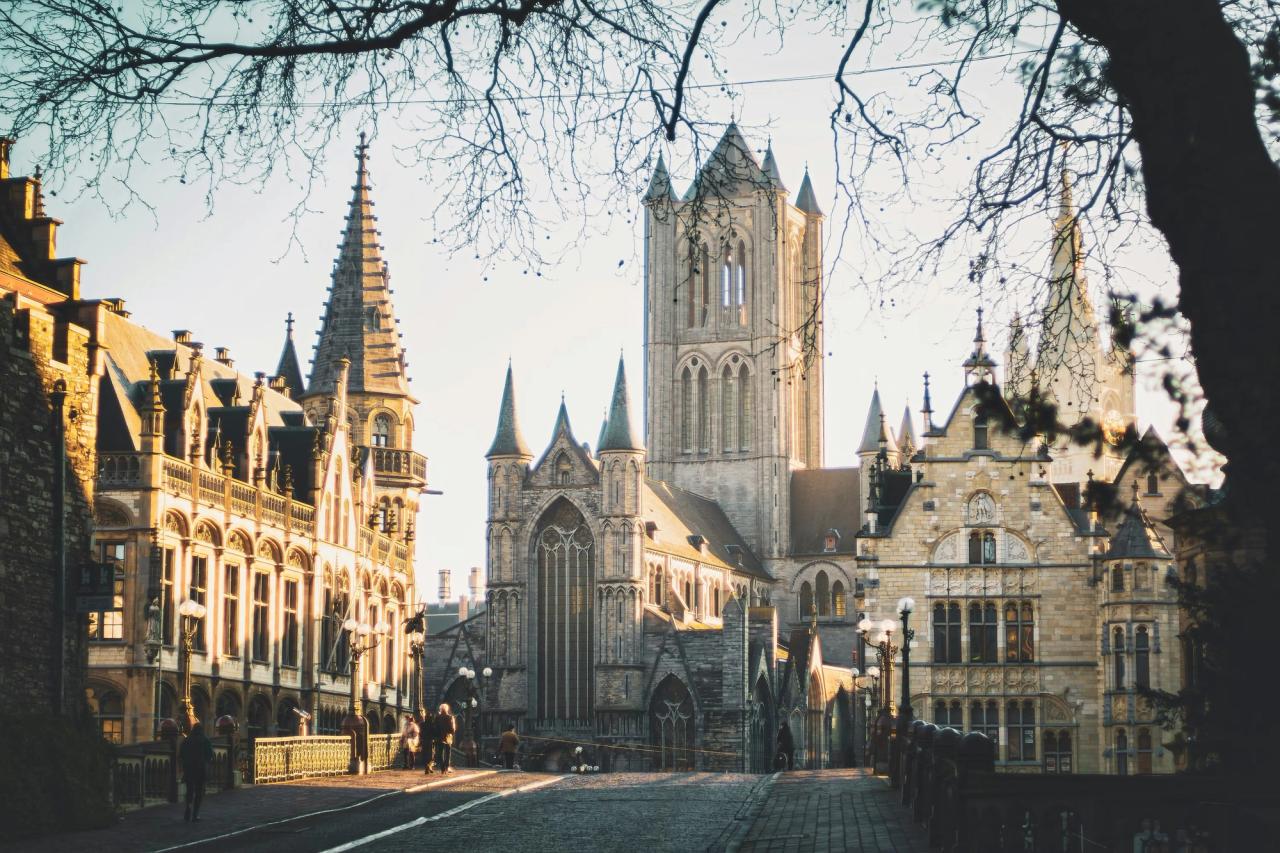
Ghent is a vibrant university city where medieval canals, cobblestone streets, and a UNESCO-listed belfry meet a thriving creative arts scene and one of Europe's most progressive food cultures. With roughly 263,000 residents and a large international student population, Ghent strikes a rare balance: the cultural richness of a historic city with the affordability and relaxed energy of a college town. It appeals to students, young professionals, and families who want walkable streets, excellent cycling infrastructure, and a welcoming, open-minded community — all without Brussels-level prices.
Often overshadowed by Brussels and Bruges, Ghent rewards those who look closer. The Patershol quarter offers candlelit dining in medieval alleyways, the Dok-Noord district pulses with creative startups and street art, and the canals that wind through the city center remain frozen in time. Yet beneath the old-world charm lies a deeply modern, sustainable city — traffic-restricted zones, a "veggieday" initiative, and one of the best cycling networks in northern Europe. Whether you are a student, a remote worker, or a family seeking a safe and cultured home base, Ghent delivers.
Ghent at a Glance
- Population
- ~263,000 (metro ~600,000)
- Region
- East Flanders, Flanders
- Known For
- Medieval city center, Ghent University, creative arts scene, vegetarian capital of Europe
- Average Rent (1BR)
- €700–€950/month
- Average Salary
- €2,100–€2,600 net/month
- Expat Community
- Medium-sized, student-heavy, highly international
- Language
- Dutch (Flemish), English widely spoken
- Climate
- Maritime — mild winters (2–6°C), cool summers (18–23°C)
Why Move to Ghent
- Affordable by Belgian standards: Rents and daily costs are noticeably lower than Brussels or Antwerp, making Ghent one of the best-value cities in Flanders for expats.
- Cycling capital of Belgium: A flat city with over 300 km of dedicated bike lanes, bike-priority streets, and a culture where cycling is the default mode of transport.
- Creative and cultural energy: Street art, independent galleries, live music venues, and the annual Ghent Festivities festival create a year-round cultural calendar that rivals much larger cities.
- Student atmosphere with depth: Ghent University (founded 1816) attracts roughly 47,000 students, injecting the city with international energy, affordable eateries, and an abundance of language exchanges and social groups.
- Compact and walkable: Most of central Ghent is pedestrianized or traffic-restricted, making daily errands, socializing, and commuting comfortable without a car.
- Central European location: Ghent is within 30 minutes of Brussels, 25 minutes of Bruges, and under 3 hours of Paris or London by train — an excellent base for exploring Europe on weekends.
Finding Housing in Ghent
Average Rents
| Neighborhood | 1-Bedroom | 3-Bedroom | Character |
|---|---|---|---|
| Patershol | €850–€1,050 | €1,400–€1,800 | Medieval maze, trendy restaurants, atmospheric |
| Sint-Amandsberg | €650–€850 | €1,100–€1,400 | Quiet residential, family-friendly, good tram links |
| Brugse Poort | €600–€800 | €1,000–€1,300 | Up-and-coming, diverse, affordable |
| Citadelpark area | €750–€950 | €1,200–€1,600 | Green, near museums, popular with expats |
| Binnenstad (center) | €850–€1,100 | €1,500–€1,900 | Tourist heart, walkable everything, priciest |
| Rabot | €550–€750 | €900–€1,200 | Student-heavy, multicultural, budget-friendly |
How to Find Housing
- Immoweb.be: Belgium's largest property portal — the first stop for most expats searching for apartments and houses.
- Zimmo.be: Aggregates listings from multiple sources, useful for comparing options across platforms.
- Facebook groups: "Flats/Ghent" and "Expats in Ghent" groups regularly post sublets, shared housing, and short-term lets.
- Student housing (koten): For students, the university housing office and websites like kot.gent list available rooms in student residences and shared flats.
- Local tip: Many Ghent landlords prefer longer leases (1+ year). Start searching at least 4–6 weeks before your move date.
Renting Process in Belgium
The Belgian rental system has specific rules that expats should understand:
- Lease types: Most leases are "3-6-9" contracts (standard 9-year leases with break points every 3 years). Shorter fixed-term leases are possible but less common and may have higher rents.
- Deposit: Landlords typically require 2–3 months' rent as a deposit, held in a blocked bank account. The deposit is returned at the end of the lease minus any damage costs.
- Inventory (plaatsbeschrijving): A detailed inventory of the property is conducted at the start and end of your lease. This protects both tenant and landlord — make sure it is thorough.
- Notice period: Tenants must give 3 months' notice when leaving. During the first 3 years, breaking a 3-6-9 lease may require paying 1–3 months' rent as compensation.
Tips for Expats
- Ghent requires registration at the municipal hall (Stad Gent) within 8 days of arrival — landlords expect this and will often ask for proof of registration.
- Shared housing (koten) is common near the university and is the cheapest option (€350–€550/month).
- Always request a signed lease contract and verify the Energy Performance Certificate (EPC) before committing.
- Rents do not always include charges (gemeenschappelijke kosten). Always confirm whether the listed price is all-inclusive before signing.
- Be cautious of scams — never transfer money before viewing a property in person or through a verified contact.
- If you are staying short-term (under 6 months), serviced apartments or Airbnb-style monthly rentals may be easier than navigating the traditional lease market.
Neighborhoods Guide
- Patershol: A medieval neighborhood of narrow lanes and candlelit restaurants. Ideal for foodies and history lovers willing to pay a premium for atmosphere. Rents are among the highest in Ghent, but the experience of living in a 13th-century quarter is unique. The area has limited parking and is best suited to those who rely on bikes or public transport.
- Binnenstad (City Center): Walking distance to everything — the Gravensteen castle, Korenmarkt square, shopping, and nightlife. Best for short-term expats or those who prefer car-free living. Expect tourist foot traffic in summer and noise from weekend revelers near the Overpoort student district.
- Sint-Amandsberg: A peaceful residential area east of the center with good tram connections and lower rents. Popular with families and professionals seeking more space and a quieter pace. Weekly markets and local shops give it a village-like feel within the city.
- Brugse Poort: A multicultural neighborhood west of the Leie river undergoing quiet gentrification. Great for budget-conscious expats who want local character, emerging cafe culture, and proximity to the canal. New coworking spaces and artist studios are attracting a younger creative crowd.
- Bourgoyen area: Green and spacious, near the Bourgoyen-Ossemeersen nature reserve. Ideal for outdoor enthusiasts and families with children who want nature on their doorstep while staying within cycling distance of the center. Housing is mostly detached or semi-detached, at higher price points.
- Citadelpark district: Anchored by the SMAK contemporary art museum, the Museum of Fine Arts, and a large park, this area attracts academics, culture-focused expats, and families who value green space close to the center. Rents are moderate and the atmosphere is calm and residential.
Cost of Living in Ghent
Monthly Budget Breakdown
| Category | Budget Range |
|---|---|
| Rent (1BR, center) | €750–€950 |
| Utilities (electric, water, heating) | €120–€180 |
| Internet | €35–€50 |
| Groceries | €250–€350 |
| Transport (bike/occasional tram) | €20–€60 |
| Dining out (4x/month) | €80–€140 |
| Leisure/Gym | €25–€45 |
| Total | €1,280–€1,775 |
A single person can live comfortably in Ghent on approximately €1,600/month. Families of four should budget around €3,200–€3,800/month, depending on housing and childcare choices. Ghent is roughly 15–20% cheaper than Brussels for comparable lifestyle spending.
Day-to-Day Costs
- Coffee: €3.00–€3.50
- Lunch (casual): €12–€16
- Monthly transport pass (De Lijn): €56 (single zone)
- Beer (bar): €3.50–€5.00
- Cinema ticket: €10–€12
- Gym membership: €25–€45/month
- Monthly mobile plan: €10–€20
- Loaf of bread: €2.00–€3.00
- Meal at a mid-range restaurant: €20–€35
Getting Around Ghent
- Cycling: Ghent is the best city in Belgium for cycling. Most residents bike year-round, even in rain. Buy a second-hand bike for €50–€150 at one of the many bike shops or via 2dehands.be. The city also offers the Velo bike-sharing system for €60/year, with docking stations across the center. The city government actively invests in new bike parking, bike highways, and cyclist-friendly intersections.
- Public transport: De Lijn operates trams and buses throughout the city and suburbs. A single ride costs €2.50; a monthly pass is €56. The tram network is reliable for reaching outlying neighborhoods and the train station.
- Driving: Ghent has a low-emission zone (LEZ) — older diesel vehicles may face fines or entry bans. Parking in the center is expensive (up to €3.50/hour) and limited. Most residents do not need a car for daily life. Car-sharing services like Cambio and Poppy are available for occasional use.
- Airport: Brussels Airport (BRU) is approximately 60 minutes by train. Brussels South Charleroi (CRL) serves budget airlines and is roughly 90 minutes away by shuttle bus.
- Intercity trains: Ghent-Sint-Pieters station connects to Brussels (30 min), Bruges (25 min), Antwerp (50 min), and Paris (via Eurostar connection, approximately 2.5 hours). Trains run frequently throughout the day.
- Water transport: Ghent-Terneuzen Canal connects the city to the North Sea, supporting one of Europe's busiest inland ports. Passenger canal boats offer scenic tours through the city center.
- E-scooters and e-bikes: Shared micromobility services like Lime and Bolt operate in Ghent, offering app-based rentals for short trips. Prices are typically €1 unlock + €0.15–€0.25/minute.
- Taxis: Taxis are available but not commonly used by residents due to the prevalence of cycling and public transport. Uber operates in Ghent with fares typically 10–20% cheaper than traditional taxis.
Healthcare in Ghent
- Hospitals/Clinics: UZ Gent (University Hospital Ghent) is one of Belgium's top medical centers and a major research hospital with specialists in nearly every field. AZ Sint-Lucas is another well-regarded option with a broad range of specialties and a reputation for shorter wait times.
- English-speaking doctors: Widely available, particularly near the university hospital and in expat-popular neighborhoods. The Ghent expat community regularly shares referrals in online groups. The UZ Gent website lists English-speaking specialists by department.
- Pharmacies: Abundant throughout the city. Look for the green cross sign. Most open Monday–Saturday; some offer weekend and evening hours. Pharmacists in Belgium can advise on minor health issues without an appointment.
- Emergency number: 112 (ambulance/fire) or 101 (police). For non-urgent medical advice outside business hours, call 1733.
Health Insurance
- All Belgian residents must join a health insurance fund (mutualiteit). The main options are CM, Solidaris, Helan, and Liberale Mutualiteit.
- Coverage reimburses most GP visits (typically €4–€6 copay), hospital stays, dental, and prescriptions.
- Expats employed in Belgium are automatically covered through social security contributions.
- Self-employed expats must register independently with a mutualiteit and pay quarterly contributions.
- Consider supplementary private insurance for faster specialist access or private hospital rooms.
- Belgian healthcare is among the best in Europe, consistently ranked in the top 20 globally. Wait times are generally reasonable, though non-urgent specialist appointments may take several weeks.
Planning your move?
Tell us about your move to compare quotes from international moving companies.
Culture & Lifestyle
- Medieval heritage: The Gravensteen castle, St. Bavo's Cathedral (home to the famous Ghent Altarpiece by the Van Eyck brothers), and the UNESCO-listed Belfry create a living museum in the city center. Walking the medieval streets is a daily pleasure for Ghent residents.
- Arts and music: Ghent hosts the Ghent International Film Festival, Jazz Fest Gent, and countless street art installations. The Vooruit arts center — a converted workers' hall — is an iconic cultural venue hosting concerts, theater, and exhibitions year-round. The Handelsbeurs concert hall is another gem for classical and contemporary music. The annual Ghent Light Festival transforms the city's medieval facades into canvases for light art.
- Vegetarian capital: Ghent declared Thursday "Veggieday" and has more vegetarian and vegan restaurants per capita than any other Belgian city. The weekly Friday market on the Vrijdagmarkt is a local institution for fresh produce and local specialties.
- Ghent Festivities (Gentse Feesten): A 10-day free street festival every July, one of the largest cultural festivals in Europe, drawing over 1.5 million visitors. Expect live music on every corner, pop-up bars, theatrical performances, and a city buzzing with energy.
- Nightlife: The Overpoortstraat area is the student nightlife hub, while the Patershol and Dok-Noord areas offer more sophisticated cocktail bars, craft breweries, and live music venues. Ghent's nightlife is lively but manageable — you can enjoy a great night out without the intensity of Brussels or Amsterdam.
- Waterways and parks: Ghent's canals are not just scenic — they define the city. Kayaking, boat tours, and waterside picnics are part of daily life. Parks like Citadelpark and the Bourgoyen nature reserve provide green breathing room.
Food & Dining
- Local specialties: Waterzooi (creamy chicken or fish stew), Neuzekes (cone-shaped candies), Mattentaarten (puff pastry tarts), and Tierenteyn-Verlent mustard. Ghent also has a strong chocolate tradition — visit chocolatiers like Chocolaterie Van Hoorebeke for handmade Belgian pralines.
- Best dining areas: Patershol for upscale Flemish cuisine, Overpoort for cheap student meals, and the Dok-Noord area for trendy new eateries and craft breweries.
- Budget options: University student restaurants offer full meals for €5–€7. Supermarkets (Colruyt, Aldi, Lidl) are the cheapest for groceries. The weekly markets on Vrijdagmarkt and Groentenmarkt offer fresh produce at competitive prices.
- Coffee culture: Ghent has a thriving specialty coffee scene. Try OR Espresso Bar, Mokabon, and Bar Bidon for locally roasted beans and a relaxed work-friendly atmosphere.
- Beer: Belgium's beer heritage is alive in Ghent. Visit the Gruut Brewery (which brews without hops using medieval herbs) or sample local bars like Het Waterhuis aan de Bierkant along the Leie river.
Waterways and Parks
Ghent's canals are not just scenic — they define the city. Kayaking, boat tours, and waterside picnics are part of daily life. Parks like Citadelpark, the Bourgoyen-Ossemeersen nature reserve, and the Blaarmeersen recreational area provide green breathing room with swimming, beach volleyball, and sailing. The recently developed Dok-Noord waterfront area combines industrial heritage with modern living, art spaces, and weekend markets.
Expat Community
- Expats in Ghent: Active Facebook groups ("Expats in Ghent," "Internationals in Ghent") and Meetup.com groups organize regular social events, networking nights, and language exchanges.
- International organizations: Ghent University's International Office runs orientation programs for incoming students and researchers. The city's integration service (In-Gent) offers support with paperwork, Dutch courses, and community connections.
- Language exchanges: Tandem Ghent and Café Lingua events pair Dutch learners with native speakers in casual bar settings — an excellent way to make local friends while improving your language skills.
- Sports and hobbies: Ghent has running clubs, rowing on the canals, climbing gyms, and numerous recreational sports leagues open to internationals.
- Family resources: The Ghent expat family network organizes playdates, school orientation sessions, and weekend outings for families adjusting to life in Flanders.
Job Market in Ghent
- Main industries: Biotechnology, logistics (the port of Ghent is one of Europe's largest), higher education, digital/creative sectors, and public sector employment.
- Major employers: Ghent University, UZ Gent hospital, ArcelorMittal, VolkerWessels, and numerous tech startups in the Dok Noord and Rabot districts.
- Average salaries by sector:
| Sector | Monthly Net |
|---|---|
| IT / Tech | €2,200–€3,200 |
| Healthcare | €2,000–€2,800 |
| Education / Academic | €2,100–€2,900 |
| Logistics / Port | €2,000–€2,600 |
| Creative / Media | €1,900–€2,500 |
- Job search resources: VDAB (Flanders employment agency, vdab.be), LinkedIn Belgium, Ghent University job board (jobs.ugent.be), and the port of Ghent career portal.
- Freelancing and self-employment: Ghent's creative and tech scenes are well suited to freelancers. Belgian tax obligations for self-employed workers are managed through a social insurance fund (sociaal verzekeringsfonds) and quarterly VAT returns.
- Work permits: Non-EU nationals need a work permit. Highly skilled workers can apply for a single permit combining work and residence authorization. Ghent-based employers regularly sponsor international talent, especially in biotech and academia. EU/EEA citizens can work freely without a permit.
- Remote work: Ghent's coworking spaces (including Bar d'Office, Co.Station, and numerous cafe-friendly spots) make it a strong base for remote workers. The city's quality of life, reliable internet, and central European location are major draws.
- Note: Belgian income tax rates are relatively high (25–50% bracket), but this funds robust public services including healthcare, education, and infrastructure.
Education in Ghent
- International schools: Ghent International School (GIS, ages 3–18, English-language curriculum), Edith Stein International School (Catholic, bilingual Dutch-English), and the European School in nearby Mol for EU institution families.
- Universities: Ghent University (UGent) — consistently ranked in the global top 100 — offers a wide range of English-taught master's programs and attracts researchers from around the world. Artevelde University of Applied Sciences provides practice-oriented bachelor's degrees with strong industry links.
- Language schools: CVO Ghent (Centrum voor Volwassenenonderwijs) offers government-subsidized Dutch integration courses (often free for registered newcomers). Private academies including Berlitz and ILT cater to expats needing English, French, or Dutch instruction.
- Childcare: Ghent has a well-developed system of public and private crèches and after-school care (Buitenschoolse Opvang). Demand is high — register early, ideally during pregnancy or before arrival. Costs are income-dependent and can range from €5 to €30 per day.
- Nursery and primary school: The Belgian system offers free public schooling from age 2.5. Dutch is the language of instruction in Flemish schools, which helps children integrate quickly. Enroll early — popular schools fill up fast, especially in central neighborhoods.
- Higher education beyond UGent: In addition to the main universities, Ghent has several research institutes, design schools, and conservatories that welcome international students. The city's academic ecosystem extends beyond traditional university programs into vocational and creative education.
Moving Checklist for Ghent
- Secure housing or temporary accommodation (4–6 weeks in advance)
- Obtain necessary visa or residence permit via the Belgian embassy in your home country
- Arrange health insurance (required for Belgian registration)
- Gather apostilled documents (birth certificate, marriage certificate, university degrees)
- Research your neighborhood and set up alerts on Immoweb and Zimmo
- Download useful apps: De Lijn (public transport), Immoweb, 2dehands.be (classifieds), and Too Good To Go (cheap food from local restaurants)
- Register at Ghent City Hall (Stad Gent) within 8 days of arrival — bring your lease, passport, and residence permit
- Open a Belgian bank account (KBC and BNP Paribas Fortis are popular with expats; most require in-person appointment)
- Register for a Belgian phone number (Proximus, Base, or Mobile Vikings for affordable prepaid options)
- Register with a local GP (huisarts) near your address — ask neighbors or expat groups for recommendations
- Set up your eID (Belgian electronic identity card) appointment if applicable
- Download the Stad Gent app for local news, events, and municipal services
- Apply for a Velo bike-sharing subscription (€60/year) at any Velo station or online
- Enroll in a Dutch language course at CVO Ghent or a private language school
- Join at least one expat or social group to build your local network
- Explore your neighborhood — find your local bakery, market, and park
- Set up utility accounts (water, gas/electric) if not included in your rent
- Register your bike with the local police for theft protection
- Open a savings or investment account if needed (Belgian tax residents can benefit from tax-advantaged savings plans)
- Familiarize yourself with Belgian tax obligations — consult a local accountant if you have international income
Yes. Ghent offers a high quality of life, an international community anchored by its university, affordable living costs by Belgian standards, excellent cycling infrastructure, and a rich cultural scene. It is consistently ranked among the most livable cities in Belgium, with a Quality of Life Index around 187 and high scores for safety, healthcare, and environmental quality.
Not necessarily. Most younger Ghent residents and university staff speak excellent English. However, learning Dutch (Flemish) is strongly recommended for integrating into the local community, navigating bureaucracy, and accessing certain job opportunities. Government-subsidized integration courses through CVO Ghent are often free for registered newcomers and can be completed in the evenings or weekends.
Ghent is smaller, more affordable, and significantly more bike-friendly than Brussels. It has a stronger student atmosphere and a more cohesive local community. Brussels offers more international job opportunities, a larger diplomatic and expat network, and more English-only workplaces. Ghent suits those who prefer a relaxed, creative city with easy access to Brussels by train (30 minutes) for occasional work or travel.
Belgium has a high-quality universal healthcare system. Expats working in Belgium are automatically enrolled in a mutual health fund (mutualiteit) that covers most medical costs, including GP visits (typically a €4–€6 copay) and hospital stays. Ghent's UZ Gent is a leading university hospital with specialists in nearly every field. Out-of-pocket costs are generally low, and English-speaking doctors are easy to find through expat networks and hospital directories.
Yes. Ghent has low crime rates by European standards, particularly violent crime. The city center and most residential neighborhoods are safe to walk and cycle at all hours. The city's extensive pedestrian zones and traffic-restricted areas also make it very safe for children. Like any city, petty theft can occur in crowded tourist areas during festivals — standard precautions apply.
Absolutely. Ghent is one of the easiest Belgian cities to navigate without a car. Cycling is the primary mode of transport for most residents, and the tram/bus network covers the wider metro area. Brussels Airport and major Belgian cities are reachable by direct train from Ghent-Sint-Pieters station. Car-sharing services like Cambio are available for occasional trips.
The rental market is competitive but less intense than Brussels or Antwerp. One-bedroom apartments in the center range from €750 to €950 per month. Shared student housing (koten) starts around €350. Most leases require a deposit of 2–3 months' rent and proof of income or a guarantor. The market moves quickly — respond to listings within 24 hours to stay competitive.
Ghent has a maritime climate with mild winters (2–6°C) and cool summers (18–23°C). Rain is frequent year-round — invest in a good rain jacket rather than an umbrella, as wind makes umbrellas impractical. Winters are overcast but rarely extreme, with occasional frost. The best months for outdoor activities are May through September, when terraces fill up and the city's parks are at their best. Snow is rare but possible in January and February.
Ghent has a welcoming social scene, especially for newcomers willing to engage. The university atmosphere, language exchange events, and active expat groups create many opportunities to meet people. Learning even basic Dutch phrases goes a long way in building relationships with locals. Ghent is smaller than Brussels, which means you will start recognizing faces at markets, cafes, and events within a few months — a real advantage for forming genuine connections.
Late spring (May–June) and early autumn (September) are the best times to move. The weather is pleasant, rental turnover is higher due to the academic calendar, and you can settle in before the Ghent Festivities (July) or the academic year begins. Avoid moving in January or February if possible — cold, dark, and rainy conditions make the logistics harder.
Ghent is larger, more multicultural, and more dynamic than Bruges, which has a quieter, more tourist-focused character. Bruges is picturesque and compact but can feel sleepy outside peak season. Ghent offers more cultural events, a stronger expat community, and better job opportunities — especially in tech, biotech, and academia. Both cities share Flemish charm, but Ghent has more of a lived-in, year-round energy.
Related Guides
- [Moving to Belgium] — comprehensive country guide
- [Moving to Brussels] — capital city guide
- [Moving to Bruges] — nearby Flemish city guide
- [Moving to Antwerp] — Belgium's largest port city guide