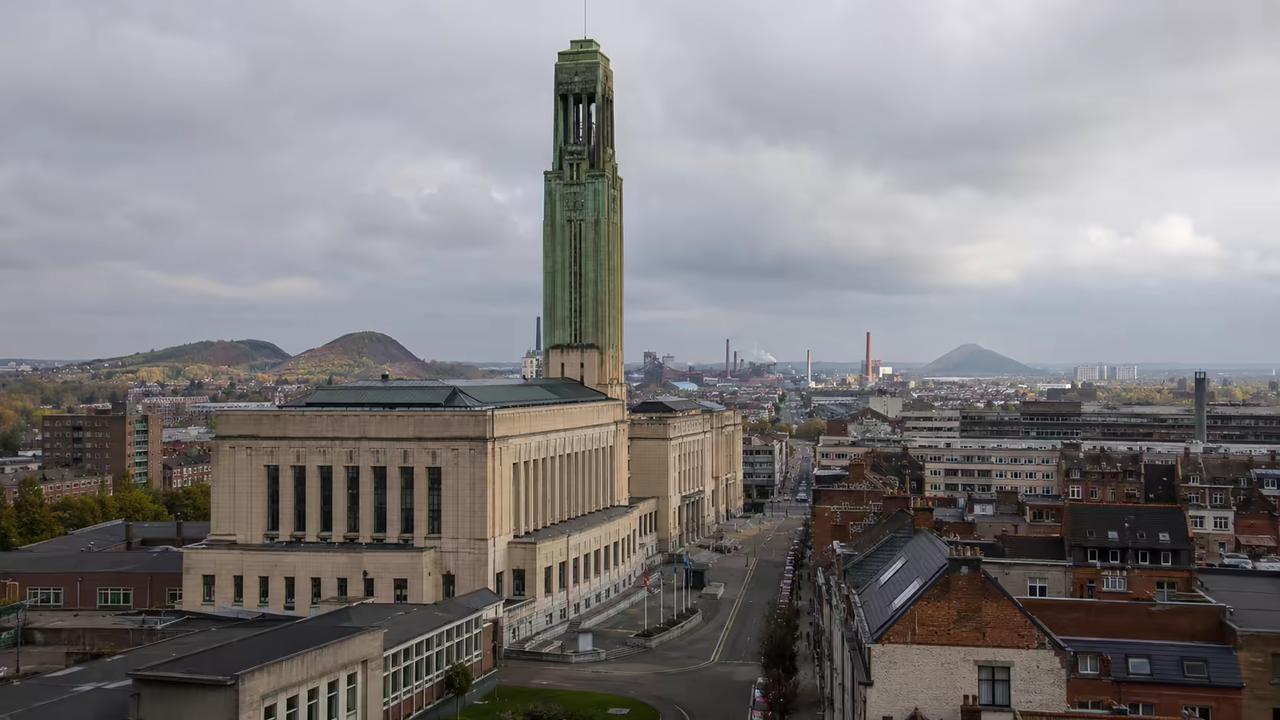
Charleroi is the largest city in Wallonia, Belgium's French-speaking southern region, and a place where industrial grit meets cultural revival. Once known as the "Pays Noir" for its coal-mining and steelmaking past, Charleroi today offers some of the lowest rents in French-speaking Belgium, a growing arts scene anchored by institutions like BPS22 and the Musée de la Photographie, and a strategic location less than an hour from Brussels by train. It suits budget-conscious expats, remote workers willing to trade polish for affordability, and anyone who needs easy access to Brussels South Charleroi Airport (CRL), one of Europe's biggest low-cost airline hubs. French is the administrative and daily language, and the local bureaucracy runs entirely in French through the Ville de Charleroi commune (the Belgian term for a municipal government).
Charleroi at a Glance

- Population
- ~205,000 (city); ~520,000 (metropolitan area)
- Region
- Wallonia (Walloon Region), Hainaut Province
- Known For
- Industrial heritage, Brussels South Charleroi Airport, affordable housing
- Average Rent (1BR)
- €550–€750
- Average Salary
- €2,100–€2,400 net/month
- Expat Community
- Small but growing; concentrated near Gosselies and the university corridor
Why Move to Charleroi
- Rock-bottom rents for French-speaking Belgium: A one-bedroom apartment in central Charleroi costs roughly half what the same unit would cost in Brussels, making it one of the cheapest cities of its size in Western Europe.
- Direct low-cost flights across Europe and beyond: Brussels South Charleroi Airport (CRL) is a major base for Ryanair and Wizz Air, with direct routes to over 70 destinations across the continent and North Africa.
- Cultural revival underway: The photography museum (Musée de la Photographie at Mont-sur-Marchienne), the contemporary art venue BPS22, and the UNESCO-listed Bois du Cazier industrial heritage site have put Charleroi back on the cultural map.
- Strategic rail connections: Charleroi-Sud station reaches Brussels Midi in about 55 minutes on a regular S2 service and connects directly to Namur, Mons, and Lille (France).
Visas and Residency
Belgium's immigration rules are set at the federal level, so the process is the same whether you move to Charleroi or Brussels, but the local handling goes through the Ville de Charleroi.
- EU/EEA/Swiss citizens: No visa required. You must register at the Charleroi commune's Service de la Population (population registry office) within 90 days of arrival. You will receive a registre des personnes (population register) entry and, after review, a carte E/E+ (EU registration certificate) or a carte F/F+ (permanent residence card for EU nationals after five years).
- Non-EU nationals: You must obtain the appropriate long-stay visa (D visa) from the Belgian embassy in your country before arrival. Common categories include work (single permit), study, family reunification, and the freelance/professional card.
- Single permit: Non-EU workers need a combined work and residence permit, applied for by the employer through the Walloon Region's employment service (le Forem). Processing takes two to four months.
- Commune registration: After arrival, book an appointment at the Charleroi town hall (Hôtel de Ville, Place Charles II). Bring your passport, visa, proof of address (such as a bail à loyer — the formal Belgian term for a residential lease), and two passport photos. An officer will visit your home to verify residence (the contrôle de résidence).
- Carte d'identité d'étranger: After approval, you receive a foreigner's identity card (type A for temporary, type B for longer stay, type C for permanent). Carry it at all times.
Finding Housing in Charleroi
Average Rents by Neighborhood
| Neighborhood | 1-Bedroom | 3-Bedroom | Character |
|---|---|---|---|
| Ville Basse (City Centre Lower) | €500–€650 | €750–€950 | Busy commercial core around Place Verte; older buildings, mixed condition |
| Ville Haute (Upper Town) | €550–€750 | €800–€1,100 | Administrative heart around Place Charles II; grander facades, more renovation |
| Montignies-sur-Sambre | €450–€600 | €650–€850 | Residential, family-oriented, good value; 10 min by bus to centre |
| Marchienne-au-Pont | €450–€600 | €650–€850 | Industrial heritage quarter along the Sambre; quiet, affordable |
| Gosselies | €550–€700 | €800–€1,050 | Airport area; modern apartments, good for frequent flyers and aerospace workers |
| Couillet | €400–€550 | €600–€800 | Southern suburb; green, very affordable, limited nightlife |
How to Find Housing
- Immoweb.be: Belgium's dominant property portal; filter by Charleroi and surrounding communes. Most listings are in French.
- Zimmo.be: Second-largest portal; useful for cross-referencing prices.
- Facebook groups: "Appartement Charleroi" and "Location Charleroi" have direct landlord postings, sometimes below market rate.
- Local estate agents: Agencies along Rue de la Montagne and Rue Tumelaire in Ville Basse handle most managed rentals. Expect to pay one month's rent as an agency fee.
- Word of mouth: In a city where personal connections matter, asking colleagues or neighbors about available apartments can uncover listings that never appear online.
Tips for Expats
- Landlords require a bail à loyer (written lease), typically for one year renewable (three-year leases are also common). A garantie locative (rental deposit) of two months' rent must be deposited in a blocked bank account at a institution such as BNP Paribas Fortis or Belfius.
- An état des lieux (inventory and condition report) is mandatory at move-in and move-out, signed by both parties. Hire an independent expert if the landlord's report seems incomplete.
- Most utilities are not included in rent. Budget separately for electricity, gas, and water. Internet is always tenant-arranged.
- French is the language of all lease documents. Have a local or a translator review anything you do not fully understand.
Cost of Living in Charleroi
Monthly Budget Breakdown
| Category | Budget Range |
|---|---|
| Rent (1BR, centre) | €500–€700 |
| Utilities (electricity, gas, water) | €120–€180 |
| Internet + mobile | €35–€55 |
| Groceries | €250–€350 |
| Transport (TEC monthly pass) | €35–€50 |
| Dining out (4x/month) | €60–€100 |
| Leisure/Gym | €30–€60 |
| Healthcare (mutuelle contribution) | €15–€30 |
| Total | €1,045–€1,525 |
Day-to-Day Costs
- Coffee (café): €1.80–€2.50
- Lunch (casual): €10–€15
- Monthly transport pass (TEC): €49
- Beer (bar): €2.50–€4.00
- Cinema ticket: €9–€12
- Baguette (bakery): €1.20–€1.60
Healthcare in Charleroi
Belgium operates a mandatory health insurance system. You must affiliate with a mutuelle (French for health insurance fund/mutual), such as Mutuelle Chrétienne (MC), Mutualité Socialiste, or Solidaris (the dominant mutuelle in Wallonia). The mutuelle reimburses a portion of medical costs; the remainder can be covered by supplemental assurance hospitalisation (hospital insurance), often offered by employers.
- Hospitals: The Centre Hospitalier Universitaire (CHU) de Charleroi, located in Jumet, is the main hospital complex and serves as a teaching hospital. The Grand Hôpital de Charleroi (GHDC) operates sites in Charleroi and Montignies-sur-Sambre.
- General practitioners (médecin généraliste): A standard consultation costs €26–€30, of which roughly 75% is reimbursed by the mutuelle. Many GPs in Ville Haute and Ville Basse speak at least basic English.
- Pharmacies: Identified by a green cross. The main pharmacy cluster is on Rue de la Montagne. Belgian pharmacies are well-stocked; bring your European Health Insurance Card (EHIC) if you have one during the transition period.
- Emergency number: 112 (European standard). For the local on-call doctor service outside hours, call 1733 (Bruxelles-Hainaut guard doctor network).
Planning your move?
Tell us about your move to compare quotes from international moving companies.
Banking
Opening a Belgian bank account is straightforward. The main options in Charleroi:
- BNP Paribas Fortis: Branches on Place Charles II and Boulevard Joseph Tirou. Strong English-language online banking.
- Belfius: State-rooted bank with branches across Charleroi; solid for everyday banking.
- ING Belgium: Present on Rue de la Marche au Charbon; popular with expats for its app.
- KBC: Smaller presence in Charleroi but competitive rates.
You will need your passport or carte d'identité, proof of address (such as a bail à loyer), and sometimes proof of income. A basic compte à vue (current/checking account) is usually free or costs €2–€4/month.
Getting Around Charleroi
- TEC bus network (Transport en Commun): The Walloon regional bus operator, TEC Hainaut, runs all public buses in and around Charleroi. A monthly pass costs €49 for the Charleroi zone. Routes converge on the Charleroi-Sud bus terminus next to the railway station. Service frequency is good on weekdays but drops sharply after 8 PM and on weekends.
- Charleroi Metro (Métro Léger): Charleroi has a partial light-rail/pre-metro system (lines M1, M2, M3, M4) running from the central loop out to suburbs like Gilly, Gosselies, and Anderlues. It is useful but the network is incomplete after decades of stalled construction.
- Charleroi-Sud railway station: The city's main train hub, with S2 services to Brussels (every 30 minutes, ~55 min), IC trains to Namur (~35 min), and connections to Mons (~30 min). Reaching Lille, France (~1 hr 20 min) requires a transfer, typically in Mons or Brussels — no direct international rail service runs from Charleroi.
- Brussels South Charleroi Airport (CRL): Located in Gosselies, about 7 km north of the city centre. Served by TEC buses (Line A from Charleroi-Sud station, ~20 min). Ryanair and Wizz Air dominate; flights to cities across Europe and North Africa. No rail link exists to the airport.
- Cycling: Charleroi is hilly and cycling infrastructure is limited compared to Flanders. The RAVeL network (Réseau Autonome de Voies Lentes — a network of slow-travel paths built on former canal towpaths and rail lines) offers pleasant recreational cycling routes along the Sambre and the old industrial canals.
- Driving: Car ownership is common. Parking in Ville Basse is managed by Interparking (underground at Place Verte and Rive Gauche shopping centre). Traffic congestion is moderate.
Education
- Universities: Charleroi itself does not host a full university, but the Université de Mons (UMons) is 30 minutes away by train, and the Université de Namur (UNamur) is 35 minutes away. The UCLouvain campus at Louvain-la-Neuve is about 45 minutes by car. Several of these universities offer courses in English at the graduate level.
- Haute École: The Haute École Charleroi Métropole offers bachelor-level programs in education, social work, and economics, taught in French.
- International schools: There is no dedicated international school in Charleroi. Most expat families commute to the British School of Brussels (BSB) in Tervuren or St. John's International School in Waterloo, both roughly 50–60 minutes by car.
- Language schools: The Alliance Française de Charleroi offers French courses for foreigners. The CLL Language Schools have a centre nearby in Louvain-la-Neuve. Le Forem (the Walloon employment agency) also provides free or subsidized French courses for registered job seekers.
- Local schools: Belgian public schools in Charleroi teach entirely in French. Enrollment is handled through the local commune. The Confession libre (Catholic network) and officiel (public/neutral) networks both operate primary and secondary schools.
Neighborhoods Guide
- Ville Basse (Lower Town): The commercial and nightlife centre around Place Verte and Rue de la Montagne. Best for young professionals who want walkable access to bars, restaurants, and Charleroi-Sud station. Rents are the lowest in the city but some streets show visible neglect. Budget €500–€650 for a one-bedroom.
- Ville Haute (Upper Town): The administrative district around Place Charles II and the Hôtel de Ville. Wider boulevards, grander 19th-century architecture, and the Palais de Justice. Quieter at night. Rents slightly higher at €550–€750 for a one-bedroom. Good for professionals working in government or finance.
- Montignies-sur-Sambre: A large residential area southeast of the centre with a village-like feel, local shops, and good TEC bus links. Family-friendly and significantly cheaper. One-bedrooms from €450–€600. Popular with local families rather than expats.
- Marchienne-au-Pont: Southwest along the Sambre River, known for its industrial heritage and the old Forges de la Providence site (now a cultural space). Quiet, green, and affordable. One-bedrooms €450–€600. Suits remote workers who want space and quiet.
- Gosselies: The airport district northeast of the centre. Modern housing developments, proximity to aerospace employers (Sonaca, Sabca), and the Charleroi Airport shuttle. One-bedrooms €550–€700. Best for frequent flyers and aviation industry workers.
- Jumet: Northwest suburb hosting the CHU hospital complex. Good for healthcare workers. Mix of older homes and newer builds. One-bedrooms €450–€600. Well connected by pre-metro line M3.
Culture and Lifestyle
- Industrial heritage: The Bois du Cazier in Marcinelles is a former coal mine and the site of Belgium's worst mining disaster (1956). Now a UNESCO World Heritage Site with three museums. The Musée de la Photographie in Mont-sur-Marchienne is one of Europe's most important photography museums, housed in a former Carmelite convent.
- BPS22: Charleroi's premier contemporary art space, located in a striking glass-and-steel building in Ville Basse. Hosts rotating exhibitions with a focus on Belgian and international contemporary art.
- Rive Gauche shopping centre: The main retail complex along the Sambre in Ville Basse, with over 120 shops, a cinema (Cinépointcom), and restaurants.
- Markets: The Marché de la Ville Basse (Sunday morning) is the largest open-air market in the Charleroi area, selling fresh produce, clothing, and household goods.
- Le Phénix cultural centre: A renovated industrial building in Marchienne-au-Pont hosting concerts, theatre, and community events.
- Nightlife: Ville Basse's Rue de la Montagne area has the densest concentration of bars and cafés. The student population from nearby Haute Écoles keeps prices low and the atmosphere informal. A local beer costs €2.50–€4.00.
Food and Dining
- Local specialties include boulets à la liégeoise (meatballs in a sweet-sour syrup sauce, common across Wallonia), carbonnades flamandes (a beef and beer stew), and gaufres de Liège (sugar-waffle pastries sold from street carts near Place Verte).
- Rue de la Montagne and the side streets around Place Verte offer the densest dining options, from Belgian brasseries to Turkish kebab shops and Portuguese tascas (reflecting Charleroi's large Portuguese community).
- Budget meals under €12 are easy to find; kebab or falafel wraps cost €5–€7.
Expat Community
- Charleroi's expat community is smaller and less organized than Brussels or Antwerp. Most international residents work in aerospace (Gosselies), healthcare (CHU), or logistics near the airport.
- The International Meeting Centre Charleroi (a loosely organized group on Meetup and Facebook) holds informal language exchanges.
- Alliance Française de Charleroi is a practical meeting point; many expats take French courses there and build connections.
- The Portuguese and Italian communities, descendants of 20th-century industrial migrants, are well-established, with cultural associations in Marchienne-au-Pont and Montignies-sur-Sambre.
Job Market in Charleroi
- Main industries: Aerospace (Sonaca, Sabca, John Cockerill), logistics (driven by the airport), healthcare (CHU hospital network), public administration, and retail.
- Major employers: Sonaca (aircraft structures, Gosselies), John Cockerill (energy and industrial equipment), CHU de Charleroi, Brussels South Charleroi Airport operators, the Ville de Charleroi municipal government.
- Average salaries: €2,100–€2,400 net/month for mid-level roles. Aerospace engineers can earn €2,800–€3,500 net. Public sector roles follow fixed federal pay scales.
- Job search resources: Le Forem (the Walloon public employment service, with an office on Boulevard Joseph Tirou) is the primary portal. VDAB and Actiris cover Flanders and Brussels respectively but list Walloon positions too. LinkedIn and Indeed.be are widely used.
Moving Checklist for Charleroi
- Obtain the correct Belgian D visa (non-EU) or confirm EU right of residence
- Book temporary accommodation for your first two to four weeks (hotel or Airbnb near Ville Basse or Charleroi-Sud)
- Gather documents: passport, birth certificate (apostilled and translated into French if non-EU), marriage certificate if applicable, diploma copies
- Purchase travel insurance to cover your first weeks before mutuelle enrollment
- Research and shortlist mutuelle providers (Solidaris has the largest Wallonia network)
- Transfer savings to cover the garantie locative (two months' rent deposit) and first month's rent
- Register at the Ville de Charleroi commune, Service de la Population (Place Charles II, Hôtel de Ville) — bring passport, visa, proof of address, and photos
- Open a Belgian bank account (BNP Paribas Fortis, Belfius, or ING) — you will need it for the garantie locative and salary deposits
- Buy a Belgian SIM card (Proximus, Orange, or Base — available at the Rive Gauche shopping centre)
- Get a TEC transport card at the Charleroi-Sud station or TEC agency office
- Confirm your temporary address and begin apartment hunting via Immoweb.be
- Sign a bail à loyer and complete the état des lieux with the landlord
- Deposit the garantie locative into a blocked account via your bank
- Affiliate with a mutuelle (Solidaris, MC, or Mutualité Socialiste) — bring your carte d'identité and proof of income or employment
- Register with a local médecin généraliste (GP) — ask your mutuelle or neighbors for recommendations
- If you are an EU citizen, ensure your EU registration certificate (carte E) is being processed by the commune
- If a non-EU worker, confirm your single permit status with your employer's HR department
- Enroll children in a local school (contact the Service de l'Enseignement at the Ville de Charleroi)
- Set up utilities: electricity (Engie or Luminus), internet (Proximus, Telenet, or VOO)
- Attend a French language course at Alliance Française or register with Le Forem for subsidized classes
Pros and Cons of Living in Charleroi
Pros
- Rents among the lowest in French-speaking Belgium — a couple can live comfortably on under €1,500/month
- Direct low-cost flights from CRL to dozens of European cities
- Growing cultural institutions and heritage tourism
- Easy train access to Brussels, Mons, and Namur
- Genuine, unpretentious local culture with strong working-class identity
Cons
- High unemployment (among the highest in Belgium) and visible urban decay in some areas
- French-language bureaucracy can be slow and unwelcoming to non-French speakers
- Limited international school options; most families commute toward Brussels
- Public transport (TEC buses) runs reduced service evenings and weekends
- The city's reputation for roughness, while overstated, reflects real pockets of deprivation in Ville Basse and some southern suburbs
Charleroi has higher crime rates than the Belgian average, particularly for property crime in Ville Basse. However, violent crime against strangers is uncommon. Use normal urban caution: lock your bike, avoid poorly lit streets late at night, and keep valuables out of sight. Neighborhoods like Ville Haute, Gosselies, and Montignies-sur-Sambre are generally calm and residential.
Yes, practically. Charleroi is in Wallonia and all government services, lease agreements, and daily interactions are in French. Unlike Brussels, you will rarely find English-speaking staff at the commune or in shops. Arriving with at least A2-level French makes a significant difference. The Alliance Française de Charleroi and Le Forem both offer French courses for newcomers.
Visit the Hôtel de Ville on Place Charles II, Service de la Population, with your passport, visa (if non-EU), proof of address (a bail à loyer or a host's attestation d'hébergement), and two passport photos. The commune will schedule a home visit (contrôle de résidence) to verify you live at the stated address. After verification, you will receive your carte d'identité or carte d'étranger within a few weeks.
A mutuelle is a Belgian health insurance fund. Membership is legally required and costs €15–€30/month depending on your income. The mutuelle reimburses a large portion of doctor visits, hospital stays, and prescriptions. Solidaris and Mutualité Chrétienne (MC) are the two largest mutuelles operating in Charleroi. You must register within three months of arriving to avoid gaps in coverage.
Yes. The S2 train from Charleroi-Sud to Brussels Midi takes about 55 minutes and runs every 30 minutes on weekdays. A monthly rail commute adds roughly €200–€250 to your budget. Some expats choose to live in Charleroi for the lower rents and commute to Brussels, saving €300–€500/month on housing even after transport costs.
A one-bedroom apartment in the city centre costs €500–€700 per month. Suburban areas like Montignies-sur-Sambre and Marchienne-au-Pont range from €450–€600. A three-bedroom apartment in or near the centre costs €750–€1,100. These rents are roughly 40–50% lower than comparable properties in Brussels.
Brussels South Charleroi Airport (CRL) is one of Europe's busiest low-cost hubs. Ryanair and Wizz Air operate dozens of routes to destinations across Europe, the Middle East, and North Africa. Fares frequently start at €20–€40 one way if booked in advance. The TEC Line A bus connects Charleroi-Sud station to the terminal in about 20 minutes for €6.
The garantie locative (rental deposit) is a legal requirement in Belgium. In Wallonia, landlords may ask for up to two months' rent as a deposit. This money must be placed in a blocked bank account in the tenant's name — the landlord cannot hold it directly. The deposit is returned after the final état des lieux (move-out inspection) confirms no damage beyond normal wear. Some mutuelles and banks offer garantie locative guarantees that avoid tying up the full cash amount.
Belgium has a progressive income tax system ranging from 25% to 50%, with additional municipal surcharges. In Charleroi, the local tax supplement (centimes additionnels) is set by the Ville de Charleroi and is added to your federal tax bill. Most employees have tax withheld at source by their employer. If you are self-employed, you must file quarterly advance tax payments via MyMinfin.be (the federal tax portal). A Belgian tax accountant (comptable) is worth the €200–€400 annual fee for navigating deductions and international tax treaties.
Related Guides
- Moving to Belgium — comprehensive country guide covering federal visas, taxation, and the mutuelle system
- Moving to Brussels — the capital, 55 minutes north by train
- Moving to Liège — Wallonia's other major city, 1 hour east by train