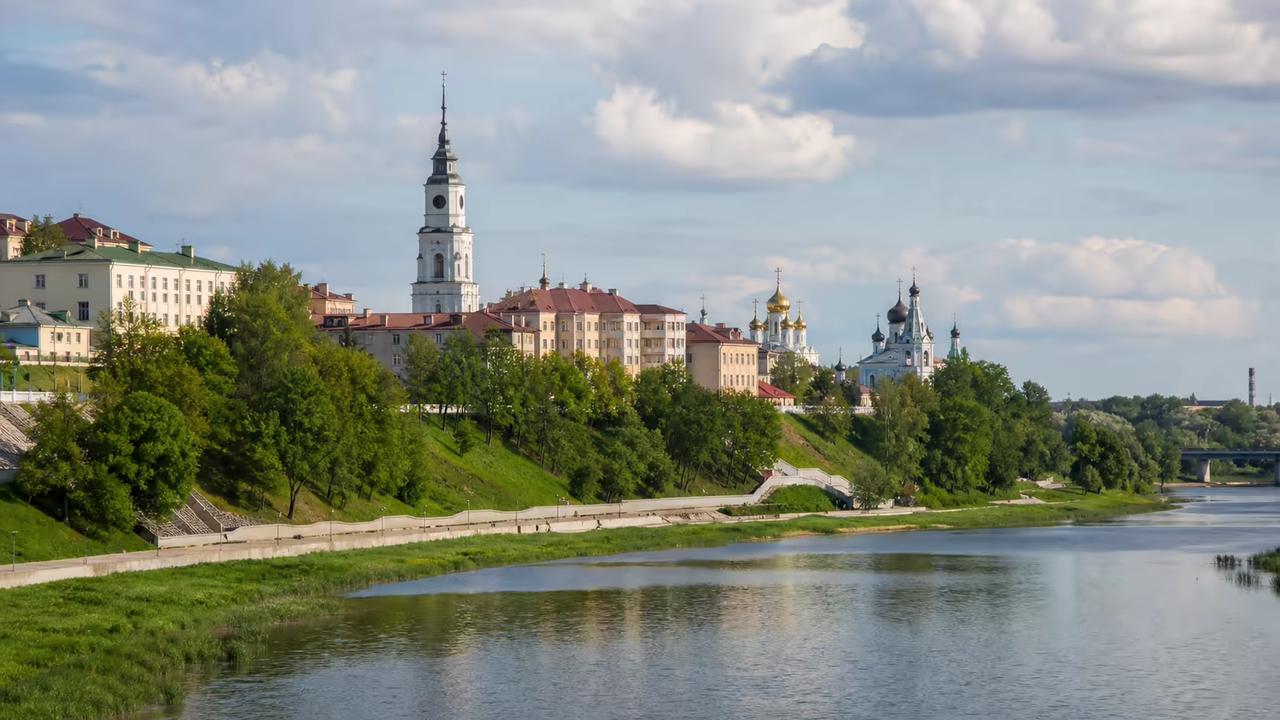
Mahiliou — også stavet Mogilev — er en industriel by med omkring 365.000 indbyggere ved Dnepr-floden i det østlige Hviderusland. Byen mangler Minsks kosmopolitiske puls, men det er netop pointen: leveomkostningerne er lave, tempoet er roligt, og man kan gå gennem centrum på under en time. Hvis du værdsætter overkommelige priser og en stille hverdag frem for natteliv og internationale restauranter, er Mahiliou et seriøst overvejelse værd.
Mahiliou i et overblik
- Indbyggertal
- ca. 365.000 (Hvideruslands tredjestørste by)
- Region
- Mogilev oblast, østlige Hviderusland
- Kendt for
- Dnepr-flodens bredpromenade, tungindustriel arv, Skt. Nikolaj-klosteret
- Gennemsnitlig leje (1-værelses)
- BYN 900–1.200/md. (ca. €280–€380)
- Gennemsnitlig løn
- BYN 1.800–2.200/md. netto (ca. €560–€690)
- Ekspatmiljø
- Lille, men voksende — overvejende russiske, ukrainske og centralasiatiske statsborgere
Hvorfor flytte til Mahiliou
- Lave leveomkostninger: Husleje, dagligvarer og transport er mærkbart billigere end i Minsk, hvilket gør byen til en af de mest budgetvenlige i Hviderusland.
- Beliggenhed ved Dnepr-floden: Bredpromenaden, parkerne langs floden og weekend-flodkrydstogter giver byen et behageligt udendørs præg på trods af dens industrielle ry.
- Overskuelig størrelse: Du kan krydse centrum til fods på under en time; daglige ærinder kræver sjældent en bil.
- Industrielt jobgrundlag: Kemiske, maskin- og fødevareforarbejdningsvirksomheder tilbyder stabil beskæftigelse til ingeniører og faglærte håndværkere.
- Rolig livsstil: Byen føles sjældent hektisk — trafikken er let, gaderne er rene, og de lokale er generelt imødekommende over for nytilkomne, der gør en indsats for at tale russisk.
Find bolig i Mahiliou
Gennemsnitlige huslejer
| Bydel | 1-værelses (BYN) | 3-værelses (BYN) | Karakter |
|---|---|---|---|
| Centrum | 1.000–1.300 | 2.000–2.500 | Gåvenlig, tæt på butikker og caféer |
| Leninsky-distriktet | 900–1.200 | 1.600–2.200 | Moderne etagebyggeri, parker, familievenligt |
| Oktyabrsky-distriktet | 800–1.100 | 1.400–2.000 | Boligområde, roligere gader |
| Forstæder / Udkanten | 500–800 | 750–1.200 | Boligblokke længere fra centrum, laveste huslejer |
Sådan finder du bolig
- Realt.by: Den største hviderussiske boligportal; filtrer på Mogilev.
- Kufar.by: Annoncesite, hvor mange private udlejere opretter annoncer direkte.
- Lokale formidlere: Flere formidlere har til huse i centrum; honoraret er typisk en halv måneds leje.
- Videregivelse: Spørg på din arbejdsplads eller i ekspat-chatgrupper — de lokale kender ofte til boliger, der ikke er offentligt annonceret.
Tips til expats
- Lejekontrakter løber typisk 12 måneder; forvent en depositum på 1–3 måneders leje.
- Undersøg om forbrugsudgifter (varme, vand, internet) er inkluderet eller afregnes separat.
- Tjek varmesystemet inden du underskriver — nogle ældre bygninger har stadig sovjetiske radiatorer.
- Få altid en skriftlig kontrakt; mundtlige aftaler er svære at håndhæve.
- Fotografer lejlighedens stand på indflytningsdagen for at beskytte dit depositum.
Bydelsguide
- Centrum: Bedst for singler og par, der ønsker caféer, butikker og flodpromenaden inden for gåafstand. Højere husleje, men bekvemmeligheden er svær at slå.
- Leninsky-distriktet: Populært blandt unge familier; moderne lejlighedskomplekser nær Sejrsparken og flere skoler.
- Oktyabrsky-distriktet: En roligere boligzone med ældre boligbestand til lavere priser; gode busforbindelser til centrum.
- Forstæder / Udkanten: Ældre boligblokke uden for de tre hoveddistrikter; laveste huslejer, rolige gader og nem adgang til natur — ideelt for familier med stramt budget.
- Podnikolle-området: Udkanten nær Podnikiolle-søerne; tiltrækker dem, der gerne vandrer i naturen og tager weekendture.
Leveomkostninger i Mahiliou
Månedligt budgetoverblik
| Kategori | Budgetinterval (BYN) |
|---|---|
| Husleje (1-vær., centrum) | 1.000–1.300 |
| Forbrugsudgifter | 150–250 |
| Internet | 30–50 |
| Dagligvarer | 500–700 |
| Transport | 50–55 |
| Restaurantbesøg (4×/md.) | 150–250 |
| Fritid/Træningscenter | 50–100 |
| Total | 1.940–2.525 |
Daglige omkostninger
- Kaffe (café): BYN 4–8
- Frokost (casual restaurant): BYN 18–30
- Månedligt transportkort: BYN 50–55
- Øl (bar): BYN 4–10
- Biografbillet: BYN 12–20
- Brød: BYN 1,50–3,00
- 1 liter mælk: BYN 2,00–3,00
- Tolv æg: BYN 4–6
Transport i Mahiliou
- Offentlig transport: Busser og trolleybusser dækker det meste af byen; en enkeltbillet koster BYN 0,80–1,20, og et månedskort koster omkring BYN 50–55. Ruterne er faste og kører cirka fra kl. 06.00 til 23.00.
- Cykling: Det flade terræn gør cykling muligt i de varme måneder, selvom dedikerede cykelstier er begrænsede. Cykeludlejning er endnu ikke udbredt.
- Bilkørsel: Trafikken er let efter europæiske standarder; parkering i centrum er sjældent et problem. Vejene kan være isglatte om vinteren — vinterdæk er obligatoriske fra november til marts.
- Lufthavn: Mahiliou Lufthavn (MVQ) har ingen regelmæssig passagertrafik; de fleste expats flyver via Minsk Nationale Lufthavn (MSQ), cirka 190 km mod vest (ca. 2,5–3 timers buskørsel).
- Intercity: Direkte tog forbinder Mahiliou med Minsk (~3–3,5 timer) og Homiel. Forbindelser til andre byer kræver typisk skift i Minsk eller Orsja. Langdistancebusser betjener også mindre byer i oblasten.
- Taxa: Lokale ride-hailing-apps og taxaer er billige — en tur på tværs af byen koster typisk BYN 5–10.
- Intercitybusser: Hyppige forbindelser linker Mahiliou med nærliggende byer og landsbyer; billetterne er billige og kan købes på busstationen eller om bord.
- Bilejerskab: Brugte biler er overkommelige, men forsikring, brændstof og vinterdæk løber op. Budgetter BYN 200–400/mdr. for at drive en bil, afhængigt af kørsel.
Bank og finans
- Åbning af konto: Medbring pas, bevis på bopæl og opholdstilladelse til en hvilken som helst afdeling af Belarusbank, Belagroprombank eller Priorbank. Konti kan normalt åbnes ved et enkelt besøg.
- Kortbetaling: Visa og Mastercard udstedt af hviderussiske banker accepteres i de fleste butikker og restauranter i centrum. Vigtigt: På grund af vestlige sanktioner virker Visa/Mastercard-kort udstedt uden for Hviderusland generelt ikke i landet. Medbring kontanter (USD/EUR) til omveksling ved ankomst.
- Valutaomveksling: Licenserede vekselkontorer er almindelige. Undgå uformelle vekslinger — kurserne er mindre fordelagtige, og det er risikabelt at bære større kontantbeløb.
- Internationale overførsler: SWIFT-overførsler er stærkt begrænsede på grund af sanktioner; mange vestlige banker behandler ikke længere hviderussiske transaktioner. Krypto, UnionPay-kort og kontanter er de mest almindelige alternativer for expats.
- Mobilbank: De fleste store banker har funktionelle apps til saldooversigt, overførsler og regningsbetaling på russisk.
Fa en personlig flytteplan
Skriv din e-mail, sa sender vi en skraeddersyet tjekliste plus tre tilbud fra godkendte flyttefirmaer.
Sundhedsvæsen i Mahiliou
- Engelsktalende læger: Sjældne; overvej at medbringe en tolk eller bruge en telefonisk tolkeservice. Nogle yngre læger har basal engelsk, men kan ikke garantere klar kommunikation i en medicinsk nødsituation.
- Apoteker: Let tilgængelige; de fleste har åbent til kl. 21.00. Receptreglerne er strenge — medbring en lægeerklæring til kontrollerede lægemidler.
- Nødnummer: 103 (ambulance), 101 (brand), 102 (politi).
- Sygesikring: Offentlig sygesikring er obligatorisk for langtidsbeboere. Privat forsikring giver adgang til de få private klinikker i byen og kan fremskynde speciallægetider.
- Tandpleje: Private tandklinikker findes og er overkommelige sammenlignet med Vesteuropa. Kvaliteten varierer, så spørg lokale om anbefalinger.
Kultur og livsstil
- Dnepr-kajen: Byens sociale hjerte — gåture, weekendmarkeder og sommerens friluftsarrangementer.
- Teatre og museer: Det Regionale Dramateater, Mogilev Regionale Kunstmuseum og flere små gallerier holder den kulturelle kalender aktiv.
- Parker og natur: Sejrsparken, Gorkijparken og Podnikolles flodøer tilbyder grønne områder og vandrestier.
- Sæsonarrangementer: Maslenitsa-fejringer i senvinter og bydagsfestligheder i sen juni samler folkemængder over hele byen.
Mad og spisesteder
- Lokalt køkken: Draniki (kartoffelpandekager), machanka (svinesteg), kold rødbedssuppe og blini er faste bestanddele af det hviderussiske køkken.
- Bedste spisesteder: Centrum og gaderne omkring Pervomayskaya har den største koncentration af restauranter og caféer.
- Budgetmuligheder: Stolovaya (kantineagtige) måltider koster BYN 8–15 for en fuld frokost. Hjemmelavet mad er endnu billigere — markeder som Det Centrale Marked tilbyder friske råvarer til lave priser.
Natteliv og underholdning
- Barer og pubber: Begrænset i forhold til Minsk, men centrum har et par barer med livemusik i weekenderne.
- Biograf: Flere biografsale viser russisk eftersynkroniserede film; forestillinger i originalsprog er sjældne.
- Sport: Lokale fodbold- og ishockeyhold spiller i nationale ligaer — at overvære en kamp er en overkommelig weekendaktivitet.
- Fitness: Fitnesscentre tager BYN 50–100/mdr.; flere parker har udendørs fitnessudstyr.
Expat-fællesskabet
- Onlinegrupper: Telegram- og VKontakte-chatgrupper for Mahiliou-expats er den hurtigste måde at finde meetups og stille praktiske spørgsmål.
- Sprogudveksling: Universitetsstuderende arrangerer til tider uformelle russisk-engelske sprogbytter — en god måde at forbedre dit russisk på, samtidig med at du får nye venner.
- Internationale kontakter: Den lokale konsulære afdeling på den russiske og ukrainske ambassade kan henvise dig til community-arrangementer og ressourcer.
- Frivilligt arbejde: Lokale NGO'er og communitycentre tager til tider imod engelsktalende frivillige til kulturprojekter og ungdomsprogrammer.
- Meetups: Uformelle expat-middage finder sted lejlighedsvis — tjek Telegram-grupperne for meddelelser.
Visum og opholdstilladelse
Udenlandske borgere, der ønsker at bo, arbejde eller studere i Hviderusland, har brug for et visum eller en opholdstilladelse. Almindelige muligheder omfatter:
- Arbejdstilladelser: Påkrævet ved ansættelse; arbejdsgiveren håndterer normalt ansøgningsprocessen.
- Studievisum: Udstedes til personer, der er indskrevet på et hviderussisk universitet eller et sprogprogram.
- Midlertidige opholdstilladelser: Tilgængelige til familiesammenføring, ansættelse eller studie; gældende i et til to år og fornybare.
- Permanent ophold: Muligt efter at have haft en midlertidig tilladelse i den påkrævede periode, demonstreret stabil indkomst og bestået helbreds- og karakterkontrol.
- eVisum: Borgere fra 74+ lande kan ansøge om et 30-dages eVisum online (https://evisa.gov.by). Nyttigt til indledende besøg, men kan ikke omkonverteres til en opholdstilladelse.
Sanktionsbemærkning: På grund af igangværende vestlige sanktioner virker mange vestligt udstedte Visa/Mastercard-kort ikke i Hviderusland. Planlæg at medbringe USD/EUR-kontanter og åbne en lokal bankkonto ved ankomst.
Alle udenlandske beboere skal registrere deres adresse hos lokale migrationsmyndigheder inden for fem hverdage efter ankomst. Manglende registrering kan resultere i bøder eller problemer ved udrejse.
Jobmarked i Mahiliou
- Hovedindustrier: Kemisk produktion, maskinfremstilling, fødevareforarbejdning, let industri, logistik.
- Større arbejdsgivere: Khimvolokno (syntetiske fibre), Mogilev Metallurgiske Værk, Babushkina Krynka (mejeri).
- Gennemsnitlige lønninger efter sektor:
| Sektor | Omtrentlig netto pr. måned (BYN) |
|---|---|
| Ingeniørarbejde / Fremstilling | 2.000–2.800 |
| IT / Tech | 2.500–4.000 |
| Uddannelse | 1.200–1.800 |
| Detailhandel / Service | 1.000–1.500 |
- Jobsøgningsressourcer: hh.by, rabota.by, LinkedIn (mindre almindeligt lokalt, men voksende).
- Freelancing: Fjernarbejde bliver mere almindeligt, især inden for IT og design. Sørg for, at dit visum tillader selvstændig erhvervsvirksomhed.
- Arbejdskultur: Arbejdspladserne er generelt formelle og hierarkiske. Punktlighed forventes, og forretningsrelationer opbygges over tid. Russisk er arbejdssproget i stort set alle kontorer.
Uddannelse i Mahiljou
- Internationale skoler: Der findes ingen på nuværende tidspunkt. De fleste expat-familier indskriver deres børn på lokale hviderussisksprogede skoler eller bruger privatundervisning som supplement.
- Universiteter: Belarusian-Russian University (Mogilev) og Mogilev State University tilbyder tekniske og humanistiske uddannelsesprogrammer. Begge optager internationale studerende.
- Sproskoler: Flere private centre underviser i russisk som fremmedsprog. Universiteternes sprogafdelinger tager også imod udenlandske studerende til overkommelige priser.
- Børneundervisning: Lokale børnehaver og grundskoler er velholdte. Nogle forældre hyrer en tutor til at bygge bro over sprogligheden i det første år.
- Videregående uddannelse for voksne: Aften- og deltidsprogrammer er tilgængelige på begge universiteter for erhvervsaktive, der ønsker at videreuddanne sig.
Tjekliste for flytning til Mahiljou
- Ansøg om det korrekte visum eller opholdstilladelse
- Få notariserede oversættelser af vigtige dokumenter klar (fødselsattest, eksamensbevis, vielsesattest)
- Søg efter boliger på realt.by og kufar.by
- Tegn en sundhedsforsikring, der er gyldig i Hviderusland
- Giv din bank besked om en international flytning for at undgå spærring af kortet
- Lær grundlæggende russiske fraser og det kyrilliske alfabet
- Registrér din adresse hos de lokale migrationsmyndigheder (inden for 5 hverdage)
- Åbn en bankkonto hos Belarusbank eller Priorbank
- Køb et lokalt SIM-kort (A1, MTS eller life:))
- Udforsk bymidten, og find din nærmeste poliklinik
- Opret en lokal e-mail- eller Telegram-konto for nemmere kontakt med udlejere og tjenester
- Ansøg om et skatteidentifikationsnummer (TIN), hvis du er lokalt ansat
- Tilmeld dig hos den lokale sundhedsforsikringsudbyder
- Bliv medlem af en expat-gruppe på Telegram eller VK for at opbygge et lokalt netværk
- Ombyt dit udenlandske kørekort, hvis du bliver længere tid
- Opret en konto på rabota.by for at følge lokale jobannoncer, hvis du stadig søger
- Udforsk supermarkeder og det centrale marked for prisvenlige dagligvarer
Relaterede guider
- Flytning til Hviderusland — omfattende landeguide
- Flytning til Minsk — byguide for Hvideruslands hovedstad
- Flytning til Brest — byguide for vestlige Hviderusland
- Flytning til Homiel — byguide for sydlige Hviderusland