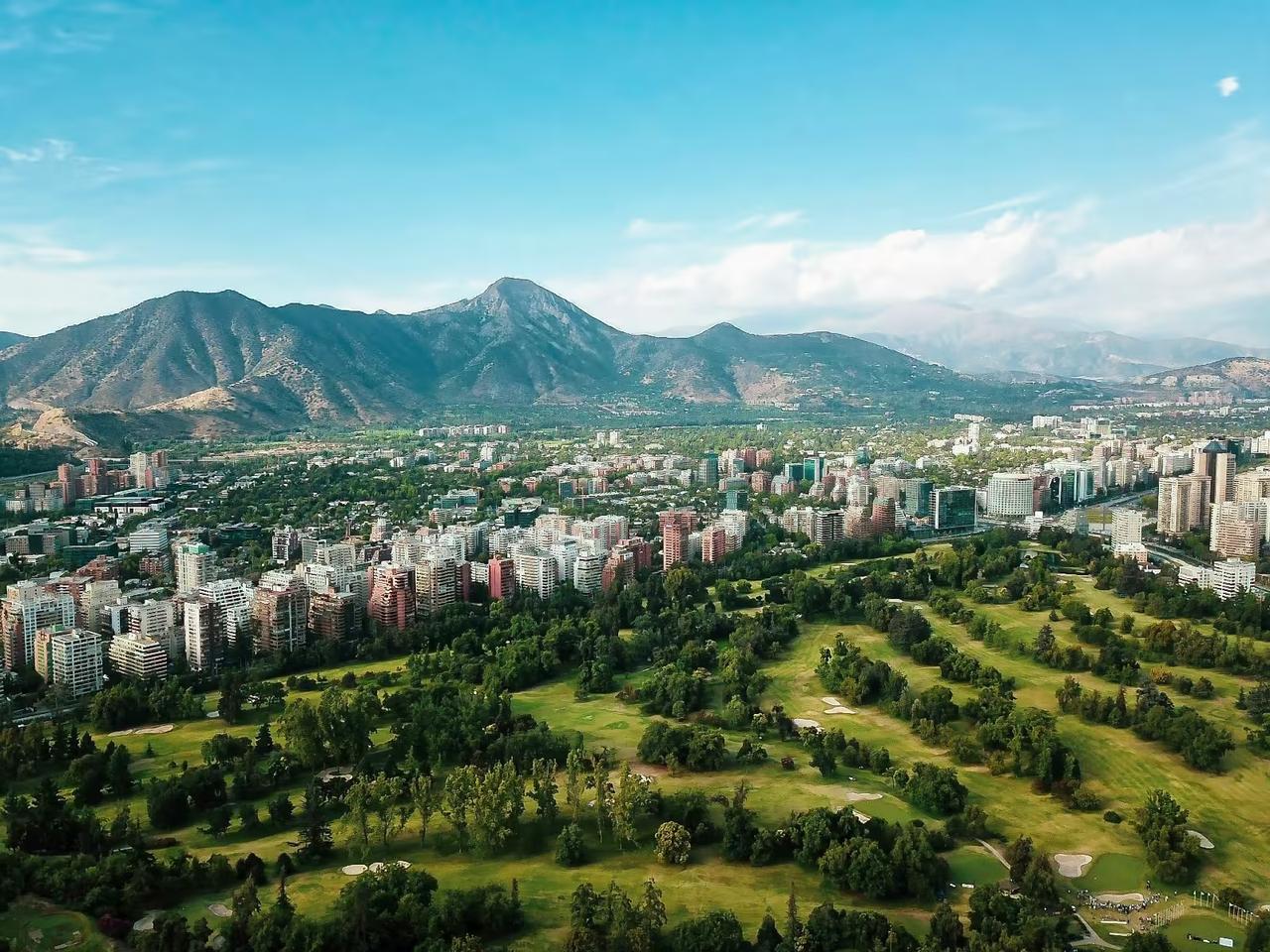

Santiago er Chiles hovedstad og økonomiske motor — en vidtstrakt metropol med ca. 7 millioner indbyggere, der ligger i en dal ved foden af de snedækkede Andesbjerge. Byen forener kolonial arkitektur med glaskláder, verdensklasse-metrolinjer med kaotiske mikrobusser og et middelhavsklima, der sætter skisportssteder og vingårde inden for 90 minutters køretur. Det er indgangsvinklen for næsten alle ekspater, der flytter til Chile — uanset om du er udstationeret af et multinationalt firma til finansdistriktet "Sanhattan" i Las Condes, starter på Pontificia Universidad Católica eller søger den lavere leveomkostning sammenlignet med Buenos Aires eller São Paulo. Santiago belønner dem, der ser forbi smoggen og trafikken: levende nabolag, en globalt konkurrencedygtig vinkultur og nem adgang til bjerge, hav og ørken gør byen til et af Sydamerikas mest levende hovedstæder.
Santiago i et overblik

- Indbyggertal
- ~7,4 millioner (større byområde, folketælling 2024)
- Region
- Región Metropolitana de Santiago
- Kendt for
- Andesbjergene som baggrund, Santiago Metro, vindistrikt inden for en time
- Gennemsnitlig husleje (1-værelses)
- CLP 350.000–700.000 afhængigt af nabolag
- Gennemsnitlig løn
- CLP 900.000–1.200.000 netto pr. måned
- Ekspatmiljø
- Stort og veletableret — betydelige grupper fra Argentina, Peru, Colombia, USA, Spanien og Tyskland
Hvorfor flytte til Santiago
- Stærk, stabil økonomi: Chile har det højeste BNP pr. indbygger på det sydamerikanske fastland, og Santiago huser hovedkvartererne for de fleste store chilenske og mange multinationale virksomheder.
- Førsteklasses infrastruktur: Santiago Metro er regionens største og mest moderne, fiberinternet er udbredt, og Arturo Merino Benítez-lufthavnen (SCL) tilbyder direkte fly til Nordamerika, Europa og resten af Latinamerika.
- Geografiskprivilegium: Du kan stå på ski i Valle Nevado eller El Colorado om morgenen og drikke Carménère på en vingård i Maipo-dalen om eftermiddagen. Stillehavskysten ved Valparaíso og Viña del Mar er kun 90 minutter væk.
- Relativt sikkert: efter latinamerikanske standarder er Santiago ret sikker — voldskriminaliteten ligger markant under gennemsnittet for regionen, selvom lommetyveri i centrum og i overfyldte metrovogne forekommer.
- Blomstrende mad- og vinkultur: Fra fiskeboderne på Mercado Central til Carménère- og Cabernet Sauvignon-vine fra nærliggende Maipo-vingårde (Concha y Toro, Santa Rita, Cousiño Macul) byder Santiago på gourmetoplevelser i verdensklasse. Byens restaurationscene er vokset hurtigt, og flere af dem findes på Latin America's 50 Best Restaurants-listen.
- Porten til Chile og videre: Santiagos centrale placering gør byen til et ideelt udgangspunkt for at udforske Atacama-ørkenen (2 timers flyvning), Patagonien (3 timers flyvning til Punta Arenas) og nabolandet Argentina via den naturskønne Libertadores-pas gennem Andesbjergene.
Boligsøgning i Santiago
Gennemsnitlige huslejer
| Nabolag | 1-værelses | 3-værelses | Karakter |
|---|---|---|---|
| Providencia | CLP 450.000–600.000 | CLP 800.000–1.200.000 | Grønt, gangvenligt, populært hos unge professionelle og ekspater |
| Las Condes | CLP 550.000–800.000 | CLP 1.000.000–1.600.000 | Eksklusive højhuse nær den finansielle korridor Sanhattan |
| Bellavista | CLP 400.000–550.000 | CLP 750.000–1.100.000 | Bohemisk nattelivsmiljø, gadekunst, Pablo Nerudas La Chascona-museum |
| Ñuñoa | CLP 380.000–520.000 | CLP 700.000–1.100.000 | Roligt boligområde, parker, stadig mere populært hos hjemmearbejdere |
| Santiago Centro | CLP 300.000–450.000 | CLP 550.000–900.000 | Historisk centrum nær La Moneda-paladset, overkommelig, men mere larmende |
| Vitacura | CLP 600.000–900.000 | CLP 1.200.000–2.000.000 | Velhavende forstad med lave bygninger, ambassader, internationale skoler |
| Lo Barnechea | CLP 500.000–750.000 | CLP 1.000.000–1.800.000 | Bjergnær forstad, adgang til skiløb, roligere familieområde |
| La Reina | CLP 450.000–650.000 | CLP 850.000–1.300.000 | Boligområde, grønne områder, The Grange School |
Sådan finder du bolig
- Portal Inmobiliario (portalinmobiliario.com): Den dominerende boligportal i Chile — filtrer efter comuna, pris og antal værelser. De fleste udlejere og alle større ejendomsmæglere annoncerer her.
- Yapo.cl: En generel annonceside med et omfattende udlejningsafsnit; flere direkte udlejer-annoncer og lavere priser, men mindre sikkerhed for kvalitet.
- Facebook-grupper: "Arriendos Santiago" og "Expats in Santiago" er aktive; korttidslejemål og værelsesdeling dukker op dagligt.
- Ejendomsmæglere: I Las Condes, Vitacura og Providencia håndterer mæglere som Engel & Völkers og Sotheby's International Realty Chile dyrere møblerede lejemål.
- Korttidslejemål med møblement: Airbnb, Booking.com og lokale sider som ChileDepartamentos.com tilbyder möblerede måned-til-måned-lejemål, som er ideelle i din første tid.
Tips til ekspater
- Udlejere i velhavende områder (Las Condes, Vitacura) kræver ofte en fiador (kautionist med chilensk ejendom) eller en medunderskriver. Har du ikke en, accepterer nogle udlejere 6 måneders husleje forudbetalt eller en garantiordning fra et chilensk forsikringsselskab.
- Dit RUT (Rol Único Tributario — det nationale skatte-ID-nummer) er nødvendigt for at underskrive en lejekontrakt, åbne en bankkonto og opsætte forsyninger. Ansøg hos Servicio de Impuestos Internos (SII) så hurtigt som muligt efter ankomsten.
- Husk altid at afklare, om gastos comunes (fællesudgifter til bygningens vedligeholdelse) er inkluderet i den oplyste husleje. I nyere bygninger kan de udgøre CLP 50.000–120.000 om måneden.
- Møblerede lejemål er almindelige i Providencia, Las Condes og Santiago Centro og er ideelle i dine første måneder, mens du falder til.
- Lejekontrakter i Chile løber normalt over 12 måneder, men 6-måneders lejemål kan undertiden forhandles i Santiago Centro. Brud på lejekontrakten koster typisk én måneds husleje i bod.
- Forsyninger er næsten aldrig inkluderet i huslejen. Budgettér separat med el (Enel Distribución, CLP 15.000–35.000/md.), vand (Aguas Andinas, CLP 8.000–15.000/md.), gas (flaske eller ledning, CLP 5.000–15.000/md.) og internet (CLP 20.000–35.000/md.).
Nabolagsguide
- Providencia: Standard-ankomstområdet for mange engelsktalende ekspater. Træbevoksede gader, Café Coffee Day og lokale kaffebarer, metrolinje 1 og 5 samt indkøbscentret Costanera Center i den østlige ende. Mid-range huslejer, god gangvenlighed og en sikker atmosfære dag og nat.
- Barrio Bellavista: Santiagos bohemiske hjerte, der strækker sig på begge sider af Mapocho-floden mellem Providencia og Santiago Centro. Packed med restauranter, barer, gallerier og gadekunst. Her finder du La Chascona, et af Pablo Nerudas tre huse. Roligere på den østlige side mod Cerro San Cristóbal. Huslejerne er moderate, men larm kan være et problem i weekenderne.
- Las Condes (Sanhattan): Finansdistriktet langs Av. Apoquindo, domineret af det 300 meter høje Costanera Center — Sydamerikas højeste bygning. Virksomhedsudstationerede med relocation-pakker ender ofte her. Højhuse, fremragende sikkerhed, tæt på internationale skoler, men blandt byens dyreste huslejer.
- Ñuñoa: Øst for Providencia, i stigende grad beskrevet som Santiagos Brooklyn — unge familier, craft bryggerier, restaurantmiljøet omkring Plaza Ñuñoa og lavere huslejer end den vestlige nabo. Metrolinje 3 og linje 6 betjener området. God balance mellem plads, overkommelige priser og atmosfære.
- Barrio Lastarria: En lille, elegant lomme ved foden af Cerro Santa Lucía i Santiago Centro. Museer, uafhængige biografer, vinbarer og boutiquehoteller. Begrænset boligudvalg og premiumleje for Centro, men med en uovertruffen karakter for kulturentusiaster.
- Vitacura: Den mest velhavende comuna i Santiago, hjemsted for de fleste ambassader, luksusbutikker langs Av. Alonso de Córdova og Bicentenario-parken. Næsten udelukkende lave huse og byhuse. Bedst for familier, der ønsker plads, ro og nærhed til internationale skoler.
- Santiago Centro: Det historiske og regeringsmæssige hjerte, forankret af La Moneda-paladset, Plaza de Armas og fiskemarkedet Mercado Central. De billigste lejepriser i byen, rig arkitektur, men mere gadekriminalitet samt mere larm og smog.
- Lo Barnechea: En stor comuna nær bjergene nordøst for Las Condes, der inkluderer adgangsvejen til skisportsstederne Valle Nevado og Farellones. De boligmæssige områder omkring Av. La Dehesa tilbyder rummelige huse og kædehuse til priser lavere end Vitacura. Populært blandt familier, der ønsker nærhed til Andesbjergene og den internationale skole Nido de Águilas. Begrænset Metro-adgang — du er afhængig af busser og biler.
- La Reina: En stille, overvejende boligpræget comuna øst for Ñuñoa og nord for Peñalolén. Kendt for sine store parker (Parque Mahuida), træbevoksede gader og The Grange School. Lejerne er moderate, og området tiltrækker chilenske fagfolk og expat-familier på langt ophold, der ønsker en forstadsfølelse uden Vitacuras prisniveau.
Leveomkostninger i Santiago
Månedligt budgetoverslag
| Kategori | Budgetinterval |
|---|---|
| Leje (1-værelses, centralt) | CLP 400.000–700.000 |
| Forsyninger (el, vand, gas) | CLP 40.000–80.000 |
| Internet + mobilabonnement | CLP 25.000–40.000 |
| Dagligvarer | CLP 200.000–320.000 |
| Transport (Bip!-kort) | CLP 35.000–55.000 |
| Spise ude (4 gange/md.) | CLP 60.000–120.000 |
| Fritid / fitnesscenter | CLP 50.000–100.000 |
| Total | CLP 810.000–1.415.000 |
Daglige udgifter
- Kaffe (café corto eller espresso): CLP 1.500–2.500
- Frokost på en fuente de soda (uformel lokal diner): CLP 4.000–7.000
- Månedligt transportkort (Tarjeta Bip!): CLP 35.000–60.000 afhængigt af antal ture
- Øl (schop, fadøl) på en bar i Bellavista: CLP 3.500–6.000
- Biografbillet: CLP 4.500–7.000
- Completo (chilensk hotdog med avokado, tomat, mayo): CLP 2.500–4.500
- Empanada de pino fra et lokalt bageri: CLP 1.500–3.000
- Grundlæggende dagligvarer (1 l mælk): CLP 1.000–1.300; brød (marraqueta, 1 stk.): CLP 150–300; 1 kg kyllingebryst: CLP 5.000–7.500
- Fitnesscenter (mellemklassekæde som SmartFit eller Bodytech): CLP 30.000–55.000/md.
- Hushjælp (nana, deltids): CLP 15.000–25.000 pr. dag
Transport i Santiago
- Santiago Metro: Syv farvekodede linjer, 143 stationer og bredt anerkendt som det bedste metrosystem i Latinamerika. En enkelt tur koster CLP 750–950 afhængigt af tidspunktet. Tank kredit op på et Tarjeta Bip!-kort, det fælles smartkort, der også virker i busser og på svævebanen ved Cerro San Cristóbal. Linje 1 (den røde linje) kører øst–vest gennem byens hjerte fra Los Dominicos til San Pablo og forbinder Las Condes, Providencia, Baquedano og Santiago Centro — det er den linje, du vil bruge mest.
- Transantiago-busser (micros): Busnetværket er omfattende og bruger det samme Tarjeta Bip!-kort. Busserne kan være overfyldte i myldretiden, og ruterne kan være forvirrende i starten — brug Moovit- eller Google Maps-appen til rutevejledning i realtid. En bustur koster det samme som Metroen med Bip!, og omstigning mellem bus og Metro inden for 2 timer giver rabat.
- Cykling: Santiago har over 300 km ciclovías (dedikerede cykelstier), særligt stærkt i Providencia, Ñuñoa og langs Mapocho-floden. Byens cykeldelingssystem, Bike Santiago, opererer i flere comunas.
- Bilkørsel: Trafikken på ringvejen Vespucio og langs Av. Providencia er tung i myldretiden (kl. 7.30–9.30 og 17.30–19.30). Betalt parkering er standard i kommercielle områder (CLP 2.000–3.500/time). Udenlandske kørekorter er gyldige for turister; fastboende skal omkonvertere deres kørekort hos deres comunas Municipalidad. Santiagos gadenet er relativt logisk — avenidas kører øst–vest, og calles kører nord–syd i de fleste comunas. Myldretidsrestriktioner baseret på nummerplader (restricción vehicular) gælder på hverdage i vintermånederne.
- Taxaer og ridesharing: Gule taxaer er talrige og har taxameter (startpris CLP 400, ca. CLP 300 pr. 200 meter). Uber, Cabify og DiDi opererer alle i Santiago og er generelt billigere og mere pålidelige end taxaer på gaden. De fleste expats bruger ridesharing som standard.
- Lufthavn: Arturo Merino Benítez International Airport (SCL), ca. 20 km nordvest for centrum, håndterer direkte flyvninger til Madrid, Paris, New York, Miami, Atlanta, Dallas og over hele Latinamerika. Sæsonbestemt eller forbundet service er tilgængelig til Sydney og Auckland. CentroPuerto-bussen og officielle taxaer og transportvarevogne forbinder terminalen med byen på 25–45 minutter.
- Intercity: TurBus og Pullman Bus kører luksusbusser til Valparaíso (1,5 timer), Viña del Mar (1,5 timer), Concepción (6 timer) og Mendoza, Argentina (6–8 timer, naturskøn bjergsrute). For langdistancerejser inden for Chile tilbyder LATAM, Sky Airline og JetSMART hyppige indenrigsflyvninger fra SCL.
Sundhedsvæsen i Santiago
- Hospitaler og klinikker: Clínica Las Condes, Clínica Alemana (i Vitacura) og Hospital Clínico Universidad de Chile er de højest rangerede faciliteter. Clínica Las Condes og Clínica Alemana har internationale patientafdelinger med engelsktalende personale.
- Offentligt vs. privat system: Fastboende bidrager til enten Fonasa (Fondo Nacional de Salud — den offentlige sundhedsfond) eller en Isapre (privat sygeforsikring). Fonasa-dækning er automatisk for lønmodtagere og tilbyder subsidieret behandling på offentlige hospitaler og tilknyttede klinikker. Isapre-planer koster mere, men giver adgang til private klinikker med kortere ventetid.
- Sådan fungerer Fonasa: Fonasa inddeler berettigede i tramos (indkomstgrupper A til D). Tramo A er gratis (for lavindkomstpersoner); højere tramos betaler moderate egenbetalinger. Selv ved den højeste tramo koster en speciallægekonsultation på et offentligt hospital betydeligt mindre end et besøg på en privat klinik.
- Sådan fungerer Isapre-planer: Isapres (som Banmédica, Colmena, Consalud og Cruz Blanca) tilbyder skræddersyede planer, hvor du vælger dit dækningsniveau, egenbetalingsprocent og udbydernetværk. Planer prissættes i UF (Unidad de Fomento — en chilensk inflationsindekseret enhed; 1 UF er ca. CLP 38.000–39.000 i 2026). Læs det med småt om ventetider for allerede eksisterende sygdomme, som kan være 6–18 måneder.
- Engelsktalende læger: Let tilgængelige på Clínica Las Condes, Clínica Alemana og det britiske hospital (Hospital Británico). I det offentlige system er engelsktalende personale mindre almindeligt, selvom yngre læger på Hospital Clínico Universidad de Chile ofte taler noget engelsk.
- Apoteker: Cruz Verde, Salcobrand og Ahumada er de tre store kæder med lokaler på næsten enhver gade i det centrale og østlige Santiago. Mange lægemidler, der kræver recept andre steder, sælges over disk i Chile, selvom antibiotika og stærke smertestillende midler kræver recept. Apoteker er typisk åbne indtil kl. 22, med mindst ét pr. nabolag, der har åbent døgnet rundt (farmacia de turno — det vagthavende apotek skifter).
- Nødnummer: 131 for ambulance (SAMU). 133 for politi (Carabineros). 132 for brandvæsen (Bomberos).
- Sygeforsikringsomkostninger: Fonasa-bidrag trækkes fra din løn med 7 % af den skattepligtige indkomst. Isapre-planer varierer meget — en basal privat plan starter omkring CLP 150.000–250.000/md. for en sund person i 30'erne, mens omfattende planer med fuld klinikadgang kan overstige CLP 500.000/md. Isapre-prisfastsættelse tager højde for alder, køn og allerede eksisterende sygdomme, så sammenlign planer omhyggeligt.
- Tandpleje: Private tandklinikker er udbredte og overkommelige sammenlignet med Nordamerika og Europa. En almindelig tandrensning koster CLP 30.000–60.000. DENTISTAS Chile og Dentex er to store kæder med lokaler over hele byen.
Fa en personlig flytteplan
Skriv din e-mail, sa sender vi en skraeddersyet tjekliste plus tre tilbud fra godkendte flyttefirmaer.
Kultur og livsstil
- Middelhavsklima: Varme, tørre somre (december–marts, ofte over 32 °C) og kølige, våde vintre (juni–september, 3–12 °C). Vinterens temperaturinversioner fanger smog i Santiagos bassin — luftkvaliteten kan være dårlig fra maj til august. Foråret (oktober–november) er den mest behagelige årstid.
- Jordrystelsesberedskab: Chile ligger på Stillehavsringen. Santiago oplever hyppige rystelser og lejlighedsvise stærke jordskælv. Moderne bygninger følger strenge seismiske normer; lær evakueringsruterne i din bygning, og hav et beredskabssæt.
- Andesbjergene som baggrund: På klare vintermorgener er de snedækkede tinder synlige fra de fleste østlige nabolag. Cerro San Cristóbal byder på panoramaudsigt over byen og bjergene — nå toppen med kabelbane, svævebane (teleferico) eller til fods.
- Sociale skikke: Chilenere er varme og gæstfrie, men mere reserverede end naboer som argentinere. Et enkelt kys på højre kind er den almindelige hilsen mellem kvinder og mellem mænd og kvinder; mænd trykker hånd. Invitationer til et chilensk hjem til en barbecue (asado) er et tegn på ægte venskab — medbring vin eller en dessert. Drikkepenge på restauranter er 10 % og er ofte allerede inkluderet på regningen; tjek altid, inden du tilføjer ekstra.
- Vin- og skikultur: Maipo- og Casablanca-vindalene ligger 45–90 minutter fra byen. Skisæsonen løber fra juni til september i Valle Nevado, El Colorado og La Parva (alle 1–2 timer fra Las Condes med bil eller shuttle).
- Fodbold (soccer) passion: Santiago er hjemsted for Chiles to største rivaliserende klubber — Universidad de Chile ("U") og Colo-Colo. Kampdage på Estadio Nacional eller Estadio Monumental er larmende, farverige og intense. Køb billetter gennem Puntoticket; undgå generel adgang-sektionerne (galería), hvis du foretrækker en roligere oplevelse.
- Kulturelle institutioner: Museo Nacional de Bellas Artes, Museo de la Memoria y los Derechos Humanos (der dokumenterer Pinochet-æraen) og Museum of Pre-Columbian Art ligger alle i eller nær Santiago Centro og er gratis eller billige. GAM (Centro Gabriela Mistral) i Barrio Lastarria afholder koncerter, teater og kunstudstillinger året rundt.
Mad og spisesteder
- Lokale specialiteter: Pastel de choclo (majs- og kødtærte), empanadas de pino (oksekøds- og løgture), cazuela (kød- og grøntsagssuppe) og completoen — en overfyldt hotdog med palta (avokado), tomate (hakket tomat) og mayonesa.
- Mercado Central: Det centrale fiskemarked er en Santiago-institution. Kom før middag for den ferskeste fisk og skaldyr; den tilstødende Mercado Vega er byens hovedgrøntmarked.
- Pisco sour: Chiles nationale cocktail (pisco-druebrandy, citronsaft, sukker, æggehvide) serveres overalt. Prøv for en lokal øl håndbryg fra Capital, Szot eller Rothhammer, alle brygget i Santiago.
- Bedste spiseområder: Bellavista for livlige restauranter og terrasser, Barrio Lastarria for opscalede bistroer, og Calle Av. Irarrázaval i Ñuñoa for overkommelige lokale spisesteder. Komplekset BordeRío i Vitacura har luksuriøs spisning langs vandet ved Mapocho.
- Once (eftermiddagste): En dybt chilensk tradition — ca. kl. 17–19 samles familier og kolleger til "once" (udtales OHN-seh), et let måltid med brød, palta, ost, skinke og te eller kaffe. Mange arbejdspladser serverer once som et uformelt team-øjeblik.
- Supermarkedskæder: Jumbo (opscale, gode importerede produkter), Líder (ejet af Walmart, mellemklasse, udbredt) og Santa Isabel (budget). For friske råvarer tilbyder La Vega Central-markedet og ferias libres (gademarkeder, der roterer gennem nabolagene på forskellige ugedage) de bedste priser på frugt og grøntsager.
Expat-fællesskabet
- Meetup og Facebook: "Expats in Santiago" på Facebook har over 30.000 medlemmer og arrangerer regelmæssige sociale arrangementer. Meetup.com lister aktive sprogudvekslings- og vandrergrupper.
- Chile Global og ANDECH (Asociación Nacional de Extranjeros en Chile): Netværksorganisationer, der forbinder udenlandske fagfolk.
- Sprogudvekslinger: Spanglish Chile og Mundo Lingo afholder ugentlige arrangementer på barer i Bellavista og Providencia, hvor lokale og expats øver engelsk og spansk over drinks.
- Kvindernetværk: "Expat Women in Santiago" på Facebook er et støttende fællesskab til netværk og råd om at bo og integrere sig.
- Sport og friluftsliv: Sendero de Chiles vandrenet har ruter inden for bygrænsen. Løbere og gående strømmer til Parque Metropolitano (det enorme parkområde omkring Cerro San Cristóbal), Parque Bicentenario i Vitacura og cykelstien Parque Florencio Constantin langs Mapocho. Vandrergrupper i weekenden, organiseret via Facebook, besøger regelmæssigt Cajón del Maipo, en dramatisk kløft 90 minutter sydøst for byen.
Jobmarkedet i Santiago
- Hovedindustrier: Mineindustri-tjenester og hovedkvarterer (BHP, Codelco, Antofagasta Minerals), finans og bankvæsen (Banco de Chile, Banco Santander, BCI), teknologiske startups (ekspanderer hurtigt i "Sanhattan" og Providencias co-working-rum), vedvarende energi og agribusiness/vineksport.
- Større arbejdsgivere: Codelco (statligt kobberselskab), BHP Chile, Banco de Chile, LATAM Airlines' hovedkvarter, Falabella-detailkæden samt en voksende tilstedeværelse af Google, Microsoft og Amazon Web Services.
- Gennemsnitlige lønninger efter branche:
| Branche | Månedlig nettoløn (CLP) |
|---|---|
| IT / softwareudvikling | 1.500.000–3.000.000 |
| Finans / bankvæsen | 1.200.000–2.800.000 |
| Engelskundervisning | 600.000–1.000.000 |
| Mineingeniørarbejde | 2.000.000–4.500.000 |
| Marketing / kommunikation | 800.000–1.600.000 |
| Administrativt / support | 500.000–900.000 |
| Vedvarende energi / rådgivning | 1.800.000–3.500.000 |
| Hotel og turisme | 500.000–850.000 |
- Ressourcer til jobsøgning: LinkedIn er den primære platform til professionelle stillinger. Laborum.com og Trabajando.cl er de vigtigste chilenske jobportaler. Til stillinger som engelsklærer slår Dave's ESL Cafe og lokale institutter som The Anglo og Instituto Chileno Británico de Cultura opslag op året rundt.
- Arbejdskultur: Chilensk kontorkultur er formel – brug 'usted' over for ledere og nye kolleger, indtil du inviteres til at skifte til 'tú'. Arbejdstiden er typisk kl. 9 til 18.30 med en frokostpause omkring kl. 13–14. Punktlighed forventes i virksomhedsmæssige sammenhænge, mens sociale begivenheder typisk starter 15–30 minutter for sent. 13. løn (aguinaldo) er ikke lovpligtig, men almindelig i formel beskæftigelse.
- Freelance og remote work: Chile introducerede et digital nomad-visum i 2022, der giver remote-arbejdere mulighed for at opholde sig i op til et år. Santiagos co-working-miljø er vokset tilsvarende – WeWork har lokaler i Las Condes og Providencia, og lokale kæder som Cowork Chile og Urban Station tilbyder fleksible arbejdspladser.
Uddannelse i Santiago
- Internationale skoler: Santiago har et stort udvalg. Bemærkelsesværdige muligheder omfatter Nido de Águilas (international skole, IB-læreplan, i Lo Barnechea), Santiago College (IB, i Las Condes), The Grange School (britisk læreplan, i La Reina) og Colegio Internacional SEK (IB, i Vitacura). Skolepengene ligger på CLP 4.000.000–8.000.000 om året afhængigt af klassetrin. Optagelse kan være konkurrencepræget – ansøg i god tid, helst inden det chilenske skoleår starter i marts.
- Universiteter: Universidad de Chile (offentlig, rangeret som nr. 1 nationalt) og Pontificia Universidad Católica de Chile (privat, toprangeret inden for forskning) er de mest prestigefyldte. Begge tilbyder kandidatuddannelser på engelsk og tiltrækker internationale studerende. Universidad Diego Portales og Universidad Adolfo Ibáñez er også velansete inden for business, jura og kommunikation. Akademiskåret i Chile løber fra marts til december med en vinterferie i juli.
- Sprogskoler: Berlitz Chile, Instituto Chileno Francés og Instituto Cervantes tilbyder spanskundervisning. Pontificia Universidad Católica driver et velanset program i spansk som fremmedsprog for indkommende internationale studerende og expats. Private lærere tager CLP 15.000–30.000 i timen og kan findes via Superprof.cl eller lokale Facebook-grupper.
Flyttetjekliste for Santiago
- Bekræft din visumtype (midlertidig opholdstilladelse til arbejde, studerendevisum eller Mercosur-aftalen, hvis relevant), og indsend ansøgningen via Servicio Nacional de Migraciones (Extranjería)-portalen eller på den chilenske ambassade i dit land.
- Få en straffeattest (certificado de antecedentes penales) fra dit hjemland, apostilleret eller legaliseret – kræves til visum og senere til RUT.
- Tegn en international sundhedsforsikring, der dækker dig, indtil du er tilmeldt Fonasa eller en Isapre-plan.
- Undersøg nabolag og book midlertidig indkvartering (Airbnb eller møbleret korttidslejlighed) til de første 4–6 uger, mens du leder efter lejlighed.
- Lav certificerede kopier og apostiller af dine universitetsgrader, ægteskabsattest og fødselsattest – de skal bruges til jobsøgning, skoleindskrivning og visumbehandling.
- Hvis du tager et kæledyr med, skal du have en dyrlægeerklæring og bevis på rabiesvaccination mindst 30 dage før afrejse samt bekræfte kravene hos SAG (Servicio Agrícola y Ganadero).
- Giv din hjemmebank besked om din flytning og opret onlineadgang til at administrere konti på afstand. Bekræft, om din bank har et chilensk korrespondentforbund for at reducere overførselsgebyrer.
- Ansøg om et internationalt kørekort (IDP), hvis du planlægger at køre i de første uger, inden du omkonverterer dit kørekort.
- Registrer din adresse hos den nærmeste Policía de Investigaciones (PDI) – udlændinge skal registrere deres chilenske adresse inden for 30 dage efter ankomst.
- Ansøg om dit RUT (Rol Único Tributario) hos SII-kontoret (Servicio de Impuestos Internos) i din comuna. Medbring pas, visum og bevis på adresse.
- Få et chilensk mobilnummer – Movistar, Entel og WOM tilbyder forudbetalte og abonnementsplaner. Et forudbetalt SIM-kort koster CLP 2.000–5.000 og kan købes på ethvert apotek eller kiosk.
- Få et Tarjeta Bip! på enhver Metro-station og lad det op med kredit til busser og metroture.
- Åbn en bankkonto – Banco de Chile, Santander og BCI er de vigtigste muligheder. Du skal bruge dit RUT, pas, dokumentation for indkomst eller ansættelseskontrakt samt bevis på adresse.
- Download ONEMI's beredskabsapp og Moovit- eller Google Maps-transitapp – uundværlige til daglig navigation og jordskælvadvarsler.
- Få dit Cédula de Identidad (nationalt ID-kort) hos Registro Civil. Det er obligatorisk for alle beboere og bruges til næsten enhver transaktion i Chile – bank, sundhedsvæsen, kontrakter og indenrigsfly.
- Tilmeld dig sygesikringssystemet: registrer dig hos Fonasa (offentlig) via din arbejdsgiver eller selvstændigt, eller vælg en Isapre-plan (privat), der passer til dit budget og dine dækningsbehov.
- Tilmeld dig en privat pensionskasse (AFP – Administradora de Fondos de Pensiones), hvis du er ansat i Chile; obligatoriske 10 % bidrag trækkes direkte fra din løn.
- Find langtidsbolig. Underskriv en lejekontrakt (typisk 12 måneder), arranger fiador eller kaution, og opret forsyningsabonnementer: strøm (Chilectra/Enel i det meste af Santiago), vand (Aguas Andinas), gas og internet (Movistar, VTR eller Claro).
- Registrer dit udenlandske kørekort hos Dirección de Tránsito i din comuna for at få et chilensk kørekort. Du skal bruge dit Cédula, en lægeerklæring og en teoretisk prøve på spansk.
- Registrer dig til at stemme på din ambassade, hvis dit land tillader stemmer fra udlandet – mange gør, og det holder dig forbundet med hjemlandets demokratiske liv.
- Udforsk byen – kør med kabelbanen op ad Cerro San Cristóbal, gå gennem Barrio Lastarria, nyd en pisco sour i Bellavista, og køb ind på La Vega Central.
Relaterede guides
- Flytning til Chile — omfattende landeguide om visum, skatter og nationale systemer
- Flytning til Valparaíso — den farverige havneby 90 minutter vest for Santiago
- Flytning til Viña del Mar — Chiles 'Haveby' ved Stillehavskysten