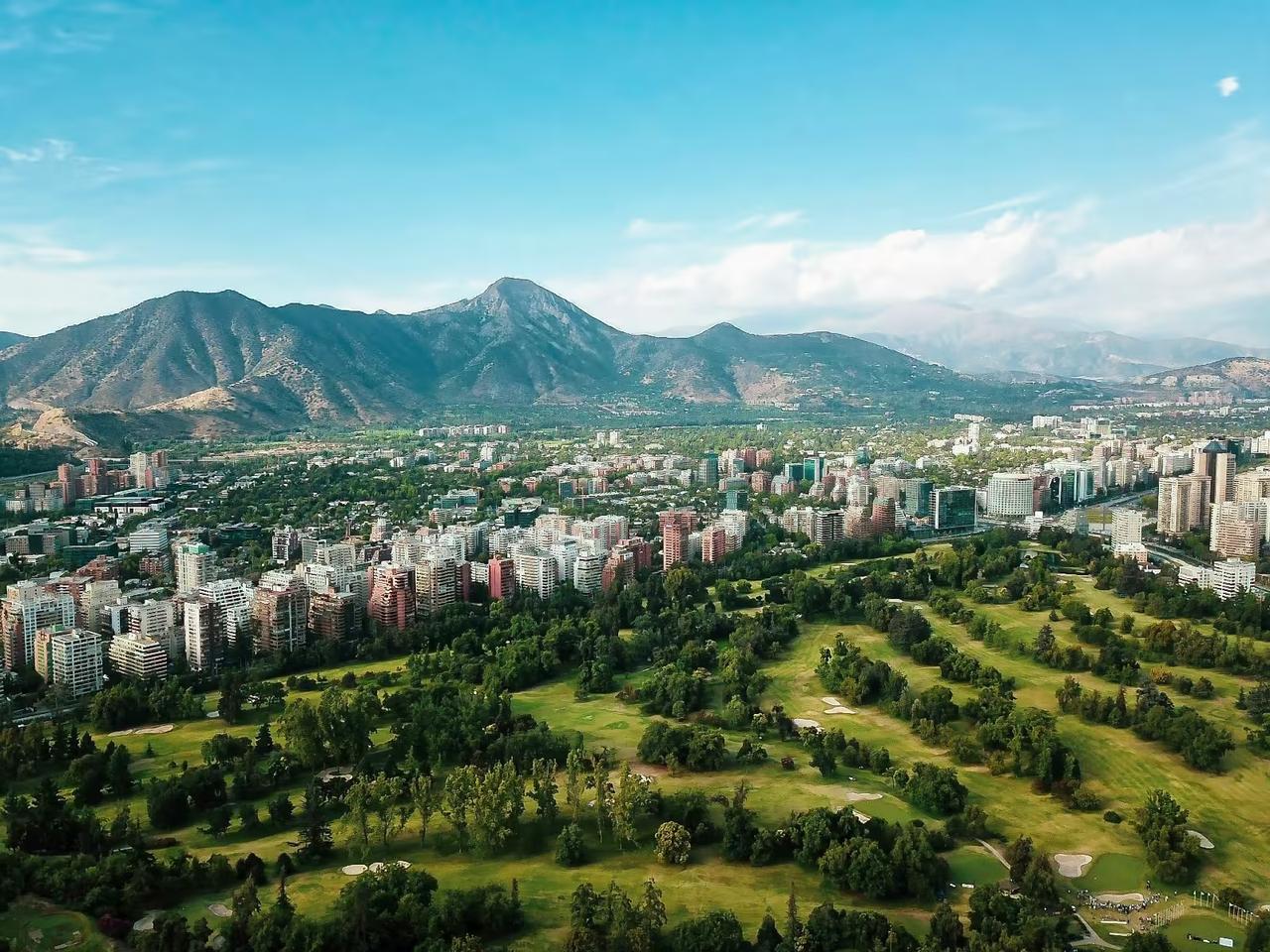
Santiago is Chile's capital and economic engine, a sprawling metropolis of roughly 7 million people nestled in a valley beneath the snow-capped Andes. The city blends colonial architecture with glass towers, world-class metro lines with chaotic micro buses, and a Mediterranean climate that puts ski resorts and vineyards within a 90-minute drive. It is the gateway for nearly every expat moving to Chile — whether you are transferred by a multinational to the "Sanhattan" financial district in Las Condes, enrolling at the Pontificia Universidad Católica, or chasing the lower cost of living compared to Buenos Aires or São Paulo. Santiago rewards those who look past the smog and traffic: vibrant neighborhoods, a globally competitive wine culture, and easy access to mountains, ocean, and desert make it one of South America's most livable capitals.
Santiago at a Glance

- Population
- ~7.4 million (metro area, 2024 census)
- Region
- Región Metropolitana de Santiago
- Known For
- Andes mountain backdrop, Santiago Metro, wine country within an hour
- Average Rent (1BR)
- CLP 350,000–700,000 depending on neighborhood
- Average Salary
- CLP 900,000–1,200,000 monthly net
- Expat Community
- Large and established — significant contingents from Argentina, Peru, Colombia, the US, Spain, and Germany
Why Move to Santiago
- Strong, stable economy: Chile has the highest GDP per capita in mainland South America, and Santiago hosts the headquarters of most major Chilean and many multinational firms.
- First-world infrastructure: The Santiago Metro is the largest and most modern in the region, fiber internet is widely available, and Arturo Merino Benítez Airport (SCL) connects you nonstop to North America, Europe, and across Latin America.
- Geographic privilege: You can ski at Valle Nevado or El Colorado in the morning and drink Carménère in a Maipo Valley vineyard that afternoon. The Pacific coast at Valparaíso and Viña del Mar is 90 minutes away.
- Relatively safe: By Latin American standards Santiago is quite safe — violent crime rates are well below regional averages, though petty theft in the city center and on crowded metro cars does occur.
- Thriving food and wine scene: From the seafood stalls of Mercado Central to the Carménère and Cabernet Sauvignon of nearby Maipo Valley wineries (Concha y Toro, Santa Rita, Cousiño Macul), Santiago rewards gourmands. The city's restaurant scene has expanded rapidly, with several entries on Latin America's 50 Best Restaurants list.
- Gateway to Chile and beyond: Santiago's central location makes it an ideal base for exploring the Atacama Desert (2-hour flight), Patagonia (3-hour flight to Punta Arenas), and neighboring Argentina via the scenic Libertadores pass through the Andes.
Finding Housing in Santiago
Average Rents
| Neighborhood | 1-Bedroom | 3-Bedroom | Character |
|---|---|---|---|
| Providencia | CLP 450,000–600,000 | CLP 800,000–1,200,000 | Leafy, walkable, popular with young professionals and expats |
| Las Condes | CLP 550,000–800,000 | CLP 1,000,000–1,600,000 | Upscale high-rises near the Sanhattan financial corridor |
| Bellavista | CLP 400,000–550,000 | CLP 750,000–1,100,000 | Bohemian nightlife hub, street art, Pablo Neruda's La Chascona museum |
| Ñuñoa | CLP 380,000–520,000 | CLP 700,000–1,100,000 | Quiet residential area, parks, increasingly popular with remote workers |
| Santiago Centro | CLP 300,000–450,000 | CLP 550,000–900,000 | Historic core near La Moneda Palace, affordable but noisier |
| Vitacura | CLP 600,000–900,000 | CLP 1,200,000–2,000,000 | Wealthy low-rise suburb, embassies, international schools |
| Lo Barnechea | CLP 500,000–750,000 | CLP 1,000,000–1,800,000 | Mountain-adjacent suburb, skiing access, quieter family area |
| La Reina | CLP 450,000–650,000 | CLP 850,000–1,300,000 | Residential, green spaces, The Grange School |
How to Find Housing
- Portal Inmobiliario (portalinmobiliario.com): The dominant listing site in Chile — filter by comuna, price, and number of bedrooms. Most landlords and all major real-estate agencies post here.
- Yapo.cl: A general classifieds site with a substantial rentals section; more direct-owner listings and lower prices but less vetting.
- Facebook groups: "Arriendos Santiago" and "Expats in Santiago" are active; short-term and room-share options appear daily.
- Real-estate agencies: In Las Condes, Vitacura, and Providencia, agencies like Engel & Völkers and Sotheby's International Realty Chile handle higher-end furnished apartments.
- Short-term furnished rentals: Airbnb, Booking.com, and local sites like ChileDepartamentos.com offer month-to-month furnished options ideal for your arrival period.
Tips for Expats
- Landlords in upscale areas (Las Condes, Vitacura) often require a fiador (guarantor with Chilean property) or a co-signer. If you do not have one, some landlords accept 6 months' rent paid in advance or a guarantee policy from a Chilean insurance company.
- Your RUT (Rol Único Tributario — the national tax ID number) is essential for signing a lease, opening a bank account, and setting up utilities. Apply at the Servicio de Impuestos Internos (SII) as soon as you arrive.
- Always confirm whether gastos comunes (building maintenance fees) are included in the listed rent. In newer buildings they can add CLP 50,000–120,000 per month.
- Furnished apartments are common in Providencia, Las Condes, and Santiago Centro and are ideal for your first months while you settle in.
- Rental contracts in Chile typically run 12 months, but 6-month leases are sometimes negotiable in Santiago Centro. Breaking a lease early usually costs one month's rent as a penalty.
- Utilities are almost never included in rent. Budget separately for electricity (Enel Distribución, CLP 15,000–35,000/month), water (Aguas Andinas, CLP 8,000–15,000/month), gas (bottled or piped, CLP 5,000–15,000/month), and internet (CLP 20,000–35,000/month).
Neighborhoods Guide
- Providencia: The default landing pad for many English-speaking expats. Tree-lined streets, Café Coffee Day and local coffee shops, Metro Lines 1 and 5, and the Costanera Center mall at the eastern edge. Mid-range rents, good walkability, and a safe feel day and night.
- Barrio Bellavista: Santiago's bohemian heart, straddling the Mapocho river between Providencia and Santiago Centro. Packed with restaurants, bars, galleries, and street art. Home to La Chascona, one of Pablo Neruda's three houses. Quieter on the eastern side toward Cerro San Cristóbal. Rents are moderate but noise can be an issue on weekends.
- Las Condes (Sanhattan): The financial district along Av. Apoquindo, dominated by the 300-meter Costanera Center — the tallest building in South America. Corporate expats on relocation packages tend to land here. High-rise living, excellent security, close to international schools, but among the most expensive rents in the city.
- Ñuñoa: East of Providencia, increasingly described as Santiago's Brooklyn — young families, craft breweries, Plaza Ñuñoa restaurant scene, and lower rents than its western neighbor. Metro Line 3 and Line 6 serve the area. Good balance of space, affordability, and atmosphere.
- Barrio Lastarria: A small, elegant pocket at the foot of Cerro Santa Lucía in Santiago Centro. Museums, indie cinemas, wine bars, and boutique hotels. Limited housing stock and premium rents for the Centro, but unmatched character for culture lovers.
- Vitacura: The wealthiest comuna in Santiago, home to most embassies, luxury retail along Av. Alonso de Córdova, and the Bicentenario Park. Almost exclusively low-rise houses and townhouses. Best for families who want space, quiet, and proximity to international schools.
- Santiago Centro: The historic and governmental heart, anchored by La Moneda Palace, Plaza de Armas, and the Mercado Central seafood market. Cheapest rents in the city, rich architecture, but higher street crime and heavier noise and smog.
- Lo Barnechea: A large, mountain-adjacent comuna northeast of Las Condes that includes the ski-resort access road to Valle Nevado and Farellones. The residential parts around Av. La Dehesa offer spacious houses and townhouse complexes at prices lower than Vitacura. Popular with families who want proximity to the Andes and Nido de Águilas international school. Limited Metro access — you will rely on buses and cars.
- La Reina: A quiet, predominantly residential comuna east of Ñuñoa and north of Peñalolén. Known for its large parks (Parque Mahuida), tree-lined streets, and The Grange School. Rents are moderate, and the area attracts Chilean professionals and long-term expat families who want a suburban feel without the price tag of Vitacura.
Cost of Living in Santiago
Monthly Budget Breakdown
| Category | Budget Range |
|---|---|
| Rent (1BR, central) | CLP 400,000–700,000 |
| Utilities (electricity, water, gas) | CLP 40,000–80,000 |
| Internet + mobile plan | CLP 25,000–40,000 |
| Groceries | CLP 200,000–320,000 |
| Transport (Bip! card) | CLP 35,000–55,000 |
| Dining out (4x/month) | CLP 60,000–120,000 |
| Leisure / gym | CLP 50,000–100,000 |
| Total | CLP 810,000–1,415,000 |
Day-to-Day Costs
- Coffee (café corto or espresso): CLP 1,500–2,500
- Lunch at a fuente de soda (casual local diner): CLP 4,000–7,000
- Monthly transport pass (Tarjeta Bip!): CLP 35,000–60,000 depending on trips
- Beer (schop, draft) at a bar in Bellavista: CLP 3,500–6,000
- Cinema ticket: CLP 4,500–7,000
- Completo (Chilean hot dog with avocado, tomato, mayo): CLP 2,500–4,500
- Empanada de pino from a local bakery: CLP 1,500–3,000
- Grocery staples (1L milk): CLP 1,000–1,300; bread (marraqueta, 1 unit): CLP 150–300; 1kg chicken breast: CLP 5,000–7,500
- Gym membership (mid-range chain like SmartFit or Bodytech): CLP 30,000–55,000/month
- Domestic helper (nana, part-time): CLP 15,000–25,000 per day
Getting Around Santiago
- Santiago Metro: Seven color-coded lines, 143 stations, and widely regarded as the best subway system in Latin America. A single ride costs CLP 750–950 depending on the time of day. Load credit onto a Tarjeta Bip!, the unified smart card that also works on buses and the Metro cable car at Cerro San Cristóbal. Line 1 (the red line) runs east–west through the heart of the city from Los Dominicos to San Pablo, connecting Las Condes, Providencia, Baquedano, and Santiago Centro — it is the line you will use most.
- Transantiago buses (micros): The surface bus network is extensive and uses the same Tarjeta Bip! card. Buses can be crowded at peak hours and routes can be confusing at first — use the Moovit or Google Maps app for real-time routing. A bus ride costs the same as the Metro when using Bip!, and transfers between bus and Metro within 2 hours are discounted.
- Cycling: Santiago has over 300 km of ciclovías (dedicated bike lanes), particularly strong in Providencia, Ñuñoa, and along the Mapocho river path. The city-run bike-share system, Bike Santiago, operates in several comunas.
- Driving: Traffic on the Vespucio ring road and along Av. Providencia is heavy during rush hour (7:30–9:30 AM, 5:30–7:30 PM). Paid parking is standard in commercial areas (CLP 2,000–3,500/hour). Foreign licenses are valid for tourists; residents must convert theirs at the Municipalidad of their comuna. Santiago's street grid is relatively logical — avenidas run east–west and calles run north–south in most comunas. Rush-hour restrictions based on license-plate numbers (restricción vehicular) apply on weekdays in winter months.
- Taxis and rideshares: Yellow taxis are abundant and metered (starting fare CLP 400, roughly CLP 300 per 200 meters). Uber, Cabify, and DiDi all operate in Santiago and are generally cheaper and more reliable than street-hailed taxis. Most expats use rideshares as their default.
- Airport: Arturo Merino Benítez International Airport (SCL), about 20 km northwest of the city center, handles direct flights to Madrid, Paris, New York, Miami, Atlanta, Dallas, and across Latin America. Seasonal or connecting service is available to Sydney and Auckland. The CentroPuerto bus and official taxis and transfer vans connect the terminal to the city in 25–45 minutes.
- Intercity: TurBus and Pullman Bus run luxury coaches to Valparaíso (1.5 hrs), Viña del Mar (1.5 hrs), Concepción (6 hrs), and Mendoza, Argentina (6–8 hrs, scenic mountain route). For long-distance travel within Chile, LATAM, Sky Airline, and JetSMART offer frequent domestic flights from SCL.
Healthcare in Santiago
- Hospitals and clinics: Clínica Las Condes, Clínica Alemana (in Vitacura), and Hospital Clínico Universidad de Chile are the top-rated facilities. Clínica Las Condes and Clínica Alemana have international patient departments with English-speaking staff.
- Public vs. private system: Residents contribute to either Fonasa (Fondo Nacional de Salud — the public health fund) or an Isapre (private health insurer). Fonasa coverage is automatic for employees and offers subsidized care at public hospitals and affiliated clinics. Isapre plans cost more but give access to private clinics with shorter wait times.
- How Fonasa works: Fonasa groups beneficiaries into tramos (brackets A through D) based on income. Tramo A is free (for low-income individuals); higher tramos pay modest copayments. Even at the highest tramo, a specialist consultation at a public hospital costs significantly less than a private clinic visit.
- How Isapre plans work: Isapres (such as Banmédica, Colmena, Consalud, and Cruz Blanca) offer customizable plans where you choose your coverage level, copay percentage, and provider network. Plans are quoted in UF (Unidad de Fomento — a Chilean inflation-indexed unit; 1 UF is approximately CLP 38,000–39,000 in 2026). Read the fine print on pre-existing-condition waiting periods, which can be 6–18 months.
- English-speaking doctors: Readily available at Clínica Las Condes, Clínica Alemana, and the British Hospital (Hospital Británico). In the public system, English-speaking staff are less common, though younger doctors at Hospital Clínico Universidad de Chile often speak some English.
- Pharmacies: Cruz Verde, Salcobrand, and Ahumada are the three major chains with locations on nearly every block in central and eastern Santiago. Many medications that require prescriptions elsewhere are sold over the counter in Chile, though antibiotics and strong painkillers do require a prescription. Pharmacies are typically open until 10 PM, with at least one per neighborhood open 24 hours (farmacia de turno — the duty pharmacy rotates).
- Emergency number: 131 for ambulance (SAMU). 133 for police (Carabineros). 132 for fire department (Bomberos).
- Health insurance costs: Fonasa contributions are deducted from your salary at 7% of taxable income. Isapre plans vary widely — a basic private plan starts around CLP 150,000–250,000/month for a healthy individual in their 30s, while comprehensive plans with full clinic access can exceed CLP 500,000/month. Isapre pricing factors in age, gender, and pre-existing conditions, so compare plans carefully.
- Dental care: Private dental clinics are widespread and affordable compared to North America and Europe. A routine cleaning costs CLP 30,000–60,000. DENTISTAS Chile and Dentex are two large chains with locations across the city.
Get a personalised relocation plan
Drop your email and we'll send a tailored checklist plus three quotes from vetted movers.
Culture and Lifestyle
- Mediterranean climate: Hot, dry summers (December–March, often above 32 °C) and cool, wet winters (June–September, 3–12 °C). Winter temperature inversions trap smog in the Santiago basin — air quality can be poor from May to August. Spring (October–November) is the most pleasant season.
- Earthquake preparedness: Chile sits on the Pacific Ring of Fire. Santiago experiences frequent tremors and occasional strong earthquakes. Modern buildings follow strict seismic codes; learn the evacuation routes in your building and keep an emergency kit.
- Andes backdrop: On clear winter mornings the snow-capped peaks are visible from most eastern neighborhoods. Cerro San Cristóbal offers panoramic views of the city and mountains — reach the summit by funicular, teleferico (cable car), or on foot.
- Social customs: Chileans are warm and hospitable but reserved compared to neighbors like Argentines. A single kiss on the right cheek is the standard greeting between women and between men and women; men shake hands. Invitations to a Chilean home for a barbecue (asado) are a sign of genuine friendship — bring wine or a dessert. Tipping in restaurants is 10% and is often already included on the bill; always check before adding extra.
- Wine and ski culture: The Maipo and Casablanca wine valleys are within 45–90 minutes of the city. Ski season runs June–September at Valle Nevado, El Colorado, and La Parva (all 1–2 hours from Las Condes by car or shuttle).
- Football (soccer) passion: Santiago is home to Chile's two biggest rival clubs — Universidad de Chile (the "U") and Colo-Colo. Match days at Estadio Nacional or Estadio Monumental are loud, colorful, and intense. Buy tickets through Puntoticket; avoid the general-admission sections (galería) if you prefer a calmer experience.
- Cultural institutions: The Museo Nacional de Bellas Artes, Museo de la Memoria y los Derechos Humanos (chronicling the Pinochet era), and the Museum of Pre-Columbian Art are all in or near Santiago Centro and are free or low-cost. The GAM (Centro Gabriela Mistral) in Barrio Lastarria hosts concerts, theater, and art exhibitions year-round.
Food and Dining
- Local specialties: Pastel de choclo (corn and meat pie), empanadas de pino (beef and onion turnovers), cazuela (meat and vegetable stew), and the completo — a loaded hot dog with palta (avocado), tomate (diced tomato), and mayonesa.
- Mercado Central: The central seafood market is a Santiago institution. Arrive before noon for the freshest fish and shellfish; the adjacent Mercado Vega is the city's main produce market.
- Pisco sour: Chile's national cocktail (pisco grape brandy, lemon juice, sugar, egg white) is served everywhere. For a local beer, try craft brews from Capital, Szot, or Rothhammer, all brewed in Santiago.
- Best dining areas: Bellavista for lively restaurants and patios, Barrio Lastarria for upscale bistros, and Calle Av. Irarrázaval in Ñuñoa for affordable neighborhood eateries. The BordeRío complex in Vitacura has upscale waterfront dining along the Mapocho.
- Once (afternoon tea): A deeply Chilean tradition — around 5–7 PM, families and colleagues gather for "once" (pronounced OHN-seh), a light meal of bread, palta, cheese, ham, and tea or coffee. Many workplaces serve once as an informal team moment.
- Supermarket chains: Jumbo (upscale, good imported products), Líder (owned by Walmart, mid-range, widely available), and Santa Isabel (budget). For fresh produce, La Vega Central market and the ferias libres (street markets that rotate through neighborhoods on different days of the week) offer the best prices on fruits and vegetables.
Expat Community
- Meetup and Facebook: "Expats in Santiago" on Facebook has over 30,000 members and organizes regular social events. Meetup.com lists active language-exchange and hiking groups.
- Chile Global and ANDECH (Asociación Nacional de Extranjeros en Chile): Networking organizations that connect foreign professionals.
- Language exchanges: Spanglish Chile and Mundo Lingo host weekly events in Bellavista and Providencia bars where locals and expats practice English and Spanish over drinks.
- Women's groups: "Expat Women in Santiago" on Facebook is a supportive community for networking and advice on settling in.
- Sports and outdoors: The Sendero de Chile trail network has routes within the city limits. Runners and walkers flock to Parque Metropolitano (the massive park encompassing Cerro San Cristóbal), Parque Bicentenario in Vitacura, and the Parque Florencio Constantin cycle path along the Mapocho. Weekend hiking groups organized through Facebook regularly visit Cajón del Maipo, a dramatic gorge 90 minutes southeast of the city.
Job Market in Santiago
- Main industries: Mining services and headquarters (BHP, Codelco, Antofagasta Minerals), finance and banking (Banco de Chile, Banco Santander, BCI), technology start-ups (expanding rapidly in "Sanhattan" and Providencia co-working spaces), renewable energy, and agribusiness/wine exports.
- Major employers: Codelco (state copper company), BHP Chile, Banco de Chile, LATAM Airlines headquarters, Falabella retail group, and a growing presence of Google, Microsoft, and Amazon Web Services.
- Average salaries by sector:
| Sector | Monthly Net (CLP) |
|---|---|
| IT / software engineering | 1,500,000–3,000,000 |
| Finance / banking | 1,200,000–2,800,000 |
| English teaching | 600,000–1,000,000 |
| Mining engineering | 2,000,000–4,500,000 |
| Marketing / communications | 800,000–1,600,000 |
| Admin / support roles | 500,000–900,000 |
| Renewable energy / consulting | 1,800,000–3,500,000 |
| Hospitality / tourism | 500,000–850,000 |
- Job search resources: LinkedIn is the primary platform for professional roles. Laborum.com and Trabajando.cl are the main Chilean job portals. For English-teaching positions, Dave's ESL Cafe and local institutes like The Anglo and Instituto Chileno Británico de Cultura post openings year-round.
- Work culture: Chilean office culture is formal — use "usted" with superiors and new colleagues until invited to switch to "tú." Business hours are typically 9 AM to 6:30 PM with a lunch break around 1–2 PM. Punctuality is expected in corporate settings, though social events tend to start 15–30 minutes late. The 13th-month bonus (aguinaldo) is not legally required but is customary in formal employment.
- Freelancing and remote work: Chile introduced a digital nomad visa in 2022 allowing remote workers to stay up to one year. Santiago's co-working scene has grown accordingly — WeWork has locations in Las Condes and Providencia, and local chains like Cowork Chile and Urban Station offer flexible desks.
Education in Santiago
- International schools: Santiago has a large selection. Notable options include Nido de Águilas (International School, IB curriculum, in Lo Barnechea), Santiago College (IB, in Las Condes), The Grange School (British curriculum, in La Reina), and Colegio Internacional SEK (IB, in Vitacura). Tuition ranges from CLP 4,000,000–8,000,000 per year depending on grade level. Admission can be competitive — apply well in advance, ideally before the Chilean school year begins in March.
- Universities: Universidad de Chile (public, ranked #1 nationally) and Pontificia Universidad Católica de Chile (private, top-ranked in research) are the most prestigious. Both offer graduate programs in English and attract international students. Universidad Diego Portales and Universidad Adolfo Ibáñez are also well-regarded for business, law, and communications. The academic year in Chile runs March–December, with a winter break in July.
- Language schools: Berlitz Chile, Instituto Chileno Francés, and the Instituto Cervantes offer Spanish courses. The Pontificia Universidad Católica runs a well-regarded Spanish as a Foreign Language program for incoming international students and expats. Private tutors charge CLP 15,000–30,000 per hour and can be found through Superprof.cl or local Facebook groups.
Moving Checklist for Santiago
- Confirm your visa type (Temporary Residence for work, student visa, or Mercosur agreement if applicable) and submit the application through the Servicio Nacional de Migraciones (Extranjería) portal or at the Chilean consulate in your country.
- Obtain a police clearance certificate (certificado de antecedentes penales) from your home country, apostilled or legalized — required for the visa and later for the RUT.
- Book international health insurance to cover you until you are enrolled in Fonasa or an Isapre plan.
- Research neighborhoods and book temporary accommodation (Airbnb or furnished short-term apartment) for your first 4–6 weeks while you apartment-hunt.
- Make certified copies and apostilles of your university degrees, marriage certificate, and birth certificate — they will be needed for job applications, school enrollment, and visa processing.
- If bringing a pet, obtain a veterinary health certificate and proof of rabies vaccination at least 30 days before travel, and confirm requirements with SAG (Servicio Agrícola y Ganadero).
- Notify your home bank of your relocation and set up online access to manage accounts remotely. Confirm whether your bank has a Chilean correspondent relationship to reduce transfer fees.
- Request an international driving permit (IDP) if you plan to drive during your first weeks before converting your license.
- Register your address at the nearest Policía de Investigaciones (PDI) — foreign nationals must register their Chilean address within 30 days of arrival.
- Apply for your RUT (Rol Único Tributario) at the SII (Servicio de Impuestos Internos) office in your comuna. Bring your passport, visa, and proof of address.
- Get a Chilean mobile number — Movistar, Entel, and WOM offer prepaid and contract plans. A prepaid SIM costs CLP 2,000–5,000 and can be purchased at any pharmacy or kiosk.
- Obtain a Tarjeta Bip! at any Metro station and load credit for buses and metro rides.
- Open a bank account — Banco de Chile, Santander, and BCI are the main options. You will need your RUT, passport, proof of income or employment contract, and proof of address.
- Download the ONEMI emergency app and the Moovit or Google Maps transit app — essential for daily navigation and earthquake alerts.
- Obtain your Cédula de Identidad (national ID card) at the Registro Civil. This is mandatory for all residents and is used for nearly every transaction in Chile — banking, healthcare, contracts, and domestic flights.
- Enroll in the health insurance system: register with Fonasa (public) through your employer or independently, or select an Isapre plan (private) that fits your budget and coverage needs.
- Sign up for a private pension fund (AFP — Administradora de Fondos de Pensiones) if you are employed in Chile; mandatory 10% contributions are deducted from your salary.
- Find long-term housing. Sign a lease (typically 12 months), arrange the fiador or guarantee, and set up utilities: electricity (Chilectra/Enel in most of Santiago), water (Aguas Andinas), gas, and internet (Movistar, VTR, or Claro).
- Register your foreign driver's license at the Dirección de Tránsito of your comuna to obtain a Chilean license. You will need your Cédula, a medical certificate, and a theoretical exam in Spanish.
- Register to vote at your embassy if your country allows overseas voting — many do, and it keeps you connected to home-country civic life.
- Explore the city — ride the funicular up Cerro San Cristóbal, walk through Barrio Lastarria, have a pisco sour in Bellavista, and pick up groceries at La Vega Central.
Related Guides
- Moving to Chile — comprehensive country guide covering visas, taxes, and national systems
- Moving to Valparaíso — the colorful port city 90 minutes west of Santiago
- Moving to Viña del Mar — Chile's "Garden City" on the Pacific coast