
Forstå Canadas klima før din flytning

En af de mest undervurderede aspekter ved at flytte til Canada er de store klimaforskelle på tværs af regionerne. Selvom Canada er kendt for sine barske, lange vintre, er virkeligheden langt mere nuanceret afhængigt af, hvor du slår dig ned.
Regionale klimavariationer
Canadas klima varierer dramatisk efter geografi. Kystområderne i British Columbia oplever milde, våde vintre lig dem i det amerikanske Pacific Northwest. Prærierne (Alberta, Saskatchewan, Manitoba) har ekstremt kolde vintre med temperaturer helt ned til -30 °C eller lavere. Ontario og Quebec oplever moderate vintre med betydeligt snefald. Atlanterhavskanada tilbyder et relativt mildt kystklima, selvom vintrene kan være uforudsigelige.
Årstidernes indvirkning på flytningen
Tidspunktet for din flytning påvirker både omkostninger og komfort. Forår (april–maj) og efterår (september–oktober) byder på ideelt vejr og lavere flytteudgifter. Flytninger om sommeren er populære, men dyre. Flytninger om vinteren er mulige, men medfører højere omkostninger og logistiske udfordringer.
Boliger og indlogering: Hvad udlændinge bør vide

At finde en passende bolig er en af de første udfordringer, når man skal flytte til Canada. Leje- og købsmarkederne varierer betydeligt efter beliggenhed og årstid.
Oversigt over lejemarkedet
Lejeboliger og huse er let tilgængelige i de store byer. De fleste udlejninger kræver første og sidste måneds husleje forud samt et depositum. Lejeaftaler starter typisk den 1. i måneden. Populære lejeplatforme omfatter Kijiji, Craigslist og PadMapper. Virtuelle fremvisninger og online ansøgninger er udbredte.
Køb af bolig
Køb af bolig kræver en udbetaling på mindst 5 % (selvom 20 % er standard for at undgå realkreditforsikring). Du skal bruge et gyldigt SIN (Social Insurance Number) og en forhåndsgodkendelse af realkreditlånet. Der tillægges gebyrer for juridisk bistand, inspektioner og overdragelsesafgift. Processen tager typisk 30–60 dage.
Regionale boligomkostninger
Boligomkostningerne varierer markant fra provins til provins og by til by:
- Toronto: 1.800–2.500 $/måned for en lejlighed med 1 soveværelse; boligpriser ligger i gennemsnit på 900.000 $+
- Vancouver: 1.900–2.600 $/måned for en lejlighed med 1 soveværelse; boligpriser ligger i gennemsnit på 1,2 mio. $+
- Calgary: 1.200–1.600 $/måned for en lejlighed med 1 soveværelse; boligpriser ligger i gennemsnit på 500.000 $
- Montreal: 1.000–1.500 $/måned for en lejlighed med 1 soveværelse; boligpriser ligger i gennemsnit på 600.000 $
Sammenligning af leje kontra køb – store canadiske byer
| By | Gennemsnitlig leje, 1 soveværelse | Boligpris | Markedets sværhedsgrad | Købskompleksitet |
|---|---|---|---|---|
| Toronto | 2.000–2.500 $ | 900.000–1,2 mio. $ | Høj (konkurrencepræget) | Høj (budkrig) |
| Vancouver | 1.900–2.600 $ | 1,1–1,5 mio. $ | Høj (meget konkurrencepræget) | Meget høj |
| Calgary | 1.200–1.600 $ | 450.000–550.000 $ | Moderat | Moderat |
| Montreal | 1.000–1.500 $ | 550.000–700.000 $ | Moderat | Moderat |
| Ottawa | 1.300–1.800 $ | 600.000–800.000 $ | Moderat | Moderat |
Leveomkostninger i Canada: Budgetforventninger
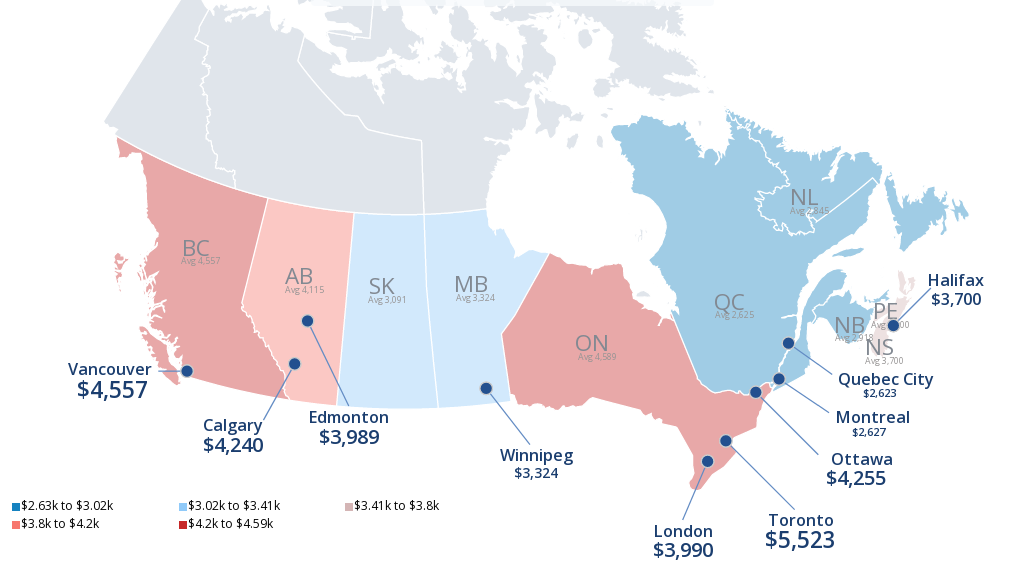
At kende dine månedlige udgifter hjælper dig med at planlægge din flytning effektivt. Her er en realistisk opdeling af omkostningerne i store canadiske byer:
Månedlig omkostningsopdeling (pr. person, gennemsnitlige estimater)
- Bolig: 1.200–2.500 $ (husleje eller afdrag på realkreditlån)
- Dagligvarer: 300–500 $
- Transport: 100–200 $ (offentlig transport eller bilomkostninger)
- Forbrugsudgifter: 120–200 $ (el, gas, vand, internet)
- Restaurantbesøg og underholdning: 200–400 $
- Sundhed og forsikring: 50–150 $ (dækket af provinsielle ordninger; privat forsikring tillægges)
- Samlet månedligt budget: 2.000–3.950 $
Omkostningsforskelle efter provins/by
Toronto, Vancouver og Ottawa er de dyreste. Calgary og Edmonton tilbyder lavere omkostninger. Atlanterhavskanada (Halifax, St. John's) og Quebec tilbyder konkurrenceprægede priser.
Pro tip: Brug ReloAdvisors gratis flyttetilbudsværktøj til at estimere dine flytteomkostninger og sammenligne tilbud fra godkendte internationale flyttefirmaer. Det hjælper dig med at forstå den samlede investering, der kræves til din flytning.
Sundhedsvæsen og sociale ydelser

Canadas sundhedsvæsen er offentligt finansieret og tilbyder dækning af grundlæggende ydelser til indbyggerne.
Provinsielle sundhedsforsikringsordninger
Hver provins driver sit eget sygesikringssystem (OHIP i Ontario, MSP i BC osv.). Dækningen omfatter lægebesøg, hospitalsophold og receptpligtig medicin (delvist). De fleste provinser kræver en ventetid på 3 måneder for nye indbyggere, før dækningen træder i kraft.
Krav til tilmelding
Ved ankomsten skal du ansøge om provinsielt sundhedsforsikring. Du skal bruge bevis på bopæl (lejekontrakt, regning) og gyldig id. Processen tager 1–3 uger. Nogle provinser tilbyder midlertidig dækning i ventetiden.
Forventninger til dækning
Det offentlige sundhedsvæsen dækker grundlæggende medicinske behov, men har begrænsninger. Tandpleje, syn og receptpligtig medicin kræver ofte privat forsikring. Psykiatriske ydelser er i stigende grad dækket af provinsielle ordninger. Akutte ydelser er fuldt dækket.
Beskæftigelse og arbejdstilladelser

Beskæftigelsesmulighederne i Canada varierer efter provins, branche og din faglige baggrund.
Kategorier af arbejdsvisum
- Temporary Foreign Worker Program (TFWP): Til specifikke stillinger med særlige kvalifikationer
- International Mobility Program (IMP): Til interne overflytninger mellem virksomheder og andre fritagne arbejdere
- Express Entry: Hurtigere permanent opholdstilladelse til kvalificerede arbejdere
- Provincial Nominee Programs (PNP): Provins-specifikke indvandringsordninger
Oversigt over arbejdsmarkedet
Canadas arbejdsmarked er konkurrencepræget i de store byer. Der er stor efterspørgsel på tech-stillinger (Toronto, Waterloo, Vancouver), sundhedssektoren, faglærte håndværkere og ingeniører. Mulighederne for fjernarbejde er vokset efter pandemien. Jobplatforme omfatter Indeed, LinkedIn, Workopolis og Glassdoor.
Godkendelse af kvalifikationer
Faglige kvalifikationer skal godkendes af relevante provinsielle myndigheder. Ingeniører, læger, revisorer og lærere kræver vurdering af kvalifikationer. Nogle erhverv kræver yderligere eksaminer eller licens. Processen kan tage 2–6 måneder og koster 500–2.000 $.
Bank, skatter og økonomisk opsætning
At etablere dit økonomiske liv i Canada kræver opmærksomhed på bankforhold, skatter og valutastyring.
Åbning af en canadisk bankkonto
Du kan åbne en bankkonto hos store banker (TD, RBC, BMO, Scotiabank) eller online-banker (Tangerine, EQ Bank). Du skal bruge:
- Gyldigt pas eller id
- Bevis på bopæl (lejekontrakt, regning)
- Indledende indskud (varierer efter bank, typisk 0–500 $)
Mange banker tilbyder pakker til nyankomne med gebyrfritagelser. Processen tager 1–2 uger.
Krav til skattemæssigt bopæl
Du bliver skattemæssigt bosiddende, når du etablerer boforhold i Canada (lejekontrakt, job, familie). Skattepligtige indbyggere skal indsende årlige selvangivelser og opgive global indkomst. Ikke-bosiddende beskattes kun af canadisk kildeindkomst. Kontakt en skatterådgiver for at forstå din specifikke situation.
Forhold omkring valutaveksling
Internationale overførsler medfører valutaspreads og gebyrer. Brug tjenester som Wise, OFX eller din banks internationale overførselstjeneste. Sammenlign kurser, før du overfører større beløb. Undgå vekselning i lufthavnen, som typisk tilbyder dårlige kurser.
Visum, indvandring og juridiske krav
Indvandringsreglerne varierer betydeligt afhængigt af dit oprindelsesland og din tilsigtede status.
Indrejsekrav efter land
Borgere fra de fleste udviklede lande kan rejse ind i Canada uden visum til turisme (op til 6 måneder). Hvis du har brug for visum, skal du ansøge via Immigration, Refugees and Citizenship Canada (IRCC). Behandlingstiden varierer fra 2 uger til flere måneder.
Midlertidigt kontra permanent ophold
Midlertidigt bosiddende har arbejds- eller studietilladelse (gyldig 1–3 år). Permanent bosiddende har ubegrænset opholdsstatus, men skal opretholde krav om fysisk tilstedeværelse (2 ud af 5 år). Statsborgerskab kræver 3 års permanent ophold.
Tjekliste til dokumentation
Før du flytter, skal du sikre dig, at du har:
- Gyldigt pas (mindst 2 års gyldighed)
- Arbejds- eller studietilladelse (hvis relevant)
- Straffeattest
- Resultater af lægeundersøgelse (hvis krævet)
- Bevis for økonomisk forsørgelse
- Ansættelsesbrev (hvis relevant)
- Ansøgning om provinsielt sundhedsforsikring
Uddannelse og skoler for flyttende familier
Canadas uddannelsessystem er højt respekteret, hvilket gør landet attraktivt for familier.
Tilmelding til skole
Offentlige skoler optager elever året rundt. Tilmelding kræver:
- Bevis på bopæl (lejekontrakt eller ejerskab)
- Vaccinationsoplysninger
- Fødselsattest eller pas
- Forældremyndighedsbevis (hvis relevant)
Tilmeldingsfrister varierer efter provins. De fleste skoler starter i september, men optagelse midt på året er muligt.
Oversigt over læreplaner
Canada anvender provinsielle læreplaner (ikke føderale). British Columbia og Ontario har velansete programmer med vægt på STEM og kreativ tænkning. Elever i gymnasiet tjener deres eksamen efter 4 år. Videregående uddannelse er tilgængelig og overkommelig sammenlignet med USA.
Internationale skolemuligheder
Store byer har internationale skoler, der følger IB (International Baccalaureate) eller britiske læreplaner. Eksempler omfatter Upper Canada College (Toronto), Collingwood School (Vancouver) og Académie Internationale Montréal. Skolepenge spænder fra 15.000–30.000 $/år.
Kulturel integration og tips til fællesskab
Vellykket integration i det canadiske samfund forbedrer din flytteoplevelse.
Sociale normer og etikette
Canadierne sætter pris på høflighed og direkte kommunikation. Drikkepenge er almindeligt (15–20 % på restauranter). Håndtryk er standardhilsen i forretningslivet. Canadianere respekterer personlige zoner og undgår højlydt opførsel offentligt. Multikulturalisme er dybt forankret i det canadiske samfund – mangfoldighed fejres.
At finde fællesskaber
- Deltag i lokale community centre og fritidsligaer (hockey, sport, kunst)
- Deltag i kulturfestivaler og lokale arrangementer
- Brug Meetup.com til at finde lokale grupper og netværksarrangementer
- Deltag som frivillig i lokale organisationer
- Kom i kontakt med expat-fællesskaber via Facebook-grupper og faglige foreninger
Sproglige forhold
Engelsk er det primære sprog i de fleste provinser. Fransk er officielt i Quebec og får stigende national betydning. At lære samtalefransk (især hvis du bosætter dig i Quebec) hjælper med integration og beskæftigelse. Gratis eller billige sprogprogrammer er tilgængelige gennem integrationsorganisationer.
Konklusion: Din vej til succes i Canada
At flytte til Canada tilbyder fantastiske muligheder for personlig og faglig udvikling. Ved at forstå disse otte væsentlige faktorer – klima, boliger, omkostninger, sundhed, beskæftigelse, økonomi, indvandring og uddannelse – bliver du bedre rustet til at træffe velinformerede beslutninger og håndtere din flytning problemfrit.
Nøglen til en vellykket flytning er grundig planlægning og realistiske forventninger. Tøv ikke med at henvende dig til integrationsydelse, expat-fællesskaber og professionelle rådgivere for støtte under din overgang.
Klar til at flytte til Canada? Lad dig ikke holde tilbage af flyttestress.
Hvornår er det bedste tidspunkt at flytte til Canada?
Hvornår er det bedste tidspunkt at flytte til Canada?
Forår (april–maj) og efterår (september–oktober) byder på ideelt vejr og lavere flytteomkostninger. Vinterflytninger er mulige, men dyrere på grund af logistik. Planlæg tidspunktet ud fra startdatoer for job, skemaer og personlige præferencer. Sommeren er populær, men medfører højere flyttepriser.
Skal jeg bruge en arbejdstilladelse for at bo i Canada?
De fleste internationale tilflyttere har brug for en arbejdstilladelse eller permanent opholdsstatus for at bo og arbejde i Canada. Berettigelse afhænger af dit oprindelsesland, erhverv og erfaring. Borgere fra visse lande kan besøge Canada uden visum til turisme, men kan ikke arbejde uden tilladelse. Tjek Canadas officielle hjemmeside for Immigration, Refugees and Citizenship for specifikke krav
Hvor meget koster det at flytte til Canada?
Internationale flytteomkostninger ligger typisk på 5.000–25.000 $+ afhængigt af forsendelsesvægt, afstand og destinationsby. En flytning af en lille lejlighed (1–2 soveværelser) koster 8.000–15.000 $. Store husholdningsflytninger (4+ soveværelser) koster 15.000–30.000 $+. Få personlige tilbud fra ReloAdvisors godkendte flyttenetværk for at sammenligne muligheder og finde den bedste pris.
Hvilke boligmuligheder findes der for expats i Canada?
A: Mulighederne omfatter lejeboliger, parcelhuse, ejerboliger og møblerede korttidslejemål. Lejemarkederne varierer betydeligt efter by – Toronto og Vancouver er dyrere end Calgary, Montreal eller Halifax. Mange udlejere kræver bevis for ansættelse, kredithistorik og referencer. Møblerede lejemål giver fleksibilitet for nyankomne, der er usikre på den langsigtet placering.
Kan mine internationale kvalifikationer anerkendes i Canada?
Kan mine internationale kvalifikationer anerkendes i Canada? Anerkendelse af kvalifikationer varierer betydeligt efter erhverv og provins. Nogle områder (ingeniørarbejde, medicin, revision) kræver genoptagelse og yderligere eksaminer. Andre kræver ikke formel anerkendelse. Kontakt den relevante provinsielle tilsynsmyndighed inden for dit erhverv for specifikke krav. Processen tager typisk 2–6 måneder og koster 500–2.000 $.
Kilde:
- Statistics Canada: https://www.statcan.gc.ca/ (indvandringsdata)
- Regeringen i Canada – indvandring: https://www.canada.ca/en/immigration-refugees-citizenship.html
- CMHC (Canada Mortgage & Housing Corporation): https://www.cmhc-schl.gc.ca/ (boligdata)
- Numbeo – leveomkostninger: https://www.numbeo.com/cost-of-living/ (data fra 2026)
- Indeed Canada: https://ca.indeed.com/ (jobopslag)
Klar til at flytte til Canada?
Lad dig ikke holde tilbage af flyttestress. Få gratis flyttetilbud fra vores godkendte internationale flyttenetværk i dag. Brug ReloAdvisors øjeblikkelige flyttevolumenberegner til at sammenligne tilbud og finde det perfekte flyttefirma til din flytning til Canada.
Få gratis flyttetilbud nu