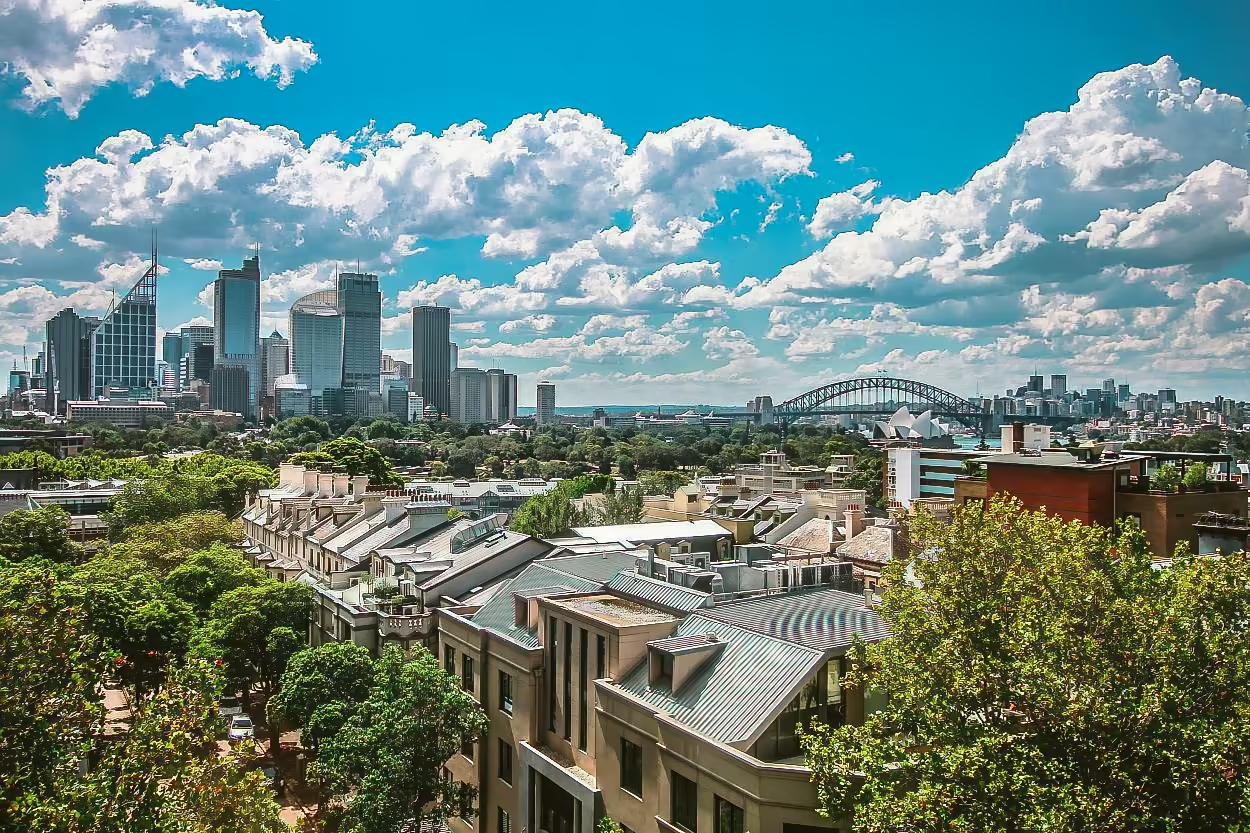

Está a planear mudar-se para Down Under? A Austrália está consistentemente entre os destinos mais populares do mundo para expatriados, oferecendo um estilo de vida descontraído, uma economia forte, paisagens naturais deslumbrantes e uma sociedade multicultural acolhedora. Este guia cobre tudo o que precisa - desde vistos e custos de transporte a habitação, cuidados de saúde, banca, impostos e dicas culturais - para tornar a sua mudança para a Austrália o mais tranquila possível.
Austrália em resumo

- População
- ~27.7 milhões
- Capital
- Canberra
- Moeda
- Dólar australiano (AUD)
- Salário médio
- AUD 65,000-85,000/ano
- Língua
- Inglês
- Clima
- Varia muito - tropical no norte, temperado no sul, árido no interior
- Fuso horário
- GMT+8 a GMT+11 (três fusos)
Por que mudar-se para a Austrália em 2026
- Salários elevados e economia forte: a Austrália tem um salário mínimo elevado (AUD 24.95/hora em 2026) e baixo desemprego, o que a torna atrativa para trabalhadores qualificados.
- Qualidade de vida de classe mundial: cidades limpas, baixa poluição, muitos espaços verdes e acesso a praias e parques nacionais.
- Multicultural e acolhedora: quase 30% dos australianos nasceram no estrangeiro, criando uma sociedade verdadeiramente diversa.
- Sistema público de saúde forte: o Medicare, o sistema público universal de saúde da Austrália, oferece cuidados médicos subsidiados ou gratuitos a residentes permanentes e cidadãos.
- Estilo de vida ao ar livre: os australianos valorizam a vida ao ar livre - surf, caminhadas, churrascos e desporto fazem parte do dia a dia.
- Caminho para a residência permanente: o sistema australiano de migração qualificada oferece vias claras de vistos temporários para residência permanente e cidadania.
Custos de mudança para a Austrália
O custo de se mudar para a Austrália depende do tamanho da remessa, do método de transporte, do país de origem e do tratamento aduaneiro. Abaixo estão valores de mercado típicos no início de 2026:
| Origem | Intervalo de custo estimado | Contentor/volume |
|---|---|---|
| Reino Unido para Austrália | AUD 5,500-AUD 12,000 | contentor de 20ft-40ft |
| EUA para Austrália | AUD 6,000-AUD 14,000 | contentor de 20ft-40ft |
| Europa para Austrália | AUD 5,000-AUD 11,000 | contentor de 20ft-40ft |
| Ásia para Austrália | AUD 3,000-AUD 7,500 | contentor de 20ft |
| Nova Zelândia para Austrália | AUD 1,500-AUD 4,000 | Contentor partilhado |
Custos por componente explicados
- Transporte marítimo: AUD 2,500-AUD 8,000 dependendo do tamanho do contentor (20ft ou 40ft); o tempo de trânsito é normalmente de 6-10 semanas a partir da Europa ou da América do Norte.
- Transporte aéreo: AUD 8-AUD 18 por kg; muito mais rápido (3-7 dias), mas significativamente mais caro para grandes volumes.
- Seguro: AUD 150-AUD 600, geralmente calculado em 2-3% do valor declarado da remessa.
- Desalfandegamento e quarentena: AUD 200-AUD 800; a Austrália tem inspeções rigorosas de biossegurança que podem acrescentar custos.
- Materiais de embalagem: AUD 100-AUD 400 para serviços profissionais de embalagem.
- Armazenamento (se necessário): AUD 150-AUD 400 por mês nas principais cidades.
Precisa de uma estimativa personalizada?
Receba três orçamentos verificados de empresas de mudanças em menos de 48 horas.
Requisitos de visto e residência
A Austrália opera um sistema de migração qualificada baseado em pontos e oferece uma ampla variedade de categorias de visto para trabalhadores, estudantes, famílias e investidores. Todos os pedidos de visto são processados através do Department of Home Affairs.
Para cidadãos da Nova Zelândia
Os cidadãos da Nova Zelândia podem viver e trabalhar na Austrália por tempo indeterminado ao abrigo do Special Category Visa (Subclass 444), concedido automaticamente à chegada. No entanto, isto não confere residência permanente - os kiwis devem solicitar PR separadamente para aceder a determinados benefícios, como votar ou obter empréstimos estudantis HECS.
Para outras nacionalidades: principais categorias de visto
Skilled Independent Visa (Subclass 189)
- O que é: um visto permanente sujeito a teste de pontos para trabalhadores qualificados que não sejam patrocinados por um empregador ou estado.
- Sistema de pontos: os candidatos recebem pontuação com base na idade (25-32 anos tem a pontuação mais alta), proficiência em inglês, qualificações, experiência profissional e outros fatores. Geralmente precisa de um mínimo de 65 pontos, embora ocupações competitivas possam exigir 80+.
- Tempo de processamento: 6-12 meses.
- Detalhes principais: deve ter uma ocupação na Medium and Long-term Strategic Skills List (MLTSSL) e receber um convite através do SkillSelect.
Skilled Nominated Visa (Subclass 190)
- O que é: um visto permanente sujeito a teste de pontos para trabalhadores nomeados por um governo estadual ou territorial australiano.
- Requisitos: o mesmo teste de pontos da Subclass 189, mais uma nomeação estadual. Cada estado publica a sua própria lista de ocupações com procura.
- Tempo de processamento: 6-12 meses.
- Detalhes principais: deve viver no estado que o nomeou durante os seus primeiros dois anos.
Skilled Work Regional Visa (Subclass 491)
- O que é: um visto provisório sujeito a teste de pontos para trabalhadores dispostos a viver e trabalhar na Austrália regional.
- Requisitos: Nomeação por um estado ou território, ou patrocínio por um familiar elegível que viva numa área regional designada.
- Duração: Até 5 anos, com uma via para residência permanente (Subclass 191) após 3 anos.
- Detalhes principais: As áreas regionais incluem todo o território excepto Sydney, Melbourne e Brisbane.
Visto Temporary Skill Shortage (Subclass 482)
- O que é: Um visto de trabalho patrocinado por empregador para profissões nas listas de profissões qualificadas.
- Modalidades: curta duração (até 2 anos), duração média (até 4 anos) e modalidades ao abrigo de acordos laborais.
- Requisitos: Precisa de um empregador patrocinador, pelo menos 2 anos de experiência profissional relevante e uma avaliação de competências.
- Detalhes principais: Os titulares da modalidade de duração média podem candidatar-se à residência permanente após 3 anos.
Visto Working Holiday (Subclass 417)
- O que é: Um visto de 12 meses para jovens viajantes (dos 18 aos 30 anos, ou dos 18 aos 35 para alguns países) que querem trabalhar enquanto exploram a Austrália.
- Requisitos: Deve candidatar-se a partir de fora da Austrália, ter um passaporte válido de um país elegível e cumprir os requisitos de saúde e idoneidade.
- Detalhes principais: Pode prolongar por um segundo e terceiro ano ao completar 88 dias de trabalho especificado (normalmente agricultura ou construção em zonas regionais) no primeiro e segundo anos.
Visto de Estudante (Subclass 500)
- O que é: Para estudantes internacionais inscritos num curso a tempo inteiro numa instituição australiana.
- Duração: A duração do curso mais um curto período de tolerância.
- Detalhes principais: Os titulares de visto de estudante podem trabalhar até 48 horas por quinzena durante o período lectivo e horas ilimitadas durante as pausas.
Registos após a chegada
A Austrália não tem um sistema nacional único de registo como o Anmeldung da Alemanha. No entanto, vários registos são essenciais após a chegada:
Passos obrigatórios
- Pedir um Tax File Number (TFN): Faça o pedido online através do Australian Taxation Office (ATO) assim que chegar. O seu TFN é essencial para trabalhar e para operações bancárias - sem ele, é tributado à taxa marginal mais elevada.
- Inscrever-se no Medicare (se for elegível): Residentes permanentes e cidadãos de países com acordo recíproco de cuidados de saúde podem inscrever-se num balcão do Medicare.
- Registar-se no Centrelink (se necessário): Para serviços sociais e apoios, registe-se junto da Services Australia.
- Actualizar a sua morada junto do banco e do empregador: Mantenha os registos actualizados para efeitos fiscais e de superannuation.
Documentos necessários para os principais registos
- Passaporte válido com carta de concessão do visto
- Comprovativo de morada australiana (contrato de arrendamento ou factura de serviços)
- Certidão de nascimento (para algumas candidaturas)
- Avaliação de qualificações obtidas no estrangeiro (se estiver a reivindicar pontos de migração qualificada)
Encontrar habitação na Austrália
O mercado de arrendamento na Austrália é competitivo, especialmente em Sydney e Melbourne. A maioria dos australianos arrenda ou compra através de agentes imobiliários. As propriedades são normalmente sem mobília, embora existam apartamentos mobilados por um preço mais elevado.
Rendas médias por grande cidade (2026)
| Cidade | T1 (centro da cidade) | T3 (subúrbios) | Competitividade do mercado |
|---|---|---|---|
| Sydney | AUD 2,600-AUD 3,500/mês | AUD 4,000-AUD 5,500/mês | Muito competitivo |
| Melbourne | AUD 2,000-AUD 2,800/mês | AUD 3,200-AUD 4,500/mês | Muito competitivo |
| Brisbane | AUD 1,600-AUD 2,200/mês | AUD 2,500-AUD 3,500/mês | Competitivo |
| Perth | AUD 1,500-AUD 2,100/mês | AUD 2,200-AUD 3,200/mês | Moderado |
| Adelaide | AUD 1,300-AUD 1,800/mês | AUD 2,000-AUD 2,800/mês | Moderado |
Terminologia australiana de arrendamento
- Bond: Uma caução, normalmente equivalente a 4 semanas de renda, paga antecipadamente e mantida por uma autoridade pública de cauções. É devolvida no fim do arrendamento se a propriedade estiver em bom estado.
- Renda antecipada: Normalmente paga as primeiras 2-4 semanas de renda adiantadas juntamente com a bond.
- Lease: Um contrato por prazo fixo, normalmente de 6 ou 12 meses. Após o prazo fixo, costuma passar para um arrendamento periódico (mês a mês).
Como encontrar habitação
Plataformas online:
- Domain.com.au: Um dos principais sites de anúncios imobiliários da Austrália.
- realestate.com.au: O maior portal imobiliário da Austrália, amplamente utilizado por agentes e senhorios particulares.
- Flatmates.com.au: Popular para encontrar habitação partilhada e quartos para arrendar.
Recursos locais:
- Agentes imobiliários no subúrbio pretendido - entre e registe o seu interesse.
- Grupos de Facebook como "Sydney Housing" ou "Melbourne Renters" para anúncios informais.
Dicas para estrangeiros que procuram habitação
- Prepare com antecedência um dossier de candidatura ao arrendamento: documento de identificação, visto, comprovativo de rendimento, extractos bancários e referências.
- Compareça nas visitas abertas - as propriedades são mostradas em horários definidos, normalmente aos fins-de-semana.
- Esteja preparado para candidatar-se de imediato - as boas propriedades são arrendadas em poucos dias.
- Não ter histórico de arrendamento australiano pode ser um obstáculo; ofereça uma caução adicional ou renda paga antecipadamente, se necessário.
Contrato de arrendamento e protecção legal
Cada estado e território tem as suas próprias leis de arrendamento. As principais protecções incluem:
- Os senhorios devem avisar por escrito sobre aumentos de renda (normalmente 60 dias).
- A bond é mantida por uma autoridade pública, não pelo senhorio, protegendo a sua caução.
- Os períodos mínimos de aviso para terminar um arrendamento variam por estado (normalmente 14-28 dias para inquilinos em arrendamentos periódicos).
- Pode contestar tratamento injusto através do Civil and Administrative Tribunal do seu estado.
Aviso: burlas no arrendamento
- Nunca transfira dinheiro por uma propriedade que não tenha visitado pessoalmente.
- Tenha cuidado com anúncios com preços muito abaixo do valor de mercado.
- Verifique o senhorio ou agente no registo de licenciamento imobiliário do estado relevante.
- Evite pagar caução ou renda em dinheiro; use sempre transferências bancárias rastreáveis.
Saúde e seguros
A Austrália tem um sistema de saúde misto, público e privado. O Medicare é o sistema público, financiado através de uma contribuição Medicare de 2% sobre o rendimento tributável (mais uma sobretaxa para rendimentos elevados sem cobertura privada). O seguro de saúde privado complementa o Medicare e dá acesso a hospitais privados, tempos de espera mais curtos e extras como dentista e ótica.
Cuidados de saúde públicos
Medicare
- Custo: Financiado através da contribuição Medicare (2% do rendimento tributável).
- Cobertura: consultas de GP (com bulk billing ou subsidiadas), tratamento em hospital público, medicamentos PBS (Pharmaceutical Benefits Scheme) a preços subsidiados.
- Elegibilidade: cidadãos australianos, residentes permanentes e residentes de países com acordo recíproco de cuidados de saúde (inclui Reino Unido, Nova Zelândia, Irlanda, Bélgica, Finlândia, Itália, Malta, Países Baixos, Noruega, Eslovénia e Suécia).
- Ideal para: quem quer cobertura básica e consegue tolerar os tempos de espera dos hospitais públicos.
Seguro de saúde privado
- Custo: AUD 100-AUD 300/mês para um adulto solteiro (cobertura básica a completa).
- Cobertura: quartos em hospitais privados, escolha de médico, tempos de espera mais curtos para cirurgia eletiva, além de extras (dentista, ótica, fisioterapia).
- Elegibilidade: disponível para todos os residentes. Pessoas com rendimentos elevados (AUD 97,000+ para solteiros) sem cobertura privada pagam a Medicare Levy Surcharge (1-1.5% de imposto adicional).
- Ideal para: quem quer acesso mais rápido a especialistas, cuidados dentários e tratamento em hospital privado.
Principais seguradoras
- Medibank: uma das maiores seguradoras de saúde privadas da Austrália, com uma ampla gama de coberturas hospitalares e extras.
- Bupa: seguradora internacional com planos abrangentes, populares entre expatriados.
- HCF: fundo detido pelos membros, conhecido por preços competitivos e bom serviço ao cliente.
- nib: oferece planos flexíveis e é popular entre pessoas mais jovens e expatriados.
Obter cobertura de saúde (calendário)
-
À chegada
Se for elegível, visite um balcão do Medicare com o seu passaporte, visto e comprovativo de morada para se inscrever. Receberá um cartão Medicare.
-
No prazo de 2 meses
Considere contratar um seguro de saúde privado para evitar o agravamento Lifetime Health Cover (LHC), um aumento de 2% no prémio por cada ano em que adiar a contratação da cobertura depois dos 31 anos.
-
Continuamente
Use o seu cartão Medicare nas consultas de GP e peça reembolsos à sua seguradora privada para os extras.
Custos a cargo do utente
- Consulta de GP (bulk-billed): gratuita
- Consulta de GP (privada): AUD 40-AUD 90 a cargo do utente
- Consulta de especialista: AUD 100-AUD 300
- Receitas médicas (PBS): máximo de AUD 25.00 por receita (AUD 7.70 com concessão)
- Check-up dentário: AUD 150-AUD 300
- Hospital de emergência (público): gratuito para titulares de Medicare
Receba um plano de mudança personalizado
Deixe o seu email e enviaremos uma checklist personalizada, além de três orçamentos de empresas de mudanças verificadas.
Banca e finanças
Abrir uma conta bancária
- Quando: idealmente nas primeiras 6 semanas após a chegada; depois desse período, precisará de identificação adicional além do passaporte.
- Documentos necessários: passaporte, carta de concessão do visto e comprovativo de morada na Austrália.
- Principais bancos para expatriados:
- Commonwealth Bank (CBA): o maior banco da Austrália, com extensas redes de agências e ATM e uma app fácil de usar.
- ANZ: bons serviços de transferências internacionais e uma grande rede de ATM.
- Westpac: boa variedade de contas poupança e taxas competitivas para crédito habitação.
- NAB (National Australia Bank): sem comissões mensais de manutenção em contas standard.
Obter o seu Tax File Number (TFN)
- O que é: um número único de nove dígitos emitido pelo Australian Taxation Office (ATO) para fins fiscais.
- Quando pedir: assim que chegar à Austrália. Os pedidos são gratuitos e podem ser feitos online através do site da ATO (tem de estar na Austrália quando fizer o pedido).
- Tempo de processamento: até 28 dias por correio; muitas vezes mais rápido para pedidos online.
- Porque precisa dele: sem um TFN, o seu empregador tem de reter imposto à taxa marginal mais elevada (45% mais a contribuição Medicare). Também é necessário para abrir contas bancárias com juros e entregar declarações fiscais.
Funcionalidades e custos da conta bancária
- Comissão mensal: AUD 0-AUD 10 (muitas contas não cobram comissões com depósitos mínimos).
- Cartão de débito: gratuito (Visa Debit ou Mastercard Debit).
- Cartão de crédito: as anuidades variam entre AUD 0 (básico) e AUD 400 (cartões com recompensas).
- Transferências internacionais: AUD 10-AUD 30 por transferência através de bancos tradicionais; serviços como Wise ou Revolut são significativamente mais baratos.
Cultura de pagamentos
A Austrália funciona quase sem dinheiro em numerário. Os pagamentos contactless (tap and go) por cartão ou smartphone (Apple Pay, Google Pay) são a norma. Os ATM do seu próprio banco são gratuitos, mas usar o ATM de outro banco pode implicar taxas de AUD 2-AUD 3.50.
Impostos, superannuation e pensão
Imposto sobre o rendimento
Se for residente fiscal australiano (geralmente determinado por residir na Austrália durante mais de 183 dias por ano ou por ter os seus principais interesses económicos no país), é tributado sobre o seu rendimento mundial. Os não residentes são tributados apenas sobre rendimentos de fonte australiana, a taxas mais elevadas.
| Rendimento tributável (AUD) | Taxa de imposto (residentes, 2025-26) |
|---|---|
| 0-18,200 | Isento |
| 18,201-45,000 | 16 cêntimos por AUD 1 |
| 45,001-135,000 | AUD 4,288 + 30 cêntimos por AUD 1 |
| 135,001-190,000 | AUD 31,288 + 37 cêntimos por AUD 1 |
| 190,001+ | AUD 51,638 + 45 cêntimos por AUD 1 |
Todos os residentes também pagam a contribuição Medicare de 2%.
Superannuation (poupança para a reforma)
A superannuation (ou super) é o sistema obrigatório de poupança para a reforma da Austrália. Os empregadores devem contribuir com 12% dos rendimentos ordinários de um trabalhador para um fundo super nomeado. Pontos principais:
- Você escolhe o seu fundo super, ou o seu empregador atribui um fundo padrão.
- As contribuições para o super são tributadas a 15% dentro do fundo (menos do que a maioria das taxas de imposto sobre o rendimento).
- Em geral, os fundos ficam bloqueados até atingir a idade de preservação (atualmente 60 anos para quem nasceu depois de 1 de julho de 1964).
- Se sair permanentemente da Austrália, poderá ter direito a pedir o seu super como Departing Australia Superannuation Payment (DASP), embora seja tributado a 35%–45%.
Convenções para evitar a dupla tributação
A Austrália tem convenções fiscais com mais de 40 países para evitar a dupla tributação. Se tiver rendimentos do estrangeiro, verifique se existe uma convenção com o seu país de origem para evitar ser tributado duas vezes.
Custo de vida na Austrália
Detalhe do orçamento mensal por cidade
| Cidade | Orçamento para uma pessoa | Orçamento para uma família de 3 | Nível de custo |
|---|---|---|---|
| Sydney | AUD 3.500–AUD 5.000 | AUD 6.500–AUD 9.000 | Muito elevado |
| Melbourne | AUD 3.000–AUD 4.500 | AUD 5.500–AUD 8.000 | Elevado |
| Brisbane | AUD 2.500–AUD 3.500 | AUD 4.500–AUD 6.500 | Moderado–Elevado |
| Perth | AUD 2.400–AUD 3.400 | AUD 4.200–AUD 6.000 | Moderado |
| Adelaide | AUD 2.200–AUD 3.000 | AUD 4.000–AUD 5.500 | Moderado |
Detalhe dos custos
Habitação:
- Apartamento T1 (centro da cidade): AUD 1.300–AUD 3.500/mês
- Apartamento T3 (subúrbios): AUD 2.000–AUD 5.500/mês
- Serviços básicos (eletricidade, gás, água): AUD 200–AUD 350/mês
- Internet (NBN): AUD 70–AUD 100/mês
Supermercado e alimentação:
- Compras semanais de supermercado (1 pessoa): AUD 100–AUD 180
- Refeição em restaurante (informal): AUD 20–AUD 35
- Refeição em restaurante (gama média, dois pratos): AUD 40–AUD 80
Transportes:
- Passe mensal de transportes públicos: AUD 150–AUD 250 (varia consoante a cidade)
- Gasolina: AUD 1,70–AUD 2,20/litro
- Seguro automóvel (contra todos os riscos): AUD 100–AUD 200/mês
Seguros e cuidados de saúde:
- Seguro de saúde privado (individual): AUD 100–AUD 300/mês
- Contribuição Medicare: 2% do rendimento tributável
Lazer e entretenimento:
- Mensalidade de ginásio: AUD 50–AUD 80/mês
- Bilhete de cinema: AUD 18–AUD 25
- Serviços de streaming (Netflix standard): AUD 16,99/mês
Comparação com outros países
- vs Reino Unido: a Austrália é cerca de 15%–20% mais cara no geral, sobretudo devido à habitação e às compras de supermercado.
- vs EUA: custo de vida semelhante nas grandes cidades, mas os cuidados de saúde são significativamente mais baratos graças ao Medicare.
- vs Alemanha: a Austrália é 20%–30% mais cara, principalmente devido à habitação. As compras de supermercado e comer fora são claramente mais caros.
Dicas de língua e cultura
Precisa de aprender outra língua?
Não — o inglês é a língua oficial e dominante da Austrália. Irá encontrar algum calão australiano e abreviaturas próprias que podem ser confusos no início:
- Arvo: tarde
- Barbie: churrasco
- Brekkie: pequeno-almoço
- Esky: geleira térmica portátil
- Servo: estação de serviço
- Thongs: chinelos de dedo
- Tradie: profissional de ofício (canalizador, eletricista, construtor)
Normas culturais e etiqueta
Descontraído e informal:
- Os australianos valorizam a informalidade. O primeiro nome é usado em quase todo o lado, incluindo no trabalho.
- A pontualidade é apreciada, mas a atitude é descontraída — "she'll be right" é uma expressão comum que significa que as coisas vão correr bem.
O desporto é uma obsessão nacional:
- Australian Rules Football (AFL): dominante em Victoria, South Australia e Western Australia.
- Rugby League (NRL): extremamente popular em New South Wales e Queensland.
- Cricket: uma instituição de verão — o Boxing Day Test é um evento nacional.
- Mostrar interesse pelo desporto local é uma das formas mais rápidas de criar ligação com colegas e vizinhos.
Cultura ao ar livre:
- Os churrascos (barbies) são um elemento social essencial — é comum trazer a própria carne e bebidas (BYO) quando convidado.
- A cultura de praia é central — nadar sempre entre as bandeiras vermelha e amarela nas praias vigiadas.
- Proteção solar: a Austrália tem alguns dos níveis de UV mais elevados do mundo. Use protetor solar FPS 50+, chapéu e óculos de sol.
Gorjetas:
- As gorjetas não são esperadas na Austrália. Pode arredondar ou deixar uma gorjeta pequena (5–10%) por um serviço excecional em restaurantes, mas não é a norma.
Integração Social
- Junte-se a clubes desportivos locais, clubes de salvamento aquático ou grupos comunitários — estes são essenciais para a vida social australiana.
- Participe em encontros através de sites como o Meetup.com ou grupos de expatriados no Facebook.
- Voluntarie-se em organizações como a Conservation Volunteers Australia para conhecer pessoas e contribuir para a comunidade.
Alfândega, Biossegurança e Relocalização de Animais de Estimação
A Austrália tem algumas das regras de biossegurança e alfândega mais rigorosas do mundo, aplicadas pelo Department of Agriculture, Fisheries and Forestry e pela Australian Border Force.
Importação de Bens Domésticos
- Os pertences pessoais usados podem geralmente ser importados isentos de direitos e impostos, desde que sejam propriedade e de uso do titular há pelo menos 12 meses e destinados exclusivamente a uso pessoal.
- É necessário apresentar uma declaração aduaneira com um inventário detalhado, passaporte e visto.
- Todas as encomendas são inspecionadas à chegada. Artigos feitos de madeira, palha ou materiais vegetais podem necessitar de tratamento.
Artigos Proibidos e Restritos
- Nenhum produto alimentar, vegetal ou animal — isto inclui fruta fresca, legumes, sementes, nozes, mel, carne, laticínios, penas, conchas e artigos de madeira com casca.
- Armas de fogo, armas e certos medicamentos requerem licenças.
- A não declaração de artigos com risco de biossegurança pode resultar em multas imediatas de AUD 330 ou em processo criminal.
Relocalização de Animais de Estimação
- Cães, gatos e furões requerem uma licença de importação, microchip, vacinação antirrábica e um certificado veterinário de saúde.
- Os animais de estimação provenientes da maioria dos países devem cumprir uma quarentena mínima de 10 dias no Mickleham Post Entry Quarantine Facility em Melbourne.
- O planeamento deve começar com 6 a 12 meses de antecedência, dada a extensão dos requisitos de documentação e testes.
- A Austrália não permite a importação de certas raças de cães (por exemplo, Pit Bull Terrier, Dogo Argentino).
Conduzir na Austrália
- As cartas de condução estrangeiras são válidas durante os primeiros 3 meses após a chegada (mais tempo em alguns estados).
- Após 3 meses, é necessário obter uma carta de condução australiana — o processo varia consoante o estado e o país de origem.
- Os australianos conduzem pelo lado esquerdo da estrada.
- Os limites de velocidade são rigorosamente aplicados com multas pesadas e pontos de penalização.
Lista de Verificação da Mudança
- Pesquise e candidate-se ao visto australiano correto.
- Comece a reunir documentos: passaporte, certidão de nascimento, habilitações e referências profissionais.
- Obtenha orçamentos de transportadoras internacionais através do ReloAdvisor.
- Comece a organizar — venda, doe ou descarte artigos que não precisa de enviar.
- Se levar um animal de estimação, contacte um especialista em relocalização de animais e inicie o processo de candidatura à quarentena.
- Confirme a sua empresa de mudanças e a data de envio.
- Providencie seguro de viagem para os primeiros meses na Austrália.
- Notifique o seu banco, empregador e as entidades governamentais relevantes sobre a sua mudança.
- Pesquise bairros e elabore uma lista de áreas de arrendamento potenciais.
- Abra uma conta bancária australiana (a maioria dos grandes bancos permite abrir uma conta até 3 meses antes da chegada).
- Finalize as malas e certifique-se de que todos os artigos cumprem as regras de biossegurança da Austrália.
- Elabore um inventário detalhado para a alfândega.
- Cancele ou redirecione serviços e subscrições na sua morada atual.
- Confirme alojamento temporário para as primeiras 1 a 2 semanas na Austrália.
- Descarregue mapas offline e as aplicações essenciais (Opal Travel para Sydney, PTV para Melbourne).
- Confirme todas as reservas de voo e alojamento.
- Transporte documentos importantes na bagagem de mão: passaporte, carta de concessão de visto, oferta de emprego e dados bancários.
- Informe a sua empresa de mudanças sobre a sua morada de entrega na Austrália.
- Troque alguma moeda ou certifique-se de que o seu cartão bancário funciona internacionalmente.
- Candidate-se ao seu Tax File Number (TFN) online através da ATO.
- Inscreva-se no Medicare (se elegível).
- Abra ou ative a sua conta bancária australiana.
- Adquira um cartão SIM local (Telstra, Optus ou Vodafone).
- Registe-se num cartão de transporte Opal (Sydney), myki (Melbourne), Go Card (Brisbane) ou metroCARD (Adelaide).
- Inicie a sua pesquisa de imóveis — assista a visitas abertas.
- Candidate-se a arrendamentos com o seu dossier de candidatura preparado.
- Configure os serviços (eletricidade, gás, internet) na sua nova morada.
- Familiarize-se com a sua área local: supermercados, clínicas de medicina geral e transportes públicos.
- Registe-se nos Services Australia (Centrelink) se precisar de serviços sociais.
- Assine um contrato de arrendamento e mude-se para a sua casa permanente.
- Atualize a sua morada junto da ATO, banco, fundo de pensões e empregador.
- Adquira um seguro de saúde privado, se ainda não o fez (para evitar o Lifetime Health Cover loading).
- Explore a sua cidade — visite praias, parques e mercados locais.
- Junte-se a um clube local, equipa desportiva ou grupo de expatriados para começar a construir a sua rede social.
Onde Encontrar Ferramentas e Recursos
Ferramentas da ReloAdvisor:
- Calculadora de volume
- Vistoria por vídeo
- Calculadora de custos de mudança
Recursos Oficiais da Austrália:
- Department of Home Affairs (imigração e vistos): https://immi.homeaffairs.gov.au
- Australian Taxation Office (TFN e impostos): https://www.ato.gov.au
- Medicare (cuidados de saúde): https://www.servicesaustralia.gov.au/medicare
- Services Australia (Centrelink e serviços sociais): https://www.servicesaustralia.gov.au
Comunidades de Expatriados:
- InterNations na Austrália: https://www.internations.org/australia-expats
- Expats britânicos na Austrália: https://www.britishexpats.com
- Fóruns Aussieve: https://www.aussieveforums.com
Guias Relacionados:
- Mudar para a Nova Zelândia
- Mudar para o Reino Unido