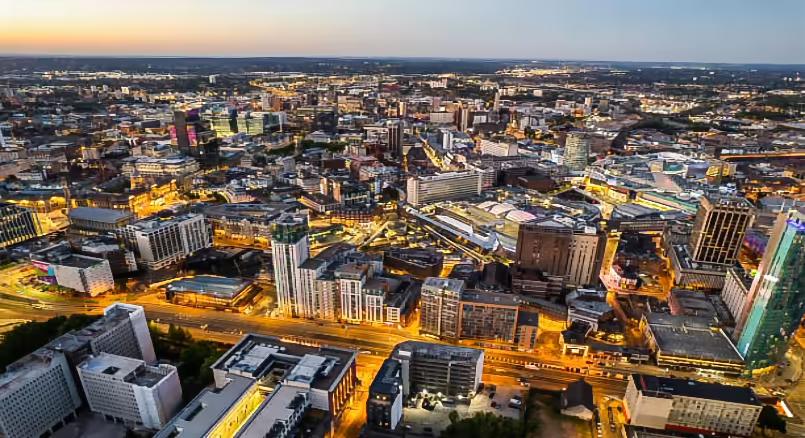

Birmingham é a segunda maior cidade do Reino Unido, com cerca de 1,15 milhões de habitantes e uma área metropolitana com mais de 2,5 milhões de pessoas. Outrora o motor da Revolução Industrial, Birmingham reinventou-se como um centro multicultural de finanças, tecnologia, gastronomia e artes. Se procura uma experiência de grande cidade com rendas mais baixas do que Londres e uma atmosfera famosamente acolhedora, Birmingham merece ser seriamente considerada. Este guia abrange tudo o que precisa de saber sobre a mudança para Birmingham como expatriado.
Birmingham em Síntese
- População
- ~1,15 milhões (cidade), ~2,5 milhões (área metropolitana)
- Região
- West Midlands, Centro de Inglaterra
- Conhecida Por
- Jewellery Quarter, Balti Triangle, canais, herança industrial
- Renda Média (T1)
- £750–£1.100/mês
- Salário Médio
- ~£2.070/mês líquido (~£31.000/ano bruto)
- Comunidade Expatriada
- Grande — com significativas comunidades do Sul Asiático, das Caraíbas, polaca e da Europa de Leste
- Moeda
- Libra Esterlina Britânica (GBP)
Por Que Mudar para Birmingham
- Acessibilidade: Aproximadamente 50% mais baixo do que Londres, e os custos do dia a dia são significativamente mais baratos em geral.
- Localização central: Birmingham situa-se no coração da rede de autoestradas e caminhos de ferro de Inglaterra — Londres fica a 1h20m de comboio, Manchester a 1h30m e Bristol a 1h20m.
- Diversidade cultural: Uma das cidades mais jovens e diversificadas da Europa — mais de 40% dos residentes pertencem a minorias étnicas.
- Regeneração urbana: Grandes projetos como o Smithfield e o Big City Plan estão a transformar o centro da cidade rapidamente. (Nota: o projeto de comboio de alta velocidade HS2 para Birmingham tem sofrido alterações significativas — verifique o estado atual antes de o considerar para planeamento de deslocações.)
- Gastronomia: Birmingham tem mais restaurantes com estrela Michelin do que qualquer outra cidade do Reino Unido fora de Londres.
Encontrar Alojamento em Birmingham
Rendas Médias
| Bairro | T1 | T3 | Características |
|---|---|---|---|
| Centro da Cidade (Colmore Row / Jewellery Quarter) | £900–£1.200 | £1.500–£2.200 | Profissional, apartamentos modernos, bairro histórico |
| Edgbaston | £750–£1.000 | £1.300–£1.800 | Arborizado, campo de críquete, boas escolas |
| Moseley / Kings Heath | £650–£900 | £1.100–£1.600 | Boémio, lojas independentes, música ao vivo |
| Harborne | £700–£950 | £1.200–£1.700 | Ambiente de aldeia, famílias, restauração na rua principal |
| Solihull | £750–£1.000 | £1.300–£1.800 | Suburbano, escolas excelentes, proximidade ao aeroporto |
| Selly Oak / Bournville | £550–£750 | £950–£1.400 | Acolhedor para estudantes, herança Cadbury, acessível |
| Sutton Coldfield | £650–£900 | £1.100–£1.600 | Afluente, parques, orientado para famílias |
| Digbeth | £600–£800 | £1.000–£1.400 | Bairro criativo, em ascensão, espaços em armazéns |
Como Encontrar Alojamento
- Rightmove e Zoopla: Principais portais imobiliários — pesquise por código postal (B1, B15, B16, B29, B5, etc.).
- SpareRoom: Popular para partilha de apartamentos, especialmente para expatriados mais jovens e estudantes.
- OpenRent: Anúncios diretos de proprietários, sem comissões de agência.
- Agências imobiliárias como a Centrick, DM & Co e Connells cobrem diferentes bairros — registe-se em várias.
- Tenha o depósito (até cinco semanas de renda) e referências prontos; o mercado move-se rapidamente nas áreas mais procuradas.
Dicas para Expatriados
- O Jewellery Quarter oferece apartamentos estilo loft em oficinas reconvertidas — popular entre jovens profissionais e criativos.
- Moseley e Harborne equilibram acessibilidade com excelente ambiente comunitário e boas escolas.
- Solihull é ideal se precisar de proximidade ao Aeroporto de Birmingham ou ao NEC.
- Digbeth é a zona emergente mais dinâmica de Birmingham — espere rendas mais baixas mas regeneração urbana em curso.
Guia de Bairros
- Jewellery Quarter: Oficinas históricas convertidas em apartamentos e estúdios. Restaurantes independentes, galerias e bares. Jovens profissionais. Rendas intermédias.
- Edgbaston: Afluente e arborizado — Edgbaston Cricket Ground, Jardins Botânicos de Birmingham e escolas de topo. Famílias e profissionais. Rendas médias a elevadas.
- Moseley: Mercado de agricultores premiado, Moseley Park e uma cena artística vibrante. Criativos e jovens famílias. Rendas moderadas.
- Harborne: Uma aldeia dentro da cidade — os cafés, gastropubs e excelentes escolas primárias da Harborne High Street. Famílias. Rendas moderadas.
- Solihull: Tecnicamente um município separado, mas parte da área metropolitana. Centro comercial Touchwood, boas escolas e 10 minutos de comboio até ao centro de Birmingham. Famílias. Rendas moderadas a elevadas.
- Digbeth: o bairro criativo de Birmingham — arte de rua, a Custard Factory e espaços em armazéns. Artistas e startups. Rendas mais baixas, em ascensão.
- Sutton Coldfield: Royal Sutton Coldfield — afluente, verde, com o Sutton Park (um dos maiores parques urbanos da Europa). Famílias. Rendas moderadas a elevadas.
- Kings Heath: o «novo Moseley» — lojas independentes, o Highbury Park e uma cena gastronómica em crescimento. Jovens profissionais e famílias. Rendas mais baixas do que em Moseley.
Custo de Vida em Birmingham
Orçamento Mensal Detalhado
| Categoria | Intervalo de Orçamento |
|---|---|
| Renda (T1, centro) | £750–£1.100 |
| Serviços públicos (gás, eletricidade, água) | £120–£160 |
| Internet | £25–£35 |
| Mercearia | £200–£300 |
| Transportes (passe de autocarro/comboio) | £70–£90 |
| Refeições fora (4x/mês) | £70–£120 |
| Lazer/Ginásio | £20–£40 |
| Telemóvel | £12–£25 |
| Total | £1.317–£1.870 |
Custos do Dia a Dia
- Café (flat white): £3.00–£3.50
- Almoço (restaurante informal): £8–£11
- Passe mensal de autocarro (Network West Midlands): £75
- Cerveja (imperial): £4.00–£5.00
- Bilhete de cinema: £10–£13
- Litro de leite: £0.95–£1.30
- Pão de forma: £1.00–£1.50
Como Circular em Birmingham
- Transportes públicos: a Network West Midlands cobre autocarros, elétricos (West Midlands Metro) e comboios locais. Um passe mensal custa cerca de £75. A extensão do Metro de Birmingham Snow Hill, passando pelo centro da cidade até Edgbaston, já está em funcionamento.
- Bicicleta: o centro de Birmingham é plano, mas a infraestrutura cicloviária ainda está em desenvolvimento. As bicicletas Beryl (o sistema de partilha de bicicletas da cidade) estão disponíveis em toda a cidade.
- Automóvel: o trânsito é intenso nas horas de ponta. Existem parques de estacionamento com ligação ferroviária em várias estações. A Zona de Ar Limpo (CAZ) cobra taxas a veículos não conformes no centro da cidade.
- Aeroporto: o Aeroporto de Birmingham (BHX) — voos diretos para a Europa, o Médio Oriente e a América do Norte.
- Ligações intercidades: estação de New Street — Londres Euston (1h20), Manchester (1h30), Leeds (2h), Edimburgo (3h45), Bristol (1h20).
Saúde em Birmingham
- Hospitais/Clínicas: o Queen Elizabeth Hospital (centro de trauma de grande dimensão, um dos maiores do Reino Unido), o Birmingham Children's Hospital, o Heartlands Hospital e o City Hospital. As opções privadas incluem o Spire Parkway e o BMI The Priory.
- Médicos de língua inglesa: o inglês é a língua principal; os médicos de família do NHS estão disponíveis em todos os bairros. Registe-se num médico de família próximo da sua residência.
- Farmácias: Boots, LloydsPharmacy e farmácias independentes em toda a cidade.
- Número de emergência: 999 (também 112). NHS 111 para aconselhamento em situações não urgentes.
- Sobretaxa de saúde: os titulares de visto pagam a Immigration Health Surcharge, que concede acesso completo ao NHS.
Receba um plano de mudanca personalizado
Deixe o seu e-mail e enviaremos uma checklist personalizada e tres orcamentos de empresas verificadas.
Cultura e Estilo de Vida
- Gastronomia: Birmingham é o berço do balti — o Balti Triangle (Sparkbrook/Ladypool Road) continua a ser icónico. A cidade tem também uma vibrante cena de alta gastronomia, com mais estrelas Michelin do que qualquer outra cidade do Reino Unido fora de Londres (Adam's, Purnell's, Opheem).
- Artes: o Birmingham Museum & Art Gallery, a Ikon Gallery, o Barber Institute e o novo edifício do Birmingham Royal Ballet em Eastside.
- Música e vida noturna: o O2 Academy, o Symphony Hall, os espaços em armazéns de Digbeth e os bares no terraço do Bullring.
- Desporto: futebol com o Aston Villa e o Birmingham City, críquete em Edgbaston e a Maratona de Birmingham.
Gastronomia e Restauração
- O Balti Triangle continua a ser uma visita obrigatória — dezenas de restaurantes balti que servem o prato típico da cidade.
- Alta gastronomia: Adam's (estrela Michelin), Purnell's, Opheem e Carters.
- Melhores zonas para comer: Jewellery Quarter, Harborne High Street, Digbeth e Brindleyplace junto aos canais.
- Opções económicas: Digbeth Dining Club, bancas do mercado do Bullring e refeições de supermercado.
Comunidade Expat
- A diversidade de Birmingham é um dos seus maiores pontos fortes — grandes comunidades do Paquistão, Índia, Caraíbas, Polónia, Somália e Bangladesh.
- InterNations Birmingham, grupos Meetup e centros comunitários em Sparkbrook, Alum Rock e Handsworth.
- Intercâmbios linguísticos e festivais culturais ao longo do ano — Vaisakhi, celebrações do Eid, Carnaval das Caraíbas e Diwali.
Mercado de Trabalho em Birmingham
- Principais setores: serviços financeiros (sede do HSBC UK), fabrico avançado (Jaguar Land Rover), tecnologia e digital, setor público (NHS, administração local), logística e distribuição.
- Principais empregadores: HSBC UK, Jaguar Land Rover, University of Birmingham, NHS Trusts, Deloitte, PwC, KPMG, Deutsche Bank, Knorr-Bremse.
- Salários médios por setor:
| Setor | Salário Anual Médio |
|---|---|
| Serviços Financeiros | £35.000–£55.000 |
| Tecnologia | £32.000–£50.000 |
| Indústria/Engenharia | £30.000–£48.000 |
| Saúde (NHS) | £28.000–£48.000 |
| Direito | £35.000–£65.000 |
| Hotelaria | £20.000–£25.000 |
- Recursos para procura de emprego: LinkedIn, Indeed UK, Reed.co.uk e recrutadoras especializadas como Robert Walters, Hays e Michael Page.
Educação em Birmingham
- Escolas internacionais: King Edward's School, King Edward VI High School for Girls, Edgbaston High School for Girls e Solihull School.
- Universidades: University of Birmingham (Russell Group), Aston University, Birmingham City University, Newman University.
- Escolas de idiomas: British Council Birmingham, CELS, Kaplan International.
Lista de Verificação para Mudança para Birmingham
- Garanta o seu visto e verifique a validade do passaporte (candidate-se com pelo menos 8 a 12 semanas de antecedência)
- Obtenha orçamentos de pelo menos três empresas de mudanças
- Solicite o regime de Transferência de Residência (ToR) para isenção aduaneira
- Reserve alojamento temporário para as primeiras 2 a 4 semanas
- Pesquise bairros e tempos de deslocação utilizando o planeador de viagens do Network West Midlands
- Abra uma conta bancária no Reino Unido (Monzo, Starling ou agência bancária de rua)
- Registe-se num médico de clínica geral local do NHS
- Solicite um Número de Segurança Nacional através de gov.uk
- Obtenha um cartão de transporte Network West Midlands ou configure o pagamento por contacto
- Registe-se na câmara municipal local para pagamento do imposto municipal (council tax)
- Garanta alojamento de arrendamento a longo prazo
- Configure os serviços públicos e a internet (British Gas, Octopus Energy, BT, Virgin)
- Explore o seu bairro, parques locais e rotas de transporte
- Junte-se a grupos locais de expatriados ou comunidades no Meetup ou InterNations
- Contrate um plano de telemóvel no Reino Unido (EE, Three, Vodafone, O2 ou GiffGaff)
- Solicite uma carta de condução provisória do Reino Unido se planeia conduzir (através da DVLA)
Abertura de Conta Bancária e Obtenção do Número de Segurança Nacional
Abrir uma conta bancária em Birmingham requer um documento de identificação fotográfico válido (passaporte ou carta de condução do Reino Unido) e comprovativo de morada, como um contrato de arrendamento ou fatura de serviços. Os bancos digitais como o Monzo e o Starling permitem abrir uma conta através do telemóvel apenas com o passaporte — útil antes de ter comprovativo de morada. Os bancos tradicionais como o Barclays, o HSBC e o Lloyds podem exigir uma marcação presencial na agência.
Deverá solicitar um Número de Segurança Nacional (NIN) logo após a chegada. É obrigatório para trabalhar e aceder a prestações sociais. Candidate-se online em gov.uk — o processamento demora 2 a 4 semanas. Pode começar a trabalhar enquanto o seu pedido está a ser processado.
Obrigações Fiscais
Os residentes no Reino Unido pagam imposto sobre o rendimento de fonte mundial. O Reino Unido utiliza um sistema fiscal progressivo — o limite de isenção pessoal é de £12.570 (isento de imposto), com taxas de 20% (taxa base), 40% (taxa superior) e 45% (taxa adicional). As contribuições para a Segurança Nacional (National Insurance) também são deduzidas do seu salário.
Os acordos de dupla tributação com muitos países ajudam a evitar o pagamento de imposto duas vezes sobre o mesmo rendimento. Se for trabalhador independente, tiver rendimentos estrangeiros ou possuir imóveis no exterior, consulte um consultor fiscal qualificado. As declarações fiscais de autoavaliação têm prazo até 31 de janeiro de cada ano.
Importação de Veículo e Carta de Condução
Trazer um veículo para o Reino Unido requer declarações aduaneiras e o pagamento de IVA e direitos aduaneiros, salvo se se aplicarem isenções. O veículo deve cumprir as normas de segurança e emissões do Reino Unido (teste MOT). A Zona de Ar Limpo (CAZ) de Birmingham cobra £8/dia para veículos não conformes no centro da cidade.
Os condutores com cartas de condução da UE ou do EEE podem utilizá-las durante 12 meses após se tornarem residentes no Reino Unido. Depois disso, devem trocar a sua carta por uma do Reino Unido através da DVLA. Os condutores de outros países poderão ter de realizar o exame de condução do Reino Unido após 12 meses.
Transporte de Pertences para Birmingham
Os custos de mudança dependem do volume da carga e do método de transporte. Tarifas típicas em meados de 2025:
| Tipo de Mudança | Prazo de Entrega | Custo Estimado (GBP) |
|---|---|---|
| Contentor de 20 pés | 2 a 4 semanas | £1.600–£2.800 |
| Contentor de 40 pés | 2 a 4 semanas | £3.000–£4.500 |
| Frete aéreo (1m³) | 4 a 7 dias | £720–£1.250 |
| Taxas aduaneiras | — | £120–£330 |
Solicite o regime de Transferência de Residência (ToR) antes do envio para evitar direitos aduaneiros sobre bens domésticos usados. Utilize a calculadora de volume da ReloAdvisor para obter um orçamento personalizado.
Regras Aduaneiras e de Direitos
Todos os bens pessoais trazidos para o Reino Unido devem ser declarados no Formulário C3. Se Birmingham for a sua residência principal, pode solicitar o regime de Transferência de Residência (ToR), que permite a importação isenta de direitos de bens domésticos usados, detidos e utilizados durante pelo menos seis meses. Bens novos, comerciais ou sujeitos a restrições podem estar sujeitos a IVA e direitos aduaneiros. Declarações precisas reduzem atrasos no desalfandegamento e custos imprevistos.
Transporte de Animais de Estimação
Os animais de estimação que entram no Reino Unido devem ter microchip, estar vacinados contra a raiva e ser acompanhados por um passaporte de animal válido ou por um Certificado de Saúde Animal (AHC). Dependendo do país de origem, podem aplicar-se tratamentos contra a ténia e regras de quarentena. Utilize agentes de transporte de animais autorizados e prepare a documentação com bastante antecedência.
Dicas Úteis para Expatriados em Birmingham
- A aplicação Network West Midlands ajuda a planear viagens de autocarro, elétrico e comboio em toda a região.
- Os canais de Birmingham são uma joia escondida — as caminhadas ao longo das margens são uma alternativa tranquila às ruas movimentadas.
- A Zona de Ar Limpo (CAZ) aplica-se ao centro da cidade — verifique se o seu veículo cumpre os requisitos antes de entrar.
- A gorjeta é habitual (10 a 12,5%) nos restaurantes, mas não é esperada em pubs ou em serviço de balcão.
- As leis de comércio ao domingo determinam que as grandes lojas só podem abrir 6 horas aos domingos (normalmente das 11h às 17h).
- O Jewellery Quarter é o melhor lugar para comprar joias a preços acessíveis e presentes únicos — mais de 100 lojas independentes.
Guias Relacionados
- [Mudar-se para o Reino Unido] — guia completo do país
- [Mudar-se para Londres] — a capital do Reino Unido
- [Mudar-se para Manchester] — a cidade dinâmica do norte de Inglaterra