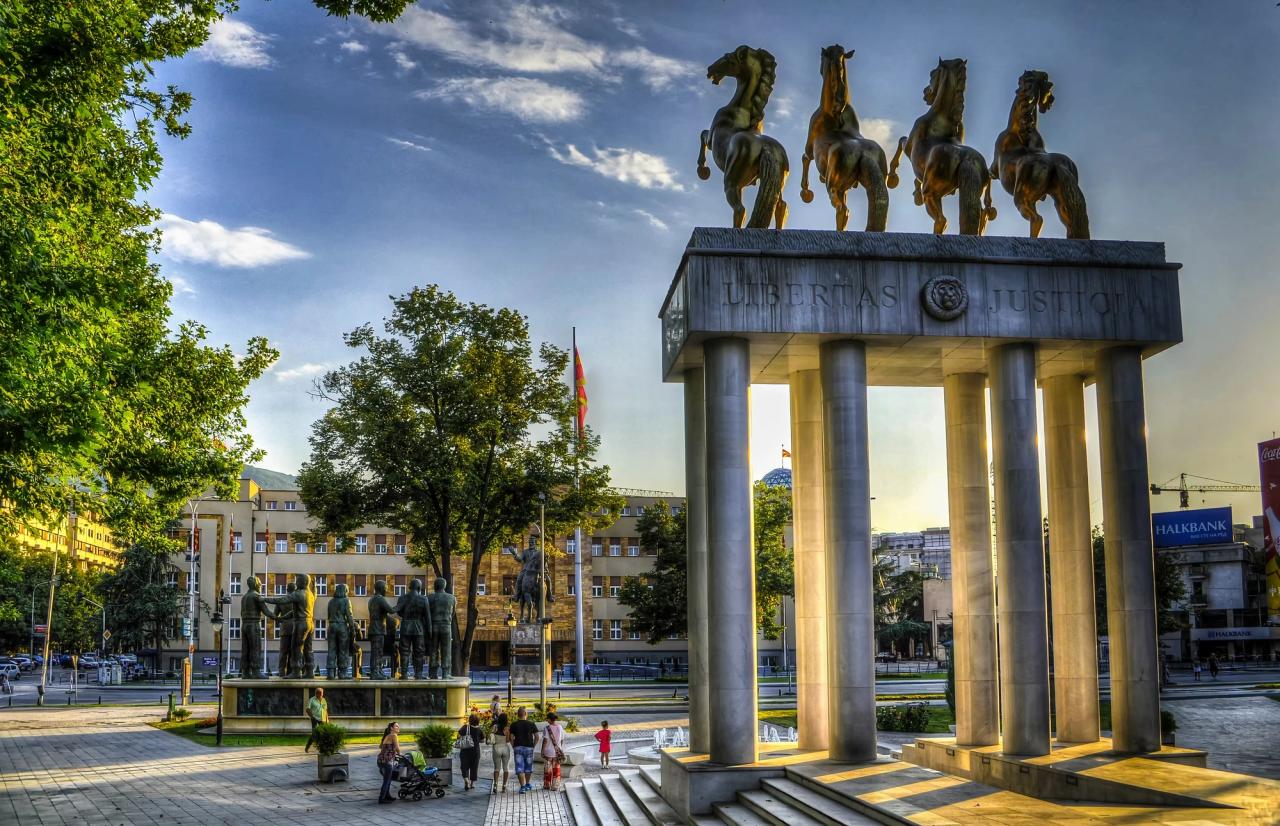
Skopje, a capital da Macedónia do Norte, é um dos destinos de expatriados mais subestimados da Europa. Encravada no vale do rio Vardar e enquadrada pelo monte Vodno, esta cidade de cerca de 526.000 habitantes mistura bazares da era otomana com a arrojada arquitetura neoclássica do controverso projeto Skopje 2014. É a terra natal de Madre Teresa, sede do centenário Old Bazaar (Čaršija) e funciona como o centro político, económico e cultural do país. Expatriados atraídos por um custo de vida extremamente acessível, um ritmo de vida descontraído e uma hospitalidade genuína escolhem cada vez mais Skopje em vez de capitais balcânicas mais caras.
Skopje não é uma cidade da Europa Ocidental polida — e isso faz parte do seu encanto. A mistura de fachadas otomanas em ruínas, blocos de apartamentos da era soviética e monumentos novos reluzentes cria uma paisagem urbana diferente de qualquer outra. Para expatriados dispostos a abraçar o inesperado, Skopje oferece uma qualidade de vida autêntica, acessível e surpreendentemente rica.
Skopje em Resumo
- População
- ~526.000 (Grande Skopje, censo de 2021)
- Região
- Região Estatística de Skopje, norte da Macedónia do Norte
- Conhecida Por
- Old Bazaar, Ponte de Pedra, local de nascimento de Madre Teresa
- Renda Média (T1)
- €200–€350 / MKD 12.300–21.500
- Salário Médio
- ~€745 / MKD 45.961 líquido/mês
- Comunidade de Expatriados
- Em crescimento; estudantes, trabalhadores remotos, pessoal de ONG
Porquê Mudar-se para Skopje
- Custo de vida extremamente acessível: Skopje é uma das capitais mais baratas da Europa. Uma refeição completa num restaurante raramente ultrapassa os €5, e um apartamento T1 no centro custa em média menos de €300 por mês. Mesmo o expatriado mais parcimonioso pode viver bem aqui.
- Rico património cultural: O Old Bazaar é um dos maiores e mais antigos distritos de mercado dos Bálcãs, e a icónica Ponte de Pedra liga o passado otomano da cidade ao seu núcleo moderno. A história em camadas da cidade — romana, bizantina, otomana, jugoslava — é visível em cada rua.
- Escapadelas naturais a minutos de distância: O Desfiladeiro de Matka, a apenas 15 km do centro, oferece caminhadas, caiaque e exploração de grutas — um paraíso de fim de semana sem sair dos arredores da cidade. O Monte Vodno, com a sua Cruz do Milénio, é acessível por teleférico e oferece vistas panorâmicas.
- Locais acolhedores e simpáticos: Os norte-macedónios são famosos pela sua hospitalidade. O inglês é cada vez mais falado entre os residentes mais jovens, facilitando a integração dos recém-chegados. Não se surpreenda se um vizinho o convidar para um café durante a sua primeira semana.
- Crescente comunidade de nómadas digitais: Com internet rápida, espaços de coworking económicos e uma cultura de cafés que acolhe quem trabalha no portátil, Skopje está a emergir como um centro balcânico para profissionais remotos.
- Localização estratégica nos Bálcãs: Skopje fica a uma curta viagem de autocarro ou carro de Salónica, Sófia, Pristina e Tirana, tornando as viagens regionais fáceis e económicas.
Encontrar Habitação em Skopje
Rendas Médias
| Bairro | T1 | T3 | Características |
|---|---|---|---|
| Centar | €280–€380 | €500–€700 | Coração da cidade; pedestrianizável, vibrante |
| Debar Maalo | €250–€350 | €450–€650 | Cafés da moda, edifícios renovados |
| Aerodrom | €180–€270 | €350–€500 | Acessível, residencial, bem servido de transportes |
| Karpoš | €220–€320 | €400–€580 | Ideal para famílias, espaços verdes |
| Kisela Voda | €160–€250 | €320–€470 | Boa relação qualidade/preço, acesso conveniente |
| Gjorče Petrov | €140–€220 | €280–€420 | Mais calmo, mais espaço, ambiente descontraído |
Como Encontrar Habitação
- Pazar3.mk: O maior site de classificados local; a maioria dos senhorios privados anuncia aqui. Filtre por bairro, preço e dimensão.
- Reklama5.mk: Outra plataforma popular para apartamentos e quartos. Útil para comparar preços de mercado.
- Grupos do Facebook: Pesquise por "Skopje Apartments" ou "Expats in Skopje" — surgem anúncios diariamente. É muitas vezes a forma mais rápida de encontrar alojamento.
- Agências locais: As agências imobiliárias podem ajudar com a documentação e as barreiras linguísticas, cobrando normalmente meio mês de renda como comissão.
- Passa-palavra: Muitas das melhores oportunidades nunca são anunciadas online. Diga a colegas e conhecidos que procura — os locais costumam saber de apartamentos disponíveis.
Dicas para Expatriados
- Negocie a renda — os preços anunciados são muitas vezes flexíveis, especialmente para contratos mais longos.
- Obtenha sempre um contrato de arrendamento assinado; é necessário para o registo de residência na esquadra de polícia local.
- Contemple um orçamento separado para utilidades (eletricidade, aquecimento, água, internet) — raramente estão incluídas na renda.
- Visite os apartamentos pessoalmente quando possível; as fotografias nos sites de anúncios podem estar desatualizadas ou ser enganosas.
- Apartamentos mobilados são comuns e custam apenas um pouco mais do que os não mobilados.
- Pergunte sobre o sistema de aquecimento — alguns edifícios mais antigos usam aquecimento central com horários fixos, enquanto os apartamentos mais recentes costumam ter controlos de aquecimento individuais.
Guia de Bairros
- Centar: Ideal para expatriados pela primeira vez que querem estar no centro de tudo. A uma curta distância a pé da Praça Macedónia, do Old Bazaar e da maioria dos serviços governamentais. A renda é a mais alta da cidade, mas continua acessível para os padrões europeus. Animado de dia e de noite, com restaurantes, bancos e lojas em cada esquina.
- Debar Maalo: O bairro boémio. Repleto de restaurantes, bares de vinhos e locais de brunch de fim de semana. Popular entre jovens profissionais e criativos. Renda moderada com uma atmosfera animada dia e noite. Provavelmente o bairro mais social de Skopje.
- Aerodrom: Um grande bairro residencial moderno a leste do centro. Bem servido de autocarros, com supermercados, ginásios e escolas. Ótimo para quem quer uma renda mais baixa sem sacrificar a conveniência. Uma boa mistura de edifícios de apartamentos antigos e novos.
- Karpoš: A oeste do Vardar, Karpoš é mais verde e mais tranquilo. Famílias e expatriados de longo prazo preferem-no pelos seus parques, proximidade ao City Park e infraestrutura sólida, incluindo escolas internacionais. Também perto da zona do Bulevar com restaurantes e lojas.
- Kisela Voda: Sul do centro, oferecendo algumas das melhores relações qualidade/preço da cidade. Uma escolha prática para expatriados preocupados com o orçamento que se deslocam diariamente ao centro. Ruas residenciais tranquilas com lojas e mercados locais.
- Vodno / Gorno Nerezi: Bairros na encosta com vistas panorâmicas sobre a cidade, ar mais fresco e moradias. Preço mais elevado, mas ideal para quem procura paz e natureza. O acesso aos trilhos do monte Vodno é uma grande vantagem para os amantes de caminhadas.
Custo de Vida em Skopje
Decomposição do Orçamento Mensal
| Categoria | Intervalo de Orçamento |
|---|---|
| Renda (T1, centro) | €250–€350 / MKD 15.400–21.500 |
| Serviços públicos | €80–€120 / MKD 4.900–7.400 |
| Internet | €12–€18 / MKD 740–1.100 |
| Alimentação | €120–€180 / MKD 7.400–11.100 |
| Transportes | €24 / MKD 1.500 (passe mensal) |
| Refeições fora (4×/mês) | €40–€60 / MKD 2.500–3.700 |
| Lazer/Ginásio | €20–€35 / MKD 1.200–2.200 |
| Total | €546–€787 / MKD 33.640–48.500 |
Custos do dia a dia
- Café: €0,80–€1,20 / MKD 50–75
- Almoço (restaurante informal): €3–€5 / MKD 185–310
- Passe mensal de transportes: €24 / MKD 1.500
- Cerveja (bar): €1,50–€2,50 / MKD 90–155
- Bilhete de cinema: €3,50–€5 / MKD 215–310
- Pão (fôrma): €0,50 / MKD 30
- 1 litro de leite: €0,90 / MKD 55
Deslocar-se em Skopje
- Transportes públicos: Skopje tem uma rede de autocarros gerida pela JSP. Um passe mensal custa cerca de €24 (MKD 1.500). Os autocarros cobrem a maior parte da cidade, mas podem ficar lotados nas horas de ponta. As rotas estão a ser modernizadas com veículos mais recentes.
- Táxis: Baratos e abundantes. Utilize aplicações como o Cammeo ou ligue para uma central. Uma viagem atravessando a cidade raramente ultrapassa os €3–€4. Confirme sempre que o taxímetro está a funcionar ou combine o preço com antecedência. A gorjeta não é obrigatória, mas arredondar o valor é comum.
- Bicicleta: A cidade está a construir mais ciclovias, embora a infraestrutura ainda esteja em desenvolvimento. O caminho ao longo do rio Vardar é popular para passeios de bicicleta e liga vários bairros. O sistema de partilha de bicicletas está a surgir, mas ainda não é generalizado. Andar de bicicleta é mais agradável de abril a outubro.
- Condução: O congestionamento de trânsito é moderado, principalmente durante as deslocações matinais e vespertinas. Estacionar no centro pode ser difícil, mas é barato em comparação com a Europa Ocidental. O estacionamento na via pública é pago nas zonas centrais. Pode obter um cartão de residente para estacionamento na câmara municipal.
- Partilha de viagens: O Uber não opera em Skopje, mas o Cammeo e outras aplicações locais funcionam de forma semelhante. Existem serviços de táxi partilhado em algumas rotas.
- Aeroporto: O Aeroporto Internacional de Skopje (SKP), a 17 km do centro, liga-se aos principais hubs europeus através da Wizz Air, Turkish Airlines, Austrian Airlines, LOT e outras companhias. Voos económicos para Viena, Budapeste e Istambul são frequentes e podem custar apenas €15–€30 por trajeto.
- Viagens entre cidades: Ligações regulares de autocarro para Ohrid (3 horas), Bitola (2,5 horas) e países vizinhos (Sófia: 4 horas, Salónica: 3 horas, Pristina: 2 horas). Existe serviço ferroviário, mas é significativamente mais lento do que os autocarros. Os bilhetes de autocarro internacionais são baratos — muitas vezes abaixo de €15.
Saúde em Skopje
- Hospitais públicos: Centro Clínico Madre Teresa (o maior do país), Hospital Municipal "8 de Setembro". As instalações públicas são acessíveis, mas podem implicar maiores tempos de espera e equipamento mais antigo.
- Clínicas privadas: Acibadem Sistina, Remedika e Zan Mitrev são populares entre os expatriados pelos tempos de espera mais curtos, equipamento moderno e pessoal falante de inglês. As consultas privadas custam tipicamente €15–€40.
- Médicos de língua inglesa: Facilmente disponíveis em clínicas privadas; menos comuns em instalações públicas. A maioria das clínicas privadas tem pessoal de receção que fala inglês.
- Dentística: As clínicas dentárias privadas são excelentes e muito acessíveis — uma fração dos preços da Europa Ocidental. Muitos expatriados planificam trabalhos dentários para a sua estadia em Skopje.
- Farmácias: Amplamente disponíveis por toda a cidade, muitas abertas até tarde ou 24 horas. A medicação com receita é muito acessível em comparação com a Europa Ocidental. Os medicamentos de venda livre mais comuns estão disponíveis sem receita médica.
- Seguro de saúde: Obrigatório para residentes. O seguro público cobre a maioria dos serviços básicos. Os planos de seguro de saúde privado são baratos (€20–€50/mês) e recomendados para expatriados que preferem clínicas privadas.
- Número de emergência: 194 (ambulância), 192 (polícia), 193 (bombeiros).
Receba um plano de mudanca personalizado
Deixe o seu e-mail e enviaremos uma checklist personalizada e tres orcamentos de empresas verificadas.
Cultura e Estilo de Vida
A identidade cultural de Skopje é multifacetada. O Antigo Bazar (Čaršija) é a alma da cidade — um extenso bairro comercial da era otomana com mesquitas, igrejas medievais, hamames (banhos turcos), oficinas de caldeireiros e restaurantes tradicionais. É um dos bazares mais bem preservados dos Bálcãs e um sítio cultural reconhecido pela UNESCO.
A Ponte de Pedra, construída no século XV sobre fundações romanas, atravessa o rio Vardar e liga simbolicamente o antigo bairro otomano à Praça da Macedónia e à parte moderna da cidade. Continua a ser uma passagem pedonal e o cenário de festivais e eventos públicos.
Skopje é a cidade natal de Madre Teresa, nascida aqui em 1910 como Gonxha Bojaxhiu. A Casa Memorial de Madre Teresa, construída no local da igreja original do Sagrado Coração onde foi batizada, é um museu e local de peregrinação na Rua da Macedónia.
O Cânion de Matka, a cerca de 30 minutos do centro da cidade, é um dos maiores tesouros naturais de Skopje. O cânion possui um lago, uma barragem hidroelétrica, mosteiros medievais (incluindo o de Santo André e o Mosteiro de Santo André do século XIV) e a Gruta de Vrelo — potencialmente uma das grutas submarinas mais profundas do mundo. Passeios de barco, caiaque e escalada são atividades populares.
A cidade também tem uma cena artística em crescimento, com galerias, arte urbana e o Festival anual de Jazz de Skopje e o Festival de Cinema SOFEST, que atraem atenção internacional.
Vida Noturna e Entretenimento
- A vida noturna de Skopje está concentrada em Debar Maalo e ao longo da margem do rio Vardar. Os clubes e bares vão de espaços descontraídos de vinhos a discotecas com música local e internacional.
- A música ao vivo é comum — jazz, rock e música folclórica tradicional macedónia podem ser encontrados em qualquer fim de semana.
- O Skopje City Mall e o East Gate Mall oferecem complexos de cinema, boliche e compras para os dias de chuva.
- Sessões de cinema ao ar livre e concertos ao ar livre realizam-se nos meses mais quentes, frequentemente na Praça da Macedónia ou no Parque da Cidade.
- A cidade tem uma cena crescente de cerveja artesanal e café de especialidade, com novas microcervejarias e cafés de terceira vaga a abrir regularmente.
Comida e Restauração
- Experimente tavče gravče (feijão assado tradicional em panela de barro), ajvar (pasta de pimento e beringela assados), burek (massa folhada recheada com carne ou queijo), salada shopska (tomate, pepino, cebola e queijo branco) e mastika (aguardente local com sabor a anis).
- Para os amantes de carne, kebapi (enchidos grelhados de carne picada) e pljeskavica (hambúrguer temperado) são imprescindíveis nas grelhadoras.
- O Antigo Bazar e Debar Maalo são as melhores zonas para refeições autênticas e diversificadas.
- Uma refeição tradicional completa com bebidas pode custar menos de €5 por pessoa em restaurantes locais. A restauração de luxo raramente ultrapassa os €15–€20.
- O Mercado Verde de Skopje (Zelena Pazar) é ideal para fruta fresca, legumes, queijo local, mel e ajvar a preços mínimos.
- Cozinha internacional (italiana, turca, chinesa, indiana) está disponível, embora a oferta seja mais limitada do que nas grandes capitais europeias. As opções de sushi e comida tailandesa estão a aumentar.
Comunidade de Expatriados
- Grupos ativos no Facebook: "Expats in Skopje", "Internationals in North Macedonia", "Digital Nomads in the Balkans".
- Tertúlias regulares de intercâmbio de idiomas, quizzes de pub e grupos de caminhadas organizados através das redes sociais.
- Organizações internacionais (agências da ONU, OSCE, ONGs) mantêm uma presença expatriada visível, particularmente em Centar e Debar Maalo.
- Espaços de coworking como o Hub Skopje e o Brainster atraem nómadas digitais, freelancers e fundadores de startups.
- A comunidade local é geralmente curiosa e acolhedora para com os estrangeiros, o que torna a integração social relativamente fácil.
- As comunidades das igrejas e mesquitas também funcionam como centros de convívio para alguns grupos de expatriados.
Mercado de Trabalho em Skopje
- Principais setores: TI e externalização de software, fabrico automóvel, governo e administração pública, educação, ONGs e turismo.
- Principais empregadores: Instituições governamentais, empresas de externalização de TI, fornecedores do setor automóvel (Kostal, Johnson Matthey, Van Hool), ONGs internacionais e embaixadas.
- Salários médios por setor:
| Setor | Salário Mensal Líquido (MKD) | Aprox. EUR |
|---|---|---|
| TI / Software | 50.000–90.000 | €810–€1.460 |
| Administração | 30.000–45.000 | €490–€730 |
| Educação | 28.000–40.000 | €450–€650 |
| Hotelaria e restauração | 22.000–35.000 | €360–€570 |
| Engenharia | 40.000–70.000 | €650–€1.140 |
- Recursos de procura de emprego: Vrabotuvanje.com, Makedonski Raboti, LinkedIn e agências de recrutamento locais como a Manpower North Macedonia.
- Trabalho remoto: Muitos expatriados em Skopje trabalham remotamente para empregadores estrangeiros, aproveitando o baixo custo de vida e a internet rápida.
Cultura de trabalho e negócios
- O horário comercial é normalmente das 09:00 às 17:00, de segunda a sexta-feira. Muitas lojas e serviços também funcionam ao sábado de manhã.
- A cultura de trabalho é relativamente formal no governo e na banca, mas mais descontraída nas áreas de TI, startups e indústrias criativas.
- A pontualidade é valorizada, mas não rigorosamente exigida em contextos sociais.
- Os apertos de mão são a norma para cumprimentos em contextos profissionais. Oferecer presentes não é esperado, mas é apreciado durante as festas.
- O inglês é amplamente utilizado em empresas internacionais e ONGs. O conhecimento de macedónio ou albanês é uma vantagem em empresas locais.
Educação em Skopje
- Escolas internacionais: NOVA International Schools (do 1.º ao 12.º ano, currículo americano), Yahya Kemal College (programas bilingues turco-macedónio e inglês). As propinas variam entre €3.000 e €8.000 por ano. As listas de espera podem ser longas, por isso candidate-se com antecedência.
- Universidades: Universidade Ss. Cyril e Methodius (maior universidade pública, várias faculdades oferecem programas lecionados em inglês), University American College Skopje (privada, programas de negócios e direito em inglês), European University, University of Tourism and Management.
- Escolas de línguas: Numerosas escolas privadas oferecem macedónio para estrangeiros, assim como cursos de inglês, alemão, francês, albanês e turco. O Centro de Línguas da Universidade é uma opção popular e acessível.
- Jardim de infância e creche: Disponíveis em contexto público e privado. Os jardins de infância privados custam entre €100 e €250 por mês e frequentemente possuem equipa bilingue.
Lista de verificação para a mudança para Skopje
- Confirme os requisitos de visto ou autorização de residência de acordo com a sua nacionalidade
- Organize um seguro de saúde (seguro de viagem ou apólice internacional)
- Prepare documentos legalizados ou apostilados (certidão de nascimento, diplomas, certidão de casamento)
- Pesquise opções de alojamento no Pazar3.mk e em grupos do Facebook
- Informe o seu banco sobre a mudança de endereço internacional
- Descarregue aplicações de tradução (o Google Translate suporta macedónio offline)
- Pesquise os acordos bilaterais do seu país de origem com a Macedónia do Norte (carta de condução, reformas)
- Registe a sua morada na esquadra de polícia mais próxima (obrigatório por lei dentro de 72 horas após a mudança)
- Abra uma conta bancária local (NLB Banka, Stopanska Banka, Komercijalna Banka — é necessário passaporte e comprovativo de morada)
- Obtenha um cartão SIM local (T-Mobile, A1 ou Lycamobile — disponíveis em quiosques e centros comerciais)
- Obtenha um Número de Identificação Fiscal (TIN / ЕМБГ) se planeia trabalhar ou trabalhar como freelancer
- Familiarize-se com as rotas de transporte local e descarregue a aplicação de horários de autocarro
- Localize a farmácia, supermercado e hospital mais próximos da sua nova casa
- Inscreva-se num seguro de saúde (público através do empregador ou apólice privada)
- Registe a sua carta de condução estrangeira ou inicie o processo de troca no Ministério do Interior
- Junte-se a grupos locais de expatriados e participe num encontro ou evento de troca de idiomas
- Explore vários bairros antes de se comprometer com um arrendamento de longo prazo
- Registe-se na embaixada ou consulado do seu país de origem
- Configure as contas de serviços públicos (eletricidade via EVN, água via Vodovod, internet via A1 ou Telekom)
Guias relacionados
- [Mudar-se para a Macedónia do Norte] — guia completo do país sobre vistos, impostos, alfândega e residência
- [Mudar-se para Bitola] — a encantadora segunda cidade da Macedónia do Norte
- [Mudar-se para Ohrid] — vida à beira-lago no Lago Ohrid, classificado pela UNESCO