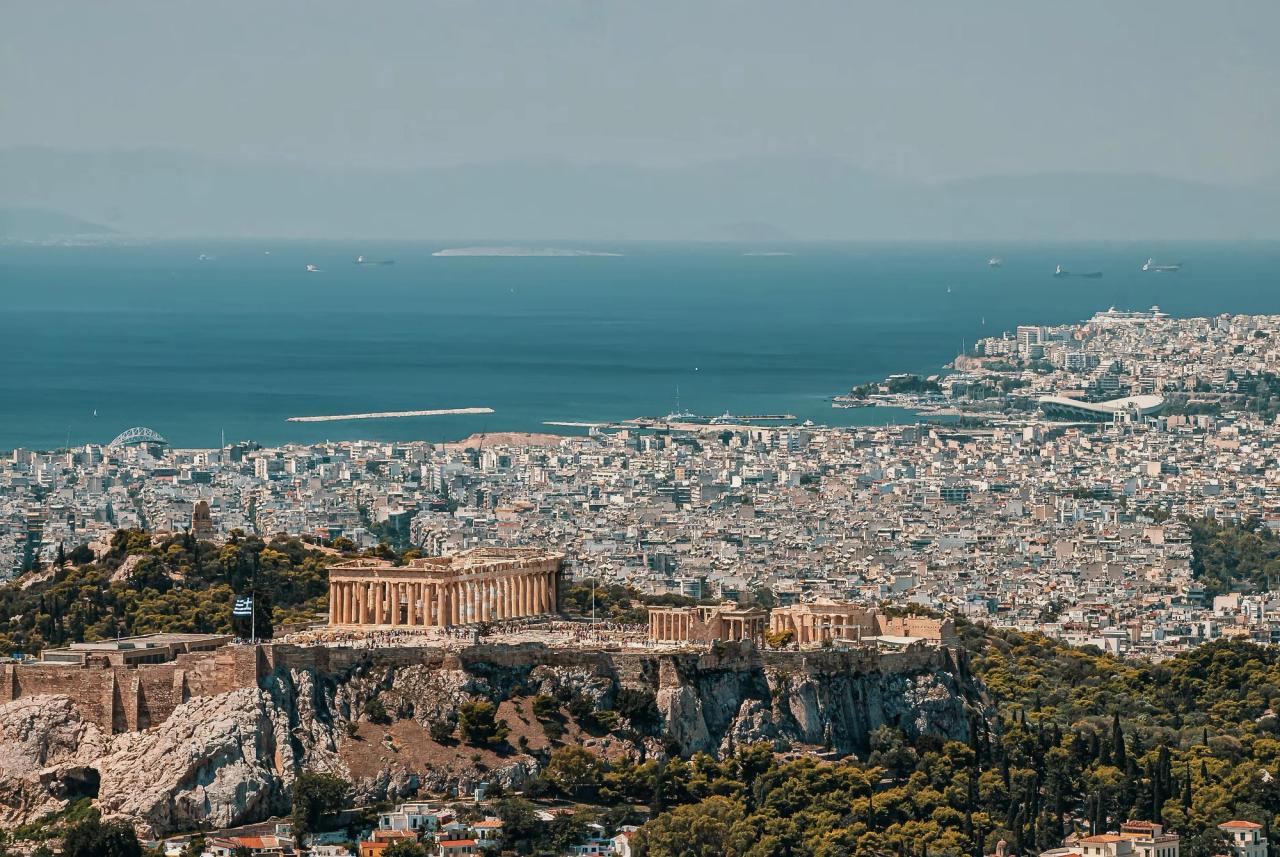
Atenas é uma cidade onde a história antiga encontra a energia urbana moderna. Como capital e maior cidade da Grécia, oferece cultura de classe mundial, vida noturna vibrante e um custo de vida significativamente inferior ao da maioria das capitais da Europa Ocidental. Seja atraído pelas ruínas da Acrópole, pelas ruas boémias de Exarchia ou pelas boutiques de luxo de Kolonaki, Atenas proporciona um estilo de vida que mistura o antigo e o novo. É uma excelente escolha para nómadas digitais, reformados e profissionais que procuram uma base europeia acessível com ótimas condições climatéricas durante todo o ano.
Atenas em Resumo
- População
- ~3,1 milhões (área metropolitana)
- Região
- Ática
- Conhecido Por
- Acrópole, história antiga, cultura de rua vibrante
- Renda Média (T1)
- €400–€700/mês
- Salário Médio
- €900–€1.200/mês líquido
- Comunidade de Expatriados
- Grande e diversificada; comunidades britânica, americana, alemã e balcânica com forte presença
Porquê Mudar para Atenas
- Capital europeia acessível: Atenas oferece uma qualidade de vida comparável à de cidades como Barcelona ou Lisboa, a uma fração do custo.
- Vida cultural rica: Das ruínas antigas às galerias de arte contemporânea e música ao vivo, o calendário cultural da cidade está repleto durante todo o ano.
- Clima excelente: Mais de 250 dias de sol por ano, com invernos suaves e verões quentes e secos.
- Localização estratégica: Atenas é uma porta de entrada para as ilhas gregas e está a um curto voo da maioria das capitais europeias e do Médio Oriente.
- Cena tecnológica em crescimento: Um número crescente de startups e espaços de coworking está a tornar Atenas atrativa para trabalhadores remotos e empreendedores.
- Gastronomia e cultura social: O estilo de vida das tabernas, as refeições ao ar livre e a cultura de café fazem da vida quotidiana uma sensação de férias permanentes.
Visto e Residência
Os cidadãos da UE/EEE podem viver e trabalhar na Grécia sem visto. Os cidadãos não pertencentes à UE precisam de uma autorização de residência. As principais opções incluem:
- Visto de Nómada Digital: Requer comprovativo de rendimento remoto de pelo menos €3.500/mês. Válido por um ano, renovável.
- Visto de Trabalho: Requer uma oferta de emprego de um empregador grego que patrocine a autorização.
- Visto de Estudante: Para quem está inscrito em universidades gregas ou programas de língua.
- Visto de Reforma/Independência Financeira: Comprovativo de rendimento passivo suficiente e seguro de saúde.
- Cartão Azul da UE: Para trabalhadores altamente qualificados com grau universitário e uma oferta de emprego que cumpra os limiares mínimos salariais.
Registe-se no Serviço de Estrangeiros local (Αστυνομία) no prazo de 30 dias após a chegada. O processo é burocrático — leve todos os documentos, cópias e muita paciência.
Dicas de Residência
- Guarde cópias certificadas de todos os documentos (passaporte, certidão de nascimento, certidão de casamento, comprovativo de rendimentos).
- O AFM (número de contribuinte) é necessário antes de quase qualquer transação oficial — obtenha-o em primeiro lugar.
- O AMKA (número de segurança social) é necessário para cuidados de saúde e emprego. Solicite no seu KEP local (Centro de Atendimento ao Cidadão).
- As renovações de residência devem ser iniciadas 60 dias antes do vencimento para evitar interrupções.
Encontrar Alojamento em Atenas
Rendas Médias
| Bairro | T1 | T3 | Características |
|---|---|---|---|
| Kolonaki | €550–€800 | €1.000–€1.600 | Requintado, central, embaixadas |
| Plaka | €500–€750 | €900–€1.500 | Muito turístico, encantador, cidade antiga |
| Exarchia | €350–€550 | €650–€1.000 | Boémio, amigo dos estudantes, artístico |
| Psyrri | €400–€650 | €750–€1.200 | Vida noturna na moda, central, estilo urbano-chique |
| Kypseli | €300–€500 | €550–€900 | Multicultural, acessível, residencial |
| Koukaki | €450–€700 | €800–€1.300 | Tranquilo, vistas para a Acrópole, muitos Airbnb |
Como Encontrar Alojamento
- Spitogatos.gr: o maior portal imobiliário da Grécia; a maioria dos anúncios encontra-se aqui.
- XE.gr: site de classificados com uma grande secção de arrendamento.
- Grupos do Facebook: "Apartments in Athens" e "Athens Expats Housing" estão ativos.
- Visite pessoalmente antes de assinar; as fotos podem ser enganosas. Peça sempre um contrato de arrendamento (μίσθωση).
- As agências imobiliárias cobram um mês de renda como honorários — tente tratar diretamente com os proprietários sempre que possível.
Dicas para Expatriados
- Preveja 1 a 2 meses de depósito mais o primeiro mês de renda adiantado.
- Muitos senhorios preferem dinheiro ou transferência bancária; os pagamentos por cartão são raros.
- Verifique se as utilidades (eletricidade DEI, água EYDAP) estão incluídas ou são separadas.
- Os arrendamentos de curta duração mobilados custam entre 20 a 40% mais do que os arrendamentos de longa duração sem mobília.
- Evite pagar qualquer coisa antes de ver o apartamento pessoalmente — existem burlas, especialmente no Facebook.
Guia de Bairros
- Plaka: o coração histórico sob a Acrópole. Ruas empedradas, casas neoclássicas e cafés sem fim. A renda é mais alta devido ao turismo, mas o ambiente é inigualável. Ideal para quem quer viver dentro de um postal.
- Kolonaki: o bairro mais prestigiado de Atenas. Lojas de designers, galerias de arte e embaixadas alinham-se pelas ruas. As rendas estão no topo do mercado. Ideal para profissionais e expatriados com maior poder de compra.
- Exarchia: o bairro anarquista e intelectual. Arte urbana por todo o lado, comida barata e uma forte atmosfera de contracultura. As rendas são baixas. Popular entre estudantes, artistas e expatriados mais jovens.
- Psyrri: antes áspero, agora uma das zonas mais na moda de Atenas. Cheio de bares, restaurantes e pequenas galerias. Central e fácil de percorrer a pé. Óptimo para amantes da vida nocturna e jovens profissionais.
- Koukaki: ruas residenciais tranquilas mesmo a sul da Acrópole. Popular entre turistas de Airbnb, mas cada vez mais ocupado por arrendatários de longo prazo. Bons cafés e um ambiente de aldeia a poucos minutos do centro.
- Kypseli: um bairro residencial diverso, com uma forte comunidade imigrante. Rendas acessíveis e vida local autêntica. Bom para famílias e expatriados atentos ao orçamento.
- Glyfada: a "Riviera Ateniense". Vida junto à praia, com restaurantes e lojas sofisticados. A 30 minutos de elétrico do centro. Ideal para quem quer viver à beira-mar sem sair da cidade.
Custo de Vida em Atenas
Detalhe do Orçamento Mensal
| Categoria | Intervalo de Orçamento |
|---|---|
| Renda (T1, centro) | €400-€700 |
| Serviços básicos | €100-€180 |
| Internet | €25-€35 |
| Mercearias | €200-€300 |
| Transportes | €30–€50 |
| Comer fora (4x/mês) | €80–€140 |
| Lazer/Ginásio | €30–€50 |
| Total | €865–€1.455 |
Custos do dia a dia
- Café (freddo espresso): €2,50–€3,50
- Almoço (taverna informal): €8–€12
- Passe mensal de transportes (autocarro/metro): €30
- Cerveja (bar): €4–€6
- Bilhete de cinema: €7–€9
- Pão: €1,00–€1,50
- 1 litro de leite: €1,20–€1,50
- Dúzia de ovos: €3,00–€4,00
Deslocar-se em Atenas
- Transportes públicos: Atenas tem um metro eficiente (3 linhas), autocarros, elétricos e tróleis. Um passe mensal custa €30 para todos os modos. O metro liga o aeroporto, o porto (Pireu) e a maioria das zonas centrais.
- Bicicleta: infraestrutura ciclável limitada; há algumas ciclovias dedicadas nos subúrbios costeiros. Não é ideal para deslocações diárias no centro devido às colinas e ao trânsito.
- Condução: trânsito intenso e estacionamento limitado no centro. Um carro é útil para explorar a Ática, mas pouco prático para deslocações diárias na cidade.
- Aeroporto: o Aeroporto Internacional de Atenas (ATH) fica a 35 km do centro. O metro, o autocarro (X95) e o comboio suburbano ligam-no à cidade em 40-60 minutos.
- Intercidades: comboios para Salónica (4,5 horas), autocarros para o Peloponeso e cidades do continente. Os ferries a partir do Pireu chegam a todas as ilhas principais.
- Táxis: acessíveis para os padrões europeus. Use a aplicação Beat para reservas fiáveis. A tarifa fixa do aeroporto para o centro é 40 EUR (5h00-meia-noite) ou 55 EUR (meia-noite-5h00).
- Serviços de transporte por aplicação: a Beat (aplicação local) funciona bem. A Uber opera em Atenas, mas usa táxis licenciados.
Cuidados de saúde em Atenas
- Hospitais/clínicas: os principais hospitais públicos incluem o Evangelismos e o Laiko. Hospitais privados como o Hygeia e o Metropolitan são populares entre expatriados pelos tempos de espera mais curtos e pelo pessoal que fala inglês.
- Médicos que falam inglês: amplamente disponíveis, sobretudo em clínicas privadas. Muitos médicos fizeram formação no estrangeiro.
- Farmácias: encontram-se praticamente em todas as esquinas. Os farmacêuticos podem aconselhar sobre problemas menores e dispensar muitos medicamentos sem receita médica.
- Número de emergência: 112 (em toda a EU) ou 166 (ambulância EKAB).
- Seguro de saúde: cidadãos da EU podem usar o EHIC em emergências. Residentes de fora da EU precisam de seguro privado ou podem aceder aos cuidados de saúde públicos através de contribuições para o EFKA.
- Cuidados dentários: as clínicas dentárias privadas são acessíveis em comparação com o norte da Europa. Uma consulta de rotina custa 30-50 EUR.
Receba um plano de mudanca personalizado
Deixe o seu e-mail e enviaremos uma checklist personalizada e tres orcamentos de empresas verificadas.
Bancos e finanças
- Abrir uma conta bancária: precisa de um AFM (número fiscal), passaporte e comprovativo de morada. Os principais bancos incluem Alpha Bank, Eurobank, National Bank e Piraeus Bank.
- Tipos de conta: a maioria dos expatriados abre uma conta à ordem (logariasmos trexoumenou). Os cartões de débito são habituais; os cartões de crédito exigem comprovativo de rendimentos.
- Transferências: as transferências SEPA dentro da EU são gratuitas ou muito baratas. As transferências internacionais custam 10-30 EUR por transação.
- Cultura do dinheiro vivo: a Grécia ainda usa muito dinheiro vivo. Muitos pequenos negócios, senhorios e mercados preferem dinheiro vivo. Leve sempre algum consigo.
- Caixas automáticos: amplamente disponíveis. Os limites de levantamento são normalmente 300-600 EUR/dia. Alguns cobram taxas a não clientes.
Língua e comunicação
- Língua oficial: grego. O alfabeto é diferente (grego, não latino), o que torna a leitura de placas desafiante no início.
- Proficiência em inglês: elevada entre os gregos mais jovens (com menos de 40 anos) e no setor dos serviços. Repartições públicas e gerações mais velhas podem não falar inglês.
- Aprender grego: Muito recomendado, mesmo para o básico do dia a dia. A Universidade de Atenas e escolas privadas oferecem cursos entre EUR 150 e EUR 400 por semestre. Aplicações como o Duolingo cobrem o essencial.
- Frases úteis: Kalimera (bom dia), efharisto (obrigado), parakalo (por favor/de nada), signomi (com licença).
- Cartões SIM: A Cosmote tem a melhor cobertura. A Vodafone e a Wind são alternativas mais baratas. Os tarifários pré-pagos começam nos EUR 8 a EUR 12 por mês com dados.
Cultura e estilo de vida
- Património antigo: A Acrópole, a Ágora Antiga e o Museu Arqueológico Nacional são locais de nível mundial. A história está entranhada na vida quotidiana.
- Arte urbana e música: Atenas tem uma cena artística alternativa muito ativa, especialmente em Exarchia e Metaxourgeio. O rebetiko ao vivo e a música rock enchem pequenos espaços todas as noites.
- Vida noturna: Atenas fica acordada até tarde. Os bares em Gazi, Psyrri e Koukaki muitas vezes só começam a encher depois da meia-noite. As discotecas funcionam até ao amanhecer.
- Vida ao ar livre: Parques como o Jardim Nacional e a Colina de Lycabettus oferecem refúgios verdes. As praias ao longo da costa sul são acessíveis de elétrico.
- Cultura da sesta: Muitas lojas pequenas fecham entre as 14:00 e as 17:00. Planeie recados para as manhãs ou para o início da noite.
Comida e restauração
- Especialidades locais: Souvlaki, moussaka, pastitsio, spanakopita, loukoumades (sonhos com mel).
- Melhores zonas para comer fora: Plaka e Monastiraki para tabernas tradicionais; Psyrri e Koukaki para cozinha grega moderna; Kolonaki para restaurantes mais sofisticados.
- Opções económicas: Os wraps de souvlaki custam EUR 2,50 a EUR 3,50. As padarias (fournos) oferecem tartes e pastelaria baratas. Uma refeição completa numa taverna pode ficar abaixo de EUR 12.
Comunidade expatriada
- Grupos Meetup: Athens Expats, Internations Athens e grupos de intercâmbio linguístico reúnem-se semanalmente.
- Organizações internacionais: A American Community Schools, o British Council e o Goethe-Institut têm todos presença em Atenas.
- Intercâmbios linguísticos: Eventos do Couchsurfing e da aplicação Tandem são populares em cafés à volta de Koukaki e Exarchia.
Mercado de trabalho em Atenas
- Principais setores: Turismo, transporte marítimo, tecnologia, educação (escolas de línguas), imobiliário e alimentação/bebidas.
- Principais empregadores: COSCO (transporte marítimo/porto), OPAP (jogos), National Bank of Greece, Vodafone Greece, vários centros de atendimento multinacionais.
- Salários médios por setor:
| Setor | Líquido Mensal |
|---|---|
| IT / Tecnologia | €1,100–€1,800 |
| Turismo / Hotelaria | €800–€1,100 |
| Ensino (Inglês) | €700–€1,200 |
| Finanças | €1,000–€1,600 |
| Marketing | €900–€1,400 |
- Recursos de pesquisa de emprego: LinkedIn, Kariera.gr, Indeed Greece e grupos locais do Facebook para expatriados.
Educação em Atenas
- Escolas internacionais: American Community Schools of Athens (ACS), St. Catherine's British School, Campion School. As propinas variam entre €8,000 e €20,000/ano.
- Universidades: Universidade Nacional e Kapodistrian de Atenas, Universidade de Economia e Negócios de Atenas, Universidade Panteion.
- Escolas de idiomas: Centenas de escolas de idiomas privadas (frontistiria) ensinam grego e inglês. A Universidade de Atenas também oferece cursos de grego para estrangeiros.
Lista de Verificação para Mudança para Atenas
- Obter um visto ou autorização de residência, se necessário (cidadãos da UE: registar-se na esquadra de polícia local)
- Pesquisar bairros e selecionar 2€3 áreas
- Juntar-se a grupos do Facebook de expatriados em Atenas para pistas sobre alojamento
- Arranjar seguro de saúde internacional ou confirmar cobertura do EHIC
- Começar a aprender grego básico ? mesmo algumas frases ajudam
- Preparar cópias certificadas de documentos essenciais (passaporte, certidão de nascimento, comprovativo de rendimentos)
- Obter um AFM (número fiscal) no serviço de finanças local (DOY)
- Abrir uma conta bancária grega (Alpha Bank, Eurobank ou Piraeus)
- Obter um cartão SIM local (Cosmote, Vodafone ou Wind)
- Assinar um contrato de arrendamento e instalar os serviços de utilidade pública (DEI, EYDAP)
- Comprar um passe de transporte mensal (€30)
- Localizar a farmácia, o supermercado e o escritório KEP mais próximos
- Registar-se com um médico local ou clínica privada
- Requerer um AMKA (número de segurança social)
- Explorar o bairro a pé e encontrar os seus locais favoritos
- Iniciar aulas de grego ? mesmo o básico ajuda enormemente
- Registar-se na embaixada, se aplicável
- Configurar a banca móvel e familiarizar-se com os hábitos de pagamento gregos
Internet e Conectividade
- Velocidades: Atenas tem boa cobertura de fibra nas zonas centrais. As velocidades médias de download são de 30€100 Mbps. As ligações de fibra (até 1 Gbps) estão disponíveis em muitos bairros.
- Fornecedores: Cosmote, Vodafone e Nova oferecem pacotes de banda larga a partir de €22–€40/mês.
- Dados móveis: O 4G cobre a maior parte da cidade. O 5G está em expansão. A Cosmote tem a melhor cobertura geral.
- Espaços de coworking: Impact Hub Athens, Stone Soup e numerosos cafés servem os trabalhadores remotos. Passes diários a partir de €10–€15.
Guias Relacionados
- [Mudar-se para a Grécia] ? guia completo do país
- [Mudar-se para Tessalônica] ? a segunda cidade da Grécia
- [Mudar-se para Patras] ? a porta de entrada para o Peloponeso