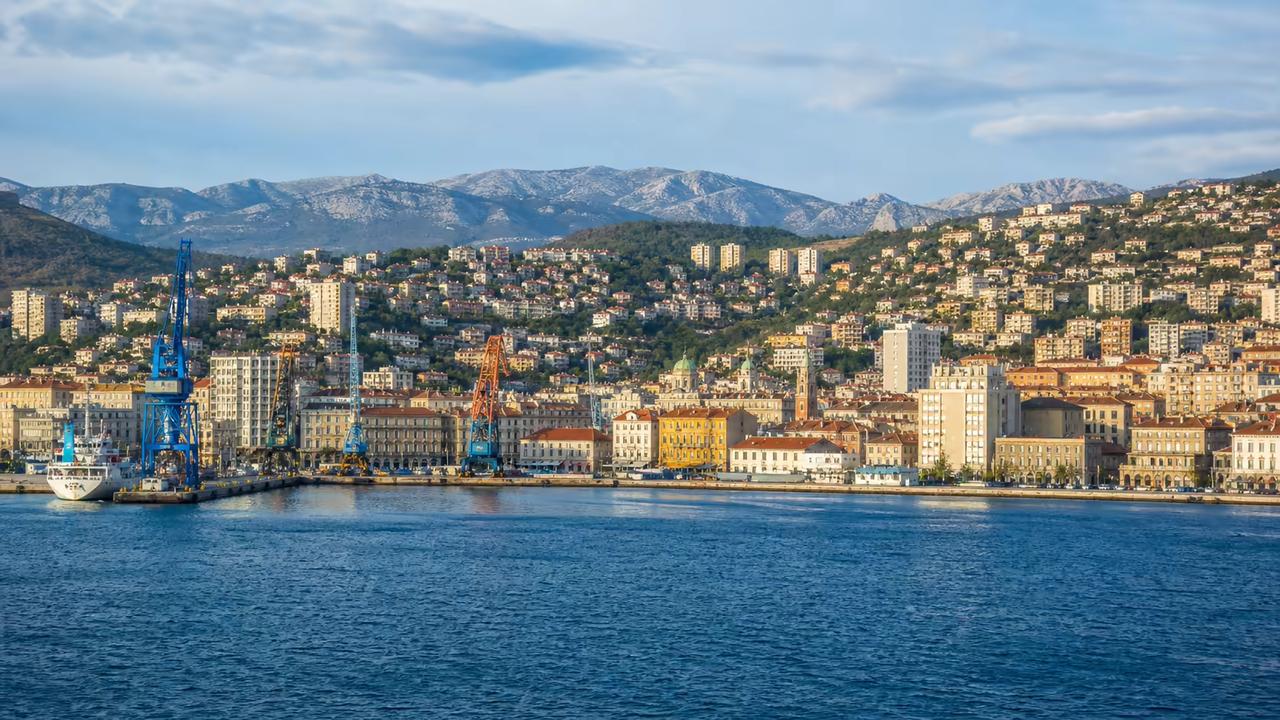

Rijeka é a terceira maior cidade da Croácia e o seu principal porto marítimo, estendendo-se ao longo de um porto natural na Baía de Kvarner, onde as montanhas encontram o Adriático. Conhecida pelo animado passeio Korzo, pelo Castelo de Trsat no topo da colina e por um dos carnavais mais exuberantes da Europa, a cidade mistura a rusticidade marítima com uma cena artística florescente — foi Capital Europeia da Cultura em 2020. O custo de vida é significativamente inferior ao de Zagrebe ou Split, tornando Rijeka atrativa para trabalhadores remotos, reformados e qualquer pessoa que queira a vida adriática sem os preços de Dubrovnik. Se valoriza a autenticidade em vez do polimento e prefere um porto ativo a um resort turístico, Rijeka merece séria consideração.
Rijeka em Resumo
- População
- ~108 000 cidade / ~220 000 área metropolitana
- Região
- Condado de Primorje-Gorski Kotar, Baía de Kvarner
- Conhecida Por
- Passeio Korzo, Castelo de Trsat, Carnaval de Rijeka, Capital Europeia da Cultura 2020
- Moeda
- Euro (€) — adotado em janeiro de 2023
- Renda Média (T1)
- €450–€800 dependendo do bairro
- Salário Médio
- ~€1 200–€1 400/mês líquido
- Comunidade de Expatriados
- Pequena, mas a crescer; mistura de cidadãos da UE, nómadas digitais e regressados dos Balcãs
Porque Mudar-se para Rijeka
- Vivência costeira acessível: A renda e as despesas diárias são notavelmente inferiores às de Split ou Zagrebe, e ainda assim tem o Mar Adriático à sua porta. Um T1 no centro custa em média €600–€800, muito abaixo da costa dálmata.
- Riqueza cultural: Um calendário anual de festivais, galerias e o legado de Capital Europeia da Cultura 2020 mantém a cidade animada fora da época de verão. Só o Carnaval atrai mais de 100 000 visitantes todos os anos em fevereiro.
- Localização estratégica: Rijeka situa-se num cruzamento — uma curta viagem de carro até à península da Istria, fácil acesso de ferry às ilhas de Kvarner de Krk, Cres e Lošinj, e boas ligações de comboio e autocarro a Zagrebe, Liubliana e Trieste.
- Ritmo gerível: Grande o suficiente para oferecer verdadeiras comodidades, pequena o suficiente para atravessar o centro a pé em 20 minutos. O trânsito é leve e a cidade raramente parece superlotada.
- Porta para a natureza: O Parque Natural de Učka, o Parque Nacional de Risnjak e dezenas de praias insulares ficam todos a menos de uma hora de distância. Caminhadas, natação e vela fazem parte do dia a dia, não são luxos de fim de semana.
- Membro da zona euro: Desde a adoção do euro em 2023, a Croácia elimina as complicações de câmbio para residentes da UE e torna o planeamento financeiro mais simples para todos os expatriados.
Encontrar Habitação em Rijeka
Rendas Médias
| Bairro | T1 | T3 | Características |
|---|---|---|---|
| Centar | €600–€800 | €950–€1 350 | Centro histórico junto ao Korzo; acessível a pé, animado, mais ruidoso |
| Trsat | €500–€700 | €800–€1 150 | No topo da colina com vista para o castelo; mais tranquilo, verde, panorâmico |
| Kantrida | €450–€650 | €750–€1 050 | Distrito costeiro a oeste; praias, complexo desportivo, descontraído |
| Pećine | €500–€700 | €800–€1 150 | Zona costeira a leste do centro; panorâmico, residencial, calmo |
| Turnić | €450–€600 | €650–€950 | Blocos modernos; prático, económico, bem servido de transportes |
| Škurinje | €420–€550 | €650–€900 | Encosta; construções mais recentes, vistas panorâmicas, acessível de carro |
Como Encontrar Habitação
- Njuskalo.hr: O maior site de classificados da Croácia — a maioria dos anúncios de arrendamento privado está aqui. Filtre por "najam" (arrendamento) e pelo distrito de Rijeka para a maior variedade.
- Index oglasi: Outra plataforma local popular com uma secção dedicada a imóveis e um catálogo um pouco diferente do Njuskalo.
- Grupos do Facebook: Os grupos "Stanovi Rijeka" e "Najam Rijeka" são ativos e frequentemente revelam oportunidades antes de chegarem aos portais. Publicar em croata obtém respostas mais rápidas.
- Agências locais: Úteis se precisar de um agente que fale inglês e de ajuda com o contrato; espere pagar um mês de renda como comissão.
- Passa a palavra: Muitas das melhores oportunidades nunca chegam aos anúncios online. Informe vizinhos, colegas e donos de cafés de que está à procura.
Dicas para Expatriados
- Prevê um depósito de um a três meses de renda mais o primeiro mês adiantado. Alguns senhorios aceitam uma garantia bancária em vez disso.
- Pergunte se as despesas estão incluídas — a maioria dos contratos indica renda e contas separadamente. Os custos de aquecimento podem disparar no inverno se o apartamento usar aquecimento elétrico.
- Inspecione quanto a humidade durante o outono; os edifícios antigos em pedra perto do porto podem reter humidade. Verifique cuidadosamente as janelas e a ventilação da casa de banho.
- Os contratos de arrendamento são frequentemente chamados "Ugovor o najmu" e têm normalmente a duração de um ano com renovação automática. Leia a cláusula do período de pré-aviso — é geralmente de 30 a 60 dias.
- Registe o seu contrato de arrendamento no posto de finanças; alguns senhorios preferem saltar este passo, mas isso protege-o legalmente e é necessário para as autorizações de residência.
- Visite o apartamento em diferentes alturas do dia — o ruído da rua e a luz solar variam significativamente entre a manhã e a tarde.
- Se comprar imóvel, espere custos adicionais de 4–6 % do preço de compra para imposto de transmissão, honorários notariais e comissões de agente.
Guia de Bairros
- Centar: O coração da cidade — Korzo, mercados, vida noturna e a estação principal de autocarros. Ideal para quem quer tudo a poucos passos. Rendas mais altas, ruído de rua e estacionamento limitado. Perfeito para jovens profissionais e estadias de curta duração.
- Trsat: Suba as Escadas de Trsat (escadaria Petar Kružić, 561 degraus) para chegar ao castelo e à basílica. Mais tranquilo, vistas panorâmicas, popular entre famílias e expatriados de longo prazo. A descida a pé até ao centro demora cerca de 15 minutos. Também alberga residências de estudantes.
- Kantrida: A oeste ao longo da costa, com praias, o complexo de natação de Kantrida e o estádio de futebol. Ambiente descontraído e desportivo com rendas mais baixas; ideal para nadadores, corredores e famílias com crianças.
- Pećine: Baías viradas a leste e passeios marítimos. Um pouco afastado do centro, mas bem servido pelas linhas de autocarro 1 e 2. Ótimo para quem privilegia vistas para o mar e ruas mais tranquilas em vez de conveniência.
- Turnić: Blocos residenciais no interior com supermercados, escolas e autocarros diretos para o centro em menos de 10 minutos. A opção mais económica perto do centro — prática, sem luxos.
- Škurinje: Mais alto na encosta; construções mais recentes e vistas panorâmicas para as ilhas. Acessível de carro com estacionamento abundante. Atrai famílias que procuram mais espaço e um ambiente mais tranquilo.
Custo de Vida em Rijeka
Decomposição do Orçamento Mensal
| Categoria | Intervalo de orçamento |
|---|---|
| Renda (T1, centro) | €600–€800 |
| Serviços públicos (eletricidade, água, aquecimento) | €150–€200 |
| Internet (fibra, 100 Mbps+) | €25–€35 |
| Supermercado | €250–€350 |
| Transportes (passe mensal de autocarro) | €45–€65 |
| Refeições fora (4x/mês) | €100–€140 |
| Lazer/Ginásio | €35–€55 |
| Total | €1.230–€1.710 |
Uma pessoa solteira pode viver confortavelmente com cerca de €1.400 por mês. Casais que partilham um apartamento costumam reduzir o custo por pessoa para aproximadamente €900–€1.100. Famílias com filhos devem prever um orçamento de €2.000–€2.800, incluindo despesas com escolaridade.
Custos do dia a dia
- Café (expresso): €1,50–€2,50
- Almoço (restaurante informal): €10–€15
- Passe mensal de transportes: €45–€65
- Cerveja (nacional, bar): €3,00–€4,00
- Bilhete de cinema: €6–€8
- Inscrição mensal em ginásio: €35–€55
- Pão de forma: €1,20–€1,80
- Refeição em restaurante de gama média (dois pratos): €18–€30
- 1 litro de leite: €1,10–€1,40
- Dúzia de ovos: €2,80–€3,80
- 1 litro de gasolina: €1,45–€1,65
Clima e Tempo
Rijeka tem um clima subtropical húmido, com verões quentes e invernos frescos e chuvosos, moderados pelo Mar Adriático.
| Estação | Temperatura | Condições |
|---|---|---|
| Primavera (mar–mai) | 10–20 °C (media) | Aquecimento, chuva ocasional; agradável a partir de abril |
| Verão (jun–ago) | 22–30 °C (media) | Quente, sol, seco; brisas marítimas refrescam a costa |
| Outono (set–nov) | 10–22 °C (media) | Início ameno, chuva crescente; outubro é o mês mais chuvoso |
| Inverno (dez–fev) | 3–10 °C (media) | Fresco, nublado, chuvoso; neve é rara ao nível do mar |
A precipitação anual ronda os 1.500 mm, o que faz de Rijeka uma das cidades mais chuvosas da Croácia. Traga um bom casaco de chuva — os habitantes locais dizem que a bura (vento frio de nordeste) é o verdadeiro desafio, não a chuva.
Deslocar-se por Rijeka
- Transportes públicos: Os autocarros urbanos operados pela Autotrolej cobrem o centro e os arredores. Um bilhete único custa cerca de €1,80–€2,00; os passes mensais custam €45–€65 e podem ser carregados num cartão inteligente recarregável. O serviço é fiável, mas as frequências reduzem-se após a meia-noite.
- Ciclismo: O passeio marginal é plano e adequado para bicicletas, e o aluguer de e-bikes está a crescer. As ruas íngremes em Trsat, Škurinje e outros bairros mais elevados limitam o uso da bicicleta nas tarefas diárias. A cidade está a expandir a sua rede de ciclovias.
- Condução: O estacionamento no centro da cidade é limitado e sujeito a parquímetro na zona azul; as zonas residenciais exigem licença. O trânsito é moderado em comparação com Zagreb. É necessária uma vinheta de autoestrada ou dispositivo de portagens ENC para as autoestradas croatas. Os preços dos combustíveis rondam a média da UE.
- Aeroporto: O Aeroporto de Rijeka (RJK), na Ilha de Krk, opera rotas sazonais para Londres, Berlim, Estocolmo e algumas outras cidades. Para ligações internacionais durante todo o ano, o Aeroporto de Zagreb (ZAG) é o principal hub, a cerca de duas horas de carro ou autocarro.
- Ligações interurbanas: Frequentes serviços de autocarro para Zagreb (~3 h), autocarros diretos para Trieste (~1,5 h) e Liubliana (~3 h), e ferries da Jadrolinija para Cres, Lošinj, Krk e Rab. A estação ferroviária fica no centro, junto ao porto, embora os serviços ferroviários sejam mais lentos que os autocarros na maioria das rotas.
- Táxis e transporte a pedido: Táxis tradicionais e a Bolt operam na cidade. Uma viagem pela cidade custa €5–€10. A Bolt é geralmente mais barata do que os táxis de rua e pode ser reservada pela aplicação.
- A pé: O centro da cidade é compacto e plano. Pode ir a pé da estação de autocarros a Trsat em cerca de 25 minutos (a subir), e todo o passeio marginal é pedonal.
- Partilha de carro: Diversos serviços de partilha e aluguer de carros operam em Rijeka para passeios de dia. Úteis para escapadelas de fim de semana à Ístria ou às ilhas.
- Estacionamento: O estacionamento na rua no centro é sujeito a parquímetro (zona azul) durante o horário de trabalho. Há passes mensais de garagem disponíveis para residentes por aproximadamente €50–€80.
Saúde em Rijeka
- Hospitais/Clínicas: O KBC Rijeka (Centro Hospitalar Clínico) é o principal hospital público, oferecendo uma gama completa de especialidades, incluindo urgências, cirurgia e diagnósticos. Diversas clínicas privadas — como a Poliklinika Rijeka — complementam o sistema e costumam ter tempos de espera mais curtos.
- Médicos de língua inglesa: Disponíveis no KBC Rijeka e em clínicas privadas no centro. A comunidade expatriada mantém listas informais de referência através de grupos no Facebook e do InterNations. Consultas com especialistas em clínicas privadas podem geralmente ser marcadas em poucos dias.
- Farmácias: Bem distribuídas pela cidade, abertas durante o horário comercial (normalmente das 8:00 às 20:00). Pelo menos uma farmácia de serviço funciona 24 horas no centro da cidade. Os farmacêuticos podem aconselhar sobre pequenas doenças e vender muitos medicamentos sem receita médica.
- Número de emergência: 112 (emergência geral) / 194 (ambulância)
- Seguro de saúde: O sistema público croata (HZZO) cobre os residentes legais. O registo exige comprovativo de morada, documento de identificação válido e documentação de emprego. Muitos expatriados complementam com seguro privado de provedores como a Allianz ou a Wiener Städtische para acesso mais rápido a especialistas.
Receba um plano de mudanca personalizado
Deixe o seu e-mail e enviaremos uma checklist personalizada e tres orcamentos de empresas verificadas.
Cultura e Estilo de Vida
- Passeio Korzo: A espinha dorsal social da cidade — ladeada por arquitetura austro-húngara, cafés, artistas de rua e a icónica Torre do Relógio. Habitantes locais e expatriados convergem aqui para café, conversa e observação de pessoas.
- Carnaval de Rijeka: Um dos maiores da Europa, atraindo mais de 100.000 espetadores todos os anos em fevereiro, com desfiles, carros alegóricos elaborados, grupos mascarados e a entrega simbólica das chaves da cidade ao Meštar do Carnaval. A tradição remonta a séculos e contamina toda a cidade.
- Museus e galerias: O Museu de Arte Moderna e Contemporânea, o Museu Marítimo e de História, o peculiar museu de informática Peek & Poke e numerosos espaços de galeria independentes — muitos inaugurados ou ampliados durante o ano da Capital Europeia da Cultura.
- Vida noturna: Bares bordejam o porto e a Cidade Velha durante todo o ano; no verão, a animação desloca-se para as discotecas ao ar livre em Kantrida e Preluk. A música ao vivo é comum aos fins de semana, e a universidade mantém um fluxo constante de público mais jovem.
- Vida ao ar livre: Caminhadas no Parque Natural de Učka, banhos nas praias de Sablićevo e Ploče, e passeios de ferry às ilhas de Cres, Krk e Rab fazem parte do ritmo habitual — não são apenas programas de fim de semana.
Gastronomia e Restaurantes
- Especialidades: Lagostim fresco do Kvarner (considerado dos melhores da Europa), massa fuži com trufas e škampi na buzaru — lagostim estufado em vinho, alho e tomate. O azeite istriano e o vinho Malvazija ficam a uma curta distância.
- Melhores zonas para comer: As ruas laterais da Cidade Velha junto ao Korzo, os restaurantes no topo da colina de Trsat com esplanadas panorâmicas e as konobas (tavernas) à beira-mar espalhadas ao longo da costa em direção a Opatija.
- Opções económicas: Padarias (pekara) para pastéis e sandes abaixo de €3; o Mercado Central para produtos frescos, queijo local e fruta da época. Um almoço completo num buffet custa €7–€10.
Comunidade Expatriada
- Grupos: O grupo "Expats in Rijeka" no Facebook e o capítulo do InterNations em Rijeka organizam encontros regulares, quizzes de bar e passeios de dia.
- Organizações internacionais: A Alliance Française, os eventos do British Council e diversas redes estudantis Erasmus+ mantêm um calendário internacional ativo ao longo de todo o ano.
- Tandems linguísticos: A Croatian Language School Rijeka e grupos de permuta linguística encontram-se semanalmente em cafés junto ao Korzo — uma forma descontraída de aprender a língua e conhecer habitantes locais.
- Coworking: Diversos espaços de coworking operam no centro, destinados a freelancers e trabalhadores remotos. Mensalidades de mesa partilhada a partir de aproximadamente €120–€180.
- Clubes desportivos: Grupos de corrida, clubes de natação no mar e ligas de futebol acolhem recém-chegados, independentemente do idioma. A Meia Maratona de Rijeka, na primavera, é um evento popular da comunidade.
Abrir uma Conta Bancária
Para abrir uma conta bancária, necessita de um passaporte válido ou bilhete de identidade, comprovativo de morada croata (como um contrato de arrendamento) e o seu número de identificação pessoal OIB. Os principais bancos — Zagrebačka Banka, Erste e Raiffeisen — oferecem todos serviço em inglês, banca online e cartões de débito. Os não residentes podem muitas vezes abrir uma conta básica, que pode ser posteriormente atualizada para incluir descobertos e empréstimos assim que a residência for confirmada. O OIB pode ser obtido na Administração Fiscal Croata (Porezna uprava) e é necessário para praticamente todas as transações oficiais.
Mercado de Trabalho em Rijeka
- Principais setores: transporte marítimo e logística portuária, turismo e hotelaria, TI e outsourcing, educação e indústria ligeira. O histórico estaleiro 3. Maj (atualmente em reestruturação) continua a ser uma parte significativa do património da cidade.
- Principais empregadores: Luka Rijeka (autoridade portuária), Jadrolinija (operadora de ferryboats), Universidade de Rijeka, Saponia e várias operações internacionais de outsourcing e call center. O estaleiro 3. Maj, historicamente um dos maiores empregadores, encontra-se atualmente em reestruturação.
- Salários médios por setor: | | TI / Software | €1.200–€2.000 | | Turismo e Hotelaria | €800–€1.100 | | Logística e Transporte Marítimo | €1.000–€1.400 | | Educação | €900–€1.200 | | Saúde | €1.000–€1.500 |
- Recursos de procura de emprego: MojPosao.net, Posao.hr, LinkedIn filtrado ao Condado de Primorje-Gorski Kotar e grupos de emprego locais no Facebook, como "Posao Rijeka".
- Trabalho independente: O regime de paušalni obrt (empresário em nome individual com taxa fixa) da Croácia oferece um regime fiscal simplificado popular entre trabalhadores independentes e nómadas digitais. Os impostos e contribuições anuais situam-se tipicamente entre €700–€1.200, consoante o nível de rendimentos, tornando-o num dos regimes mais favoráveis a trabalhadores independentes na UE.
Educação em Rijeka
- Escolas internacionais: Limitadas na própria Rijeka; algumas famílias utilizam as escolas de currículo alemão ou italiano na vizinha Opatija, ou os programas internacionais disponíveis em Zagreb (a cerca de duas horas de distância). Também existem cooperativas de ensino doméstico na comunidade de expatriados.
- Universidades: A Universidade de Rijeka é uma das maiores da Croácia, com faculdades de engenharia, medicina, direito, humanidades, estudos marítimos e artes aplicadas. Estão disponíveis vários programas lecionados em inglês ao nível de mestrado, atraindo estudantes internacionais.
- Escolas de línguas: Croatian Language School Rijeka, Berlitz Rijeka e cursos de Croaticum afiliados à universidade para aprender croata. O ensino de italiano e alemão também está amplamente disponível, dadas as ligações históricas da região.
- Escolas públicas: As escolas públicas croatas são gratuitas e geralmente de boa qualidade. O ensino é em croata, pelo que as crianças mais novas tendem a aprender a língua rapidamente.
Lista de Verificação para Mudança para Rijeka
- Confirme os requisitos de visto ou autorização de residência para a sua nacionalidade
- Obtenha um seguro de saúde válido na Croácia (CEAM para cidadãos da UE, ou uma apólice privada)
- Consiga alojamento temporário — um Airbnb ou arrendamento de curta duração para o primeiro mês dá tempo para procurar pessoalmente
- Reúna documentos com apostila (certidão de nascimento, diploma, certidão de casamento, se aplicável)
- Informe o seu banco atual e abra uma conta multimoeda ou denominada em EUR
- Pesquise o mercado de trabalho ou confirme as condições de trabalho remoto
- Registe a sua morada na esquadra de polícia local (MUP) no prazo de 15 dias após a chegada
- Solicite o seu OIB (Osobni identifikacijski broj — número de identificação pessoal) no balcão da Administração Fiscal
- Abra uma conta bancária croata (Zagrebačka Banka, Erste e Raiffeisen oferecem todas serviço em inglês)
- Compre um cartão SIM local — A1, T-Mobile e Telemach oferecem todos planos pré-pagos a partir de €8/mês
- Familiarize-se com as rotas de autocarro da Autotrolej e adquira um cartão inteligente
- Registe-se no HZZO (Fundo Croata de Seguro de Saúde) se elegível através de emprego ou trabalho independente
- Inscreva-se num curso de língua croata
- Registe-se no balcão de finanças local se for trabalhador independente ou freelancer
- Explore os bairros em diferentes horas do dia antes de se comprometer com um arrendamento de longa duração
- Junte-se a grupos locais de expatriados e participe num meetup ou evento de troca de idiomas
- Registe o seu animal de estimação junto de um veterinário local, se aplicável
Visão Geral de Impostos e Residência
Os cidadãos da UE/EEE podem registar-se para residência temporária de forma relativamente simples, com comprovativo de emprego, trabalho independente ou fundos suficientes. Os nacionais não comunitários necessitam tipicamente de um visto de longa duração (Visto Nacional D) antes de candidatar-se a uma autorização de residência. O processo exige comprovativo de alojamento, seguro de saúde, meios financeiros e registo criminal limpo.
A residência fiscal aplica-se após 183 dias num ano civil. O imposto sobre o rendimento segue dois escalões — 20 % sobre o rendimento mensal até €4.200 e 30 % acima desse valor — mais sobretaxa municipal, e as contribuições obrigatórias para a segurança social cobrem pensão, saúde e desemprego. A Croácia tem tratados de dupla tributação com mais de 50 países, e o regime fiscal de paušalni obrt com taxa fixa é popular entre trabalhadores independentes e trabalhadores remotos com rendimentos do estrangeiro.
Realojamento de Animais de Estimação
Cães, gatos e furões que entrem na Croácia necessitam de microchip, vacinação antirrábica válida e um certificado veterinário oficial emitido nos 10 dias anteriores à viagem. Para animais provenientes de fora da UE, pode ser necessário um Certificado Sanitário para Animais da UE, e alguns animais podem estar sujeitos a verificações adicionais na fronteira. Notifique previamente as autoridades aduaneiras e veterinárias croatas para evitar atrasos. A maioria dos senhorios em Rijeka aceita animais, mas confirme sempre a política relativa a animais no seu contrato antes de assinar.
Guias Relacionados
- [Mudança para a Croácia] — guia abrangente do país sobre vistos, impostos e alfândega
- [Mudança para Split] — guia da cidade costeira vizinha
- [Mudança para Zagreb] — guia da capital