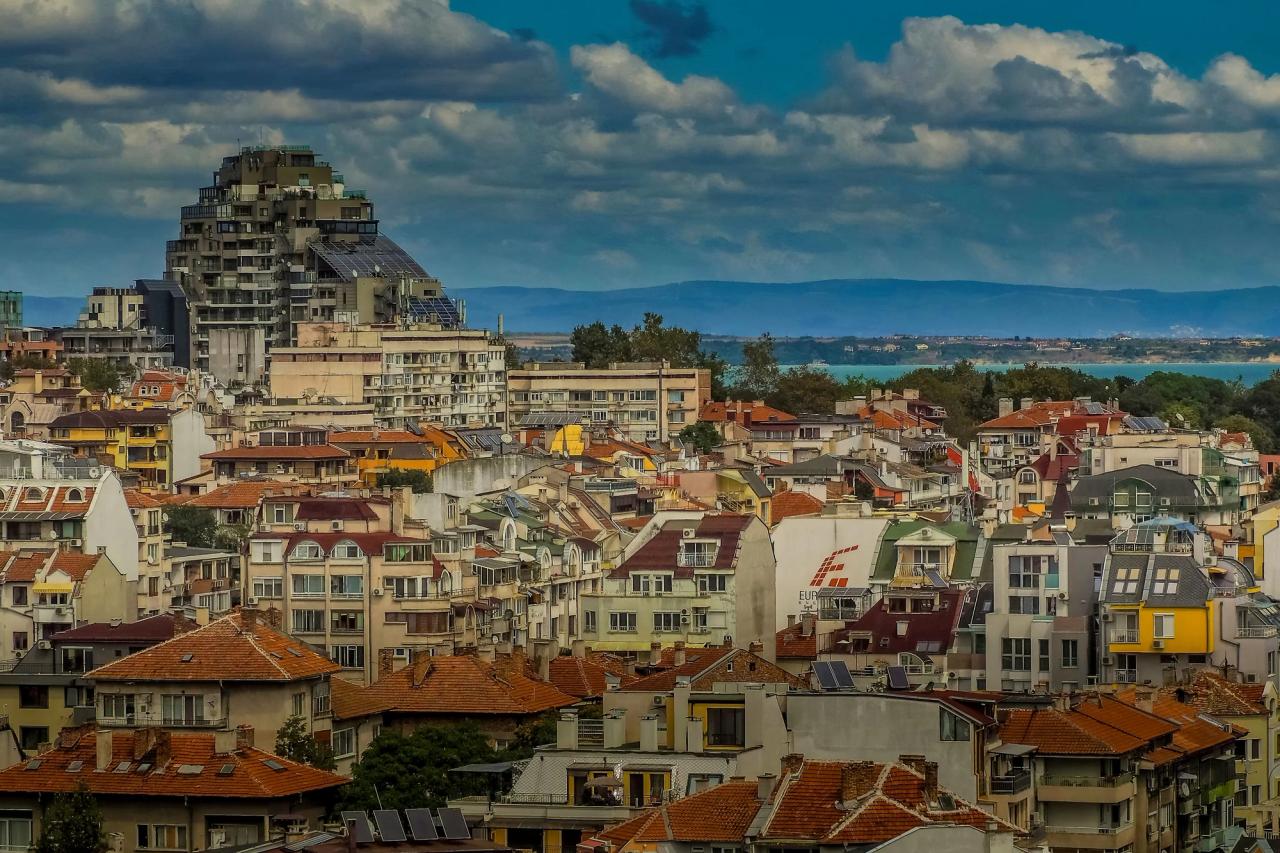
Burgas fica na costa do Mar Negro da Bulgária como a quarta maior cidade do país e um verdadeiro centro urbano que, por acaso, tem vários quilómetros de praia arenosa à sua porta. Não é um resort sazonal — escolas, hospitais, lojas e uma população permanente de mais de 200.000 habitantes mantêm a cidade a funcionar os doze meses do ano —, mas o verão transforma-a num dos locais mais animados do Mar Negro ocidental, com festivais ao ar livre, um Jardim do Mar vibrante e noites quentes ao longo do passeio marítimo. Burgas atrai expatriados que procuram vida costeira europeia acessível sem as multidões de Varna ou os preços das alternativas mediterrânicas. Trabalhadores remotos, reformados antecipados e famílias à procura de uma base soalheira e económica com boa infraestrutura encontrarão aqui uma excelente opção.
A cidade investiu fortemente na sua frente ribeirinha e espaços públicos na última década. Projetos financiados pela EU limparam as praias, expandiram o Jardim do Mar e modernizaram a zona do porto. O resultado é uma cidade com um aspeto visivelmente melhor do que a sua reputação possa sugerir — onde o passeio marítimo rivaliza com muitas cidades costeiras europeias mais conhecidas, e onde o custo de vida continua a ser uma fração do que pagaria noutros locais do continente.
Para Quem É Burgas
- Trabalhadores remotos e freelancers que procuram uma base costeira europeia com internet rápida, custos baixos e uma taxa plana de imposto sobre o rendimento de 10%.
- Reformados antecipados que procuram clima quente, cuidados de saúde acessíveis e um ritmo de vida descontraído sem sacrificar o acesso a serviços urbanos.
- Famílias à procura de bairros seguros, habitação acessível e espaços ao ar livre — embora as opções de escolas internacionais sejam limitadas em comparação com cidades maiores.
- Nómadas digitais que preferem uma cidade mais tranquila e funcional todo o ano em vez de uma vila turística voltada para a vida noturna.
- Amantes da natureza atraídos pelas Zonas Húmidas de Burgas, pelo Parque Natural de Strandzha e pela costa do Mar Negro.
Burgas de Relance
- População
- ~210.000 cidade / ~226.000 área urbana
- Região
- Província de Burgas, sudeste da Bulgária
- Conhecida Por
- Praias do Mar Negro, parque Sea Garden, festival de verão Spirit of Burgas
- Renda Média (T1)
- 550-850 BGN (cerca de 280-435 EUR)
- Salário Médio
- BGN 1 400–1 800/mês líquido (~€715–€920)
- Comunidade de Expatriados
- Pequena mas a crescer; comunidades britânica, russa, ucraniana e alemã
- Moeda
- Lev Búlgaro (BGN), indexado ao euro a 1,95583 BGN = €1
Porquê Mudar-se para Burgas
- Vida costeira acessível: A renda e os custos diários são uma fração do que pagaria em cidades costeiras comparáveis do Mediterrâneo ou do Atlântico, e mesmo assim tem praias limpas e um passeio marítimo pedonal que se estende por vários quilómetros ao longo da costa.
- Festivais de verão: A cidade acolhe o Spirit of Burgas, o Festival das Figuras de Areia e inúmeros concertos ao ar livre de junho a setembro, conferindo aos meses quentes uma atmosfera genuinamente festiva que atrai visitantes de toda a região dos Balcãs.
- Ritmo descontraído com infraestruturas reais: Ao contrário de resorts búlgaros mais pequenos que encerram no inverno, Burgas é uma cidade ativa todo o ano, com hospitais, centros comerciais, serviços públicos fiáveis e uma população permanente que mantém a economia local em funcionamento.
- Conetividade em melhoria: O Aeroporto de Burgas opera voos diretos sazonais para dezenas de cidades europeias, e a autoestrada Sofia–Burgas reduziu o tempo de viagem entre as duas cidades para menos de quatro horas, tornando as escapadelas de fim de semana e as viagens de negócios mais simples.
- Clima ameno do Mar Negro: O mar modera as temperaturas durante todo o ano. Os invernos são mais suaves do que no interior da Bulgária, os verões são quentes mas raramente opressivos graças a uma brisa costeira constante, e a primavera chega notoriamente mais cedo do que no interior.
- Crescente comunidade de nómadas digitais: Os baixos custos de vida, a internet de fibra rápida e uma taxa plana de IRS de 10% tornam Burgas cada vez mais atrativa para freelancers e trabalhadores remotos que procuram uma base costeira europeia sem os custos da Europa Ocidental.
Encontrar Habitação em Burgas
Rendas Médias
| Bairro | 1 Quarto | 3 Quartos | Carácter |
|---|---|---|---|
| Lazur | 600-900 BGN (cerca de 305-460 EUR) | 1.000-1.500 BGN (cerca de 510-765 EUR) | Moderno, perto do Sea Garden, popular entre jovens profissionais |
| Meden Rudnik | 400-600 BGN (cerca de 205-305 EUR) | 700-1.000 BGN (cerca de 360-510 EUR) | Maior bairro residencial, orientado para famílias, boa relação qualidade/preço |
| Slaveykov | 550-800 BGN (cerca de 280-410 EUR) | 900-1.300 BGN (cerca de 460-665 EUR) | Central, transitável a pé, mistura de edifícios antigos e novos |
| Sarafovo | 500-750 BGN (cerca de 255-385 EUR) | 800-1.200 BGN (cerca de 410-615 EUR) | Ambiente de aldeia costeira perto do aeroporto, tranquilo e pitoresco |
| Zornitsa | 500-700 BGN (cerca de 255-360 EUR) | 800-1.100 BGN (cerca de 410-560 EUR) | Residencial, perto do centro comercial e das principais avenidas |
| Pobeda | 350-550 BGN (cerca de 180-280 EUR) | 600-900 BGN (cerca de 305-460 EUR) | Económico, edifícios mais antigos, alguma atividade de renovação |
A maioria dos contratos de arrendamento na Bulgária tem uma duração mínima de um ano. Apartamentos mobilados são comuns e costumam custar 10–20% mais do que os não mobilados. As despesas de serviços geralmente não estão incluídas no valor de renda anunciado e devem ser orçamentadas separadamente.
Como Encontrar Habitação
- Imot.bg e BulgarianProperties.bg: Os dois portais de anúncios dominantes; a maioria dos senhorios publica aqui primeiro. Pesquise em búlgaro para mais opções.
- Grupos do Facebook: Os grupos "Rent in Burgas" e "Expats in Burgas" costumam ter anúncios diretos de proprietário com preços mais baixos e sem comissões de agência.
- Agências locais: A comissão é tipicamente o valor de um mês de renda. Úteis se não falar búlgaro, mas verifique sempre os anúncios de forma independente antes de pagar um depósito.
- OLX.bg: Um site de classificados geral onde alguns senhorios publicam arrendamentos, frequentemente a preços competitivos. Vale a pena consultar juntamente com os portais de imóveis dedicados.
Dicas para Expatriados
- Visite pessoalmente antes de assinar — as fotos nos sites de anúncios podem estar desatualizadas ou enganosas, e o estado da entrada do edifício e das áreas comuns costuma revelar mais do que as fotografias interiores.
- Negocie: os preços anunciados, especialmente para contratos de longa duração, costumam ter uma margem de negociação de 5 a 15%, sobretudo se puder pagar vários meses adiantados.
- Pergunte sobre o tipo de aquecimento. O aquecimento central é limitado em Burgas; a maioria dos apartamentos usa aquecimento elétrico ou por bomba de calor, o que influencia bastante os custos de inverno.
- Inspecione a canalização e a pressão da água durante as visitas. Os edifícios mais antigos no centro de Burgas por vezes têm tubagens envelhecidas que afetam a qualidade e o caudal da água.
- Peça um contrato escrito em búlgaro e no seu idioma. Os acordos verbais são comuns, mas oferecem pouca proteção legal.
- Verifique a idade do edifício e o histórico de renovações. As construções posteriores a 2000 costumam ter melhor isolamento, canalização moderna e janelas de vidro duplo, o que faz diferença no conforto no inverno e nas faturas.
- Confirme se o apartamento tem ar condicionado a funcionar. Os verões são quentes e, como inquilino, raramente lhe é permitido instalar ar condicionado.
Guia de Bairros
- Lazur: A escolha preferida dos expatriados que querem ficar perto do Jardim do Mar e da praia. Blocos de apartamentos modernos, cafés e restaurantes a poucos passos. Os arrendamentos estão na gama média para Burgas, mas valem a pena pela localização. Jovens profissionais e casais tendem a instalar-se aqui.
- Meden Rudnik: O maior bairro, construído numa colina a sul do centro. Rendas acessíveis, grandes supermercados, escolas e uma linha de autocarro direta para o centro. Ideal para famílias com orçamento limitado que privilegiam o espaço e o custo-benefício em vez da proximidade da praia.
- Slaveykov: Centralmente localizado, com uma mistura de blocos da era comunista e construções mais recentes. A pé da rua pedonal Aleksandrovska, do porto e da estação de comboios. Uma opção equilibrada para quem quer estar no centro da ação.
- Sarafovo: Uma antiga aldeia de pescadores no extremo norte da cidade, mesmo na costa. Mais tranquilo e panorâmico, com um número crescente de residentes estrangeiros atraídos pelas vistas para o mar e pela menor densidade. Ligeiramente isolado, mas bem servido de autocarro para o centro.
- Zornitsa: Uma opção residencial sólida, situada entre o centro e Meden Rudnik. Perto do Plaza Mall e dos principais boulevares a sul. Mais tranquilo que Slaveykov, mais económico que Lazur, com bom acesso a lojas e serviços.
- Pobeda: Zona em crescimento a oeste do centro, com habitação mais antiga a preços muito baixos. Alguma atividade de renovação à medida que famílias jovens se instalam pela acessibilidade. Ideal para quem não se importa com 10 a 15 minutos de autocarro até à costa.
Custo de Vida em Burgas
Distribuição do Orçamento Mensal
| Categoria | Intervalo de Orçamento (BGN) | Intervalo de Orçamento (~€) |
|---|---|---|
| Renda (T1, centro) | 600–900 | 305–460 |
| Serviços públicos (eletricidade, água, aquecimento) | 120–200 | 60–100 |
| Internet (fibra, 100 Mbps) | 20–30 | 10–15 |
| Alimentação | 300–450 | 155–230 |
| Transportes (passe de autocarro) | 50–60 | 25–30 |
| Refeições fora (4×/mês) | 120–200 | 60–100 |
| Lazer/Ginásio | 40–80 | 20–40 |
| Total | 1.250–1.920 | ~640–980 |
Um casal a partilhar um apartamento de um quarto pode viver realisticamente com BGN 1.800–2.500/mês (~€920–€1.280) no total. Famílias com filhos devem prever um orçamento de BGN 2.500–3.500/mês (~€1.280–€1.790), dependendo das opções de escolaridade e do estilo de vida.
Custos do dia a dia
- Café (cappuccino/expresso): BGN 3–5 (~€1,50–2,50)
- Almoço (restaurante informal): BGN 15–25 (~€7,50–13)
- Almoço (cantina de trabalhadores): BGN 8–12 (~€4–6)
- Passe de transporte mensal: BGN 50–60 (~€25–30)
- Cerveja (0,5 L, bar): BGN 3–5 (~€1,50–2,50)
- Bilhete de cinema: BGN 10–14 (~€5–7)
- Pão (uma unidade): BGN 1.50–2.50 (~€0.75–1.25)
- Dúzia de ovos: BGN 3.50–5 (~€1.80–2.55)
- Inscrição mensal no ginásio: BGN 40–70 (~€20–35)
- Garrafa de água de 1,5 L: BGN 0.70–1.20 (~€0.35–0.60)
- Contas mensais (apartamento de 60 m²): BGN 120–200 (~€60–100)
- Jantar para dois (restaurante de gama média): BGN 50–80 (~€25–40)
- Legumes frescos (1 kg de tomate): BGN 2.50–4 (~€1.30–2)
- Táxi (viagem de 5 km): BGN 9–12 (~€4.50–6)
- Plano de telemóvel mensal (pré-pago, 10 GB): BGN 10–15 (~€5–7.50)
- Lavandaria (por carga, lavandaria self-service): BGN 5–8 (~€2,50–4)
- Corte de cabelo (masculino): BGN 10–18 (~€5–9)
- Corte de cabelo (feminino, lavagem e corte): BGN 20–35 (~€10–18)
As compras nos mercados locais — o Mercado Central e o Mercado de Peixe perto do porto — são tipicamente 20–30% mais baratas do que nas cadeias de supermercados como o Kaufland ou o Lidl. Comprar produtos da época diretamente aos vendedores do mercado é a opção mais económica e de maior qualidade.
Deslocar-se em Burgas
- Transportes públicos: A rede de autocarros cobre a cidade e os bairros envolventes de forma abrangente. Os bilhetes simples custam BGN 1,50–1,70; o passe mensal ronda os BGN 50–60. O serviço é fiável durante o dia, mas as frequências reduzem-se após as 21h, e aos fins de semana a cadência diminui notoriamente.
- Bicicleta: O terreno plano e um longo passeio marítimo fazem de Burgas uma das cidades mais amigas da bicicleta da Bulgária. No verão, há estações de aluguer de bicicletas ao longo do Jardim do Mar, e várias lojas vendem bicicletas usadas a preços acessíveis para residentes permanentes.
- Automóvel: O trânsito é suportável fora dos meses de pico do verão. O estacionamento no centro é pago, a BGN 1–2/hora. A maioria dos expatriados considera o carro útil para passeios de fim de semana às praias e reservas naturais próximas, mais do que para as deslocações diárias.
- Táxis: Os táxis com taxímetro são baratos — espere BGN 1,20–2,00/km. Utilize as aplicações TaxiMe ou OK Supertrans para evitar cobranças excessivas. Parar táxi na rua é seguro durante o dia; à noite, as aplicações são mais seguras.
- Aeroporto: O Aeroporto de Burgas (BOJ) fica a 10 km a norte do centro da cidade. Voos diretos sazonais ligam a Londres, Berlim, Praga, Varsóvia e outros hubs europeus de maio a outubro. Fora de temporada, o Aeroporto de Sofia (4 horas de carro ou 1 hora de voo doméstico) preenche as lacunas de ligação.
- Intercidades: Existem comboios e autocarros regulares para Sófia (~5–6 horas de autocarro), Varna (~2,5 horas) e Plovdiv (~4 horas). A estação de autocarros fica no centro da cidade e é bem organizada, com autocarros confortáveis nas rotas principais.
Saúde em Burgas
- Hospitais/Clinicas: A UMHAT (Universitetska Mnogoprofilna Bolnitsa za Aktivno Lechenie) é o principal hospital público de Burgas, oferecendo uma gama completa de serviços. A unidade principal é a UMHAT "Dr. Georgi Stranski". Diversas clinicas privadas, incluindo a Medline Burgas e a City Clinic, oferecem um atendimento mais rápido, profissionais de saúde que falam inglês e melhores instalações, por um valor mais elevado.
- Médicos que falam inglês: Disponíveis em clinicas privadas, particularmente dentistas, dermatologistas e médicos de família. A comunidade de expatriados mantém listas informais de recomendações em grupos do Facebook. Espere pagar BGN 40–80 por uma consulta privada com um médico de família.
- Farmácias: Amplamente disponíveis por toda a cidade, muitas vezes a uma curta distância a pé das zonas residenciais. Muitas ficam abertas até às 21h; pelo menos uma funciona 24 horas. A medicação de venda livre é consideravelmente mais barata do que na Europa Ocidental.
- Cuidados dentários: A Bulgária é um destino popular para turismo dentário, e Burgas tem diversas clinicas dentárias modernas que oferecem trabalhos de alta qualidade por uma fracção dos preços da Europa Ocidental. Uma limpeza de rotina custa BGN 30–50; os procedimentos complexos são 50–70% mais baratos do que no Reino Unido ou na Alemanha.
- Saúde mental: Terapeutas e psicólogos que falam inglês são escassos a nível local, mas plataformas de teleterapia que ligam a profissionais no Reino Unido ou na UE são amplamente utilizadas por expatriados. Diversas clinicas privadas em Varna e Sófia oferecem aconselhamento presencial em inglês para quem esteja disposto a deslocar-se.
- Número de emergência: 112 (linha de emergência pan-europeia; os operadores costumam falar inglês)
Receba um plano de mudanca personalizado
Deixe o seu e-mail e enviaremos uma checklist personalizada e tres orcamentos de empresas verificadas.
Cultura e Estilo de Vida
- Parque Sea Garden: Um vasto parque costeiro que se estende ao longo da costa por vários quilómetros, com parques infantis, esplanadas, um pequeno zoo, instalações desportivas e acesso direto à praia. É o coração social de Burgas — os residentes passeiam, correm e encontram-se aqui em todas as estações.
- Festivais de verão: o Spirit of Burgas (festival de música internacional), o Festival Internacional de Folclore, o Festival das Figuras de Areia e inúmeros concertos ao ar livre trazem energia e visitantes à cidade de junho a setembro.
- Praias: A praia principal da cidade é gratuita, bem cuidada e equipada com bares e aluguer de espreguiçadeiras. A Praia Norte e a Praia de Kraimorie são alternativas mais tranquilas, populares entre os locais. A qualidade da água melhorou significativamente após grandes projetos de limpeza financiados pela UE.
- Arte e música: A Ópera de Burgas apresenta espetáculos regulares. O Museu Arqueológico, o Museu Etnográfico e uma crescente cena de street art dão à cidade uma profundidade cultural maior do que a sua reputação de estância balnear sugere.
- Contacto com a natureza: As Zonas Húmidas de Burgas — lagos e pântanos que rodeiam a cidade — são um ponto de paragem importante para aves migratórias e oferecem excelentes condições para observação de aves. O Parque Natural de Strandzha, uma das áreas protegidas mais selvagens da Bulgária, fica a 40 minutos de carro para sul.
- Desporto: A cidade tem um clube de futebol (PSFC Chernomorets Burgas), complexos de natação e vários equipamentos de fitness ao ar livre ao longo do passeio do Jardim do Mar. Desportos aquáticos — caiaque, paddleboard e windsurf — são populares no verão, com aluguer disponível na praia.
- Vida noturna: Burgas não é uma cidade de festa, mas a época estival traz bares de praia e discotecas ao ar livre ao longo da costa que ficam abertos até tarde. Durante todo o ano, a rua Aleksandrovska e a zona perto do porto têm bares de cocktails, cerveja artesanal e espaços de música ao vivo. A cena é mais pequena do que em Varna ou Sófia, mas genuína.
Compras e Serviços do Dia a Dia
- O centro da cidade tem todas as principais cadeias de supermercados: Kaufland, Lidl, Billa e Fantastico. O Plaza Mall, perto de Zornitsa, oferece roupa, eletrónica e um praça de alimentação.
- O Mercado Central (Tsentralen Pazar) é o melhor local para produtos frescos, laticínios, mel e conservas caseiras a preços mais baixos.
- Roupa e artigos para o lar estão disponíveis no centro comercial e ao longo da Aleksandrovska. Para mobiliário, a IKEA faz entregas a partir de Sófia, e lojas locais como a Mömax e a Jysk têm showroom na zona.
- Os multibancos estão amplamente disponíveis. A maioria dos restaurantes, lojas e supermercados aceita pagamentos com cartão, embora algumas bancas de mercado e certos táxis ainda aceitem apenas dinheiro.
Comida e Restauração
- O marisco local é excelente — prove os mexilhões do Mar Negro, os caracóis do mar grelhados (rapana) e a carapau fresco nos restaurantes à beira-mar. A salada shopska búlgara tradicional e os kebapche são presença obrigatória em todo o lado.
- A rua pedonal (Aleksandrovska) e a zona em redor do Jardim do Mar concentram o maior número de restaurantes, cafés e gelatarias.
- Refeições económicas são fáceis de encontrar: um almoço completo num refeitório de trabalhadores custa entre 8 e 12 BGN (~4–6 €) e inclui tipicamente prato principal, acompanhamento e bebida.
- A restauração deluxo é limitada, mas está a crescer. Espere pagar 30–50 BGN por pessoa por uma refeição de três pratos num dos melhores restaurantes perto do porto ou do Jardim do Mar.
Comunidade de Expatriados
- Grupos ativos no Facebook — "Expats in Burgas" e "Bulgaria Expats" — organizam encontros informais, partilham conselhos práticos e funcionam como a principal rede de apoio para recém-chegados.
- Noites de permuta de idiomas surgem em cafés ao longo da Aleksandrovska, especialmente durante o verão, quando a energia da temporada turística traz mais visitantes internacionais.
- O Festival Internacional de Cinema de Burgas e os eventos do centro cultural atraem um público misto de locais e expatriados, sendo boas oportunidades para conhecer pessoas fora da bolha habitual de expatriados.
Mercado de Trabalho em Burgas
- Principais setores: Turismo e hotelaria, logística portuária, indústria ligeira, call centers e operações de BPO, e um setor de TI em crescimento.
- Principais empregadores: Porto de Burgas, Lufthansa Technik (manutenção de aeronaves), operações da cadeia de abastecimento da IKEA, Concentrix e outros operadores de call centers, e diversas empresas de turismo sazonal.
- Salários médios por setor:
| Setor | Líquido mensal (BGN) | Líquido mensal (~€) |
|---|---|---|
| TI / Software | 2.500–4.000 | 1.280–2.045 |
| Call Center / BPO | 1.200–1.800 | 610–920 |
| Hotelaria (sazonal) | 1.000–1.600 | 510–815 |
| Saúde | 1.500–2.500 | 765–1.280 |
| Logística / Porto | 1.400–2.200 | 715–1.125 |
- Recursos de procura de emprego: O Jobs.bg e o Zaplata.bg são os principais portais de emprego búlgaros com mais anúncios. O LinkedIn é cada vez mais utilizado para funções de TI e internacionais. Muitos expatriados em Burgas trabalham remotamente para empregadores estrangeiros em vez de localmente.
Educação em Burgas
- Escolas internacionais: As opções são limitadas em comparação com Sófia. A Burgas English-Language School oferece um programa bilingue no ensino básico e secundário. Para currículos internacionais completos (IB ou britânico), algumas famílias deslocam-se a Varna ou optam por ensino doméstico complementado por programas online.
- Universidades: A Universidade "Prof. Dr. Assen Zlatarov" é a principal instituição, oferecendo programas em química, engenharia e economia. A Universidade Livre de Burgas oferece programas de gestão e TI populares entre estudantes locais e internacionais.
- Escolas de línguas: Várias escolas privadas oferecem búlgaro para estrangeiros, além de cursos de inglês, alemão, russo e turco. Aulas individuais custam entre BGN 20–35/hora, e cursos de grupo podem custar apenas BGN 100–150 por um módulo de 30 horas.
- Atividades para crianças: O Jardim do Mar acolhe oficinas sazonais para crianças, o complexo desportivo municipal oferece programas de natação e atletismo, e vários estúdios privados ensinam música, arte e dança a preços acessíveis.
Residência e Vistos
- Cidadãos da UE/EEE: Podem viver e trabalhar na Bulgária sem visto. Registe-se no departamento local de Migração no prazo de 90 dias após a chegada para obter um certificado de residência. Estadias de longa duração (mais de 5 anos) podem dar direito a residência permanente.
- Cidadãos não pertencentes à UE: Necessitam de um visto de longa duração (Tipo D) antes de chegar, solicitado numa embaixada ou consulado búlgaro. Uma vez na Bulgária, devem pedir uma autorização de residência no Serviço de Migração. As vias mais comuns incluem trabalho por conta de outrem, trabalho por conta própria, estudo ou reforma, com comprovativo de fundos suficientes.
- Nómadas digitais: A Bulgária introduziu um visto de nómada digital (em vigor desde janeiro de 2024) para trabalhadores remotos e freelancers de fora da UE, exigindo comprovativo de rendimento equivalente a cerca de 2,5× o salário médio búlgaro (aproximadamente 3 500–4 000 BGN/mês). O visto permite até 12 meses de residência, renovável uma vez. A taxa fixa de IRS de 10% é outro grande incentivo. Os freelancers também podem obter residência através do registo como trabalhadores independentes ou da constituição de uma empresa búlgara.
- Residência permanente: Disponível após 5 anos de residência legal ininterrupta. Exige comprovativo de rendimento estável, seguro de saúde e conhecimentos básicos de búlgaro.
- Cidadania: Possível após 5 anos de residência permanente. A Bulgária admite a dupla cidadania na maioria dos casos.
Lista de Verificação para a Mudança para Burgas
- Pesquise os requisitos de visto/autorização de residência para a sua nacionalidade (cidadãos da UE podem permanecer livremente; cidadãos não pertencentes à UE necessitam de visto D para estadias de longa duração)
- Reserve alojamento temporário (Airbnb ou arrendamento de curta duração para as primeiras 2–4 semanas)
- Inscreva-se em grupos de Facebook "Expats in Burgas" para informações locais e dicas de alojamento
- Contrate um seguro de saúde internacional ou confirme a cobertura através do formulário S1 da UE
- Reúna e apostile documentos importantes (certidão de nascimento, certidão de casamento, diplomas universitários)
- Descarregue mapas offline de Burgas e da zona envolvente para os seus primeiros dias
- Informe-se sobre as regras de conversão da carta de condução búlgara se tenciona conduzir
- Registe a sua morada no serviço local de Migração se for ficar a longo prazo
- Abra uma conta bancária búlgara (UniCredit Bulbank ou DSK Bank são opções comuns)
- Compre um cartão SIM local (A1, Yettel ou Vivacom; os planos pré-pagos começam em 10 BGN/mês com dados)
- Explore os bairros pessoalmente antes de assinar um contrato de arrendamento — visite em diferentes horas do dia
- Compre um cartão de autocarro recarregável na estação central de autocarros
- Identifique a farmácia, clínica e supermercado mais próximos
- Configure o calendário de recolha de resíduos (os contentores são partilhados por prédio; pergunte ao senhorio os dias de recolha)
- Assine um contrato de arrendamento de longo prazo e registe-o nas autoridades fiscais
- Registe-se junto de um clínico geral numa clínica privada para acompanhamento de saúde
- Configure a internet em casa (A1 e Vivacom oferecem fibra na maioria das zonas, 20–30 BGN/mês)
- Obtenha um número fiscal búlgaro (se trabalhar localmente ou como freelancer ao abrigo da lei búlgara)
- Familiarize-se com a farmácia, supermercado e serviços de emergência mais próximos
- Comece aulas de búlgaro — mesmo um nível básico transforma as interações do dia a dia
- Registe a sua morada junto dos fornecedores de eletricidade e água (o senhorio deverá orientá-lo)
- Considere obter um cartão de saúde búlgaro se for cidadão da UE com cobertura S1
- Abra uma conta de corretagem ou poupança se planeia ficar a longo prazo
- Explore passeios de um dia a Nessebar, Sozopol e ao Parque Natural de Strandzha
- Inscreva-se num ginásio local, clube desportivo ou grupo de voluntariado para construir uma rede social
- Revise os termos do seu contrato de arrendamento para condições de renovação e caução
- Registe-se no centro de finanças local se auferir rendimentos na Bulgária
- Familiarize-se com as regras de separação de resíduos do seu edifício — Burgas tem contentores separados para papel, plástico, vidro e resíduos indiferenciados
Guias Relacionados
- [Mudar-se para a Bulgária] — guia completo do país sobre vistos, impostos e residência
- [Mudar-se para Varna] — a outra grande cidade costeira do Mar Negro
- [Mudar-se para Sófia] — capital da Bulgária e maior centro de expatriados