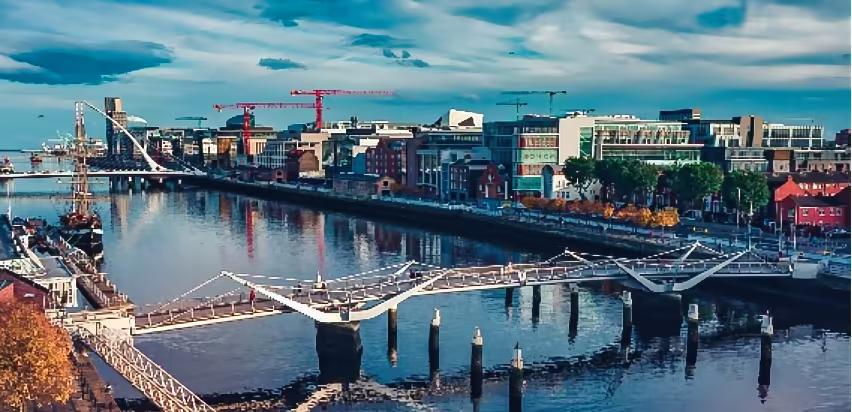
Dublin is de hoofdstad van Ierland, de grootste stad en het kloppend hart van de economie. De stad huisvest de Europese hoofdkantoren van Google, Meta, Apple en honderden andere multinationals, en is een van de dynamischste tech- en financiële centra van Europa. Met een rijk literair erfgoed, Georgische architectuur, een bruisende pubcultuur en een enorme internationale gemeenschap biedt de stad een ongeëvenaarde levenskwaliteit — als je maar een woning kunt vinden. De huurmarkt in Dublin is extreem competitief en de kosten zijn de hoogste van Ierland, maar de salarissen zijn naar verhouding hoger, het sociale leven is ongeëvenaard en dankzij de compacte grootte van de stad ligt alles binnen handbereik.
Dublin in één oogopslag
- Inwoners
- ~593.000 (gemeente, 2022); ~1,26 miljoen met voorsteden; ~1,5 miljoen graafschap Dublin
- Regio
- Leinster, oostkust
- Bekend om
- Tech-hub, Trinity College, Guinness, Georgische architectuur, bruisend nachtleven
- Gemiddelde huur (1-kamer)
- €2.000–€2.500 (centrum)
- Gemiddeld salaris
- ~€55.000–€65.000 per jaar (hoger dan landelijk gemiddelde)
- Expatgemeenschap
- Grootste van Ierland — tech-werkers uit heel Europa, Afrika, Amerika en Azië
- Klimaat
- Zacht zeeklimaat; winters 4–8 °C, zomers 14–20 °C; regelmatig regen
- Taal
- Engels (Iers wordt onderwezen maar in Dublin zelden dagelijks gesproken)
- Munteenheid
- Euro (€)
Waarom naar Dublin verhuizen
- De tech-hoofdstad van Europa: Dublin huisvest de Europese hoofdkantoren van Google, Meta, Apple, Salesforce, Stripe, Workday, LinkedIn en nog honderden meer. Op LinkedIn staan regelmatig meer dan 10.000 openstaande vacatures in tech, financiën en farmacie.
- Engelstalige EU-hub: Na de Brexit is Dublin de enige grote Engelstalige stad in de EU met toegang tot de interne markt — een enorm voordeel voor de financiële, tech- en juridische sector.
- Hogere salarissen: De salarissen in Dublin liggen doorgaans 10–20% hoger dan het Ierse gemiddelde. Senior tech-functies kunnen oplopen tot €100.000–€150.000, en via de Critical Skills Employment Permit is de immigratieprocedure voor tech-werkers gestroomlijnd.
- Compact en wandelvriendelijk: Het centrum van Dublin is compact genoeg om in 20 minuten doorheen te lopen. De Luas-tram, de DART-treinen en het uitgebreide busnet dekken de bredere metropoolregio.
- Culturele rijkdom: Thuisbasis van Trinity College (met het Book of Kells), de Guinness Storehouse, Dublin Castle, Temple Bar, en een bloeiend theatertoneel in het Abbey Theatre, Gate Theatre en Bord Gáis Energy Theatre.
- Internationale gemeenschap: Dublin heeft de grootste expatgemeenschap van Ierland — met meetup-groepen, InterNations en wijkgemeenschappen kun je vanaf dag één gemakkelijk een sociaal netwerk opbouwen.
Huisvesting vinden in Dublin
De woningcrisis in Dublin is de meest ernstige van Ierland. Het leegstandspercentage in de hoofdstad ligt onder de 1%, wat betekent dat beschikbare huurwoningen binnen enkele uren tientallen reacties ontvangen. Begin op tijd met zoeken en wees voorbereid om snel te handelen.
Gemiddelde huren
| Wijk | 1-slaapkamer | 3-slaapkamers | Karakter |
|---|---|---|---|
| Centrum (D1/D2) | €2.200–€2.800 | €3.500–€4.500 | Loopafstand, uitgaansleven, hoge prijzen |
| Ballsbridge / Sandymount | €2.000–€2.500 | €3.200–€4.200 | Chique, ambassadebuurt, wandelingen aan zee |
| Rathmines / Rathgar | €1.800–€2.200 | €2.800–€3.500 | Dorpskarakter, goede scholen |
| Stoneybatter / Phibsborough | €1.600–€2.000 | €2.500–€3.200 | Hip, creatief, snel in opkomst |
| Drumcondra / Glasnevin | €1.500–€1.900 | €2.300–€3.000 | Bij DCU, botanische tuinen, betaalbaar |
| Dun Laoghaire / Dalkey | €1.700–€2.100 | €2.800–€3.600 | Aan zee, welvarend, DART-verbinding |
| Howth / Malahide | €1.600–€2.000 | €2.500–€3.300 | Kustdorpjes, gezinsvriendelijk |
| Blanchardstown | €1.400–€1.700 | €2.000–€2.600 | Betaalbaar, buitenwijk, goede busverbindingen |
Woning zoeken
- Daft.ie: Ierlands grootste woningplatform — de belangrijkste bron voor huurwoningen in Dublin. Controleer meerdere keren per dag en reageer binnen enkele minuten.
- Rent.ie: Handig voor zoekopdrachten op de kaart en prijswaarschuwingen.
- Facebook-groepen: "Rent in Dublin"-groepen zijn actief met particuliere en gedeelde aanbiedingen.
- Makelaars: Sherry FitzGerald, Savills, Lisney en DNG beheren vastgoed en langere huurcontracten.
- Huis delen: Een kamer in een gedeeld huis kost €800–€1.200/maand in Dublin — aanzienlijk goedkoper dan alleen huren en heel gebruikelijk onder nieuwkomers.
Tips voor expats
- Begin 4–8 weken voor je verhuizing met zoeken; reageer op advertenties binnen enkele minuten.
- Zorg dat je bewijs van inkomen (loonstroken of werkgeversverklaring), referenties, identiteitsbewijs met foto en je PPS-nummer bij de hand hebt.
- Overweeg forensenplaatsen: Maynooth, Drogheda en Bray zijn per trein verbonden met Dublin en besparen je honderden euro's per maand.
- Sta op een schriftelijk huurcontract; controleer de RTB-registratie op rtb.ie.
- De borg is wettelijk beperkt tot twee maanden huur volgens de Ierse wet.
- In huurdrukzones (geheel Dublin) worden jaarlijkse huurverhogingen beperkt tot 2% of de inflatie, afhankelijk welk lager is.
Kosten van levensonderhoud in Dublin
Maandelijks budgetoverzicht
| Categorie | Budgetbereik |
|---|---|
| Huur (1-slaapkamer, centrum) | €2.000–€2.500 |
| Nutsvoorzieningen (elektriciteit, gas, afval) | €170–€220 |
| Internet (breedband) | €40–€60 |
| Boodschappen | €350–€500 |
| Vervoer (Leap Card) | €120–€140 |
| Eten uit (4x/maand) | €140–€200 |
| Vrije tijd/Sportschoolabonnement | €40–€70 |
| Zorgverzekering (basis) | €100–€170 |
| Mobiel abonnement | €20–€30 |
| Totaal | €2.790–€3.840 |
Dagelijkse kosten
- Koffie (flat white): €3,80–€4,20
- Lunch (informeel restaurant): €14–€18
- Pint bier (pub): €6,00–€7,50
- Bioscoopkaartje: €13–€16
- Sportschoolabonnement (maandelijks): €40–€70
- Brood: €1,80
- Liter melk: €1,30
- Dozijn eieren: €3,40–€4,00
- Afhaalmaaltijd voor twee: €25–€35
- Jaarlijkse Leap Card (Young Adult 19-23): €560; maandelijkse limiet voor volwassenen ongeveer €140
Je verplaatsen in Dublin
- DART (Dublin Area Rapid Transit): Kustspoorlijn van Howth/Malahide in het noorden naar Greystones in het zuiden. Rijdt elke 10–15 minuten tijdens de spits. Ideaal voor forenzen die in kustplaatsen wonen.
- Luas: Twee tramlijnen — Green Line (rijdt naar het zuiden via Ranelagh, Dundrum naar Brides Glen) en Red Line (rijdt naar het westen via Smithfield, Heuston naar Tallaght/Saggart). Snel en betrouwbaar.
- Dublin Bus: Uitgebreid netwerk dat de hele regio bestrijkt. Meer dan 130 routes. Gebruik de TFI Go-app voor realtime tracking en routeplanning.
- Leap Card: Geïntegreerde smartcard voor al het openbaar vervoer in Dublin — goedkoper dan contant betalen, met dagelijkse en wekelijkse plafonds. Verkrijgbaar bij tabakszaken, online of bij vervoerskantoren.
- Fietsen: Het fietspadennetwerk van Dublin breidt uit. Dublinbikes biedt kortdurende fietsverhuur bij stations door het hele centrum.
- Autorijden: Het verkeer is druk tijdens de spits, vooral op de M50-ringweg en de kades. Parkeren in het centrum is duur (€3–€4,50 per uur).
- Luchthaven: Dublin Airport (DUB) ligt 12 km ten noorden van de stad. Aircoach- en Dublin Express-bussen verbinden met de stad in 40–50 minuten.
- Taxi's: Uber, Free Now en lokale taxi's rijden in Dublin. Een typische rit door het centrum kost €10–€15.
Gezondheidszorg in Dublin
- Belangrijke ziekenhuizen: Mater Misericordiae, St. James's Hospital, St. Vincent's University Hospital, Beaumont Hospital, de Rotunda (kraamzorg) en het National Children's Hospital (Tallaght).
- Privéklinieken: Blackrock Clinic, Mater Private, Bon Secours Hospital Dublin, Hermitage Medical Clinic.
- Huisartsen: Ruim beschikbaar; een consult kost €50–€70 zonder medical card. Huisarts zoeken op hse.ie.
- Apotheken: Boots, Lloyd's Pharmacy en onafhankelijke apotheken door de hele stad.
- Tandheelkunde: Praktijken van particuliere tandartsen; controle €50–€80.
- Noodgevallen: 999 of 112.
Krijg een persoonlijk verhuisplan
Laat je e-mailadres achter en we sturen een checklist op maat plus drie offertes van gecontroleerde verhuizers.
Cultuur & Lifestyle
- Pubcultuur: De pubs van Dublin zijn het hart van het sociale leven. Van literaire pubs in Temple Bar tot wijkpubs in Rathmines en Stoneybatter — de meeste avonden is er door de hele stad live traditionele muziek ('sessions').
- Theater & kunst: Abbey Theatre, Gate Theatre, Gaiety Theatre. Irish Museum of Modern Art (IMMA), National Gallery en Hugh Lane Gallery — allemaal gratis.
- Sport: Croke Park (GAA, 82.000 zitplaatsen), Aviva Stadium (rugby en voetbal), Six Nations-rugbytoernooi in de lente.
- Festivals: Dublin Writers Festival, St Patrick's Day-festival, Bloomsday (juni), Dublin Fringe Festival.
- Parken en buitenleven: Phoenix Park (1.752 acres, Dublin Zoo, wilde herten), St Stephen's Green, North Bull Island (Blue Flag-strand).
Expatgemeenschap
- Dublin heeft de grootste expatgemeenschap van Ierland. InterNations Dublin organiseert maandelijks netwerkevenementen. Meetup.com biedt tientallen groepen, van wandelen tot tech-meetups.
- Actieve Facebook-groepen voor Brazilianen, Amerikanen, Indiërs, Fransen, Duitsers en vele andere nationaliteiten.
- Trinity College Dublin, UCD, DCU en TU Dublin trekken elk jaar duizenden internationale studenten.
Arbeidsmarkt in Dublin
- Belangrijkste sectoren: Technologie, financiële dienstverlening, farmacie, juridische dienstverlening, toerisme, digitale media, cybersecurity.
- Grootste werkgevers:
- Google (Europees hoofdkantoor — 6.000+ medewerkers)
- Meta (Europees hoofdkantoor)
- Apple (Europese operaties)
- PayPal, Stripe, Workday, Salesforce, LinkedIn, Pfizer
- Gemiddelde salarissen per sector:
| Sector | Gemiddeld jaarsalaris |
|---|---|
| IT / Software | €55.000–€90.000 |
| Financiën / Bankwezen | €50.000–€85.000 |
| Farmacie / Biotech | €50.000–€80.000 |
| Techniek | €50.000–€75.000 |
| Marketing / Digitaal | €40.000–€60.000 |
| Gezondheidszorg (verpleegkunde) | €38.000–€60.000 |
| Juridisch | €55.000–€100.000+ |
- Vacaturebanken: IrishJobs.ie, Jobs.ie, LinkedIn, Indeed Ireland, vacaturepagina's van bedrijven.
Onderwijs in Dublin
- Internationale scholen: International School of Dublin (IB), Sandford Park School (Frans curriculum), Nordic School. Schoolgeld: €5.000–€15.000/jaar.
- Universiteiten:
- Trinity College Dublin (TCD): de oudste universiteit van Ierland (1592), wereldwijd gerangschikt, thuisbasis van het Book of Kells.
- University College Dublin (UCD): de grootste universiteit van Ierland, sterk in bedrijfskunde, techniek en architectuur.
- Dublin City University (DCU): sterk in bètavakken en communicatie, uitstekende banden met de industrie.
- Technological University Dublin (TU Dublin): toegepaste wetenschappen, techniek, creatieve vakken.
Verhuischecklist voor Dublin
- Zorg voor tijdelijke huisvesting (Airbnb/serviceappartement) voor 2–4 weken.
- Regel je visum of bevestig je EU/EER-verblijfsrechten.
- Vraag je PPS-nummer aan via MyWelfare.ie.
- Onderzoek scholen als je met kinderen verhuist.
- Sluit een ziektekostenverzekering af (VHI, Laya of Irish Life Health).
- Installeer TFI Go, Daft.ie, Revolut en Revenue myAccount.
- Schrijf je in bij een lokale huisarts.
- Open een bankrekening (PPS-nummer + bewijs van adres vereist).
- Koop een Leap Card voor goedkoper openbaar vervoer.
- Verken je wijk — supermarkt, apotheek, huisarts, bushaltes.
- Regel je belastingaangifte bij Revenue (revenue.ie).
- Zoek langdurige huisvesting en teken het huurcontract.
- Vraag een medical card of GP visit card aan als je in aanmerking komt.
- Regel je nutsvoorzieningen (Electric Ireland, Airtricity, Bord Gáis Energy, internet).
- Sluit je aan bij lokale expatgroepen — Meetup.com, InterNations, Facebook-community's.
Belangrijke contacten en nuttige links
- PPS-nummer: MyWelfare.ie — dien online een aanvraag in en ga vervolgens naar een Intreo-kantoor aan Ballymun Road of in het centrum van Dublin.
- Belastingregistratie: revenue.ie — registreer voor PAYE, USC en PRSI.
- Health Service Executive (HSE): hse.ie — huisartsen zoeken, medische kaart, publieke gezondheidszorg.
- Residential Tenancies Board (RTB): rtb.ie — controleer of je verhuurder geregistreerd is.
- Citizens Information: citizensinformation.ie — uitgebreide gids voor Ierse diensten en rechten.
- Dublin City Council: dublincity.ie — diensten en informatie van de gemeente.
- TFI Go: tfi.go — geïntegreerde app voor het openbaar vervoer in Dublin en Ierland.
Gerelateerde gidsen
- Verhuizen naar Ierland — uitgebreide landgids
- Verhuizen naar Cork — de rebelse stad van Ierland
- Verhuizen naar Galway — kunsthoofdstad aan de westkust
- Verhuizen naar Limerick — de Treaty City in het midwesten
- Verhuizen naar Waterford — de oudste stad van Ierland