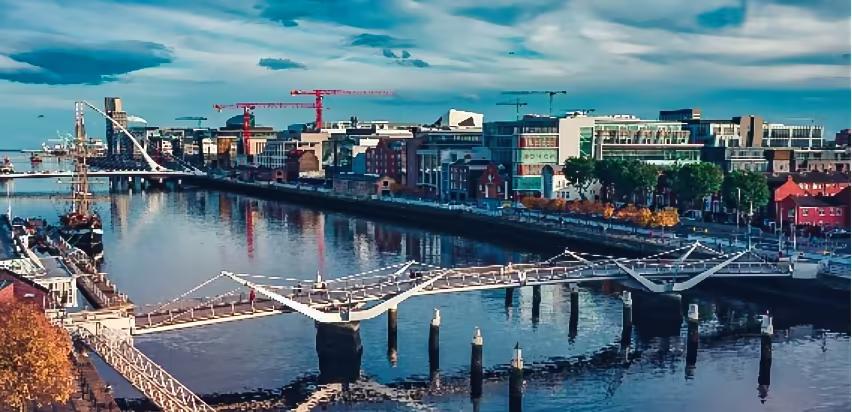
Dublin is Ireland's capital, largest city, and the beating heart of its economy. Home to the European headquarters of Google, Meta, Apple, and hundreds of other multinationals, Dublin is one of Europe's most dynamic tech and finance hubs. With a rich literary heritage, Georgian architecture, vibrant pub culture, and a massive international community, the city offers an unparalleled quality of life — if you can find the housing. Dublin's rental market is intensely competitive, and costs are the highest in Ireland, but salaries are correspondingly higher, the social life is unmatched, and the city's compact size means everything is within reach.
Dublin at a Glance
- Population
- ~593,000 (city proper, 2022); ~1.26M with suburbs; ~1.5M County Dublin
- Region
- Leinster, east coast
- Known For
- Tech hub, Trinity College, Guinness, Georgian architecture, vibrant nightlife
- Average Rent (1BR)
- €2,000–€2,500 (city centre)
- Average Salary
- ~€55,000–€65,000 per year (higher than national average)
- Expat Community
- Largest in Ireland — tech workers from across Europe, Africa, Americas, and Asia
- Climate
- Mild oceanic; winters 4–8°C, summers 14–20°C; frequent rain
- Language
- English (Irish taught but rarely used daily in Dublin)
- Currency
- Euro (€)
Why Move to Dublin
- Europe's tech capital: Dublin hosts the European headquarters of Google, Meta, Apple, Salesforce, Stripe, Workday, LinkedIn, and hundreds more. LinkedIn listings regularly show 10,000+ open positions in tech, finance, and pharma.
- English-speaking EU hub: Post-Brexit, Dublin is the only major English-speaking city in the EU with access to the single market — a huge advantage for finance, tech, and legal services.
- Higher salaries: Dublin salaries are typically 10–20% higher than the Irish average. Tech roles at senior levels can reach €100,000–€150,000, and the Critical Skills Employment Permit route makes immigration streamlined for tech workers.
- Compact and walkable: Dublin's city centre is compact enough to walk across in 20 minutes. The Luas tram, DART commuter rail, and extensive bus network cover the wider metro area.
- Cultural richness: Home to Trinity College (with the Book of Kells), the Guinness Storehouse, Dublin Castle, Temple Bar, and a thriving theatre scene at the Abbey Theatre, Gate Theatre, and Bord Gáis Energy Theatre.
- International community: Dublin has the largest expat community in Ireland — meetup groups, InterNations, and neighbourhood communities make it easy to build a social network from day one.
Finding Housing in Dublin
Dublin's housing crisis is the most severe in Ireland. Vacancy rates in the capital are below 1%, meaning available rentals receive dozens of applications within hours. Start the search early and be prepared to move fast.
Average Rents
| Neighborhood | 1-Bedroom | 3-Bedroom | Character |
|---|---|---|---|
| City Centre (D1/D2) | €2,200–€2,800 | €3,500–€4,500 | Walkable, nightlife, premium prices |
| Ballsbridge / Sandymount | €2,000–€2,500 | €3,200–€4,200 | Upscale, embassy area, coastal walks |
| Rathmines / Rathgar | €1,800–€2,200 | €2,800–€3,500 | Village feel, good schools |
| Stoneybatter / Phibsborough | €1,600–€2,000 | €2,500–€3,200 | Hip, creative, gentrifying rapidly |
| Drumcondra / Glasnevin | €1,500–€1,900 | €2,300–€3,000 | Near DCU, botanical gardens, affordable |
| Dun Laoghaire / Dalkey | €1,700–€2,100 | €2,800–€3,600 | Coastal, affluent, DART access |
| Howth / Malahide | €1,600–€2,000 | €2,500–€3,300 | Seaside villages, family-friendly |
| Blanchardstown | €1,400–€1,700 | €2,000–€2,600 | Affordable, suburban, good bus links |
How to Find Housing
- Daft.ie: Ireland's largest property portal — the primary source for Dublin rentals. Check several times daily and respond within minutes.
- Rent.ie: Useful for map-based search and price alerts.
- Facebook groups: "Rent in Dublin" groups are active with private and shared listings.
- Estate agents: Sherry FitzGerald, Savills, Lisney, and DNG handle managed properties and longer-term rentals.
- Sharing: A room in a shared house costs €800–€1,200/month in Dublin — significantly cheaper than renting alone and very common among newcomers.
Tips for Expats
- Start searching 4–8 weeks before your move; respond to listings within minutes.
- Have proof of income (payslips or employment letter), references, photo ID, and PPS number ready.
- Consider commuter towns: Maynooth, Drogheda, and Bray are connected by rail to Dublin and save hundreds per month.
- Insist on a written lease; check RTB registration at rtb.ie.
- Deposit is capped at two months' rent under Irish law.
- In Rent Pressure Zones (all of Dublin), annual rent increases are capped at 2% or inflation, whichever is lower.
Cost of Living in Dublin
Monthly Budget Breakdown
| Category | Budget Range |
|---|---|
| Rent (1BR, centre) | €2,000–€2,500 |
| Utilities (electricity, gas, waste) | €170–€220 |
| Internet (broadband) | €40–€60 |
| Groceries | €350–€500 |
| Transport (Leap Card) | €120–€140 |
| Dining out (4x/month) | €140–€200 |
| Leisure/Gym membership | €40–€70 |
| Health insurance (basic) | €100–€170 |
| Mobile phone plan | €20–€30 |
| Total | €2,790–€3,840 |
Day-to-Day Costs
- Coffee (flat white): €3.80–€4.20
- Lunch (casual restaurant): €14–€18
- Pint of beer (pub): €6.00–€7.50
- Cinema ticket: €13–€16
- Gym membership (monthly): €40–€70
- Loaf of bread: €1.80
- Litre of milk: €1.30
- Dozen eggs: €3.40–€4.00
- Takeaway dinner for two: €25–€35
- Annual Leap Card (Young Adult 19-23): €560; standard adult monthly cap around €140
Getting Around Dublin
- DART (Dublin Area Rapid Transit): Coastal railway from Howth/Malahide in the north to Greystones in the south. Runs every 10–15 minutes during peak hours. Ideal for commuters living in coastal suburbs.
- Luas: Two tram lines — Green Line (runs south through Ranelagh, Dundrum to Brides Glen) and Red Line (runs west through Smithfield, Heuston, to Tallaght/Saggart). Fast and reliable.
- Dublin Bus: Extensive network covering the entire metro area. Over 130 routes. Use the TFI Go app for real-time tracking and route planning.
- Leap Card: Integrated smart card for all Dublin public transport — cheaper fares than cash, with daily and weekly caps. Available at newsagents, online, or at transport offices.
- Cycling: Dublin's bike lane network is expanding. Dublinbikes scheme offers short-term bike hire at stations across the centre.
- Driving: Traffic is heavy during rush hours, especially on the M50 ring road and the quays. Parking in the city centre is expensive (€3–€4.50/hour).
- Airport: Dublin Airport (DUB) is 12 km north of the city. Aircoach and Dublin Express buses connect to the city in 40–50 minutes.
- Taxis: Uber, Free Now, and local taxis operate in Dublin. A typical city-centre ride costs €10–€15.
Healthcare in Dublin
- Major hospitals: Mater Misericordiae, St. James's Hospital, St. Vincent's University Hospital, Beaumont Hospital, the Rotunda (maternity), and the National Children's Hospital (Tallaght).
- Private hospitals: Blackrock Clinic, Mater Private, Bon Secours Hospital Dublin, Hermitage Medical Clinic.
- GPs: Widely available; visits cost €50–€70 without a medical card. GP finder at hse.ie.
- Pharmacies: Boots, Lloyd's Pharmacy, and independent chemists throughout the city.
- Dental: Private dentists; check-up €50–€80.
- Emergency: 999 or 112.
Planning your move?
Tell us about your move to compare quotes from international moving companies.
Culture & Lifestyle
- Pub culture: Dublin's pubs are the heart of social life. From literary pubs in Temple Bar to neighbourhood pubs in Rathmines and Stoneybatter, live traditional music ("sessions") happens most nights across the city.
- Theatre & arts: Abbey Theatre, Gate Theatre, Gaiety Theatre. Irish Museum of Modern Art (IMMA), National Gallery, and Hugh Lane Gallery — all free.
- Sports: Croke Park (GAA, 82,000 capacity), Aviva Stadium (rugby and soccer), Six Nations rugby tournament in spring.
- Festivals: Dublin Writers Festival, St Patrick's Day festival, Bloomsday (June), Dublin Fringe Festival.
- Parks and outdoors: Phoenix Park (1,752 acres, Dublin Zoo, wild deer), St Stephen's Green, North Bull Island (Blue Flag beach).
Expat Community
- Dublin has the largest expat community in Ireland. InterNations Dublin hosts monthly networking events. Meetup.com offers dozens of groups from hiking to tech meetups.
- Active Facebook groups for Brazilians, Americans, Indians, French, Germans, and many other nationalities.
- Trinity College Dublin, UCD, DCU, and TU Dublin bring thousands of international students each year.
Job Market in Dublin
- Main industries: Technology, financial services, pharmaceuticals, legal services, tourism, digital media, cybersecurity.
- Major employers:
- Google (European HQ — 6,000+ employees)
- Meta (European HQ)
- Apple (European operations)
- PayPal, Stripe, Workday, Salesforce, LinkedIn, Pfizer
- Average salaries by sector:
| Sector | Average Annual Salary |
|---|---|
| IT / Software | €55,000–€90,000 |
| Finance / Banking | €50,000–€85,000 |
| Pharma / Biotech | €50,000–€80,000 |
| Engineering | €50,000–€75,000 |
| Marketing / Digital | €40,000–€60,000 |
| Healthcare (nursing) | €38,000–€60,000 |
| Legal | €55,000–€100,000+ |
- Job search resources: IrishJobs.ie, Jobs.ie, LinkedIn, Indeed Ireland, company career sites.
Education in Dublin
- International schools: International School of Dublin (IB), Sandford Park School (French curriculum), Nordic School. Fees: €5,000–€15,000/year.
- Universities:
- Trinity College Dublin (TCD): Ireland's oldest (1592), globally ranked, home to the Book of Kells.
- University College Dublin (UCD): Ireland's largest university, strong in business, engineering, and architecture.
- Dublin City University (DCU): Strong in STEM and communications, excellent industry links.
- Technological University Dublin (TU Dublin): Applied sciences, engineering, creative arts.
Moving Checklist for Dublin
- Secure temporary housing (Airbnb/serviced apartment) for 2–4 weeks.
- Arrange visa or confirm EU/EEA residency rights.
- Apply for PPS number at MyWelfare.ie.
- Research schools if moving with children.
- Arrange health insurance (VHI, Laya, or Irish Life Health).
- Download TFI Go, Daft.ie, Revolut, Revenue myAccount.
- Register with a local GP.
- Open a bank account (PPS number + proof of address required).
- Get a Leap Card for discounted transport.
- Explore your neighbourhood — supermarket, pharmacy, GP, transport stops.
- Register for tax with Revenue (revenue.ie).
- Secure long-term housing and sign lease.
- Apply for medical card or GP visit card if eligible.
- Set up utilities (Electric Ireland, Airtricity, Bord Gáis Energy, broadband).
- Join local expat groups — Meetup.com, InterNations, Facebook communities.
Yes, Dublin is one of the most expensive cities in the Eurozone, driven primarily by rent. A single person needs roughly €2,800–€3,800/month including accommodation. However, Dublin salaries are 10–20% higher than the national average. Groceries, transport, and entertainment are moderately compared to other Western European capitals — only housing is a genuine shock for newcomers.
No. Dublin's public transport (DART, Luas, Dublin Bus) covers the city well, and the centre is very walkable. A car is only useful for outer suburbs or frequent travel outside Dublin. Parking in the centre is expensive and traffic heavy.
Extremely. Vacancy rates are below 1%, and well-priced properties get 20–50 applications within hours. Act fast, have all documents ready (proof of income, references, ID, PPS number), and consider commuter towns like Maynooth, Drogheda, or Bray.
Rathmines/Rathgar, Ballsbridge, Blackrock, Dalkey, Malahide, and Dun Laoghaire are popular with families. They offer good schools, green spaces, and safe streets. Blanchardstown and Lucan are more affordable but have longer commutes.
Dublin is one of Europe's largest tech job markets. Google, Meta, Apple, Stripe, Workday, and hundreds of other tech are headquartered here. LinkedIn regularly shows 10,000+ open tech positions. Non-EU/EEA applicants with job offers can obtain a Critical Skills Employment Permit relatively quickly.
Dublin is generally very safe. Like any capital city, petty crime (phone theft, pickpocketing in tourist areas) exists. Violent crime rates are low. Areas like Temple Bar can be rowdy on weekends but are well-patrolled. The suburbs are particularly safe and quiet.
Factor: 1BR Rent (centre); Dublin: €2,000–€2,500; London: €2,000–€2,800; Paris: €1,300–€1,800; Amsterdam: €1,600–€2,200
Factor: Avg. Salary; Dublin: ~€55,000–€65,000; London: ~£40,000; Paris: ~€38,000; Amsterdam: ~€45,000
Factor: Tech Jobs; Dublin: Very strong; London: Very strong; Paris: Strong; Amsterdam: Strong
Factor: Cost Level; Dublin: High; London: Very high; Paris: High; Amsterdam: High
Dublin has a mild, oceanic climate. Winters are cool (4–8°C) and summers are mild (14–20°C). Rain is frequent but rarely heavy — locals joke about "soft day" weather. Bring layers and a good waterproof jacket.
Excellent. From Temple Bar's tourist-friendly venues to the authentic local pubs of Camden Street, Wexford Street, and Stoneybatter, Dublin has something for everyone. Traditional music sessions, live rock and indie at venues like Whelan's, electronic music at the Button Factory, and cocktail bars all across the city centre. Pubs typically close at 11:30pm–12:30am on weekdays and 1:30am–2:30am on weekends.
Key Contacts and Useful Links
- PPS number: MyWelfare.ie — apply online, then attend Intreo office on Ballymun Road or Dublin city centre.
- Tax registration: revenue.ie — register for PAYE, USC, and PRSI.
- Health Service Executive (HSE): hse.ie — GP finder, medical card, public healthcare.
- Residential Tenancies Board (RTB): rtb.ie — check if your landlord is registered.
- Citizens Information: citizensinformation.ie — comprehensive guide to Irish services and entitlements.
- Dublin City Council: dublincity.ie — local authority services and information.
- TFI Go: tfi.go — integrated public transport app for Dublin and Ireland.
Related Guides
- Moving to Ireland — comprehensive country guide
- Moving to Cork — Ireland's rebel city
- Moving to Galway — west coast arts capital
- Moving to Limerick — midwest Treaty City
- Moving to Waterford — Ireland's oldest city