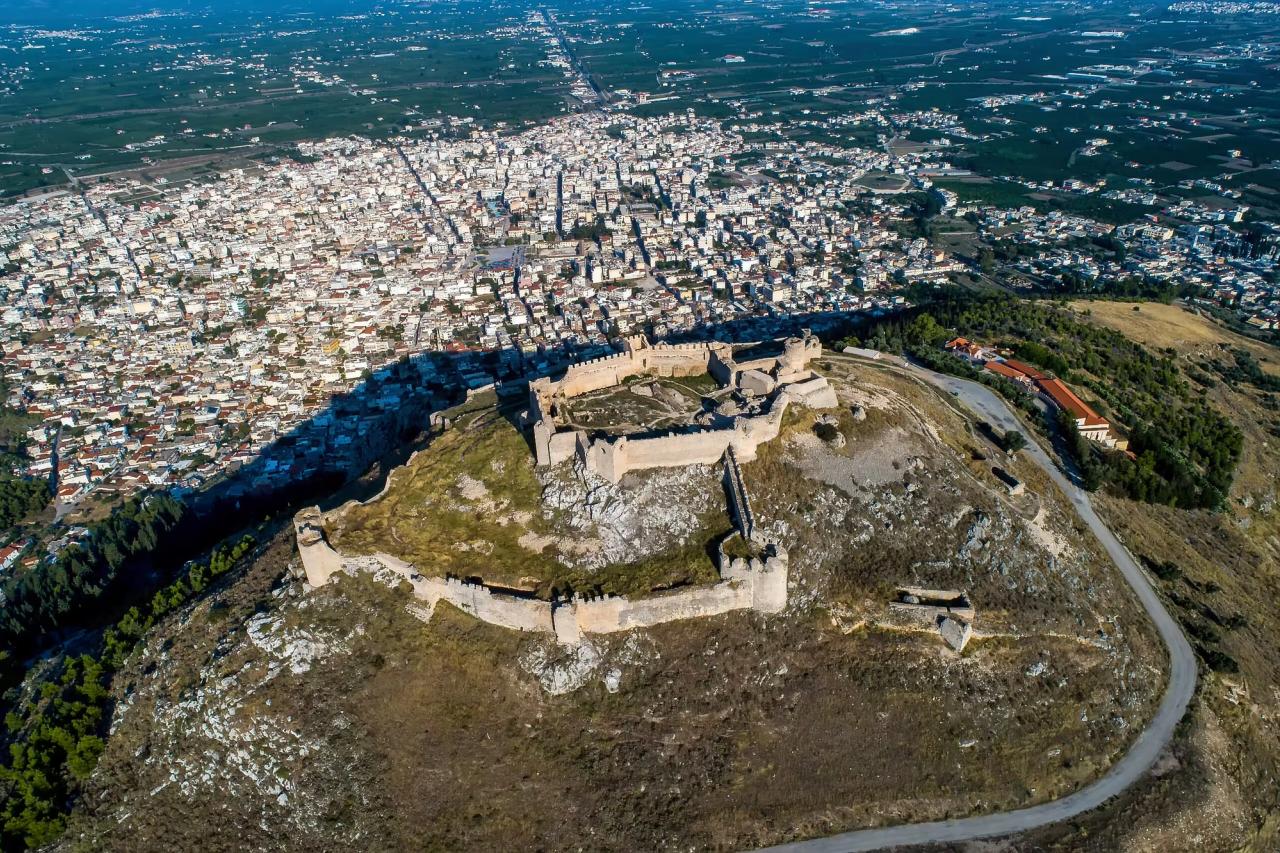
Larissa is de hoofdstad van de regio Thessalië en een van de meest onderschatte steden van Griekenland. Gelegen in het hart van Centraal-Griekenland, omringd door vruchtbare vlaktes en met de Olympus in het noorden, is Larissa een welvarende landbouwhub met een ontspannen levenstempo. De stad mist de kustallure van Athene of de studentensfeer van Thessaloniki, maar compenseert dat met zeer lage kosten, authentiek Grieks dagelijks leven en uitstekende verbindingen met de rest van het vasteland. Larissa is ideaal voor expats die betaalbaarheid, authenticiteit en gemakkelijke toegang tot zowel bergen als zee zoeken.
Larissa in een oogopslag
- Bevolking
- ~163.000 (gemeente)
- Regio
- Thessalië
- Bekend om
- Landbouwhart van Griekenland, Antiek Theater van Larissa, poort naar de Olympus
- Gemiddelde huur (1 slaapkamer)
- €220–€400/maand
- Gemiddeld salaris
- €750–€1.000/maand netto
- Expatgemeenschap
- Klein; voornamelijk landarbeiders, enkele academici en gepensioneerden
Waarom verhuizen naar Larissa
- Extreem betaalbaar: Larissa behoort tot de goedkoopste steden van Griekenland voor wonen en dagelijkse uitgaven. Je geld gaat hier verder dan bijna overal elders in het land.
- Centrale ligging: Larissa ligt op het kruispunt van de belangrijkste noord-zuidroute en oost-westroute van Griekenland. Athene ligt op 3,5 uur per trein, Thessaloniki op 1,5 uur en de stranden van het Pelion-schiereiland zijn 45 minuten rijden.
- Landbouwprosperiteit: De Thessalische vlakte is de graanschuur van Griekenland. De lokale economie is stabiel en wordt gedragen door landbouw, voedselverwerking en handel.
- Authentiek Grieks leven: Larissa is geen toeristenstad. Het dagelijks leven volgt Griekse ritmes — lange koffiepauzes, late diners en sterke buurtbanden.
- Poort naar natuurwonderen: Meteora, de Olympus, het Plastirameer en de kust van Pelion liggen allemaal op 1–2 uur afstand.
- Rustige levensstijl: Geen toerismendrukte, geen seizoensgebonden prijsstijgingen, geen vertoon. Gewoon stabiel, betaalbaar, Grieks dagelijks leven.
Visum en verblijfsvergunning
EU/EER-burgers mogen vrij in Griekenland wonen en werken. Niet-EU-burgers hebben een verblijfsvergunning nodig. Relevante opties:
- Digital Nomad-visum: Bewijs van inkomen op afstand ≥€3.500/maand. Geldig voor één jaar, verlengbaar.
- Werkvisum: Via de werkgever. Kansen zijn er voornamelijk in de landbouw, voedselverwerking en gezondheidszorg.
- Studentenvisum: Via de Universiteit van Thessalië.
- Pensioenvisum: Bewijs van passief inkomen en ziektekostenverzekering. De lage kosten in Larissa maken het aantrekkelijk voor gepensioneerden met een beperkt budget.
EU-burgers moeten zich binnen 90 dagen inschrijven bij de lokale gemeente (bij verblijf langer dan 3 maanden). Niet-EU-burgers dienen zich te registreren bij het lokale Vreemdelingenkantoor. Het immigratiekantoor van Larissa behandelt minder zaken dan dat van Athene, wat de verwerking soepeler kan maken.
Tips voor verblijfsregistratie
- Haal eerst je AFM (belastingnummer) op — dit is vereist voor bankieren, huren en nutsdiensten.
- AMKA (burgerservicenummer) is nodig voor gezondheidszorg en werk.
- Neem gecertificeerde kopieën mee van alle belangrijke documenten.
- Begin met de verlenging 60 dagen voor het verlopen van je vergunning.
Een woning vinden in Larissa
Gemiddelde huurprijzen
| Wijk | 1 slaapkamer | 3 slaapkamers | Karakter |
|---|---|---|---|
| Stadscentrum | €250–€420 | €450–€750 | Commercieel, goed te voet bereikbaar, nabij Alcazar Park |
| Neapoli | €220–€380 | €400–€680 | Residentieel, betaalbaar, rustig |
| Agios Thomas | €200–€350 | €380–€650 | Arbeidersmilieu, erg betaalbaar |
| Koulouri | €230–€380 | €420–€700 | Gemengd woongebied |
| Anatoli | €250–€400 | €450–€720 | Zuidoostelijk, iets chiquer |
| Terpsithea | €220–€370 | €400–€670 | Zuidelijke buitenwijk, gezinsvriendelijk |
Hoe vind je een woning
- Spitogatos.gr: Het belangrijkste woningportaal, al zijn er in Larissa minder aanbiedingen dan in grotere steden.
- XE.gr: Goed voor particuliere verhuurders in Larissa en de bredere Thessalische regio.
- Facebook-groepen: "Larissa Expats" en Thessalische gemeenschapsgroepen.
- Loop door het centrum en zoek naar handgeschreven bordjes — veel verhuurders in Larissa adverteren nog steeds op deze manier.
- Makelaars zijn er, maar veel verhuur wordt rechtstreeks door de eigenaar geregeld.
Tips voor expats
- De huurmarkt van Larissa is niet concurrerend. Neem de tijd en onderhandel — verhuurders zijn flexibel, zeker bij langere huurcontracten.
- De meeste huurwoningen zijn ongestoffeerd. Gemeubileerde opties bestaan maar zijn duurder.
- Verwarmingskosten zijn hier belangrijk — Larissa heeft koude winters. Vraag naar aardgasaansluitingen (goedkoper dan olie- of elektrische verwarming).
- De stad is vlak, waardoor je er gemakkelijk te voet of op de fiets doorheen kunt.
- Sta erop een schriftelijk huurcontract te krijgen, ook al zijn informele afspraken gebruikelijk.
Wijkengids
- Stadscentrum: Rond het Alcazar Park en de belangrijkste winkelstraten. Vlak, goed te bewandelen en dicht bij alles. Cafés, winkels en de centrale markt liggen voor je deur. Ideaal voor wie gemak wil of geen auto heeft.
- Neapoli: Een grote woonwijk ten westen van het centrum. Betaalbaar, rustig en goed bereikbaar met de bus. Populair bij gezinnen en langdurige bewoners.
- Agios Thomas: Een van de meest betaalbare buurten. Arbeidersmilieu met een sterke lokale gemeenschap. Sober wonen voor de laagste prijzen. Ideaal voor expats met een krap budget.
- Koulouri: Een gemengd woongebied. Goede prijs-kwaliteitverhouding. Geschikt voor jonge professionals.
- Anatoli: Het zuidoostelijke deel van Larissa met een suburbaan karakter. Iets hogere huurprijzen maar mooiere straten en meer groen. Een goede balans tussen centrum en buitenwijk.
- Terpsithea: Een zuidelijke buitenwijk nabij de Pinios-rivier. Gezinsgerichte wijk met parken en scholen. Rustig en ruim. Ideaal voor gezinnen die zich langdurig willen vestigen.
Kosten van levensonderhoud in Larissa
Maandelijkse budgetverdeling
| Categorie | Budgetbereik |
|---|---|
| Huur (1 slaapkamer, centrum) | €220–€400 |
| Nutsvoorzieningen | €80–€150 |
| Internet | €22–€30 |
| Boodschappen | €150–€230 |
| Vervoer | €15–€35 |
| Uit eten (4x/maand) | €45–€80 |
| Vrije tijd/Sportschool | €20–€35 |
| Totaal | €552–€960 |
Dagelijkse kosten
- Koffie (freddo): €2,00–€3,00
- Lunch (eenvoudige taverna): €6–€9
- Maandabonnement (stadsbus): €15
- Bier (bar): €3,00–€4,00
- Bioscoopkaartje: €5–€7
- Brood: €0,80–€1,20
- 1 liter melk: €1,00–€1,30
- Dozijn eieren: €2,50–€3,20
Vervoer in Larissa
- Openbaar vervoer: Het bussysteem van Larissa bestrijkt de stad en nabijgelegen dorpen. De service is eenvoudig maar functioneel. Een maandabonnement kost ongeveer €15. Bussen rijden minder frequent dan in Athene of Thessaloniki.
- Fietsen: Larissa is vlak en compact — een van de meest fietsvriendelijke steden van Griekenland. De fietsinfrastructuur is beperkt, maar het terrein is gunstig.
- Rijden: Het verkeer is te overzien. Parkeren is eenvoudiger dan in kustplaatsen. Een auto is erg handig om Thessalië, Meteora en de kust van Pelion te verkennen.
- Luchthaven: Larissa heeft geen commerciële luchthaven. De dichtstbijzijnde is de luchthaven van Thessaloniki (SKG, 1,5 uur) of de luchthaven Volos Nea Anchialos (seizoensgebonden, 45 minuten).
- Intercity: Larissa is een belangrijk spoorknooppunt op de lijn Athene–Thessaloniki (Athene: 3,5 uur, Thessaloniki: 1,5 uur). KTEL-bussen verbinden met Volos, Trikala, Karditsa en Meteora.
- Taxi's: Goedkoop naar Europese maatstaven. Starttarief is €1,80. Handig voor korte ritten binnen de stad.
Gezondheidszorg in Larissa
- Ziekenhuizen/klinieken: Het Universitair Ziekenhuis van Larissa is de belangrijkste openbare instelling. Privéklinieken zoals het Chatzikosta Ziekenhuis bieden snellere service.
- Engelssprekende artsen: Beschikbaar bij privépraktijken, maar minder gebruikelijk dan in Athene. Jongere artsen spreken doorgaans wel Engels.
- Apotheken: Overal in de stad te vinden. Herkenbaar aan het groene kruis. Apothekers geven basismedisch advies.
- Noodnummer: 112 (EU-breed) of 166 (EKAB ambulance).
- Ziektekostenverzekering: EU-burgers gebruiken de EHIC bij noodgevallen. Langdurige inwoners registreren zich bij EFKA of sluiten een particuliere verzekering af.
- Tandheelkundige zorg: Betaalbaar. Een controle kost €20–€35 bij privéklinieken.
Krijg een persoonlijk verhuisplan
Laat je e-mailadres achter en we sturen een checklist op maat plus drie offertes van gecontroleerde verhuizers.
Bankieren & Financiën
- Bankrekening openen: Je hebt een AFM, paspoort en adresbewijs nodig. Alpha Bank, National Bank en Eurobank zijn actief in Larissa.
- Contante betalingscultuur: Contant geld wordt in Larissa veel gebruikt — meer dan in Athene. Kleine winkels, markten en veel verhuurders geven de voorkeur aan contant.
- Overschrijvingen: SEPA-overschrijvingen binnen de EU zijn goedkoop. Internationale overschrijvingen kosten €10–€30.
- Geldautomaten: Overal in de stad beschikbaar. Opnamelimiet €300–€600/dag.
- Mobiel bankieren: Griekse bank-apps zijn beschikbaar met een Engelse interface.
Taal & Communicatie
- Officiële taal: Grieks.
- Engelse taalbeheersing: Beperkter dan in Athene of Thessaloniki. Jongeren en universiteitspersoneel spreken enig Engels. Overheidskantoren en oudere inwoners doorgaans niet.
- Grieks leren: Onmisbaar voor het dagelijks leven in Larissa. De Universiteit van Thessalië biedt taalcursussen aan. Particuliere frontistiria zijn beschikbaar.
- Handige zinnen: Kalimera (goedemorgen), efharisto (dank je), parakalo (alsjeblieft/graag gedaan), signomi (pardon), poso kani? (hoeveel kost het?).
- Simkaarten: Cosmote, Vodafone en Wind beschikbaar. Prepaid vanaf €8/maand. Cosmote heeft de beste dekking op het platteland voor daguitstapjes.
Cultuur & Levensstijl
- Oud erfgoed: Larissa heeft twee antieke theaters, waaronder het goed bewaarde Antieke Theater van Larissa (3e eeuw v.Chr.). Het Archeologisch Museum van Larissa behandelt de Thessalische geschiedenis van de prehistorie tot de Romeinse tijd.
- Alcazar Park: De groene long van de stad langs de Pinios-rivier. Inwoners wandelen, joggen en ontmoeten elkaar hier dagelijks. Een centraal ontmoetingspunt.
- Carnaval en festivals: Larissa organiseert een levendig carnaval en diverse culturele evenementen in de open lucht in de zomer. Lokale feesten (panigiria) in de omliggende dorpen zijn een belangrijk onderdeel van de sociale agenda.
- Nabijheid van Meteora: De UNESCO-kloosters van Meteora liggen op slechts 1,5 uur rijden — een van de spectaculairste bezienswaardigheden van Europa.
- Siëstacultuur: Kleine winkels sluiten tussen 14.00–17.00 uur. Supermarkten en grotere winkels blijven open.
Eten & Drinken
- Lokale specialiteiten: Spetzofai (pikante worst- en peperstoofpot), tyropsouli (kaasgebakje), gegrild vlees, Thessalisch lamsvlees, lokale wijnen uit Rapsani.
- Beste eetgebieden: Het centrum voor traditionele taverna's, de oeverzone voor cafés en de omliggende dorpen voor authentieke plattelandskeuken.
- Budgetopties: Een souvlakibord kost €5–€7. Bakkerijen zijn goedkoop en overal te vinden. Een taverna-diner met drankjes kan minder dan €10 per persoon kosten.
Expatgemeenschap
- Ontmoetingsgroepen: Kleine expatgemeenschap. Kijk op Internations en Facebook voor Larissa-specifieke of Thessalische groepen.
- Academische gemeenschap: De Universiteit van Thessalië (deels gevestigd in Larissa en Volos) trekt internationale onderzoekers.
- Landarbeiders: Seizoensgebonden landbouwwerk brengt arbeiders uit Albanië, Bulgarije en andere landen — een andere soort multiculturele gemeenschap.
Arbeidsmarkt in Larissa
- Belangrijkste sectoren: Landbouw, voedselverwerking, lichte industrie, detailhandel, onderwijs, gezondheidszorg.
- Grote werkgevers: Universiteit van Thessalië, regionale landbouwcoöperaties, lokale voedingsbedrijven, publieke sector.
- Gemiddelde salarissen per sector:
| Sector | Maandelijks netto |
|---|---|
| Landbouw / Voeding | €700–€1.000 |
| Onderwijs / Onderzoek | €750–€1.200 |
| Gezondheidszorg | €800–€1.200 |
| Detailhandel / Diensten | €650–€900 |
| IT / Tech | €800–€1.300 |
- Vacaturebronnen: Kariera.gr, Indeed Greece, LinkedIn, advertenties in de lokale krant, de loopbaandiensten van de Universiteit van Thessalië.
Onderwijs in Larissa
- Internationale scholen: Geen grote internationale scholen in Larissa. Gezinnen die internationaal onderwijs zoeken, kijken doorgaans naar scholen in Thessaloniki of Athene.
- Universiteiten: Universiteit van Thessalië (vestigingen in Larissa en Volos — sterk in landbouw, techniek en geesteswetenschappen).
- Taalscholen: Particuliere frontistiria bieden Engelse en Griekse cursussen aan. De Universiteit van Thessalië biedt taalondersteuning Grieks voor internationale studenten.
Verhuischecklist voor Larissa
- Bevestig visum- of verblijfsvereisten (EU-burgers: registreer je bij de lokale politie)
- Verken de wijken — Larissa is klein en goed te voet
- Sluit je aan bij Larissa- of Thessalische Facebook-groepen voor lokaal advies
- Regel een ziektekostenverzekering
- Begin met het leren van basis-Grieks — hier belangrijker dan in toeristische steden
- Zorg voor gecertificeerde kopieën van alle belangrijke documenten
- Haal een AFM (belastingnummer) op bij de lokale DOY
- Open een bankrekening (Alpha Bank, National Bank of Eurobank)
- Koop een lokale simkaart
- Teken het huurcontract en regel nutsvoorzieningen (vraag naar de aardgasaansluiting)
- Maak jezelf vertrouwd met de busroutes
- Zoek de dichtstbijzijnde apotheek, supermarkt en KEP-kantoor
- Registreer je bij een lokale huisarts
- Vraag een AMKA aan (burgerservicenummer)
- Verken het stadscentrum en ontdek je lokale markt, bakkerij en café
- Begin met Griekse taallessen — onmisbaar hier, want Engels wordt er minder gesproken
- Registreer je bij je ambassade indien van toepassing
- Activeer mobiel bankieren
Internet & Connectiviteit
- Snelheden: Larissa heeft voldoende breedbandinternet. Gemiddelde downloadsnelheden zijn 20–50 Mbps. Glasvezel is beschikbaar in sommige centrale gebieden en wordt uitgebreid.
- Aanbieders: Cosmote, Vodafone en Nova bieden breedband aan vanaf €22–€35/maand.
- Mobiele data: 4G dekt de stad. 5G-dekking is nog beperkt. Cosmote heeft de beste dekking.
- Coworkingplekken: Zeer beperkt. Enkele kleine ruimtes en cafés met wifi. Voor een groter coworkingaanbod is Thessaloniki op 1,5 uur afstand.
Gerelateerde gidsen
- [Verhuizen naar Griekenland] — uitgebreide landengids
- [Verhuizen naar Thessaloniki] — de hoofdstad van Noord-Griekenland
- [Verhuizen naar Patras] — toegangspoort van West-Griekenland