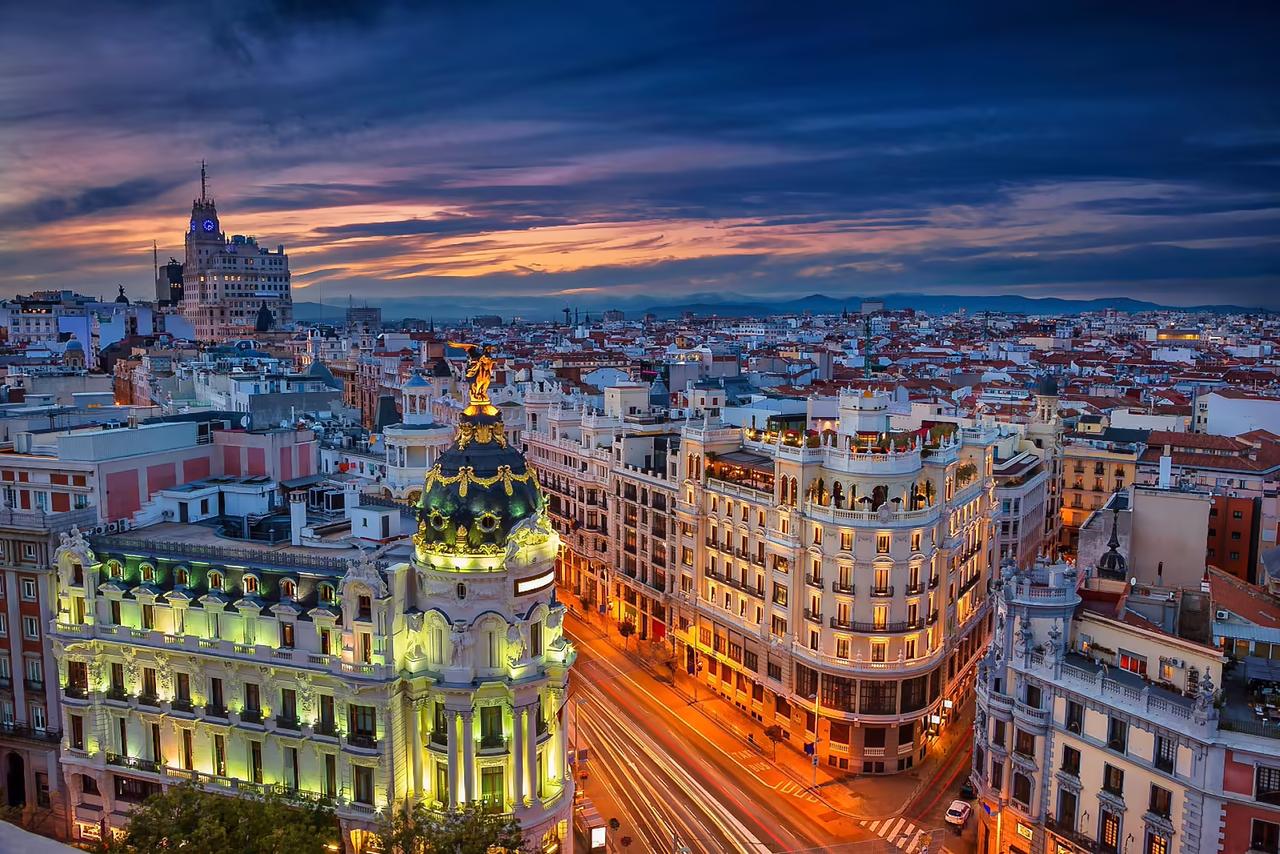
Madrid è la capitale e la città più grande della Spagna — una metropoli in continua espansione che unisce secoli di storia reale a una scena creativa e imprenditoriale vibrante e moderna. Si trova nel cuore geografico della Penisola Iberica e offre agli expat ottimi collegamenti di trasporto, musei di livello mondiale e un costo della vita inferiore a quello della maggior parte delle capitali dell'Europa occidentale.
Madrid in breve
- Popolazione
- 3,3 milioni (città) / 6,8 milioni (area metropolitana)
- Regione
- Comunità di Madrid, Spagna centrale
- Nota per
- Museo del Prado, Palazzo Reale, vita notturna vivace
- Affitto medio (monolocale)
- 1.100–1.500 € al mese
- Stipendio medio
- 1.900–2.400 € netti al mese
- Comunità expat
- Molto ampia — oltre 500.000 residenti stranieri
- Lingua
- Spagnolo (Castigliano)
- Clima
- Continentale — estati calde e secche (35 °C+), inverni freddi (2–8 °C)
Perché trasferirsi a Madrid
- Polo professionale: Madrid è il motore economico della Spagna, sede della borsa, delle principali banche e delle sedi centrali della maggior parte delle multinazionali operanti nel Paese.
- Capitale culturale: Il Prado, la Reina Sofía e il Thyssen-Bornemisza formano il "Triangolo d'Oro dell'Arte" — uno dei più importanti complessi museali al mondo.
- Posizione centrale: I treni ad alta velocità AVE raggiungono Barcellona, Siviglia e Valencia in meno di tre ore; l'aeroporto di Madrid-Barajas collega oltre 200 destinazioni in tutto il mondo.
- Vita sociale: Dalle terrazze sui tetti di Malasaña ai tablaos di flamenco a Lavapiés, la vita sociale della città non si ferma mai. La vita notturna inizia proverbialmente a mezzanotte.
- Clima: Oltre 2.800 ore di sole all'anno, con estati calde e secche e inverni freschi e limpidi — la neve è rara ma possibile a gennaio.
- Eccellenza nei trasporti: Uno dei migliori sistemi metropolitani d'Europa (13 linee) più l'abbonamento mensile Abono che copre tutte le zone.
Trovare casa a Madrid
Affitti medi
| Quartiere | Monolocale | Trilocale | Caratteristiche |
|---|---|---|---|
| Salamanca | 1.400–1.900 € | 2.500–3.500 € | Elegante, shopping di lusso, viali signorili |
| Chamberí | 1.100–1.400 € | 1.900–2.600 € | Centrale, adatto alle famiglie, bar di tapas tradizionali |
| Malasaña | 1.000–1.300 € | 1.700–2.300 € | Alla moda, vita notturna, ambiente creativo |
| Retiro | 1.100–1.500 € | 1.900–2.800 € | Tranquillo, verde, vicino al parco |
| Lavapiés | 850–1.150 € | 1.450–2.000 € | Multiculturale, economico, vivace cultura di strada |
| La Latina | 950–1.300 € | 1.650–2.400 € | Storico, bar di tapas, mercato domenicale del Rastro |
Come cercare casa
- Idealista: La piattaforma di affitti leader in Spagna — imposta avvisi per le offerte più veloci nei quartieri più richiesti.
- Fotocasa: Ampia copertura di Madrid con filtri dettagliati e mappe di calore per quartiere.
- Milanuncios: Sito di annunci dove i proprietari privati pubblicano direttamente — spesso più economico e senza commissioni d'agenzia.
- Spotahome: Utile per affitti arredati con visite virtuali prima dell'arrivo.
- Commissione d'agenzia: Se si utilizza un'agenzia, prevedere una commissione pari a un mese di affitto più il 21% di IVA — anche se una legge del 2023 trasferisce questo costo ai proprietari in molti casi.
Consigli per gli expat
- Prevedere un deposito di 1-2 mesi. Molti proprietari richiedono una prova di reddito pari a 2,5-3 volte l'affitto mensile.
- La concorrenza è intensa tra settembre e ottobre, quando inizia l'anno accademico. Cominciate a cercare almeno quattro settimane prima della data prevista per il trasloco.
- Verificate che l'appartamento abbia l'aria condizionata — le estati di Madrid superano regolarmente i 35 °C.
- Controllate l'età dell'edificio — gli appartamenti antecedenti agli anni '60 potrebbero essere privi di riscaldamento centralizzato e ascensore.
Guida ai quartieri
- Salamanca: Il quartiere più prestigioso di Madrid. Ampi viali alberati, boutique di lusso in Calle de Serrano e ristoranti stellati Michelin. Gli affitti sono i più alti della città ma la zona è pulita, sicura e impeccabilmente collegata.
- Chamberí: Un quartiere residenziale classico, popolare tra i giovani professionisti e le famiglie. Ottima copertura metropolitana (quattro linee lo attraversano), mercati tradizionali come il Mercado de Vallehermoso e un forte senso di comunità.
- Malasaña: Il cuore creativo di Madrid. Street art, boutique indipendenti, bar di birra artigianale e una vivace vita notturna la rendono ideale per gli expat più giovani e gli artisti. Gli affitti sono aumentati ma restano al di sotto dei livelli di Salamanca.
- Retiro: Costruito attorno al famoso Parque del Buen Retiro, questo quartiere offre un ritmo più tranquillo. Gli appartamenti tendono a essere più vecchi ma spaziosi. Popolare tra famiglie e professionisti in cerca di aree verdi a pochi passi.
- Lavapiés: Uno dei quartieri più diversificati di Madrid. Affitti accessibili, ristoranti internazionali (indiani, marocchini, senegalesi) e una scena culturale dal basso ancorata al vicino museo Reina Sofía. Alcune strade hanno un'aria trasandata ma la zona è in trasformazione.
- La Latina: La parte più antica di Madrid. Vicoli stretti, bar di tapas centenari e il famoso mercatino delle pulci domenicale del Rastro. Gli affitti sono nella fascia media e l'atmosfera è autenticamente madrilena — soprattutto nei pomeriggi del fine settimana.
Costo della vita a Madrid
Ripartizione del budget mensile
| Categoria | Fascia di budget |
|---|---|
| Affitto (monolocale, centro) | 1.100–1.500 € |
| Utenze (elettricità, acqua, gas, riscaldamento) | 120–160 € |
| Internet (fibra 300 Mbps+) | 30–45 € |
| Spesa alimentare | 250–350 € |
| Trasporti (abbonamento mensile Abono) | 20–55 € (1) |
| Ristoranti (4 volte/mese) | 80–130 € |
| Tempo libero/Palestra | 30–55 € |
| Piano telefonico mobile | 10–20 € |
| Totale | 1.720–2.315 € |
Costi giornalieri
- Caffè (café con leche): 1,50–2,00 €
- Pranzo (menú del día): 11–15 €
- Abbonamento mensile trasporti (Abono Zona A): 54,60 € (non agevolato; la Comunidad de Madrid ha recentemente offerto tariffe agevolate di circa 20–30 € — verificare le agevolazioni correnti)
- Birra (bar, caña): 2,50–3,50 €
- Biglietto del cinema: 8–10 €
- Abbonamento mensile palestra: 30–55 €
- Pagnotta: 1,00–1,50 €
Visto e residenza a Madrid
La Spagna offre diverse tipologie di visto per i cittadini extracomunitari (non UE/SEE):
- Visto di lavoro: richiede un'offerta di lavoro da un datore di lavoro spagnolo. È il datore di lavoro ad avviare la pratica. I tempi di elaborazione vanno da 1 a 3 mesi.
- Visto per studenti: per gli studenti iscritti. Consente il lavoro part-time fino a 20 ore settimanali.
- Visto non lucrativo: per pensionati o chi dispone di risparmi sufficienti. Non consente di lavorare. Richiede la prova di un reddito pari al 400% dell'IPREM (circa 2.400+ €/mese, indicizzato annualmente).
- Visto per nomadi digitali (Ley de Startups): per lavoratori da remoto impiegati presso aziende non spagnole. Offre un'aliquota fissa agevolata del 24% fino a cinque anni.
- Carta Blu UE: per professionisti altamente qualificati. Richiede una laurea e uno stipendio superiore alla media.
- Visto per imprenditori: per chi intende avviare progetti imprenditoriali innovativi in Spagna.
Una volta in Spagna, le servirà un NIE (Número de Identificación de Extranjero) per praticamente tutte le pratiche ufficiali — aprire un conto bancario, firmare un contratto d'affitto e iscriversi all'assistenza sanitaria. Si richiede presso la stazione di polizia locale o l'ufficio Extranjería.
Obblighi fiscali
I residenti fiscali (183+ giorni/anno in Spagna) pagano le tasse sul reddito mondiale. L'IRPF varia dal 19% a circa il 43,5% a Madrid (l'aliquota massima nazionale del 47% non si applica nella Comunità di Madrid). La Comunità di Madrid offre alcune delle aliquote fiscali regionali più basse di Spagna, il che rappresenta un richiamo per chi ha redditi elevati.
| Voce fiscale | Descrizione | Aliquota |
|---|---|---|
| Imposta sul reddito (IRPF) | Sul reddito mondiale | 19%–43,5% progressiva (Madrid) |
| Previdenza sociale | Contributi obbligatori | ~6,35% dipendente / ~30% datore di lavoro |
| IVA | Su beni e servizi | 21% ordinaria |
| Imposta sul patrimonio | Sul patrimonio netto (Madrid: esente al 100%) | 0% di fatto |
Spostarsi a Madrid
- Trasporti pubblici: una delle migliori reti metropolitane d'Europa (13 linee, oltre 300 stazioni), più oltre 200 autolinee e la metro leggera (Metro Ligero). L'abbonamento mensile Abono (54,60 € Zona A; tariffa agevolata di circa 20 € per gli under 26) copre viaggi illimitati su metro, autobus e treni pendolari cercanías — un rapporto qualità-prezzo eccezionale.
- Bicicletta: il servizio di bike-sharing pubblico BiciMAD copre i quartieri centrali con oltre 260 stazioni e più di 3.000 biciclette. Le infrastrutture ciclabili sono in espansione, ma risultano ancora discontinue al di fuori del centro.
- Automobile: il traffico intenso e i parcheggi costosi rendono l'auto poco pratica per gli spostamenti quotidiani. La zona a basse emissioni (ZBE) di Madrid limita l'accesso al centro città ai veicoli senza etichetta ecologica.
- Aeroporto: Madrid-Barajas Adolfo Suárez (MAD), 12 km a nordest. La linea 8 della metropolitana collega direttamente (supplemento di 4,50–6 €). L'autobus espresso opera 24/7 fino a Cibeles.
- Tra le città: l'alta velocità AVE per Barcellona (2,5 ore), Siviglia (2,5 ore), Valencia (1,5 ore), Malaga (2,5 ore). L'Estación Sur è il principale hub degli autobus per i collegamenti economici verso le città più piccole.
Assistenza sanitaria a Madrid
- Ospedali e cliniche: Hospital Universitario La Paz, Hospital Gregorio Marañón, Hospital 12 de Octubre — principali ospedali pubblici con tutte le specializzazioni. Tra le opzioni private figurano l'Hospital Quirónsalud Madrid e gli HM Hospitales.
- Medici di lingua inglese: facilmente reperibili negli ospedali privati e nelle cliniche internazionali. Il servizio pubblico ha meno personale di lingua inglese; per le visite complesse è utile farsi accompagnare da una persona di lingua spagnola.
- Farmacie: onnipresenti — cerchi la croce verde. I medicinali da banco sono accessibili; le prescrizioni sono agevolate per i residenti. Le farmacie di turno (farmacias de guardia) funzionano 24/7 a rotazione.
- Numero di emergenza: 112 (europeo), 061 per le emergenze mediche.
- Assicurazione privata: le compagnie più diffuse sono Adeslas, Sanitas, MAPFRE e Cigna Global. I costi variano da 50 a 150 €/mese a seconda dell'età e del livello di copertura.
Ricevi un piano di trasloco personalizzato
Lascia la tua e-mail e ti invieremo una checklist su misura piu tre preventivi da traslocatori verificati.
Cultura e stile di vita
- Musei: il Prado (maestri europei), la Reina Sofía (la Guernica di Picasso) e il Thyssen-Bornemisza (collezione privata che abbraccia secoli) — ingresso gratuito nelle ore serali in giorni selezionati.
- Vita notturna: la vita notturna di Madrid è leggendaria. I locali aprono a mezzanotte e chiudono all'alba. Le zone principali: Malasaña, Chueca, La Latina e Sol. Gli spagnoli di solito fanno il pre-party a casa (el pre) prima di uscire tra l'1 e le 2 di notte.
- Sport: il Santiago Bernabéu (Real Madrid, recentemente ristrutturato) e il Wanda Metropolitano (Atlético Madrid) sono impianti di livello mondiale. Correre nella Casa de Campo o nel Parco del Retiro è un rituale quotidiano per migliaia di residenti.
- Feste: San Isidro (maggio — festa del santo patrono), La Paloma (agosto), l'Orgoglio (luglio — uno dei più grandi d'Europa) e la notte di Capodanno in Puerta del Sol.
Cibo e ristorazione
- Da assaggiare: cocido madrileño (stufato di ceci e carne — un classico invernale), bocadillo de calamares (panino con calamari in Plaza Mayor), churros con chocolate alla Chocolatería San Ginés (aperta dal 1894).
- Migliori zone per mangiare: La Latina per un giro di tapas, Lavapiés per il cibo internazionale, Malasaña per il brunch, Salamanca per la cucina raffinata.
- Opzioni economiche: il menú del día a pranzo è un'istituzione di Madrid — un pasto completo con pane e bevanda a 11–15 € in quasi tutti i ristoranti di quartiere.
Comunità expat
- Gruppi Meetup: InterNations Madrid (uno dei più grandi di Spagna), Madrid Expat Social e serate di scambio linguistico nei bar della città che si tengono ogni sera.
- Organizzazioni internazionali: American Club of Madrid, British Chamber of Commerce in Spain, French Chamber of Commerce.
- Scambi linguistici: Madrid Language Exchange, Mundo Lingo e gli eventi Conversation Exchange si svolgono diverse sere a settimana a Chueca, Malasaña e Sol.
Gite di un giorno e destinazioni vicine
La posizione centrale di Madrid la rende un'ottima base da cui esplorare la Spagna:
- Toledo: la «Città delle Tre Culture» — patrimonio medievale cristiano, musulmano ed ebraico. 30 minuti con l'AVE. Patrimonio Mondiale dell'UNESCO.
- Segovia: l'acquedotto romano, l'Alcázar da fiaba e il cochinillo asado. 30 minuti in AVE.
- El Escorial: il maestoso palazzo-monastero rinascimentale di Filippo II. 1 ora con il treno Cercanías.
- Sierra de Guadarrama: le montagne a nord di Madrid per escursioni, sci (Navacerrada, Valdesquí) e aria fresca. 45 minuti in auto.
- Ávila: mura cittadine medievali complete, 90 minuti in treno. Famosa per il chuletón (bistecca con osso).
- Chinchón: un piccolo borgo a sud di Madrid con una Plaza Mayor circolare e liquore all'anice. 50 minuti in autobus.
Mercato del lavoro a Madrid
- Principali settori: finanza, tecnologia, turismo, consulenza, media, telecomunicazioni e pubblica amministrazione.
- Principali datori di lavoro: Telefónica, Banco Santander, BBVA, Iberia Airlines, Accenture, Deloitte, Amadeus IT, Repsol.
- Stipendi medi per settore:
| Settore | Fascia salariale annua |
|---|---|
| IT / Sviluppo software | 30.000–50.000 € |
| Finanza / Contabilità | 28.000–55.000 € |
| Marketing / Comunicazione | 25.000–40.000 € |
| Ospitalità / Turismo | 18.000–25.000 € |
| Ingegneria | 30.000–50.000 € |
| Istruzione (insegnamento linguistico) | 18.000–28.000 € |
- Risorse per la ricerca di lavoro: InfoJobs.net (il più grande portale di lavoro in Spagna), LinkedIn, Tecnoempleo (specifico per l'IT), Welcome Talent Spain, Glassdoor.
Istruzione a Madrid
- Scuole internazionali: International College Spain, The British Council School, American School of Madrid, Hastings School, Lycée Français de Madrid.
- Università: Universidad Complutense de Madrid (UCM, una delle più grandi di Spagna), Universidad Politécnica de Madrid (UPM — ingegneria), IE University (economia), Carlos III, Autónoma de Madrid.
- Scuole di lingua: International House Madrid, Inhispania, Don Quijote, AIL Madrid — corsi di spagnolo dal livello principiante a quello avanzato, con preparazione all'esame DELE.
Checklist per il trasloco a Madrid
- Trova un alloggio a breve termine (Airbnb o appartamento arredato) per almeno il primo mese
- Richiedi il visto corretto se sei cittadino non EU — calcola 2–3 mesi per l'istruttoria
- Fai apostillare e tradurre i documenti in spagnolo da un traduttore giurato
- Procurati un'assicurazione sanitaria privata (obbligatoria per la richiesta del visto e consigliata per il primo anno)
- Cerca informazioni sui quartieri online e iscriviti ai gruppi Facebook per expat per consigli sulla casa
- Iscriviti all'anagrafe comunale (empadronamiento) presso l'ufficio del tuo distretto — è necessario per quasi tutto
- Richiedi il NIE presso l'ufficio Extranjería più vicino (prenota la cita previa online con largo anticipo)
- Apri un conto bancario (Santander, BBVA oppure opzioni online come N26 o Revolut per iniziare)
- Acquista una SIM spagnola (Movistar, Vodafone, Orange oppure operatori economici come Digi)
- Iscriviti al sistema sanitario pubblico (se ne hai diritto tramite il lavoro o la previdenza sociale)
- Attiva le utenze — luce (Iberdrola/Endesa), acqua (Canal de Isabel II), gas (Naturgy) e internet (Movistar, Orange, Digi)
- Acquista l'abbonamento mensile Abono in qualsiasi stazione della metropolitana
- Esplora diversi quartieri prima di firmare un contratto d'affitto a lungo termine
- Registrati presso l'ambasciata o il consolato del tuo Paese d'origine
- Richiedi la tessera TIE (carta d'identità per stranieri) se il tuo visto dura più di 6 mesi
- Iscriviti a BiciMAD, il servizio di bikesharing, se prevedi di muoverti in bicicletta nel centro
Guide correlate
- [Trasferirsi in Spagna] — guida completa al Paese
- [Trasferirsi a Barcellona] — guida alla seconda città di Spagna
- [Trasferirsi a Valencia] — un'alternativa mediterranea accessibile
- [Trasferirsi a Siviglia] — guida alla cultura andalusa