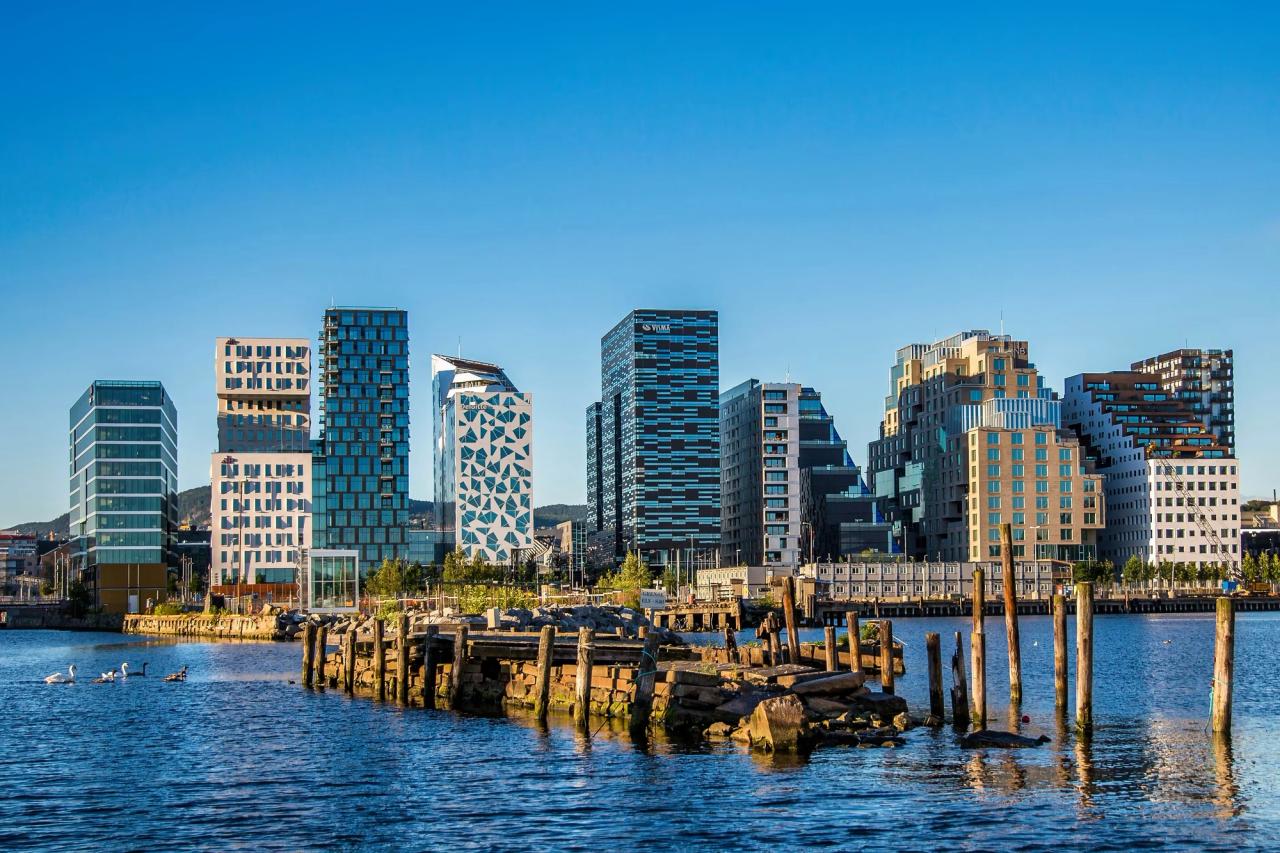
Oslo es la capital y la ciudad más grande de Noruega, una impresionante metrópolis enclavada entre el fiordo de Oslo y las colinas boscosas. Conocida por su alta calidad de vida, sus museos de categoría mundial y sus animados barrios como Grünerløkka y Aker Brygge, Oslo atrae a profesionales, estudiantes y familias de todo el mundo. Si valora tener la naturaleza a la puerta de casa, salarios altos y una ciudad segura y peatonal, Oslo merece una mirada seria — solo prepárese para una de las ciudades más caras de Europa.
Oslo de un vistazo
- Población
- ~725.000 (área metropolitana ~1,55 millones)
- Región
- Noruega Oriental (condado de Oslo)
- Conocida por
- Fiordo de Oslo, Grünerløkka, Aker Brygge, herencia vikinga
- Alquiler medio (1 dormitorio)
- NOK 13.000–18.000/mes (centro de la ciudad)
- Salario medio
- NOK 38.000–45.000/mes netos
- Comunidad expatriada
- Amplia y diversa: petróleo, tecnología, finanzas, diplomacia
Por qué mudarse a Oslo
- Oportunidades profesionales: el centro económico de Noruega, con sectores fuertes en energía, finanzas, tecnología y transporte marítimo.
- Acceso a la naturaleza: fiordos, bosques y pistas de esquí a menos de 20 minutos del centro de la ciudad.
- Calidad de vida: excelentes servicios públicos, baja criminalidad y aire limpio sitúan a Oslo entre las ciudades más habitables del mundo de forma constante.
- Escena cultural: sede del Museo Munch, la Ópera de Oslo y una próspera oferta gastronómica y musical.
- Conectividad internacional: vuelos directos a todas las principales ciudades europeas y a los principales nudos de comunicación de Norteamérica y Asia.
Buscar vivienda en Oslo
Alquileres medios
| Barrio | 1 dormitorio (NOK/mes) | 3 dormitorios (NOK/mes) | Carácter |
|---|---|---|---|
| Grünerløkka | 14.000–18.000 | 24.000–32.000 | De moda, peatonal, cafeterías y bares |
| Frogner | 15.000–20.000 | 28.000–38.000 | Exclusivo, histórico, ideal para familias |
| Majorstuen | 14.000–19.000 | 26.000–35.000 | Céntrico, excelente transporte, tiendas |
| Tøyen | 11.000–15.000 | 20.000–27.000 | Multicultural, asequible, vibrante |
| Sagene | 12.000–16.000 | 22.000–30.000 | Residencial, tranquilo, cerca de parques |
| Nordstrand | 12.500–16.500 | 23.000–31.000 | Residencial periférico, acceso al puerto, familias |
Cómo buscar vivienda
- Finn.no: el portal de anuncios clasificados más importante de Noruega; casi todos los listados de alquiler aparecen aquí.
- Hybel.no: plataforma especializada en habitaciones compartidas y apartamentos pequeños.
- Grupos de Facebook: "Oslo Housing, Rooms, Apartments" y grupos similares son muy activos con publicaciones diarias.
- OBOS y USBL: cooperativas de vivienda que publican apartamentos en venta y, en ocasiones, en alquiler.
Consejos para expatriados
- Prepárese para pagar un depósito de 2 a 3 meses de alquiler más el primer mes por adelantado, ingresado en una cuenta de depósito específica (depositumkonto).
- Los suministros (strøm, internet) rara vez están incluidos; prevea un extra de NOK 1.500–2.500/mes.
- Tener un fødselsnummer noruego (número de identificación) acelera notablemente el proceso de alquiler.
- Empiece a buscar con antelación: los mejores apartamentos se alquilan en cuestión de días tras su publicación.
- Siempre visite la vivienda en persona antes de pagar nada. Existen estafas de alquiler, especialmente dirigidas a extranjeros.
Guía de barrios
- Grünerløkka: zona de ambiente alternativo con tiendas vintage, bares de cerveza artesanal y mercados de comida callejera. Muy popular entre jóvenes profesionales. Alquiler de medio a alto.
- Frogner: distrito elegante y ajardinado con embajadas, galerías y casas familiares. Alquiler alto.
- Aker Brygge / Tjuvholmen: lujo frente al mar con restaurantes, galerías y vistas al fiordo. Alquiler muy alto.
- Tøyen: económico y multicultural, sede del Museo Munch y el Jardín Botánico. Alquiler de bajo a medio.
- Nordstrand: ambiente suburbano tranquilo con buenas escuelas y acceso al puerto. Ideal para familias. Alquiler medio.
- Gamle Oslo: cerca de la estación central, mezcla de antiguos edificios industriales y nuevas urbanizaciones. Alquiler medio.
Coste de vida en Oslo
Desglose del presupuesto mensual
| Categoría | Rango de presupuesto (NOK) |
|---|---|
| Alquiler (1 dormitorio, centro) | 13.000–18.000 |
| Suministros | 1.500–2.500 |
| Internet | 500–700 |
| Supermercado | 4.000–5.500 |
| Transporte (abono mensual) | 850–950 |
| Comer fuera (4 veces/mes) | 2.400–4.000 |
| Ocio/Gimnasio | 500–800 |
| Total | 22.750–32.450 (incl. alquiler) |
Gastos diarios
- Café: NOK 50–65
- Almuerzo (informal): NOK 150–200
- Abono mensual de transporte: NOK 850–950
- Cerveza (bar): NOK 90–120
- Entrada de cine: NOK 140–170
- Barra de pan: NOK 35–50
- 1 litro de leche: NOK 20–25
- Cuota mensual de gimnasio: NOK 400–700
- Pizza para llevar: NOK 190–260
- Botella de vino (Vinmonopolet): NOK 160–280
Cómo moverse por Oslo
- Transporte público: Ruter opera autobuses, tranvías, metro (T-bane) y ferris. Un abono mensual (1 zona) cuesta unos NOK 850–950 y cubre todos los medios de transporte de la ciudad.
- Bicicleta: Extensa red de carriles bici y el sistema de bicicletas urbanas Oslo Bysykkel (NOK 99/mes por trayectos ilimitados de 60 minutos). La infraestructura ciclista es de las mejores de Escandinavia.
- Coche: Los peajes urbanos del centro (bomring) aplican cargos diarios de NOK 20–50 según el tipo de vehículo. Aparcar es caro (NOK 40–60/hora) y limitado — la mayoría de los residentes utilizan el transporte público.
- Aeropuerto: Oslo Gardermoen (OSL), a 50 km al norte. El tren exprés Flytoget llega al aeropuerto en 20 minutos desde Oslo S. Opción económica: tren regional de Vy (algo más lento, bastante más barato).
- Interurbano: Trenes directos a Bergen (~7 horas), Trondheim (~7 horas) y Stavanger (~8 horas). Las conexiones de autobús exprés de Vy cubren todo el país.
Sanidad en Oslo
- Hospitales y clínicas: El Hospital Universitario de Oslo (Rikshospitalet, Ullevål) es el más grande de Escandinavia. También operan numerosas clínicas privadas.
- Médicos de habla inglesa: Ampliamente disponibles. La mayoría de los médicos de cabecera hablan inglés con fluidez, y muchas clínicas privadas atienden a la población expatriada.
- Farmacias: Apotek 1, Vitusapotek y Boots se encuentran por toda la ciudad.
- Emergencias: 113 (ambulancia), 110 (bomberos), 112 (policía).
- Registro de médico de cabecera: Elija su propio médico (fastlege) a través de Helsenorge.no. Las consultas cuestan NOK 200–300. Los tiempos de espera para especialistas pueden ser largos en el sistema público.
Recibe un plan de mudanza personalizado
Deja tu email y te enviaremos una checklist a medida y tres presupuestos de empresas verificadas.
Visados y residencia
La mayoría de los ciudadanos no pertenecientes a la UE/EEE o Suiza necesitan un visado o permiso de residencia noruego. Las principales opciones son:
- Visado de trabajo (trabajador cualificado): Requiere una oferta de empleo y las cualificaciones pertinentes.
- Permiso de trabajador cualificado (fuera de la UE/EEE): Noruega no es miembro de la UE y no emite la Tarjeta Azul UE. Los trabajadores cualificados no comunitarios solicitan el permiso de trabajador cualificado a través de la UDI; requiere oferta de empleo, cualificaciones pertinentes y un salario que cumpla los mínimos de la UDI.
- Visado de estudiante: Requiere admisión en una institución noruega y justificación de fondos.
- Permiso de reagrupación familiar: Para cónyuges, hijos u otros familiares cercanos de residentes noruegos.
- Visado de autónomo/startup: Para emprendedores con un plan de negocio viable.
Los ciudadanos de la UE/EEE pueden vivir y trabajar en Noruega sin visado, pero deben registrarse en la policía en un plazo de 3 meses.
Categorías de visados y requisitos: https://www.udi.no/en/want-to-apply
Cultura y estilo de vida
- Vida al aire libre: Los habitantes de Oslo son grandes amantes de la naturaleza — hacer senderismo en Nordmarka, nadar en Sørenga y esquí de fondo en invierno forman parte de la vida cotidiana.
- Museos: El Museo Munch (sede de El grito), el Parque de Esculturas Vigeland, el Museo Fram y el Museo Kon-Tiki son grandes atractivos.
- Escena gastronómica: Aker Brygge y Grünerløkka están llenos de restaurantes que van desde alta cocina nórdica hasta comida callejera.
- Vida nocturna: Youngstorget y Grünerløkka albergan cóctel-bars y discotecas. El alcohol es caro — un cóctel cuesta NOK 140–180.
- Festivales: Oslo acoge cada año el Festival de Música Øya, el Festival de Jazz de Oslo y la ceremonia del Premio Nobel de la Paz.
Comida y restaurantes
- Platos noruegos típicos: fårikål (estofado de cordero y col), brunost (queso marrón), salmón ahumado y gambas del fiordo.
- Mejores zonas para comer: Grünerløkka, Aker Brygge, Tjuvholmen, el mercado gastronómico Mathallen.
- Opciones económicas: Los locales de kebab y las panaderías ofrecen comidas desde NOK 100–130. Las cadenas de supermercados Rema 1000, Kiwi y Extra son las más baratas.
Comunidad expatriada
- InterNations Oslo: Encuentros periódicos y eventos de networking para profesionales internacionales.
- Oslo International Church: Punto de encuentro social para expatriados angloparlantes de cualquier procedencia.
- Intercambios de idiomas: Los grupos de Meetup.com y Folkeuniversitetet ofrecen clases de noruego e intercambios lingüísticos en tándem.
- Clubes deportivos: Los grupos de running, las ligas de fútbol y los rocódromos son formas populares de conocer gente.
Mercado laboral en Oslo
- Principales sectores: Energía (petróleo y gas), finanzas y banca, transporte marítimo, tecnología, sector público y consultoría.
- Principales empleadores: Equinor, DNB, Telenor, Aker, Schibsted, Universidad de Oslo, PwC, McKinsey.
- Salarios medios por sector (bruto mensual):
| Sector | Media (NOK) |
|---|---|
| TI / Tecnología | 60.000–85.000 |
| Finanzas | 55.000–90.000 |
| Ingeniería | 55.000–75.000 |
| Sanidad | 45.000–65.000 |
| Educación | 45.000–58.000 |
| Hostelería | 35.000–45.000 |
- Recursos de búsqueda de empleo: Finn.no/jobb, Nav.no, LinkedIn, Glassdoor, Indeed Norway.
Educación en Oslo
- Colegios internacionales: Oslo International School (Bekkestua), German School Oslo, Oslo French School, Bjørknes Private School.
- Universidades: Universidad de Oslo (UiO), BI Norwegian Business School, OsloMet, Academia Noruega de Música.
- Escuelas de idiomas: Folkeuniversitetet, Lingu, Oslo Voksenopplæring (clases municipales de noruego, gratuitas para residentes registrados).
Banca y registro
Para abrir una cuenta bancaria noruega, necesita:
- Pasaporte o documento nacional de identidad
- Fødselsnummer noruego o D-number
- Comprobante de domicilio (contrato de alquiler)
- En ocasiones, comprobante de empleo o de estudios
Regístrese en Skatteetaten (Administración Tributaria) con su pasaporte, permiso de residencia y comprobante de domicilio para recibir su fødselsnummer. Este número es imprescindible para la banca, la sanidad, los impuestos y prácticamente todos los trámites oficiales.
Lista de comprobación para mudarse a Oslo
- Obtenga un permiso de residencia o confirme sus derechos de registro en la UE/EEE.
- Busque alojamiento temporal (Airbnb, alquiler a corto plazo) para las primeras 2–4 semanas.
- Empiece a aprender noruego básico con los cursos gratuitos de Duolingo y el curso de noruego de la NTNU.
- Investigue los colegios si se muda con niños; solicite plaza en los colegios internacionales con antelación.
- Regístrese en Skatteetaten (Administración Tributaria) para obtener un fødselsnummer o un D-number.
- Abra una cuenta bancaria noruega (DNB, Nordea o Sparebanken).
- Dése de alta en un abono mensual de transporte de Ruter.
- Busque vivienda permanente en Finn.no o Hybel.no.
- Regístrese con un médico de cabecera local (fastlege) en Helsenorge.no.
- Consiga un número de teléfono noruego (Telia, Telenor o ice).
- Regístrese en NAV, si procede, para obtener apoyo en la búsqueda de empleo.
Transportar sus pertenencias a Oslo
Los costes de envío varían según el volumen y el origen. Tarifas habituales del mercado para una mudanza a Oslo:
| Tipo de envío | Tiempo | Coste (USD) |
|---|---|---|
| Contenedor de 20 pies (FCL) | 2–6 semanas | $1.400–3.900 |
| Contenedor de 40 pies (FCL) | 2–6 semanas | $2.350–4.950 |
| Envío aéreo (~1 m³) | 3–5 días | $1.650+ |
Noruega no pertenece a la UE: se aplica un arancel de importación del 0 al 10 % más un 25 % de IVA sobre el valor CIF. Los bienes de uso personal usados, en su posesión durante 6 o más meses, pueden acogerse a la importación exenta de aranceles si ha residido en el extranjero durante 12 o más meses.
Llevar un coche a Oslo
Importar un vehículo requiere una declaración aduanera, un 25 % de IVA y un impuesto de matriculación (engangsavgift) basado en las emisiones y el peso; a menudo resulta muy caro para vehículos con altas emisiones. Los coches importados deben superar una inspección técnica. Los permisos de conducir de la UE/EEE son válidos sin canje. Los permisos no comunitarios deben canjearse en un plazo de 12 meses; algunos países (Reino Unido, Australia, Canadá) permiten el canje sin examen; otros requieren exámenes teóricos y prácticos.
Llevar mascotas a Oslo
Las mascotas deben tener microchip, estar vacunadas contra la rabia y contar con un certificado sanitario de la UE o Pasaporte para Animales de Compañía. Las mascotas procedentes de países no comunitarios necesitan un certificado veterinario emitido en los 10 días previos al viaje. Algunas razas de perro están prohibidas en Noruega. Las mascotas procedentes de fuera de la UE/EEE deben entrar por puntos de entrada designados y pueden ser inspeccionadas por Mattilsynet (Autoridad Noruega de Seguridad Alimentaria).
Obligaciones fiscales en Oslo
Los residentes fiscales (183 o más días al año o vínculos significativos) tributan por sus ingresos mundiales. El impuesto sobre la renta es progresivo: aproximadamente del 22 % al 45 %. Las cotizaciones sociales (Trygdeavgift) suponen alrededor del 8 % de los ingresos. Noruega tiene convenios de doble imposición con más de 90 países para evitar la doble tributación.
Idioma noruego e integración
- ¿Es necesario el noruego? Puede desenvolverse con inglés, especialmente en Oslo, pero aprender noruego es fundamental para el desarrollo profesional a largo plazo, la integración social y las solicitudes de ciudadanía.
- Cursos gratuitos: Oslo Kommune ofrece clases de noruego gratuitas (norskopplæring) para los residentes registrados. Folkeuniversitetet y Lingu ofrecen cursos de pago en distintos niveles.
- Recursos en línea: Duolingo (noruego bokmål), el curso gratuito de noruego de la NTNU y Memrise son puntos de partida populares.
- Niveles de idioma: La mayoría de los empleadores esperan un nivel B1–B2 de noruego en un plazo de 1 a 2 años. El requisito para la ciudadanía es un nivel A2 oral y A2 escrito de noruego.
- Programa de introducción social (introduksjonsprogramme): Disponible para algunos refugiados e inmigrantes por reagrupación familiar; es un programa estructurado de 1 a 2 años que incluye formación en idioma, cultura y preparación laboral.
Guías relacionadas
- Mudarse a Noruega — guía completa del país
- Mudarse a Bergen — puerta de entrada a los fiordos
- Mudarse a Trondheim — centro tecnológico y universitario
- Mudarse a Stavanger — la capital petrolera de Noruega
- Mudarse a Tromsø — vida por encima del Círculo Polar Ártico
- Mudarse a Drammen — ciudad dormitorio de Oslo asequible