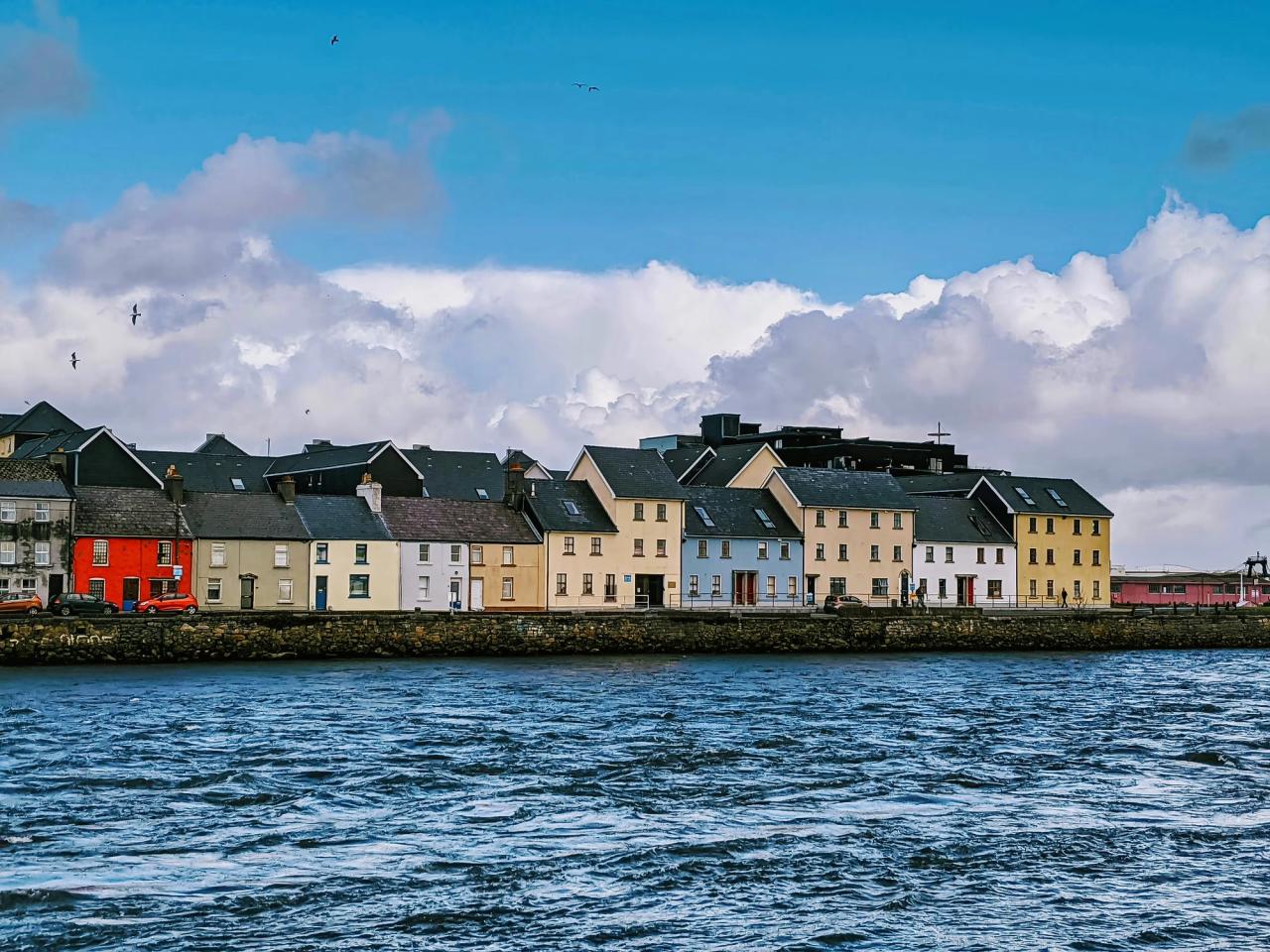
Galway se encuentra en la salvaje costa oeste de Irlanda, mirando directamente al Atlántico. Conocida como la capital cultural de Irlanda, la ciudad vibra con música en directo, espectáculos callejeros y un calendario de festivales durante todo el año. El Spanish Arch marca el borde del casco antiguo medieval, el paseo marítimo de Salthill atrae a caminantes cada tarde y el paisaje agreste de Connemara empieza justo más allá de los límites de la ciudad. Los expatriados eligen Galway por su energía creativa, su fuerte presencia universitaria y una calidad de vida que cambia los salarios de una gran ciudad por comunidad auténtica y paisajes. Si quiere una ciudad irlandesa que se sienta viva en cada pub y en cada esquina, Galway es esa ciudad.
Galway de un vistazo
- Población
- ~85,000 (área metropolitana de Galway ~120,000)
- Región
- Connacht, costa oeste
- Conocida por
- Arte y música, Spanish Arch, puerta de entrada a Connemara
- Alquiler medio (1 dormitorio)
- €1,300–€1,600
- Salario medio
- ~€41,000 al año (neto ~€2,750/mes)
- Comunidad expatriada
- Sólida; gran población estudiantil, comunidad internacional en crecimiento
- Clima
- Atlántico suave; inviernos 4–9°C, veranos 13–19°C
- Idioma
- Inglés e irlandés (señalización bilingüe, zonas Gaeltacht cercanas)
- Moneda
- Euro (€), moneda local
Por qué mudarse a Galway
- Pulso cultural: Galway tiene más locales de música en directo, teatros y festivales por habitante que cualquier otro lugar de Irlanda. El Galway International Arts Festival (julio), la semana de las carreras (finales de julio/principios de agosto), el desfile de Halloween de Macnas, el Cúirt Literature Festival y el Galway Film Fleadh llenan el calendario durante todo el año.
- Puerta de entrada a Connemara: Algunos de los paisajes más espectaculares de Europa —montañas, lagos, turberas y costa atlántica escarpada— están a un paso. Kylemore Abbey, the Twelve Bens y the Sky Road están todos a menos de una hora en coche.
- Compacta y fácil de recorrer a pie: Todo el centro de la ciudad se puede recorrer andando en 15 minutos. Aquí es más fácil vivir sin coche que en la mayoría de las ciudades irlandesas. La playa de Salthill está a 20 minutos a pie por el paseo marítimo.
- Fuerte presencia universitaria: University of Galway (antes NUIG, situada entre las 250 mejores del mundo) y Atlantic Technological University (ATU) aportan empleos de investigación, estudiantes internacionales y una energía joven.
- Cultura bilingüe: Galway es la puerta de entrada a la Gaeltacht de Connemara, la mayor región de habla irlandesa de Irlanda. La señalización bilingüe en las calles y los eventos culturales en irlandés añaden un carácter distintivo.
- Fama de ciudad acogedora: Galway aparece de forma constante entre las ciudades más amables de Irlanda. La gente local es conocida por iniciar conversaciones y hacer que los recién llegados se sientan bienvenidos.
- Islas Aran: Tres islas frente a la costa de Galway —Inis Mór, Inis Meáin e Inis Oírr— ofrecen una mirada a la vida tradicional de habla irlandesa. Hay ferris diarios desde Rossaveal y se pueden visitar en una excursión de un día.
Encontrar vivienda en Galway
Alquileres medios
| Barrio | 1 dormitorio | 3 dormitorios | Carácter |
|---|---|---|---|
| Centro / Latin Quarter | €1,400–€1,700 | €2,200–€3,000 | Transitable a pie, vida nocturna, Shop Street |
| Salthill | €1,300–€1,600 | €2,100–€2,800 | Junto al mar, paseo marítimo, familias |
| Knocknacarra | €1,200–€1,400 | €1,800–€2,400 | Suburbano, viviendas más nuevas, tranquilo |
| Oranmore | €1,100–€1,400 | €1,700–€2,300 | Ambiente de pueblo, cómodo para desplazarse |
| Newcastle / Dangan | €1,200–€1,500 | €1,900–€2,500 | Cerca de la universidad, residentes variados |
| Rahoon | €1,100–€1,350 | €1,700–€2,250 | Asequible, familias, rutas de autobús |
| Renmore | €1,200–€1,450 | €1,800–€2,400 | Cerca de GMIT/ATU, tranquilo, práctico |
Cómo encontrar vivienda
- Daft.ie: El portal principal para alquileres en Galway; revíselo a diario porque los buenos anuncios desaparecen rápido, especialmente en agosto–septiembre, cuando llegan los estudiantes.
- Rent.ie: Útil para alertas y filtros por barrio.
- Grupos de Facebook: "Galway Accommodation", "Galway Rentals" y "Galway House Hunting for Sound People" son grupos comunitarios activos.
- Agencias inmobiliarias: DNG Galway, O'Donnellan & Joyce y Rooney gestionan alquileres administrados y alquileres de más larga duración.
- Habitaciones en pisos compartidos: Alquilar una habitación en una casa compartida (€550–€850/mes) es habitual y una buena forma de instalarse rápido y de manera asequible.
- Alquileres de corta estancia: Airbnb y Booking.com ofrecen descuentos mensuales para estancias iniciales mientras busca vivienda permanente.
- Consejos para las visitas: Lleve referencias impresas y esté preparado para comprometerse rápido. El mercado de Galway se mueve deprisa, especialmente cerca de la universidad.
- Cuidado con las estafas: Nunca transfiera dinero sin ver una propiedad en persona. Denuncie los anuncios sospechosos ante la RTB.
Consejos para expatriados
- La demanda estudiantil alcanza su punto máximo en agosto–septiembre. Si es posible, asegure vivienda antes o después de ese periodo para evitar la competencia más intensa.
- Salthill ofrece un estilo de vida junto al mar a solo 20 minutos a pie del centro, un punto medio popular para profesionales que quieren tardes más tranquilas.
- Tenga listo el depósito (un mes de alquiler), referencias y una carta de empleo. Los propietarios suelen elegir al primer solicitante cualificado que se presenta con la documentación.
- Asegúrese de que la propiedad esté registrada en la Residential Tenancies Board (RTB).
- Desconfíe de las estafas de alquiler: nunca transfiera dinero sin ver primero la propiedad en persona.
Guía de barrios
- City Centre / Latin Quarter: El corazón de Galway: calles adoquinadas, Shop Street, Quay Street, pubs y restaurantes. Ideal para personas solteras y jóvenes profesionales que quieren estar en medio de todo. Los alquileres son los más altos, pero todo queda a pie.
- Salthill: Un suburbio junto al mar conectado por un bonito paseo marítimo a lo largo de Galway Bay. Las familias y los profesionales lo aprecian por la playa, los restaurantes y un ritmo más tranquilo. Muy popular entre expatriados. El paseo es un ritual diario para caminantes y nadadores.
- Knocknacarra: Un gran suburbio moderno al oeste de la ciudad con urbanizaciones más nuevas, supermercados (Dunnes, Aldi) y buenas conexiones de autobús mediante las rutas 401/402. Popular entre familias que buscan espacio y mejor relación calidad-precio.
- Newcastle / Dangan: Cerca del campus de University of Galway y de University Hospital Galway. Zona residencial mixta con estudiantes, familias y personal. Práctica para trabajadores universitarios y personal médico.
- Oranmore: Un pueblo separado, 10 km al este, conectado por carretera y por el autobús 404. Encanto de pueblo con comercios locales, restaurantes y alquileres más asequibles. Buena opción para quienes se desplazan y quieren una base más tranquila.
- Rahoon: Al oeste del centro, más asequible que Salthill y con buenas conexiones de autobús. Popular entre familias y trabajadores del sector medtech.
- Renmore: Al este de la ciudad, cerca de ATU (antes GMIT) y Ballyloughane Beach. Tranquilo, práctico y asequible.
Coste de vida en Galway
Desglose del presupuesto mensual
| Categoría | Rango de presupuesto |
|---|---|
| Alquiler (1 dormitorio, centro) | €1,300–€1,600 |
| Suministros (electricidad, gas, residuos) | €160–€200 |
| Internet (banda ancha) | €45–€60 |
| Compra de supermercado | €330–€420 |
| Transporte (abono de autobús) | €80–€110 |
| Comer fuera (4x/mes) | €100–€160 |
| Ocio/abono de gimnasio | €35–€55 |
| Seguro médico (básico) | €75–€110 |
| Plan de telefonía móvil | €20–€30 |
| Total mensual | €2,145–€2,745 |
Costes del día a día
- Café (flat white): €3.60
- Comida (restaurante informal): €11–€14
- Abono mensual de transporte (Bus Éireann): ~€90
- Pinta de cerveza (pub): €5.50–€6.50
- Entrada de cine: €11
- Abono de gimnasio (mensual): €35–€55
- Barra de pan: €1.70
- Litro de leche: €1.25
- Docena de huevos: €3.20
- Cena para llevar para dos: €20–€28
Moverse por Galway
- Transporte público: Bus Éireann opera rutas urbanas. La cobertura es razonable en la ciudad, pero limitada en los suburbios exteriores. Las rutas principales conectan el centro con Salthill, Knocknacarra, Oranmore y la universidad. Un abono mensual cuesta alrededor de €90.
- Bicicleta: Galway es llana y compacta; moverse en bici es popular y práctico para ir al trabajo. Hay carriles específicos, aunque la infraestructura aún se está desarrollando. El programa bike-to-work de la ciudad está creciendo.
- Conducir: La congestión al cruzar el River Corrib es un problema conocido, especialmente en hora punta. El aparcamiento en el centro es limitado (aparcamientos de varias plantas desde €2.50/hora). Muchos residentes optan por ir en bici o caminar.
- Aeropuerto: Shannon Airport (SNN) está a aproximadamente 1 hora en autobús y ofrece vuelos europeos y algunos transatlánticos. Dublin Airport está a 2.5–3 horas por carretera. Ireland West Airport Knock también es una opción a 1.5 horas.
- Interurbano: Dublín está a 2.5 horas en coche o a 2 horas 30 minutos en Irish Rail (línea Galway–Dublin Heuston). Bus Éireann y Citylink conectan Galway con Cork (3.5 horas), Limerick (1 hora) y Dublín (3 horas en autobús).
- Taxis: Operan Free Now y empresas locales. Un trayecto por el centro cuesta €7–€12. Los taxis están fácilmente disponibles las noches de fin de semana.
Sanidad en Galway
- Hospitales/clínicas: University Hospital Galway (UHG) es el principal hospital regional y un hospital universitario vinculado a la universidad. Bon Secours Hospital Galway ofrece atención privada. Merlin Park University Hospital cubre servicios públicos adicionales.
- Médicos que hablan inglés: Todos los médicos en Galway hablan inglés. Las visitas al GP cuestan €50–€70 sin medical card. El HSE ofrece un buscador de GP en hse.ie.
- Farmacias: Boots, Hickey's, McCauley y farmacias independientes se encuentran por toda la ciudad. La mayoría abre de lunes a sábado.
- Dental: Los dentistas privados son lo habitual. Una revisión cuesta €40–€60. La atención dental del HSE está disponible para niños y titulares de medical card.
- Número de emergencia: 999 o 112 (ambos funcionan en toda Irlanda).
Recibe un plan de mudanza personalizado
Deja tu email y te enviaremos una checklist a medida y tres presupuestos de empresas verificadas.
Cultura y estilo de vida
- Música en directo: Galway no tiene rival en sesiones de música tradicional. Taaffes y Tigh Chóilí, en Shop Street, acogen trad cada noche. The Crane Bar, en el West End, es legendario por sus sesiones. Los músicos callejeros llenan Shop Street y Quay Street todo el año, dando a la ciudad una banda sonora constante.
- Festivales: Galway International Arts Festival (julio, uno de los festivales de artes más importantes de Europa), Galway Races (finales de julio/principios de agosto, un gran evento social), desfile de Halloween de Macnas (teatro callejero espectacular), Cúirt International Festival of Literature (abril) y Galway Film Fleadh (julio).
- Spanish Arch y the Long Walk: El Spanish Arch es un resto de las murallas de la ciudad del siglo XVI, construido para proteger los barcos que comerciaban con España y Portugal. El colorido Long Walk junto al río es uno de los lugares más fotografiados de Galway y un punto de partida perfecto para explorar.
- Deporte: GAA (el hurling manda en Galway; el condado es una de las potencias tradicionales), rugby (Galwegians RFC), fútbol (Galway United) y vela desde Galway Bay Sailing Club. Connemara ofrece trail running y deportes de aventura.
- Vida al aire libre: El paseo marítimo de Salthill es un ritual diario para caminantes y nadadores de mar. Connemara National Park, the Burren y las islas Aran están todos a distancia de excursión de un día.
Comida y restaurantes
- Especialidades locales: cordero de Connemara, ostras de Galway Bay (la ciudad celebra el International Oyster Festival en septiembre), panes artesanos de panaderías locales y cerveza artesanal de Galway Bay Brewery y Western Herd.
- Mejores zonas para comer: The Latin Quarter (Quay Street, High Street), Dominick Street (el West End, la franja gastronómica más interesante de Galway) y el paseo marítimo de Salthill.
- Opciones económicas: The Galway Market (sábados en Church Lane y domingos en el paseo) ofrece comida callejera, productos locales y almuerzos asequibles. Muchos pubs sirven comida con buena relación calidad-precio.
Comunidad expatriada
- La oficina internacional de University of Galway organiza eventos de orientación, intercambios de idiomas y programas sociales para estudiantes y personal internacionales.
- Los grupos de Meetup (Galway International Meetup, Galway Social) e InterNations Galway conectan socialmente a los expatriados.
- Entre las comunidades activas hay grupos brasileños, indios, franceses, alemanes y españoles, a menudo vinculados a la universidad y al sector medtech.
- El Galway Film Fleadh y el Arts Festival atraen a profesionales creativos de todo el mundo.
Mercado laboral en Galway
- Industrias principales: dispositivos médicos, IT/software, turismo/hostelería, educación, ciencias marinas, fintech.
- Principales empleadores:
- Medtronic (gran campus de fabricación)
- Boston Scientific (dispositivos médicos)
- Cisco (tecnología, ciberseguridad)
- SAP (software empresarial)
- Fidelity Investments (tecnología financiera)
- University of Galway (educación e investigación, uno de los mayores empleadores de la ciudad)
- Creganna / TE Connectivity (dispositivos médicos)
- Salarios medios por sector:
| Sector laboral | Salario anual medio |
|---|---|
| IT / software | €48,000–€72,000 |
| Medtech / Ingeniería | €45,000–€65,000 |
| Finanzas / Fintech | €40,000–€58,000 |
| Turismo / Hostelería | €25,000–€34,000 |
| Educación / Investigación | €35,000–€55,000 |
- Recursos para buscar empleo: IrishJobs.ie, Jobs.ie, LinkedIn, Indeed Ireland. Galway Chamber of Commerce y Western Development Commission también publican oportunidades locales.
Educación en Galway
- Colegios internacionales: Galway no cuenta con un IB World School completo, pero Galway Educate Together Secondary School y Coláiste na Coiribe (enseñanza en irlandés) ofrecen enfoques progresistas e inclusivos. Varios colegios privados aceptan estudiantes internacionales.
- Universidades: University of Galway (intensiva en investigación, entre las 250 mejores del mundo, fuerte en medicina, artes e ingeniería) y Atlantic Technological University (ATU Galway, fuerte en ingeniería, diseño y negocios).
- Escuelas de idiomas: Galway Cultural Institute, Atlantic Language Galway y Bridge Mills Galway Language Centre ofrecen cursos de inglés general y de preparación de exámenes.
Lista de tareas para mudarse a Galway
- Asegure alojamiento temporal (Airbnb o apartamento con servicios) durante 2–4 semanas.
- Confirme su visado o situación de residencia EU/EEA.
- Inicie la solicitud del número PPS en línea en MyWelfare.ie.
- Investigue plazas escolares si se muda con niños; solicítelas pronto, ya que las plazas se llenan rápido.
- Contrate un seguro médico (VHI, Laya o Irish Life Health).
- Avise a su banco y a su empleador de la mudanza.
- Regístrese con un GP cerca de su casa; lleve identificación y prueba de domicilio.
- Abra una cuenta bancaria en AIB, Bank of Ireland o Permanent TSB (requiere número PPS y prueba de domicilio).
- Consiga una Leap Card para viajar en autobús con descuento.
- Recorra a pie el centro, el Latin Quarter y el paseo marítimo de Salthill para orientarse.
- Consiga una tarjeta SIM irlandesa (Three, Vodafone o Eir; planes desde €20/mes).
- Regístrese para impuestos con Revenue en línea (revenue.ie).
- Active los suministros (electricidad con Electric Ireland o Bord Gáis Energy, gas e internet) si no están incluidos en el alquiler.
- Únase a grupos locales: encuentros de expatriados en Galway, clubes deportivos o voluntariado.
- Explore Connemara y las islas Aran en una escapada de fin de semana; Inis Mór está a 40 minutos en ferri desde Rossaveal.
- Visite el mercado de los sábados en Church Lane para encontrar comida local y sentir la comunidad.
Contactos clave y enlaces útiles
- Número PPS: MyWelfare.ie; solicítelo en línea y luego acuda a su oficina local de Intreo.
- Registro fiscal: revenue.ie; regístrese para PAYE, USC y PRSI.
- Health Service Executive (HSE): hse.ie; buscador de GP, medical card y sanidad pública.
- Residential Tenancies Board (RTB): rtb.ie; compruebe si su propietario está registrado.
- Citizens Information: citizensinformation.ie; guía completa de servicios y prestaciones en Irlanda.
- Galway City Council: galwaycity.ie; servicios e información de la autoridad local.
- Galway Chamber of Commerce: galwaychamber.ie; contactos empresariales y oportunidades locales.
- University of Galway International Office: universityofgalway.ie/international; apoyo para estudiantes y personal.
Guías relacionadas
- Mudarse a Irlanda: guía completa del país
- Mudarse a Dublín: la capital de Irlanda
- Mudarse a Cork: centro tecnológico de la costa sur
- Mudarse a Limerick: la Treaty City del medio oeste
- Mudarse a Waterford: la ciudad más antigua de Irlanda