Moldova is one of Europe's best-kept secrets for expats seeking an affordable, welcoming, and culturally rich country to call home. As an EU candidate country with a growing IT sector, world-famous wine heritage, and one of the lowest costs of living on the continent, Moldova is attracting a new wave of digital nomads, retirees, and adventurous professionals. This guide covers everything you need to know — from visas and residency to housing, healthcare, banking, and cultural integration — to make your move to Moldova smooth and successful.
Moldova at a Glance
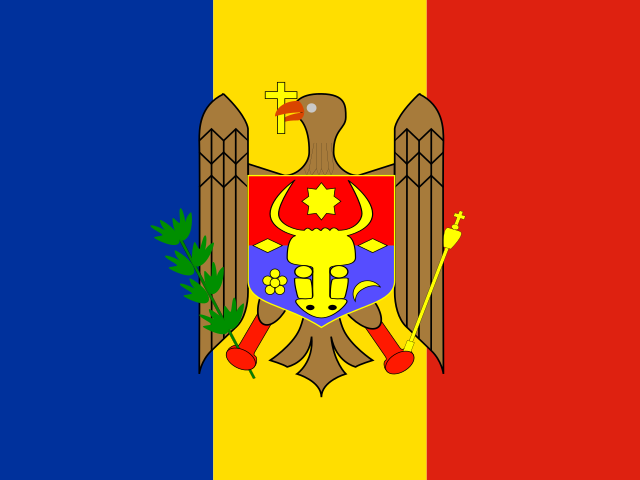
- Population
- ~2.4 million (2024 census)
- Capital
- Chișinău
- Currency
- Moldovan Leu (MDL)
- Average Salary
- ~13,500–16,500 MDL/month ($760–$930)
- Language
- Romanian (Moldovan); Russian widely spoken; limited English
- Climate
- Continental — warm summers (25–30 °C), cold winters (−5 to −10 °C)
- Time Zone
- EET (UTC+2), EEST (UTC+3 in summer)
Sources: National Bureau of Statistics of the Republic of Moldova (2024 Population & Housing Census); Trading Economics, 2026; Orbitax, 2026; XE, 2026.
Why Move to Moldova in 2026
- Extremely Affordable: Moldova is one of the cheapest countries in Europe — rent, groceries, transport, and dining out cost a fraction of Western European prices.
- EU Candidate Country: Moldova was granted EU candidate status in 2022, meaning regulatory alignment and economic growth are accelerating, making now a strategic time to establish residency.
- Wine Country Culture: Home to the world's largest wine cellar (Mileștii Mici) and a centuries-old winemaking tradition, Moldova offers a lifestyle steeped in gastronomy and hospitality.
- Growing IT Sector: Chișinău's tech scene is expanding rapidly, with tax incentives for IT companies and a pool of skilled, multilingual developers.
- Visa-Free Access: Citizens of many countries — including the EU, US, Canada, and others — can enter Moldova visa-free for up to 90 days, making it easy to explore before committing.
- Safe and Welcoming: Moldova ranks as a safe country with low crime rates, and Moldovans are renowned for their extraordinary hospitality toward foreigners.
Moving Costs to Moldova
Understanding the financial aspects of your move is crucial for proper planning. Costs vary based on shipment size, origin, and transport method.
| Origin | Estimated Cost Range | Container/Volume |
|---|---|---|
| Western Europe | $1,100–$2,800 | 20-ft container |
| Western Europe | $2,100–$4,200 | 40-ft container |
| North America | $2,400–$5,500 | 20-ft container |
| North America | $3,800–$7,500 | 40-ft container |
| Air freight (any origin) | $3.50–$7.50+ per kg | — |
| Customs / administrative fees | $120–$450+ | — |
Component Costs Explained
- Transportation: $800–$3,500 depending on origin; most shipments arrive by road or rail from Europe within 1–2 weeks.
- Insurance: $50–$200 for basic transit coverage; full-value coverage recommended for high-value items.
- Customs Clearance: $120–$450 for documentation, broker fees, and inspection handling.
- Packing Materials: $100–$300 for professional packing services.
- Storage (if needed): $50–$150/month in Chișinău warehouses.
- Administrative Fees: $50–$150 for notarised translations and permit processing.
Need a personalised estimate?
Get three vetted moving-company quotes in under 48 hours.
Visa & Residency Requirements
Moldova has a relatively welcoming immigration policy. Citizens of EU/EEA countries, the US, Canada, and many others can enter visa-free for up to 90 days within a 180-day period. For longer stays, you will need a temporary residence permit (permis de ședere temporară).
Visa-Free Entry (Up to 90 Days)
Citizens of over 90 countries — including all EU/EEA states, the US, Canada, Australia, Japan, and the UK — can enter Moldova without a visa for tourism or business purposes for up to 90 days. This period allows you to explore the country, attend meetings, and decide on long-term relocation before applying for residency.
Temporary Residence Permit (Permis de Ședere Temporară)
The most common route for expats planning to stay longer than 90 days.
- Eligibility: Employment, study, family reunification, business ownership, or investment.
- Duration: Typically granted for 1 year and renewable annually.
- Requirements: Valid passport, proof of purpose (employment contract, university enrollment, etc.), proof of accommodation, health insurance, and a clean criminal record.
- Processing time: 15–30 working days.
- Where to apply: The General Inspectorate for Migration (IGM) or the nearest Moldovan embassy/consulate.
Long-Term Residence Permit (Permis de Ședere Pe Termen Lung)
Available after holding a temporary residence permit for at least 5 continuous years.
- Requirements: Continuous legal residence, stable income, Moldovan language proficiency (basic level), and clean criminal record.
- Duration: 5 years, renewable.
- Benefits: Closer to permanent residency rights; no need for annual renewal.
Work Permits
Foreign nationals employed in Moldova must obtain a work permit alongside their residence permit.
- Who needs one: All non-Moldovan nationals employed by a Moldovan company.
- Employer's role: The employer must prove no suitable Moldovan candidate was available.
- Duration: Tied to the employment contract, typically 1 year.
- Exemptions: EU citizens and certain categories (investors, highly qualified specialists) may have simplified processes.
IDNP: Moldova's Personal Identification Number
All residents in Moldova — including foreigners with a residence permit — are assigned an IDNP (Identificator Numeric de Persoană), a unique personal identification number. The IDNP is essential for virtually all administrative processes: opening bank accounts, signing rental contracts, paying taxes, accessing healthcare, and enrolling children in school.
How to Get Your IDNP
-
Obtain your residence permit from the General Inspectorate for Migration (IGM).
-
The IDNP is automatically assigned when your residence permit is approved.
-
It appears on your residence permit card and is linked to all government databases.
-
Keep your IDNP safe — you will need it for nearly every official interaction in Moldova.
Finding Housing in Moldova
Moldova's rental market is affordable and accessible, especially compared to Western Europe. Most expats rent apartments in Chișinău, though Bălți and smaller cities also offer good options. The market is largely informal — many landlords prefer word-of-mouth and social media listings over formal agencies.
Average Rents by Major City (2026)
| City | 1-Bedroom (City Centre) | 1-Bedroom (Outside Centre) | 3-Bedroom (City Centre) | Market Competitiveness |
|---|---|---|---|---|
| Chișinău | 8,000–11,000 MDL ($450–$620) | 5,500–8,000 MDL ($310–$450) | 14,000–22,000 MDL ($790–$1,240) | Moderate |
| Bălți | 4,500–7,000 MDL ($250–$395) | 3,000–5,000 MDL ($170–$280) | 8,000–13,000 MDL ($450–$730) | Low |
| Tiraspol | 3,500–5,500 MDL ($200–$310) | 2,500–4,000 MDL ($140–$225) | 6,000–10,000 MDL ($340–$565) | Low |
| Cahul | 3,000–5,000 MDL ($170–$280) | 2,000–3,500 MDL ($110–$200) | 5,500–9,000 MDL ($310–$510) | Low |
Moldovan Rent Terminology
- Chirie: The Moldovan/Romanian word for rent.
- Garanție: Security deposit, typically 1–3 months' rent.
- Utilități: Utilities (electricity, water, gas, heating, internet) — almost always paid separately on top of rent.
- Comision: Agent commission, usually one month's rent if you use an agency.
How to Find Housing
Online Platforms:
- 999.md: Moldova's most popular classifieds website — the go-to for apartment listings across the country.
- Point.md: Growing real estate platform with verified listings and map-based search.
- Facebook Groups: Search for "Chirie Chișinău" or "Apartments for Rent Chisinau" — many landlords post directly here.
Local Resources:
- Real estate agencies in Chișinău (e.g., Acces Imobil, Imobil Expert) — useful if you do not speak Romanian or Russian.
- Word-of-mouth: Ask colleagues, neighbours, or expat contacts — Moldova's rental market is heavily relationship-driven.
Tips for Foreigners Finding Housing
- Visit apartments in person before signing — photos can be misleading.
- Negotiate rent: Moldovan landlords often expect some negotiation, especially for longer leases.
- Confirm what is included: Always clarify whether utilități (utilities) are included in the listed rent.
- Request a written contract (contract de închiriere) even though many landlords prefer informal agreements.
Rental Agreement & Legal Protection
Written rental contracts (contract de închiriere) should specify monthly rent, deposit amount, lease duration, notice period, and maintenance responsibilities. Standard lease terms are 12 months. Notice periods are typically 30 days. Tenant protections exist but enforcement can be inconsistent — having a clear written contract is your best protection.
Warning: Rental Scams
- Never transfer money before viewing an apartment in person.
- Be wary of prices significantly below market rate — this is a common scam tactic.
- Verify the landlord's ownership documents (act de proprietate) before signing.
- Avoid paying deposits in cash without a written receipt.
Healthcare & Insurance
Moldova's healthcare system is a mix of public and private services. The public system is funded through mandatory health insurance, while private clinics — concentrated in Chișinău — offer faster access and English-speaking staff.
Mandatory Health Insurance
Polița de Asigurare Medicală
- Cost: Employed individuals contribute 9% of their salary (deducted at source). Self-employed and non-working residents pay a fixed annual premium of 12,636 MDL/year (~$713).
- Coverage: GP visits, specialist consultations, hospital treatment, emergency care, and subsidised medications.
- Eligibility: All Moldovan residents with a valid IDNP and registered address.
- Best for: Anyone planning to stay in Moldova long-term — it is legally required.
Private Health Insurance
Private healthcare is widely available in Chișinău and offers shorter wait times, modern facilities, and English-speaking doctors.
- Cost: $500–$1,500/year depending on coverage level.
- Coverage: Outpatient consultations, dental care, diagnostics, elective procedures, and medical evacuation.
- Eligibility: Open to everyone; often bundled with international health insurance plans.
- Best for: Expats who want faster access, English-speaking care, or coverage for services not fully covered by the public system.
Top Insurance Providers
- Moldasig: One of Moldova's largest insurers offering mandatory and supplementary health policies.
- Donaris Group: Offers private health insurance packages popular with expats.
- Grawe Carat: International insurer with health coverage options available in Moldova.
Getting Healthcare Coverage (Timeline)
-
Register your address and obtain your residence permit and IDNP.
-
Visit the National Health Insurance Company (Compania Națională de Asigurări în Medicină — CNAM) office or register online.
-
Pay your annual premium or present your employer's contribution confirmation.
-
Receive your polița (insurance card) — valid for one calendar year.
-
Choose a family doctor (medic de familie) at a local clinic (policlinică).
Out-of-Pocket Costs
- Doctor visit (public, with insurance): 50–150 MDL ($3–$8) co-pay
- Doctor visit (private clinic): 400–800 MDL ($22–$45)
- Prescriptions: Subsidised under polița; private cost varies — generally 50%+ cheaper than Western Europe
- Dental cleaning (private): 600–1,200 MDL ($34–$68)
- Hospital stay (public, with insurance): Covered by polița
Get a personalised relocation plan
Drop your email and we'll send a tailored checklist plus three quotes from vetted movers.
Banking & Finance
Opening a Bank Account
Opening a bank account in Moldova is straightforward for residents and can even be done by some non-residents with additional documentation.
- When: As soon as you have your residence permit and IDNP — you will need a local account for rent payments, salary deposits, and utility bills.
- Required documents: Valid passport, residence permit, IDNP, proof of address.
- Top banks for expats:
- Moldova Agroindbank (MAIB): The largest bank in Moldova with extensive branch and ATM networks, online banking, and English-language support.
- Victoriabank: Major commercial bank with competitive fees, mobile banking app, and international transfer services.
- Moldindconbank: One of the oldest banks, offering a full range of personal and business accounts with good digital banking tools.
Getting Your Tax Identification Number (Cod Fiscal)
- What it is: A unique tax ID issued by the State Tax Service (Serviciul Fiscal de Stat) for all individuals earning income in Moldova.
- When issued: Upon starting employment or registering as self-employed — linked to your IDNP.
- Why you need it: Required for employment contracts, tax filing, business registration, and certain banking operations.
Bank Account Features & Costs
- Monthly maintenance fee: 20–80 MDL ($1–$4.50) depending on bank and account type
- Debit card: Usually free or included with account; Visa or Mastercard available
- Credit card: Limited availability; typically requires proof of stable income
- International transfers: 0.5%–2% of transfer amount, minimum 100–200 MDL
- ATM withdrawals: Free at own bank ATMs; 20–50 MDL fee at other banks
Payment Culture
Moldova is still largely a cash-based society, especially outside Chișinău. However, card payments (Visa and Mastercard) are increasingly accepted in supermarkets, restaurants, and larger shops in the capital. Mobile payment apps are growing but not yet widespread. Always carry cash, especially in smaller towns and local markets (piață).
Cost of Living in Moldova
Moldova is one of the most affordable countries in Europe. A comfortable lifestyle in Chișinău is achievable on a modest budget, and costs drop significantly in cities like Bălți or Cahul.
Monthly Budget Breakdown by City
| City | One-Person Budget | Family of 3 Budget | Cost Level |
|---|---|---|---|
| Chișinău | 15,000–22,000 MDL ($850–$1,240) | 28,000–40,000 MDL ($1,580–$2,260) | Low |
| Bălți | 10,000–16,000 MDL ($565–$905) | 20,000–30,000 MDL ($1,130–$1,695) | Very Low |
| Cahul | 9,000–14,000 MDL ($510–$790) | 18,000–27,000 MDL ($1,020–$1,525) | Very Low |
Detailed Cost Breakdown
Housing:
- 1-bedroom apartment (city centre, Chișinău): 8,000–11,000 MDL/month
- 3-bedroom apartment (city centre, Chișinău): 14,000–22,000 MDL/month
- Utilities (electricity, water, gas, heating): 2,000–4,000 MDL/month
- Internet (fibre, 100 Mbps): 200–350 MDL/month
Groceries & Food:
- Weekly groceries (1 person): 800–1,200 MDL
- Restaurant meal (casual, local): 150–300 MDL
- Restaurant meal (mid-range): 400–700 MDL
- Coffee (café): 40–70 MDL
Transportation:
- Monthly public transport pass (Chișinău trolleybus/bus): 234 MDL
- Single trip (public transport): 6 MDL
- Taxi (5 km ride): 50–80 MDL
- Petrol (1 litre): 29–33 MDL
Insurance & Healthcare:
- Mandatory health insurance (polița): ~1,053 MDL/month (annualised, based on 12,636 MDL/year fixed premium)
Leisure & Entertainment:
- Gym membership: 500–1,200 MDL/month
- Cinema ticket: 100–180 MDL
- Streaming services (Netflix): 150–350 MDL/month
Comparison with Other Countries
- vs Romania: Moldova is roughly 20–30% cheaper across most categories.
- vs Germany: Moldova is approximately 60–70% cheaper for rent, groceries, and dining.
- vs United States: Moldova is approximately 75–80% cheaper overall.
Language & Culture Tips
Do You Need Romanian?
The official language of Moldova is Romanian (often referred to locally as Moldovan — limba moldovenească). In practice, the two are the same language. Russian is widely spoken, especially among older generations and in certain regions. English proficiency is limited but growing among younger people and in Chișinău's business and IT communities.
You can get by with English in international hotels, some restaurants, and tech companies in the capital. However, for daily life — government offices, markets, healthcare, and rental negotiations — basic Romanian or Russian is essential.
Romanian Language Levels (CEFR)
- A1 (Beginner): Handle greetings, numbers, ordering food, and simple directions — achievable in 2–3 months of part-time study.
- A2 (Elementary): Manage basic conversations about daily life, shopping, and appointments — 4–6 months.
- B1 (Intermediate): Discuss work, explain problems, and follow most everyday conversations — 8–12 months.
- B2 (Upper Intermediate): Engage in complex discussions, understand local media, and work professionally in Romanian — 18–24 months.
Language Learning Resources
- Moldovan Language Centre (Chișinău): In-person Romanian courses for foreigners, from beginner to advanced.
- Duolingo / Babbel: Romanian language courses available on major apps — good for building vocabulary.
- Tandem / HelloTalk: Language exchange apps to connect with Moldovan native speakers for practice.
- Local tutors: Affordable private Romanian lessons available for 200–400 MDL/hour via 999.md or local recommendations.
Cultural Norms & Etiquette
Hospitality (Ospitalitate):
- Moldovans are famously hospitable — expect to be invited to homes for meals, especially during holidays and wine harvest season (culesul viilor).
- Refusing food or drink (especially homemade wine or țuică — plum brandy) can be considered impolite. Accept at least a small portion.
Wine Culture:
- Wine is central to Moldovan identity. Offering wine to guests is a sign of friendship and respect.
- Moldova hosts the world's largest wine cellar at Mileștii Mici (over 200 km of underground tunnels) and another massive cellar at Cricova.
- Wine tourism is a popular weekend activity — many wineries offer tours and tastings.
Orthodox Christian Traditions:
- The majority of Moldovans are Eastern Orthodox Christian. Religious holidays (Christmas on 7 January, Easter) are widely celebrated and may affect business hours.
- Churches and monasteries are significant cultural landmarks — dress modestly when visiting.
Social Integration
- Expat communities: Join Facebook groups like "Expats in Chișinău" or "Moldova Expats" to connect with fellow internationals.
- Language exchanges: Regular meetups in Chișinău bars and cafés where locals and expats practise languages together.
- Volunteering: Many NGOs in Chișinău welcome international volunteers — a great way to meet locals and contribute to the community.
- Wine festivals: Attend the annual National Wine Day (first weekend of October) — Moldova's biggest cultural event and an excellent way to experience local traditions.
Moldova's IT Sector and Business Opportunities
Moldova's IT sector is one of the fastest-growing parts of the economy. The government has introduced attractive tax incentives through the Moldova IT Park — a virtual economic zone offering a flat 7% tax on revenue for IT companies and freelancers registered within it.
- Moldova IT Park: Over 1,000 resident companies, including software developers, digital agencies, and outsourcing firms. Registration is open to both Moldovan and foreign companies.
- Talent pool: Chișinău has a strong pool of developers, designers, and digital professionals — many multilingual (Romanian, Russian, English, French).
- Coworking spaces: Chișinău offers several modern coworking hubs, including iHub, Artcor, and Generator Hub.
Transnistria: A Note for Expats
Transnistria (Stânga Nistrului — "Left Bank of the Dniester") is a breakaway region along Moldova's eastern border with Ukraine. It has its own government, currency (Transnistrian ruble), and border controls but is not recognised as an independent state by any UN member.
- Travel: Foreigners can visit Transnistria (Tiraspol, Bender) — it is generally safe for tourists, but register at the migration office upon entry.
- Residence: Most expats base themselves in Chișinău or other Moldovan-controlled areas rather than Transnistria due to limited international recognition and services.
- Practical note: Your Moldovan residence permit and IDNP are valid throughout Moldova's internationally recognised territory, including Transnistria, but local authorities may have different procedures.
Moving Checklist
- Research visa/residency requirements for your nationality
- Begin gathering documents: passport, birth certificate, diplomas, criminal record check
- Get documents apostilled and translated into Romanian by a certified translator
- Start learning basic Romanian (greetings, numbers, essential phrases)
- Request moving quotes via ReloAdvisor and book your shipment
- Secure temporary accommodation in Chișinău (Airbnb, hotel, or short-term rental)
- Notify your current landlord and arrange lease termination
- Arrange international health insurance for the transition period
- Begin the residence permit application process (if applying from abroad)
- Research schools if moving with children
- Confirm moving date and finalise shipment details
- Cancel or redirect subscriptions, utilities, and mail in your home country
- Prepare a customs inventory of all shipped belongings
- Arrange pet relocation documents (microchip, rabies vaccination, health certificate)
- Confirm arrival details with your landlord or temporary accommodation
- Notify your bank of your move and set up international transfer options
- Pack essentials in carry-on: documents, medications, chargers, cash (MDL or EUR to exchange)
- Clear customs at the border or port of entry
- Collect keys and inspect your accommodation
- Buy a local SIM card (Moldcell or Orange — available at the airport and throughout Chișinău)
- Exchange currency or withdraw MDL from an ATM
- Register your address at the local Public Services Agency (Agenția Servicii Publice)
- Apply for or collect your residence permit and IDNP
- Open a bank account at MAIB, Victoriabank, or Moldindconbank
- Register for mandatory health insurance (polița) at CNAM
- Register for a tax identification number (cod fiscal) if employed
- Set up utilities (electricity, gas, water, internet) in your name
- Register with your country's embassy in Chișinău (if applicable)
- Find a family doctor (medic de familie) at a local clinic
- Explore your neighbourhood — find the nearest market, pharmacy, and supermarket
- Join local expat groups and attend a social event
Where to Find Tools and Resources
ReloAdvisor Tools:
- Volume calculator
- Video survey
- Moving cost calculator
Official Moldova Resources:
- General Inspectorate for Migration (IGM): igm.gov.md (formerly Bureau for Migration and Asylum, bma.gov.md)
- State Tax Service: fisc.md
- National Health Insurance Company (CNAM): cnam.md
- Moldova IT Park: moldovaitpark.md
- National Bureau of Statistics: statistica.gov.md
Expat Communities:
- Expats in Chișinău (Facebook Group)
- Moldova Expats (Facebook Group)
- InterNations Moldova: internations.org
Related Guides:
- Moving to Romania
- Moving to Ukraine