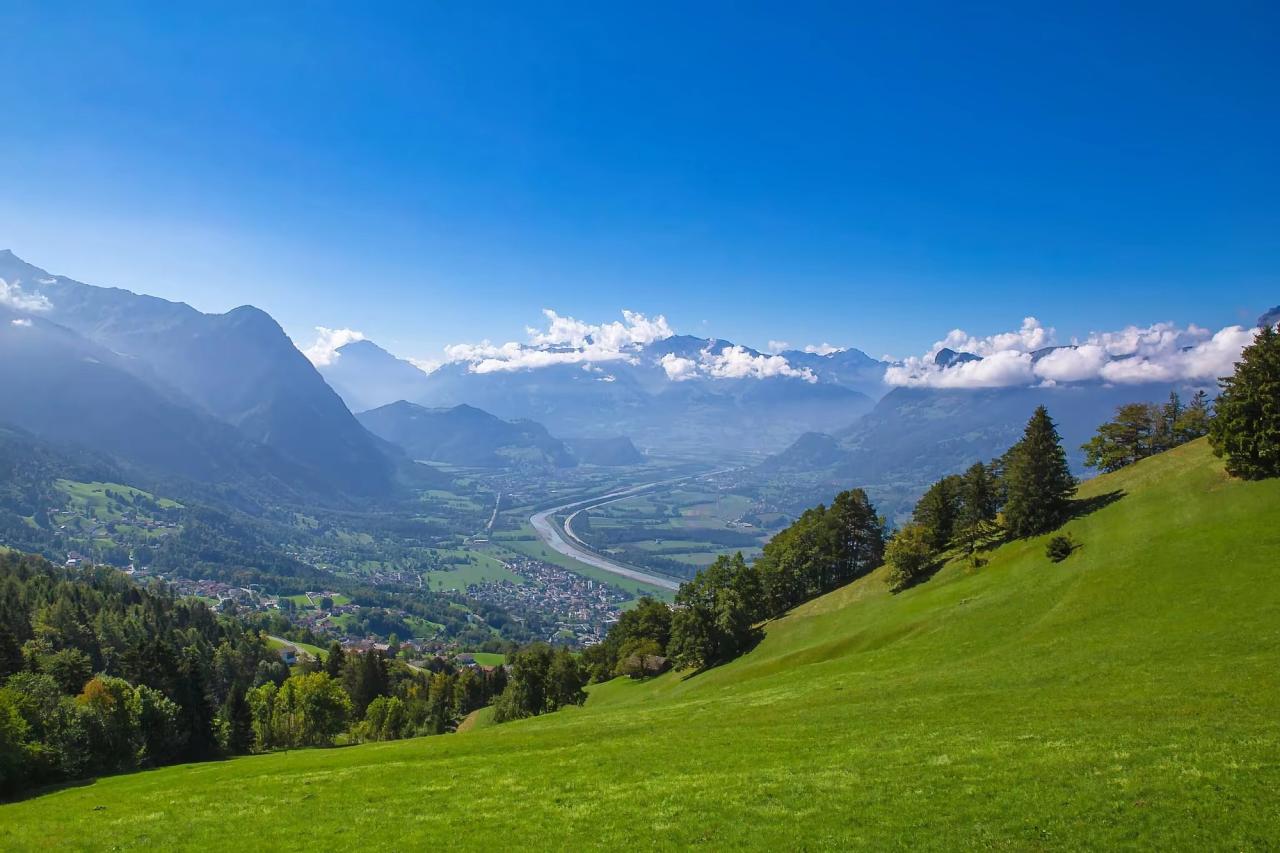
Nestled between Switzerland and Austria in the heart of the Alps, Liechtenstein is one of the smallest and wealthiest countries in the world. With a population of just 40,000 spread across 160 km², this microstate offers extraordinary safety, a thriving financial sector, and an enviable quality of life — but extremely limited residency slots and a high cost of entry. This guide covers everything you need to know about relocating to Liechtenstein in 2026, from visa and residency to housing, healthcare, banking, and daily life.
Whether you are a skilled professional recruited by a Liechtenstein employer, a cross-border commuter from Switzerland or Austria, or an entrepreneur exploring the country's business-friendly tax environment, this guide will walk you through every step of the process.
Liechtenstein at a Glance
- Population
- ~40,200
- Capital
- Vaduz
- Currency
- Swiss Franc (CHF)
- Average Salary
- CHF 72,000–84,000/year
- Language
- German (Alemannic dialect); English widely used in business
- Climate
- Alpine — cold winters, warm summers
- Time Zone
- CET (UTC+1) / CEST (UTC+2 in summer)
- Area
- 160 km²
- Government
- Constitutional monarchy (Prince Hans-Adam II; Hereditary Prince Alois acts as regent since 2004)
- International Status
- EFTA/EEA member (not EU), Schengen Area
Why Move to Liechtenstein in 2026
- Exceptional Safety: Liechtenstein consistently ranks among the safest countries in the world, with virtually no violent crime and a close-knit community atmosphere.
- High Salaries & Wealth: Average net salaries are among the highest in Europe, and the country has one of the world's highest GDPs per capita.
- Business-Friendly Tax Environment: Liechtenstein imposes no income tax on qualifying holding companies, making it a magnet for international business and wealth management.
- Stunning Alpine Location: The country offers breathtaking mountain scenery, world-class skiing, hiking, and outdoor recreation right on your doorstep.
- Strong Financial Sector: Home to renowned private banks such as LGT Bank, VP Bank, and Liechtensteinische Landesbank (LLB), Liechtenstein is a globally recognized wealth management hub.
- Strategic Central European Position: As a Schengen member bordering Switzerland and Austria, Liechtenstein provides easy access to the entire Schengen Area without internal border controls.
- Excellent Public Services: Despite its tiny size, Liechtenstein offers top-tier infrastructure, education, and healthcare systems funded by its strong economy.
Moving Costs to Liechtenstein
Liechtenstein has no airport and no major port, so all international shipments arrive via Switzerland or Austria. Costs reflect this transit complexity and the country's high standard of living. Below are typical market rates as of 2026:
| Origin | Estimated Cost Range | Container/Volume |
|---|---|---|
| Western Europe (Germany, France, Benelux) | CHF 1,800–CHF 3,800 | 20-ft container |
| United Kingdom | CHF 2,500–CHF 5,000 | 20-ft container |
| North America | CHF 5,500–CHF 10,000 | 20-ft container |
| Asia / Middle East | CHF 6,000–CHF 12,000 | 20-ft container |
| Within Switzerland/Austria | CHF 800–CHF 2,000 | Van / small load |
Component Costs Explained
- Transportation: CHF 1,200–CHF 7,000+ depending on origin. Most shipments arrive by road freight via Swiss or Austrian distribution centres.
- Insurance: CHF 150–CHF 500. Transit insurance is strongly recommended for high-value items.
- Customs Clearance: CHF 200–CHF 600. Liechtenstein follows Swiss customs territory rules, so goods cleared through Switzerland enter duty-free.
- Packing Materials: CHF 200–CHF 600 for professional packing services.
- Storage (if needed): CHF 150–CHF 400/month. Limited storage is available locally; most warehousing is in nearby Swiss or Austrian towns.
- Administrative Fees: CHF 100–CHF 300 for documentation, inventory lists, and import declarations.
Need a personalised estimate?
Get three vetted moving-company quotes in under 48 hours.
Visa & Residency Requirements
Liechtenstein is not an EU member but is part of the EEA via EFTA and the Schengen Area. Its immigration policy is among the most restrictive in Europe: the government issues approximately 89 residence permits per year in total (~72 for EEA/EFTA citizens and ~17 for non-EEA nationals), making the process highly competitive.
For EEA/EFTA Citizens
Citizens of EEA and EFTA countries (including all EU states, Switzerland, Norway, and Iceland) have the right to live and work in Liechtenstein under the EEA Agreement — but with significant restrictions. Liechtenstein negotiated a special safeguard clause limiting free movement:
- Border Commuters (Grenzgänger): EEA/EFTA nationals working in Liechtenstein but living in Switzerland or Austria can obtain a cross-border commuter permit relatively easily. This is the most common route.
- Residence Permits: Actual relocation to Liechtenstein requires a Niederlassungsbewilligung (settlement permit) or an Aufenthaltsbewilligung (residence permit). Annual quotas apply even for EEA citizens, though the quota is larger than for non-EEA nationals.
For Non-EEA Nationals: Main Residence Permit Categories
Aufenthaltsbewilligung (Residence Permit)
- Requirements: Employment offer from a Liechtenstein employer, proof of qualifications, valid passport, clean criminal record.
- Processing Time: 2–4 months.
- Duration: Initially issued for 1–5 years, renewable.
- Key Details: Extremely limited — only about 17 permits per year for non-EEA nationals (out of a total annual quota of ~89, of which ~72 are allocated to EEA/EFTA citizens). Priority is given to highly skilled professionals in sectors with labour shortages.
Niederlassungsbewilligung (Settlement Permit)
- Requirements: Continuous legal residence in Liechtenstein for at least 5 years (10 years for non-EEA nationals in some cases), stable income, integration into local community.
- Processing Time: 3–6 months.
- Duration: Indefinite.
- Key Details: Grants permanent residence with no renewal requirement. Must demonstrate good standing and community integration.
Aufenthaltsbewilligung für Studierende (Student Residence Permit)
- Requirements: Acceptance at the University of Liechtenstein, proof of sufficient financial means (minimum CHF 21,000/year), valid passport.
- Processing Time: 1–3 months.
- Duration: Duration of study programme.
- Key Details: Limited work rights (up to 10 hours/week during term). The University of Liechtenstein in Vaduz is small but internationally recognized for architecture and business.
- Valid passport or national ID card
- Residence permit or proof of employment
- Proof of address (rental contract or property ownership)
- Health insurance confirmation (proof of mandatory KVG coverage)
- Passport-sized photographs
- Obtain your residence permit or confirm your employment status before entering Liechtenstein.
- Secure housing and sign a rental or purchase agreement.
- Visit your local Gemeinde (municipal office) — for example, the Vaduz Rathaus — within 14 days of arrival.
- Present your passport, residence permit, proof of address, and health insurance documentation.
- Receive your Meldebestätigung (registration confirmation), which you will need for banking, tax, and other administrative processes.
- Register with the AHV (Alters- und Hinterlassenenversicherung) — Liechtenstein's social insurance system — through your employer or directly with the Liechtensteinische AHV-IV-FAK in Vaduz (Gerberweg 2, 9490 Vaduz).
Finding Housing in Liechtenstein
The Liechtenstein housing market is extremely tight. With only 160 km² of land and strict building regulations, supply is scarce and prices are among the highest in Europe. Most residents rent rather than buy, and vacancy rates are very low.
Average Rents by Major Town (2026)
| Town | 1-Bedroom (CHF/month) | 3-Bedroom (CHF/month) | Market Competitiveness |
|---|---|---|---|
| Vaduz | 1,800–2,800 | 3,000–5,500 | Very High |
| Schaan | 1,600–2,500 | 2,800–4,800 | Very High |
| Triesen | 1,500–2,400 | 2,600–4,500 | High |
| Balzers | 1,400–2,200 | 2,400–4,200 | High |
| Eschen | 1,300–2,100 | 2,300–4,000 | Moderate–High |
Local Rent Terminology
- Warmmiete (Warm Rent): Rent including heating and some utilities. This is the total amount you pay monthly.
- Kaltmiete (Cold Rent): Rent excluding heating and utilities. You pay these costs separately on top of the base rent.
- Nebenkosten (Service Charges): Additional monthly charges for building maintenance, waste disposal, shared electricity, and water. Typically CHF 150–CHF 400/month.
How to Find Housing
Online Platforms:
- immo.li: The leading Liechtenstein property portal for both rentals and purchases.
- homegate.ch: Swiss platform with extensive Liechtenstein listings, especially useful for border areas.
- tutti.ch: Classifieds platform covering the Swiss-Liechtenstein region.
Local Resources:
- Local newspapers in Vaduz and Schaan occasionally list available properties.
- Municipal housing offices (Gemeindekanzlei) can advise on available social or subsidized housing.
- Word of mouth — ask your employer, as many Liechtenstein companies assist employees with housing searches.
Tips for Foreigners Finding Housing
- Start your housing search at least 3–6 months before your planned move.
- Be prepared to act quickly — desirable apartments are rented within days.
- Have your documents ready: passport, proof of income, employment contract, and references from previous landlords.
- Consider living in neighbouring Swiss or Austrian border towns (e.g., Feldkirch, Buchs) and commuting if Liechtenstein housing proves impossible to secure.
- Avoid paying any deposit or fees before viewing a property in person.
Rental Agreement & Legal Protection
Rental agreements in Liechtenstein follow principles similar to Swiss tenancy law. Key protections include:
- Security Deposit: Typically 1–3 months' rent, held in a blocked bank account.
- Notice Period: Usually 3 months for tenants; landlords must provide longer notice and valid grounds for termination.
- Rent Increases: Subject to legal limits; tenants can challenge increases through the local arbitration board.
- Lease Duration: Most leases are for 12 months with automatic renewal unless notice is given.
Warning: Rental Scams
Due to the tight housing market, scams exist. Never wire money before viewing a property. Be cautious of listings significantly below market rates, landlords who refuse in-person meetings, or requests for payment via untraceable methods. Verify ownership through the local Grundbuch (land registry) if in doubt.
Healthcare & Insurance
Liechtenstein operates a mandatory health insurance system. All residents must be insured through a licensed provider, and there is no public single-payer system — instead, residents purchase mandatory basic health insurance (obligatorische Krankenversicherung) from private insurers regulated by the government.
Mandatory Basic Health Insurance
KVG / OKP
- Cost: CHF 250–CHF 450/month per adult, depending on insurer, chosen deductible (Franchise), and area of residence.
- Coverage: General practitioner visits, specialist care, hospital treatment (general ward), maternity care, prescribed medications, and certain rehabilitation services.
- Eligibility: All residents must enrol within 3 months of arrival or obtaining a residence permit.
- Deductible (Franchise): Adults choose a deductible of CHF 300–CHF 2,500/year. A higher deductible means lower monthly premiums but more out-of-pocket costs before insurance kicks in.
Supplementary Private Insurance
- Cost: CHF 50–CHF 300+/month depending on coverage level.
- Coverage: Private/semi-private hospital rooms, dental care, alternative medicine, worldwide coverage, and extended physiotherapy.
- Eligibility: Optional but recommended for comprehensive coverage. Insurers may require a health check.
Top Insurance Providers
- CONCORDIA: The primary domestic health insurance provider in Liechtenstein, headquartered in Vaduz. Offers both mandatory (KVG) and supplementary plans.
- SWICA: Swiss insurer active in the Liechtenstein market, known for strong supplementary coverage.
- Helsana: Another major Swiss insurer offering plans with cross-border coverage (useful for treatment in Switzerland).
Getting Healthcare Coverage (Timeline)
-
Before or within 3 months of arrival, choose an approved insurer and select your deductible level.
-
Submit your application with passport, residence permit, and proof of address.
-
Receive your insurance card and policy documents.
-
Present your insurance card at every doctor visit, hospital, or pharmacy.
Out-of-Pocket Costs
- Doctor visits (GP): CHF 50–CHF 100 per visit (after deductible is met).
- Prescriptions: Covered under basic insurance with a 10% co-pay per prescription.
- Dental: Not covered by basic insurance unless medically necessary; supplementary insurance recommended.
- Hospital: CHF 15/day co-pay for general ward under basic insurance.
Get a personalised relocation plan
Drop your email and we'll send a tailored checklist plus three quotes from vetted movers.
Banking & Finance
Liechtenstein is one of the world's premier wealth management centres. Its banking sector is robust, well-regulated, and offers a full range of services for residents and businesses.
Opening a Bank Account
- When: As soon as you have your residence permit and registration confirmation (Meldebestätigung).
- Required Documents: Valid passport, residence permit, proof of address, employment contract or proof of income.
- Top Banks for Expats:
- LGT Bank: The largest private bank in Liechtenstein, owned by the Princely Family. Specializes in wealth management and private banking. Offers accounts in CHF, EUR, and USD.
- VP Bank: A leading private bank offering comprehensive asset management, investment advisory, and multi-currency accounts.
- Liechtensteinische Landesbank (LLB): A universal bank providing everyday banking (current accounts, savings, mortgages) alongside private banking. Customer support available in English and German.
Getting Your AHV Number (Social Insurance Number)
- What it is: The AHV number (Alters- und Hinterlassenenversicherungsnummer) is your unique social insurance identification number used for pension contributions, healthcare, and employment records.
- When Issued: Automatically issued when you register with the AHV office, typically within 2–4 weeks of starting employment.
- Why You Need It: Required for all employment, social security contributions, pension accrual, and access to certain government services.
Getting Your Tax Identification Number (TIN)
- What it is: Issued by the Steuerverwaltung (Liechtenstein Tax Administration) for all residents earning income.
- When Issued: After your first tax registration, usually within 1–2 months of starting work.
- Why You Need It: Required for tax filing, banking compliance, and employment.
Bank Account Features & Costs
- Monthly fee: CHF 5–CHF 20/month for standard current accounts; premium or private banking accounts may have higher fees or minimum balance requirements.
- Debit card: Usually included with current account; some banks charge CHF 30–CHF 50/year.
- Credit card: CHF 50–CHF 150/year depending on card type (Visa, Mastercard, Amex).
- International transfers: CHF 10–CHF 40 per transfer within Europe; higher for non-SEPA destinations.
Payment Culture
Liechtenstein uses the Swiss franc (CHF) exclusively. Payment culture mirrors Switzerland:
- Cards: Widely accepted — Visa and Mastercard are standard; American Express less so.
- Contactless: Tap-to-pay and mobile payments (Apple Pay, Google Pay) are common.
- Cash: Still used for small purchases, markets, and some traditional businesses, but declining.
- Bank Transfers (SIC/SEPA): Standard for rent, salaries, and large payments.
Cost of Living in Liechtenstein
Liechtenstein is one of the most expensive countries in the world. The cost of living reflects its tiny size, limited supply, and high average salaries.
Monthly Budget Breakdown by Town
| Town | One-Person Budget (CHF) | Family of 3 Budget (CHF) | Cost Level |
|---|---|---|---|
| Vaduz | 3,500–5,500 | 6,000–9,500 | Very High |
| Schaan | 3,200–5,000 | 5,500–9,000 | Very High |
| Triesen | 3,000–4,800 | 5,200–8,500 | High |
| Balzers | 2,800–4,500 | 5,000–8,000 | High |
Detailed Cost Breakdown
Housing:
- 1-bedroom apartment (city centre): CHF 1,800–CHF 2,800/month
- 3-bedroom apartment: CHF 3,000–CHF 5,500/month
- Utilities (electricity, heating, water, waste): CHF 200–CHF 400/month
- Internet (100 Mbps+): CHF 50–CHF 80/month
Groceries & Food:
- Weekly groceries (1 person): CHF 100–CHF 180
- Restaurant meal (casual): CHF 25–CHF 45
- Restaurant meal (mid-range, 2 courses): CHF 60–CHF 120
Transportation:
- Monthly public transport pass (regional): CHF 50–CHF 80
- Car insurance (liability + partial comprehensive): CHF 800–CHF 1,500/year
- Fuel (1 litre petrol): CHF 1.70–CHF 2.00
Insurance & Healthcare:
- Mandatory health insurance: CHF 250–CHF 450/month
- Supplementary health insurance: CHF 50–CHF 300/month
Leisure & Entertainment:
- Gym membership: CHF 60–CHF 120/month
- Cinema ticket: CHF 18–CHF 22
- Streaming services: CHF 12–CHF 25/month
Comparison with Other Countries
- vs Switzerland: Roughly comparable; Liechtenstein is marginally cheaper for housing but similarly expensive for groceries and services.
- vs Germany: 50–80% more expensive across most categories.
- vs Austria: 30–60% more expensive, particularly for housing and dining.
- vs United Kingdom: 20–40% more expensive, especially for food and rent.
Language & Culture Tips
Do You Need German?
The official language is German, specifically an Alemannic dialect similar to Swiss German. Standard German (Hochdeutsch) is used in official documents, schools, and media. While English is widely spoken in the financial sector and among younger residents, daily life — shopping, government offices, healthcare — operates primarily in German. Learning German is essential for long-term integration.
German Levels (CEFR)
- A1 (Beginner): Basic greetings, ordering food, asking for directions. Achievable in 3–6 months of part-time study.
- A2 (Elementary): Simple conversations about familiar topics, understanding short texts. 6–12 months.
- B1 (Intermediate): Handling most travel situations, describing experiences, understanding main points of standard speech. 12–18 months.
- B2 (Upper Intermediate): Professional discussions, reading complex texts, writing detailed reports. 18–30 months.
Language Learning Resources
- Volkshochschule Liechtenstein: Adult education centre in Vaduz offering German courses at all levels, including integration courses for newcomers.
- Goethe-Institut (online): Internationally recognized German language courses with flexible scheduling.
- Language Tandem / Meetup Groups: Informal language exchange groups exist in Vaduz and Schaan, often organized through local community centres.
Cultural Norms & Etiquette
Punctuality:
- Being on time is expected for all meetings, appointments, and social engagements. Arriving 5 minutes early is the norm.
- Public transport runs precisely on schedule; buses depart on the dot.
Formality & Directness:
- Use formal titles (Herr, Frau) and last names until invited to use first names.
- Business culture is conservative, precise, and relationship-driven. Trust is built over time.
Community & Privacy:
- Liechtensteiners value privacy and discretion. Avoid intrusive personal questions early in relationships.
- Community events — local festivals, concerts at the Vaduzer Saalbau, and the national holiday on August 15 — are important social occasions.
Environmental Consciousness:
- Waste separation and recycling are strictly observed. Each municipality has detailed sorting guidelines.
- Respect for nature and the Alpine environment is deeply embedded in local culture.
Social Integration
- Join local clubs (Vereine) — Liechtenstein has hundreds, covering sports, music, hiking, and community service.
- Attend municipal events and volunteer opportunities to build local connections.
- The Liechtenstein expat community is small but welcoming; connect through online groups and workplace networks.
- Neighbouring Swiss and Austrian towns (Feldkirch, Buchs, Sargans) offer additional social and cultural activities.
Moving Checklist
- Research and apply for your residence permit through the Liechtenstein Migration Office.
- Secure a job offer or confirm employment with a Liechtenstein-based company.
- Begin your housing search — register on immo.li and contact local estate agents.
- Research and select a health insurance provider (CONCORDIA or other approved provider).
- Start German language study if you are not yet proficient.
- Obtain certified copies and translations (German) of key documents: birth certificate, marriage certificate, university degrees, professional certifications.
- Sign your rental agreement and pay the security deposit.
- Arrange your international moving company — confirm customs documentation requirements.
- Notify your current employer, landlord, bank, and utility providers of your move.
- Apply for your health insurance policy and confirm your start date.
- Open a bank account with LLB, LGT, or VP Bank (some allow remote opening with documentation).
- Confirm your moving date and delivery logistics with your removals company.
- Arrange mail forwarding from your current address.
- Cancel or transfer subscriptions, memberships, and services.
- Prepare a detailed inventory of all belongings for Liechtenstein/Swiss customs.
- If bringing a car, research import requirements and book a technical inspection.
- Confirm all appointments: registration at your Gemeinde, moving company delivery time.
- Pack an essentials bag: passport, residence permit, insurance documents, phone charger, basic toiletries, important medications.
- Notify your bank of your move and new address to avoid card blocks.
- Take final meter readings at your old home.
- Supervise the unloading and check all belongings against your inventory.
- Register at your local Gemeinde (municipal office) within 14 days of arrival.
- Confirm your health insurance is active.
- Set up utilities, internet, and mobile phone service.
- Familiarize yourself with your neighbourhood, nearest supermarket, pharmacy, and bus stop.
- Complete your Meldepflicht (address registration) at the municipal office.
- Register with the AHV office for your social insurance number.
- Activate your bank account and arrange direct debits for rent and utilities.
- Register with a local GP (Hausarzt) for primary healthcare.
- Obtain a LIEmobil bus pass for public transport.
- Explore your town — locate the post office, library, sports facilities, and community centre.
- Receive your AHV number and tax identification number.
- Set up your home: internet, streaming services, furniture (if unfurnished).
- Register your vehicle if importing one, or purchase a local transit pass.
- Attend a local community event or join a Verein (club) to start building your social network.
- Begin or continue German language classes.
- Review your first payslip and confirm tax and social security deductions are correct.
Where to Find Tools and Resources
ReloAdvisor Tools:
- Volume calculator
- Video survey
- Moving cost calculator
Official Liechtenstein Resources:
- Liechtenstein Government – Migration and Residency: https://www.llv.li
- Liechtenstein Tax Administration (Steuerverwaltung): https://www.llv.li
- AHV Social Insurance Office (Liechtenstein): https://www.ahv.li
- CONCORDIA (health insurance): https://www.concordia.li
- University of Liechtenstein: https://www.uni.li
Expat Communities:
- InterNations Liechtenstein: https://www.internations.org
- Expat.com Liechtenstein Forum: https://www.expat.com
Related Guides:
- Moving to Switzerland
- Moving to Austria