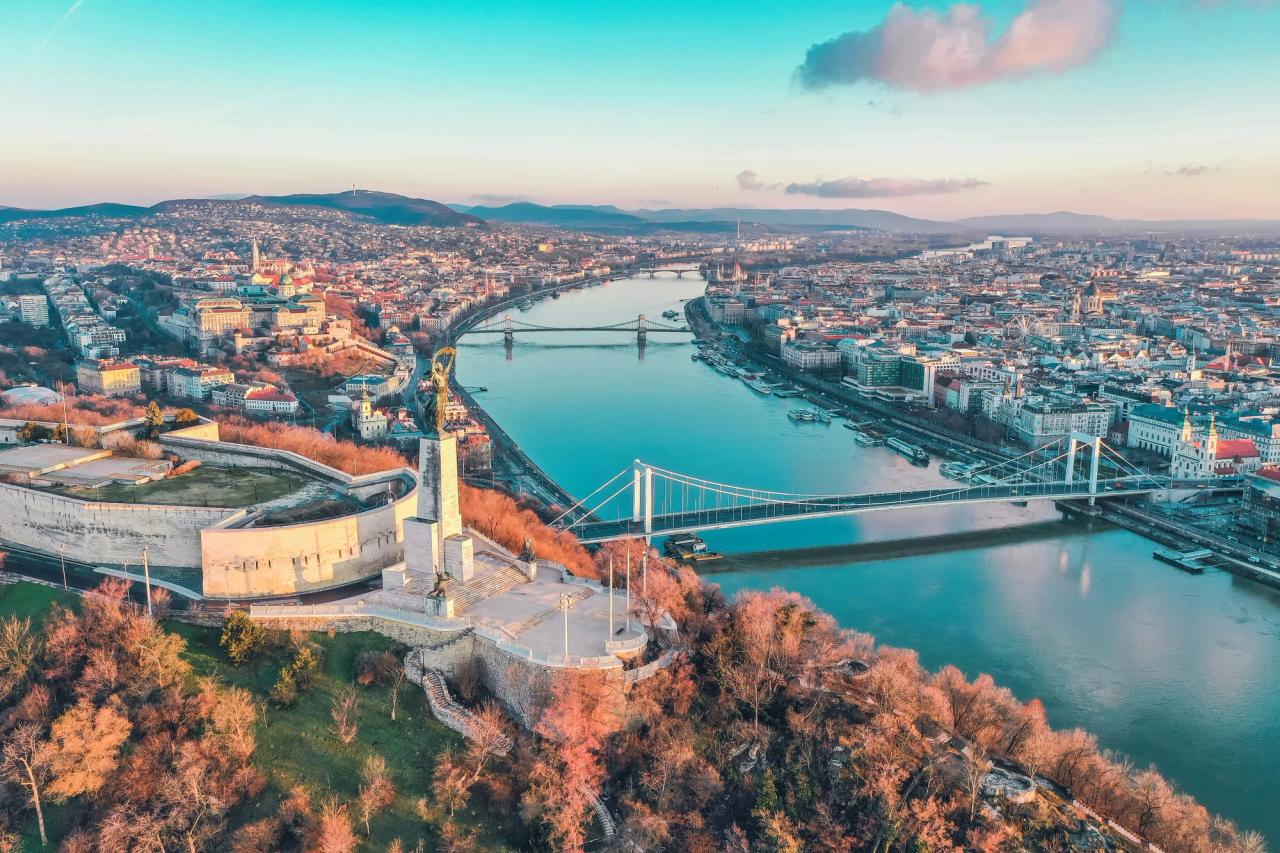
Budapest is one of Europe's most captivating capitals, split by the Danube into the hilly, residential Buda side and the flat, bustling Pest side. Known for its thermal baths, legendary ruin bars, and remarkably affordable cost of living, Budapest draws remote workers, students, and professionals who want a Western European lifestyle at a fraction of the price. Whether you are a young creative drawn to District VII's nightlife or a family seeking green hills in Buda, the city has a neighbourhood for every stage of life.
Budapest has reinvented itself over the past two decades from a post-communist capital into a thriving European hub. The city's architectural grandeur — from the Neo-Gothic Parliament to the Art Nouveau Gellért Baths — rivals cities twice its price. Add in a booming tech scene, world-class public transport, and one of the continent's best nightlife districts, and it is easy to see why Budapest consistently ranks among the top destinations for expats relocating to Central Europe.
Budapest at a Glance

- Population
- ~1.67 million (metro ~3.0 million)
- Region
- Central Hungary (independent city, surrounded by Pest county)
- Known For
- Thermal baths, ruin bars, Danube panorama
- Average Rent (1BR)
- HUF 220,000–320,000/month (city centre)
- Average Salary
- HUF 450,000–550,000/month net
- Expat Community
- Large and diverse; strong German, British, American, and Asian communities
- Language
- Hungarian; English widely spoken in central areas
Why Move to Budapest
- Affordable capital: Rent, dining, and transport cost 40–60% less than Vienna or Prague while offering comparable quality of life.
- Thermal bath culture: Over a dozen historic thermal baths, including Széchenyi, Gellért, and Rudas, provide year-round relaxation and are a core part of local social life.
- Vibrant nightlife: District VII's ruin bars (Szimpla Kert, Instant-Fogas) create a nightlife scene unlike anywhere else in Europe — eclectic, unpretentious, and endlessly surprising.
- Central European hub: Budapest Ferenc Liszt Airport connects to 150+ destinations; Vienna, Bratislava, and Zagreb are a short train or bus ride away.
- Remote work paradise: Fast internet, abundant coworking spaces, and low costs make Budapest one of Europe's top digital nomad cities.
Finding Housing in Budapest
Average Rents
| Neighborhood | 1-Bedroom (HUF/month) | 3-Bedroom (HUF/month) | Character |
|---|---|---|---|
| District V (Belváros) | 250,000–350,000 | 500,000–750,000 | Upscale, central, historic |
| District VII (Erzsébetváros) | 180,000–260,000 | 350,000–500,000 | Lively, nightlife, young professionals |
| District XIII (Angyalföld) | 160,000–230,000 | 300,000–450,000 | Family-friendly, quiet, modern |
| District XI (Újbuda) | 170,000–250,000 | 320,000–480,000 | Green, residential, well-connected |
| District VIII (Józsefváros) | 150,000–220,000 | 280,000–420,000 | Gentrifying, multicultural, affordable |
| District IX (Ferencváros) | 165,000–240,000 | 310,000–460,000 | Trendy, riverside, new developments |
How to Find Housing
- Ingatlan.com: Hungary's largest property portal; most landlords list here first. The best starting point for any apartment search.
- Facebook groups: "Budapest Apartments for Rent" and "Expats in Budapest Housing" are active with daily listings from both agents and private landlords.
- Albérlet.hu: Dedicated rental platform with filters for furnished and pet-friendly units.
- Local tip: Most contracts are 1 year minimum. Expect to pay 2 months' deposit plus the first month's rent upfront. A Hungarian guarantor can sometimes reduce the deposit.
Tips for Expats
- Always view in person before signing; photos on listing sites can be misleading or outdated.
- Confirm whether common building costs (közös költség) are included in the listed rent — they often are not.
- Learn the term "rezsi" — it means utilities and is frequently listed separately from rent.
- Older buildings (pre-war) have character but may lack lifts or modern insulation. Check heating type and energy rating before committing.
- District VII and VIII offer the best value close to the centre but can be noisy at night.
Neighborhoods Guide
- District V (Belváros-Lipótváros): The political and commercial heart along the Danube. Upscale apartments, Parliament views, and high rents. Best for professionals who want to walk everywhere.
- District VI (Terézváros): Trendy and central, home to Andrássy Avenue and the Opera House. Popular with young professionals and expats. Mid-to-high rent with a vibrant street scene.
- District VII (Erzsébetváros): Budapest's party district packed with ruin bars, street art, and the Great Synagogue. Affordable rent and buzzing energy — ideal for students and creatives.
- District XI (Újbuda): A green, residential area on the Buda side near Gellért Hill. Good schools, parks, and tram lines. Family-friendly with moderate rents.
- District XIII (Angyalföld): Quiet, modern, and increasingly popular with families. New apartment developments, riverside promenades, and solid public transport. Growing fast.
- District VIII (Józsefváros): Rapidly gentrifying, multicultural, and still affordable. Home to the Hungarian National Museum and Corvin Promenade. A good pick for budget-conscious expats.
Cost of Living in Budapest
Monthly Budget Breakdown
| Category | Budget Range (HUF) |
|---|---|
| Rent (1BR, centre) | 220,000–320,000 |
| Utilities | 35,000–55,000 |
| Internet | 5,000–8,000 |
| Groceries | 60,000–90,000 |
| Transport (monthly pass) | ~10,500 (check current BKK BudapestGO pricing) |
| Dining out (4x/month) | 25,000–40,000 |
| Leisure/Gym | 12,000–20,000 |
| Total | 366,500–562,500 |
Day-to-Day Costs
- Coffee (flat white): HUF 900–1,500
- Lunch (casual restaurant): HUF 2,500–4,000
- Monthly transport pass: ~HUF 10,500 (check current BKK BudapestGO pricing)
- Beer (bar, 0.5L): HUF 800–1,500
- Cinema ticket: HUF 2,000–2,800
- Loaf of bread: HUF 500–800
- 1 litre of milk: HUF 350–450
- Monthly gym membership: HUF 10,000–20,000
Getting Around Budapest
- Public transport: BKK operates 4 metro lines, extensive tram (especially the iconic Tram 2 along the Danube), bus, and trolleybus networks. A monthly pass covers all modes. Check BKK BudapestGO for current pricing (fares are adjusted annually). The system runs from early morning until around 11:30 PM, with night buses (marked "Éjszakai") replacing metro and tram services after midnight.
- Cycling: Growing bike lane network. MOL Bubi bike-sharing is popular and costs HUF 500/month for short rides. Best on the flat Pest side; Buda's hills are more challenging.
- Driving: Not recommended for daily commuting — parking is expensive and scarce in the centre. Car-sharing services like GreenGo and MOL Limo are common and practical for occasional trips.
- Airport: Budapest Ferenc Liszt International Airport (BUD), 16 km from the centre. Bus 100E runs direct to Deák tér for HUF 2,200. A taxi to the centre costs roughly HUF 8,000–10,000.
- Intercity: Direct trains to Vienna (2.5 h), Bratislava (2.5 h), Zagreb, and Bucharest from Budapest Keleti and Nyugati stations. FlixBus offers affordable coach connections across Central Europe.
Healthcare in Budapest
- Hospitals/Clinics: Semmelweis University Hospital, Szent János Hospital, and numerous private clinics (Medicina, Swiss Medical). The public system covers basics but wait times can be long.
- English-speaking doctors: Widely available in private clinics; limited in public hospitals. Rózsakert Medical Center and FirstMed are popular with expats. Private consultations cost HUF 15,000–30,000.
- Pharmacies: Abundant. Marked with a green cross. Many are open late or 24 hours in the city centre.
- Emergency number: 112 (general), 104 (ambulance)
Planning your move?
Tell us about your move to compare quotes from international moving companies.
Culture & Lifestyle
- Thermal baths: Széchenyi, Gellért, Rudas, and Király are must-visits. Locals treat baths as social hubs, not just tourist attractions. Entry costs HUF 2,500–6,000 depending on the bath and services.
- Ruin bars: The District VII phenomenon — bars built in abandoned buildings with eclectic décor. Szimpla Kert is the original; Instant-Fogas is the largest complex.
- Danube riverbank: Evening walks along the Pest embankment and Buda Castle hill are iconic. Free and unbeatable.
- Festivals: Sziget Festival (August), Budapest Wine Festival (September), Budapest Christmas Markets (December), Budapest Spring Festival (March/April).
Food & Dining
- Try gulyás (goulash), lángos (deep-fried dough with sour cream), and kürtőskalács (chimney cake).
- Central Market Hall (Nagyvásárcsarnok) is the go-to for local ingredients and street food.
- Budget meals: Menza-style lunch menus (daily set meals) run HUF 2,000–3,500.
- Fine dining: Budapest has several Michelin-starred restaurants, including Costes and Stand.
Nightlife
- District VII ruin bars are the main draw — Szimpla Kert, Instant-Fogas, Élesztő, and Csendes each have a unique vibe.
- Live music: A38 Ship (a converted Ukrainian ship on the Danube) hosts international acts. Budapest Jazz Club and Muzikum are great for smaller gigs.
- Clubs: Akvárium, Morrisons 2, and Lärm cater to electronic music and dancing. Most clubs stay open until 4–5 AM on weekends.
Expat Community
- InterNations Budapest: Regular meetups and networking events for professionals.
- Budapest Expats Facebook group: 50,000+ members; the go-to for advice, housing, and social events.
- Language exchanges: Tandem Budapest and various pub-based language exchange nights run weekly.
Working Remotely
- Coworking spaces: Loffice, Kaptár, KUBIK, and Impact Hub offer desks from HUF 30,000–60,000/month. Many cafés have strong WiFi and are laptop-friendly.
- Internet: Average fixed broadband speed exceeds 150 Mbps. Fibre is widely available.
- Time zone: CET (UTC+1), ideal for overlapping with both European and US East Coast working hours.
Shopping in Budapest
- Groceries: Spar, Aldi, Lidl, and Penny Market for budget shopping. CBA and Match for convenience. Central Market Hall for fresh produce and specialities.
- Malls: Westend City Center, Arena Mall, and Árkád are the largest shopping centres. Mammut and Allee are popular on the Buda side.
- Markets: The Ecseri flea market (Saturday mornings) is great for antiques and curiosities.
Job Market in Budapest
- Main industries: IT and tech, shared services centres (SSC), automotive, finance, tourism.
- Major employers: Audi, Mercedes-Benz, Nokia, Morgan Stanley, Deutsche Telekom (IT Services), GE.
- Average salaries by sector:
| Sector | Average Net Monthly (HUF) |
|---|---|
| IT / Software | 500,000–900,000 |
| Finance / Banking | 450,000–750,000 |
| Shared Services (SSC) | 350,000–550,000 |
| Hospitality / Tourism | 250,000–350,000 |
- Job search resources: Profession.hu, LinkedIn, Bluebird, Hays Hungary, No Fluff Jobs (for tech).
Education in Budapest
- International schools: Britannica International School, British International School of Budapest (BISB), American International School of Budapest (AISB). Tuition ranges from HUF 4,000,000 to HUF 8,000,000 per year.
- Universities: Corvinus University, Semmelweis University, Budapest University of Technology and Economics (BME), ELTE, Óbuda University. (Note: CEU relocated most operations to Vienna in 2019.)
- Language schools: Berlitz, International House, and dozens of Hungarian-language schools for expats.
Language and Integration
- Hungarian is one of Europe's most difficult languages, but learning even basic phrases goes a long way with locals.
- Most government offices require Hungarian or a translator. English support is growing but not guaranteed.
- Free and subsidised Hungarian courses are available through the Budapest-based MigHelp foundation and community colleges (nyelviskola).
Winter Living Tips
- Budapest winters (December–February) typically see daytime highs of 0°C to 4°C with nighttime lows of -3°C to -1°C. Occasional cold snaps can push temperatures below -10°C. Dress in layers and invest in a quality winter coat.
- Heating costs rise significantly in winter — budget an extra HUF 10,000–20,000/month for utilities between November and March.
- Thermal baths are especially magical in winter — steam rising from warm pools in freezing air is a quintessential Budapest experience.
Moving Checklist for Budapest
- Secure a visa or confirm EU/EEA right of residence
- Research neighbourhoods and shortlist apartments on Ingatlan.com
- Obtain an apostilled marriage/birth certificate if needed for paperwork
- Arrange international health insurance for the first months
- Register your address at the local Kormányablak (government office)
- Apply for a TAJ card (social security number)
- Open a Hungarian bank account (OTP, Erste, or K&H)
- Get a local SIM card (Vodafone, Yettel, Telekom)
- Register for an adószám (tax number) at NAV
- Enroll in Hungarian language classes
- Explore your neighbourhood on foot and learn your nearest market, pharmacy, and clinic
- Join an expat group or attend a meetup
Yes. Budapest is considered very safe by European standards. Petty crime like pickpocketing can occur on public transport and in tourist-heavy areas, but violent crime is rare. The districts most expats live in (V, VI, VII, XI, XIII) are all safe and well-patrolled.
Not in daily life — many younger Hungarians speak English, especially in the city centre. However, Hungarian is essential for dealing with government offices, long-term contracts, and deeper social integration. Learning basic Hungarian will dramatically improve your experience.
No. Hungary's currency is the Hungarian Forint (HUF). Some tourist-oriented shops may accept euros, but at poor exchange rates. Use a bank card with no foreign transaction fees or withdraw HUF from ATMs (avoid Euronet ATMs — they charge high fees).
Processing times for a National D-Visa or residence permit typically range from 30 to 60 days, depending on the type and completeness of your application. Apply through the nearest Hungarian consulate before arriving, or at the National Immigration Directorate (OIF-DG) if already in Hungary. Hungary also offers a White Card (digital nomad visa) for remote workers earning at least €2,000/month from foreign employers.
Absolutely. Fast internet (average 150+ Mbps), abundant coworking spaces (Loffice, Kaptár, KUBIK), low cost of living, and a large digital nomad community make Budapest one of Europe's top remote work destinations.
Buda (west bank) is hilly, greener, quieter, and more residential — favoured by families. Pest (east bank) is flat, dense, and packed with restaurants, nightlife, and business districts. Most expats settle on the Pest side for convenience, but Buda offers a calmer pace.
A monthly Budapest pass covers all BKK services — metro, tram, bus, trolleybus, and the HÉV suburban rail within city limits. Check BKK BudapestGO for current pricing. It is one of the cheapest urban transit passes in Europe.
Hungary's public healthcare is accessible to residents through the TAJ card, but wait times can be long. Most expats opt for private health insurance, which gives fast access to English-speaking doctors and modern private clinics for HUF 15,000–30,000 per visit.
The most popular baths are Széchenyi (outdoor, party atmosphere), Gellért (Art Nouveau beauty), Rudas (Ottoman-era, rooftop pool), and Király (intimate, historic). Entry ranges from HUF 2,500 to HUF 6,000. Locals recommend going on weekday mornings for fewer crowds.
You can apply for an adószám at the Nemzeti Adó- és Vámhivatal (NAV) office. Bring your passport, Hungarian address card, and residence permit. Processing usually takes 1–2 weeks. The adószám is needed for employment, opening a bank account, and signing rental contracts.
Spring (April–May) and early autumn (September–October) are ideal. The weather is mild, the housing market is active, and you avoid the extremes of summer heat (35°C+) and winter cold (-10°C). Avoid August — many locals are on holiday and services slow down.
Sports and Recreation
- Running and hiking: Margaret Island (Margitsziget) has a rubberised running track. The Buda Hills offer hiking trails accessible by public transport (Cogwheel Railway + Chairlift to János Hill).
- Swimming: Beyond the thermal baths, Dagály and Palatinus are popular open-air pools in summer. The Duna Arena hosts competitive swimming.
- Football: Ferencváros (Fradi) and MTK are the main clubs. Groupama Arena hosts matches with a lively atmosphere.
- Fitness: Gym chains like McFit, BioTech USA, and Flex Gym offer memberships from HUF 10,000/month. Outdoor fitness parks are common on Margaret Island and in city parks.
- Winter sports: No skiing in Budapest, but the Buda Hills are great for winter hiking. Slovakia's Tatras are about 3–4 hours by car.
Safety Tips for Expats
- Keep valuables out of sight on public transport and in crowded tourist areas.
- Use official taxis (Főtaxi, Bolt) rather than unmarked cars at the airport.
- Register with your embassy upon arrival for emergency support.
- Save 112 (general emergency) and 104 (ambulance) in your phone.
Related Guides
- [Moving to Hungary] — comprehensive country guide
- [Moving to Debrecen] — Hungary's second city
- [Moving to Szeged] — the sunniest city in Hungary