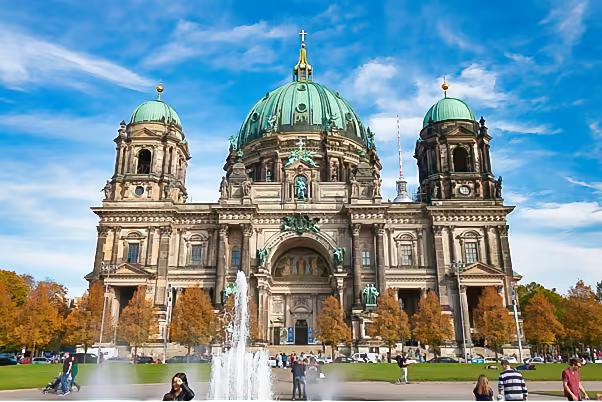
Berlin is one of Europe's most dynamic capitals — a city where history, creativity, and startup energy collide. Known for its multicultural population, world-class nightlife, and surprisingly affordable rents for a capital city, Berlin attracts artists, tech workers, freelancers, and young families from around the globe. If you're looking for a city that values individuality and offers a high quality of life without the price tag of London or Paris, Berlin deserves serious consideration.
Berlin at a Glance

- Population
- 3.85 million (metro area: ~6 million)
- Region
- Berlin (city-state)
- Known For
- Startup hub, street art, multiculturalism
- Average Rent (1BR)
- €800–€1,300
- Average Salary
- €42,000–€52,000/year gross
- Expat Community
- One of Europe's largest — 500,000+ international residents
Why Move to Berlin
- Startup and tech hub: Berlin is home to thousands of startups and major tech companies, offering strong demand for developers, designers, and marketers
- Affordable for a capital: Rents and daily costs are significantly lower than Munich, Frankfurt, or other major European capitals
- Multicultural and English-friendly: Over 190 nationalities are represented; English is widely spoken, especially in younger circles
- Cultural richness: World-class museums, galleries, live music, and a nightlife scene that never stops
- Central European location: Excellent transport connections to the rest of Germany and Europe
- Creative freedom: Berlin's open-minded culture attracts artists, musicians, and filmmakers from everywhere
Moving Costs to Berlin
Shipping costs depend on shipment size and transport method. Typical market rates as of early 2026:
| Move Type | Time | Cost (EUR) |
|---|---|---|
| 20ft container | 2–4 weeks | €2,100–€3,250 |
| 40ft container | 2–4 weeks | €3,800–€5,300 |
| Air freight (1m³) | 4–7 days | €1,100–€1,800 |
| Customs Fees | — | €150–€400 |
Moving Costs by Origin
| Origin | Estimated Cost | Volume |
|---|---|---|
| UK to Berlin | €1,200–€2,800 | 1–2 CBM |
| USA to Berlin | €2,500–€5,500 | 20ft container |
| France to Berlin | €800–€2,000 | 1–2 CBM |
| Australia to Berlin | €3,500–€7,000 | 40ft container |
Money-Saving Tips
- Get quotes from at least 3 different moving companies
- Consider shared containers if you have less than a full load
- Book during off-peak months (October–March) for better rates
- Declutter before moving — sell or donate items you no longer need
Real-life case: "I relocated to Berlin in early 2026 from London for around €2,800 including customs. All my furniture arrived without damage after about three weeks, and the movers assisted me well with paperwork." — Thomas M.
Need a personalised estimate?
Get three vetted moving-company quotes in under 48 hours.
Finding Housing in Berlin
Average Rents
| Neighborhood | 1-Bedroom | 3-Bedroom | Character |
|---|---|---|---|
| Mitte | €1,100–€1,500 | €2,200–€3,200 | Central, touristy, modern apartments |
| Kreuzberg | €900–€1,300 | €1,800–€2,600 | Alternative, multicultural, vibrant nightlife |
| Prenzlauer Berg | €950–€1,400 | €2,000–€2,800 | Family-friendly, leafy, café culture |
| Neukölln | €750–€1,100 | €1,500–€2,200 | Up-and-coming, diverse, affordable |
| Charlottenburg | €950–€1,350 | €1,900–€2,700 | Elegant, classic architecture, upscale shopping |
How to Find Housing
- Immobilienscout24: Germany's largest property portal — essential for apartment hunting
- WG-Gesucht: Best for shared flats and short-term options
- ImmoWelt: Good alternative with a clean interface
- Local tip: Competition is fierce — prepare a folder with your documents (proof of income, SCHUFA, ID) before attending viewings
Rental Terms to Know
- Kaltmiete: Base rent without utilities
- Warmmiete: Base rent plus utilities (heating, water, waste)
- Nebenkosten: Additional costs on top of cold rent
- Kaution: Security deposit — typically 3 months' cold rent
Tips for Expats
- Start your search early — expect to spend 4–8 weeks finding a place
- Consider temporary accommodation (Wunderflats, HousingAnywhere) while you search
- Be wary of scams — never transfer money before viewing a property in person
- Berlin's rental market moves fast; respond to listings within minutes
- Learn some German phrases for viewings — landlords often prefer German-speaking tenants
Neighborhoods Guide
- Kreuzberg: The heart of Berlin's alternative scene — street art, Turkish markets, and a thriving bar scene. Rents are rising but still moderate. Best for creatives and young professionals.
- Mitte: The city centre with government buildings, museums, and modern condos. Expensive by Berlin standards but well-connected. Best for professionals who want to be in the middle of everything.
- Prenzlauer Berg: Tree-lined streets, brunch spots, and playgrounds everywhere. One of the most family-friendly neighborhoods with a strong community feel. Rents are above average.
- Neukölln: Rapidly gentrifying, full of international restaurants, dive bars, and creative spaces. Still one of the cheapest central neighborhoods. Best for budget-conscious expats and students.
- Charlottenburg: Old-world elegance with wide boulevards, the Kurfürstendamm shopping street, and classic Berlin architecture. Popular with older professionals and families who prefer a quieter vibe.
Cost of Living in Berlin
Monthly Budget Breakdown
| Category | Budget Range |
|---|---|
| Rent (1BR, center) | €900–€1,300 |
| Utilities | €200–€280 |
| Internet | €30–€40 |
| Groceries | €220–€320 |
| Transport (Deutschlandticket) | €49 |
| Dining out (4x/month) | €120–€200 |
| Leisure/Gym | €30–€60 |
| Total | €1,650–€2,400 |
Day-to-Day Costs
- Coffee: €3.50–€4.50
- Lunch (casual): €10–€14
- Monthly transport pass: €49 (Deutschlandticket)
- Beer (bar): €4–€5.50
- Cinema ticket: €10–€13
Getting Around Berlin
- Public transport: Extensive U-Bahn, S-Bahn, tram, and bus network run by BVG. The Deutschlandticket (€49/month) covers all regional and local transport across Germany
- Cycling: Berlin is very flat with dedicated bike lanes; many residents cycle year-round
- Driving: Generally unnecessary in the city centre; parking is limited and expensive
- Airport: Berlin Brandenburg (BER) — connected to major European and international destinations
- Intercity: ICE trains connect Berlin to Hamburg (1h 45m), Munich (4h), and Frankfurt (4h)
Healthcare in Berlin
- Hospitals/Clinics: Charité is one of Europe's largest university hospitals; numerous private and public clinics across the city
- English-speaking doctors: Widely available, especially in Mitte and Prenzlauer Berg
- Pharmacies (Apotheken): Found on every major street; many open late or 24 hours
- Emergency number: 112 for ambulance and fire
Get a personalised relocation plan
Drop your email and we'll send a tailored checklist plus three quotes from vetted movers.
Visa and Residency
Non-EU/EEA citizens need a visa before relocating. The most common routes are:
- EU Blue Card: For highly skilled workers earning at least ~€45,300/year (or ~€41,042 in shortage occupations such as STEM, IT, and healthcare)
- Work Visa: For qualified professionals with a confirmed job offer
- Job Seeker Visa: Allows you to search for work for up to 6 months
- Freelance Visa: Popular in Berlin among self-employed creatives and tech workers
After arriving, you must register your address within 14 days and apply for a residence permit if your visa requires it.
Culture & Lifestyle
- Nightlife: World-famous club scene including Berghain, Sisyphos, and Watergate — the city barely sleeps on weekends
- Arts and museums: Museum Island houses five UNESCO-listed museums; hundreds of independent galleries across the city
- Green spaces: Tiergarten, Tempelhofer Feld (a former airport turned park), and the Mauerpark flea market
- History: Berlin Wall remnants, Holocaust Memorial, Brandenburg Gate, and Checkpoint Charlie
Food & Dining
- Currywurst and Döner: Berlin's iconic street foods, available everywhere for €3–€6
- Best areas for dining: Kreuzberg for Turkish and Middle Eastern, Neukölln for international street food, Mitte for upscale options
- Budget options: Street food markets, Vietnamese restaurants, and canteen-style lunch spots offer meals from €6–€9
Expat Community
- InterNations Berlin: Regular networking events and social meetups
- Toytown Germany: English-language forum for expats in Germany
- Facebook groups: "Berlin Expats," "New in Berlin," and neighborhood-specific groups
- Language exchanges: Tandem partnerships widely available through apps and meetups
Job Market in Berlin
- Main industries: Tech startups, creative industries, media, e-commerce, tourism, government
- Major employers: Zalando, HelloFresh, Delivery Hero, Siemens, Deutsche Bahn, various government agencies
- Average salaries by sector:
| Sector | Average Annual Salary |
|---|---|
| Software Development | €55,000–€75,000 |
| Marketing | €40,000–€55,000 |
| Design/Creative | €38,000–€52,000 |
| Finance | €50,000–€70,000 |
| Hospitality | €28,000–€38,000 |
- Job search resources: StepStone, LinkedIn, Xing, Berlin Startup Jobs, Honeypot (for developers)
Education in Berlin
- International schools: Berlin British School, Berlin Metropolitan School, John F. Kennedy School (bilingual German-American)
- Universities: Humboldt University, TU Berlin, Freie Universität Berlin — public universities with no tuition fees
- Language schools: Goethe-Institut, VHS Berlin (affordable integration courses), speakeasy Berlin
Customs and Pet Relocation
Customs for Belongings
Used personal goods can be imported duty-free under Transfer of Residence relief, provided items have been owned for at least 6 months. You'll need Form 0350, your residence registration, and a full inventory list. New or commercial items may be subject to 19% VAT.
Bringing Pets
Dogs, cats, and ferrets must be microchipped (ISO compliant), vaccinated against rabies at least 21 days before travel, and have either an EU pet passport or an official health certificate. Certain breeds (Pit Bull, American Staffordshire, Staffordshire Bull Terrier, Bull Terrier) face import restrictions. Start preparations 3–4 months ahead.
Driver's Licence and Car Import
- EU licences: Valid in Germany without exchange
- Non-EU licences: Valid for 6 months after registering residence, then must be exchanged; some countries require a theory or practical test
- Car import: Declare at customs within 10 days; must pass TÜV inspection; VAT and import duty apply unless Transfer of Residence relief is granted
Bank Account and Tax ID
To open a bank account you need a valid passport, proof of address (Anmeldung), and often a residence permit. Popular options for expats include N26 (quick setup), ING, and Deutsche Bank.
After your Anmeldung, a Tax Identification Number (Steueridentifikationsnummer) arrives by post within 2–3 weeks. It is required for employment, tax returns, and banking.
Moving Checklist for Berlin
- Secure visa or confirm EU freedom of movement
- Book temporary accommodation for at least 4–6 weeks
- Gather all required documents (passport, birth certificate, marriage certificate, degree certificates)
- Get documents translated into German if needed
- Complete Anmeldung at the nearest Bürgeramt within 14 days
- Open a bank account
- Register for health insurance or confirm employer's coverage
- Get a German SIM card
- Start apartment search with full document folder ready
- Apply for residence permit if applicable
- Enrol in a German language course
- Explore your neighborhood and learn transit routes
- Register with a local doctor
Where to Find Tools and Resources
- ReloAdvisor: Volume calculator, video survey, and moving cost estimator at reloadvisor.org
- Make it in Germany: Official portal for skilled workers at make-it-in-germany.com
- InterNations: Global expat network at internations.org
- Toytown Germany: English-speaking forum at toytowngermany.com
Related Guides
- [Moving to Germany] — comprehensive country guide
- [Moving to Munich] — Bavaria's economic powerhouse
- [Moving to Hamburg] — northern port city guide