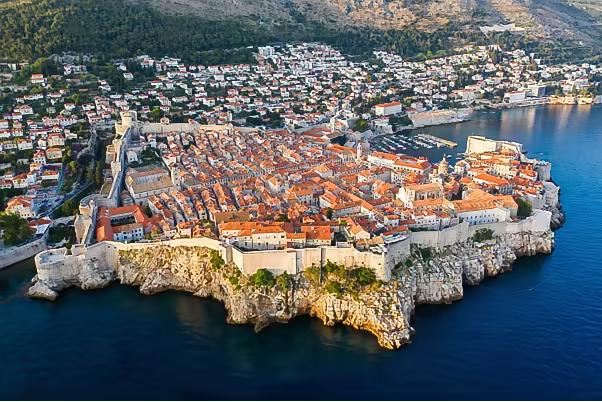
Dubrovnik is Croatia's most iconic coastal city — a UNESCO World Heritage site wrapped in medieval walls that jut out over the Adriatic Sea. Famous worldwide as a filming location for Game of Thrones, the city draws millions of tourists each summer, but beyond the cruise ship crowds lies a compact, livable city with a tight-knit local community, stunning natural surroundings, and a slower pace of life that appeals to remote workers, retirees, and adventurous expats willing to look past peak-season chaos.
Dubrovnik at a Glance
- Population
- ~42,000 (metro area ~65,000)
- Region
- Dubrovnik-Neretva County, southern Dalmatia
- Known For
- Old Town city walls, Game of Thrones filming locations, summer cruise tourism
- Average Rent (1BR)
- €550–€850/month
- Average Salary
- ~€1,070/month (net)
- Expat Community
- Small but growing — remote workers, digital nomads, retirees
Why Move to Dubrovnik
- Stunning setting: Few cities in Europe can match Dubrovnik's dramatic combination of limestone cliffs, terracotta rooftops, and turquoise Adriatic water.
- Year-round mild climate: Over 250 sunny days per year with mild winters — ideal for anyone escaping northern European weather.
- Compact and walkable: The entire city is manageable on foot, from Old Town to Lapad, without needing a car.
- Gateway to islands and nature: Mljet National Park, the Elaphiti Islands, and Montenegro's coast are all within easy reach.
- EU and Eurozone: Croatia adopted the euro in 2023, simplifying finances for EU expats and eliminating currency exchange headaches.
Finding Housing in Dubrovnik
Average Rents
| Neighborhood | 1-Bedroom | 3-Bedroom | Character |
|---|---|---|---|
| Old Town (Stari Grad) | €700–€1,100 | €1,400–€2,500 | Historic stone buildings, noisy in summer, walk-up apartments |
| Lapad | €550–€800 | €1,000–€1,600 | Beachside residential, quieter, popular with families |
| Gruž | €500–€700 | €900–€1,400 | Port district, ferry hub, more local feel |
| Babin Kuk | €500–€750 | €950–€1,500 | Resort area, green and spacious, hotel-heavy |
| Mokošica | €400–€600 | €750–€1,200 | Suburban, modern apartments, budget-friendly |
| Župa Dubrovačka | €450–€650 | €800–€1,300 | Coastal villages south of the airport, newer developments |
How to Find Housing
- Njuškalo: Croatia's largest classifieds site — most local landlords list here
- Index oglasi: Another popular Croatian platform for rentals
- Facebook groups: "Dubrovnik Rentals" and "Expats in Dubrovnik" groups have active listings
- Booking short-term first: Many expats rent an Airbnb or guesthouse for 2–4 weeks to explore neighborhoods before committing
- Local agents: Useful for navigating contracts, but expect a fee of one month's rent
Tips for Expats
- Negotiate off-season leases — landlords in tourist zones often prefer year-round tenants at lower rates over seasonal turnover
- Check if utilities are included; many listings quote rent without electricity, water, or internet
- Inspect for damp and insulation — older stone buildings can be cold in winter and trap humidity
- Get everything in writing: verbal agreements are common but offer no legal protection under Croatian tenancy law
Neighborhoods Guide
- Old Town (Stari Grad): Best for culture lovers who want to live inside the city walls. Walkable to everything, but expect noise, crowds, and premium rents from May through October. Apartments tend to be small and lack elevators.
- Lapad: The most popular neighborhood for expats and families. Beaches, cafés, a seaside promenade, and a calmer atmosphere year-round. Good bus connections to Old Town (15 minutes). Rents are moderate for Dubrovnik.
- Gruž: Dubrovnik's port and ferry terminal. More affordable, more local, and home to the main fresh market. Practical choice for daily life over postcard views. Great bus connectivity.
- Babin Kuk: A green peninsula packed with hotels and resorts, but also residential blocks. Quiet, close to beaches, slightly isolated from the city center. Good for those who want a resort-style environment.
- Mokošica: A growing suburb east of the city. Modern housing, lower prices, and a regular bus line — popular with young families and long-term residents who want space. Parking is easier here.
- Župa Dubrovačka: The broader coastal area south of the airport. Spread-out villages with newer developments, larger homes, and a more suburban Croatian lifestyle. A car is almost essential.
Cost of Living in Dubrovnik
Dubrovnik is the most expensive city in Croatia, driven largely by tourism. Day-to-day costs run 15–25% higher than Zagreb or Split, though still cheaper than most Western European cities like Lisbon, Barcelona, or Athens.
Monthly Budget Breakdown
| Category | Budget Range |
|---|---|
| Rent (1BR, center) | €650–€850 |
| Utilities (electricity, water, heating, waste) | €130–€180 |
| Internet (50+ Mbps) | €25–€35 |
| Groceries | €200–€300 |
| Transport (bus pass + occasional taxi) | €40–€55 |
| Dining out (4x/month) | €80–€140 |
| Leisure/Gym | €30–€50 |
| Total | €1,155–€1,610 |
Day-to-Day Costs
- Coffee (espresso): €2.00–€2.50
- Lunch (casual restaurant): €10–€15
- Monthly bus pass: €40
- Beer (local, bar): €3.50–€5.00
- Cinema ticket: €6–€8
- Loaf of bread: €1.20–€1.80
- Dozen eggs: €2.80–€3.50
- 1L milk: €1.10–€1.40
- Fitness gym (monthly): €35–€50
Seasonal Price Swings
During peak tourist season (June–September), restaurant prices in and around Old Town can double, and supermarket prices for imported goods tick upward. Rents for short-term stays skyrocket. Living in Lapad or Gruž shields you from the worst of it. Shopping at the Gruž green market and cooking at home keeps costs manageable year-round.
Getting Around Dubrovnik
- Public transport: Libertas Dubrovnik operates bus routes covering the city and suburbs. A monthly pass costs around €40. Buses run to Lapad, Gruž, Mokošica, and the airport. Service is reliable but frequency drops in the evenings and on weekends.
- Cycling: Limited — hilly terrain and narrow streets make cycling impractical in most areas. Lapad has a few flat coastal paths suitable for casual rides.
- Driving: Not recommended in Old Town (pedestrian-only). Parking is scarce and expensive in peak season (€5–€8/hour in summer). A car is useful for exploring the wider region, visiting Montenegro, or commuting from Župa Dubrovačka.
- Airport: Dubrovnik Airport (DBV) is 20 km southeast of the city center. Seasonal and year-round flights connect to Zagreb, major European hubs (London, Frankfurt, Paris, Rome), and some Middle Eastern cities. The airport shuttle bus costs around €8.
- Intercity: Ferries from Gruž port run to the Elaphiti Islands (Lopud, Šipan, Koločep), Mljet, Korčula, and Split. Long-distance buses connect to Split (4 hours), Zagreb (9 hours), and Montenegro (Kotor ~2 hours). Dubrovnik has no train station — the nearest rail link is in Split or Ploče.
Healthcare in Dubrovnik
- Hospitals/Clinics: Dubrovnik General Hospital (Opća bolnica Dubrovnik) is the main public facility, covering emergency care, surgery, and specialist departments. Private clinics such as Poliknika Marin Med offer faster appointments and English-speaking staff.
- English-speaking doctors: Available at private clinics and some hospital departments — the tourism industry ensures a higher proportion of English-speaking medical staff than other Croatian cities.
- Pharmacies: Widely available in Old Town, Lapad, and Gruž. Look for "Ljekarna" signs. Some offer extended hours and Sunday openings during summer.
- Emergency number: 112 (general emergency), 194 (ambulance)
- Health insurance: Public coverage through HZZO (Croatian Health Insurance Fund) is mandatory for residents. Many expats supplement it with private insurance for faster specialist access. International policies from providers like Allianz Care or Cigna are accepted at private clinics.
Planning your move?
Tell us about your move to compare quotes from international moving companies.
Culture & Lifestyle
- Living walls and history: Dubrovnik's 2 km medieval walls, Rector's Palace, and Franciscan Monastery are part of daily life, not just tourist attractions. Residents walk the walls at sunset for free outside peak hours.
- Summer tourism reality: From June to September, cruise ships dock daily and Old Town becomes extremely crowded. Locals avoid the Stradun during peak hours (10am–4pm) and instead socialize in Lapad, Gruž, or their own neighborhood cafés.
- Quiet season rewards: From November to April, the city empties out, prices drop, and the real Dubrovnik emerges — relaxed café culture, local markets, community events, and the freedom to wander empty stone streets.
- Outdoor lifestyle: Kayaking around the walls, hiking Mount Srđ via the trail or cable car, swimming from Lapad and Banje beaches, and island-hopping to the Elaphiti chain define the warmer months.
- Game of Thrones legacy: Filming tourism remains strong. You'll see walking tours, merchandise shops, and occasional filming around Fort Lovrijenac and Pile Gate. Locals have a love-hate relationship with it — it drives the economy but also feeds overtourism.
Food & Dining
- Local specialties: Fresh seafood (black risotto, grilled squid), oysters from nearby Ston, peka (meat or octopus slow-cooked under a bell-shaped lid), pašticada (Dalmatian beef stew), rozata (custard dessert similar to crème brûlée)
- Best areas for dining: Lapad for relaxed seafood restaurants with harbor views, Old Town for upscale dining and wine bars, Gruž market for fresh produce and raw fish at local prices
- Budget options: Bakery burek (€2–€3), konoba (tavern) lunch menus (€8–€12), supermarket cooking from Konzum or Tommy
Expat Community
- Facebook groups: "Expats in Dubrovnik" and "Dubrovnik Digital Nomads" are the most active online communities — useful for housing tips, meetups, and local advice
- Meetups: Informal language exchanges and social nights happen in Lapad and Gruž bars, especially outside tourist season when the community feels closer
- International organizations: The British and American embassies in Zagreb provide consular support. Dubrovnik has a small but active international school community that connects families
- Coworking: Limited dedicated coworking spaces, but several cafés in Lapad and Gruž cater to remote workers with reliable Wi-Fi and power outlets
Job Market in Dubrovnik
- Main industries: Tourism and hospitality (dominant), maritime services, real estate, trade via Gruž port, and seasonal event management
- Major employers: Rixos Premium Dubrovnik (Sun Gardens), Hilton Imperial, Valamar Hotels, Libertas (public transport), Dubrovnik city government
- Average salaries by sector:
| Sector | Average Net Monthly |
|---|---|
| Hospitality/Tourism | €800–€1,100 |
| IT/Remote work | €1,500–€3,500 (varies widely) |
| Retail/Services | €750–€950 |
| Education | €900–€1,200 |
| Healthcare | €1,000–€1,400 |
- Job search resources: MojPosao.hr, Posao.hr, and seasonal tourism job boards are the primary local platforms. Remote workers typically find opportunities through international platforms (LinkedIn, RemoteOK, We Work Remotely) rather than the local market, which is heavily seasonal and Croatian-language oriented.
Education in Dubrovnik
- International schools: Dubrovnik International School offers English-language primary education. Options are limited compared to Zagreb — families with older children or broader curriculum needs often choose Split or Zagreb.
- Universities: University of Dubrovnik offers programs in marine engineering, economics, tourism management, and electrical engineering. Small campus with a focus on Croatian-language instruction, though some English-taught courses exist for exchange students.
- Language schools: Several private Croatian language tutors operate in the city; online platforms (iTalki, Preply) are more commonly used given the small expat population and limited local demand for formal classes.
Moving Checklist for Dubrovnik
- Secure accommodation or book temporary housing for the first 2–4 weeks
- Obtain Croatian OIB (personal identification number) if possible through a consulate
- Arrange health insurance valid in Croatia (EU card or private policy)
- Research visa requirements (non-EU citizens: National Visa D for stays over 90 days)
- Ship belongings — get quotes via ReloAdvisor's moving calculator
- Gather apostilled documents (birth certificate, marriage certificate, degree)
- Register your address at the local police station (MUP) within 3 days
- Open a bank account (Zagrebačka Banka, Erste, or Raiffeisen) — bring passport and OIB
- Register with HZZO for public health coverage
- Buy a local SIM card (T-Mobile, A1, or Tele2) — available at newsstands and kiosks
- Get a Libertas bus card for public transport at Gruž or Lapad kiosks
- Familiarize yourself with the Gruž market for affordable fresh food
- Explore neighborhoods before committing to a long-term lease
- Register for e-Građani (Croatian e-citizen portal) for digital government services
- Join local expat and community groups on Facebook
- Set up utilities in your name (HEP for electricity, Vodovod for water, HT for phone/internet)
- If driving, begin the process of exchanging your foreign license at the local police station
- Apply for a Croatian residence permit if staying beyond 90 days
Dubrovnik is the most expensive city in Croatia, primarily due to tourism-driven demand. Rents in Old Town and Lapad run 20–30% higher than Split or Zagreb. However, living costs outside peak season (November–April) drop significantly, and the city remains cheaper than most Western European capitals. A single person can live comfortably on €1,200–€1,600 per month, and budget-conscious residents in Mokošica or Gruž can manage on less.
Not immediately — English is widely spoken in Dubrovnik thanks to the tourism industry. Restaurants, shops, pharmacies, and younger residents generally communicate well in English. However, learning Croatian is important for deeper integration, handling government bureaucracy, navigating lease contracts, and building relationships outside tourist-oriented circles. Even basic phrases earn respect from older locals.
Yes, but be prepared for a dramatically different experience outside summer. From November to April, many restaurants and businesses reduce hours or close entirely. The population shrinks, ferry schedules thin out, and some neighborhoods feel deserted. The upside: lower rents, no crowds, genuine local atmosphere, and a pace of life that summer visitors never experience. Many long-term expats say winter is when they fell in love with the city.
During peak season (June–September), multiple cruise ships can dock per day, bringing thousands of visitors into Old Town. Streets become impassable between 10am and 4pm, restaurant prices spike, and noise levels rise. Most residents adapt by shopping and socializing in Lapad or Gruž during peak hours, visiting Old Town early morning or evening, and planning errands around the cruise schedule (which is published online).
Dubrovnik is very safe by European standards. Violent crime is rare, petty theft is limited compared to larger tourist cities, and the local community is generally welcoming to long-term residents. The biggest practical hazards are uneven cobblestone streets, aggressive sun exposure in summer, occasional pickpocketing in crowded Old Town areas, and slippery marble streets during rain.
Lapad is the most popular choice for expats seeking a balance between coastal living, practical amenities, and reasonable rents. It offers beaches, cafés, a promenade, and good bus connections to Old Town. Gruž is better for those prioritizing budget and local authenticity, while Old Town suits history enthusiasts willing to accept noise and premium costs. Mokošica is ideal for families needing space on a tighter budget.
Dubrovnik has no train station. The main connections are by bus (Split ~4 hours, Zagreb ~9 hours), ferry (Split, Korčula, Mljet, Elaphiti Islands from Gruž port), and Dubrovnik Airport (flights to Zagreb in under an hour, seasonal direct flights across Europe). Cross-border buses also run to Mostar (2.5 hours), Sarajevo (5 hours), and Kotor in Montenegro (2 hours).
Legal residents are required to register with HZZO (Croatian Health Insurance Fund), which covers public hospital visits, GP consultations, and prescriptions. Registration requires proof of residence and a valid ID. Many expats also carry private insurance for faster specialist access and English-speaking consultations at private clinics. Dubrovnik General Hospital handles most emergencies, while private clinics cover routine and specialist care.
Related Guides
- [Moving to Croatia] — comprehensive country guide covering visas, taxes, and residency
- [Moving to Split] — Croatia's second-largest city, 4 hours up the Dalmatian coast