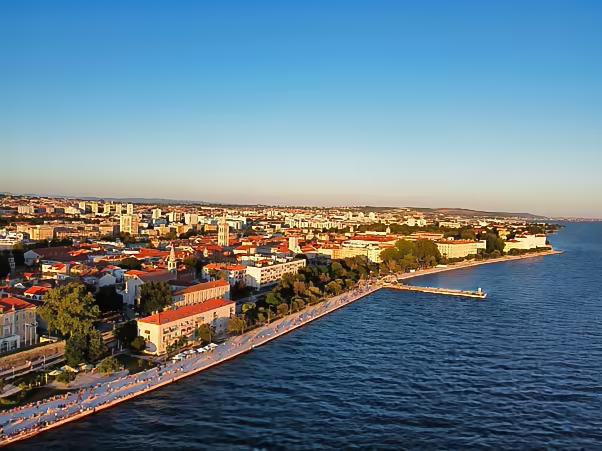
Zadar sits on Croatia's northern Dalmatian coast, a city where Roman columns border outdoor art installations and the Adriatic performs a musical duet with the sun every evening. Known for the Sea Organ and the Sun Salutation, Zadar draws remote workers, retirees, and families who want Mediterranean living without the crowds and prices of Split or Dubrovnik. If you value history, island-hopping, and a relaxed coastal pace, moving to Zadar deserves serious consideration.
With a population of roughly 71,000 (2021 census), Zadar is large enough to offer all essential services and a vibrant cultural calendar, yet compact enough that you can walk the entire historic peninsula in an afternoon. The city's economy runs on tourism, agriculture, and an emerging tech sector fueled by the growing remote-work scene. English is widely spoken among younger residents, and the expat community — though smaller than Split's — is tight-knit and welcoming.
Zadar at a Glance
- Population
- ~71,000 (2021 census; metro ~80,000)
- Region
- Zadar County, Northern Dalmatia
- Currency
- Euro (€ / EUR)
- Known For
- Sea Organ, Sun Salutation, Roman Forum
- Average Rent (1BR)
- €450–€700/month
- Average Salary
- ~€1,200/month net
- Expat Community
- Small but growing — Germans, British, Americans, Scandinavians
- Language
- Croatian; English widely spoken in services
Why Move to Zadar
- Affordable coastal living: Rents and daily costs run 30–40% below Split and Dubrovnik while offering the same Adriatic lifestyle. A comfortable single-person budget starts around €1,000/month.
- Island access: The Zadar archipelago puts dozens of islands within a short ferry ride — Dugi Otok, Ugljan, Pašman, and the Kornati National Park are all reachable in under two hours.
- Living history: The Old Town (Stari Grad) sits on a peninsula packed with Roman ruins, medieval churches, and Venetian-era architecture. You can touch a 2,000-year-old column while sipping coffee at a modern café.
- Iconic sunsets: Alfred Hitchcock famously called Zadar's sunset "the most beautiful in the world." The Waterfront promenade is where locals gather nightly to watch the sky blaze orange and purple behind the islands.
- Walkable city: Most daily needs sit within a 15-minute walk on the peninsula; a car is optional for everyday life.
- Low crime and safety: Zadar consistently ranks among Croatia's safest cities, making it attractive for families and solo expats alike.
Finding Housing in Zadar
Average Rents
| Neighborhood | 1-Bedroom | 3-Bedroom | Character |
|---|---|---|---|
| Old Town (Stari Grad) | €550–€800 | €900–€1,400 | Historic peninsula, walk to everything |
| Borik | €450–€650 | €750–€1,100 | Coastal area, beaches, modern apartments |
| Puntamika | €400–€600 | €650–€1,000 | Residential, quieter, sea proximity |
| Diklo | €400–€580 | €600–€950 | Vacation-home feel, year-round residents |
| Arbanasi | €350–€500 | €550–€850 | Suburban, more affordable, good links |
| Višnjik | €380–€550 | €600–€900 | Near sports complex and mall |
How to Find Housing
- Njuškalo.hr: Croatia's largest classifieds site — the go-to for rentals and sales. Filters let you search by neighborhood, size, and price.
- Index oglasi: Another popular portal with a wide selection of Zadar listings, often updated faster than agency sites.
- Facebook groups: Search "Zadar iznajmljivanje stanova" or "Expats in Zadar" for direct landlord posts. Listings here are often cheaper because there is no agency fee.
- Local agencies: Agencies like Feralis and Immorex specialize in Zadar-area rentals and can help with contracts in Croatian. Agency fees are typically one month's rent.
Tips for Expats
- Budget for a deposit: Most landlords require 1–3 months' rent upfront as a security deposit. Deposits are returned at the end of the lease if no damage is found.
- Contracts matter: Always insist on a signed rental contract (Ugovor o najmu) — it is required for residency registration and protects both parties.
- Utilities are extra: Electricity, water, gas, and internet are rarely included in advertised rent. Budget an additional €120–€160 per month.
- Seasonal pricing: Rents can spike during summer if landlords target tourist short-term stays. Sign a 12-month contract to lock in a stable rate.
- Inspect carefully: Older buildings in the center may lack central heating or have outdated wiring. Check water pressure, window seals, and hot water setup before signing.
Neighborhoods Guide
- Old Town (Stari Grad): Best for culture lovers and walkability. The peninsula is compact, car-free in parts, and packed with cafés, museums, and Roman ruins. Rent is the highest in the city, but you step outside your door onto the waterfront.
- Borik: Family-friendly coastal district with beaches, hotels, and a mix of older and newly built apartments. Good bus connections to the center and plenty of playgrounds.
- Puntamika: A quieter residential area west of the peninsula. Popular with long-term residents and expats who want sea access without tourist foot traffic. Local shops cover daily needs.
- Diklo: North of the center, known for its seaside promenade and relaxed vibe. Slightly cheaper rents and plenty of greenery. A favorite for retirees and families with young children.
- Arbanasi: A suburban choice for budget-conscious newcomers. More space for the money, with reliable bus routes into town. Newer construction means better insulation and modern layouts.
- Višnjik: Near the city's sports and shopping hub (City Galleria mall). Modern housing options and easy access to the highway for day trips to national parks.
Cost of Living in Zadar
Monthly Budget Breakdown
| Category | Budget Range |
|---|---|
| Rent (1BR, center) | €500–€700 |
| Utilities (electricity, water, gas) | €120–€160 |
| Internet (fibre) | €25–€35 |
| Groceries | €200–€300 |
| Transport (bus pass or fuel) | €30–€50 |
| Dining out (4x/month) | €80–€120 |
| Leisure/Gym | €30–€50 |
| Total | €985–€1,415 |
Zadar's cost of living is among the lowest on the Croatian coast. A couple can live comfortably on €1,500–€2,000 per month, including occasional travel. Groceries are cheap at the daily Green Market (Gradska tržnica), where local produce, cheese, and olive oil cost a fraction of supermarket prices.
Day-to-Day Costs
- Coffee (espresso): €1.50–€2.50
- Lunch (casual restaurant): €8–€12
- Monthly transport pass: €30–€40
- Beer (bar, 0.5L): €2.50–€4.00
- Cinema ticket: €5–€7
- Gym membership: €25–€45/month
- Loaf of bread: €1.00–€1.50
- Dozen eggs: €2.50–€3.50
Climate and Weather
Zadar enjoys a classic Mediterranean climate with hot, dry summers and mild, wet winters. This is a major draw for expats from northern Europe.
- Summer (June–August): Average highs of 28–32°C. Sea temperatures reach 24°C. Expect 10–12 hours of sunshine daily.
- Autumn (September–November): Warm through October, then cooling. Some rain in November. A lovely shoulder season for newcomers.
- Winter (December–February): Mild by European standards — average lows of 4–7°C. Rain is common but snow is extremely rare.
- Spring (March–May): Pleasant and warming, with wildflowers along the coast. Ideal time to apartment-hunt and settle in.
The infamous Bura (Bora) wind blows from the interior in winter, bringing sudden cold gusts. It rarely lasts more than a few days but can disrupt ferry schedules.
Getting Around Zadar
- Public transport: Liburnija operates local bus lines across the city and suburbs. A monthly pass costs around €30–€40. Buses run every 15–30 minutes on main routes.
- Walking and cycling: The Old Town peninsula is entirely walkable. Cycling infrastructure is growing, with dedicated paths along the waterfront and to nearby beaches.
- Driving: Roads are well-maintained; parking in the center can be tight in summer. Monthly garage rental runs €50–€80. Croatia's motorway network connects Zadar to Zagreb and Split.
- Airport: Zadar Airport (ZAD) connects directly to Zagreb, London, Frankfurt, Berlin, and several seasonal European routes. It sits about 10 km from the center — a €15–€20 taxi ride or shuttle bus.
- Intercity: Regular buses to Split (2.5 hours), Zagreb (3.5 hours), and Rijeka (3 hours). A rail line runs to Knin with onward connections to Zagreb, though buses are generally faster and more frequent.
- Ferries: The port is a hub for island connections. Jadrolinija operates car ferries and catamarans to Ugljan, Pašman, Dugi Otok, and seasonal routes to Italy (Ancona).
Healthcare in Zadar
- Hospitals/Clinics: Zadar General Hospital (Opća bolnica Zadar) covers emergency and specialist care. Several private clinics — including Poliklinika Medikol and Rident — offer faster specialist appointments and dental services.
- English-speaking doctors: Available at private practices; the expat community shares vetted recommendations in local Facebook groups. Private clinics are the most reliable option for English consultations.
- Pharmacies: Widely available across the city (look for the green cross). Most carry international medications and staff speak basic to moderate English. Many are open until late evening on rotation.
- Emergency number: 112 (general emergency) or 194 (ambulance).
- Public insurance: Croatia's Croatian Health Insurance Fund (HZZO) covers residents. Registration requires your OIB, proof of address, and valid ID. Contributions are deducted from salary or paid directly by self-employed individuals.
- Private insurance: Popular among expats for faster access and English-speaking providers. Policies from Uniqa, Allianz, and Croatia Osiguranje start around €50–€100/month for basic coverage.
Get a personalised relocation plan
Drop your email and we'll send a tailored checklist plus three quotes from vetted movers.
Culture & Lifestyle
- Sea Organ and Sun Salutation: Zadar's two most famous installations sit on the western waterfront. The Sea Organ is a set of marble steps with underwater pipes that produce haunting melodies from wave movement. Next to it, the Sun Salutation (Pozdrav Suncu) is a 22-meter solar-powered glass disc that absorbs sunlight during the day and pulses with colored light after dark. Locals and visitors gather here every evening.
- Roman Forum and Church of St. Donatus: One of the best-preserved Roman fora on the eastern Adriatic coast, dating to the 1st century BC, alongside a 9th-century church that still hosts summer concerts. The acoustics inside St. Donatus are remarkable.
- Island lifestyle: Ferries to Ugljan, Pašman, and Dugi Otok run multiple times daily. The Kornati Islands National Park — an archipelago of 89 islands — is a popular day trip by boat, with swimming, snorkeling, and seafood lunches on uninhabited shores.
- Summer festivals: Zadar hosts the Zadar Snova theater festival, outdoor cinema nights, classical concerts in churches, and a lively open-air market season from May through October.
- Museums: The Archaeological Museum of Zadar houses Roman and medieval artifacts. The Museum of Illusions is a fun family outing. The Gold and Silver of Zadar exhibition displays sacred art spanning centuries.
Food & Dining
- Local specialties: Paški cheese (from nearby Pag Island), Dalmatian pršut (dry-cured ham), fresh grilled fish, black risotto (crni rižot), and maraschino liqueur — a cherry spirit invented in Zadar in the 16th century.
- Best dining areas: The Old Town waterfront (Riva), Varoš quarter, and the harbor restaurants near the fish market. For a local experience, head inland to a traditional konoba (tavern).
- Budget options: Pekarnas (bakeries) sell burek and pastries for under €2. Konoba-style taverns serve hearty meals (grilled meat, fish stew, salad) for €8–€12. A supermarket lunch can be had for under €5.
- Fine dining: Zadar has a growing scene of upscale restaurants blending Dalmatian ingredients with modern techniques. Expect €25–€40 per person for a multi-course meal with wine.
Expat Community
- Meetups and groups: "Expats in Zadar" on Facebook is the most active community, with regular language exchanges, hiking groups, and social gatherings. "Digital Nomads Zadar" is another active group.
- Coworking: Several coworking spaces have opened on the peninsula, including Zadar Coworking and tech-friendly cafés with reliable Wi-Fi. Monthly coworking passes range from €80–€150.
- International connections: Zadar has a small but visible international scene. English, German, and Scandinavian expats are the most common. The University of Zadar also brings an international student presence.
- Volunteering: Animal shelters, beach cleanups, and cultural festivals all welcome expat volunteers and provide a quick way to build local connections.
Visa and Residency
EU/EEA citizens can live and work in Croatia without a visa but must register their stay at the local police station (MUP) within 15 days of arrival and obtain an OIB.
Non-EU citizens need a National Visa (D) for stays over 90 days, applied for at the nearest Croatian embassy or consulate. Common grounds include:
- Employment: Requires a work permit arranged by the employer.
- Digital Nomad Visa: Available for remote workers employed by or contracting with non-Croatian companies. Valid for up to one year, non-renewable immediately (six-month gap required before reapplying).
- Study: Enrollment at the University of Zadar or another Croatian institution.
- Family reunification: Joining a Croatian or EU-resident family member.
After five years of continuous temporary residence, you may apply for permanent residency. Croatian citizenship by naturalization typically requires eight years of continuous residence and renunciation of your previous citizenship (EU citizens have been exempted from renunciation since Croatia's EU accession. Spouses of Croatian nationals may apply after three years.)
Job Market in Zadar
- Main industries: Tourism and hospitality, agriculture (olives, wine), retail and services, IT and remote work.
- Major employers: Zadar County, University of Zadar, Falkensteiner Istra & Adria Hotels Group, local tourism and service companies.
- Average salaries by sector:
| Sector | Average Monthly Net |
|---|---|
| IT / Remote | €1,500–€3,000 |
| Tourism / Hospitality | €800–€1,200 |
| Education | €900–€1,300 |
| Healthcare | €1,000–€1,500 |
| Skilled trades | €800–€1,100 |
- Job search resources: MojPosao.net, Posao.hr, LinkedIn, and local Facebook job groups like "Posao Zadar." Networking through the expat community often uncovers unadvertised opportunities.
- Freelancing: Croatia allows self-employment (obrt). Freelancers must register a trade, pay social contributions, and file annual tax returns. A simplified lump-sum tax (paušalni obrt) is available for low-revenue freelancers.
Education in Zadar
- International schools: No full international school within Zadar itself. Split (2.5 hours away) has the Split International School. In Zadar, public schools accept foreign students and provide Croatian language support classes. Homeschooling is not widely practiced or legally clear in Croatia.
- Universities: University of Zadar offers programs in humanities, science, tourism, and marine studies. A growing number of courses are taught in English, particularly at the postgraduate level.
- Language schools: Several private Croatian-language schools for expats exist, including classes offered through the University's Croatian Language School. Popular online options include Italki tutors and the Croaticum program.
Moving Checklist for Zadar
- Research visa or residence permit requirements based on nationality
- Secure a rental contract or proof of accommodation
- Arrange health insurance (EHIC for EU citizens, private for others)
- Obtain apostilled copies of key documents (birth certificate, marriage certificate, diplomas)
- Start learning basic Croatian phrases
- Register your address at the local police station (MUP)
- Apply for your OIB (personal identification number) at the Tax Administration
- Open a bank account (Zagrebačka Banka, Erste, or PBZ)
- Register with HZZO for public health insurance if eligible
- Get a Croatian SIM card (A1, T-Mobile, or Telemach)
- Set up internet and utilities in your name
- Join local expat groups and attend a meetup
- Explore your neighborhood and nearby islands by ferry
- Register at a local doctor's office (ambulanta)
- Open a local payment account and set up mobile banking
- Enroll in a Croatian language course
- Establish a routine at a gym, coworking space, or local café
- Explore nearby national parks: Krka, Plitvice Lakes, Kornati, Paklenica
- File any required residency paperwork if on a visa
Taxes and Banking
- Income tax: Croatia applies progressive rates of 20% up to 36% on income above certain thresholds. Zadar's cost of living means lower salaries stretch further than in Zagreb or Split.
- Banking: Major banks — Zagrebačka Banka, Erste, PBZ, and Raiffeisen — all have branches in Zadar. Accounts can be opened with a passport, proof of address, and your OIB. Online and mobile banking are standard; most expats manage finances entirely through apps.
- Currency: Croatia adopted the Euro (€) in January 2023, simplifying life for expats from the eurozone and eliminating currency-exchange headaches.
Related Guides
- [Moving to Croatia] — comprehensive country guide covering visas, taxes, and relocation
- [Moving to Split] — nearby Dalmatian city with a larger expat scene