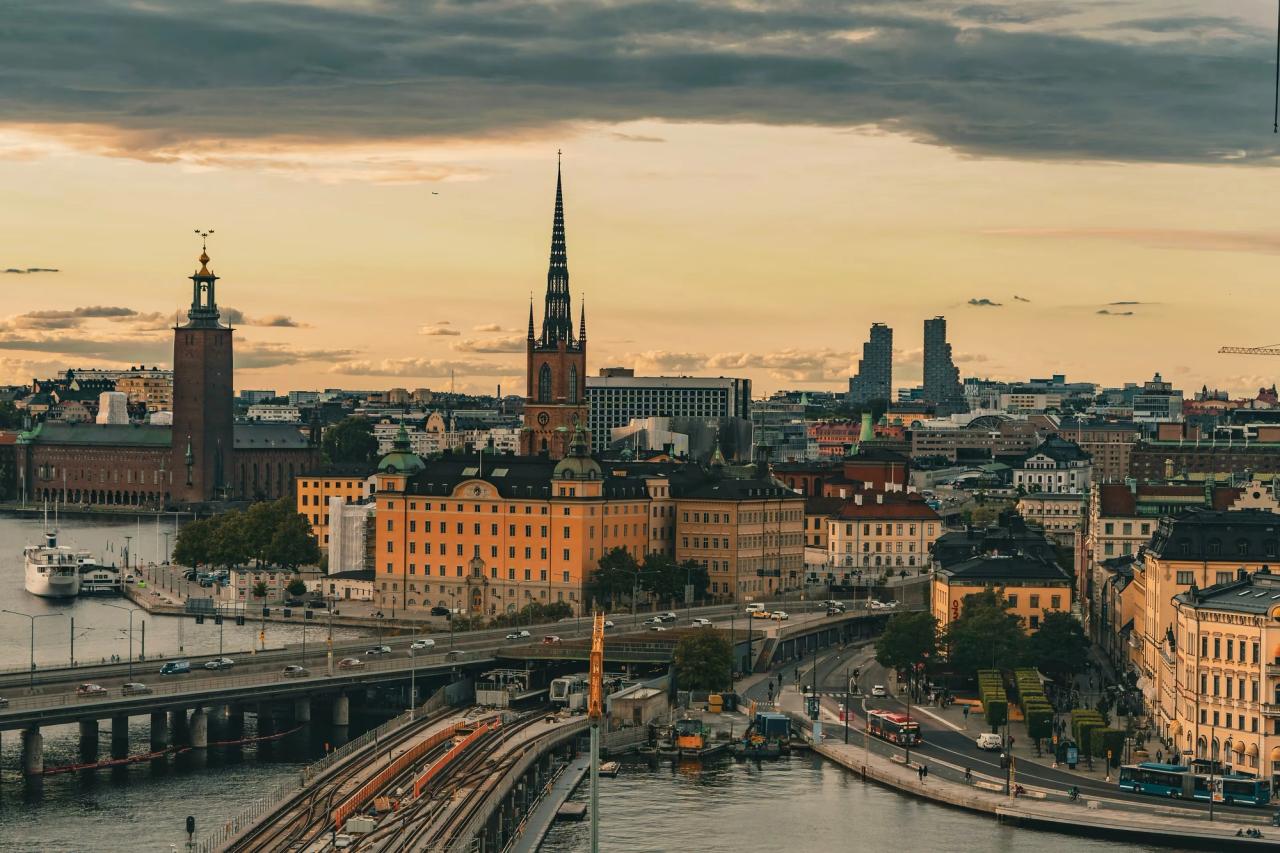
Stockholm er bygget på tværs af 14 øer forbundet af 57 broer, hvilket har givet byen tilnavnet "Venedig af Norden." Som Sveriges hovedstad og største by tiltrækker Stockholm tech-folk, kreative og internationale professionelle med sit blend af historisk charme — tænk på brostenbelagte gader i Gamla stan — og banebrydende innovation. Byen ligger lige der, hvor Mälaren møder Østersøen, og byens berømte skærgård med over 30.000 øer er aldrig mere end en times rejse væk.
Stockholm er Sveriges ubestridte tech-knudepunkt, der producerer flere milliard-startups pr. indbygger end næsten enhver anden by i verden. Byen er hjemsted for globale virksomheder som Spotify, Klarna, Ericsson og King, hvilket gør den til en magnet for internationalt talent. På trods af de høje leveomkostninger tilbyder Stockholm en enestående livskvalitet med verdensklasse-offentlige tjenester, fantastisk natur og en kultur, der vægter balancen mellem arbejde og fritid.
Hvis du overvejer at flytte til Stockholm, dækker denne guide alt, hvad du behøver at vide — fra boliger og bydele til sundhedsvæsen, jobsøgning og hverdagsliv. Uanset om du flytter for arbejde, studier eller en livsstilsændring, har Stockholm meget at byde på — forudsat at du planlægger din økonomi omhyggeligt.
Stockholm på et øjekast

- Indbyggertal
- ~1,7 mio. (bykerne); ~2,5 mio. (større byområde)
- Region
- Stockholms län (Uppland/Södermanland)
- Kendt for
- Gamla stan, skærgården, tech/startup-miljø
- Gennemsnitlig leje (1 soveværelse)
- SEK 12.000–18.000/måned (centrum)
- Gennemsnitlig løn
- SEK 38.000–45.000/måned netto
- Ekspatfællesskab
- Stort og mangfoldigt — over 200 nationaliteter repræsenteret
Hvorfor flytte til Stockholm
- Blomstrende tech-scene: Stockholm producerer flere tech-virksomheder til en milliard dollar pr. indbygger end nogen by uden for Silicon Valley, med store arbejdsgivere som Spotify, Klarna, Ericsson og King, der driver innovation og ansætter internationalt talent.
- Skærgården: Over 30.000 øer strækker sig ud i Østersøen og tilbyder weekendudflugter med kajakroning, vandreture og sommerhusliv kun en time fra bymidten. Waxholmsbolagets færger gør det nemt at hoppe mellem øerne.
- Verdensklasse-offentlige tjenester: Universel sundhedspleje, gratis uddannelse op til universitetsniveau og generøs forældreorlov (480 dage delt mellem forældrene) gør Stockholm attraktivt for både familier og professionelle.
- Engelskkundskaber: Næsten alle i Stockholm taler flydende engelsk, hvilket gør hverdagen nem for nyankomne, der endnu lærer svensk. Du kan klare de fleste daglige opgaver på engelsk fra dag ét.
- Sikkert og grønt: Lav kriminalitet, ren luft, rigeligt med parker (over 250 grønne områder) og strenge miljøstandarder gør Stockholm til en af Europas mest levevenlige hovedstæder.
- Kulturel rigdom: Fra Nobelprisuddelingen til verdensklasse-museer som Vasamuseet og Moderna Museet tilbyder Stockholm en kulturel dybde, der er usædvanlig for en by af dens størrelse.
Find bolig i Stockholm
Gennemsnitlig husleje
| Bydel | 1 soveværelse (SEK/måned) | 3 soveværelser (SEK/måned) | Karakter |
|---|---|---|---|
| Södermalm | 13.000–17.000 | 22.000–30.000 | Trendy, barer, restauranter, unge professionelle |
| Norrmalm | 14.000–18.500 | 24.000–32.000 | Central, shopping, forretningskvarter |
| Kungsholmen | 12,500–16,500 | 21,000–28,000 | Vandkant, boligområde, familievenlig |
| Östermalm | 15,000–20,000 | 26,000–36,000 | Eksklusivt, ambassader, historiske bygninger |
| Bromma | 10,500–14,000 | 18,000–24,000 | Forstad, familieorienteret, gode skoler |
| Vasastan | 12,000–16,000 | 20,000–27,000 | Roligt boligområde, caféer, populært blandt professionelle |
Sådan finder du bolig
- Blocket.se: Sveriges største annoncesite — de fleste private lejeboliger finder du her. Tjek dagligt, og svar hurtigt på nye annoncer. Det er den vigtigste kilde for expats.
- Bostaddirekt.com: Fokus på lejligheder og huse til leje, populært blandt expats og nyankomne i Sverige. Annoncerne bliver tjekket for ægthed.
- Qasa: En lejeplatform, der kobler lejere direkte med udlejere, med indbygget kontraktstøtte og håndtering af depositum. Godt til møblerede lejligheder.
- Stockholmshem & SSSB: Kommunale boligkøer — tilmeld dig tidligt, da ventetiden kan overstige 10–20 år for populære centrale områder. Det kan betale sig at stå i kø, selvom du ikke planlægger at vente.
- Facebook-grupper: "Lägenheter i Stockholm" og "Stockholm Housing/Rooms for Rent" har aktive andenhåndsannoncer hver dag. Vær hurtig, når du ser et godt tilbud.
Tips til expats
- Begynd din boligsøgning mindst 3–6 måneder før din flyttedato; konkurrencen er hård i alle bydele.
- Andenhåndskontrakter (andrahandskontrakt) er den mest realistiske mulighed for nyankomne, der ikke har stået i den kommunale boligkø.
- Sørg altid for at kontrollere, at underlejekontrakter er godkendt af ejerforeningen (bostadsrättsförening), så du undgår svindel og ulovlig videreleje.
- Budgettér med et depositum på 1–3 måneders husleje, der betales inden indflytningen.
- Undgå at betale depositum kontant eller via ikke-sporbare metoder — brug altid bankoverførsel for dokumentation og juridisk beskyttelse.
- Møblerede lejligheder koster markant mere, men sparer dig for startudgifterne.
Guide til bydele
- Södermalm: Stockholms kulturelle hjerteslag — proppet med vintagebutikker, cocktailbarer, uafhængige pladeforretninger og panoramisk udsigt over vandet fra Fjällgatan. Lejepriserne er høje, men lavere end på Östermalm. Ideelt for unge professionelle, kreative og alle, der vil have natteliv lige uden for døren.
- Norrmalm: Det kommercielle centrum omkring Drottninggatan og hovedbanegården. Hektisk, praktisk og gåafstand til alt. Bedst for professionelle, der vil være midt i begivenhederne og ikke har noget imod byens puls.
- Kungsholmen: Et roligere ø-distrikt med vandrestier langs vandet ved Norr Mälarstrand, gode skoler og en afslappet boligatmosfære. Populært blandt familier og par, der søger balance mellem byliv og ro.
- Östermalm: Stockholms mest eksklusive bydel — tænk på elegante 1800-tals-bygninger, designerbutikker, ambassaderækken og madhallen Östermalmshallen. Huslejen er den højeste i byen. Populært blandt diplomater og etablerede professionelle.
- Bromma: Vest for centrum med forstadspræg, parcelhuse og adgang til naturspor og søer. Fremragende for familier, der vil have plads og gode skoler uden at komme for langt fra midtbyen. Stockholms første lufthavn ligger her.
- Djurgården: Mere park end bydel, men hjemsted for Vasamuseet, friluftsmuseet Skansen, ABBA-museet og Rosendal slotshave. Et weekendfavorit for alle stockholmere og et must for nyankomne. Begrænsede boligmuligheder.
Leveomkostninger i Stockholm
Månedligt budgetoverblik
| Kategori | Budgetinterval (SEK) |
|---|---|
| Husleje (1-værelses, centrum) | 13.000–18.000 |
| Forsyninger (el, varme, vand) | 1.000–1.500 |
| Internet (bredbånd) | 300–500 |
| Dagligvarer | 3.500–5.000 |
| Transport (SL månedskort) | 970 |
| Restaurantbesøg (4 gange/md.) | 2.000–3.500 |
| Fritid/træningscenter | 400–700 |
| Mobilabonnement | 200–350 |
| Tøj og personlig pleje | 500–1.000 |
| I alt | 21.870–31.520 |
Daglige udgifter
- Kaffe (latte): SEK 45–60
- Frokost (simpel restaurant, dagens rätt): SEK 120–165
- Månedligt transportkort (SL): SEK 970
- Øl (bar, 500 ml): SEK 75–95
- Biografbillet: SEK 150–180
- Dagligvarer (1 kg kyllingebryst): SEK 90–120
- Medlemskab af træningscenter: SEK 350–600/md.
- Flaske vand (0,5 L, supermarked): SEK 15–20
- Brød: SEK 30–45
- Månedlige forsyninger for 1-værelses lejlighed: SEK 1.000–1.500
Transport i Stockholm
- Offentlig transport: Stockholms SL-netværk dækker metro (Tunnelbana), busser, regionaltog (pendeltåg), sporvogne og færger. Et månedskort koster SEK 970 og dækker alle zoner i amtet. Systemet er effektivt, rent og kører cirka fra kl. 5 til kl. 1 med natbusser i weekenderne. Tunnelbana kaldes nogle gange for verdens længste kunstudstilling på grund af de dekorerede stationer.
- Cykling: Stockholm har et voksende netværk af cykelstier og lejesystemet Stockholm Stadscykel. Cykling er praktisk fra april til oktober, selvom dedikerede cyklister bruger knastedæk om vinteren. Byen er bakket visse steder, men overskuelig.
- Bil: Trængselsafgifter gælder i det centrale Stockholm (SEK 15–45 pr. passage, maksimalt SEK 105/dag). Parkering er dyr (SEK 30–60/timen i centrum) og svær at finde. De fleste beboere bruger offentlig transport eller cykel til daglig pendling.
- Lufthavn: Stockholm Arlanda Airport (ARN) ligger 40 km nord for byen og kan nås med Arlanda Express (20 min, SEK 340), regionaltog (pendeltåg, SEK 165) eller flygbussarna-lufthavnsbusser (SEK 139). Bromma Lufthavn håndterer visse indenrigsflyvninger.
- Intercity: SJ-højhastighedstog forbinder Stockholm med Göteborg (3 timer), Malmö (4,5 timer) og Oslo (5 timer). Færger sejler fra det centrale Stockholm til Helsinki, Tallinn og Riga — populære muligheder for weekendanture.
Sundhedsvæsen i Stockholm
- Hospitaler/klinikker: Karolinska Universitetssjukhus (et af Europas førende forsknings- og undervisninghospitaler, tilknyttet Nobelprisen i fysiologi eller medicin), Danderyds Sjukhus, Södersjukhuset. Talreiche sundhedscentre (vårdcentraler) findes i alle bydele — du registrerer dig hos et i nærheden af din bopæl.
- Engelsktalende læger: Let tilgængelige — de fleste sundhedsprofessionelle taler flydende engelsk, især på hospitaler og centralt beliggende klinikker. Sproget er sjældent en forhindring for engelsktalende expats.
- Apoteker: Apoteket og Apotek Hjärtat findes i hele byen. Receptpligtig medicin kræver en svensk recept; håndkøbsmedicin som smertestillende og allergimedicin er let tilgængelig uden bestilling af tid.
- Nødnummer: 112 i nødstilfælde. Ikke-akut behandling: ring til 1177 (den nationale sundhedsrådgivningstelefon, tilgængelig på engelsk) eller besøg 1177.se for at booke tid, fornye recepter og få adgang til dine sundhedsoplysninger online.
Fa en personlig flytteplan
Skriv din e-mail, sa sender vi en skraeddersyet tjekliste plus tre tilbud fra godkendte flyttefirmaer.
Kultur og livsstil
- Museer og historie: Vasamuseet (et bevaret 1600-tals krigsskib — Stockholms mest besøgte museum), ABBA Museum, Moderna Museet (moderne kunst), Nordiska museet og Kungliga slottet i Gamla stan. Mange museer tilbyder gratis adgang for besøgende under 18 år og på bestemte dage.
- Skærgårdsliv: Waxholmsbolagets færger fra det centrale Stockholm når snesevis af øer inden for en time — perfekt til sommerhuse, badning, sejlads og øhopping. Populære øer inkluderer Grinda, Vaxholm, Sandhamn og Möja.
- Fika-kultur: Den svenske tradition med kaffe og kager er en daglig social begivenhed. Stockholms caféscenen er enestående — kig efter kanelbullar (kanelsnegle) og kardemummabullar (kardemommeboller) i hvert kvarter. Fika er både en pause og et socialt ritual.
- Natteliv og restaurantbesøg: Stureplan for eksklusive klubber og cocktailbarer, Södermalm for afslappede barer og live musik, samt Michelin-restauranter som Frantzén (3 stjerner) og Ekstedt til særlige lejligheder.
- Sæsonliv: Lange sommerdage (18+ timer med lys) står i kontrast til mørke vintre (6 timer med lys i december). Stockholmere omfavner begge dele — udendørs spisning og badning om sommeren, hyggelig stearinlysoplyst mys (svensk hygge) om vinteren.
Mad og restauranter
- Klassiske retter: köttbullar (kødboller med tyttebærsyltetøj), gravlax (gravet laks med dild), räksmörgås (åben rejemad), ärtsoppa (gul ærtesuppe, traditionelt spist om torsdagen med pandekager).
- Bedste spiseområder: Södermalm for trendy bistroer, Östermalm for fine dining, Kungsholmen for restauranter ved vandet og madmarkedet Östermalmshallen til gourmetindkøb og uformelle skaldyr.
- Budgetvenlige muligheder: frokostrestauranter (dagens rätt) tilbyder komplette måltider for SEK 120–165 inklusive hovedret, salat, brød og en drikkevare. Det er den mest overkommelige måde at spise ude i Stockholm — mange restauranter konkurrerer på frokostkvalitet.
Expat-miljøet
- Meetup-grupper: Stockholm Expat Meetup, InterNations Stockholm, InterNations Tech Professionals og adskillige sprogudvekslingsgrupper mødes regelmæssigt i hele byen.
- Internationale organisationer: The American Club of Stockholm, British-Swedish Chamber of Commerce, French Chamber of Commerce, German-Swedish Chamber of Commerce og forskellige nationale foreninger arrangerer begivenheder året rundt.
- Sprogudveksling: Svenska för invandrare (SFI) tilbyder gratis svenskkurser for alle registrerede borgere. Biblioteker og medborgerhuse afholder uformelle sprogcaféer ugentligt — en afslappet måde at øve sig på.
Jobmarkedet i Stockholm
- Hovedindustrier: Teknologi og IT, finans og bankvæsen, medicinalindustri og life sciences, medier og gaming, cleantech og bæredygtighed.
- Større arbejdsgivere: Spotify, Ericsson, H&M, AstraZeneca, Klarna, SEB, Scania, King (Activision Blizzard), Electrolux, Nordea, IKEA (svenskgrundet konglomerat med stor kontorvirksomhed i Stockholm).
- Gennemsnitlige lønninger efter branche:
| Branche | Gennemsnitlig månedlig bruttoløn (SEK) |
|---|---|
| Softwareudvikling | 50.000–65.000 |
| Finans og bankvæsen | 45.000–70.000 |
| Sundhedsvæsen | 35.000–50.000 |
| Markedsføring/Kommunikation | 38.000–50.000 |
| Uddannelse | 32.000–42.000 |
| Detailhandel/Gæstfrihed | 26.000–32.000 |
- Jobsøgningsressourcer: Arbetsförmedlingen (den svenske offentlige arbejdsformidling), LinkedIn, The Local Jobs, Academic Work, startup.jobs og individuelle virksomheders karrieresider. Netværk er afgørende i Sverige — mange jobs besættes gennem forbindelser.
Uddannelse i Stockholm
- Internationale skoler: Stockholm International School (SIS), Internationella Engelska Skolan (flere lokationer), Vittra Telefonplan, Lycée Français Saint-Louis. Ventelisterne kan være lange — ansøg i god tid.
- Universiteter: Stockholms universitet, KTH Royal Institute of Technology, Karolinska Institutet (medicin og biomedicinsk forskning), Stockholm School of Economics (SSE), Södertörns universitet. Alle tilbyder programmer på engelsk på kandidatniveau.
- Sprogskoler: Folkuniversitetet, Medborgarskolan, Berlitz og SFI (gratis svensk for indvandrere — tilgængelig fra begynder til avanceret niveau via Komvux).
Flytteliste til Stockholm
- Ansøg om opholdstilladelse eller EU/EØS-registrering via Migrationsverket
- Undersøg boligmuligheder og tilmeld dig kommunale boligkøer (Stockholmshem, SSSB) så tidligt som muligt
- Arrangér sygesikring for overgangsperioden, indtil svensk sygesikring træder i kraft
- Saml apostillerede eller attesterede kopier af vigtige dokumenter (fødselsattest, ægtepagt, universitetsdiplomer, ansættelsesreferencer)
- Begynd at lære grundlæggende svensk via apps som Duolingo eller SFI online
- Undersøg din arbejdsgivers flyttestøtte — mange store virksomheder tilbyder hjælp
- Registrer dig hos Skatteverket (den svenske skattemyndighed) for at få et Personnummer — det er nøglen til alt
- Opret en svensk bankkonto (SEB, Swedbank, Handelsbanken eller Nordea) — medbring dit Personnummer
- Køb et SL månedskort via SL-appen eller på en hvilken som helst metrostation
- Få et svensk telefonnummer (Telia, Telenor, Comviq eller Hallon — taletids-SIM-kort fås hos Pressbyrån)
- Find din nærmeste dagligvarebutik (ICA, Coop, Hemköp), apotek og bus-/metrostation
- Tilmeld dig SFI-svenskkurser (gratis, tilgængelige på flere niveauer)
- Registrer dig hos en lokal vårdcentral (sundhedscenter) via 1177.se
- Udforsk dit nabolag og de nærmeste metro-/busstoppesteder for at blive fortrolig med at finde rundt i byen
- Bliv medlem af expat-grupper på Facebook og InterNations, og deltag i et netværksarrangement eller fika-meetup
- Opret BankID (digital identifikation, der bruges til bank, sundhed, selvangivelse og offentlige tjenester i Sverige — det er uundværligt)
- Registrer dig for et SL-pendlerkort, hvis du pendler fra forstæderne
Arbejde og netværk i Stockholm
Stockholms arbejdsmarked favoriserer netværk. Mange stillinger besættes via anbefalinger, inden de bliver offentliggjort. Deltag i branchearrangementer, bliv medlem af LinkedIn-grupper for din sektor, og vær med til arrangementer arrangeret af handelskamrene. Coworkingsteder som Norrsken House, Epicenter og Impact Hub tiltrækker grundlæggere og fagfolk.
For freelancere og remote-medarbejdere tilbyder Stockholm fremragende infrastruktur — hurtigt internet er standard, og coworkingsteder er talrige. Dog er de svenske skatteregler for freelancere strenge, så konsultér en skatterådgiver om at oprette en virksomhed som enekontantvirksomhed (enskild firma) eller aktieselskab (aktiebolag).
Bank og økonomi
- Større banker: Swedbank, SEB, Handelsbanken, Nordea. Alle kræver et personnummer for at åbne en konto. Bestil tid i forvejen — ventetiden kan være 1–3 uger.
- Mobilbetalinger: Swish er Sveriges dominerende mobilbetalingsapp, forbundet til din bankkonto og BankID. Næsten alle bruger den — fra at dele en middagregning til at betale på loppemarkeder.
- Selvangivelse: Skatteverket sender en udfyldt selvangivelse i april. Du gennemgår den, retter om nødvendigt og indsender senest 2. maj. De fleste får skattepenge tilbage i juni.
- Pension: Det svenske pensionssystem har tre søjler — folkepension, tjenestepension (fra din arbejdsgiver) og privat opsparing. Din arbejdsgiver bidrager automatisk til din tjenestepension.
Praktiske tips til nyankomne
- Download SL-appen til offentlig transport og 1177-appen til sundhedsvæsenet, inden du ankommer.
- Køb et svensk SIM-kort hos Pressbyrån eller 7-Eleven — ingen abonnement påkrævet for taletid.
- Svenske butikker lukker tidligt (de fleste kl. 18–19 på hverdage, endnu tidligere på søndage). Planlæg dine indkøb derefter.
- Betaling med kort er næsten altid muligt — du får sjældent brug for kontanter i Stockholm.
- Systembolaget er den eneste butik, der sælger alkohol over 3,5 % ABV. Den lukker kl. 18 på hverdage og kl. 15 på lørdage. Lukket om søndagen.
- De fleste svenskere tager skoene af, når de kommer ind i et hjem — medbring eller køb innesko.
- Genanvendelse tages alvorligt — sortér affald i papir, plast, metal, glas, mad og restaffald. Lejlighedsbygninger har farvekodede beholdere.
- Søndage er meget stille i Stockholm — de fleste butikker holder lukket. Planlæg dine indkøb til lørdagen, eller brug online leveringstjenester som Mathem eller Willys online.
- Svensk elektricitet er for det meste vedvarende (vand- og vindkraft). Postevand er sikkert og af fremragende kvalitet — ingen grund til flaskevand.
- SL-appen lader dig også planlægge ruter, købe enkeltbilletter og se afgangstider i realtid for alle transportformer.
- Sen transport: Natbusser kører på de store ruter fredag og lørdag nat, når metroen holder lukket.
Relaterede guider
- [Flytte til Sverige] — omfattende landeguide
- [Flytte til Gothenburg] — Sveriges næststørste by
- [Flytte til Malmö] — Sydsveriges mest mangfoldige by