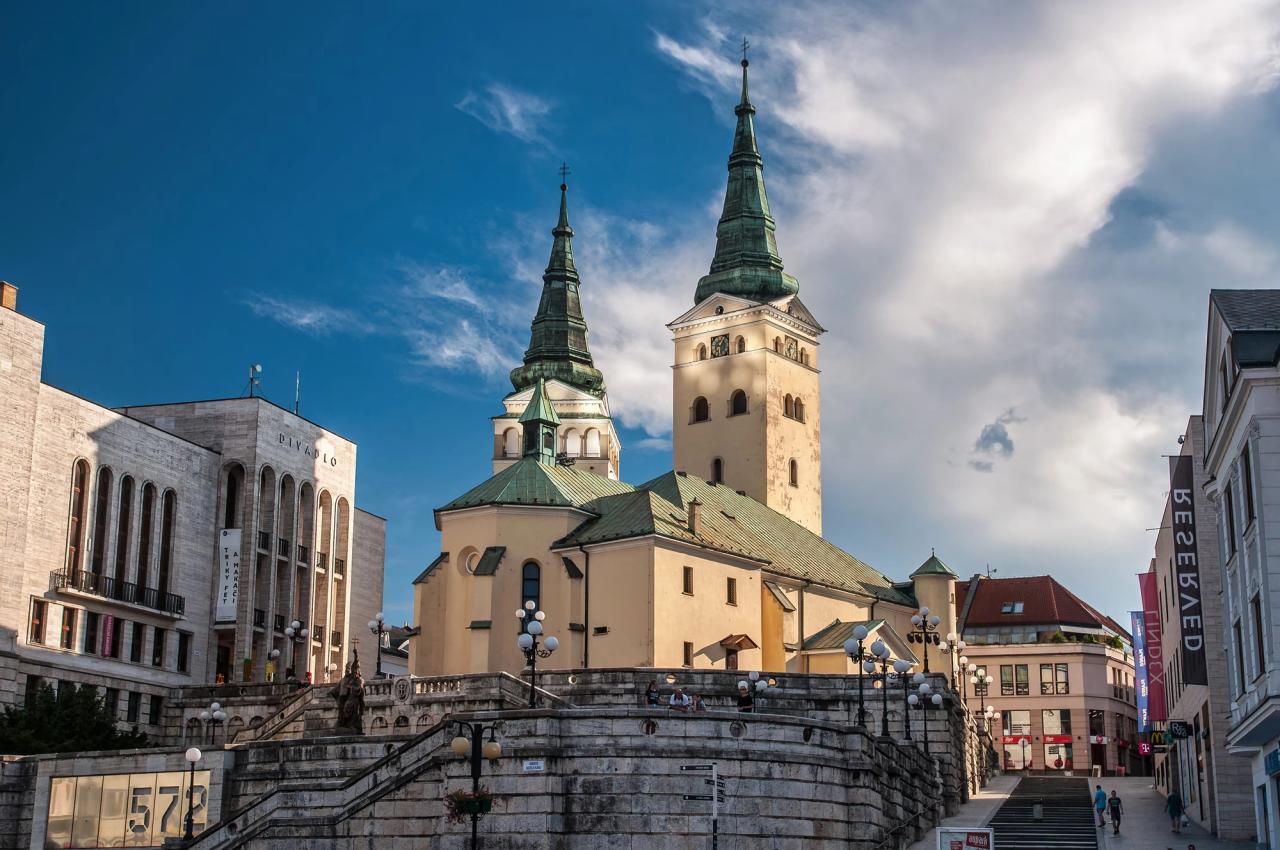

Žilina, Slovakiets fjerdestørste by, ligger, hvor floderne Váh og Kysuca mødes i landets nordvestlige hjørne, indrammet af Malá Fatra- og Súľovské vrchy-bjergkæderne. Byen tiltrækker expats, der ønsker solide karrieremuligheder inden for bilindustri og ingeniørvæsen hos Kia Motors Slovakia og dens underleverandørnetværk, lave leveomkostninger væsentligt under Bratislavas niveau og direkte adgang til noget af det bedste vandreturs- og skiterræn i Centraleuropa — alt sammen ca. to timer fra hovedstaden med tog. Uanset om du er en ingeniør, der flytter for at tiltræde en stilling som fabriksleder, en medfølgende ægtefælle, der tilpasser sig livet i det nordvestlige Slovakiet, eller en digital nomade, der søger en rolig base med hurtige togforbindelser til Wien og Prag, dækker denne guide det, du har brug for at vide.
Žilina i et nøtteskal
- Indbyggertal
- ~80.000 (by); ~160.000 (metroområde/distrikt)
- Region
- Žilinský kraj (Žilinas selvforsynende region), det nordvestlige Slovakiet
- Kendt for
- Kia Motors-fabrik, Malá Fatra Nationalpark, vigtig jernbaneknudepunkt
- Gennemsnitlig leje (1-værelses)
- €400–€550/måned
- Gennemsnitlig løn
- ~€1.200–€1.400/måned netto
- Ekspat-fællesskab
- Lille, men voksende, centreret omkring Kia, Hyundai Mobis og University of Žilina; overvejende koreanske, tyske og tjekkiske fagfolk
Hvorfor flytte til Žilina
- Store industrielle arbejdsgivere lige om hjørnet: Kia Motors Slovakia-fabrikken i Teplička nad Váhom (lige sydøst for byen) producerer over 300.000 køretøjer årligt og samler en klynge af Tier-1- og Tier-2-underleverandører til bilindustrien, hvilket gør Žilina til et af de stærkeste arbejdsmarkeder for ingeniører og produktionsledere uden for Bratislava.
- Porten til Malá Fatra: Malá Fatra (Lille Fatra) Nationalpark begynder få minutter fra bygrænsen — skiområdet i Vrátna-dalen er en 35 minutters køretur væk, og startpunkterne for vandrestier ved Šútovo og Strečno er endnu tættere på, så du får vandring, skiløb og mountainbike året rundt uden weekendtrafikpropper.
- Overkommelige boligpriser: Huslejen ligger 30–40 % under tilsvarende lejligheder i Bratislava, og købspriser pr. kvadratmeter er blandt de mest favorable for en regional hovedstad i Slovakiet.
- Fremragende togforbindelser: Žilina er et knudepunkt på Slovakiets vigtigste øst-vest-jernbanekorridor — direkte tog når Bratislava på under 2 timer, Košice på ca. 2,5 timer og Tjekkiet (Ostrava, Prag) via den nordlige linje gennem Čadca.
- Kompakt og levende skala: Alt i byen kan nås med bus eller til fods inden for 20 minutter, og du får stadig et funktionelt historisk centrum, et universitet, et regionalt hospital og et fuldt udvalg af serviceydelser.
- Sikkert og familievenligt: Žilina placerer sig konsekvent blandt de mere sikre mellemstore byer i Slovakiet med lav voldskriminalitet og et afslappet tempo, der egner sig til familier med børn.
Visa og opholdstilladelse
Slovakiet er i Schengen-samarbejdet og EU. Dine forpligtelser afhænger af dit statsborgerskab:
- EU-/EØS- og schweiziske borgere: Intet visa kræves. Du skal registrere dit ophold på Obvodný úrad Žilina (distriktskontoret) inden for 30 dage, hvis du bliver længere end 90 dage. Du modtager en registreringsattest (potvrdenie o prihlásení pobytu).
- Borgere fra lande uden for EU (tredjelandsborgere): Du skal have enten et nationalvisum (type D) eller en midlertidig opholdstilladelse (dočasný pobyt) før eller kort tid efter ankomst. De hyppigste grundlag er beskæftigelse, familiesammenføring eller studier på Universitetet i Žilina (ŽU).
- Arbejdstilladelser: Din arbejdsgiver varetager typisk ansøgningen om arbejdstilladelse (pracovné povolenie) gennem Ústredie práce, sociálnych vecí a rodiny (kontoret for arbejde, sociale anliggender og familie). Sagsbehandlingen tager 30–60 dage.
- Permanent ophold (trvalý pobyt): Muligt efter 5 års uafbrudt lovligt ophold på en midlertidig tilladelse. Du skal bestå en slovakisk sprogprøve (B1-niveau), medmindre du er fritaget.
- Vigtige kontorer i Žilina: Obvodný úrad Žilina på Ul. 1. mája håndterer registrering af bopæl; Oddelenie cudzineckej polície (Udlændingepoliti) på Krajské riaditeľstvo PZ på Ul. Karpatská behandler opholdstilladelser for statsborgere uden for EU.
Medbring dit pas, dokumentation for indkvartering, bekræftelse på sundhedsforsikring og (for ikke-EU) en straffeattest fra dit hjemland — alle dokumenter fra udlandet skal have en apostil eller superlegalisering samt en autoriseret slovakisk oversættelse.
Find bolig i Žilina
Gennemsnitlige huslejer
| Bydel | 1-værelses | 3-værelses | Karakter |
|---|---|---|---|
| Centrum (historiske centrum) | €450–€550 | €650–€800 | Prest-paneláky og renoverede ældre bygninger over butikker; kort afstand til alt, begrænset parkering |
| Hliny | €400–€500 | €550–€700 | Stort panelák-boligområde med parker, skoler og indkøbscentret Atrium Žilina; populært blandt familier |
| Vlčince | €380–€480 | €520–€680 | Roligt panelák- og lavhuskvarter på skråningen; gode busforbindelser, grønnere omgivelser |
| Solinky | €370–€460 | €500–€650 | Tæt bebygget boligområde sydvest for centrum; overkommelig pris, godt for Kia-pendlere via buslinjer |
| Bánová | €350–€430 | €480–€600 | Forstadsstemning med huse og små etagebyggerier; nær Kysuca-floden, roligere |
| Teplička nad Váhom (nabolandsby) | €350–€450 | €480–€620 | Lige ved siden af Kia-fabrikken; ideelt hvis du arbejder på fabrikken og ønsker en kort pendling |
Sådan finder du bolig
- Reality.sk og Nehnutelnosti.sk: De to største nationale boligportaler; filtrer efter Žilina og omkringliggende landsbyer. De fleste annoncer er på slovakisk — brug browseroversættelse.
- Bazos.sk (Reality-sektionen): Annoncebaserede lister, ofte fra private udlejere med lavere gebyrer. Populært lokalt for direkte aftaler.
- Facebook-grupper: Søg efter "Byty Žilina" og "Bývanie Žilina" — mange udlejere annoncerer udelukkende her, og du kan forhandle direkte.
- Ejendomsmæglere: RE/MAX Žilina, Extraliga Reality og Lexxus har engelsktalende medarbejdere. Formidlingsgebyret er typisk én måneds leje, betalt af lejeren.
- Virksomhedsformidlet bolig: Kia Motors og nogle af de større underleverandører fører lister over udlejere, der er vant til udenlandske lejere — spørg din HR-afdeling under onboarding. Det kan forkorte søgningen betydeligt.
Tips til expats
- Slovakiske udlejere kræver normalt 1–2 måneders leje i depositum (kaucia) plus den første måneds leje forud. Hav €1.200–€1.800 klar til indflytningsomkostningerne.
- Lejeaftaler er næsten altid på 12 måneder med mulighed for forlængelse. Kortere lejeperioder er sjældne og koster ekstra.
- Spørg om forsyningsomkostninger (energie — varme, vand, affald) er inkluderet eller faktureres separat. I paneláky kan centralvarme (ústredné kúrenie) løbe op i €80–€150/måned om vinteren.
- Registrér din adresse hos Obvodný úrad inden for 30 dage efter indflytning — det er din trvalý pobyt (permanent adresseregistrering) eller prechodný pobyt (midlertidig adresse), og det er et lovkrav.
Bydele
- Centrum: Området omkring Mariánske námestie og Burians tårn. Bedst for singler og par, der vil gå til caféer, restauranter og togstationen. Huslejen er den højeste i byen, men du sparer på transport. Parkering er trangt — kig efter bygninger med underjordiske garager.
- Hliny: Den største boligzone, øst for centrum. Dominoeret af paneláky, men med velholdte grønne områder, legepladser og Atrium Žilina-indkøbscentret. Familier foretrækker Hliny for dets skoler og børnehaver. Buslinje 20, 21 og 24 kører hvert 10.–15. minut til centrum.
- Vlčince: En roligere, lidt dyrere boligbakke nord for centrum. Blanding af paneláky og nyere lavbebyggelse. Tiltrækker universitetsansatte og mellemled. Udsigt over de omkringliggende bakker. Buslinje 14 og 16 forbinder til centrum på 12–15 minutter.
- Solinky: Sydvestligt panelák-kvarter med den tætteste bebyggelse i byen. Det mest budgetvenlige område. Hyppig busbetjening (linje 30, 31, 33) gør det praktisk selv uden bil. Nogle blokke bliver termoisoleret og renoveret — tjek den specifikke bygningstilstand.
- Bánová: Et mere rummeligt distrikt nordvest for centrum langs Kysuca-floden, med en blanding af ældre huse, nybyggeri-duplexer og et par lejlighedsbygninger. Tiltrækker familier, der ønsker en have eller græsplæne. Mindre hyppig busbetjening (linje 41, 42), så en bil er en fordel her.
- Teplička nad Váhom: Teknisk set en separat landsby umiddelbart syd for Žilina, men fungerer i praksis som en forstad. Kia-fabrikken ligger her, så det er det oplagte valg for arbejdere i bilindustrien, der ønsker 5 minutters pendling. Boligerne er en blanding af parcelhuse og små lejlighedsbygninger. Huslejerne er blandt de laveste i området.
Leveomkostninger i Žilina
Månedligt budgetoverslag
| Kategori | Budgetinterval |
|---|---|
| Leje (1-værelses, centrum) | €450–€550 |
| Leje (1-værelses, uden for centrum) | €370–€460 |
| Forsyninger (varme, el, vand, affald) | €120–€200 |
| Internet + mobilabonnement | €25–€40 |
| Dagligvarer | €200–€280 |
| Transport (månedligt DP Žilina-kort) | €20 |
| Restaurantbesøg (4x/md.) | €40–€80 |
| Fritid/Træningscenter | €30–€60 |
| Sygesikring (medarbejderandel) | Trukket fra løn (4 % af brutto) |
| I alt (enkelt person, centrum) | €885–€1,230 |
Daglige udgifter
- Kaffe (káva) på en café ved Mariánske námestie: €1,80–€2,50
- Frokostmenu (denné menu) på en lokal restaurant: €4,50–€6,50
- Månedligt transportkort (DP Žilina): €20
- Øl (0,5 L pivo) på en pub: €1,80–€2,50
- Biografbillet (Cinemax Žilina): €6–€8
- Medlemskab af fitnesscenter: €25–€45/måned
- Brød (1 kg): €1,20–€1,80
Sundhedsvæsen i Žilina
- Hospital: Žilinská univerzitná nemocnica (ŽUN) på Ul. V. Spanyola er det regionale universitetshospital — den største og bedst udstyrede facilitet mellem Bratislava og Košice. Det har akut-, kirurgiske og specialafdelinger.
- Sygesikring: Alle indbyggere skal have obligatorisk offentlig sygesikring. VšZP (Všeobecná zdravotná poisťovňa) er den statslige forsikring og den største; Union zdravotná poisťovňa og DÔVERA zdravotná poisťovňa er de to private alternativer. Din arbejdsgiver tilmelder dig under onboarding — præmien trækkes automatisk fra din løn (4 % af bruttoindkomsten for lønmodtagere).
- Engelsktalende læger: Udbuddet er begrænset i forhold til Bratislava. Polyklinikkerne (poliklinika) på Ul. J. M. Hurbana og i Hliny har et par praktiserende læger, der taler engelsk eller tysk. Spørg i expat Facebook-grupper efter aktuelle anbefalinger — mund-til-øre er den hurtigste måde at finde specialister, der taler engelsk. Til tandpleje har flere private tandklinikker (stomatologická klinika) i centrum engelsktalende personale.
- Private klinikker: Hvis du ønsker hurtigere adgang eller engelsksproget behandling, findes der private klinikker i Žilina, herunder tandlægepraksisser i centrum. En privat konsultation hos den praktiserende læge koster €30–€50. Nogle expats beholder VšZP til hospitalsdækning og betaler af egen lomme for private besøg hos den praktiserende læge.
- Apoteker (lekáreň): Findes over hele byen; døgnapoteket (nonstop lekáreň) ligger på Národná ulica tæt på centrum. Grundlæggende håndkøbsmedicin er billig. Bemærk, at visse lægemidler, der kan købes uden recept i andre lande (f.eks. visse smertestillende midler), kræver recept i Slovakiet — spørg apotekeren.
- Nødnummer: 112 (europæisk universelt nødnummer) eller 155 (direkte til ambulance).
Fa en personlig flytteplan
Skriv din e-mail, sa sender vi en skraeddersyet tjekliste plus tre tilbud fra godkendte flyttefirmaer.
Bankvæsen
At åbne en bankkonto i Žilina er ukompliceret for bosatte:
- Nødvendige dokumenter: Pas eller slovakisk ID, bevis på adresse (lejekontrakt eller registrering hos Obvodný úrad) og din opholdstilladelse, hvis du er statsborger uden for EU.
- Større banker med filialer i Žilina: Slovenská sporiteľňa (SLSP, del af Erste Group), VÚB Banka (Intesa Sanpaolo), Tatra Banka (Raiffeisen) og ČSOB. SLSP og Tatra Banka har de mest centralt beliggende filialer tæt på Mariánske námestie.
- Netbank: Alle større banker tilbyder mobilapps på slovakisk. Tatra Banka og VÚB har de mest funktionelle engelsksprogede grænseflader.
- Skatte-id (DIČ): Almindelige lønmodtagere bruger deres Rodné číslo (fødselsnummer) til skatteformål — din arbejdsgiver håndterer skattefradrag automatisk. Hvis du er selvstændig (živnostník), skal du ansøge om et Daňové identifikačné číslo (DIČ) hos Finančná správa (skattemyndigheden), som du ansøger om hos Finančný úrad Žilina på Ul. Ulinská.
- IBAN: Slovakiske bankkonti bruger IBAN-formatet (SK + 22 cifre). SEPA-overførsler inden for EU er gratis eller billige og ankommer inden for én hverdag.
At komme rundt i Žilina
- Offentlig transport: Dopravný podnik Žilina (DP Žilina) driver byens busnetværk — omkring 30 linjer, der dækker alle større bydele og nærliggende landsbyer. Et månedskort (cestovný lístok) koster €20. Enkeltbilletter koster €0,50–€0,70 afhængigt af zoner; køb dem i automater ved stoppestederne eller via DP Žilina-mobilappen. Busserne kører ca. fra kl. 4.30 til 23.00; natlinjerne er begrænsede.
- Cykling: Žilina har et voksende netværk af cykelstier, især langs Váh-flodens bred. Terrænet er for det meste fladt i centrum, men kuperet i bydele som Vlčince. Cykeldeling er begrænset — de fleste cyklister bruger egen cykel. Vážska cyklomagistrála (Váh-cykleruten) passerer gennem byen og forbinder til en langdistancerute langs hele Váh-floddalen, hvilket gør weekendture til nabolandsbyer til en nem sag.
- Bilkørsel: Motorvejen D1 forbinder Žilina med Bratislava (vest, ~200 km) og Košice (øst, ~210 km). Motorvejen D3 går mod nord mod Čadca og den polske grænse. Parkeringsafgift i centrum koster €0,60–€1,00/time i kommunale zoner; der findes parkeringstilladelser for beboere. Trafikken er generelt let sammenlignet med Bratislava. Bemærk, at D1 mellem Žilina og Martin stadig delvist er under anlæg — regn med enkelte ensporede strækninger og forsinkelser i myldretiden. Vinterkørsel på D1 og D3 kan være udfordrende; vinterdæk (zimné pneumatiky) anbefales kraftigt fra november til marts, selv om det ikke er lovmæssigt påkrævet.
- Taxis og samkørsel: Traditionelle taxaer kan bestilles via telefon (Taxi Žilina, Radio Taxi Žilina); en tur inden for byen koster €5–€10. Uber opererer ikke i Žilina. Bolt er heller ikke tilgængelig i øjeblikket.
- Lufthavn: Žilina har ingen kommerciel lufthavn. De nærmeste muligheder er Poprad-Tatry Lufthavn (~90 minutter mod øst, begrænsede sæsonbestemte flyvninger) og Bratislavas M. R. Štefánik Lufthavn (~2 timer med bil eller tog, fulde europæiske forbindelser). Wiens Internationale Lufthavn ligger ca. 2,5 timer væk via Bratislava og tilbyder det bredeste netværk for langdistanceflyvninger.
- Togforbindelser: Žilina Togstation (Železničná stanica Žilina) er et vigtigt knudepunkt på Bratislava–Žilina–Košice-ruten. Direkte IC- og REX-tog kører til Bratislava (1t50m–2t10m), Košice (~2t30m) og Čadca (30 min, fortsætter til Ostrava og Prag). Stationen ligger 10 minutters gang fra den historiske midtby.
Uddannelse i Žilina
- Žilina Universitet (Žilinská univerzita v Žiline — ŽU): Byens vigtigste institution for videregående uddannelse med ca. 9.000 studerende. Bedst kendt for sit Fakultet for Elektrisk Ingeniørkunst, Fakultet for Maskinteknik og Fakultet for Ledelse og Informatik. Universitetet huser også Centrum vedecko-technických informácií (Videnskabeligt og Teknisk Informationscenter) og driver en teknologisk inkubator. Tilbyder flere engelsksprogede kandidatprogrammer, særligt inden for informatik og transportingeniørkunst.
- Internationale skoler: Žilina har ikke en dedikeret international skole. Udlændinge benytter typisk lokale slovakisksprogede skoler (gratis) eller pendler til Bratislava for British International School eller Cambridge International School til ældre børn. Nogle koreanske familier tilknyttet Kia-fabrikken organiserer privat koreansksproget undervisning. For yngre børn er immersion i en slovakisksproget škôlka (børnehave) en almindelig og effektiv tilgang — børnehaver er tilskudsfinansierede og koster €20–€50 om måneden.
- Lokale skoler: Indskrivning på en lokal základná škola (grundskole, 6–15 år) eller stredná škola (gymnasium) sker på baggrund af din registrerede adresse. Kontakt Žilina bys uddannelsesafdeling (Oddelenie školstva Magistrátu mesta Žilina) for hjælp til placering. Nogle skoler i Hliny og Vlčince har erfaring med udenlandske elever og tilbyder supplerende slovakiskundervisning.
- Sprogskoler: Univerzita Mateja Bela (via satelitprogrammer) og private sprogskoler i centrum tilbyder slovakiskkurser for udlændinge. Štátny jazykový ústav (Statens Sproginstitut) oplister også godkendte udbydere af slovakisk som andetsprog. Universitetsbaserede kurser koster ca. €150–€300 pr. semester. Privat enkeltundervisning koster €15–€25 pr. time.
Kultur og livsstil
- Historiske midtby: Mariánske námestie (Maria-pladsen) er byens arkitektoniske hjerte — et langt, arkadeomgivet renæssancetorv med Trefoldighedskirken og Burians Tårn (Burianova veža), et 1500-tals klokketårn, som du kan bestige for at få panoramisk udsigt. Lige uden for pladsen står Skt. Stefans Kirke (Kostol sv. Štefana kráľa), en af byens ældste sakrale bygninger, der daterer sig tilbage til 1200-tallet. De omkringliggende gader rummer caféer, vinstuer og små specialbutikker.
- Budatín Slot: Ved byens nordlige udkant ligger Budatín Slot (Zámocký park Budatín), en delvist restaureret middelalderfæstning ved sammenløbet af floderne Váh og Kysuca, omgivet af en stor engelsk park. Det huser Považské múzeum (Považie Museum) med udstillinger om regional historie og trådmandskabet (drôtovnictvo), en traditionel slovakisk folked kunst.
- Friluftskultur: Žilinas indbyggere betragter de omgivende bjerge som deres baghave. Om vinteren tilbyder Vrátna Free Time Zone (Malá Fatra) skiløb med en dagspass til ca. €25–€35. Om sommeren er kløftstien Jánošíkove diery og toppen af Velký Rozsutec (1.610 m) blandt de mest populære vandreture i Slovakiet. Súľovské vrchy (15 minutter i bil) byder på dramatiske klippeformationer og kortere familievenlige ruter. Cyklister bruger Váh-cykelruten (Vážska cyklomagistrála), der løber gennem byen langs floden og forbinder til en længere rute, der strækker sig tværs over det nordlige Slovakiet.
- Nærliggende dagsture: Strečno Slot (10 km mod øst, placeret over Váh-floden), Vlkolínec (UNESCO-verdensarvslandsby, ~55 km væk nær Ružomberok) og Museum of the Slovak Village (Múzeum slovenskej dediny) i Martin (30 km mod øst, det største friluftsetnografiske museum i Slovakiet). Landsbyen Terchová* (fødestedet for folkehelten Juraj Jánošík, ~25 km mod nord) afholder en årlig folklorefestival i slutningen af juni.
- Sport: FC Žilina spiller i den øverste slovakiske fodbolddivision på Štadión pod Dubňom. Byen kalder sig mesto športu (sportens by) og afholder årligt Žilina Marathon sammen med cykelløb og vintersportsbegivenheder. Byen tilbyder svømning i Aquapark Žilina, fitnesscentre samt baner til basketball og tennis. Ishockey er også populært — MsHK Žilina spiller i den slovakiske Extraliga på Zimný štadión.
Mad og spisesteder
- Lokale specialiteter: Se efter bryndzové halušky (kartoffeldumplings med fåreost og bacon — Slovakiet's nationale ret), vyprážaný syr (stegt paneret ost) og kapustnica (surkålssuppe, især om vinteren). Žilina-regionen producerer også sin egen variant af fåreost (ovčí syr). Liptovská bryndza (en kraftig smørbar fåreost fra den nærliggende Liptov-region) indgår i mange lokale retter.
- Spiseområder: Mariánske námestie og de tilstødende gågader har den største koncentration af restauranter og caféer. Området omkring indkøbscentret Atrium Žilina i Hliny har mere uformelle kædemuligheder. For traditionelt slovakisk mad til ærlige priser kan du prøve Koliba u dobrého pastiera i udkanten af centrum eller Slovak Pub nær universitetet.
- Budgetvenlig spisning: Næsten enhver pub og restaurant tilbyder et denné menu (dagligt frokostmenu) på hverdage for €4,50–€6,50 — typisk en suppe, hovedret og nogle gange en drikkevare. Sådan spiser de fleste lokale frokost. Universitetets spisesal (jedáleň ŽU) på Veľký diel er åben for offentligheden og koster ca. €3–€4 for et fuldt måltid.
- Kaffekultur: Tredje bølge-kaffe er nået til Žilina — Ester Coffee og Guru Coffee Shop nær centrum serverer specialitet-espresso. Mere traditionelle kávičiareň (kaffehuse) på Mariánske námestie tilbyder italiensk kaffe til lavere priser.
- Øl og natteliv: Lokale bryggerier tæller mikrobryggeriet Pivovar Žilina. Pubber i centrum har slovakiske favoritter som Zlatý Bažant og Topvar til €1,80–€2,50 pr. halvliter. Nattelivet er beskedent — et par cocktailbarer og pubber omkring torvet og lejlighedsvis live musik på Klub u Anjela. Universitetsmiljøet holder tingene livlige i semesterperioden.
Expat-miljøet
- Onlinegrupper: Facebookgruppen "Expats in Slovakia" er aktiv i hele landet; opslag specifikt for Žilina dukker regelmæssigt op. "Žilina expats" og "Kia Slovakia foreigners" er mindre, men direkte relevante.
- Kia og leverandørnetværk: Kia-fabrikken og dens leverandørøkosystem ansætter hundredevis af udenlandske statsborgere, især fra Sydkorea, Tyskland og Tjekkiet. Disse miljøer organiserer ofte uformelle arrangementer og sportsligaer.
- Universitetsforbindelser: ŽUs internationale kontor faciliterer sociale arrangementer for indkommende udvekslingsstuderende og forskere, som er åbne for det bredere expat-miljø.
- Sprogudveksling: Hold øje med krajanské večery (internationale aftener) arrangeret af lokale kulturcentre, eller sprogudvekslings-møder på caféer omkring universitetsområdet.
- Frivilligt arbejde og klubber: Den lokale afdeling af Rotary Club Žilina og Lions Club tager imod internationale medlemmer. Byens klatrecentre (lezecká stena) og crossfit-bokse er også gode, uformelle steder at møde aktive, internationalt sindede lokale.
Jobmarkedet i Žilina
- Hovederhverv: Bilindustri, ingeniørarbejde, logistik, IT (i vækst, men stadig lille), uddannelse (universitetssektoren) og offentlig administration (funktioner som regionshovedstad).
- Voksende sektorer: Bilklyngen tiltrækker fortsat Tier-2-leverandører, og universitetet udvider sine teknologioverførselsprogrammer. IT-stillinger med mulighed for remote-arbejde stiger langsomt, efterhånden som coworking-muligheder dukker op i centrum.
- Større arbejdsgivere:
- Kia Motors Slovakia (Teplička nad Váhom) — byens største enkelte arbejdsgiver med ~3.500 direkte ansatte
- Hyundai Mobis (underleverandør, beliggende tæt på Kia)
- University of Žilina (ŽU) — forsknings- og akademiske stillinger
- Železničná spoločnosť Slovensko (ZSSK) — Slovakiets jernbaner, regional drift
- Žilinská univerzitná nemocnica — regionalt sygehus
- Dopravný podnik Žilina — byens transportselskab
- Tesco (distributionscenter) og Lidl (regional logistik) beskæftiger også et betydeligt antal
- Gennemsnitlige lønninger efter sektor:
| Sektor | Månedlig netto (ca.) |
|---|---|
| Automobil/ingeniørarbejde | €1,200–€1,600 |
| IT | €1,400–€2,000 |
| Uddannelse/forskning | €900–€1,300 |
| Sundhedsvæsen | €1,000–€1,400 |
| Produktion (linjearbejde) | €900–€1,100 |
- Jobportaler og jobsøgning: Profesia.sk er den dominerende slovakiske jobportal. LinkedIn fungerer godt til ingeniør- og IT-stillinger hos Kia og underleverandører. Ústredie práce (Arbejdsformidlingen) på Ul. K. Rapošová opslyder offentligt tilgængelige stillinger. Kandidater med koreanskkundskaber er særligt efterspurgte hos Kia-fabrikken.
- Selvstændig erhvervsvirksomhed (živnosť): Hvis du planlægger at freelance eller rådgive, kan du registrere en živnostenský list (erhvervslicens) hos Živnostenský úrad Žilina (Erhvervslicensmyndigheden). Processen tager ca. 1–2 uger og kræver en ren straffeattest, en registreret adresse og bevis på kvalifikationer, hvor det er relevant. Skatteforpligtelser for živnostníci (selvstændige) håndteres gennem Finančný úrad, og du skal også selvstændigt tilmelde dig sygeforsikring og sociale bidrag.
Tjekliste for flytning til Žilina
Før ankomsten
- [ ] Bekræft din visum- eller opholdstilladelsesstatus (EU-borgere: medbring blot pas/id-kort; ikke-EU-borgere: start 3–4 måneder i forvejen via den slovakiske ambassade)
- [ ] Få fat i og oversæt dokumenter: fødselsattest, ægteattest (hvis relevant), straffeattest — alle med apostille og autoriseret slovakisk oversættelse
- [ ] Arranger sygeforsikring til de første uger (rejseforsikring duer, indtil din arbejdsgiver tilmelder dig VšZP, Union eller DÔVERA)
- [ ] Book midlertidigt logi til de første 2–4 uger (hotel, Airbnb eller pension i nærheden af centrum)
- [ ] Undersøg nabolag på Reality.sk og udvælg 3–4 områder til at besøge personligt
- [ ] Opret en slovakisk bankkonto online, hvis din bank tillader det, eller planlæg at besøge en filial (SLSP, VÚB eller Tatra Banka) i løbet af din første uge
- [ ] Download DP Žilina bus-appen og ZSSK-appen (Slovakiske Jernbaner)
Første uge
- [ ] Registrer din adresse hos Obvodný úrad Žilina (Ul. 1. mája) — medbring dit pas, lejekontrakt og udlejerens bekræftelse
- [ ] Hvis du ikke er fra EU: Meld dig hos Cudzinecká polícia (Udlændingepolitiet) hos Krajské riaditeľstvo PZ på Ul. Karpatská for at bekræfte din ankomst og starte eller validere din opholdstilladelsesproces
- [ ] Åbn en bankkonto personligt — medbring dit pas, bevis på adresregistrering og opholdstilladelse
- [ ] Få et slovakisk SIM-kort (Orange, Telekom eller O2 — alle har butikker på Mariánske námestie og i Atrium Žilina)
- [ ] Køb et månedligt DP Žilina transportkort hos DP Žilina-kontoret eller via mobilappen
- [ ] Besøg Považské múzeum på Budatín Slot for at lære om lokal historie og orientere dig i byen
- [ ] Find din nærmeste praktiserende læge (všeobecný lekár) — spørg i expat-Facebookgrupper efter anbefalinger af engelsktalende læger
Første måned
- [ ] Sørg for, at din arbejdsgiver har tilmeldt dig den offentlige sygesikring (VšZP, Union eller DÔVERA) — du får et sygesikringskort (karta poistenca)
- [ ] Få dit DIČ (skatteidentifikationsnummer) — din arbejdsgiver håndterer det normalt, men bekræft, at det er blevet udstedt
- [ ] Hvis du har børn: indskriv dem på den lokale základná škola baseret på din registrerede adresse; kontakt Žilina kommunes uddannelseskontor for vejledning
- [ ] Ombyt dit udenlandske kørekort på Okresný úrad (distriktskontoret), hvis du planlægger at køre på lang sigt (EU-kørekort kan bruges direkte; ikke-EU-kørekort skal ombyttes inden 6 måneder)
- [ ] Tilmeld dig et slovakisk sprogkursus — universitetet og private sprogskoler i centrum tilbyder aftenundervisning
- [ ] Opsæt tilbagevendende betalinger af forsyningsregninger (inkaso — direkte debitering) via din slovakiske bankkonto for at undgå gebyrer for sen betaling
- [ ] Hvis du planlægger at blive på lang sigt, så begynd at samle dokumenter til permanent ophold (trvalý pobyt) — gem alle registreringer af adresse og beskæftigelseshistorik
- [ ] Udforsk byen — gå på Mariánske námestie, besøg Budatín Slot, og tag på en første tur til Malá Fatra for at minde dig selv om, hvorfor du flyttede hertil
Relaterede guider
- Flytning til Slovakiet — omfattende landeguide om visa, skatter og nationale systemer
- Flytning til Bratislava — byguide til hovedstaden til sammenligning
- Flytning til Košice — Østslovakiets største by
- Flytning til Nitra — sydvestlig slovakisk by med en lignende industriel profil
- Flytning til Prag — tilgængelig med direkte tog på under 5 timer