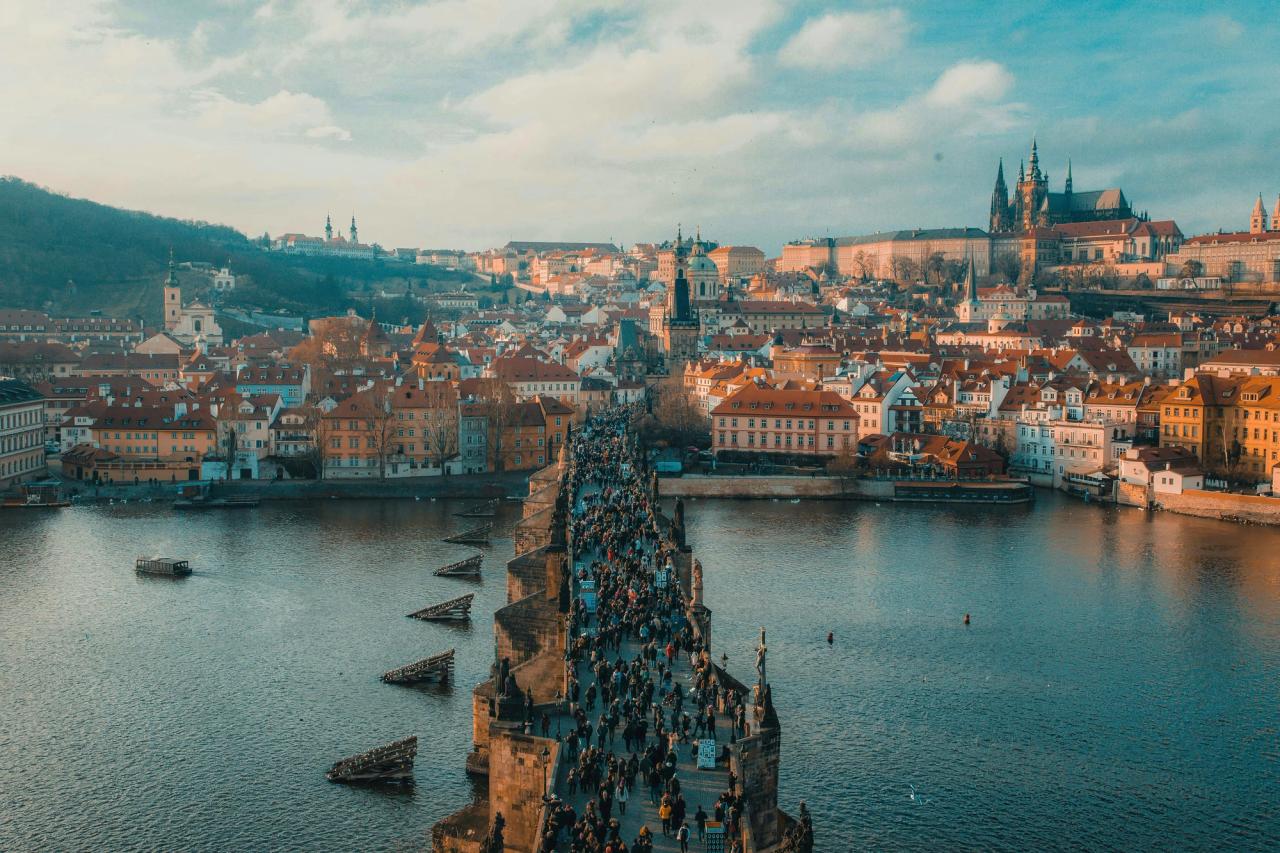
Prag er hovedstaden og den største by i Tjekkiet – et sted, hvor gotiske spir rejser sig over brostensbelagte gader, og en halvliter verdensklasse-øl koster mindre end en kaffe i Paris. Med over 1,3 millioner indbyggere og et blomstrende internationalt miljø tiltrækker Prag it-folk, kreative, studerende og familier, der søger høj livskvalitet til en brøkdel af prisen i Vesteuropa. Byens gåvenlige historiske centrum, effektive offentlige transport og pulserende kulturliv gør den til en af Europas mest levevenlige hovedstæder. Uanset om du kommer for it-jobmarkedet, arkitekturen eller blot forholdet mellem pris og kvalitet, lever Prag på næsten alle parametre.
Byen ligger ved Vltava-floden, der spændes over af mere end 30 broer – den mest berømte er Karlsbroen, en 1300-tals gangbro med 30 barokstatuer. Bag postkortmotiverne er Prag en fungerende europæisk hovedstad med moderne infrastruktur, et mangfoldigt madliv og en ekspatbefolkning på anslået over 200.000.
Prag i et nøddeskál
- Indbyggertal
- 1,3 millioner (metroområde: 2,7 millioner)
- Region
- Centrale Bøhmen / Hovedstad
- Kendt for
- Karlsbroen, Gamle By Torv, Prags Slot
- Gennemsnitlig leje (1-værelses)
- CZK 18.000-28.000/måned
- Gennemsnitlig løn
- CZK 45.000-55.000/måned netto
- Ekspatfællesskab
- Stort og mangfoldigt – over 200.000 registrerede udlændinge
Hvorfor flytte til Prag
- Overkommelig hovedstad: Leje, restauranter og transport koster 30-50 % mindre end i Berlin, Wien eller Amsterdam med en sammenlignelig livskvalitet.
- Stærkt arbejdsmarked: IT, finans, shared services og spilindustrien ansætter aktivt internationalt talent med engelsk som arbejdssprog.
- Central beliggenhed: Direkte tog og budgetfly forbinder Prag med Berlin, Wien, Budapest og Krakow på få timer.
- Kulturel rigdom: Over tusind års arkitektur, snesevis af teatre, et blomstrende livemusikmiljø og festivaler året rundt.
- Fremragende offentlig transport: Et månedskort koster CZK 550 – et af de billigste i Europa – og dækker metro, sporvogn og bus døgnet rundt.
- Sikkerhed: Prag er en af Europas sikreste hovedstæder med en lav frekvens af voldskriminalitet og pålidelig nødhjælp.
At finde bolig i Prag
Gennemsnitlige huslejer
| Kvarter | 1-værelses | 3-værelses | Karakter |
|---|---|---|---|
| Vinohrady (Prag 2) | CZK 20.000-28.000 | CZK 35.000-50.000 | Grønne gader, caféer, ekspaternes favorit |
| Žižkov (Prag 3) | CZK 16.000-22.000 | CZK 28.000-40.000 | Bohemisk, livligt natteliv, budgetvenligt |
| Smíchov (Prag 5) | CZK 18.000-25.000 | CZK 32.000-45.000 | Moderne indkøbscentre, ved floden, god transport |
| Holešovice (Prag 7) | CZK 17.000-24.000 | CZK 30.000-42.000 | Trendy, kunstgallerier, i udvikling |
| Dejvice (Prag 6) | CZK 19.000-26.000 | CZK 34.000-48.000 | Stille, ambassader, internationale skoler i nærheden |
| Karlín (Prag 8) | CZK 18.000-26.000 | CZK 33.000-46.000 | Tech-hub, moderne restauranter, hurtigt voksende |
Sådan finder du bolig
- Sreality.cz: Største tjekkiske boligportal – annoncerne er for det meste på tjekkisk, så brug en browseroversætter.
- Bezrealitky: Annoncer direkte fra ejeren uden formidlergebyr (typisk én måneds leje).
- Facebook-grupper: "Prague Housing" og "Flats for Rent in Prague" har daglige opslag fra udlejere.
- Ejendomsmæglere: Nyttige, hvis du ikke taler tjekkisk – forvent at betale én måneds leje i honorar.
- Delte lejligheder: Et kollegialt bofællesskab (spolubydlení) er almindeligt på Facebook og Spolubydlici.cz – ideelt for budgetbevidste ekspater, der lige er flyttet til.
Tips til ekspater
- Efterspørgslen er størst i Prag 1 og Prag 2 – begynd at lede mindst 6 uger før ankomst.
- Depositum er normalt 1-2 måneders leje betalt forud sammen med den første måned.
- Bed altid om en skriftlig lejekontrakt (nájemní smlouva) og bekræft udlejerens ejerskab.
- Forbrugsomkostninger (služby) er nogle gange angivet separat – afklar, om de er inkluderet i lejen.
- Vær på vagt over for svindel på sociale medier – overfør aldrig penge, før du har set lejligheden personligt eller gennem en betroet kontakt.
- Kortsigtede møblerede lejemål via Airbnb eller Flatio kan bygge bro, mens du leder efter en langtidslejlighed.
Kvarterguide
- Vinohrady (Prag 2): Ekspaternes førstevalg – træbeklædte boulevarder, brunchsteder og Riegrovy Sady-parken med udsigt over bysilhuetten. Mellem til høj leje. Fremragende metro (linje A) og sporvognsforbindelser. Området omkring Jiřího z Poděbrad-pladsen har et populært torvemarked.
- Žižkov (Prag 3): Rå charme, ofte nævnt som et af Europas mest tætbefolkede barområder, overkommelige lejer, populært hos unge professionelle og kreative. Žižkov TV-tårnet byder på panoramaudsigt. Vítkov-bakken er et favoritsted at gå og løbe.
- Smíchov (Prag 5): Gåture langs floden, Novy Smíchov indkøbscenter, direkte metro til Gamle By på 10 minutter. Godt for familier og professionelle, der ønsker moderne faciliteter. Ombygningen af Smíchovs jernbaneområde i 2020'erne tilføjer nye boliger.
- Holešovice (Prag 7): Tidligere industriområde, genfødt som Prags kunst- og madkvarter. DOX-galleriet, Letná Park, håndværksbryggerier og Prague Market Hall. Stigende lejer, men stadig god værdi sammenlignet med Vinohrady.
- Dejvice (Prag 6): Roligt, grønt, tæt på lufthavnen og internationale skoler. Populært hos diplomatisk personale og familier med børn. Břevnov-klosteret og Ladronka-parken i nærheden. Godt betjent af metro (linje A) og sporvogn 8 og 20.
- Karlín (Prag 8): Prags hurtigst foranderlige kvarter – moderne kontorbygninger side om side med 1800-tals gader. Fremragende restauranter (Eska, Krystal Mozaika Bistro), stærk tech-tilstedeværelse og Invalidovna-kulturcentret. Tidligere industrielt, nu et af Prags mest trendy adresser.
Leveomkostninger i Prag
Månedlig budgetoversigt
| Kategori | Budgetinterval (CZK) |
|---|---|
| Leje (1-vær., centrum) | 20.000-28.000 |
| El, vand og varme | 3.000-4.500 |
| Internet | 500-800 |
| Dagligvarer | 6.000-8.000 |
| Transport (månedskort) | 550 |
| Spisning ude (4 gange/md.) | 3.000-5.000 |
| Fritid/Træningscenter | 1.000-2.000 |
| Total | 34.050-48.850 |
Løbende udgifter
- Kaffe (flat white): CZK 100-130
- Frokost (uformel restaurant): CZK 180-250
- Frokostmenu (denní menu): CZK 150-200
- Månedligt transportkort: CZK 550
- Øl (0,5 L, bar): CZK 55-75
- Biografbillet: CZK 220-280
- Et brød: CZK 35-50
- Månedligt medlemskab i træningscenter: CZK 800-1.500
- Lægebesøg (privatklinik): CZK 1.500-3.000
Transport i Prag
- Offentlig transport: Integreret metro (3 linjer), sporvogn og busnet drevet af DPP. Et månedskort koster CZK 550 – et af de billigste i Europa. Driftstid fra kl. 5 til midnat, med natlige sporvogne der dækker alle hovedruter. Årskort fås for CZK 3.650.
- Cykling: Flere og flere cykelstier langs Vltava; fladt terræn i de centrale områder. Rekola og Nextbike delecykler er tilgængelige fra forår til efterår. Endnu ikke Amsterdam, men det vokser hurtigt.
- Bilkørsel: Ikke anbefalet i centrum på grund af begrænset parkering og betalte zoner (blå zoner for beboere). P+R-parkeringspladser ved metrostationer er praktiske for pendlere fra forstæderne. Trafikpropper er moderate sammenlignet med andre europæiske byer.
- Lufthavn: Václav Havel Lufthavn (PRG) – direkte fly til hele Europa, Mellemøsten og udvalgte nordamerikanske byer. Bus 119 + metro når centret på 45 minutter. Airport Express bus kører direkte til hovedbanegården på 35 minutter.
- Togforbindelser: Hovedbanegården (Hlavní nádraží) forbinder til Berlin (4,5 timer), Wien (4 timer) og Budapest (7 timer). RegioJet og FlixBus tilbyder prisvenlige busalternativer. Prag er også et knudepunkt for indenrigstog – de fleste tjekkiske byer kan nås på 2-3 timer. Praha-Holešovice station betjener de nordlige ruter.
Sundhedsvæsen i Prag
- Hospitaler/klinikker: Motol Universitetshospital (den største i Centraleuropa), Na Homolce og adskillige privatklinikker som Canadian Medical og EUC Premium.
- Engelsktalende læger: Let tilgængelige på privatklinikker; offentlige hospitaler har begrænsede engelskkundskaber. Privatklinikker tager typisk CZK 1.500-3.000 pr. besøg.
- Apoteker: Rigeligt (lékárna); mange har åbent sent og i weekender. Receptpligtig medicin kræver en tjekkisk eller EU-lægeerklæring. Apoteker i indkøbscentre har ofte forlænget åbningstid.
- Nødnummer: 112 (EU-bredt) eller 155 (ambulance).
- Sygesikring: Obligatorisk for alle indbyggere. Den offentlige sygesikring (VZP) dækker de fleste behandlinger. EU-borgere kan bruge det blå sygesikringskort (EHIC) ved midlertidige ophold. Ikke-EU-borgere skal have dokumentation for sygesikring ved visumansøgning.
Fa en personlig flytteplan
Skriv din e-mail, sa sender vi en skraeddersyet tjekliste plus tre tilbud fra godkendte flyttefirmaer.
Kultur og livsstil
- Historisk arkitektur: Prags Slot (det største gamle borgkompleks i verden), Karlsbroen, Den Gamle Bydel og det Astronomiske Ur ligger inden for gåafstand af hinanden. Byen har en af Europas højeste tætheder af fredede monumenter.
- Ølkultur: Tjekkiet drikker mere øl pr. indbygger end noget andet land i verden. Traditionelle værtshuse (hospoda) serverer ufiltreret Pilsner, Kozel og lokale craft øl for CZK 55-80. Prags craft beer-miljø er eksploderet – prøv Zlý Časy, Lokál, Pivovarský dům eller BeerGeek.
- Livemusik: Jazzklubber (Jazz Dock, AghaRTA), klassiske koncerter i kirker (Sankt Nikolaj, Rudolfinum) og et stærkt indie/rock-miljø på Lucerna Music Bar og MeetFactory. Prague Spring International Music Festival i maj er verdensberømt.
- Grønne områder: Letná Park, Petřín-bakken, Stromovka og Divoká Šárka – Prag har mere parkareal pr. indbygger end de fleste europæiske hovedstæder. Sejlads på Vltava er en populær sommeraktivitet.
Mad og restauranter
- Prøv svíčková (marineret oksekød med flødesovs), trdelník (kagetårn), chlebíčky (smørrebrød) og koleno (stegt svinekød).
- Vinohrady og Karlín er de bedste nabolag til international mad – der er et væld af vietnamesiske, italienske, georgiske, japanske og indiske muligheder.
- Frokostmenuer (denní menu) på lokale restauranter koster CZK 150-200 og inkluderer suppe og en hovedret – det bedste tilbud i byen.
- Prags bondemarkeder (Naplavka, Jiřák, Heřmaňák) finder sted fra forår til efterår og er populære weekenddestinationer for friske råvarer, lokale oste og bagværk.
Expatsamfund
- Prague Expats (Facebook, 50.000+ medlemmer) er det største online fællesskab.
- InterNations Prague afholder månedlige netværksarrangementer.
- Sprogmøder på værtshuse som The Globe og Café Lajka er populære måder at møde lokale og andre expats.
- Ugentlige Couchsurfing-møder, løbeklubber (Prague Park Run) og internationale sportsligaer (fodbold, cricket, ultimate frisbee) er også gode måder for nyankomne at netværke.
Jobmarked i Prag
- Vigtigste brancher: IT og softwareudvikling, finans og bankvæsen, shared service-centre, spilindustri, turisme, uddannelse (TEFL).
- Større arbejdsgivere: Škoda Auto, ČEZ, Avast/Norton, Kiwi.com, IBM, DHL, SAP, Accenture, Amazon, MSD.
- Gennemsnitlige lønninger pr. branche:
| Branche | Gennemsnitlig månedlig nettoløn (CZK) |
|---|---|
| IT / Software | 55.000-90.000 |
| Finans / Bankvæsen | 45.000-70.000 |
| Shared Services / SSC | 35.000-50.000 |
| Uddannelse / TEFL | 28.000-38.000 |
| Hotel og turisme | 25.000-35.000 |
- Jobportaler: Jobs.cz, Prace.cz, LinkedIn, StartupJobs.cz og Grafton Recruitment. Byen har også aktive coworking-miljøer (HubHub, Locus Workspace, WeWork, Impact Hub), der også fungerer som netværkscentre for freelancere og startup-grundlæggere.
Uddannelse i Prag
- Internationale skoler: Prague British International School (PBIS), International School of Prague (ISP), Riverside School, Meridian International School.
- Universiteter: Karls Universitet (grundlagt 1348, et af Europas ældste), Tjekkisk Teknisk Universitet (ČVUT), Handelshøjskolen (VŠE), Akademiet for Scenekunst (AMU).
- Sprogskoler: James Cook Languages, Caledonian School, tjekkiske kurser på Karls Universitets Institut for Sprog og Forberedende Studier (ILPS).
Visa og opholdstilladelse
- EU/EØS-borgere: Intet visum påkrævet. Registrer midlertidig bopæl ved ophold over 30 dage. Efter 5 års uafbrudt ophold kan du ansøge om permanent opholdstilladelse.
- Ikke-EU-borgere: Langtidsvisum (over 90 dage) eller opholdstilladelse påkrævet. Almindelige muligheder: arbejds- og opholdskort (zaměstnanecká karta), Blue Card for højt kvalificerede arbejdstagere eller studentervisum.
- Selvstændig erhvervsvirksomhed: Erhvervslicens (živnostenský list) påkrævet. Processen omfatter registrering hos erhvervslicensmyndigheden, skattevæsenet og socialsikringen.
- Vejen til statsborgerskab: Efter 5 års permanent opholdstilladelse skal du bestå en tjekkisk sprogprøve (B1-niveau) og demonstrere integration. Dobbelt statsborgerskab er tilladt.
Flytteliste for Prag
- Søg visum eller opholdstilladelse, hvis du er uden for EU
- Få apostillede og oversatte kopier af vigtige dokumenter (fødselsattest, eksamensbevis, vielsesattest)
- Start boligsøgning 6-8 uger før ankomst
- Teg en international sundhedsforsikring
- Undersøg, hvilket prag-kvarter der passer til din livsstil og dit budget
- Registrer dig hos Udlændingepolitiet (Cizinecká policie) inden for 3 hverdage
- Opret en tjekkisk bankkonto (Česká Spořitelna, ČSOB eller Fio til gratis konti)
- Køb et månedskort til offentlig transport (Lítačka-kort)
- Køb et tjekkisk SIM-kort (Vodafone, T-Mobile, O2)
- Registrer din adresse hos den lokale kommune (ohlášení pobytu)
- Tilmeld dig sundhedsforsikring hos VZP eller en privat udbyder
- Ansøg om erhvervstilladelse (živnostenský list), hvis du er selvstændig
- Opret et tjekkisk telefonnummer til bank- og myndighedskommunikation
- Udforsk kvarterer, før du forpligter dig til en langtidsleje
- Bliv medlem af mindst én expat-gruppe eller en sprogudveksling
- Ansøg om et langtidsopholdskort, hvis dit visum kræver omkonvertering
- Registrer din bil (hvis du importerer en) hos kommunekontoret
- Indskriv børn i skole, hvis relevant
- Skab en rutine – find din lokale pub, bageri og park
Sikkerhed og nødinformation
- Generel sikkerhed: Prag er en af Europas sikreste hovedstæder. Voldelige overgreb mod indbyggere er yderst sjældne.
- Lommetyveri: Den største risiko for nyankomne. Forekommer på metrolinje A, i Old Town og nær store turistattraktioner. Opbevar værdigenstande i forlommer eller lynlåstasker.
- Svindel: Pas på uofficielle vekslere i turistområder, der tilbyder dårlige kurser. Brug altid hæveautomater fra store banker (ČSOB, Česká Spořitelna, Komerční banka), og afvis automatens konverteringstilbud.
- Nødnumre: 112 (EU-central), 155 (ambulance), 158 (politi), 150 (brandvæsen).
- Udlændingepolitiets adresse: Prag har to udlændingepoliti-kontorer. Det primære ligger på Olšanská 2173/2, Prag 3. Forvent lange køer – kom tidligt (før kl. 7) og medbring alle dokumenter.
- Mistet pas: Kontakt din ambassade i Prag. De fleste store ambassader ligger i Prag 1 (Malá Strana) eller Prag 6 (Dejvice).
Sprog og integration
At lære tjekkisk er ikke et krav for at klare sig i hverdagen i Prag, men det forvandler oplevelsen. Her er, hvad du kan forvente:
- A1-niveau (basis): 3–6 måneders studie. Nok til at bestille mad, spørge om vej, læse enkle skilte og føre basal småsnak.
- A2-niveau (elementært): 6–12 måneder. Typisk tilstrækkeligt til ansøgninger om permanent ophold og de fleste henvendelser til myndigheder.
- B1-niveau (mellemniveau): 12–24 måneder. Kræves til tjekkisk statsborgerskab.
- Hvor man kan lære: Charles Universitys ILPS tilbyder intensivkurser (8.000-12.000 CZK pr. semester). Private undervisere tager 400-600 CZK i timen. Apps som Duolingo og CzechClass101 er et godt supplement til formel undervisning.
- Tjekkisk sprogs sværhedsgrad: Tjekkisk er et slavisk sprog med syv grammatiske kasus, hvilket gør det sværere end tysk eller fransk for engelsktalende. Udtalen er dog konsekvent og forudsigelig, når du først har lært reglerne.
- Tjekkernes holdning til sproglærende: Tjekkerne sætter virkelig pris på udlændinge, der forsøger at tale deres sprog, selv ufuldstændigt. Et enkelt "Dobrý den" (goddag) og "Děkuji" (tak) rækker langt.
Nyttige tjekkiske udtryk til hverdagen
| Engelsk | Tjekkisk |
|---|---|
| Hej | Dobrý den (tjekkisk frase) |
| Tak | Děkuji (tjekkisk frase) |
| Vær så venlig / Selv tak | Prosím (tjekkisk frase) |
| Jeg taler ikke tjekkisk | Nemluvím česky (tjekkisk frase) |
| Hvor meget koster det? | Kolik to stojí? (tjekkisk frase) |
| Regningen, tak | Platit, prosím (tjekkisk frase) |
| Undskyld | Promiňte (tjekkisk frase) |
Forsyninger og praktisk opsætning
- El og gas: Domineret af ČEZ og PRE. Du overtager normalt den forrige lejers kontrakt – spørg din udlejer. Månedligt elforbrug til en 1-værelses lejlighed ligger på 1.000-1.500 CZK.
- Vand: Leveret af Pražské vodovody a kanalizace. Inkluderet i de fleste "služby"-gebyrer. Månedligt forbrug: 400-700 CZK.
- Internet: Vodafone (tidligere UPC), O2 og T-Mobile tilbyder fiber- og kabelabonnementer fra 400-800 CZK/måned for 100+ Mbps. Installation tager 1-2 uger.
- Affaldsindsamling: Inkluderet i kommunale gebyrer. Containere til sorteret genanvendelse (papir, plast, glas) findes på hvert gadehjørne.
- Medielicens: Siden januar 2025 opkræves tjekkiske mediegebyrer pr. husstand på 135 CZK/måned (tv- og radiogebyrerne er slået sammen). Det nye samlede gebyr er ikke længere knyttet til din elregning – du betaler det direkte som et husstandsgebyr.
Relaterede guides
- [Flytning til Tjekkiet] - omfattende landeguide
- [Flytning til Brno] - Tjekkiets næststørste by og tech-knude
- [Flytning til Pilsen] - ølhovedstad og ingeniørcenter