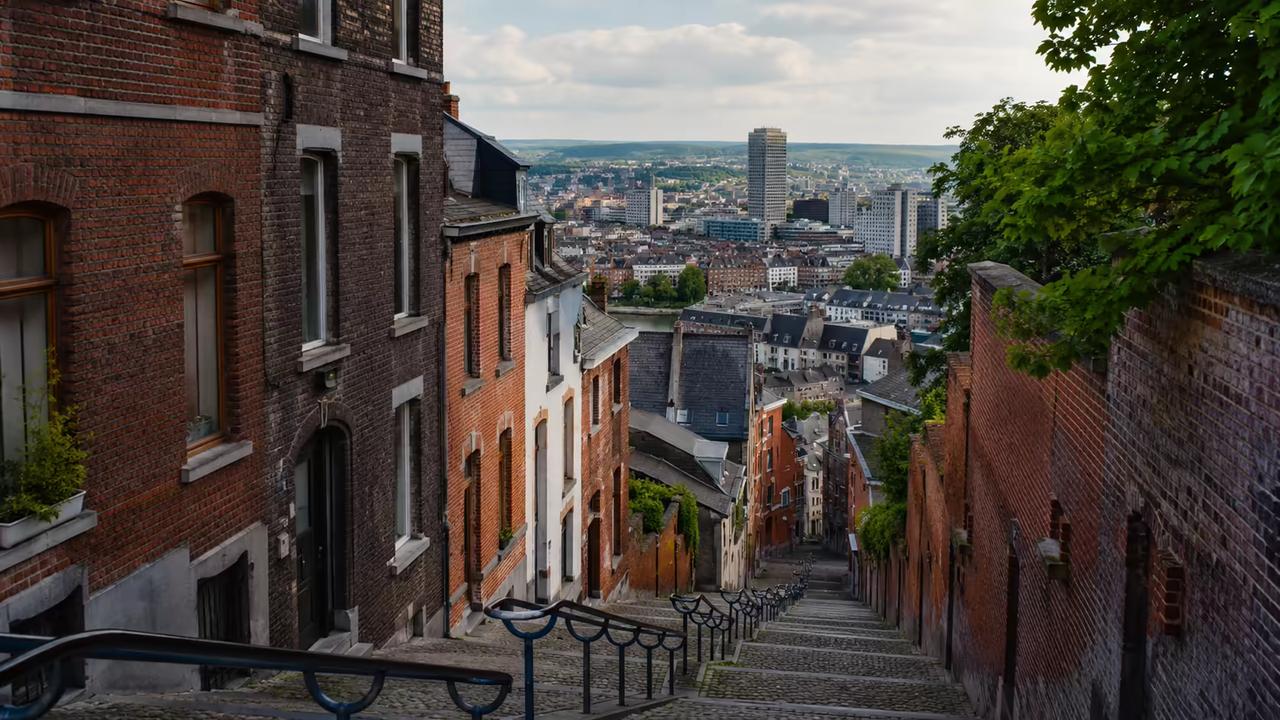

Liège er den største fransktalende by i Belgien efter Bruxelles og ligger på begge sider af Meuse-floden midt i Vallonien. Det er en by fuld af kontraster: en stolt industriarv bygget på stål- og våbenproduktion lever side om side med et livligt studentermiljø drevet af Université de Liège (ULg), og som kulturel hovedstad i fransktalende Belgien tiltrækker den expats med overkommelige huslejer, en TGV-station i verdensklasse tegnet af Santiago Calatrava og direkte adgang til Ardennerne. Hvis du vil opleve det ægte vallonske liv til en brøkdel af Bruxelles-priserne — med en gaufre de Liège i den ene hånd og et glas peket i den anden — fortjener Liège et grundigt kig.
Liège på et øjeblik

- Indbyggertal
- ~200.000 (byen); ~630.000 (storbyområdet)
- Region
- Vallonien, provinsen Liège
- Kendt for
- Liège-Guillemins TGV-station, Marché de la Batte, Université de Liège, gaufres de Liège
- Gennemsnitlig husleje (1-værelses)
- 600–850 €/måned
- Gennemsnitsløn
- 2.200–2.800 € netto/måned
- Expat-miljø
- Voksende; stærk tilstedeværelse af studerende og akademikere, mindre professionelt expat-miljø end Bruxelles
Derfor skal du flytte til Liège
- Overkommelige boliger: Huslejerne ligger 30–40 % under Bruxelles og 20 % under nabobyen Namur, hvilket gør Liège til en af Belgiens absolut bedste byer for lejere i forhold til pris.
- Enestående forbindelser: Fra Liège-Guillemins er du 38 minutter fra Bruxelles med tog, omkring 2 timer og 15 minutter fra Paris og cirka 1 time og 30 minutter fra Amsterdam — alt sammen fra en station, der selv er et arkitektonisk vartegn.
- Porten til Ardennerne: Ardennernes skove, vandreruter og floddale begynder lige syd for byen og byder på weekendture, der føles milevidt fra storbylivet.
- Belgiens varmeste by: Lièges placering i Meuse-dalen giver byen et mikroklima med landets højeste gennemsnitstemperaturer — en lille, men reel trøst i de lange belgiske vintre.
- Valloniens kulturelle hovedstad: Med Opéra Royal de Wallonie, Curtius Museum og Belgiens største udendørsmarked (Marché de la Batte) leverer Liège langt mere kunst, mad og festivaler, end byens størrelse skulle antyde.
Visa og opholdstilladelse
Belgiens indvandringsregler gælder ens i hele landet, men det lokale bureaukrati, du møder, er vallonsk og fransktalende. Her er, hvad du kan forvente:
- EU-/EØS-/schweiziske statsborgere: Ingen visumkrav. Du skal registrere dig hos din lokale Commune (det franske udtryk for det kommunale forvaltningskontor) inden for 90 dage efter ankomsten. Medbring dit pas eller nationale ID, dokumentation for adresse og dokumentation for sygesikring. Communen udsteder et E+- eller E-kort, der bekræfter din opholdsret.
- Statsborgere uden for EU: Ansøg om et D-visum (visum til længerevarende ophold) på den belgiske ambassade i dit hjemland inden afrejse. Almindelige kategorier omfatter arbejde (Single Permit), studier og familiesammenføring.
- Single Permit: Arbejdstagere uden for EU skal have en kombineret arbejds- og opholdstilladelse. Din arbejdsgiver indsender ansøgningen til Service public de l'Emploi (SPW) i Vallonien; sagsbehandlingen tager 2–4 måneder. Når den er godkendt, henter du dit A-kort (midlertidig opholdstilladelse) hos Communen.
- Registrering hos Communen: Inden for 8 arbejdsdage efter din ankomst til Belgien skal du besøge din lokale Communes Registre des Personnes (folkeregister) for at anmelde din adresse. Du bliver indkaldt til en convocation (politibesøg, der kontrollerer din adresse), før du modtager dit opholdskort. Regn med, at hele processen tager 2–6 uger.
- Carte d'identité: Efter registreringen modtager du et belgisk ID-kort (carte d'identité). Hav det altid på dig — det fungerer som din primære identifikation i Belgien.
Find bolig i Liège
Gennemsnitlige huslejer
| Bydel | 1-værelses | 3-værelses | Karakter |
|---|---|---|---|
| Outremeuse | 550–750 € | 800–1.100 € | Ø-bydel mellem to arme af Meuse; ægte Liège-identitet, livlig, overkommelig |
| Saint-Léonard | 500–700 € | 750–1.000 € | Område i fremgang nord for centrum; blandet befolkning, godt for pengene, lidt tomgang |
| Guillemins | 650–900 € | 950–1.400 € | Omkring TGV-stationen; moderne lejligheder, praktisk for pendlere, en smule dyrere |
| Chênée | 500–650 € | 700–950 € | Østlig forstad langs Vesdre-floden; mere rolig, familievenlig, gode busforbindelser |
| Sart-Tilman | 550–750 € | 800–1.100 € | Universitetsplateau; grønt, skovklædt, populært blandt ULg-ansatte og forskere |
| Vennes / Longdoz | 600–850 € | 900–1.250 € | Sydøst for centrum; nyere byggerier nær indkøbscenteret Médiacité, god parkering |
Sådan finder du bolig
- Immoweb.be: Belgiens dominerende boligportal. Filtrér på "Liège" og arrondissement. De fleste annoncer er på fransk.
- Zimmo.be: Den næststørste portal; nyttig til at sammenligne priser og finde mæglere, der er aktive i Liège-området.
- Facebook-grupper: "Appartement Liège" og "Logement Liège" har dagligt opslag fra private udlejere — ofte billigere, men det går stærkt.
- ULg's boligservice: Université de Liège driver en annonceportal (kot-à-projet og studie-/værelsesannoncer), som i nogle tilfælde også er åben for ikke-studerende.
- Lokale ejendomsmæglere: Bureauer som Cogestim, Century 21 Liège Center og Immo Concept står for de fleste administrerede udlejninger. Regn med at betale én måneds husleje i mæglersalær.
Tips til expats
- En lejekontrakt i Vallonien hedder en bail. Standardkontrakter løber 3 år (bail de trois ans) eller 9 år (bail de neuf ans). Kortere kontrakter findes, men kræver særlige klausuler.
- Din udlejer vil bede om en garantie locative (lejegaranti), typisk svarende til 2 måneders husleje, der indsættes på en spærret bankkonto i en finansiel institution som Belfius eller ING.
- Bed altid om en état des lieux (synsrapport og tilstandsbeskrivelse), som begge parter underskriver ved indflytning og fraflytning — det er lovpligtigt og beskytter din garanti.
- Boliger i Liège annonceres med boligareal i kvadratmeter (m²). Opvarmningen er ofte individuel gas eller fælles fjernvarme (chauffage collectif) — undersøg hvilken type, der gælder, og om udgifter (charges communes) er inkluderet eller opkræves separat.
Guide til bydelene
- Outremeuse: Liègesjælen. Denne bydel på Meuse-øen er voldsomt stolt af sin lokale identitet — beboerne kaldes "Outremeusiens" og fejrer Fêtes du 15 Août med dukketeater, processioner og rigelige mængder peket. Smalle gader, små butikker og nogle af byens bedste traditionelle restauranter. Bedst for: enlige og par, der vil have ægte bydelsliv til lav husleje.
- Saint-Léonard: Tidligere en industribydel langs kanalen, men Saint-Léonard er gradvist ved at blive gentrificeret med kunstneratelierer og istandsatte lofter. Stadig prisvenlig, med direkte busforbindelser til centrum på 10–15 minutter. Bedst for: budgetbevidste lejere og kreative.
- Guillemins: Med den spektakulære Calatrava-tegnede station som omdrejningspunkt er Guillemins det oplagte valg for pendlere til Bruxelles eller Aachen. Området har gennemgået en omfattende byudvikling med moderne lejlighedskomplekser og det nærliggende Médiacité-kompleks. Bedst for: professionelle, der rejser meget.
- Sart-Tilman: Universitetscampus ligger på et skovklædt plateau syd for byen. Boligerne her spænder fra studie-kots (værelser) til komfortable lejligheder til universitetsansatte. Det nærliggende CHU de Liège (universitetshospitalet) er en stor arbejdsgiver. Bedst for: forskere, hospitalsansatte og alle, der foretrækker grønne omgivelser.
- Chênée: En forstad øst for byen langs Vesdre-floden, med en hovedgade i landsbystil og let adgang til motorvejen E25 mod Tyskland. Huslejerne er blandt de laveste i Liège-området. Bedst for: børnefamilier og dig, der vil have roligere omgivelser uden at føle dig helt isoleret fra byen.
Leveomkostninger i Liège
Månedligt budget — overblik
| Kategori | Budgetinterval |
|---|---|
| Husleje (1-værelses, centrum) | 600–850 € |
| Forbrug (gas, el, vand) | 130–200 € |
| Internet + mobil | 35–55 € |
| Dagligvarer | 250–350 € |
| Transport (TEC-kort) | 49 € |
| Restaurantbesøg (4 gange/måned) | 80–140 € |
| Fritid/fitness | 40–80 € |
| Sygesikring (mutuelle-bidrag) | 15–30 € |
| I alt | 1.199–1.754 € |
Hverdagspriser
- Kaffe (espresso på en café): 1,80–2,50 €
- Frokost (dagens ret / formule du midi): 12–16 €
- Månedligt TEC-transportkort: 49 €
- Øl (lokal fadøl på en bar i Carré-kvarteret): 2,50–4,00 €
- Biografbillet (Sauvenière eller Kinepolis): 9–13 €
- Gaufre de Liège fra en gadebod: 3,50–5,00 €
- Peket (lokal enebærsnaps, en shot): 2,50–3,50 €
Sundhed i Liège
Belgien har en obligatorisk sygesikringsordning. Du tilmelder dig en mutuelle (også kaldet en mutualité eller ziekenfonds) — en non-profit sygesikringskasse — der refunderer en del af dine udgifter til lægebehandling. Tilmelding er obligatorisk for alle, der bor i landet.
- Hospitaler: CHU de Liège (Centre Hospitalier Universitaire) i Sart-Tilman er det største hospitalskompleks i provinsen og et universitetshospital med tilknytning til ULg. CHR Citadelle i centrum er det andet store hospital med et bredt udvalg af specialer og en akutmodtagelse.
- Engelsktalende læger: Både CHU og CHR Citadelle har engelsktalende personale. Spørg din mutuelle eller det lokale expat-miljø for at få anbefalinger til engelsktalende praktiserende læger i Guillemins og centrum.
- Tilmelding til mutuelle: Vælg mellem mutueller som Mutualité Chrétienne (MC), Solidaris eller Mutualité Socialiste. Medbring dit opholdskort (carte d'identité), dokumentation for adresse og din arbejdskontrakt eller registreringsattest. De månedlige bidrag afhænger af din indkomst og ligger typisk på 15–30 €/måned for lønmodtagere, efter at arbejdsgiverens andel er trukket fra.
- Apoteker: De findes overalt — kendetegnet ved et grønt kors. Centrum har flere apoteker med lange åbningstider eller vagtordning til behov uden for normal åbningstid (pharmacie de garde).
- Alarmnummer: 112 (det fælles europæiske alarmnummer). For akut lægehjælp i Vallonien kan du også ringe til den lokale lægevagt (garde médicale) på 1733.
Fa en personlig flytteplan
Skriv din e-mail, sa sender vi en skraeddersyet tjekliste plus tre tilbud fra godkendte flyttefirmaer.
Bank
Det er ligetil at oprette en belgisk bankkonto, og du har brug for den til at betale husleje, regninger og modtage din løn.
- Store banker med filialer i Liège: BNP Paribas Fortis, Belfius, ING, KBC (selvom KBC primært er flamsk orienteret, findes der enkelte Liège-filialer). Belfius og ING er særligt godt repræsenteret i centrum.
- Online-alternativer: Bunq, Revolut og N26 tilbyder konti med belgisk IBAN og er populære blandt yngre expats til den daglige økonomi, selvom du sandsynligvis får brug for en traditionel bank til indbetaling af din garantie locative.
- Det skal du have med: Pas eller ID, dokumentation for adresse (attestation d'hébergement eller lejekontrakt) og dokumentation for indkomst eller ansættelse. Din registreringsattest fra Communen (certificat d'inscription) kan også blive efterspurgt.
- Vigtig service: De fleste banker tilbyder en compte à vue (lønkonto) med et betalingskort (Bancontact/Mister Cash). Belgiske arbejdsgivere udbetaler løn via bankoverførsel, så et aktivt IBAN er afgørende fra dag ét.
Sådan kommer du rundt i Liège
- TEC-busnettet: Den offentlige transport i Liège drives af TEC (Transport En Commun), Valloniens regionale busselskab. Et tæt net af linjer (rute 1–80+) forbinder centrum med alle forstæder, universitetet og hospitalerne. Et månedskort koster 49 €; et årsabonnement koster omkring 500 €. Linje 1, 4 og 48 er blandt de mest brugbare for pendlere.
- Liège-Guillemins station: Byens hovedbanegård, gentegnet af Santiago Calatrava og indviet i 2009, er et af Europas mest markante trafikknudepunkter. Eurostar-tog (tidligere Thalys, højhastighed) kører til Bruxelles (~38 min), Paris (~2 t 15 min) og Amsterdam (~1 t 30 min). Regionaltog kører til Aachen på cirka 45 minutter. ICE-tog kører desuden til Frankfurt. Lokale S-tog (trains omnibus) forbinder Liège med Namur, Huy og Verviers.
- Liège-Palais station: En sekundær station i centrum, der er praktisk til lokale og regionale tog, så du slipper for at tage op til Guillemins.
- Cykling: Liège er mere kuperet end Bruxelles og Antwerpen, hvilket sætter en grænse for hverdagscykling. Til gengæld har byen udvidet cykelstierne langs Meuses kajer og investeret i bydelingscykler (Ville en vélo). El-cykler (vélos électriques) bliver stadig mere populære til at tackle bakkerne.
- Bilkørsel: Motorvejene E25, E40 og E42 mødes nær Liège og gør det nemt at køre til Bruxelles, Maastricht, Aachen og Namur. Parkering i centrum er reguleret med blå zoner (zone bleue — der kræves p-skive, typisk 2 timers gratis parkering) og betalingsparkering. Beboerparkeringstilladelser (vignette résident) kan fås via Communen for omkring 25–40 €/år.
- Liège Airport (Bierset): Primært en fragtlufthavn (hjemsted for TNT/FedEx og ASL Airlines), men håndterer også lejlighedsvise charter- og sæsonafhængige passagerflyvninger. Bruxelles lufthavn (Zaventem) ligger 1 time væk med tog, og Maastricht Aachen Airport er 30 minutter væk i bil, hvis du har brug for ruteflyvning.
Uddannelse i Liège
- Université de Liège (ULg): Byens primære universitet, grundlagt i 1817, med over 24.000 studerende. Stærke uddannelser inden for ingeniørvidenskab, naturvidenskab, jura og rumfart. De fleste uddannelser foregår på fransk, men udvalgte kandidatuddannelser udbydes på engelsk. Hovedcampus ligger i Sart-Tilman, en stor, grøn campus syd for byen.
- Haute École de la Province de Liège (HEPL): Tilbyder anvendelsesorienterede bacheloruddannelser inden for områder som sygepleje, pædagogik og teknologi.
- Internationale skoler: Liège har begrænsede muligheder for internationale skoler sammenlignet med Bruxelles. De nærmeste fulde internationale læseplaner findes i Bruxelles (1 time med tog). For mindre børn har flere lokale skoler i Guillemins og Chênée erfaring med at integrere ikke-fransktalende elever via tilpassede programmer (classes d'accueil).
- Sprogskoler: Alliance Française de Liège tilbyder franskkurser for udlændinge på alle niveauer. CCL (Centre de Compétences en Langues) ved ULg udbyder også kurser. Forem (den vallonske offentlige arbejdsformidling) tilbyder gratis eller tilskudsbelagte franskkurser til registrerede jobsøgende og visse andre borgere.
Kultur og livsstil
Mad og spisesteder
- Gaufres de Liège: I modsætning til Bruxelles-vafler er Liège-vaflen lavet af en briochelignende dej iblandet perlesukker, der karamelliserer på ydersiden. Køb en hos en gadeforhandler nær Place Saint-Lambert eller Marché de la Batte — de er en livsstil, ikke en turistnyhed.
- Boulets à la Liégeoise: Kødboller i en sødsur sirupsovs (sirop de Liège), serveret med pommes frites. En klassiker på enhver estaminet (traditionel lille restaurant) i byen.
- Peket: Lokal gin med smag af enebær, der fås i dusinvis af frugtvarianter. Smages bedst på barerne langs Rue du Pot d'Or eller under Fêtes du 15 Août i Outremeuse.
- Marché de la Batte: Belgiens største udendørsmarked, der strækker sig langs Meuses kajer hver søndag formiddag. Friske råvarer, ost, charcuteri, tøj og antikviteter — kom tidligt for de bedste fund.
- Carré-kvarteret: Byens nattelivshjerte, fyldt med barer og små restauranter omkring Rue du Pot d'Or og Place du Carré. Studenterpræget i weekenderne, men med fremragende traditionelle brasserier og cocktailbarer ind imellem.
Kultur og underholdning
- Curtius Museum: Indrettet i en herregård fra 1500-tallet og dækker Lièges historie fra arkæologi til kunsthåndværk og våbenproduktion.
- Opéra Royal de Wallonie: Et af kun fire operahuse i Belgien, der opfører en hel sæson af opera, ballet og klassiske koncerter på Place de l'Opéra.
- La Boverie: Kunstmuseum i en tidligere pavillon fra verdensudstillingen i 1905, beliggende på en halvø i Meuse, og vært for store skiftende udstillinger.
- Montagne de Bueren: En trappe med 374 trin, der fører fra centrum op til Citadelle-bakketoppen og giver panoramaudsigt over Liège. Gratis, åben døgnet rundt og byens mest ikoniske (og krævende) gåtur.
- Le Forum: Et kulturhus, der byder på livemusik, comedy og teater i en ombygget biograf nær centrum.
Expat-miljø
- Lièges expat-miljø er mindre og tættere sammentømret end Bruxelles' og samler sig om universitetet og internationale virksomheder inden for logistik- og techsektoren.
- Expat-gruppen "Expats in Liège" på Facebook er det mest aktive online-fællesskab, med jævnlige meetups og praktiske råd.
- Meetup.com har flere grupper i Liège, blandt andet sprogudvekslingsaftener (fransk-engelsk, fransk-spansk) på caféer nær Place Saint-Lambert.
- Université de Lièges Maison Internationale arrangerer kulturelle begivenheder og er et godt sted at starte, hvis du er nytilkommen forsker eller flytter med familien.
Jobmarkedet i Liège
- Vigtigste brancher: Logistik og transport (hjulpet på vej af Lièges placering ved krydset mellem store europæiske motorveje og byens fragtlufthavn), stål og metallurgi (ArcelorMittal er stadig til stede), rumfart (Safran, Techspace Aero ved Liège lufthavn), sundhed (CHU og CHR Citadelle), offentlig forvaltning (sæde for provinsen Liège) og uddannelse (ULg og HEPL).
- Store arbejdsgivere: ArcelorMittal, Safran Aircraft Engines, CHU de Liège, Université de Liège, TNT/FedEx (Liège lufthavns hub), Delhaize (distributionscenter), SPW (den vallonske offentlige administration).
- Jobsøgningsplatforme: Den primære ressource er Le Forem (leforem.be), den vallonske offentlige arbejdsformidling. Indeed.be og LinkedIn bliver også brugt flittigt. Til akademiske stillinger kan du tjekke Academic Jobs Online og ULg's egen stillingsoversigt.
- Sprogkrav: De fleste job i Liège kræver, at du kan arbejde på fransk. Internationale virksomheder inden for logistik og rumfart kan fungere på engelsk, men fransk på arbejdsniveau udvider dine muligheder markant og er nødvendigt i kundevendte og offentlige stillinger.
Gennemsnitslønninger pr. branche
| Branche | Månedlig nettoløn (ca.) |
|---|---|
| Logistik / lager | 1.800–2.200 € |
| Sundhed (sygeplejerske) | 2.200–2.600 € |
| IT / ingeniør | 2.500–3.500 € |
| Universitetsforsker (postdoc) | 2.600–3.200 € |
| Offentlig forvaltning | 2.000–2.800 € |
| Hotel og restauration / detail | 1.700–2.000 € |
Fordele og ulemper ved at bo i Liège
Fordele
- Husleje og de samlede leveomkostninger er blandt de laveste i nogen større belgisk by.
- Direkte højhastighedsforbindelser til Bruxelles, Paris, Amsterdam og Aachen fra Liège-Guillemins.
- Ægte, uprætentiøs lokalkultur med dybe traditioner — ikke en kurateret turistoplevelse.
- Direkte adgang til Ardennerne for vandreture, kajaksejlads og naturoplevelser.
- Det stærke studentermiljø fra ULg holder byen levende og overkommelig.
Ulemper
- Det lokale jobmarked er smallere end i Bruxelles eller Antwerpen; mange professionelle pendler til Bruxelles.
- Nogle kvarterer (især omkring banegården og visse områder nord for centrum) virker slidte og har højere kriminalitet end det belgiske gennemsnit.
- Fransk er afgørende i hverdagen — langt færre indbyggere taler engelsk sammenlignet med Bruxelles.
- Den offentlige transport består udelukkende af busser (ingen sporvogn eller metro), hvilket kan føles langsomt i myldretiden.
- Byens industrielle fortid betyder, at nogle områder stadig er i forandring, med tomme bygninger og ujævn byfornyelse.
Tjekliste til flytningen til Liège
Før ankomst
- [ ] Ansøg om dit visum (D-visum) på den belgiske ambassade, hvis du er statsborger uden for EU.
- [ ] Saml dine dokumenter: pas, fødselsattest (med apostille eller legalisering, hvis det kræves), vielsesattest hvis relevant og kopier af eksamensbeviser.
- [ ] Få dine ikke-franske dokumenter oversat til fransk hos en autoriseret oversætter (traducteur assermenté) — det kræves til de fleste procedurer hos Communen.
- [ ] Tegn en international sygeforsikring, der dækker dine første uger, før du tilmelder dig en mutuelle.
- [ ] Book midlertidigt logi (hotel, Airbnb eller korttidsleje) til dine første 2–4 uger, mens du leder efter en lejlighed.
- [ ] Undersøg bydelene og opret advarsler på Immoweb.be og Zimmo.be.
- [ ] Giv din nuværende bank besked, og forbered en overførsel af midler til din kommende belgiske konto.
Første uge
- [ ] Registrér dig hos din lokale Commune (Registre des Personnes) inden for 8 arbejdsdage efter ankomsten. Medbring pas, dokumentation for adresse (en hotelbooking duer i starten) og visum, hvis det er relevant.
- [ ] Opret en belgisk bankkonto (Belfius, ING eller BNP Paribas Fortis). Du får brug for den til alt.
- [ ] Få et belgisk SIM-kort: Proximus, Orange eller Base. Forudbetalte abonnementer starter ved 15 €/måned.
- [ ] Besøg din Commune for at starte convocation-processen (politiets verificering af adressen).
- [ ] Gå en tur gennem bydelene — især Outremeuse, Guillemins og Saint-Léonard — for at få en fornemmelse af, hvor du gerne vil bo på længere sigt.
Første måned
- [ ] Underskriv en bail (lejekontrakt), og betal din garantie locative ind på en spærret konto.
- [ ] Lav état des lieux (synsrapporten) sammen med din udlejer.
- [ ] Tilmeld dig en mutuelle (Mutualité Chrétienne, Solidaris eller en anden) for at få sygesikring.
- [ ] Opdater din adresse hos Communen, hvis du er flyttet fra midlertidig til permanent bolig.
- [ ] Tilmeld dig en lokal praktiserende læge (médecin généraliste). Spørg naboer eller din mutuelle om anbefalinger.
- [ ] Køb et TEC-transportkort (måneds- eller årskort) i et TEC-salgssted eller online.
- [ ] Tilmeld dig et franskkursus, hvis du har brug for det — Alliance Française de Liège eller Forem-tilskudsbelagte hold.
- [ ] Opret konti til forsyninger, hvis de ikke er inkluderet i huslejen: el (Ores, den vallonske distributionsoperatør), gas og internet (Proximus, Telenet eller VOO).
- [ ] Hent dit belgiske ID-kort (carte d'identité) hos Communen, når du får besked.
Relaterede guides
- Flyt til Belgien — den komplette landeguide med visa, skatter og nationale ordninger
- Flyt til Bruxelles — Belgiens hovedstad og største internationale expat-hub
- Flyt til Namur — den mindre vallonske hovedstad, 1 times togtur mod syd
- Flyt til Antwerpen — Flanderns største by, 1,5 times togtur mod nordvest