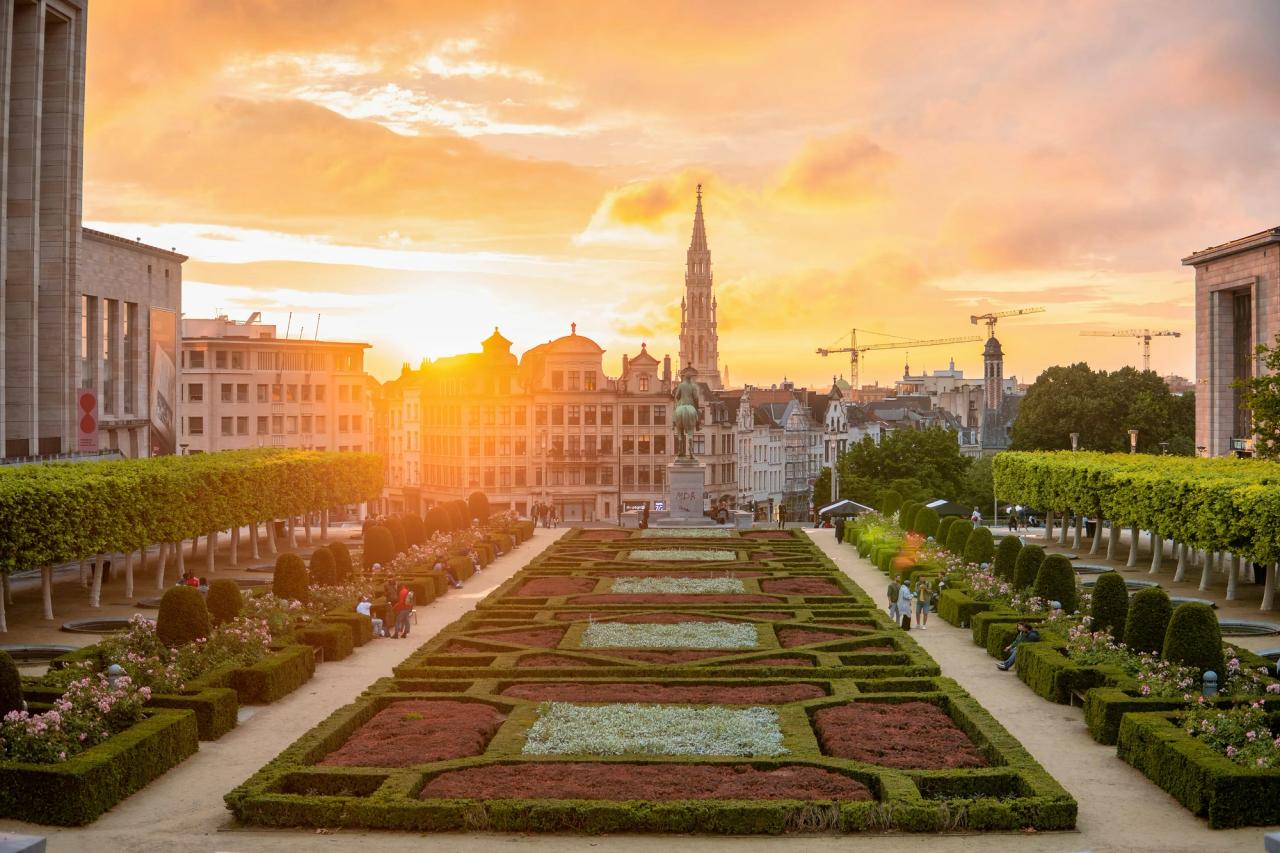
Bruxelles, EU's de facto-hovedstad, er en by, hvor brolagte gader møder EU-institutionernes glasfacader. Med omkring 1,2 millioner indbyggere i selve byen og over 2,3 millioner i storbyområdet tilbyder Bruxelles udlændinge en unik kombination af international diplomati, belgisk charme og multikulturel vitalitet. Uanset om du flytter for en EU-karriere, faglige muligheder eller blot vil opleve en af Europas mest undervurderede byer, lever Bruxelles op til forventningerne. Byen balancerer sit bureaukratiske omdømme med uventet kreativitet – fra innovative restauranter til blomstrende kunstscener i kvarterer som Saint-Gilles og Ixelles.
Bruxelles i korte træk

- Befolkning
- 1,2 mio. by / 2,3 mio. storbyområde
- Region
- Bruxelles-Hovedstadsregionen
- Kendt for
- EU-hovedstad, multikulturelt knudepunkt, historiske Grand Place, vafler og chokolade
- Gennemsnitlig husleje (1 soveværelse)
- €700-€1,200
- Gennemsnitlig løn
- €2.400-€3.200 netto/måned
- Expat-fællesskab
- Stort og veletableret – EU-institutioner, NATO, internationale NGO'er
Hvorfor flytte til Bruxelles
- EU-karrieremuligheder: Som hjemsted for Europa-Kommissionen, Europa-Parlamentet, NATO og hundredvis af internationale organisationer tilbyder Bruxelles enestående karrieremuligheder inden for diplomati, politik og internationale relationer. Fagfolk inden for jura, økonomi, miljøpolitik og kommunikation finder særlige muligheder her.
- Central beliggenhed i Europa: Placeret i hjertet af Vesteuropa giver Bruxelles nem adgang til Paris (1t20 med Eurostar, tidligere Thalys), Amsterdam (1t50), Köln (1t15) og London (1t50 via Eurostar) – weekendture til de store hovedstæder er bemærkelsesværdigt bekvemme. Belgiens jernbanenet til Brugge, Gent og kystbyerne gør dagsture nemme.
- Flersproget miljø: Selvom fransk og nederlandsk er officielle sprog, tales engelsk bredt i professionelle sammenhænge, hvilket gør integration mulig selv uden kendskab til de lokale sprog. Byen omfavner flersprogethed på hverdagsplan, med mange skilte på tre sprog, og tysk optræder på officielle EU-dokumenter.
- Høj livskvalitet: Bruxelles kombinerer fremragende sundhedsvæsen, stærk offentlig transport, internationale skoler og en varieret madscene med leveomkostninger, der er markant lavere end i London eller Paris. Parker, cykelinfrastruktur og work-life-balance er ægte værdier her.
- Kulturel rigdom: Fra UNESCO-beskyttede Grand Place til nutidskunstgallerier, jazzklubber i Saint-Josse og det ejendommelige belgiske tegneseriecenter belønner Bruxelles nysgerrighed ud over sit bureaukratiske stereotype. Byen er vært for 50+ festivaler årligt og har en genuint kreativ undergrundsscene.
- Karrieremuligheder: Ud over EU-institutionerne er Bruxelles hjemsted for EU's største klynge af tænketanke, lobbyvirksomheder og internationale NGO'er. At flytte til Bruxelles giver unikke netværksmuligheder, der ikke findes i nogen anden europæisk by – karriereudvikling inden for politik og diplomati afhænger ofte af Bruxelles-erfaring.
- Familievenlig: Byen har fremragende internationale skoler, store grønne områder og et genuint sikkert miljø. Børnefestivaler, FAO-designede legepladser og Atomium-attraktionen gør Bruxelles givende for familier. Det europæiske skolesystem (gratis eller stærkt subsideret for EU-personale) er i verdensklasse.
Find bolig i Bruxelles
Gennemsnitlige huslejer
| Kvarter | 1 soveværelse | 3 soveværelser | Karakter |
|---|---|---|---|
| Europæerkvarteret | €850-€1.400 | €1.500-€2.500 | Forretningskvarter, moderne lejligheder, tæt på EU-institutioner |
| Ixelles | €750-€1.200 | €1.300-€2.200 | Trendy, multikulturel, cafékultur, tæt på ULB-universitetet |
| Saint-Gilles | €700-€1.100 | €1.200-€1.800 | Kunstnerisk boheme-stemning, jugendarkitektur |
| Sablon | €900-€1.500 | €1.600-€2.800 | Eksklusivt, antikvitetsbutikker, tæt på det kongelige palads |
| Det nedre bycentrum | €800-€1.300 | €1.400-€2.400 | Historisk, turistvenligt, gode transportforbindelser |
| Laeken | €600-€900 | €1.000-€1.500 | Forstadsstemning, tæt på Atomium, mere overkommeligt |
Sådan finder du bolig
- Immoweb.be: Belgiens primære ejendomsplatform med omfattende opslag for både udlejning og salg – de fleste udlejere annoncerer her først. Opret øjeblikkelige alarmer for dine foretrukne kvarterer og dit budget for at reagere hurtigt.
- Spotahome: Voksende platform specifikt til møblerede lejemål, populær blandt udlændinge, der søger korttidsindkvartering (1-12 måneder). Nyttig til de første ophold, mens du slår dig ned.
- Facebook-grupper: Grupperne Expats in Brussels, Brussels Housing Wanted og Brussels Apartments for Rent er meget aktive, og både udlejere og boligsøgende deler opslag øjeblikkeligt. Disse bevæger sig ofte hurtigere end formelle platforme.
- Ejendomsmæglere: Bureauer som A Places, Trevi eller BXL Properties kan fremskynde processen, særligt for udenlandske fagfolk – forvent én måneds husleje i gebyr. Lejligheder formidlet via bureau er dyrere men mere bekvemme.
- Arbejdsgiverhjælp: Hvis du flytter for en EU-institution eller et multinationalt selskab (særligt i Kommissionen eller Parlamentet), skal du undersøge, om din arbejdsgiver tilbyder boligstøtte eller partnerskabsaftaler med lokale bureauer. Nogle EU-organer har formelle boliglister.
- Private udlejere: Mange udlejere foretrækker direkte kontakt – tjek opslagstavler i supermarkeder, universitetscampusser (ULB) og lokale opslagstavler. Mund-til-mund fungerer bemærkelsesværdigt godt til boligsøgning i Bruxelles.
Tips til udlændinge
- Begynd tidligt: Efterspørgslen er høj i Ixelles og Europæerkvarteret – begynd din søgning 6-8 uger før din planlagte flyttedato.
- Forbered dokumentation: Udlejere kræver typisk ansættelsesbevis, tre måneders lønsedler og en belgisk bankkonto – at have disse klar fremskynder ansøgningsprocessen.
- Overvej møblerede lejemål: Mange udlændinge vælger fuldt møblerede lejligheder, særligt i Europæerkvarteret, hvor erhvervslejemål er almindelige.
- Tjek energimærkning: Belgiske lejemål skal vise et energipræstationscertifikat – ældre bygninger kan være dyre at varme op om vinteren.
- Forstå tillægsomkostningerne: Huslejen er angivet ekskl. tillæg; budgetter med yderligere €150-€300 månedligt til fællesomkostninger, opvarmning og bygningsvedligeholdelse.
Kvarterguide
- Ixelles: Et af Bruxelles' mest eftertragtede kvarterer tiltrækker Ixelles unge fagfolk og udlændinge med sin kosmopolitiske atmosfære. Rue du Bailli og Avenue Louise tilbyder trendy barer og restauranter, mens området omkring Place du Châtelain er vært for et lørdagsmorgenmarked med økologiske produkter og internationale fødevarer. Ixelles er godt forbundet via sporvognslinjerne 8, 93 og metrolinje 5. Huslejerne her er konkurrencedygtige men berettigede af stemningen – forvent livlige aftener og internationale menneskemængder.
- Saint-Gilles: Dette sydvestlige kvarter har et kunstnerisk, boheme-omdømme takket være sin jugendarkitektur (se efter huse designet af Victor Horta på Rue de la Chaîne og Rue de la Senne) og kreative fællesskab. Parvis de Saint-Gilles er vært for et fantastisk aftenmarked om torsdagen, og området føles genuint lokalt, mens det forbliver godt forbundet med bycenteret. Ideelt for kreative – langt færre turister end det centrale Bruxelles.
- Europæerkvarteret: Distriktet, der omgiver EU-institutionerne – særligt omkring stationerne Schuman, Luxembourg og Midi – henvender sig til internationale fagfolk. Moderne lejlighedsbygninger dominerer, restauranter betjener flersprogede menneskemængder, og alt føles bygget til den diplomatiske boble. Huslejerne grænser til premium, men retfærdiggøres af bekvemmeligheden. Området tømmes om aftener og weekender, om end det er ved at ændre sig.
- Sablon: Bruxelles' mest eksklusive boligkvarter er Sablon kendt for sine antikvitetsbutikker på Rue de la Régence og Rue du Sablon, eksklusive restauranter og nærhed til det kongelige palads og museer. Kvarteret føles forfinet og roligt – ideelt for familier eller dem, der søger elegance. Søndagsmorgenmarkedet ved kirken tiltrækker lokale. De halvårlige kunstudstillinger tiltrækker samlere.
- Det nedre bycentrum (Ilot Sacré / Rue des Brabançons): Inden for gangafstand af Grand Place balancerer dette område historiske Bruxelles med praktisk tilgængelighed. Forvent ældre bygninger med høje lofter (ofte 3,5 m+), umiddelbar adgang til butikker og restauranter og en blanding af turister og lokale. Fremragende for dem, der vil være midt i det hele.
- Saint-Josse / Schaerbeek: Disse nordlige kvarterer er mere arbejderklasse-prægede, men stigende populære blandt unge kreative takket være overkommelige huslejer og fremvoksende natteliv. Place Saint-Josse er det sociale centrum; området nær Maximal-stedet og Yser-distriktet rummer stort potentiale. Quartier Josaphat nær Schaerbeek har Parc Josaphat, et af Bruxelles' mest undervurderede grønne områder.
- Woluwe-Saint-Lambert: Dette er en familieforstad med fremragende internationale skoler. Kvarteret er roligt og ligger ca. 25 minutters metrorejse fra bycenteret. Woluwe Park og indkøbscentret er vigtige trækplastre for familier.
- Uccle (Ukkel): Bruxelles' grønneste distrikt med nærhed til Sonjanskoven (Forêt de Soignes), kendt for sin rolige og eksklusive karakter. Huslejer og ejendomspriser er de højeste i byen – mest eftertragtede for familier, der søger ro, fremragende skoler og en landsby-lignende atmosfære, mens de stadig er i Bruxelles.
Leveomkostninger i Bruxelles
Bruxelles tilbyder markant bedre valuta for pengene end de fleste vesteuropæiske hovedstæder, om end omkostningerne er steget konsekvent siden 2020. Byen balancerer på grænsen mellem dyr hovedstad og et genuint overkommeligt europæisk liv – med omhyggelig budgettering kan en enkelt udlænding leve godt for under €2.000 månedligt.
Månedlig budgetoversigt
| Kategori | Budgetramme |
|---|---|
| Husleje (1 værelse, centrum) | €700-€1.200 |
| Forsyninger | €120-€180 |
| Internet | €35-€50 |
| Dagligvarer | €250-€350 |
| Transport (STIB-kort) | €50-€60 |
| Spisning ude (4 gange/måned) | €120-€200 |
| Fritid/Fitnesscenter | €40-€80 |
| I alt | €1.315-€2.120 |
Budgetbevidste udlændinge kan klare sig i den lavere ende i kvarterer som Schaerbeek eller Laeken med delt indkvartering, mens de, der har brug for centrale beliggenheder og moderne faciliteter, bør budgettere mod det højere interval.
Daglige udgifter
- Kaffe: €2,50-€4,00 (fra take-away til specialkaffe)
- Frokost (uformel): €10-€15 (sandwich-/salattilbud)
- Månedligt STIB-transportkort: €50 (én zone; €60 for to zoner)
- Øl (bar): €3,50-€6,00
- Biobillet: €10-€13 (standardpremiere); €8 ved ikke-myldretid
- Museumsbillet: €8-€15 (midlertidige udstillinger koster mere)
- Lille croissant fra bager: €1,30-€1,80
Vigtigste udgiftskategorier
- Dagligvarer: Colruyt og Aldi tilbyder de laveste priser; Delhaize og Carrefour giver et bredere udvalg. Økologiske varer fås hos Bio Planet (Ixelles) eller dedikerede økologiske butikker i Saint-Gilles. Ugentlige markeder som Place du Châtelain tilbyder friske råvarer til konkurrencedygtige priser sammenlignet med supermarkeder.
- Spisning ude: Mellemklasserestauranter (hovedret €15-€22) er udbredte i Ixelles og Sablon. Budgetfrokoster inkluderer etiopisk mad, tyrkiske kebabforretninger og poke bowls – Bruxelles byder på bemærkelsesværdig international variation. Fine dining i Sablon og EU-kvarteret koster €60-120 pr. person. Happy hour-tilbud giver typisk drikkevarer til €4-€5.
- Underholdning: Museumskort (€30/måned for MUS og de kongelige ensemblers flere museer) kan spare penge for faste besøgende. Gratis festivaler og arrangementer hele sommeren giver underholdning uden omkostninger. Palais de Justice og gratis koncertsteder afholder regelmæssige forestillinger.
Sådan kommer du rundt i Bruxelles
- Offentlig transport: Bruxelles driver et samlet STIB/MIVB-netværk af metro-, sporvogns- og buslinjer. Et månedskort for én zone koster €50 – bemærkelsesværdigt overkommeligt for en hovedstad; en enkeltbillet koster €2,10. Metroen kører fra kl. 5.30 til midnat (fredag/lørdag til kl. 1) på fire linjer. Centrale linjer forbinder alle større kvarterer og togstationer. Sporvognsnetværket er særligt smukt gennem kvarterer som Schaerbeek.
- Cykling: Bruxelles har investeret kraftigt i cykelinfrastruktur, og dedikerede cykelruter udvides over hele byen. Det udvidede cykelstinet udgør nu over 200 km. Villo! offentlige cykler er tilgængelige ved stationer over hele byen – tegn abonnement for ca. €20/år eller brug appen til lejlighedsvise ture. Elcykelkulturen vokser, og byen er relativt flad, hvilket gør cykling praktisk hele året.
- Bilkørsel: Det anbefales ikke at køre bil i Bruxelles til daglig pendling – parkering er knap og dyr (€4-€6/time i centrale zoner). Beboerparkering (€50/år) er begrænset til specifikke zoner og garanterer ikke gadeparkering. Hvis du er nødt til at køre bil, kan du overveje park-and-ride-faciliteter ved ydre metrostationer som Kraainem eller Stockel. Trafikken er moderat, men manglen på parkering er den egentlige udfordring. Delebiler er forbudt på mange gader i bycentrum.
- Lufthavn: Brussels Airport (Zaventem) er Belgiens vigtigste internationale hub, forbundet til byen med tog (direkte til Bruxelles-Nord og Bruxelles-Central, ca. 20 minutter, €10 enkeltbillet) og bus (STIB linje 12 fra EU-kvarteret). Brussels South Charleroi Airport er mindre, men betjener lavprisselskaber (Ryanair, Wizz); det tager ca. en time med FlixBus eller shuttle. Brussels Airport har afgange til de fleste europæiske destinationer samt langdistanceflyvninger.
- Rejser mellem byer: Bruxelles Midi (Syd)-stationen tilbyder Eurostar (tidligere Thalys) højhastighedstog til Paris Nord (1 time 20 minutter, €60-€120), Amsterdam Centraal (1 time 50 minutter) og Köln Hauptbahnhof (1 time 15 minutter). Eurostar forbinder til London St Pancras (1 time 50 minutter, ca. €60-€150 ved tidlig booking). Interne belgiske togforbindelser (NMBS/SNCB) er effektive til dagsture til Brugge (55 min), Gent (40 min) eller Liège (80 min) med fremragende punktlighed.
Sundhedsvæsen i Bruxelles
- Større hospitaler: Hôpital Erasme (nær Université Libre de Bruxelles) er et undervisningshospital med engelsktalende personale, Cliniques Universitaires Saint-Luc i Woluwe tilbyder specialiseret pleje, og CHU Brugmann betjener den sydlige del af Bruxelles med flere afdelinger. CHU Saint-Pierre nær Midi-stationen håndterer akutte tilfælde og er velrustet til akutpleje.
- Engelsktalende læger: Mange læger i Bruxelles taler engelsk, særligt dem i EU-kvarteret eller tilknyttet internationale klinikker som Group santé på Avenue Louise eller International Medical Center nær NATO. Listen over engelsktalende læger fra den britiske ambassade er et nyttigt udgangspunkt. For praktiserende læger kan du tjekke Doctena.be (aftalebestilling) eller konsultere din ambassades katalog.
- Apoteker: Apoteker er markeret med et grønt kors og er vidt tilgængelige – hvert kvarter har flere (typisk ét pr. 400-500 beboere). Apotekere kan rådgive om mindre lidelser og basale lægemidler. Natapoteker fungerer på rotationsbasis; tjek det nærmeste apotek for weekend- og eftertidsdækning. For engelsksproglig apotekerhjælp skal du lede efter apoteker nær EU-kvarteret.
- Sygeforsikring: Belgien kræver sygeforsikring – enten via det belgiske socialsikringssystem (mutualité/mutualiteit) eller privat forsikring. De tre vigtigste mutualités er CM (kristen), Solidaris (socialistisk) og Partena (liberal). Medlemskab koster ca. €100-€150 pr. år og refunderer 50-75 % af de fleste lægelige udgifter. Ikke-EU-borgere har typisk brug for privat forsikring, indtil de tilmeldes socialsikring via ansættelse. EU-borgere bør anskaffe sig et europæisk sygesikringskort (EHIC) eller britisk Global Health Insurance Card (GHIC) inden ankomst.
- Nødnummer: Ring 112 ved medicinske nødsituationer (ambulance og brand). Ring 101 ved politiets nødsituationer. Kontakt en lokal læge eller ring til vagtlægetjenesten (1733) via din kommune for ikke-akut medicinsk hjælp. Giftlinjen (070 245 245) er åben 24/7.
Fa en personlig flytteplan
Skriv din e-mail, sa sender vi en skraeddersyet tjekliste plus tre tilbud fra godkendte flyttefirmaer.
Kultur og livsstil
- Festivaler: Bruxelles er vært for talrige årlige arrangementer. Brussels Summer Festival (midt i august) forvandler byen med gratis koncerter på flere scener – over 200 kunstnere optræder. Between Worlds Festival fejrer kulturel mangfoldighed med dans, teater og musik. Zinneke Parade (hvert andet år, næste gang i 2026) byder på spektakulære gadeoptrædener med tusindvis af deltagere. Julemarkederne ved Grand Place og Ice Mountain ved Place de la Constitution tiltrækker vintergæster med skøjteløb og gløgg.
- Kunst og museer: Byen er kulturelt stærkere end dens størrelse antyder. MIMA (Millennium Iconoclast Museum of Art) viser samtidskunst i et ombygget bryggeri. De kongelige kunstmuseer huser enestående gamle mestre (herunder Bruegel). For tegneserier er det belgiske tegneseriecenter overraskende vidunderligt – Belgien opfandt Tintin, og byen er dækket af vægmalerier. Naturhistorisk Museum har Europas største dinosaurudstilling.
- Arkitektur: Bruxelles blander gotiske spir (Grand Places rådhus fra 1402), jugendstilbygninger (Victor Hortas Maison Autrique) og glasfrontede EU-kvarterer. En gåtur gennem Ixelles eller Saint-Gilles afslører facader af Horta, Hankar og deres samtidige – en af Europas fineste jugendstilsamlinger. Atomium er den ikoniske struktur fra Verdensudstillingen i 1958, nu et museum. Alle arkitektoniske stilarter finder udtryk i Bruxelles.
- Grønne områder: Bois de la Cambre tilbyder en søside-flugt i Ixelles med trampecykler og en café. Botaniquehaven nær Saint-Josse afholder kulturarrangementer i historiske drivhuse. Parc de Laeken nær Atomium egner sig til familieudflugt. Selv centrale parker som Parc de Bruxelles giver hvile, mens Wolvendael Park i Uccle byder på skovture.
- Natteliv: EU-kvarteret er livligt, men henvender sig mest til det professionelle publikum. For autentisk natteliv i Bruxelles skal du tage til Saint-Gilles (barer på Rue de Lenclos og Rue de la Senne), Ixelles (Place du Châtelain-området, særligt torsdag aften) eller Saint-Josse nær Yser. Rue des Baptiste nær Anneessens bliver stadig mere trendy. Teknoscenen omkring Tour & Taxis (tidligere toldbygning) bringer lagerfester.
Sport og fritid
- Fodbold: RSC Anderlecht og Union Saint-Gilles spiller i Belgiens øverste Pro League – Constant Vanden Stock-stadion (Anderlecht) og Stade Joseph Marien (Uccle) huser kampe fra august til maj, og derbydage skaber livlige stemninger. Byen har adskillige amatørligaer for alle niveauer.
- Løb: Parkløb finder sted hver lørdag kl. 9 i Bois de la Cambre og Parc de Bruxelles. Bruxelles-maraton (oktober) tiltrækker tusindvis af deltagere fra begynder til elite.
- Tennis og svømning: Kommunale tennisbaner findes i alle kvarterer; booking via byens sportsportal. Bruxelles har flere kommunale svømmehaller, herunder det historiske Piscine de l'Université og Ixelles-hallerne, der tilbyder banelækning og klasser.
- Cykling: Bruxelles' forstadsrutenæt tilbyder gode ruter til weekendture. Forskellige lokale grupper arrangerer regelmæssige sociale cykelture rundt i byen.
Mad og restauranter
- Lokale specialiteter: Du bør ikke rejse, før du har prøvet waterzooi (cremet kylling- eller fiskegryde), stoemp (kartoffelmos med grøntsager), gaufres de Liège (tykke Liège-vafler) og naturligvis belgiske frites (dobbeltstegte, serveret med mayonnaise). Muslinger i sæson (september-april) er et must på brasserierne i hele byen. Tag en hurtig snack og prøv en boterham med stoemp fra en lokal takeaway.
- Bedste områder til at spise ude: Ixelles (særligt omkring Rue du Bailli og Place du Châtelain) tilbyder den mest internationale variation – fra etiopisk til japansk. Sablon-området egner sig til finere dining med Michelin-stjernede restauranter. For autentiske belgiske brasseries skal du tage mod Rue des Princes i Saint-Gilles eller området ved Grand Place (dog med turistpriser).
- Brasseries og cafeer: Le Lézard og Le Meeting i Ixelles har lokal charme, mens Le Fernand på Rue du Midi serverer klassiske Bruxelles-retter. Café Merckx nær Atomium byder på historik og stemning. For kaffekultur er tredjebølgesteder som OR Coffee eller Fragile dukket op i Saint-Gilles og Ixelles. Gå ikke glip af en traditionel Bruxelles-pandekage på en lokal wafellière.
- Markeder: Torsdagsaftenmarkedet ved Place du Vieux Marché aux Oiseaux samler lokale med madstande og drikkevarer. Sablon-antikvitetsmarkedet i weekenden er mere til at kigge end at købe. For dagligvarer trives økologiske og internationale muligheder på Place du Châtelain-lørdagsmarkedet og i de økologiske dagligvarebutikker i Saint-Gilles eller Ilot Sacré.
Expat-miljøet
- Internationale organisationer: EU-institutionerne beskæftiger titusindvis af medarbejdere – Bruxelles er naturligvis hjemsted for den største expat-befolkning i Belgien. NATO, internationale NGO'er, ambassader og lobbyvirksomheder supplerer den internationale professionelle kreds.
- Expat-grupper: International Women's Club of Brussels, Brussels Expat Meetup og ESN Brussels arrangerer regelmæssige arrangementer. Facebook-grupper for specifikke nationaliteter (Italienere i Bruxelles, hollandske expats) trives. Meetup.com viser regelmæssige sprogbytter og sociale sammenkomster.
- Sprogbytter: Polyglot Brussels (meetup-gruppe) arrangerer ugentlige samtalesammenkomster på barer. 'Sprout' sprogbyttegruppen mødes nær Faubourg. Sprogbytter er gratis og en god måde at møde lokale og medexpats fra alle baggrunde.
- Ambassadearrangementer: De amerikanske, britiske, tyske og andre ambassader afholder nationaldag-fejringer og kulturelle arrangementer hele året – fremragende netværksmuligheder med det internationale samfund.
- Sport og fritid: Forskellige expat-grupper arrangerer weekendaktiviteter, herunder løb, cykling og holdsport. Brussels Rugby Club og adskillige fodboldhold byder spillere af alle niveauer velkomne.
Arbejdsmarkedet i Bruxelles
- Vigtigste brancher: EU-institutionerne og tilknyttede agenturer er Bruxelles' største arbejdsgiver, efterfulgt af NATO, internationale NGO'er, lobbyvirksomheder og konsulentvirksomheder. Byen understøtter også stærke sektorer inden for finans (BNP Paribas Fortis, KBC), transport/logistik (Brussels Airport, STIB) og medier (RTBF, medieagenturer).
- Større arbejdsgivere: Europa-Kommissionen, Europa-Parlamentet (Bruxelles-sessionen), NATO, EU's Udenrigstjeneste (EEAS), multinationale konsulentvirksomheder (Deloitte, PwC, McKinsey har kontorer i Bruxelles), regionale regeringsorganer og belgiske føderale ministerier.
- Arbejdstilladelser: EU-borgere kan arbejde uden begrænsninger. Ikke-EU-borgere har typisk brug for en enkelt tilladelse (Permis Unique), der kombinerer arbejds- og opholdstilladelse – din arbejdsgiver sponsorerer normalt dette. Ansøgningsprocessen med Bruxelles-regionen kan tage 2-4 måneder, så planlæg i god tid.
- Gennemsnitslønninger pr. sektor
| Sektor | Månedlig bruttoløn |
|---|---|
| EU-institutioner (begynderniveau) | €3.500-€4.500 |
| EU-institutioner (seniorniveau) | €6.000-€10.000 |
| NGO/Politik | €3.000-€5.000 |
| Den private sektor (finans/teknologi) | €4.000-€7.000 |
| Gæstfrihed/Detail | €2,000–€2,800 |
- Jobsøgningsressourcer: EURES (EU's jobportal), StepStone.be, Actiris.be (Bruxelles' regionale beskæftigelsestjeneste), Jobat.be, Indeed.be og LinkedIn med Bruxelles-filtre. Afgørende er det, at mange stillinger besættes via netværk – at tilslutte sig EU-relaterede grupper og deltage i konferencer fremskynder jobsøgningen.
- Sprogkrav: Fransk er meget efterspurgt – mange EU- og myndighedsrelaterede stillinger kræver DELF B2 eller derover. Nederlandsk (flamsk) åbner døre til lokale belgiske stillinger. Engelsk er obligatorisk til internationale stillinger, men fransk forbliver afgørende for integration i hverdagen.
Uddannelse i Bruxelles
- Internationale skoler: European School Brussels I (for EU-ansattes børn) og II har lange ventelister. International School of Brussels (ISB) i Watermael-Boitsfort tilbyder IB-programmer fra 3 til 18 år. The British School of Brussels dækker grundskole og gymnasium med GCSE og A-Levels. Franske skolemuligheder inkluderer Lycée Français de Bruxelles (fra maternelle til lycée). German School of Brussels betjener det tyske expat-miljø.
- Universiteter: Université Libre de Bruxelles (ULB, fransktalende) og Vrije Universiteit Brussel (VUB, nederlandsktalende) er byens offentlige universiteter. Begge er forskningsintensive og relativt overkommelige (ca. €900/år for EU-borgere). ULB har anerkendte naturvidenskabs- og juridiske fakulteter; VUB udmærker sig inden for ingeniørvidenskab. The College of Europe i Brugge (separat campus) tilbyder prestigefulde etårige masteruddannelser inden for europæiske studier.
- Sprogskoler: Alliance Française Brussels tilbyder franske kurser på alle niveauer året rundt med intensive kurser for hurtigere fremgang. Den nederlandskfokuserede organisation 'Inburgering Brussel' tilbyder integrationskurser, der kræves til belgisk statsborgerskab. For aftenhold på tværs af sprog (tysk, spansk, italiensk) kan du tjekke Ecole des Adultes eller ULB's efteruddannelsesafdeling. Cambridge English-eksamener er regelmæssigt tilgængelige i Bruxelles.
- Børnepasning: Kommunale vuggestuer har lange ventelister – tilmeld dig ideelt ved fødslen eller når du kender din termin. Private pasningsalternativer som Boom tager imod internationale familier, men pladserne er meget eftertragtede og dyre (€700–€1,000/måned). Børnetilskud fra den belgiske regering dækker delvist udgifterne for berettigede beboere.
Tjekliste for flytning til Bruxelles
- Sikr dig ansættelse eller bekræft jobtilbud med oplysninger om støtte til flytningen
- Undersøg boligkvarterer baseret på pendlertid og livsstilspræferencer
- Saml de nødvendige dokumenter: pas, ansættelseskontrakt og dokumentation for økonomi
- Ansøg om EU Blue Card (ikke-EU-borgere) eller bekræft visum/arbejdstilladelse
- Kontakt din sygeforsikringsudbyder vedrørende belgiske dækningsmuligheder
- Registrer dig på den lokale kommune (rådhuset) for opholdstilladelse – obligatorisk inden for 8 dage efter ankomst
- Åbn en belgisk bankkonto (ING, BNP Paribas Fortis eller KBC) – nødvendigt for lejekontrakter
- Få et SIM-kort fra belgiske udbydere (Proximus, Orange eller BASE tilbyder gode datapakker)
- Køb et STIB-kort og download appen til rejseplanlægning
- Tilmeld dig en mutualité/mutualiteit for adgang til sygeforsikring
- Afslut lejekontrakt og tilmeld forsyninger (el/gas med Engie eller Luminus)
- Tilmeld dig et nederlandsk eller fransk sprogkursus, hvis du er interesseret i integration
- Udforsk dit kvarter – find de nærmeste butikker, apoteker og transportstoppesteder
- Deltag i en expat-sammenkomst eller sprogbytte for at begynde at opbygge dit sociale netværk
- Ansøg om et belgisk ID-kort (eID), når registreringen er afsluttet
Relaterede guides
- [Flytning til Belgien] – omfattende landsguide om visumkrav, bankforhold og regionale forskelle
- [Flytning til Antwerpen] – Belgiens næststørste by med sin egen særprægede karakter og havneøkonomi
- [Flytning til Gent] – historisk universitetsby med en ung, livlig befolkning
- [Flytning til Brugge] – middelalderlig UNESCO-fredet by med et voksende expat-miljø