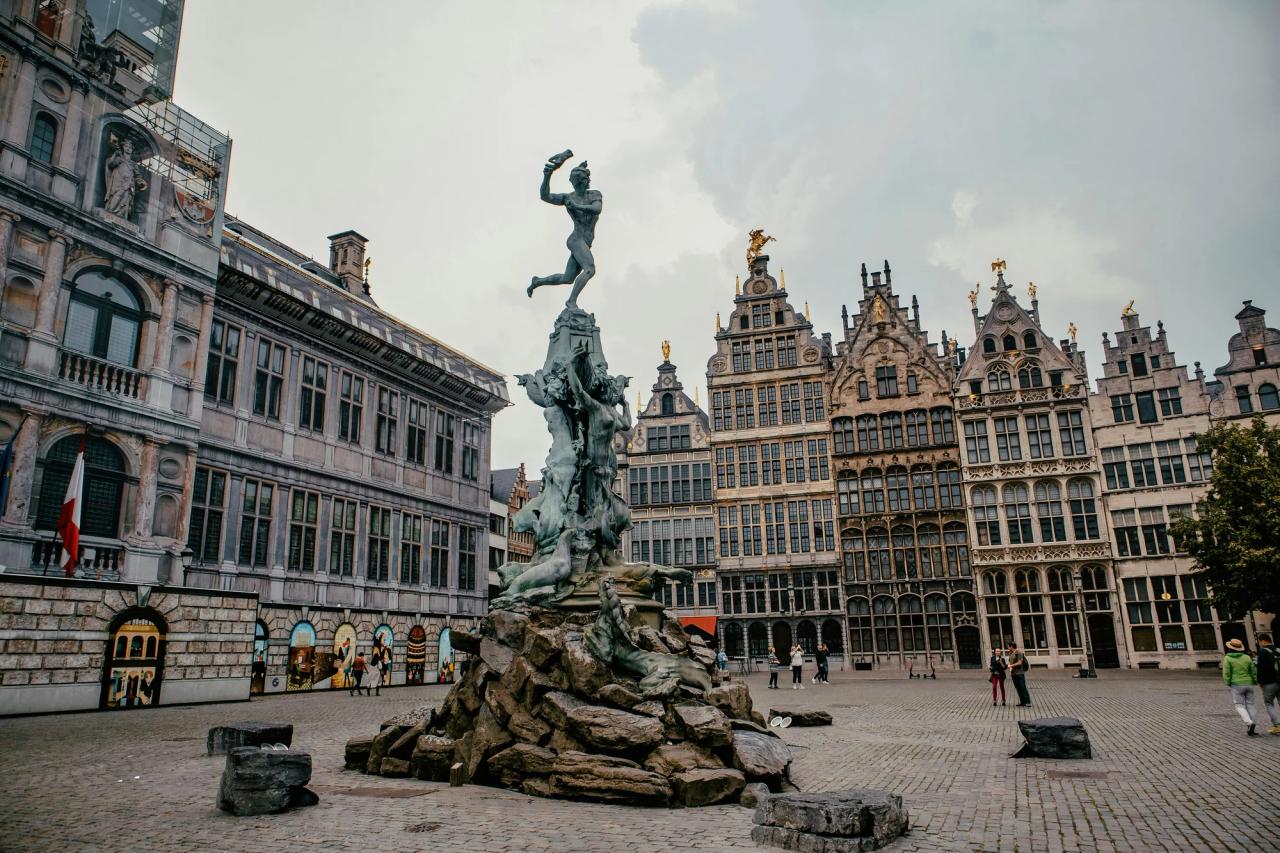
Antwerpen er Belgiens næststørste by og et af Europas mest undervurderede ekspatdestinationer. Som verdens diamanthovedstad, en modemetropol og hjemsted for Europas næststørste havn kombinerer Antwerpen industriel styrke med kreativ energi. Byen tiltrækker en stadig strøm af internationale fagfolk, kunstnere og iværksættere, der drages af dens overskuelige størrelse, fremragende infrastruktur og en livskvalitet, der kan måle sig med byer til den dobbelte pris. Hvis du leder efter en europæisk by med karakter, international rækkevidde og et stærkt fællesskab, fortjener Antwerpen seriøs overvejelse.
Antwerpen på et øjekast

- Indbyggertal
- ~565.000 (metroområde ~1,23 million)
- Region
- Flandern, Provinsen Antwerpen
- Kendt for
- Diamanthandel, modedesign, Europas næststørste havn
- Gennemsnitlig leje (1 værelse)
- €750–€1.100/måned
- Gennemsnitlig løn
- €2.400–€3.200/måned netto
- Ekspatfællesskab
- Stort og mangfoldigt — over 170 nationaliteter repræsenteret
Hvorfor flytte til Antwerpen
- Globalt handelsknudepunkt: Antwerpens havn håndterer over 230 millioner tons gods årligt og skaber et bredt arbejdsmarked inden for logistik, søfart og international handel.
- Verdens diamanthovedstad: Omkring 80 % af verdens rå diamanter passerer gennem Antwerpen og understøtter en specialiseret økonomi af gemmologer, forhandlere og håndværkere.
- Mode- og designscene: Byen har fostret de legendariske Antwerp Six-modedesignere og er fortsat en magnet for kreative, med Det Kongelige Akademi for Skønne Kunster, der tiltrækker talent fra hele verden.
- Overkommelig i vesteuropæisk sammenhæng: Sammenlignet med Bruxelles, Amsterdam eller Paris tilbyder Antwerpen betydeligt lavere lejepriser, mens byen opretholder en høj levestandard.
- Kompakt og gåvenlig: Bymidten er let at gå i, og de fleste nabolag ligger højst 15 minutters cykeltur fra hinanden.
- Stærk international forbindelse: Direkte tog til Bruxelles, Gent og Brugge gør weekendture i Europa ubesværede. Fra Bruxelles kan du hurtigt nå Paris, Amsterdam og London.
At finde bolig i Antwerpen
Gennemsnitlige huslejer
| Bydel | 1 soveværelse | 3 soveværelser | Karakter |
|---|---|---|---|
| Historisch Centrum | €900–€1,300 | €1.500–€2.200 | Middelalderlig bykerne, turistpræget, fodgængervenlig |
| Zuid (Syd) | €850–€1.200 | €1.400–€2.000 | Trendy kunstkvarter, gallerier, natteliv |
| Sint-Andries | €750–€1.050 | €1.200–€1.800 | Bohemske, uafhængige butikker, broget publikum |
| Eilandje | €900–€1.300 | €1.500–€2.200 | Havnefront, moderne lejligheder, MAS-museets område |
| Berchem | €700–€950 | €1.100–€1.600 | Boligområde, familievenligt, gode transportforbindelser |
| Zurenborg | €800–€1.100 | €1.300–€1.900 | Art Nouveau-arkitektur, stille, charmerende gader |
Sådan finder du bolig
- Immoweb.be: Belgiens største boligportal — det foretrukne valg til lejeboliger i alle prisklasser.
- Zimmo.be: Samler boligannoncer fra flere kilder – nyttig til at sammenligne side om side.
- 2dehands.be: Belgiens markedsplads for privatannoncer, hvor private udlejere nogle gange udbyder boliger uden ejendomsmæglergebyrer.
- Facebook-grupper: Søg efter "Apartments in Antwerp" eller "Expats in Antwerp" — private annoncer dukker op her, inden de når frem til platformene.
- Lokale mæglere: At samarbejde med en registreret immo (ejendomsmægler) koster svarende til én måneds leje, men sparer tid og reducerer risikoen for svindel.
Tips til expats
- Start din søgning 4–6 uger før dit flytning; markedet bevæger sig hurtigt for kvalitetsboliger.
- Bed altid om EPC-certifikatet (energimærke) — ældre bygninger kan have høje forsyningsomkostninger.
- Budgettér med en depositum på to måneders husleje, hvilket er standard i Belgien.
- Lejekontrakter løber typisk over 3 år (eller 1 år for møbleret), med 3 måneders varsel ved tidlig opsigelse.
- Møblerede lejligheder er mindre almindelige og koster 20–30 % mere end umøblerede.
- Vær opmærksom på "kot"-annoncer — det er studieværelser, som ikke er egnede til professionelle expats.
- Vand er normalt inkluderet i huslejen i Belgien, men el og gas er dit eget ansvar. Regn med et ekstra forbrug på €150–€220/måned til disse forsyningsudgifter.
Guide til bydele
- Historisch Centrum: Antwerpens middelalderlige hjerte — ideelt for dem, der vil gå overalt. Forvent højere huslejer og turistmængder, men enestående adgang til Vor Frue-katedralen, Grote Markt og hovedindkøbsgaden Meir. Bedst til korttidsophold eller for dem, der prioriterer beliggenhed over alt.
- Zuid (Syd): Antwerpens kulturelle centrum. Fyldt med moderne kunstgallerier, konceptbutikker og nogle af byens bedste restauranter. Populært blandt unge erhvervsfolk og kreative, der sætter pris på et pulserende natteliv. Området omkring Marnixplaats er hovedtorvet for natteliv.
- Sint-Andries: Byens bohemiske kvarter. Uafhængige boutiquer, vintagebutikker og et multikulturelt præg gør, at det skiller sig ud fra resten af Antwerpen. Lidt mere overkommeligt end Zuid med et tæt sammenhold af lokale og expats. Kloosterstraat er kendt for sit antikmarked om søndagen.
- Tilskudsberettigede NT2-kurser: Den flamske regering yder tilskud til NT2-kurser (Nederlands als Tweede Taal) for registrerede borgere. Kurserne tilbydes på sprogcentre i hele byen til meget lav pris. Niveau spænder fra begynder (A1) til avanceret (B2).
- CVO Antwerpen: Byens center for voksenuddannelse tilbyder strukturerede NT2-programmer med både aften- og daghold, ideelt for erhvervsaktive.
- Zurenborg: En skjult perle kendt for sine imponerende art nouveau- og belle époque-facader. Grønne, rolige gader og et stærkt kvarterfællesskab — perfekt for dem, der sætter pris på arkitektur og ro frem for natteliv.
- Kiel: Et kvarter i fremgang syd for centrum med mere overkommelige huslejer, hjemsted for Det Kongelige Museum for Skønne Kunster og Middelheim skulpturpark i det fri. Bliver stadig mere populært blandt unge lejere, som er blevet presset væk fra Zuid på grund af de høje priser.
Leveomkostninger i Antwerpen
Månedligt budgetoverblik
| Kategori | Budgetområde |
|---|---|
| Husleje (1-vær., centrum) | €850–€1,200 |
| Forbrug (el, varme, vand) | €150–€220 |
| Internet | €35–€50 |
| Dagligvarer | €250–€350 |
| Transport (månedskort) | €50–€60 |
| Spisning ude (4x/måned) | €120–€200 |
| Fritid/Fitness | €30–€60 |
| Sygeforsikring (sygekasse) | €10–€15 |
| I alt | €1,495–€2,155 |
Daglige udgifter
- Kaffe (flat white): €3,50–€4,50
- Frokost (uformelt restaurantbesøg): €14–€18
- Månedskort til offentlig transport (De Lijn): €55
- Øl (bar, lokal Jupiler): €2,50–€3,50
- Biobillet: €10–€12
- Et brød: €1,50–€2,50
- Månedligt fitnesscenter-medlemskab: €25–€45
- En liter mælk: €1,00–€1,30
Sådan kommer du rundt i Antwerpen
- Offentlig transport: De Lijn driver sporvogne og busser i hele Flandern. Et månedskort koster omkring €55. Premetroen (underjordisk sporvogn) forbinder bydelene effektivt med vigtige stationer ved Groenplaats, Meir og Astrid. Der kører tog fra tidlig morgen til midnat med begrænsede natbusser i weekenderne.
- Cykling: Antwerpen er i stigende grad cyklervenlig med dedikerede cykelstier, der udvides hvert år. Velo Antwerp tilbyder en cykeldeleordning integreret i De Lijns abonnementsplaner (~€20/år) – et af de billigste i Europa. Det flade terræn gør cykling praktisk hele året. Investér i en god lås; cykeltyveri er udbredt i bycentret.
- El-løbehjul: Flere virksomheder driver delte el-løbehjul i hele byen, tilgængelige via apps som Lime og Bolt. De er praktiske til korte ture, men ikke ideelle til længere pendling.
- Bilkørsel: Parkering i centrum er dyrt (€4–€6/time). En lavemissionszone (LEZ) begrænser ældre køretøjer – tjek din bils adgangsstatus på slimnaarantwerpen.be, inden du kører ind. Gadeparkering kræver tilladelse i de fleste boligområder.
- Lufthavn: Antwerp International Airport (ANR) betjener et begrænset antal europæiske ruter. De fleste expats bruger Brussels Airport (BRU), 45 minutters togrejse væk, til internationale fly. Et direkte tog kører fra Antwerp-Centraal til lufthavnsterminalen.
- Regionaltog: Direkte tog til Bruxelles (35 min), Gent (50 min) og Brügge (1t20). Højhastighedsforbindelser via Bruxelles når Paris (~2t10), Amsterdam (~1t15) og London (~3t, med omstigning i Bruxelles til Eurostar). Antwerp-Centraal er et arkitektonisk vartegn i sig selv – ofte kaldet en af verdens smukkeste togstationer.
- Taxier og samkørsel: Traditionelle taxier er tilgængelige men dyre. Uber opererer i Antwerpen og er generelt billigere end taxier på gaden. Samkørselstjenester er den foretrukne mulighed for sene ture, når den offentlige transport er begrænset.
Sundhedsvæsen i Antwerpen
- Hospitaler/Klinikker: UZA (Universitair Ziekenhuis Antwerpen) og GZA Ziekenhuizen er de store hospitalnetværk. ZNA-gruppen (Ziekenhuisnetwerk Antwerpen) driver flere afdelinger rundt i byen. For ikke-akut pleje starter du med en henvisning fra din praktiserende læge (huisarts).
- Engelsktalende læger: Vidt udbredt, særligt i privatpraksis og internationale klinikker. Mange specialister er uddannet i engelsksprogede lande. Spørg din sygekasse efter en liste over engelsktalende praktiserende læger i dit område.
- Apoteker: Talrige over hele byen. Kig efter det grønne kors. De fleste farmaceuter taler engelsk og kan rådgive om mindre sundhedsproblemer uden en lægekonsultation.
- Alarmnummer: 112 til ambulance og brandvæsen. 101 til politiet.
- Forsikring: Belgien kræver sygeforsikring via en sygekasse (mutualité). Dækningen er bred med refusion for lægebesøg, hospitalsindlæggelser og receptpligtig medicin. Mange arbejdsgivere tilbyder supplerende hospitalsforsikring (hospitalisatieverzekering) som personalegode. Tandpleje er delvist dækket; større indgreb som implantater refunderes typisk ikke.
- Mental sundhed: Adgang til engelsktalende terapeuter og psykologer er tilgængelig, men kan indebære ventetid. Privatpraksis tilbyder hurtigere tider. Byen har også flere kommunale psykiatricentre (CGGZ), der tilbyder subsideret behandling med henvisning fra praktiserende læge.
- Barselsomsorg: Belgien tilbyder fremragende pre- og postnatal pleje. Jordemoderassistance er dækket af forsikringen, og hospitalsfødsler er godt understøttet. Forældreorloven er generøs – mødre modtager 15 uger, og fædre eller medforældre modtager 20 dage.
Fa en personlig flytteplan
Skriv din e-mail, sa sender vi en skraeddersyet tjekliste plus tre tilbud fra godkendte flyttefirmaer.
Kultur og livsstil
- Diamantkvarteret: Området omkring Hoveniersstraat og Schupstraat er det globale centrum for diamanthandel med over 1.500 diamantvirksomheder i blot få kompakte kvartaler. Kvarteret har sin egen sikkerhedsinfrastruktur og en håndgribelig international atmosfære med handlende fra Indien, Israel og Armenien.
- Modearv: Modemuseet (MoMu) på Nationalestraat fejrer Antwerpens store rolle i global mode. Det Kongelige Akademis modeafdeling producerer fortsat internationalt anerkendte designere, og byen er vært for sæsonmæssige modearrangementer, der tiltrækker global opmærksomhed.
- Museum aan de Stroom (MAS): Et markant rødt sandstenstårn ved vandkanten, der dækker Antwerpens maritime historie, globale handelsforbindelser og lokale identitet. Tagterrassen tilbyder panoramaudsigt over byen og er gratis tilgængelig.
- Rubenshuset: Det tidligere hjem og atelier for barokmesteren Peter Paul Rubens er åbent for besøgende i centrum – et must for kunstelskere. Haven er et fredeligt tilflugtssted fra byens travlhed.
- Meir Shoppinggade: Byens vigtigste kommercielle åre, der løber fra Centraal Station-området mod den gamle bydel. Belagt med flagskibsbutikker, internationale brands og den storslåede tidligere Stadsfeestzaal shoppinghal. For uafhængige butikker og designerhandel, gå til Kammenstraat (streetwear og sneakers) eller Nationalestraat (modeboutikker og konceptbutikker).
- Natteliv: Områderne omkring Zuid og Sint-Andries er de vigtigste nattelivscentre – fra cocktailbarer på Marnixplaats til underjordiske klubber i omdannede lagerhaller. Byen har også en blomstrende elektronisk musikscene med arrangementer på steder som Ampere og Petrol. For en mere afslappet aften, prøv en brown café – Antwerpens version af en traditionel belgisk pub, ofte med mørketræsinteriør og et bredt udvalg af lokale øl.
Mad og restauranter
- Prøv Antwerpse handjes – små håndformede kager eller chokolader, byens kendetegnende specialitet.
- Cogels-Osylei-området i Zurenborg har fremragende brunchsteder, mens Sint-Andries exotische markt (lørdagsmarked) tilbyder friske råvarer, international mad og vintage tøj i en livlig gademarkedsatmosfære.
- For billig spisning kan du tage til Sint-Andries-kvarteret med et bredt udvalg af overkommelige spisesteder, der serverer alt fra marokkansk til vietnamesisk mad.
- Belgiske specialiteter du bør prøve: moules-frites (muslinger og pommes frites), stoofvlees (flamsk oksekødsstuvning) og vafler fra gadesælgere.
- Het Zuid-området har den højeste koncentration af eksklusive restauranter, mens Kloosterstraat er besat med antikvitetsforretninger og hyggelige frokostcafeer.
- For en lokal oplevelse, besøg Frituur-butikker – belgiske pommes frites-stadere, der serverer tyktskårne pommes frites med en bred vifte af saucer. Portionerne er generøse, og priserne er lave. Kig efter den traditionelle papirkegle-servering.
- Supermarkeder: Colruyt tilbyder de laveste priser, Delhaize er den mest populære kæde, og Albert Heijn (hollandsk ejet) har et godt udvalg af internationale produkter. For specialvarer kan du prøve asiatiske supermarkeder i Sint-Andries-området eller de tyrkiske butikker på Statiestraat.
Festivaler og begivenheder
- Antwerp Pride (august): Byens årlige LGBTQ+-pridefestival med et farverigt optog gennem centrum.
- Sint-Annadag (26. juli): En traditionel fejring med et optog gennem den gamle bydel, unikt for Antwerpen.
- Bollekesfeest (august): En weekendfestival, der fejrer lokal øl, mad og musik langs floden.
- Tomorrowland (juli): Selvom det afholdes i nærliggende Boom, er denne verdenskendte elektroniske musikfestival tæt forbundet med Antwerpens nattelivskultur.
- Julemarked (december): Grote Markt og de omgivende gader forvandles til et festligt marked med skøjteløb, madsalg og lokale håndværk.
Expat-fællesskab
- Internations Antwerp: Et af de mest aktive expat-netværk – regelmæssige møder, netværksarrangementer og byture.
- Antwerp Expat Center: En kommunal tjeneste, der hjælper internationale med registrering, tilladelser og etablering. Beliggende på Sint-Jacobsmarkt 35, er det et værdifuldt første stop for nytilkomne.
- Sprogudveksling: Flere caféer og kulturcentre arrangerer hollandsk-engelske sprogudvekslingsaftener. Byen subsiderer også NT2-kurser (nederlandsk som andetsprog) for registrerede beboere.
- Sportsklubber: Fra løbegrupper i Park Spoor Noord til roning på Schelde er sport en populær måde at møde folk på. Byen har flere expat-venlige sportsforeninger, herunder fodbold-, tennis- og svømmeklubber.
- Online-fællesskaber: Aktive Facebook-grupper, Reddit-fællesskaber (r/antwerp) og WhatsApp-grupper forbinder expats med råd, boligtips og sociale arrangementer.
At lære nederlandsk i Antwerpen
Selvom engelsk rækker langt, er det at lære nederlandsk (specifikt den flamske variant, der tales lokalt) en af de bedste investeringer, du kan gøre for langvarig integration.
- Subsidierede NT2-kurser: Den flamske regering subsiderer NT2-kurser (Nederlands als Tweede Taal) for registrerede beboere. Kurserne er tilgængelige på sprogcentre over hele byen til meget lave priser. Niveauerne spænder fra begynder (A1) til avanceret (B2).
- CVO Antwerpen: Byens voksenuddannelsescenter tilbyder strukturerede NT2-programmer med aften- og dagtidsmuligheder, ideelt for erhvervsaktive.
- Encora: Et andet populært valg, der tilbyder intensive og semi-intensive nederlandsk-kurser med fleksibel planlægning.
- Private muligheder: Berlitz og IOL tilbyder hurtige programmer med mindre hold, dog til højere pris.
- Uformel øvelse: Mange caféer arrangerer ugentlige taalcafés (sprogcaféer), hvor du kan øve nederlandsk i en afslappet omgivelse. Disse er gratis og åbne for alle niveauer.
- Praktisk tip: Belgisk nederlandsk lyder lidt anderledes end nederlandsk fra Holland – blødere udtale, i visse tilfælde forskelligt ordforråd. Bekymr dig ikke om at lære den 'forkerte' version; lokale sætter enhver indsats pris på.
Arbejdsmarkedet i Antwerpen
- Vigtigste erhverv: Havnelogistik og maritim handel, diamantslibning og -handel, petrokemi, mode og design, teknologi og startups.
- Større arbejdsgivere: Port of Antwerp-Bruges, KBC Group, BASF Antwerp, ExxonMobil, Barco, AG Insurance, Umicore og forskellige diamantbørser.
- Gennemsnitslønninger pr. sektor:
| Sektor | Gennemsnitlig månedlig nettoløn |
|---|---|
| IT / Teknologi | €2,800–€3,800 |
| Logistik / Maritim | €2,400–€3,200 |
| Finans / Bank | €2,600–€3,500 |
| Kreativ / Design | €2,000–€2,800 |
| Diamanthandel | €2,500–€4,000+ |
| Ingeniørvirksomhed | €2,800–€3,600 |
- Jobsøgningsressourcer: VDAB.be (Flanderns beskæftigelsesagentur), StepStone.be, LinkedIn og Antwerp Expat Centers jobopslag. Byen har desuden et voksende startup-økosystem støttet af The Beacon (tech-hub) og Start it @KBC-inkubatorerne.
- Arbejdskultur: Belgisk arbejdskultur er generelt mere formel end i angelsaksiske lande. Der forventes punktlighed, og work-life balance værdsættes € den normale arbejdsuge er 38 timer med generøse ferierettigheder (minimum 20 dage).
Arbejde og skat i Belgien
- Skattesatser: Belgien har nogle af Europas højeste indkomstskattesatser, der spænder fra 25 % til 50 % afhængigt af indkomsten. Sociale sikringsbidrag udgør yderligere ca. 13 %.
- Særlig expat-skatteordning: Visse højt kvalificerede arbejdstagere og forskere kan være berettiget til en særlig skattemæssig status, der reducerer den effektive skatteprocent. Ordningen giver et skattefrit fradrag på op til 30 % af bruttolønnen til godkendte udgifter. Kontakt en belgisk skatterådgiver for at vurdere din berettigelse.
- Skatteindberetning: Det belgiske skatteår løber fra januar til december. Selvangivelsen indgives typisk i perioden maj til juni for det foregående år. Regeringens MyMinfin-portal håndterer online-indberetninger.
- Bidrag til sygekassefond: Som belgisk bosiddende skal du tilmelde dig en sygekasse. Månedlige bidrag trækkes automatisk fra din løn, hvis du er ansat, eller betales direkte, hvis du er selvstændig.
Uddannelse i Antwerpen
- Internationale skoler: Antwerp International School (AIS) i Edegem tilbyder et IB-curriculum og er det mest populære valg blandt expatfamilier. Europees Lyceum Antwerpen (ELA) tilbyder flersproglig undervisning.
- Universiteter: University of Antwerp er et globalt top 200-forskningsuniversitet med stærke programmer inden for biomedicinsk videnskab, erhvervsøkonomi og samfundsvidenskab. Karel de Grote Hogeschool og AP University of Applied Sciences tilbyder praksisorienterede programmer, der er populære blandt internationale studerende.
- Sprogskoler: CVO Antwerpen og Encora tilbyder overkommelige hollandske sprogkurser på alle niveauer. Private muligheder som Berlitz og IOL tilbyder hurtigere forløb. Franske og engelske kurser er også bredt tilgængelige. Mange sprogskoler tilbyder aftenkurser, der passer til erhvervsaktive.
Tjekliste for flytning til Antwerpen
- Sikr dig et jobtilbud eller bekræft overflytning med din arbejdsgiver
- Ansøg om det rette visum/arbejdstilladelse (EU Blue Card, enkelt tilladelse eller intern virksomhedsoverflytning)
- Undersøg kvarterer og begynd at kontakte udlejere på Immoweb
- Arranger internationalt flyttefirma eller forsendelse
- Skaff en apostilleret kopi af din fødselsattest og andre vigtige dokumenter
- Saml pasfoto (Belgien kræver specifikke størrelser til officielle dokumenter)
- Undersøg belgiske skatteforpligtelser, og om du er berettiget til den særlige expat-skatteordning
- Registrer dig på Stadswinkel (bykontoret) inden for 8 dage efter ankomst
- Åbn en belgisk bankkonto (KBC, BNP Paribas Fortis eller ING)
- Tilmeld dig en sygekasse (mutualité/mutualiteit)
- Skaf et belgisk SIM-kort (Proximus, Base eller Mobile Vikings)
- Udforsk dit kvarter til fods og find det nærmeste supermarked, apotek og stoppested
- Ansøg om et Velo cykelabonnement
- Tilmeld dig et NT2-hollandsk kursus, hvis du planlægger et langsigtet ophold
- Tilmeld dig en lokal praktiserende læge (huisarts)
- Tilmeld dig en expatgruppe eller en lokal klub for at begynde at opbygge et socialt netværk
- Opret forsyningskonti (el, gas, internet), hvis de ikke er inkluderet i huslejen
- Ansøg om en parkeervergunning, hvis du har bil og parkerer på gaden i dit område
- Sæt dig ind i de belgiske krav til skatteindberetning (årsopgørelse)
- Opret en hjemmeinternetforbindelse, hvis den ikke er inkluderet af din udlejer
- Gennemgå din lejekontrakt og notér eventuelle opsigelsesklausuler eller fornyelsesfrister
- Vurder dine fremskridt i hollandsk og overvej at rykke op til et højere NT2-niveau
- Registrer dig for et BIS-nummer (belgisk identifikationsnummer), hvis du ikke allerede har gjort det € det er nødvendigt til mange officielle processer
- Udforsk flamske pasningsordninger (kindercrèche), hvis du har små børn
- Overvej at tilmelde dig en kvartersforening eller en lokal frivilliggruppe for en dybere integration
Relaterede guider
- [Flytning til Belgien] € omfattende landeguide
- [Flytning til Bruxelles] € guide til den nærliggende by
- [Flytning til Gent] € en anden flamsk by, der er værd at overveje
- [Flytning til Brugge] € den historiske middelalderby i nærheden