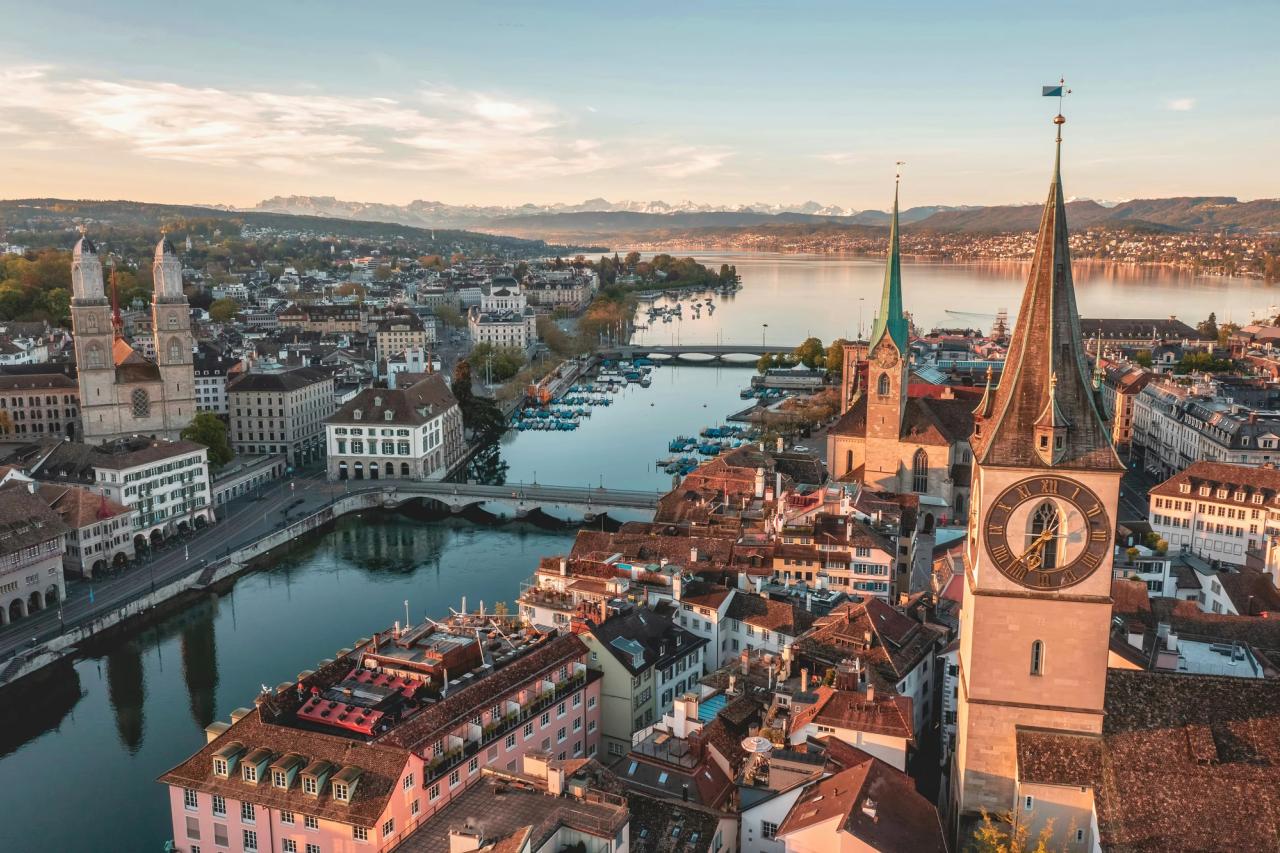
Zwitserland staat elk jaar bovenaan de lijst van meest leefbare landen ter wereld — maar het is ook een van de duurste en meest bureaucratische. Deze gids doorbreekt de complexiteit. Of je nu vanuit de EU, het VK of verder weg komt, hier vind je elke praktische stap, kostencijfer en registratie-eis die je nodig hebt om je met zelfvertrouwen te vestigen. Elk onderdeel is afgestemd op de realiteit van de Zwitserse bureaucratie, het kantonnale systeem en de eigenaardigheden die zelfs ervaren expats verrassen.
Zwitserland in een oogopslag

- Bevolking
- 9,0 miljoen
- Hoofdstad
- Bern
- Valuta
- Zwitserse frank (CHF)
- Gemiddeld salaris
- Ongeveer CHF 85.000/jaar
- Talen
- Duits, Frans, Italiaans, Reto-Romaans (Engels wordt veel gesproken in het bedrijfsleven)
- Klimaat
- Landklimaat met alpine invloed; koude winters, warme zomers
- Tijdzone
- Centraaleuropese tijd (CET/CEST)
Waarom verhuizen naar Zwitserland in 2026
- Uitzonderlijke salarissen: het gemiddelde bruto-inkomen ligt rond CHF 85.000, ver boven het Europese gemiddelde, zelfs na correctie voor de hoge kosten van levensonderhoud.
- Politieke stabiliteit: directe democratie, weinig corruptie en een neutraal buitenlands beleid zorgen voor een uniek voorspelbare omgeving.
- Wereldklasse-infrastructuur: het netwerk van de SBB (Zwitserse Federale Spoorwegen) behoort tot de meest stipte en efficiënte ter wereld.
- Meertalige cultuur: vier officiële talen en een sterk internationale beroepsbevolking maken integratie soepeler dan de meeste mensen verwachten.
- Centraal-Europese ligging: grenzend aan Duitsland, Frankrijk, Italië en Oostenrijk is Zwitserland een poort naar het continent.
- Veiligheid: de cijfers voor geweldscriminaliteit behoren tot de laagste ter wereld, en de openbare diensten zijn uiterst betrouwbaar.
- Kwaliteitsobsessie: van voedselnormen tot openbaar vervoer tot gezondheidszorg, de Zwitserse systemen zijn gebouwd op precisie en consistentie.
Verhuiskosten naar Zwitserland
Transportkosten variëren sterk afhankelijk van herkomst en verzendvolume. De onderstaande cijfers weerspiegelen de gebruikelijke markttarieven vanaf begin 2026.
| Verhuistype | Tijd | Kosten (CHF/EUR) |
|---|---|---|
| 20ft-container | 1–3 weken | CHF 1.700–3.200 |
| 40ft-container | 1–3 weken | CHF 3.200–4.800 |
| Luchtvracht (1m³) | 4–6 dagen | CHF 950–1.400 |
| Douane-afhandeling | — | 180–400 CHF |
Verhuiskosten per herkomstland
| Herkomst | Geschatte kosten | Volume |
|---|---|---|
| VK naar Zwitserland | CHF 1.200–2.800 | 1–2 m3 |
| VS naar Zwitserland | CHF 2.800–5.500 | 20ft-container |
| Frankrijk naar Zwitserland | CHF 700–1.800 | 1–2 m3 |
| Duitsland naar Zwitserland | CHF 800–2.200 | 1–2 m3 |
| Australië naar Zwitserland | CHF 3.800–7.500 | 40ft-container |
Kostenonderdelen uitgelegd
- Transport: Wegtransport vanuit buurlanden in de EU is gebruikelijk en voordelig; voor overzeese verhuizingen komen daar aanzienlijke kosten bij voor zee- of luchtvracht.
- Verzekering: Transportverzekering kost doorgaans CHF 150–350, afhankelijk van de opgegeven waarde en de route.
- Douane-afhandeling: CHF 180–400 voor standaard verhuizingen; complexe aangiften kosten meer.
- Inpakmateriaal: Professioneel inpakken kost CHF 200–500, afhankelijk van het volume.
- Opslag (indien nodig): Kortetermijnopslag in Zwitserland kost CHF 150–300 per maand per 10m³.
- Administratiekosten: Gewaarmerkte vertalingen, documentapostilles en vergunningsaanvragen kunnen CHF 100–400 extra kosten.
Een persoonlijke schatting nodig?
Ontvang drie beoordeelde offertes van verhuisbedrijven binnen 48 uur.
Douane- en importregels
Zwitserland valt buiten de EU-douane-unie, wat betekent dat alle goederen die de grens passeren moeten worden aangegeven. Gebruikte persoonlijke huisraad kan echter meestal belastingvrij worden geïmporteerd als je je hoofdverblijfplaats verhuist.
Hoe de douane-afhandeling werkt
- Gebruik formulier 18.44 (aangifte voor belastingvrije invoer van inboedel) bij de grens of dien het vooraf in bij je verhuisbedrijf.
- Je moet minstens zes maanden in het buitenland hebben gewoond en de goederen minstens zes maanden in bezit hebben gehad om in aanmerking te komen voor belastingvrije behandeling.
- Nieuwe artikelen (gekocht binnen zes maanden) zijn onderhevig aan Zwitserse BTW (momenteel 8,1%) en mogelijk invoerrechten.
- Alcohol, tabak en levensmiddelen hebben strikte persoonlijke limieten en worden altijd belast.
- Voor vuurwapens is een afzonderlijke invoervergunning van de kantonale politie vereist.
Praktijkvoorbeeld
"Ik heb het officiële douaneaangifteformulier ingevuld en kon het grootste deel van mijn huisraad belastingvrij invoeren omdat het gebruikt was en tot mijn hoofdverblijfplaats behoorde. Een nieuwe fiets die ik recent had gekocht werd wel belast, maar het verliep verder vlot." — Jonas L., verhuisd in maart 2025.
Visum- en verblijfsvereisten
Zwitserland is geen EU-lidstaat, maar maakt wel deel uit van het Schengengebied en de EFTA (European Free Trade Association). Dit zorgt voor een uniek immigratiekader: EU/EFTA-burgers profiteren van de Overeenkomst over de vrije verplaatsing van personen, terwijl niet-EU-onderdanen te maken krijgen met strengere quota's en een goedkeuringsprocedure per kanton.
Voor EU/EFTA-burgers
Burgers van EU- en EFTA-lidstaten kunnen Zwitserland zonder visum binnenkomen en hebben tot drie maanden de tijd om zich in te schrijven bij hun gemeente (Gemeinde) en werk te vinden of financiële zelfstandigheid aan te tonen. Zodra je werk hebt, ontvang je automatisch een verblijfsvergunning.
Voor niet-EU/EFTA-onderdanen
Niet-EU-onderdanen moeten vóór binnenkomst een werkvergunning regelen. Zwitserse werkvergunningen worden op kantonnaal niveau beheerd en elk kanton kent jaarlijks een beperkt aantal vergunningen toe. De belangrijkste categorieën zijn:
1. Vergunning L (kort verblijf)
- Doel: Voor verblijven tot maximaal één jaar gekoppeld aan een specifiek arbeidscontract.
- Vereisten: Bevestigd arbeidsaanbod, werkgeverssponsoring, bewijs dat er geen Zwitserse of EU/EFTA-kandidaat beschikbaar was.
- Geldigheid: Geldig voor maximaal 12 maanden; eenmalig verlengbaar met 12 maanden.
- Belangrijk detail: Gekoppeld aan één werkgever en één kanton; bij een nieuwe baan is een nieuwe aanvraag nodig.
2. Vergunning B (jaarlijks verblijf)
- Doel: De meest voorkomende vergunning voor langdurige expatwerkers en hun gezinnen.
- Vereisten: Arbeidscontract van minimaal 12 maanden, bewijs van geschikte huisvesting, aanvraag ingediend door de werkgever bij het kantonale migratiekantoor (Kantonale Migrationsamt).
- Geldigheid: Eén jaar geldig, jaarlijks te verlengen. Na 10 onafgebroken jaren van verblijf kunnen houders een C-vergunning aanvragen.
- Belangrijk detail: Je moet werk en verblijf behouden in het kanton dat de vergunning heeft afgegeven.
3. Vergunning C (vast verblijf)
- Doel: Geeft een onbeperkt recht om in Zwitserland te wonen en werken, zonder werkgevers- of kantonale beperkingen.
- Vereisten: 10 jaar onafgebroken legaal verblijf (5 jaar voor Amerikaanse en Canadese onderdanen op basis van bilaterale overeenkomsten), bewijs van integratie inclusief taalvaardigheid.
- Geldigheid: Onbeperkt; elke vijf jaar formeel vernieuwd.
- Belangrijk detail: Opent de weg naar het Zwitserse staatsburgerschap na een verdere periode.
4. Vergunning G (grensganger)
- Doel: Voor werknemers die in een EU/EFTA-land wonen maar in Zwitserland werken en minstens één keer per week naar huis terugkeren.
- Vereisten: Bevestigd dienstverband in Zwitserland, hoofdverblijf in een aangrenzend EU/EFTA-land.
- Geldigheid: Maximaal vijf jaar geldig voor EU/EFTA-onderdanen; één jaar voor niet-EU-onderdanen.
- Belangrijk detail: Geeft geen Zwitserse verblijfsrechten; de houder blijft fiscaal ingezetene in het thuisland.
Werkvergunningquota's
Zwitserland hanteert jaarlijkse quota's voor niet-EU/EFTA-vergunningen. Voor 2026 heeft de federale overheid ongeveer 4.500 B-vergunningen en 4.000 L-vergunningen toegewezen voor onderdanen van derde landen. Sectoren met veel vraag (financiën, farmacie, tech, techniek) krijgen voorrang.
Inschrijving bij de Gemeinde
De Gemeinde (gemeente) is de lokale overheid. Binnen 14 dagen na aankomst moet elke nieuwe bewoner zich inschrijven bij de gemeente waar hij of zij woont. Dit is het Zwitserse equivalent van de Duitse Anmeldung en de toegangspoort tot vrijwel elk ander administratief proces.
Vereiste documenten
- Geldig paspoort of identiteitskaart
- Verblijfsvergunning (of bevestiging van de aanvraag)
- Huurcontract of bewijs van adres
- Pasfoto (in sommige gemeenten)
- Arbeidscontract of bewijs van financiële middelen
- Huwelijkscertificaat en geboorteaktes van kinderen (indien van toepassing)
Het inschrijfproces (stap voor stap)
-
Zorg voor woonruimte en teken een huurcontract.
-
Verzamel alle benodigde documenten uit de bovenstaande lijst.
-
Ga naar het Einwohnerkontrolle (bevolkingsregister) van je gemeente tijdens de openingstijden.
-
Vul het inschrijfformulier in dat je op het bureau krijgt.
-
Ontvang de officiële inschrijfbevestiging (Wohnsitzbescheinigung).
-
De gemeente stuurt je gegevens door naar het kantonale migratiebureau, dat je verblijfsvergunning afgeeft.
Wat gebeurt er na inschrijving
Na inschrijving krijg je automatisch een AHV/AVS-nummer (sociaalverzekeringsnummer, van Alters- und Hinterlassenenversicherung / Assurance-vieillesse et survivants). Dit nummer is essentieel voor werk, gezondheidszorg en pensioenbijdragen.
Woning zoeken in Zwitserland
De Zwitserse huurwoningmarkt is concurrerend, vooral in Zürich, Genève en Bazel. Huren is de norm — ongeveer 60% van de Zwitserse bewoners huurt in plaats van koopt. Huurdersbescherming is sterk zodra je een contract hebt, maar dat contract bemachtigen is het lastige deel.
Gemiddelde huren per grote stad (2026)
| Stad | 1-slaapkamer (centrum) | 3-slaapkamers (centrum) | Marktconcurrentie |
|---|---|---|---|
| Zürich | CHF 1.800–2.500 | CHF 3.200–4.800 | Zeer hoog |
| Genève | CHF 1.700–2.400 | CHF 3.000–4.600 | Zeer hoog |
| Bazel | CHF 1.400–2.000 | CHF 2.500–3.800 | Hoog |
| Bern | CHF 1.300–1.800 | CHF 2.200–3.400 | Gemiddeld–hoog |
| Lausanne | CHF 1.300–1.900 | CHF 2.300–3.500 | Hoog |
Zwitserse huurterminologie
- Kaltmiete / Mietzins (nettohuur): De basis huurprijs exclusief bijkomende kosten.
- Nebenkosten (servicekosten): Onderhoud van het gebouw, afvalverwerking, water en gedeelde verwarming. Meestal CHF 150–300 per maand bovenop de nettohuur.
- Bruttomiete (brutohuur): Nettohuur plus Nebenkosten — het totaalbedrag dat je daadwerkelijk per maand betaalt.
Woonruimte vinden
Online platforms:
- homegate.ch: Het grootste woningportaal van Zwitserland; de eerste plek waar de meeste expats kijken.
- flatfox.ch: Groot aanbod met een moderne interface; populair bij jongere expats.
- immoscout24.ch: Bekend platform met uitgebreid aanbod in alle kantons.
Lokale bronnen:
- Lokale kranten (Tages-Anzeiger in Zürich, Tribune de Genève in Genève) publiceren nog steeds rubrieksadvertenties.
- Mond-tot-mondreclame en expat Facebook-groepen — vooral handig in Genève en Bazel.
Tips voor buitenlanders bij het zoeken naar woonruimte
- Zorg voor een volledig Mieterdossier (huurdossier) voordat je woningen gaat bezichtigen: sollicitatiebrief, bewijs van inkomen, AHV-nummer, uittreksel uit het schuldregister (Betreibungsregisterauszug) en een kopie van je verblijfsvergunning.
- Reageer op advertenties binnen enkele minuten, niet uren. In Zürich ontvangen populaire advertenties 50–100 sollicitaties op een dag.
- Overweeg tijdelijke huisvesting (gemeubileerde appartementen, Airbnb) voor je eerste 1–3 maanden terwijl je zoekt.
- Verhuurders eisen meestal een borg van drie maanden huur op een geblokkeerde bankrekening (Mietkautionskonto).
Waarschuwing: Huurscams
Maak nooit geld over voordat je een appartement persoonlijk hebt bezichtigd. Frauduleuze advertenties — vooral op sociale media — richten zich op nieuwkomers. Legitieme Zwitserse verhuurders vragen nooit om borg via Western Union of cryptocurrency. Controleer het eigendomsrecht via het lokale kadaster (Grundbuch) bij twijfel.
Gezondheidszorg en verzekeringen
Zwitserland heeft een van de beste gezondheidszorgstelsels ter wereld, maar het werkt volledig via particuliere verzekeringen — er is geen overheidsgezondheidsdienst. Zorgverzekering is verplicht voor alle inwoners.
Verplichte basisverzekering (KVG/LAMal)
De basiszorgverzekering, bekend als KVG (Krankenversicherungsgesetz) in Duitstalige gebieden of LAMal (Loi sur l'assurance-maladie) in Franstalige gebieden, moet binnen drie maanden na aankomst worden afgesloten. De dekking wordt met terugwerkende kracht verleend vanaf je inschrijfdatum.
- Kosten: CHF 300–400 per maand voor volwassenen; CHF 100–150 voor kinderen. Premies variëren per kanton, leeftijd en gekozen eigen risico.
- Dekking: Artsenbezoeken, ziekenhuisopnames, kraamzorg, voorgeschreven medicijnen en medisch noodzakelijke behandelingen.
- Geschiktheid: Verplicht voor alle inwoners, ongeacht nationaliteit of inkomen.
- Het beste voor: Iedereen — je kunt je niet afmelden. Alle basisplannen bieden volgens de wet dezelfde dekking; alleen de premie en verzekeraar verschillen.
Het franchise (eigen risico) systeem
De Zwitserse basisverzekering werkt met een franchise — een jaarlijks eigen risico dat je zelf betaalt voordat de verzekering kosten dekt. Volwassenen kunnen kiezen uit:
- CHF 300 (laagste eigen risico, hoogste maandpremie)
- 500 CHF
- CHF 1.000
- CHF 1.500
- CHF 2.000
- CHF 2.500 (hoogste eigen risico, laagste maandpremie)
Nadat het eigen risico is bereikt, betaal je een eigen bijdrage van 10% (Selbstbehalt) met een maximum van CHF 700 per jaar voor volwassenen. De franchise voor kinderen is lager (CHF 0–600).
Aanvullende particuliere verzekering
De basisverzekering dekt geen tandheelkundige zorg, alternatieve geneeswijzen, privékamers in het ziekenhuis of behandelingen in het buitenland. Aanvullende verzekeringen (Zusatzversicherung) vullen deze gaten op, maar zijn optioneel en vereisen een medische keuring.
Belangrijkste Verzekeringsaanbieders
- CSS Versicherung: Grootste Zwitserse zorgverzekeraar; breed netwerk, concurrerende premies.
- Helsana: Sterke aanvullende verzekeringen en digitale diensten.
- SWICA: Bekend om klanttevredenheid en wellnessprogramma's.
- Visana: Concurrerende premies, vooral in Duitstalige kantons.
Zorgverzekering Afsluiten (Tijdlijn)
-
Registreer bij je Gemeinde (je ontvangt je AHV-nummer).
-
Binnen 90 dagen kies je een verzekeraar en een franchiseniveau.
-
De verzekeraar bevestigt je dekking en stuurt premiefacturen (maandelijks).
-
Aanvullende verzekering kun je tegelijkertijd met of na de basisverzekering aanvragen.
Eigen Bijdragen
- Huisartsbezoek: CHF 80–150
- Specialistenbezoek: CHF 150–300
- Geneesmiddelen op recept: CHF 10–50 per recept (na franchise)
- Tandarts (niet gedekt door basisverzekering): CHF 100–500+ per bezoek
- Ziekenhuisopname (basisafdeling): CHF 15/dag eigen bijdrage na franchise
Ontvang een persoonlijk verhuisplan
Vul je e-mailadres in en we sturen je een op maat gemaakte checklist plus drie offertes van gecontroleerde verhuisbedrijven.
Bankieren en Financiën
De Zwitserse bankensector is wereldberoemd, al is die aanzienlijk veranderd. De dagen van anonieme genummerde rekeningen zijn grotendeels voorbij door internationale transparantieakkoorden.
Een Bankrekening Openen
- Wanneer: Zodra je een huurcontract en een bevestiging van je verblijfsvergunning hebt. Veel banken laten je voor vertrek online een rekening openen.
- Vereiste documenten: Paspoort, bewijs van Zwitsers adres, verblijfsvergunning of bevestigingsbrief, arbeidsovereenkomst (soms).
- Belangrijkste banken voor expats:
- UBS: De grootste bank van Zwitserland; volledige dienstverlening in het Engels, uitgebreid filiaalnetwerk.
- PostFinance: Overheidsbank, lage kosten, ideaal voor dagelijks bankieren; geen minimuminkomenseisen.
- Neon / Yuh: Digitale banken zonder rekeningkosten, gebruiksvriendelijke app, populair bij jongere expats.
- Credit Suisse (nu geïntegreerd in UBS): Oorspronkelijk merk in 2024 samengevoegd met UBS; bestaande rekeningen lopen verder onder UBS.
Je AHV/AVS-nummer Krijgen
- Wat het is: Je Zwitsers sociaalverzekeringsnummer (Alters- und Hinterlassenenversicherung / Assurance-vieillesse et survivants), gebruikt voor werk, belastingen, pensioenen en zorgverzekering.
- Wanneer uitgegeven: Automatisch toegewezen bij registratie bij de Gemeinde.
- Waarom je het nodig hebt: Je werkgever kan je niet uitbetalen zonder dit nummer; het koppelt al je sociale zekerheidsbijdragen gedurende je tijd in Zwitserland.
Bankrekeningkenmerken en Kosten
- Maandelijks tarief: CHF 0–8 (verschilt per bank; digitale banken vaak gratis)
- Debitcard: Meestal inbegrepen; Maestro of Visa Debit standaard
- Creditcard: CHF 0–120/jaar afhankelijk van niveau en extra's
- Internationale overboekingen: CHF 5–20 per overboeking; gebruik Wise of Revolut om kosten te verlagen
Betaalcultuur
Pinnen en contactloos betalen zijn de norm in de steden. Zwitserland was trager dan Scandinavië met het invoeren van mobiel betalen, maar Apple Pay, Google Pay en de eigen app Twint worden inmiddels algemeen geaccepteerd. Contant geld wordt nog steeds gebruikt in kleinere winkels, op markten en in landelijke gebieden.
Kosten van levensonderhoud in Zwitserland
Zwitserland is een van de duurste landen ter wereld. De salarissen maken dat goed, maar een zorgvuldig budget is essentieel, vooral in de eerste maanden voordat je eerste salaris binnenkomt.
Maandelijks budget per stad
| Stad | Budget voor 1 persoon | Budget voor gezin van 3 | Kostenniveau |
|---|---|---|---|
| Zürich | CHF 3.500–5.500 | CHF 7.000–10.000 | Zeer hoog |
| Genève | CHF 3.400–5.200 | CHF 6.800–9.500 | Zeer hoog |
| Bazel | CHF 2.800–4.500 | CHF 5.500–8.500 | Hoog |
| Bern | CHF 2.600–4.200 | CHF 5.200–8.000 | Hoog |
| Lausanne | CHF 2.700–4.300 | CHF 5.400–8.200 | Hoog |
Gedetailleerde kostenverdeling
Huisvesting:
- 1-slaapkamerappartement (stadscentrum): CHF 1.400–2.500
- 3-slaapkamerappartement (stadscentrum): CHF 2.200–4.800
- Vaste lasten (elektriciteit, verwarming, water): CHF 150–250
- Internet (breedband, 60 Mbps+): CHF 50–70
Boodschappen en eten:
- Wekelijkse boodschappen (1 persoon): CHF 100–150
- Restaurantmaaltijd (eenvoudig, één gerecht): CHF 25–40
- Restaurantmaaltijd (middensegment, twee gangen): CHF 50–80
- Koffie (café): CHF 4,50–6,00
Vervoer:
- Maandelijks openbaarvervoerabonnement (stadszone): CHF 75–100
- Halbtax (halffare kaart): CHF 190/jaar — halveert de prijs van bijna alle Zwitserse trein-, bus- en veerbootkaartjes
- Benzine (per liter): CHF 1,70–2,00
- Autoverzekering (enkel aansprakelijkheid): CHF 400–800/jaar
Verzekeringen en gezondheidszorg:
- Basiszorgverzekering (KVG/LAMal): CHF 300–400/maand
- Aanvullende zorgverzekering: CHF 50–200/maand
Vrije tijd en uitgaan:
- Sportschoolabonnement: CHF 60–120/maand
- Bioscoopticket: CHF 18–22
- Streamingdiensten (Netflix, Spotify): CHF 13–22/maand
Vergelijking met andere landen
- vs Duitsland: 40–60% duurder in totaal; salarissen ongeveer 50–80% hoger.
- vs Frankrijk: 35–50% duurder; salarissen 40–60% hoger.
- vs VK: 20–40% duurder; salarissen 20–40% hoger.
Eten en restaurantcultuur
Boodschappen doen in Zwitserland heeft een paar eigenaardigheden die nieuwkomers verrassen:
- Coop en Migros zijn de twee dominante supermarktketens; het is algemeen bekend dat Migros geen alcohol verkoopt.
- Denner, Lidl en Aldi Suisse bieden aanzienlijk lagere prijzen voor dagelijkse boodschappen.
- Winkels zijn op zondag gesloten in de meeste kantons — plan vooruit of verlaat je op winkels bij treinstations (die een speciale vergunning hebben).
- Zwitsers brood, kaas en chocolade zijn van wereldklasse en vaak goedkoper dan geïmporteerde alternatieven.
- Kraanwater is veilig, schoon en gratis in restaurants als je om "Leitungswasser" vraagt.
Vervoer
- Het SBB-netwerk (Zwitserse federale spoorwegen) vormt de ruggengraat van de Zwitserse mobiliteit — treinen rijden op de minuut nauwkeurig.
- Een GA (Generalabonnement) reisabonnement biedt onbeperkt reizen met alle openbaar vervoer in het hele land: CHF 3.995/jaar voor volwassenen (2e klas).
- De Halbtax-kaart (CHF 190/jaar) halveert alle ticketprijzen en is onmisbaar, zelfs voor incidentele reizigers.
- Fietsen is populair en de infrastructuur is goed; veel steden hebben fietsdeelsystemen.
- Autorijden is eenvoudig maar duur: een snelwegvignet kost CHF 40/jaar, en parkeren in steden is schaars en prijzig.
Tips over taal en cultuur
Heb je de lokale taal nodig?
In Zürich en Genève kun je in de meeste professionele en veel sociale situaties uit de voeten met Engels. In Bern, Lausanne en kleinere plaatsen wordt een goede beheersing van het Frans of Duits belangrijk voor het dagelijks leven — overheidsformulieren, medische afspraken en contact met buren verlopen vaak uitsluitend in de lokale taal.
Zwitserse talen per regio
- Duits (Schweizerdeutsch): Gesproken in centraal, noordelijk en oostelijk Zwitserland. Het gesproken dialect wijkt aanzienlijk af van standaardduits — zelfs moedertaalsprekers uit Duitsland hebben vaak in het begin moeite.
- Frans: Gesproken in westelijk Zwitserland (Romandie), inclusief Genève, Lausanne en Neuchâtel.
- Italiaans: Gesproken in Ticino en delen van Graubünden in het zuiden.
- Reto-Romaans: Wordt gesproken door ongeveer 40.000 mensen in delen van Graubünden; een beschermde minderheidstaal.
Zwitserduits (Schweizerdeutsch) niveaus
- A1–A2 (Overleven): Genoeg om buren te groeten, eten te bestellen en basisboodschappen te doen. Haalbaar in 3–6 maanden met consistent oefenen.
- B1 (Gespreksvaardig): Comfortabel in informele sociale situaties, afspraken bij de dokter en eenvoudige administratieve taken. 6–12 maanden studie.
- B2 (Professioneel): Zelfstandig functioneren in de meeste werkomstandigheden en bureaucratische contexten. 12–24 maanden.
Taalleermiddelen
- Volkshochschule (VHS): Betaalbare gemeenschappelijke taalscholen in elk kanton.
- Migros Klubschule: Een van de grootste aanbieders van volwasseneneducatie in Zwitserland; cursussen in alle vier de landstalen.
- Babbel / Duolingo: Handig voor de basis, maar ze leren je geen Schweizerdeutsch.
- Tandem-partnerschappen: Veel Zwitserse steden hebben gratis taaluitwisselingsbijeenkomsten.
Culturele normen en etiquette
Stiptheid:
- Precies op tijd komen — niet te vroeg, niet te laat — is een kernwaarde in Zwitserland.
- Treinen, vergaderingen en sociale afspraken lopen allemaal op de minuut. Vijf minuten te laat komen zonder door te geven wordt als onbeleefd beschouwd.
Rusttijden (Ruhezeit):
- De meeste gemeenten handhaven rusttijden van 22:00 tot 07:00 uur, en de hele zondag.
- Geen harde muziek, geen was, niet boren op zondag. Overtredingen kunnen leiden tot formele klachten van buren.
Directheid:
- De Zwitserse communicatie is direct maar beleefd. Als een collega of buurman een probleem heeft, zeggen ze het je — meestal in je gezicht, meestal kalm.
- Interpreteer directheid niet als onbeleefdheid; het is een teken van respect en efficiëntie.
Recycling en afval:
- Zwitserland heeft een van de strengste recyclingssystemen ter wereld. Elke gemeente geeft specifieke zakken (Abfallsäcke) uit voor huishoudelijk afval — en je betaalt per zak.
- Glas, papier, aluminium en PET-flessen moeten gescheiden worden en naar gemeentelijke inzamelpunten worden gebracht.
Begroetingsgewoonten:
- In het Duitstalige deel van Zwitserland groet je met "Grüezi" (formeel) of "Hoi" (informeel).
- In Franstalige gebieden gebruik je "Bonjour" of "Bonsoir".
- Een handdruk is gebruikelijk bij een eerste ontmoeting; goede vrienden begroeten elkaar met drie zoenen (links-rechts-links).
Sociale integratie
- Word lid van een lokale Verein (vereniging) — sport-, wandel-, muziek- of hobbyverenigingen zijn de belangrijkste manier waarop Zwitsers socialiseren.
- Expatsgroepen (InterNations, Meetup.com) zijn sterk vertegenwoordigd in Zürich en Genève en helpen de overstap naar lokale integratie te overbruggen.
- Bezoek de jaarlijkse evenementen van je gemeente — dorpsfeesten, Fasnacht (carnaval) of buurtbarbecues bouwen buurtcontacten op.
Belastingen in Zwitserland
Zwitserland heeft een drielaags belastingstelsel: federaal, cantonaal en gemeentelijk. De tarieven verschillen enorm per kanton — de keuze waar je woont heeft echte financiële gevolgen.
Hoe de Zwitserse belasting werkt
- Federale belasting: een vlak progressief tarief; voor een alleenstaande met een inkomen van CHF 85.000 ongeveer CHF 1.500–2.500 per jaar.
- Cantonale belasting: hier zitten de grote verschillen. Zug en Schwyz hebben de laagste tarieven; Genève en Vaud behoren tot de hoogste.
- Gemeentelijke belasting: elke gemeente past een vermenigvuldigingsfactor toe op het cantonale basistarief; landelijke gemeenten zijn vaak goedkoper.
- Alle ingezetenen worden belast over hun wereldwijde inkomen en moeten een jaarlijkse belastingaangifte (Steuererklärung) indienen.
Verdragen ter voorkoming van dubbele belasting
Zwitserland heeft verdragen met meer dan 100 landen om dubbele belasting te voorkomen. Als je in Zwitserland belasting betaalt over buitenlands inkomen, kun je meestal een verrekening claimen tegen de belasting die je in je thuisland verschuldigd bent. Raadpleeg een belastingadviseur voor jouw specifieke situatie — Zwitserse belastingaangiften zijn complex en verschillen per kanton.
Bronbelasting (Quellensteuer)
Houders van een ander verblijfsdocument dan een C-vergunning die geen Zwitsers staatsburger zijn, krijgen de inkomstenbelasting door hun werkgever aan de bron ingehouden (Quellensteuer). Mogelijk moet je toch een jaarlijkse aangifte doen om correcties of teruggaven te ontvangen, vooral als je aanvullend inkomen of aftrekposten hebt.
Autorijden in Zwitserland
Je auto importeren
- Auto's kunnen invoervrij worden geïmporteerd als je ze al minstens zes maanden in eigendom hebt voor de verhuizing.
- Je moet het voertuig binnen 12 maanden na aankomst registreren bij het kantonnaal verkeersbureau (Strassenverkehrsamt).
- De Zwitserse registratie omvat een technische keuring (MFK), die strenger is dan de meeste vergelijkbare EU-keuringen.
- Het snelwegvignet (Autobahnvignette) kost CHF 40 per jaar en is verplicht voor elk gebruik van de snelweg.
Je rijbewijs omruilen
- EU/EER-rijbewijzen: Kunnen binnen 12 maanden worden omgeruild voor een Zwitsers rijbewijs, zonder examen.
- Amerikaanse, Canadese, Australische en Britse rijbewijzen: Vereisen vaak een praktijkexamen, afhankelijk van bilaterale overeenkomsten met je thuisland.
- Niet-EU-onderdanen moeten zich vroegtijdig melden bij het kantonnaal verkeersbureau — het proces kan enkele weken duren.
Huisdieren meenemen naar Zwitserland
Huisdieren zijn welkom in Zwitserland, maar de regels zijn specifiek.
Vereisten
- Microchip (ISO 11784/11785-standaard).
- Geldig rabiësvaccinatiebewijs (toegediend minstens 21 dagen voor binnenkomst bij een eerste vaccinatie).
- EU-huisdierenpaspoort of een vergelijkbare dierenartsenverklaring uit je thuisland.
- Maximaal vijf huisdieren per persoon voor niet-commerciële invoer.
Na aankomst
- Honden: Moeten binnen 10 dagen bij je gemeente worden geregistreerd. Hondenbelasting (Hundesteuer) geldt in de meeste kantons — meestal CHF 100–200 per jaar.
- Katten: Registratie verschilt per kanton; sommige vereisen het, andere niet.
- Gevaarlijke rassen: Bepaalde kantons hebben beperkingen voor rassen die als gevaarlijk worden geclassificeerd. Controleer de kantonale voorschriften vóór de invoer.
- Sommige verhuurders verbieden huisdieren in het huurcontract — controleer dit voordat je tekent.
Verhuischecklist
- Vraag je werkvergunning (L of B) aan via je werkgever of het kantonnaal migratiebureau.
- Begin met het zoeken naar huisvesting op homegate.ch, flatfox.ch en immoscout24.ch.
- Vraag offertes aan bij internationale verhuizers via ReloAdvisor.
- Verzamel en vertaal alle benodigde documenten (geboorteakte, trouwboekje, diploma's, medische dossiers).
- Teken je huurcontract en regel de Mietkaution (borg) op een geblokkeerde bankrekening.
- Informeer je huidige verhuurder en de lokale overheid over je verhuizing.
- Zeg nutsvoorzieningen, abonnementen en verzekeringen in je huidige land op of draag ze over.
- Begin met het leren van basiszinnen in de taal van jouw regio (Grüezi, Merci, enzovoort).
- Bevestig de verhuisdatum en de transportafspraken.
- Vul douaneformulier 18.44 in voor je inboedel.
- Regel het transport van je huisdieren indien van toepassing (microchip, rabiësvaccinatie, huisdierenpaspoort).
- Open een Zwitserse bankrekening (UBS en PostFinance bieden de mogelijkheid om dit vóór aankomst te doen).
- Laatste inpakken en inventaris van verzonden goederen.
- Neem alle originele documenten, paspoorten en vergunningsbevestigingen mee in je handbagage.
- Informeer je nieuwe gemeente over je verwachte aankomstdatum.
- Bevestig je tijdelijke accommodatie als je definitieve woning nog niet beschikbaar is.
- Trek je nieuwe woning in.
- Schrijf je binnen 14 dagen in bij je gemeente (Einwohnerkontrolle) — neem je paspoort, vergunningsbevestiging en huurcontract mee.
- Ontvang de bevestiging van je AHV/AVS-nummer.
- Regel internet, elektriciteit en telefoonabonnement.
- Maak foto's van de staat van je appartement op de dag dat je intrekt om je borg te beschermen.
- Stel je voor aan je directe buren — een klein gebaar doet in de Zwitserse cultuur wonderen.
- Kies en sluit de verplichte basiszorgverzekering (KVG/LAMal) af — bepaal je franchiseniveau.
- Activeer je Zwitserse bankrekening en regel de salarisstorting.
- Koop een Halbtax (half-fare card) voor korting op het openbaar vervoer.
- Registreer je auto bij het kantonale voertuigenbureau als je er een importeert.
- Vraag een Betreibungsregisterauszug (schuldenuittreksel) aan voor toekomstige huuraanvragen.
- Sluit een Zwitsers mobiel abonnement af (Swisscom, Sunrise en Salt zijn de belangrijkste providers).
- Verken je wijk, zoek de dichtstbijzijnde supermarkt, apotheek, huisarts en postkantoor.
- Vraag desgewenst een aanvullende zorgverzekering aan.
- Word lid van een lokale Verein of expatgroep om je sociale netwerk op te bouwen.
- Open een SBB-account (Zwitserse federale spoorwegen) voor online treinreserveringen en abonnementen.
- Schrijf je kinderen in op school — de kantonnale onderwijsafdelingen behandelen de inschrijving.
- Maak je vertrouwd met de lokale recyclingregels en koop Abfallsäcke (vuilniszakken) bij je gemeente.
Waar je tools en bronnen vindt
ReloAdvisor-tools:
- Volumecalculator — schat de omvang van je verhuizing voordat je offertes aanvraagt.
- Video-inspectie — ontvang een nauwkeurige offerte op afstand van verhuizers.
- Verhuiskostencalculator — vergelijk offertes van geverifieerde internationale verhuizers.
Officiële Zwitserse bronnen:
- Zwitsers Federaal Migratiekantoor — informatie over visa en vergunningen.
- ch.ch — officiële Zwitserse overheidsportal voor nieuwkomers.
- Zwitserse Federale Spoorwegen (SBB) — dienstregelingen, Halbtax en reisabonnementen.
Expatgemeenschappen:
- InterNations Zwitserland — netwerkevenementen in Zürich, Genève en Bazel.
- English Forum Switzerland — langlopend Engelstalig forum voor expats.
- Expat.ch — praktische adviesthreads over het dagelijks leven in Zwitserland.
Gerelateerde gidsen:
- Verhuizen naar Duitsland
- Verhuizen naar Frankrijk
- Verhuizen naar Oostenrijk