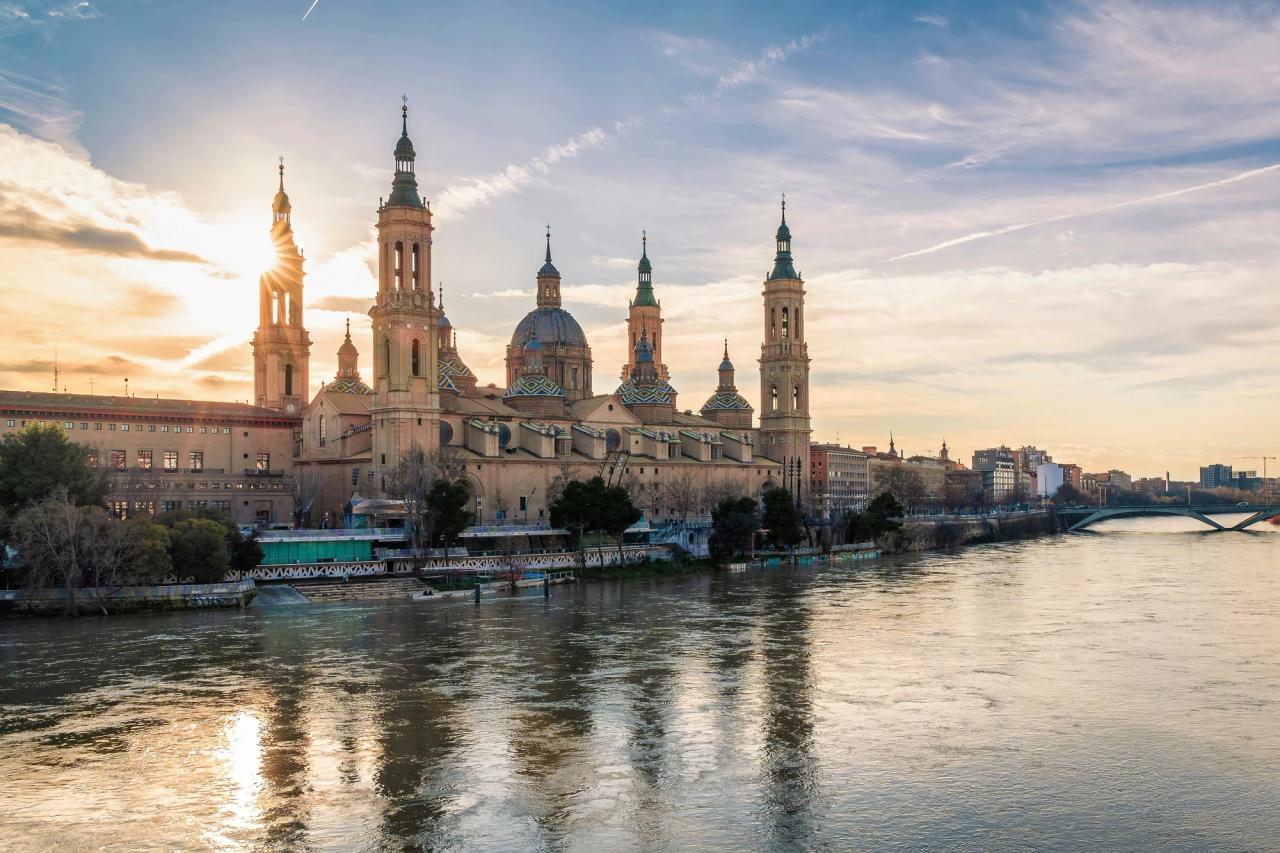

Zaragoza is de vijfde stad van Spanje, gelegen aan de oevers van de Ebro in de autonome gemeenschap Aragón. Vaak over het hoofd gezien door expats die naar kuststeden trekken, biedt Zaragoza een betaalbare, authentiek Spaanse levensstijl met uitstekende verbindingen tussen Madrid en Barcelona, een rijk Romeins en Moors erfgoed, en een levenskwaliteit die consequent tot de hoogste van Spanje behoort.
Zaragoza in een oogopslag

- Inwoners
- 675.000 (stad) / 750.000 (metropoolgebied)
- Regio
- Aragón, noordoost-Spanje
- Bekend om
- Basilica del Pilar, Moorse architectuur, Rivier de Ebro
- Gemiddelde huur (1-kamerwoning)
- €500–€750 per maand
- Gemiddeld salaris
- €1.400–€1.750 netto per maand
- Expats
- Klein maar groeiend — de Latijns-Amerikaanse, Roemeense en Marokkaanse gemeenschappen zijn het grootst
- Taal
- Spaans (Castiliaans, met Aragonese invloeden)
- Klimaat
- Continentaal — zeer warme, droge zomers (35–40°C), koude winters (2–8°C)
Waarom verhuizen naar Zaragoza
- Lage kosten van levensonderhoud: Een van de goedkoopste grote steden van Spanje — de huur ligt 40–50% onder die van Madrid of Barcelona. Een alleenstaande kan comfortabel leven van €1.000–€1.400/maand.
- Strategische ligging: Halverwege Madrid en Barcelona per AVE (75 minuten naar beide). De skigebieden van de Pyreneeën liggen op minder dan twee uur naar het noorden. De Middellandse Zeekust ligt 3–4 uur naar het oosten.
- Kwaliteit van leven: Staat op de tweede plaats in Spanje wat betreft indicatoren voor levenskwaliteit — schone straten, weinig criminaliteit, behapbare grootte en uitstekende publieke dienstverlening.
- Authenticiteit: Veel minder toeristen dan in kuststeden — Zaragoza biedt een echte, ongedwongen Spaanse beleving met sterke lokale tradities.
- Klimaat: Meer dan 2.500 uur zonneschijn per jaar. De zomers zijn heet (35–40°C) maar droog; de winters zijn koud met af en toe vorst en zelden sneeuw. Het hele jaar door weinig regen.
- Groeiende economie: De automobielsector (Stellantis/Opel), logistiek en agri-foodindustrie bieden stabiele werkgelegenheid. De stad investeert in tech en innovatie.
Woning zoeken in Zaragoza
Gemiddelde huren
| Wijk | 1-slaapkamer | 3-slaapkamer | Karakter |
|---|---|---|---|
| Casco Histórico | €500–€750 | €850–€1.200 | Oude binnenstad, Basílica del Pilar, levendig maar toeristisch |
| Delicias | €400–€600 | €700–€1.000 | Grootste wijk, modern, uitstekende prijs-kwaliteitverhouding |
| Actur-Rey Fernando | €450–€650 | €800–€1.150 | Woonwijk, Expo 2008-gebied, parken aan de rivier |
| San José | €400–€600 | €700–€1.000 | Volksbuurt, traditionele markten, betaalbaar |
| La Magdalena | €450–€650 | €750–€1.100 | Rustig, woonwijk, vlak bij de universiteiten |
| Centro / Universidad | €500–€700 | €850–€1.200 | Centraal, veel studenten, bruisend nachtleven |
Woning zoeken
- Idealista: De beste portal voor huurwoningen in Zaragoza — ruim aanbod langetermijnverhuur met prijstrends.
- Fotocasa: Gedetailleerde aanbodpagina's met wijkfilters en plattegronden.
- Milanuncios:advertenties van particuliere verhuurders — populair bij huurders met een budget. Zo vermijd je makelaarskosten.
- Lokale makelaars: Minder gebruikelijk dan in Madrid of Barcelona; veel verhuurders plaatsen hun aanbod direct online of via raamborden.
Tips voor expats
- De borg is meestal één maand. Borgstellingen worden minder streng geëist dan in Madrid — het tonen van een baan of spaargeld is meestal voldoende.
- De meeste appartementen hebben gasverwarming, maar veel oudere gebouwen hebben geen airconditioning — onmisbaar in juli en augustus.
- Delicias en Actur bieden de beste prijs-kwaliteitverhouding voor moderne, goed bereikbare appartementen uit recente bouw.
- Het bezichtigen van appartementen in de zomer kan oncomfortabel zijn zonder airco — vraag bij het eerste contact naar koelsystemen.
Wijkgids
- Casco Histórico: Het historische hart rond de Basilica del Pilar, het Aljafería-paleis (Moorse burcht) en de Romeinse muren. Smalle straatjes, tapasbars en drukte in het weekend. Ideaal als je overal naartoe wilt lopen en dagelijks van het erfgoed van de stad wilt genieten.
- Delicias: Het meest bevolkingsrijke district van de stad. Moderne appartementsblokken, brede lanen en uitstekende bus- en tramverbindingen. Gezinsvriendelijk, betaalbaar en praktisch — de werkpaard van het Zaragozaanse woongeleven.
- Actur-Rey Fernando: Gebouwd rond het Expo 2008-terrein langs de Ebro. Parken aan de rivieroever, moderne architectuur en een groeiend aanbod van cafés en restaurants. Populair bij jonge professionals en gezinnen die nieuwere gebouwen en groene ruimte zoeken.
- San José: Een traditionele arbeiderswijk ten zuiden van de rivier. Lokale markten, authentieke sfeer en enkele van de laagste huren van de stad. Minder gelikt, maar des te echter.
- La Magdalena: Een rustige, groene woonwijk vlak bij de universiteitscampus. Goed bereikbaar per bus, met parken en een ontspannen tempo. Geschikt voor studenten en academici.
- Centro / Universidad: De wijk rond Paseo de la Independencia en de Universiteit van Zaragoza. Op studenten gerichte bars, boekwinkels en restaurants. Levendig en centraal — het sociale hart van de stad voor jongere bewoners.
Kosten van levensonderhoud in Zaragoza
Maandelijks budgetoverzicht
| Categorie | Budgetbereik |
|---|---|
| Huur (1-slaapkamer, centrum) | €500–€750 |
| Nutsvoorzieningen (elektriciteit, water, gas, verwarming) | €90–€130 |
| Internet (glasvezel 300 Mbps+) | €30–€40 |
| Boodschappen | €180–€260 |
| Openbaar vervoer (bus/tram per maand) | €35–€45 |
| Uit eten (4x/maand) | €45–€80 |
| Vrije tijd/Sportschool | €25–€40 |
| Mobiel telefoonabonnement | €10–€20 |
| Totaal | €915–€1,365 |
Dagelijkse kosten
- Koffie (solo of cortado): €1.20–€1.50
- Middageten (menú del día): €9–€12
- Maandelijks ov-kaart (bus/tram onbeperkt): €37
- Bier (café, caña): €2,00–€2,80
- Bioscoopkaartje: €7–€8
- Sportschool maandabonnement: €25–€40
- Brood (heel): €0,90–€1,30
Visa & Verblijf voor Zaragoza
Spanje biedt verschillende visumroutes voor niet-EU/EER-burgers:
- Werkvisum: Vereist een arbeidsaanbod van een Spaanse werkgever. De werkgever start het proces. De behandeltermijn is 1–3 maanden.
- Studentenvisum: Voor ingeschreven studenten aan de Universiteit van Zaragoza of andere instellingen. Staat deeltijdwerk toe tot 20 uur per week.
- Visum zonder winstoogmerk: Voor gepensioneerden of personen met voldoende spaargeld. Werken is niet toegestaan. Vereist bewijs van ~€2.400+ inkomen per maand.
- Digital Nomad Visa (Ley de Startups): Voor remote werkers. Biedt een vast belastingtarief van 24% voor maximaal vijf jaar. De extreem lage kosten van levensonderhoud in Zaragoza maken het een van de meest betaalbare opties.
- EU Blue Card: Voor hoogopgeleide professionals. Vereist een diploma en een bovenmodaal salaris.
Als je eenmaal in Spanje bent, heb je een NIE (Número de Identificación de Extranjero) nodig voor vrijwel alle officiële zaken. Vraag hem aan bij het lokale politiebureau of de Extranjería in Zaragoza.
Belastingverplichtingen
Belastingplichtigen (183+ dagen/jaar) worden belast over hun wereldwijde inkomen. De IRPF loopt uiteen van 19% tot 47%. Aragón heeft eigen regionale belastingschijven — over het algemeen gematigd.
| Belastingonderdeel | Omschrijving | Tarief |
|---|---|---|
| Inkomstenbelasting (IRPF) | Over wereldwijd inkomen | 19%–47% progressief |
| Sociale zekerheid | Verplichte premies | ~6,35% werknemer / ~30% werkgever |
| BTW (IVA) | Op goederen en diensten | 21% standaard |
| Vermogensbelasting | Op netto vermogen boven €700.000 | 0,2%–3,03% |
Vervoer in Zaragoza
- Openbaar vervoer: Stadsbussen (40+ lijnen) en een enkele tramlijn (Tranvía) dekken het stedelijk gebied. Het maandabonnement (€37) geeft onbeperkt toegang tot beide systemen.
- Fietsen: Zaragoza heeft meer dan 100 km aan fietspaden en is vlak — fietsen is populair en praktisch. Het openbare deelsysteem (Bizi) kost ~€25/jaar met stations verspreid over de stad.
- Auto: Makkelijker te navigeren dan kuststeden. Parkeren is goed te doen buiten de oude binnenstad. Files zijn minimaal naar Spaanse begrippen.
- Luchthaven: Luchthaven Zaragoza (ZAZ), 10 km ten westen. Beperkte routes — voornamelijk binnenlandse vluchten (Madrid, Palma) en een paar Europese bestemmingen. Veel bewoners gebruiken Madrid-Barajas voor internationale reizen (75 min met de AVE).
- Intercity: AVE-hogesnelheidstrein naar Madrid (75 min) en Barcelona (75 min) — een van de best verbonden steden van Spanje per trein. Regionale bussen verbinden Huesca, Teruel en kleinere Aragonese plaatsen.
Gezondheidszorg in Zaragoza
- Ziekenhuizen/Klinieken: Hospital Clínico Universitario Lozano Blesa, Hospital Miguel Servet — grote publieke ziekenhuizen met alle specialismen. Privé-opties zijn onder andere Hospital Quirónsalud Zaragoza en Hospital Nuestra Señora del Pilar.
- Engelstalige artsen: Beperkt in het publieke systeem. Privéklinieken en internationale verzekeringsnetwerken bieden enkele Engelstalige opties, al zijn die schaarser dan in Madrid of de kuststeden.
- Apotheken: Wijd beschikbaar in alle wijken. Herkenbaar aan het groene kruis. De meeste apothekers spreken alleen Spaans.
- Alarmnummer: 112 (pan-Europees), 061 voor medische noodgevallen.
- Particuliere verzekering: Sanitas, Adeslas en MAPFRE zijn actief in Zaragoza. De kosten liggen tussen de €45–€110 per maand, afhankelijk van je leeftijd en dekking. Particuliere verzekeringen zijn populair voor snellere toegang tot specialisten.
Krijg een persoonlijk verhuisplan
Laat je e-mailadres achter en we sturen een checklist op maat plus drie offertes van gecontroleerde verhuizers.
Cultuur & levensstijl
- Basilica del Pilar: het beroemdste herkenningspunt van Zaragoza — een immense barokke basiliek aan de oevers van de Ebro, zichtbaar vanuit de hele stad. De Fiestas del Pilar in oktober (een week lang feest met concerten, optochten en stiergevechten) zijn het grootste evenement van de stad.
- Mudéjar-architectuur: Zaragoza heeft de hoogste dichtheid aan Mudéjar-gebouwen (een islamitisch-christelijke hybride stijl) van Spanje, waaronder het Aljafería-paleis en diverse kerktorens — erkend als UNESCO-werelderfgoed.
- Tapascultuur: El Tubo — een doolhof van smalle straatjes in het centrum — is het tapasepicentrum van Zaragoza. De bars serveren royale porties van lokale specialiteiten tegen prijzen die ver onder die van Madrid of Barcelona liggen.
- Rivier de Ebro: De boulevard langs de rivier is een populaire plek om te wandelen, hardlopen en fietsen. Het Expo 2008-terrein langs de rivier omvat het Acuario de Zaragoza en het vernieuwde rivierpark.
- Festivals: Fiestas del Pilar (oktober), San Valero (beschermheilige, februari) en Semana Santa (processies in de Goede Week) zijn de belangrijkste culturele evenementen.
Eten & drinken
- Moet je proeven: ternasco de Aragón (gebraden jonge lam — het streekgerecht bij uitstek), migas (gebakken broodkruim met chorizo, druiven en sardientjes), borrajas (gort in amandelsaus) en adoquín (amandelsponscake).
- Beste eetgebieden: El Tubo voor klassieke tapasroutes, Avenida de Cataluña voor moderne restaurants en de oude binnenstad voor traditionele bodegas met lokale wijn.
- Budgetopties: Menú del día tijdens de lunch — een volledige driegangenmaaltijd met brood en een drankje voor €9–€12 is standaard in de hele stad. Tapasporties in Zaragoza zijn beroemd royaal.
Expatgemeenschap
- Meetup-groepen: Zaragoza Expat Meetup (kleiner dan in kuststeden, maar actief), InterNations Zaragoza.
- Internationale organisaties: Kleiner dan in Madrid of Barcelona, maar het Centro de Idiomas en universiteitsuitwisselingsprogramma's zorgen voor connecties. De Latijns-Amerikaanse gemeenschap is de grootste buitenlandse groep.
- Taaluitwisselingen: Taaltandems in cafés en culturele centra vinden wekelijks plaats. Evenementen van de Universiteit van Zaragoza trekken internationale studenten aan en creëren een natuurlijke expat-studenten sociaal scene.
Dagtripjes & Nabije Bestemmingen
De centrale ligging van Zaragoza maakt het een uitstekende uitvalsbasis voor het verkennen van noordoost-Spanje:
- Skiën in de Pyreneeën: De skigebieden Formigal, Candanchú en Astún liggen op 1,5–2 uur rijden naar het noorden. Uitstekend te skiën van december tot april.
- Nationaal Park Ordesa y Monte Perdido: Een UNESCO-werelderfgoedlocatie met dramatische kloven, watervallen en wandelroutes. 2,5 uur met de auto.
- Albarracín: Een van de mooiste middeleeuwse dorpjes van Spanje, op een rots 2 uur ten zuiden. Roze zandstenen gebouwen en oude muurschilderingen.
- Huesca: Een kleinere stad ten noorden van Zaragoza met een romaanse kathedraal en toegang tot de Pyreneeën. 45 minuten met de trein.
- Monasterio de Piedra: Een prachtig klooster met watervallen en tuinen in een natuurpark. 1,5 uur met de auto.
- Tarazona: Een klein stadje met Mudéjar-torens, een kathedraal en uitstekende lokale wijn uit de Moncayo-streek. 1 uur met de auto.
- Teruel: Beroemd om Mudéjar-architectuur (UNESCO) en de legende van de Geliefden van Teruel. 2 uur met de auto.
Arbeidsmarkt in Zaragoza
- Belangrijkste sectoren: auto-industrie (Stellantis/Opel-fabriek — een van de grootste van Spanje), logistiek (strategische centrale ligging), agrifood (Aragón is een belangrijk landbouwgebied), productie (Bosch/Siemens-apparaten, Pikolin-matrassen) en overheidsadministratie.
- Grote werkgevers: Stellantis (Opel España), BSH Home Appliances (Bosch/Siemens), Pikolin, Grupo Saica (papier/verpakkingen), Gobierno de Aragón, University of Zaragoza.
- Gemiddelde salarissen per sector:
| Sector | Jaarlijks salarisbereik |
|---|---|
| Productie / Techniek | €24.000–€38.000 |
| Logistiek / Supply chain | €18.000–€26.000 |
| IT / Software | €22.000–€35.000 |
| Onderwijs (taalonderwijs) | €16.000–€24.000 |
| Openbare dienst | €20.000–€32.000 |
| Agro-industrie | €18.000–€28.000 |
- Vacatures en solliciteren: InfoJobs.net, LinkedIn, INAEM (arbeidsportaal van Aragón), EURES (EU-mobiliteit), Zaragoza Activa (stedelijke innovatie en werkgelegenheidsondersteuning).
Onderwijs in Zaragoza
- Internationale scholen: Beperkte keuze vergeleken met Madrid of Barcelona. Zaragoza heeft een paar tweetalige scholen, waaronder Colegio Montessori de Zaragoza en Colegio Reino de Aragón. Het aanbod aan internationale scholen is kleiner, maar groeit.
- Universiteiten: Universidad de Zaragoza (opgericht in 1542, een van de oudste en meest vooraanstaande van Spanje — 30.000+ studenten), San Jorge University (particulier), UNED (centrum voor afstandsonderwijs).
- Talenscholen: International House Zaragoza, AIP Language Institute, Academia de Idiomas CLM — Spaanse cursussen van beginner tot gevorderd. Voorbereiding op het DELE-examen is beschikbaar.
Verhuischecklist voor Zaragoza
- Zorg voor tijdelijke huisvesting (Airbnb of serviceappartement) voor minstens de eerste maand
- Vraag je visum aan (niet-EU-burgers) ruim van tevoren — reken op 2–3 maanden behandeltijd
- Voorzie je belangrijkste documenten van een apostille en laat ze door een beëdigd vertaler (traductor jurado) naar het Spaans vertalen
- Sluit een particuliere ziektekostenverzekering af voor de eerste periode
- Begin met Spaans leren — Zaragoza heeft vergeleken met kuststeden erg weinig Engelssprekenden
- Schrijf je in in het gemeentelijk register (empadronamiento) bij je districtsloket — neem je huurcontract mee
- Vraag je NIE aan bij het lokale politiebureau of de Extranjería (boek een cita previa online)
- Open een bankrekening (Ibercaja — de lokale Aragonese bank — CaixaBank, of digitale banken zoals N26)
- Koop een Spaanse simkaart (Movistar, Vodafone, Orange of Digi)
- Schrijf je in voor de publieke gezondheidszorg (als je in aanmerking komt via werk of verblijf)
- Regel je nutsvoorzieningen — elektriciteit (Endesa/Iberdrola), water (Emmasa), gas (Naturgy) en internet
- Koop een maandabonnement voor bus/tram bij een tabakswinkel (estanco)
- Verken wijken te voet voordat je een langlopend huurcontract afsluit
- Registreer je bij je ambassade of consulaat
- Vraag een TIE-kaart (buitenlander-ID-kaart) aan als je visum langer dan 6 maanden geldig is
- Sluit je aan bij Bizi deelfietsen voor dagelijks fietsen — Zaragoza is erg vlak
Gerelateerde gidsen
- [Verhuizen naar Spanje] — uitgebreide landgids
- [Verhuizen naar Madrid] — stedengids van de hoofdstad van Spanje
- [Verhuizen naar Barcelona] — stedengids van de hoofdstad van Catalonië
- [Verhuizen naar Valencia] — mediterraan alternatief