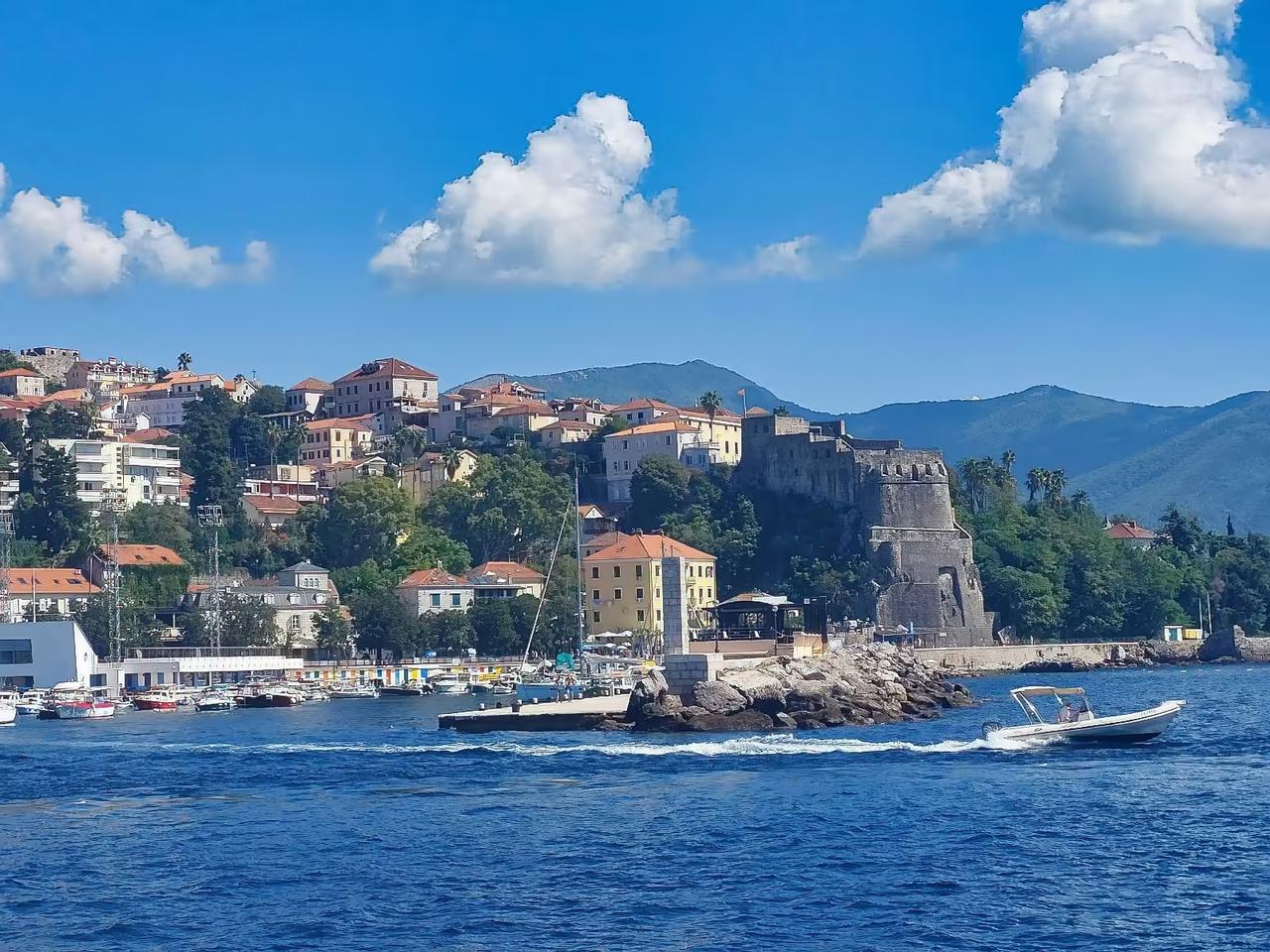

Herceg Novi ligt aan de westelijke ingang van de Baai van Kotor, een zonovergoten kustplaats bekend om zijn trapsgewijze trappen, geurende botanische tuinen en een van de meest betaalbare levensstijlen aan de Montenegrijnse Adriatische kust. De locals noemen het de 'Stad van de Bloemen' en de 'Stad van de Trappen' — meer dan 700 stenen trappensets klimmen de steile hellingen op tussen de waterkant en de wijken op de heuveltoppen, wat de stad een dramatisch, gelaagd karakter geeft dat nergens anders aan de kust te vinden is. Met Kroatië op slechts een korte rit afstand en een ontspannen sfeer die kunstenaars, gepensioneerden en remote workers aantrekt, biedt Herceg Novi een rustiger en authentieker alternatief voor de drukke badplaatsen verder naar het zuiden. Of je nu aangetrokken wordt door de mimosaklanke februarifestivals, het rustige baaivater of de mogelijkheid om goed te leven met een bescheiden budget — Herceg Novi verdient zeker een nadere blik.
Herceg Novi in een oogopslag
- Bevolking
- ~33,000
- Regio
- Baai van Kotor (Boka-baai), kust van Montenegro
- Bekend om
- Botanische tuinen, Mimosa Festival, 700+ trappen, toegangspoort Baai van Kotor
- Gemiddelde huur (1-slaapkamer)
- €400–€650/maand
- Gemiddeld salaris
- €500–€650/maand netto
- Expat-gemeenschap
- Groeiend; gepensioneerden, remote workers en forenzen aan de Kroatische grens
Waarom verhuizen naar Herceg Novi
- Betaalbaar kustleven: Herceg Novi is nog altijd een van de meest budgetvriendelijke plaatsen aan de Montenegrijnse kust, met huren en dagelijkse kosten die aanzienlijk lager liggen dan in Kotor of Budva. Een alleenstaande kan comfortabel leven van €850–€1.350/maand.
- Toegangspoort tot de Baai van Kotor: De stad ligt bij de indrukwekkende ingang van de baai, waar de Adriatische Zee versmalt tot een fjordachtige inham omgeven door bergen. Op elke hoek heb je prachtige uitzichten op het water en de bergen.
- Nabijheid van Kroatië en Dubrovnik: De Kroatische grens ligt op slechts enkele minuten rijden, en de luchthaven van Dubrovnik is op ongeveer 30 km afstand — ideaal voor EU-reizen en weekenduitstapjes naar een van de meest bezochte steden van Europa.
- Mild mediterraan klimaat: Meer dan 200 zonnige dagen per jaar, zachte winters die zelden onder de 5°C dalen, en een lang zwemseizoen van mei tot oktober.
- Ontspannen levensstijl: Minder drukte dan in Montenegro's feestplaatsen, een sterke café-cultuur en een gemeenschap die houdt van rustig leven en buitenactiviteiten.
- Mimosa en cultuur: Herceg Novi heeft een rijke festivalkalender, concerten in middeleeuwse forten en een bloeiende lokale kunstscene die veel indruk maakt voor een stad van deze omvang.
- Montenegro's EU-traject: Montenegro is kandidaat-lid voor de EU en toetreding wordt verwacht binnen de komende jaren. Vroege nieuwkomers kunnen profiteren van het vestigen van verblijf voordat het proces is voltooid, wat veranderingen in eigendoms- en arbeidsregels met zich mee kan brengen.
Een woning vinden in Herceg Novi
Gemiddelde huren
| Wijk | 1-slaapkamer | 3-slaapkamers | Karakter |
|---|---|---|---|
| Oude Stad (Stari Grad) | €500–€700 | €900–€1.300 | Historische kern, stenen straatjes, zeezicht, alles te voet bereikbaar |
| Igalo | €400–€600 | €700–€1.100 | Kustresortgebied, stranden, wellnesscentra, rustig tempo |
| Meljine | €350–€550 | €650–€1.000 | Woonwijk, nabij de jachthaven, rustig, gezinsvriendelijk |
| Zelenika | €300–€480 | €550–€900 | Afgelegen baaidorp, schilderachtig, meest betaalbaar |
| Bijela | €300–€500 | €550–€850 | Suburbaan, groene ruimtes, gemeenschapsgevoel, makkelijk pendelen |
Hoe vind je een woning
- Nekretnine.me: Montenegro's grootste vastgoedportaal, met veel aanbod in Herceg Novi voor zowel koop als huur.
- Olx.me: Advertentieplatform met particuliere verhuur, vaak onderhandelbare prijzen en kortetermijnopties.
- Facebook-groepen: 'Herceg Novi Rentals' en 'Expats in Montenegro' bieden kort- en langetermijnopties, vooral tijdens het laagseizoen.
- Lokale makelaars: Makelaars aan de waterkant kunnen snel gemeubileerde appartementen vinden, vooral buiten het hoogseizoen (oktober–mei). Makelaarskosten bedragen doorgaans één maand huur.
- Mond-tot-mondreclame: Veel verhuurders adverteren met borden in ramen of via lokale netwerken — persoonlijk door de wijken lopen loont, vooral in de Oude Stad en Igalo. Vraag het in lokale cafés en winkels; connecties zijn belangrijk.
- Eerst korte termijn boeken: Veel expats boeken een Airbnb of guesthouse voor 1–2 weken en zoeken ter plaatse naar een appartement in plaats van op afstand te tekenen. Zo kun je de woning inspecteren, de verhuurder ontmoeten en face-to-face onderhandelen.
Tips voor expats
- Het toeristenseizoen beïnvloedt de prijzen: Huren stijgen sterk in juli–augustus wanneer verhuurders meer kunnen verdienen met kortetermijnverhuur aan toeristen. Sluit een huurcontract van 12 maanden buiten het seizoen (oktober–maart) af voor betere tarieven en stabiliteit. Winterhuurcontracten bieden vaak 20–30% korting.
- Nutsvoorzieningen zijn meestal apart: Reken op extra €100–€150/maand voor elektriciteit, water, verwarming en internet. Elektriciteitskosten kunnen in de winter flink stijgen als je elektrisch verwarmt — vraag naar het verwarmingssysteem voordat je tekent.
- Borgsom is standaard: Verwacht 1–3 maanden huur vooraf als borgsom. Vraag een schriftelijk ontvangstbewijs en fotografeer de staat van het appartement bij intrek om jezelf te beschermen bij vertrek.
- Gemeubileerd versus ongemeubileerd: De meeste expatvriendelijke huurwoningen zijn gemeubileerd met basisapparatuur. Ongemeubileerde appartementen zijn goedkoper maar moeilijker te vinden en vereisen mogelijk je eigen wasmachine, koelkast of fornuis.
- Taal van het huurcontract: Huurcontracten worden doorgaans in het Montenegrijns opgesteld. Als je de taal niet spreekt, laat een tweetalige vriend of vertaler het contract doorlezen voordat je tekent. Zorg dat het contract de verantwoordelijkheden voor nutsvoorzieningen, opzegtermijnen en terugbetaling van de borgsom specificeert.
- Seizoensaanbod: Het beste aanbod aan langetermijnhuurwoningen verschijnt in september–oktober, nadat de zomerse toeristendrukte voorbij is en verhuurders overgaan op jaarcontracten. Vermijd januari–februari, wanneer het Mimosa Festival de vraag naar kortetermijnverhuur tijdelijk opdrijft.
- Onderhandelen: Huurprijzen zijn vaak onderhandelbaar, vooral voor 12-maandse contracten die buiten het seizoen worden gesloten. Een aanbod om meerdere maanden vooraf te betalen kan 5–10% korting opleveren.
Wijkengids
- Oude Stad (Stari Grad): Het beste voor cultuurliefhebbers en mensen die graag alles te voet doen. Stenen steegjes, middeleeuwse forten en cafés samengeperst in een compact stuk aan het water. Huren liggen hoger, maar je hebt geen auto nodig. Het nachtleven is beperkt tot een paar bars.
- Igalo: Ideaal voor op welzijn gerichte expats en strandliefhebbers. Thuisbasis van het beroemde gezondheidsinstituut 'Dr. Simo Milošević' en een lang kiezelstrand. Goede busverbindingen naar het centrum. De sfeer is meer resort dan woonwijk.
- Meljine: Geschikt voor gezinnen en mensen die zich langdurig willen vestigen. Woonsfeer met een kleine jachthaven, lokale winkels en nabijheid van de hoofdweg naar het zuiden richting Kotor. Rustigere avonden, meer alledaags gemak.
- Zelenika: Het beste voor budgetbewuste expats die op zoek zijn naar rust. Een rustig baaidorpje met panoramisch uitzicht op het water en de laagste huren in de gemeente. Beperkt nachtleven, maar prachtige zonsondergangen.
- Bijela: Goed voor wie suburbaan groen en een dorpssfeer wil terwijl je verbonden blijft. Kleine jachthaven voor bootjes en eenvoudige toegang in beide richtingen naar Kotor en de Kroatische grens. Groeit in populariteit bij gezinnen.
- Savina: Woonwijk op de heuvel boven de Oude Stad met weelderige begroeiing, appartementen met zeezicht en snelle toegang tot het beroemde klooster Savina en de botanische tuin. Steile wandelingen — een auto of goede conditie is handig. Rustiger en schilderachtiger dan de waterkantstrook.
- Topla: Een klein kustgebied tussen de Oude Stad en Igalo met een mix van oudere en nieuwere appartementen. Goede prijs-kwaliteitverhouding en op loopafstand van beide centra.
Kosten van levensonderhoud in Herceg Novi
Maandelijkse budgetverdeling
| Categorie | Budgetbereik |
|---|---|
| Huur (1-slaapkamer, centrum) | €400–€650 |
| Nutsvoorzieningen | €100–€150 |
| Internet | €20–€30 |
| Boodschappen | €200–€300 |
| Vervoer | €35–€50 |
| Uit eten (4x/maand) | €80–€120 |
| Vrije tijd/Sportschool | €30–€50 |
| Totaal | €865–€1.350 |
Dagelijkse kosten
- Koffie: €1,50–€2,50
- Lunch (informeel): €6-€10
- Maandabonnement openbaar vervoer: €37–€40
- Bier (café): €2,50–€3,50
- Bioscoopkaartje: €4–€6
- Brood (heel): €0,80–€1,20
- Twaalf eieren: €2,00–€3,00
- Maaltijd in een middenklasserestaurant: €12–€20
- Sportschoolabonnement (maandelijks): €25–€40
- Flesje water (1,5 liter): €0,50–€0,80
- Lokale bus (enkele rit): €1,00–€1,50
- Fitness-/sportclub (losse entree): €5–€8
Verplaatsen in Herceg Novi
Herceg Novi is compact genoeg om te voet te verkennen als je vlakbij de waterkant woont, maar de steile heuvels en trappen betekenen dat comfortabele schoenen en enige conditie onmisbaar zijn.
- Lokale bussen: Blauwe lijnbussen verbinden Igalo, het centrum van Herceg Novi, Meljine en Bijela via de hoofdkustweg. Buiten het seizoen rijden ze ongeveer elke 30–45 minuten. Een maandabonnement kost ongeveer €37–€40.
- Rijden: De wegen in de Oude Stad zijn smal en bochtig, met veel eenrichtingsstraten en steile hellingen. Parkeren is beperkt en kan duur zijn in het hoogseizoen (€1–€2/uur in centrale zones). Een auto is handig om de baai te verkennen en Kroatië over te steken, maar strikt noodzakelijk is hij niet als je centraal woont.
- Veerboten: De Kamenari–Lepetane autoveerboot bespaart de lange rit om de binnenbaai en vaart elke 15–30 minuten in de zomer. Tickets kosten een paar euro per oversteek en zijn verkrijgbaar als rittenboekje.
- Luchthaven: De luchthaven van Dubrovnik (DBV, Kroatië) ligt op ongeveer 30 km en 45 minuten rijden — de dichtstbijzijnde internationale hub met uitgebreide Europese verbindingen, inclusief budgetmaatschappijen. De luchthaven van Tivat (TIV) ligt op ongeveer 25 km maar heeft minder routes, voornamelijk seizoenscharters en regionale vluchten.
- Intercitylijnen: Diensten naar Kotor (45 min), Budva (1,5 uur), Podgorica (2,5 uur) en Dubrovnik (1 uur) rijden meerdere keren per dag vanaf het hoofdbusstation nabij de waterkant.
- Taxi's en ridesharing: Lokale taxi's zijn betaalbaar (€3–€5 voor ritten binnen de stad). Spreek een prijs af voordat je instapt, want meters worden niet altijd gebruikt. Bolt is actief in delen van Montenegro en dekt Herceg Novi mogelijk seizoensgebonden.
- Fietsen: Mogelijk langs de vlakke kustweg, maar uitdagend op de heuvels. E-bikes winnen aan populariteit onder bewoners voor het bedwingen van het steile terrein.
Gezondheidszorg in Herceg Novi
- Ziekenhuizen/klinieken: Het instituut 'Dr. Simo Milošević' in Igalo is het belangrijkste medische en revalidatiecentrum van de stad, met fysiotherapie, diagnostiek en huisartsenzorg. Voor serieuze ziekenhuiszorg zijn het Algemeen Ziekenhuis van Kotor (45 min) en het Klinisch Centrum in Podgorica (2,5 uur) de dichtstbijzijnde volwaardige opties.
- Engelssprekende artsen: Beschikbaar bij privéklinieken in Igalo en via het welzijns- en medisch toerismenetwerk. Het instituut 'Dr. Simo Milošević' behandelt regelmatig internationale patiënten. De beschikbaarheid van Engels in het openbare systeem verschilt per locatie — privéklinieken zijn een veiligere keuze voor expats die duidelijke communicatie willen.
- Apotheken: Meerdere apotheken langs de waterkant en in Igalo, open tijdens standaard openingstijden (ongeveer 8.00–20.00 uur) met dienstdoende apotheken voor 's avonds en in het weekend. Gangbare medicijnen zijn betaalbaar, maar breng recepten mee voor gespecialiseerde geneesmiddelen.
- Tandheelkundige zorg: Privétandklinieken in Herceg Novi bieden kwalitatieve zorg voor een fractie van de West-Europese prijzen. Veel expats combineren een tandartsbezoek met een kort verblijf in Montenegro.
- Noodnummer: 124 (ambulance) / 122 (politie) / 123 (brandweer). Voor het EU-standaard noodnummer bel je 112. Responstijden zijn over het algemeen goed binnen het stadscentrum.
- Ziektekostenverzekering: Inwoners moeten zich registreren voor verplichte ziektekostenverzekering via het Montenegrijnse openbare systeem, dat huisartsbezoeken, verwijzingen naar specialisten, ziekenhuisopnames en gesubsidieerde medicijnen dekt. Een particuliere verzekering wordt aanbevolen voor snellere toegang, meer keuzevrijheid en Engelstalige service. Populaire opties zijn internationale polissen van Allianz Care, Cigna en lokale Montenegrijnse privéklinieken die rechtstreekse betaling accepteren. Zie de gids Verhuizen naar Montenegro voor informatie op landniveau over ziektekostenverzekeringen.
Krijg een persoonlijk verhuisplan
Laat je e-mailadres achter en we sturen een checklist op maat plus drie offertes van gecontroleerde verhuizers.
Werken op afstand vanuit Herceg Novi
Herceg Novi is een steeds populairdere uitvalsbasis voor digitale nomaden en remote workers die mediterraan leven willen combineren met Balkan-prijzen.
- Internet: Glasvezelbreedband is beschikbaar in de meeste stedelijke gebieden, met snelheden van 50–200 Mbps van providers als M:tel en Crnogorski Telekom. Mobiele data (4G) is snel en goedkoop als back-up.
- Coworking: Dedicated coworkingruimtes zijn beperkt, maar verschillende cafés aan de waterkant zijn laptopvriendelijk met betrouwbare wifi en stopcontacten. Sommige expats huren informeel kleine kantoorruimtes via lokale contacten.
- Tijdzone: Montenegro ligt in de CET-tijdzone (UTC+1, UTC+2 in de zomer), wat handig aansluit op de meeste Europese kantooruren.
- Digitale nomadvisum Montenegro: Montenegro is bezig een verblijfsoptie voor digitale nomaden te ontwikkelen. Raadpleeg de meest recente vereisten via het Montenegrijnse overheidsportaal, want de regelgeving verandert.
- Kostenvoordeel: Een remote worker met een West-Europees salaris kan 40–60% besparen op levenskosten vergeleken met steden als Lissabon, Barcelona of Athene — terwijl je vergelijkbaar weer en een prachtige natuurlijke omgeving geniet.
Cultuur & Levensstijl
- Mimosa Festival (Praznik Mimoze): Het kenmerkende februaricarnival van Herceg Novi ter ere van de bloeiende mimosabloem — optochten, livemuziek, gemaskerde bals en zeevruchtenfeesten die meerdere weken duren. Lopend sinds 1969 is het een van de oudste festivals aan de Adriatische kust.
- De Trappenstad: Meer dan 700 trappensets doorkruisen de steile hellingen en maken Herceg Novi tot een van de meest unieke steden om te voet te verkennen. Elke trap heeft zijn eigen karakter — sommige omzoomd met bloemen, andere met verborgen uitzichten op de zee.
- Botanische tuinen: De botanische tuin van Savina herbergt mediterrane en subtropische soorten op een heuvellocatie met uitzicht over de baai. Het is een van de mooiste collecties aan de Montenegrijnse kust.
- Forten en geschiedenis: Vier middeleeuwse forten — Forte Mare, Kanli Kula, Španjola en Citadela — sieren de heuvel en bieden een venster op het gelaagde verleden van de stad onder Venetiaans, Ottomaans en Oostenrijks-Hongaars bewind. In de zomer worden hier openluchtconcerten, filmvertoningen en kunsttentoonstellingen gehouden met een weids panorama over de baai.
- Kajakken en zwemmen: Het rustige baaivater is perfect voor zeekajak, en kiezelstranden strekken zich uit van Igalo tot Meljine. De waterkwaliteit is over het algemeen uitstekend en de beschutte ligging van de baai zorgt ervoor dat de omstandigheden zelden te ruw zijn om te zwemmen.
- Wandelen en natuur: Het nabijgelegen Orjen-gebergte biedt gemarkeerde wandelroutes en panoramische uitkijkpunten boven de baai, bereikbaar binnen 30 minuten rijden. De Vrbanj- en Subraroutes zijn populair bij ervaren wandelaars.
- Film en muziek: Het fort Kanli Kula doet in de zomer dienst als openluchtbioscoop, waar films worden vertoond onder de sterrenhemel met uitzicht op de baai. Het 'Guitar Art Summer Fest' en diverse jazzavonden vullen de festivalagenda van het fort van juni tot september.
- Daguitstapjes: Dankzij de ligging is Herceg Novi een ideale uitvalsbasis — Perast en het eiland Gospa od Škrpjela zijn 40 minuten weg, de stranden van het schiereiland Luštica zijn binnen een uur bereikbaar en de Oude Stad van Dubrovnik is een dagtrip over de Kroatische grens.
Eten & Drinken
- Verse zeevruchten domineren de lokale keuken: gegrilde inktvis, zwarte risotto (crni rižot) en Boka-stijl vissoep (brudet) zijn lokale gerechten die je snel moet proberen. Vis wordt vaak dagelijks gevangen en verkocht op de watermarkt.
- De riva (waterkantpromenade) is omzoomd met konoba's (traditionele tavernes) en cafés die Montenegrijnse en mediterrane gerechten serveren tegen prijzen die ver onder West-Europese normen liggen. Een volledig zeevruchtendinee met wijn kan €15–€25 per persoon kosten.
- Lokale markten verkopen seizoensgroenten, olijfolie, Adriatische vis en zelfgemaakte kaas voor een fractie van de restaurantprijzen. De hoofdmarkt bevindt zich bij het busstation en is dagelijks open in de zomer.
- De wijnscene van Herceg Novi is bescheiden maar groeiende — zoek naar Vranac (volle rode wijn) en Krstač (frisse witte wijn) van Montenegrijnse wijngaarden. Lokale rakija (vruchtenbrandewijn) is een cultureel gebruik dat als welkomstdrankje wordt aangeboden.
- Internationale keuken is beperkt maar groeiende — een handvol Italiaanse, Chinese en pizzarestaurants zijn actief langs de kust. Voor meer variëteit zijn Kotor en Budva een korte rit weg.
Expat-gemeenschap
- Facebook-groepen zoals 'Expats in Montenegro' en 'Herceg Novi Life' zijn actieve hubs voor ontmoetingen, woontips en praktisch advies over alles van verblijfsdocumentatie tot de beste lokale tandarts.
- Taaluitwisselingen en informele bijeenkomsten vinden plaats in cafés aan de waterkant, vooral tijdens de rustigere maanden buiten het seizoen (november–april) wanneer de expatgemeenschap hechter is.
- De gemeenschap bestaat voornamelijk uit gepensioneerden en remote workers uit West-Europa, Rusland en de bredere Balkaanse regio. Ze is kleiner en hechter dan de expatscenes in Budva of Tivat.
- Vrijwilligersmogelijkheden bestaan via lokale milieu- en culturele organisaties — een goede manier om te integreren en Montenegrijnen te leren kennen buiten de toerismesector.
- Door de compacte omvang van de stad zul je snel bekende gezichten herkennen. Herceg Novi beloont degenen die investeren in relaties en oprecht interesse tonen in lokale gewoonten.
Arbeidsmarkt in Herceg Novi
- Belangrijkste sectoren: Toerisme en horeca domineren, gevolgd door gezondheidszorg/welzijn (gecentreerd rond het kuuroord in Igalo), kleinschalige landbouw en maritieme diensten.
- Werken op afstand: Steeds populairder — de lage kosten van levensonderhoud en betrouwbaar internet in Herceg Novi trekken freelancers en digitale nomaden aan, hoewel coworkingruimtes beperkt zijn.
- Grootste werkgevers: Instituut 'Dr. Simo Milošević', lokale hotels en resorts, gemeentelijke diensten en seizoensgebonden toerismebedrijven.
- Vacaturebanken: LinkedIn voor internationale en remote functies, het Montenegrijnse Arbeidsbureau (Zavod za zapošljavanje) voor lokale vacatures en netwerken via expatgroepen voor horeca- en seizoenswerk. Veel banen in het toerisme worden ingevuld via mond-tot-mondreclame, vooral in de zomer.
- Zelfstandigen: Freelancers en zelfstandige expats kunnen zich registreren bij de Montenegrijnse belastingdienst. Het vlakke vennootschapsbelastingtarief van 9% is een van de laagste in Europa, wat Montenegro aantrekkelijk maakt voor kleine ondernemers. Raadpleeg een lokale accountant voor advies over de oprichting.
- Werkvergunningen: Niet-EU-burgers hebben doorgaans een werkvergunning nodig die gekoppeld is aan een specifieke werkgever. EU- en Amerikaanse burgers kunnen 90 dagen visumvrij verblijven en een verblijfsvergunning aanvragen met bewijs van dienstbetrekking of zelfstandige activiteit. Regels veranderen regelmatig — verifieer de actuele vereisten bij het Montenegrijnse consulaat voordat je plannen maakt.
- Gemiddelde salarissen per sector:
| Sector | Approximate maandelijks netto |
|---|---|
| Horeca/Toerisme | €450–€650 |
| Gezondheidszorg | €500–€800 |
| Detailhandel/Diensten | €400–€550 |
| IT/Remote (internationaal) | €1.500–€4.000+ |
Onderwijs in Herceg Novi
- Openbare scholen: Montenegrijnstalige basis- en middelbare scholen volgen het nationaal curriculum. In de gemeente zijn meerdere basisscholen en één middelbare school (Gimnazija). De kwaliteit is redelijk, maar de onderwijstaal kan een drempel zijn voor kinderen die geen Montenegrijns spreken. De integratiebegeleiding voor buitenlandse leerlingen verschilt per school.
- Internationale opties: Beperkt in Herceg Novi zelf. Podgorica en Tivat bieden internationale en tweetalige schoolprogramma's op pendelbereik voor gezinnen die bereid zijn te rijden of te verhuizen. De Knightsbridge School International in Tivat (ongeveer 25 km) is een optie voor Engelstalig basis- en voortgezet onderwijs.
- Universiteiten: Er is geen universiteit in Herceg Novi. De Universiteit van Montenegro in Podgorica (ongeveer 2,5 uur rijden) is de belangrijkste instelling voor hoger onderwijs, met opleidingen in techniek, rechten, economie en geesteswetenschappen. De Universiteit van Donja Gorica en de Mediterrane Universiteit zijn ook gevestigd in Podgorica als particuliere alternatieven.
- Taalscholen: Particuliere Montenegrijnse/Servische taalles is gebruikelijk en betaalbaar (€10–€15/uur). Sommige buurtcentra bieden groepscursussen aan voor buitenlanders tijdens het toeristenseizoen en het expat-seizoen. Online bronnen en apps vullen de persoonlijke lessen aan voor veel expats.
- Kinderactiviteiten: De stad biedt jeugdsportclubs (waterpolo, voetbal, zeilen), een muziekschool en zomerkampen — handig voor expatgezinnen die kinderen willen laten integreren in het lokale sociale leven.
Verhuischecklist voor Herceg Novi
- Bevestig de vereisten voor visum of verblijfsvergunning — zie de gids Verhuizen naar Montenegro voor details
- Regel een ziektekostenverzekering (openbaar of particulier)
- Zoek naar huurwoningen op Nekretnine.me of Facebook-groepen en neem contact op met verhuurders
- Haal een internationaal rijbewijs als je van plan bent te rijden
- Stel huisdierenpapieren op (microchip, hondsdolheidvaccin, gezondheidsverklaring) als je dieren meebrengt
- Vraag een verhuisofferte aan bij ReloAdvisor voor de verzendkosten
- Verzamel gelegaliseerde kopieën van belangrijke documenten (geboorteakte, huwelijksakte, diploma)
- Informeer je thuisbank en zorg dat je pas internationaal werkt; overweeg een Wise- of Revolut-rekening te openen voor EUR-transacties
- Registreer je adres bij het lokale politiebureau (MUP) binnen 24 uur na aankomst — je verhuurder of hotel kan helpen
- Open een bankrekening bij CKB, NLB Banka of Hipotekarna Banka met je paspoort en adresbewijs
- Koop een lokale simkaart (T-Mobile, One of m:tel) voor data en bellen — verkrijgbaar in winkels langs de waterkant
- Loop door de Oude Stad, Igalo en de trappen om je te oriënteren en je dichtstbijzijnde winkels, apotheek en bushalte te vinden
- Bezoek het gemeentekantoor (Opština) voor eventuele verblijfs- of registratiepapieren
- Zoek het dichtstbijzijnde ziekenhuis, politiebureau en brandweerkazerne voor noodgevallen
- Vraag een fiscaal identificatienummer (PIB/TIN) aan als je lokaal werkt of zelfstandige bent
- Schrijf je in bij een huisarts of privékliniek voor reguliere gezondheidszorg
- Wissel je buitenlands rijbewijs om als je van plan bent lang te verblijven — er kan een lokaal rijexamen vereist zijn
- Word lid van lokale expatgroepen op Facebook en woon een bijeenkomst of taaluitwisseling bij
- Verken de bredere Baai van Kotor — Kotor, Perast en Tivat zijn allemaal eenvoudige daguitstapjes per bus of auto
- Zet nutsaccounts op (elektriciteit, water, internet) als ze niet zijn inbegrepen in de huur; vraag je verhuurder welke providers het gebouw bedienen
- Leer basisbegroetingen en zinnen in het Montenegrijns — de locals waarderen de moeite en het opent deuren
Gerelateerde gidsen
- Verhuizen naar Montenegro — uitgebreide landengids
- Verhuizen naar Kotor — middeleeuwse stad aan de Baai van Kotor
- Verhuizen naar Budva — uitgangscentrum aan de Rivièra van Montenegro
- Verhuizen naar Tivat — luxe jachthaven- en luchthavenvstad
- Verhuizen naar Podgorica — de hoofdstad van Montenegro