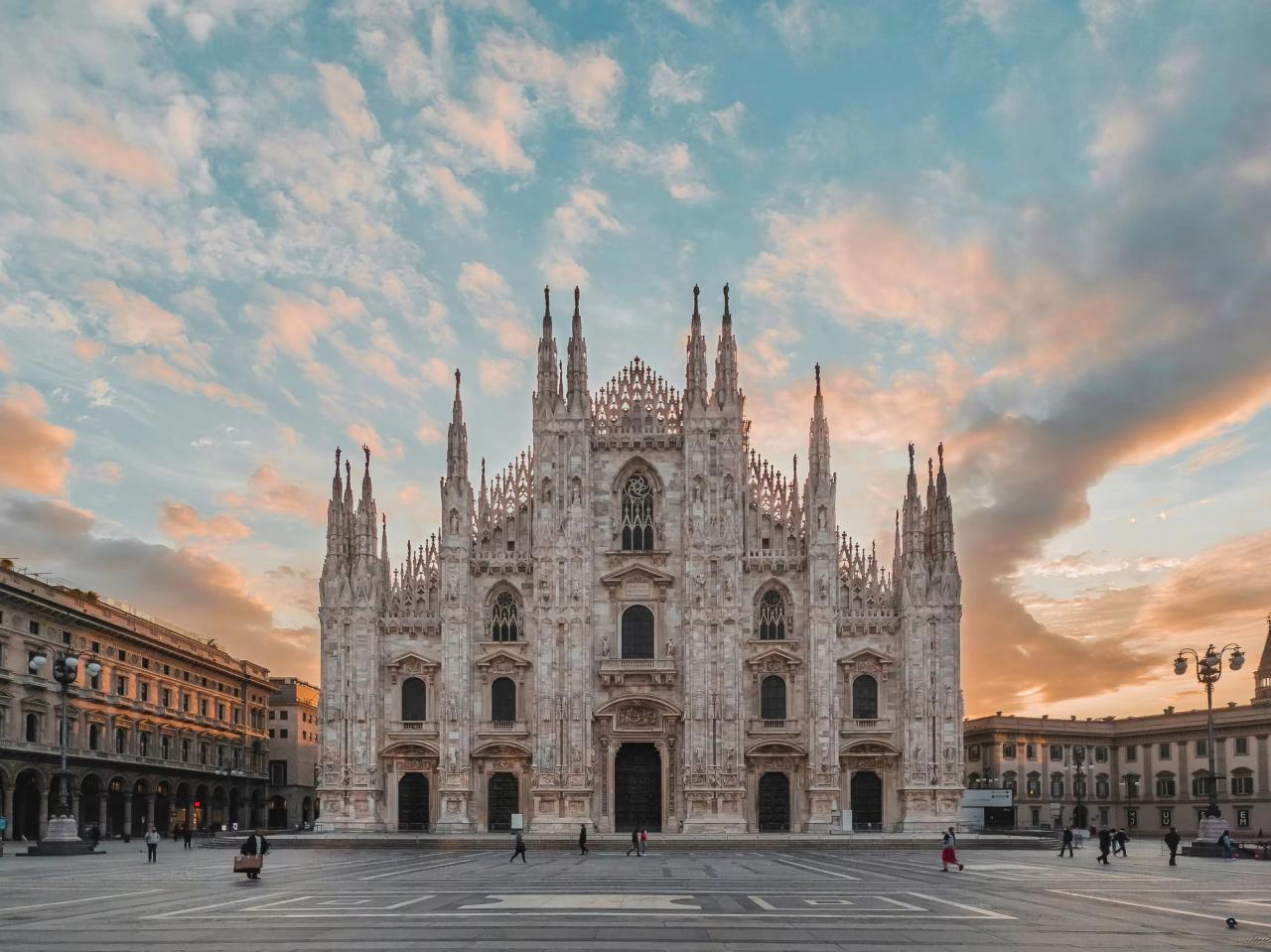
Milaan is de financiële en modestad van Italië — een kosmopolitische stad met een hoog tempo die professionals, creatieven en ondernemers van over de hele wereld aantrekt.
Als je gedijt op energie, carrièreambitie en vernieuwend design, dan is Milaan de plek voor je. Het is de meest internationaal verbonden stad van Italië, met de hoogste salarissen en de meest diverse arbeidsmarkt, maar ook de hoogste kosten van levensonderhoud.
In tegenstelling tot de eeuwenoude pracht van Rome of de chaotische charme van Napels, voelt Milaan modern en efficiënt aan — dichter bij Parijs of Londen dan bij het stereotiepe Italiaanse ansichtkaartbeeld.
De stad is compact genoeg om te voet of met de metro te verkennen, maar zit barstensvol dingen om te doen: musea van wereldklasse, restaurants met Michelinsterren, legendarisch nachtleven, en de Alpen op slechts twee uur afstand.
Of je nu financieel professional bent, modeontwerper, techwerker of student, Milaan heeft een plek voor je.
Deze gids behandelt alles wat je moet weten over verhuizen naar Milaan — van huisvesting en levenskosten tot gezondheidszorg, visa en het dagelijks leven.
Milaan in een oogopslag
- Inwoners
- 1,36 miljoen (stad), ~6,1 miljoen (metropoolgebied)
- Regio
- Lombardije
- Bekend om
- Mode, financiën, design
- Gemiddelde huur (1-slaapkamer)
- €1.000–€1.800/maand
- Gemiddeld salaris
- €2.000–€2.600/maand netto
- Expatgemeenschap
- Groot en goed gevestigd
- Taal
- Italiaans (Engels veel gesproken in het bedrijfsleven)
- Klimaat
- Vochtig subtropisch — warme zomers, mistige winters
Waarom verhuizen naar Milaan
- Carrièremogelijkheden: Milaan is de economische motor van Italië — thuisbasis van de Borsa Italiana, grote banken en talloze hoofdkantoren van multinationals. De salarissen zijn het hoogst van Italië.
- Mode en design: Van de Milan Fashion Week tot de Salone del Mobile, de stad is het wereldwijde epicentrum van stijl en designinnovatie. De Quadrilatero della Moda is het meest prestigieuze winkelgebied van Italië.
- Internationale verbindingen: Twee luchthavens (Malpensa en Linate) plus hogesnelheidstreinen maken Milaan de meest bereikbare stad van Italië. Parijs, Zürich en München zijn allemaal binnen een paar uur bereikbaar.
- Kwaliteit van leven: Prachtige parken, restaurants van wereldklasse en een bruisend cultureel leven. De stad is schoon, efficiënt en goed georganiseerd naar Italiaanse maatstaven.
- Onderwijs en onderzoek: Met de Bocconi en het Politecnico di Milano trekt Milaan studenten en onderzoekers van over de hele wereld.
- Alpenbereikbaarheid: Skigebieden in de Alpen liggen op slechts 1,5–2 uur met de auto of trein. Het Comomeer, het Gardameer en het Meer van Maggiore zijn allemaal gemakkelijk bereikbaar.
Woning zoeken in Milaan
De huurmarkt in Milaan is competitief. Appartementen in gewilde wijken zijn snel weg. Reken op vooruitbetaling: eerste maand huur, een borg van 2–3 maanden en makelaarskosten van één maand.
Zorg dat je documenten klaar hebt (identiteitsbewijs, Codice Fiscale, inkomensbewijs) — dat versnelt het proces aanzienlijk.
Gemiddelde huren
| Wijk | 1-slaapkamer | 3-slaapkamers | Karakter |
|---|---|---|---|
| Brera | €1.300–€2.000 | €2.800–€4.500 | Historisch en artistiek |
| Navigli | €900–€1.400 | €1.800–€3.000 | Grachtenwijk, levendig nachtleven |
| Porta Nuova | €1.400–€2.200 | €3.000–€5.000 | Moderne wolkenkrabbers, zakendistrict |
| Isola | €1.000–€1.600 | €2.200–€3.500 | Trendy, creatief, in opkomst |
| Zona Tortona | €1.100–€1.700 | €2.400–€3.800 | Mode- en designstudio's |
| Porta Romana | €1.000–€1.500 | €2.200–€3.200 | Gezinsvriendelijk, goed bereikbaar |
Huisvesting vinden
- Immobiliare.it: Het grootste woningportaal van Italië. Onmisbaar voor Milaan.
- Idealista.it: Sterk in Milaan met goede filteropties en een Engelse interface.
- Facebook-groepen: "Affitti Milano" en expat-woninggroepen voor kamers en onderverhuur.
- Spotahome: Bekijk en boek appartementen op afstand — populair bij expats die uit het buitenland komen.
- Makelaars: Eén maand huur courtage. Gabetti, Tecnocasa en Solo Affitti zijn betrouwbaar.
Tips voor expats
- Begin 1–2 maanden voor je verhuizing met zoeken — goede appartementen zijn binnen dagen weg.
- Houd rekening met een borg van 2–3 maanden plus de eerste maand huur.
- Pas op voor "contratto transitorio" — kortere looptijd, minder bescherming.
- Vraag altijd om een geregistreerd contract (contratto registrato) voor vestiging.
- Bezoek de woning indien mogelijk persoonlijk — foto's kunnen misleidend zijn bij oudere gebouwen.
- Controleer het energielabel (classe energetica) — dit beïnvloedt de stookkosten in de winter.
- Vraag naar de "spese condominiali" (gebouwkosten) — deze kunnen €50–€200/maand extra uitmaken.
Wijkgids
- Brera: het artistieke hart van Milaan. Galerijen, boetieks en sfeervolle café's op kinderkopjesstraten. Ideaal voor singles en stellen die cultuur waarderen. Hoge huurprijzen. Thuisbasis van de Pinacoteca di Brera.
- Navigli: Wonen aan het water met een bohémien sfeer. Populair bij creatieven en young professionals. Uitstekend nachtleven, zondagse vintagemarkten en betaalbare eetgelegenheden langs de grachten.
- Porta Nuova: Strak hoogbouwdistrict. Het Bosco Verticale (verticale bostorens), Piazza Gae Aulenti. Ideaal voor financiële professionals die een centraal, zakelijk gevoel zoeken.
- Isola: Voormalige arbeiderswijk die nu bruist van de street art, ambachtelijke brouwerijen en jonge gezinnen. Betaalbaarder, maar snel aan het gentrificeren. Geweldig eetcircuit.
- Zona Tortona: Modedistrict met industriële lofts en ontwerpersstudio's. Erg druk tijdens de Fashion Week en Salone del Mobile. Rustiger buiten het seizoen.
- Porta Romana: Goed bereikbaar en gezinsvriendelijk. Uitstekende restaurants en het historische QC Terme-spa. Gebalanceerde mix van rustig wonen en stedelijk gemak.
- Città Studi: Universiteitswijk nabij het Politecnico. Betaalbaar, jong en energiek. Ideaal voor studenten en starters. Veel goedkope restaurants en studentencafés.
- Bicocca: Ten noorden van het centrum, huisvesting van de Bicocca-universiteitscampus en het Hangar Bicocca-museum voor hedendaagse kunst. Rustige, moderne woonwijk met redelijke huurprijzen.
Levenskosten in Milaan
Milaan is de duurste stad van Italië, maar de salarissen zijn evenredig hoger. Huur is de belangrijkste variabele — al het overige is redelijk volgens West-Europese maatstaven.
Maandelijks budgetoverzicht
| Categorie | Budgetbereik |
|---|---|
| Huur (1-slaapkamer, centrum) | €1.200–€1.800 |
| Vaste lasten (elektriciteit, verwarming, water, afval) | €150–€220 |
| Internet | €25–€35 |
| Boodschappen | €300–€400 |
| Openbaar vervoer (maandelijks ATM-kaartje) | €39 |
| Uit eten (4x/maand) | €120–€200 |
| Vrije tijd/Sportschool | €40–€80 |
| Totaal | €1.874–€2.774 |
Dagelijkse kosten
- Koffie (espresso aan de bar): €1,20
- Lunch (informele trattoria): €10–€15
- Maandelijks ov-kaartje: €39
- Bier (bar): €5–€7
- Bioscoopkaartje: €9–€12
- Sportschoolabonnement: €40–€80/maand
- Gelato: €2,50–€3,50
- Aperitivo (drankje + buffet): €8–€12
Beste wijken per budget
- Budgetvriendelijk (€600–€900/maand): Città Studi, Lambrate, Greco — verder van het centrum maar goed bereikbaar met de metro.
- Middensegment (€900–€1.400/maand): Navigli, Isola, Porta Romana — levendige wijken met goed openbaar vervoer en uitgaansmogelijkheden.
- Premium (€1.400–€2.200/maand): Brera, Porta Nuova, City Life — centraal, modern en gewilde adressen.
Internet en connectiviteit
Milaan heeft een uitstekende internetinfrastructuur. Glasvezelverbindingen zijn wijd beschikbaar in het centrum.
- Belangrijkste providers: TIM, Fastweb, Vodafone, WindTre en Iliad.
- Gemiddelde snelheid: 100–300 Mbps (glasvezel), sommige wijken bieden 1 Gbps.
- Kosten: €25–€35/maand voor glasvezel-internet.
- Simkaarten: Iliad biedt abonnementen vanaf €9,99/maand. TIM en Vodafone kosten €12–€20/maand.
- Coworkingruimtes: Talent Garden, WeWork, Impact Hub en Copernico bieden betrouwbare verbindingen en een community.
Kosten van het verhuizen van je inboedel naar Milaan
Verhuiskosten zijn afhankelijk van de omvang van de zending, de transportmethode en je land van herkomst.
| Verzendmethode | Doorlooptijd | Geschatte kosten (EUR) |
|---|---|---|
| 20-voet container | ~2–4 weken | €1.600–€3.600 |
| 40-voet container | ~2–4 weken | €3.000–€6.000 |
| Luchtvracht (per kg) | Enkele dagen | €4,50–€8,50+ |
| Douane / Kosten | — | €160–€520+ |
<!-- FLAG: This testimonial (Luca R., April 2025 moving quote) was generated without a verified real source. Treat as illustrative only. --> Praktijkvoorbeeld: "Ik ben in april 2025 naar Milaan verhuisd met ongeveer 15 kubieke meter aan spullen via een gedeelde 20-voet container. De totale kosten, inclusief douaneafhandeling en bezorging op mijn appartement in Isola, bedroegen ongeveer €2.800. De zending arriveerde in ongeveer drie weken." — Luca R.
Je verplaatsen in Milaan
Milaan heeft een van de beste openbaarvervoersystemen van Italië. De metro dekt het grootste deel van de stad en het tramnetwerk is iconisch. Een auto is overbodig en vaak eerder een last.
- Openbaar vervoer: ATM-netwerk — metro (4 lijnen: M1, M2, M3, M5), trams en bussen. Een maandkaart kost €39. Enkele reizen kosten €2,20.
- Fietsen: BikeMi-deelfietsen en een uitdijend fietsnetwerk. De stad is grotendeels plat, wat fietsen praktisch maakt.
- Auto: Niet aanbevolen in het centrum. Area C-filesurtoeslag (€5/dag) geldt op werkdagen. Parkeren is schaars en duur (€2–€4/uur).
- Luchthaven: Malpensa (MXP) ligt op 50 km met een sneltrein. Linate (LIN) ligt op 7 km van het centrum, bereikbaar met de metro. Bergamo (BGY) bedient budgetluchtvaartmaatschappijen.
- Intercitytreinen: Milano Centrale — hogesnelheidstreinen naar Rome (3 uur), Turijn (1 uur), Venetië (2,5 uur), Florence (1,75 uur). Zowel Trenitalia als Italo exploiteren deze routes.
Gezondheidszorg in Milaan
Milaan heeft een van de beste gezondheidszorgs van Italië. Het publieke systeem (SSN) is over het algemeen goed, maar wachttijden voor specialisten kunnen lang zijn. Veel expats combineren registratie bij het publieke systeem met een privéverzekering.
- Ziekenhuizen/Klinieken: Ospedale San Raffaele (wereldklasse, onderzoekgericht), Policlinico di Milano, Humanitas (privé, Engelstalig personeel), La Madonnina.
- Engelstalige artsen: Ruim beschikbaar in privéklinieken. Humanitas en San Raffaele zijn bijzonder expat-vriendelijk.
- Apotheken: Overal — herkenbaar aan het groene kruis. Vele zijn laat open of rouleren 's nachts en in het weekend.
- Alarmnummer: 112 (Europees alarmnummer) of 118 (ambulance).
- Particuliere verzekering: Aanbevolen voor snellere toegang tot specialisten. Allianz Care, Cigna en Generali bieden expatverzekeringen aan.
Krijg een persoonlijk verhuisplan
Laat je e-mailadres achter en we sturen een checklist op maat plus drie offertes van gecontroleerde verhuizers.
Veiligheid en beveiliging
Milaan is een van de veiligere grote steden van Italië, maar de gebruikelijke stedelijke voorzorgsmaatregelen gelden.
- Zakkenrollers: Veelvoorkomend op drukke metrolijnen (vooral M1 en M2), rondom de Duomo en bij Stazione Centrale.
- Oplichting: Pas op voor nep-petitieondertekenaars, roosverkopers en "vriendschapsarmband"-oplichters in toeristische gebieden.
- Wijkveiligheid: Brera, Porta Nuova en City Life zijn erg veilig. Delen van Stazione Centrale en Corso Buenos Aires kunnen 's nachts onveilig aanvoelen.
- Politie: De Carabinieri (112) en de Polizia Locale zijn zichtbaar en responsief. De toeristenpolitie is actief in het centrum.
Visum- en verblijfsvereisten
Buitenlanders hebben een visum of verblijfsvergunning nodig om in Italië te wonen, werken of studeren.
Veelvoorkomende opties zijn:
- Werkvergunningen — voor expats in loondienst. Onderhevig aan het jaarlijkse Decreto Flussi-quotasysteem, dat bepaalt hoeveel niet-EU-werkers per jaar mogen binnenkomen. Dien je aanvraag ruim van tevoren in.
- EU Blue Card — voor hoogopgeleide werknemers met een universitair diploma en een arbeidsaanbod dat voldoet aan de minimumsalariseisen (~€26.000/jaar). Biedt makkelijkere gezinshereniging.
- Studentenvisa (voor ingeschreven universiteitsstudenten)
- Digital Nomad Visa — gelanceerd in april 2024 voor remote werkers en freelancers. Vereist bewijs van ~€27.000 jaarlijks inkomen, een ziektekostenverzekering en een strafblad zonder meldingen.
- Elective Residence Visa — voor personen met onafhankelijk/passief inkomen. Vereist ~€38.000/jaar voor alleenstaande aanvragers (meer voor gezinsleden).
- Startup Visa — voor ondernemers met innovatieve businessplannen (vereist goedkeuring van een commissie)
- Tijdelijke of langdurige verblijfsvergunningen — in aanmerking komen voor permanent verblijf na 5 jaar onafgebroken legaal verblijf
Je moet je adres registreren bij de Anagrafe, geldige vergunningen behouden en wijzigingen doorgeven. Permanent verblijf kan mogelijk zijn na meerdere jaren van onafgebroken legaal verblijf.
Belasting- en pensioenverplichtingen
Belastinginwoners (183+ dagen per jaar of primaire economische belangen in Italië) worden belast op hun wereldwijde inkomen. Italië hanteert een progressief belastingstelsel.
| Belastingcomponent | Beschrijving |
|---|---|
| Inkomstenbelasting | Progressieve tarieven: 23%–43% op wereldwijd inkomen |
| Sociale zekerheid (INPS) | Verplichte bijdragen voor pensioenen en sociale voorzieningen |
| Belastingverdragen | Verdragen met 80+ landen om dubbele belastingheffing te voorkomen |
Douane en het importeren van inboedelgoederen
Gebruikte inboedelgoederen kunnen douanevrij worden geïmporteerd als je ze minimaal zes maanden in eigendom en gebruik hebt gehad en ze bestemd zijn voor persoonlijk gebruik.
Vereiste documenten:
- Douaneaangifteformulier
- Gedetailleerde inventarislijst
- Geldig paspoort
- Bewijs van woonplaats of verblijfsvergunning
Nieuwe of commerciële goederen kunnen onderhevig zijn aan rechten en BTW. Nauwkeurige aangiften zijn essentieel om vertragingen of boetes te voorkomen.
Huisdieren verhuizen
Het meenemen van huisdieren naar Italië vereist naleving van de Italiaanse en EU-regelgeving.
De vereisten zijn onder meer:
- Microchipidentificatie
- Geldige rabiësvaccinatie
- Dierenartsgezondheidsverklaring (afgegeven binnen 10 dagen voor vertrek)
- Importvergunning (voor huisdieren van buiten de EU)
- Rabiës-antistoftest (voor sommige niet-EU-landen)
Plan ruim van tevoren — de documentatie kan enkele weken in beslag nemen.
Een auto importeren en je rijbewijs omwisselen
Voertuigen moeten voldoen aan EU-normen op het gebied van veiligheid, milieu en registratie.
Belangrijkste punten:
- Auto's van buiten de EU kunnen belast worden met douanerechten en BTW
- Inschrijven bij de PRA (Pubblico Registro Automobilistico)
- Technische keuring vereist vóór registratie
- EU/EER-rijbewijzen kunnen zonder keuring worden omgewisseld
- Niet-EU-bewoners moeten hun rijbewijs omwisselen — dit kan een theorie- en praktijkexamen vereisen
Een bankrekening openen en belastingnummer
Je hebt een geldig paspoort, bewijs van woonplaats en (indien van toepassing) een verblijfsvergunning nodig.
Belangrijkste banken:
- Intesa Sanpaolo: De grootste Italiaanse bank, met een uitgebreid filiaalnetwerk
- UniCredit: Uitstekende online diensten en Engelstalige ondersteuning
- Banco BPM: Geschikt voor nieuwkomers en niet-ingezetenen
De Codice Fiscale (via de Agenzia delle Entrate) is vereist voor werk, bankieren, huurcontracten en belastingaangifte. Vraag hem persoonlijk of online aan met je paspoort en verblijfsdocumentatie.
Cultuur & lifestyle
Milaan werkt hard en feest hard. De cultuur is internationaler en sneller dan in de rest van Italië.
- Modestad: Via Montenapoleone, de Quadrilatero della Moda en Milan Fashion Week tweemaal per jaar (februari en september).
- Kunst en geschiedenis: Leonardo's Het Laatste Avondmaal (vooraf reserveren), Pinacoteca di Brera en de Duomo — een gotisch meesterwerk dat bijna 600 jaar in aanbouw was.
- Nachtleven: Navigli en Corso Como zijn de belangrijkste uitgaansgebieden. De aperitivocultuur is koning — 18.00 tot 21.00 uur is heilig.
- Sport: San Siro (AC Milan en Inter), Formule 1 op het nabijgelegen Monza, en de openingsceremonie van de Olympische Winterspelen 2026.
Eten & uitgaan
- Lokale klassiekers: Risotto alla Milanese (saffraanrisotto) en cotoletta alla Milanese (gepaneerd kalfslapje).
- Snelle lunch: Panzerotti bij Luini vlakbij de Duomo — een Milaanse instelling voor €3–€5.
- Beste eetgebieden: Brera voor fine dining, Navigli voor informele trattoria's, Chinatown (Via Paolo Sarpi) voor budgetvriendelijk eten.
- Begrotingstip: Aperitivo-buffetten (€8–€12 voor een drankje en onbeperkt eten) zijn eigenlijk een goedkoop diner.
- Markten: Mercato Centrale Milano (eetzaal in Stazione Centrale) en Mercato Comunale voor verse producten.
- Supermarkten: Esselunga, Carrefour en Conad zijn de belangrijkste ketens. Lokale markten bieden betere prijzen voor fruit en groenten.
Expatcommunity
Milaan heeft een van de grootste expatcommunities van Italië. De stad trekt talent van over de hele wereld aan, wat zorgt voor een bruisend internationaal milieu.
- Nationaliteiten: Grote gemeenschappen van Amerikaanse, Britse, Franse, Duitse, Japanse, Indiase en Zuid-Amerikaanse expats.
- Organisaties: InterNations, Meetup-groepen, American Chamber of Commerce in Italy, British Chamber of Commerce.
- Talenruil: "Milano Lingue" en vergelijkbare groepen organiseren wekelijkse evenementen in bars en cafés.
- Sociaal leven: Aperitivo-meetups, voetbalsupportersgroepen, wandelclubs, professionele netwerkevenementen.
- Coworkingruimtes: Talent Garden, WeWork, Impact Hub — populair bij freelancers en remote werkers.
Arbeidsmarkt in Milaan
Milaan heeft de best betaalde banen van Italië en het laagste werkloosheidscijfer.
- Belangrijkste sectoren: financiën, mode, design, tech, consultancy, media, farmacie en automotive.
- Grote werkgevers: UniCredit, Intesa Sanpaolo, Prada, Luxottica, Pirelli, Deloitte, Accenture, McKinsey, Microsoft Italy.
- Gemiddelde salarissen per sector:
| Sector | Gemiddeld netto per maand |
|---|---|
| Financiën | € 2.500–€ 4.000 |
| Tech/IT | € 2.200–€ 3.500 |
| Mode/Design | € 1.800–€ 2.800 |
| Consultancy | € 2.400–€ 3.800 |
| Horeca | € 1.400–€ 2.000 |
- Vacatures vinden: LinkedIn, Indeed Italia, InfoJobs, Glassdoor, Michael Page, Hays, Robert Half.
Onderwijs in Milaan
- Internationale scholen: British School of Milan, American School of Milan, International School of Milan, Bilingual European School.
- Universiteiten: Politecnico di Milano (techniek en architectuur), Bocconi (bedrijfskunde en economie), Università degli Studi di Milano, Università Cattolica del Sacro Cuore.
- Taalonderwijs: Dante Alighieri Society, Berlitz, Istituto Marangoni, Scuola Leonardo da Vinci.
Verhuislijst voor Milaan
- Zorg voor een visum en werkvergunning als je van buiten de EU komt
- Verken wijken en maak een shortlist van appartementen
- Regel tijdelijke huisvesting voor 2–4 weken
- Zorg dat je documenten op orde hebt: paspoort, inkomensbewijs, diploma's (gelegaliseerd en vertaald)
- Stel een budget op — de kosten in de eerste maand zijn hoog (borg, makelaarskosten, eerste aanschafkosten)
- Schrijf je adres in bij de Anagrafe (bevolkingsregister)
- Vraag een Codice Fiscale aan bij de Agenzia delle Entrate
- Open een bankrekening (UniCredit, Intesa Sanpaolo, of N26/Revolut voor tijdelijk gebruik)
- Koop een Italiaanse SIM-kaart (TIM, Vodafone, Iliad — Iliad is het goedkoopst voor € 9,99/maand)
- Maak je vertrouwd met het ATM-metro- en tramnetwerk
- Schrijf je in bij de SSN voor de openbare gezondheidszorg
- Teken een langdurig huurcontract (zorg dat het geregistreerd wordt)
- Regel je nutsvoorzieningen — A2A (elektriciteit), gas, water, internet (TIM, Fastweb, Vodafone)
- Ontdek je wijk — zoek een leuk café, een markt en een apotheek in de buurt
- Sluit je aan bij een expatgroep of een taaluitwisseling
Gerelateerde gidsen
- [Verhuizen naar Italië] — uitgebreide landgids
- [Verhuizen naar Turijn] — nabijgelegen stad met lagere kosten
- [Verhuizen naar Rome] — gids voor de hoofdstad van Italië
- [Verhuizen naar Napels] — de foodhoofdstad van Zuid-Italië