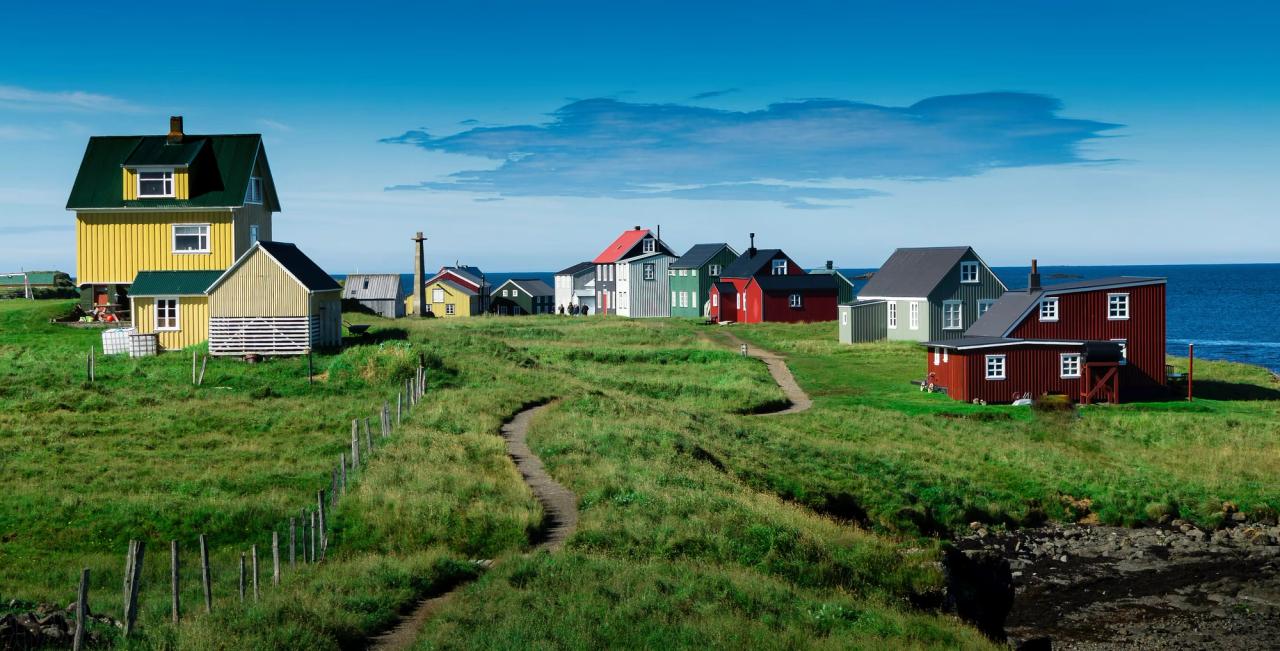
IJsland is een van de veiligste, meest egalitaire en visueel adembenemende landen ter wereld — maar verhuizen naar een vulkanisch eilandland van ongeveer 380.000 mensen brengt unieke uitdagingen met zich mee. Er is weinig woonruimte, de kosten van levensonderhoud behoren tot de hoogste in Europa, het weer is onverbiddelijk en je zult nergens op het eiland een McDonald's vinden. Toch melden degenen die de stap zetten consequent een levenskwaliteit die moeilijk te evenaren is: schone lucht, eersteklas geothermische baden, een hechte gemeenschap en een samenleving waar gelijkheid niet alleen een slogan is, maar een wettelijk kader. Deze gids leidt je door elke praktische stap van het verhuizen naar IJsland in 2026, van visa en kennitala-registratie tot boodschappenprijzen en de krappe woningmarkt van Reykjavík.
Of je nu een EER-burger bent die gebruikmaakt van het recht op vrij verkeer, een niet-EER-professional die een werkvergunning regelt, of een gezin dat de voor- en nadelen van het Arctische leven afweegt — de secties hieronder behandelen alles wat je nodig hebt, met echte kosten in ISK, landspecifieke bureaucratie en ervaringen van mensen die de stap al hebben gezet.
IJsland in een oogopslag
- Bevolking
- ~394.000 (eind Q4 2025)
- Hoofdstad
- Reykjavík
- Munteenheid
- IJslandse Kroon (ISK)
- Gemiddeld salaris
- ~10.500.000 ISK/jaar (~€70.000)
- Taal
- IJslands; Engels wordt door vrijwel iedereen gesproken
- Klimaat
- Subarctisch oceanisch; milde winters (gem. −3 °C), koele zomers (gem. 11 °C), veel wind en regen
- Tijdzone
- GMT (UTC+0); geen zomertijd
- Veiligheid
- Consequent gerangschikt als veiligste land ter wereld
Waarom verhuizen naar IJsland in 2026
- Veiligheid: IJsland heeft vrijwel geen geweldscriminaliteit, geen leger en politieagenten dragen zelden vuurwapens. Kinderen lopen zelfstandig naar school en deuren worden regelmatig niet op slot gedaan.
- Gelijkheid en wetgeving gelijke beloning: IJsland was het eerste land ter wereld dat het bij wet verbood om mannen en vrouwen verschillend te betalen voor hetzelfde werk (wet van 2018). Het bredere gelijkheidskader strekt zich uit tot LGBTQ+-rechten, ouderschapsverlof en toegankelijkheid voor mensen met een beperking.
- Universele gezondheidszorg: Alle inwoners met een geldige kennitala (nationaal identificatienummer) vallen onder het publieke stelsel dat wordt beheerd door Sjúkratryggingar Íslands (IJslandse Ziektekostenverzekering). Eigen bijdragen zijn bescheiden.
- Natuur en geothermische cultuur: Warmwaterbronnen, watervallen, gletsjers en het noorderlicht zijn geen toeristische attracties — ze zijn onderdeel van het dagelijks leven. Geothermische zwembaden zijn gemeenschappelijke ontmoetingsplaatsen, geen luxe.
- Hoge beheersing van het Engels: Bijna elke IJslander spreekt vloeiend Engels, waardoor de eerste overgang soepel verloopt — hoewel het leren van het IJslands cruciaal is voor langdurige integratie.
- Extreem lage criminaliteit en corruptie: IJsland staat consequent bovenaan de wereldwijde vrede- en transparantie-indexen.
Verhuiskosten naar IJsland
Alle goederen moeten IJsland per zee- of luchtvracht bereiken; er is geen landgrens. Containers komen voornamelijk aan via de havens van Reykjavík en Akureyri. Douaneafhandeling kan extra tijd kosten, vooral voor nieuwe artikelen die onderhevig zijn aan de Ijslandse BTW van 24% (VSK — virðisaukaskattur).
| Herkomst | Geschatte kostenmarge (ISK) | Geschatte kostenmarge (EUR) | Container/volume |
|---|---|---|---|
| VK / West-Europa | 360.000–600.000 | 2.200–3.800 | 20ft-container |
| VK / West-Europa | 650.000–1.000.000 | 4.000–6.200 | 40ft-container |
| Noord-Amerika | 800.000–1.300.000 | 5.000–8.000 | 20ft-container |
| Noord-Amerika | 1.300.000–2.000.000 | 8.000–12.500 | 40ft-container |
| Luchtvracht (1 m³) | 210.000–290.000 | 1.300–1.800 | Luchtvracht |
Toelichting op de deelkosten
- Transport: 360.000–1.000.000 ISK, afhankelijk van volume en herkomst. Zeevracht vanuit continentaal Europa duurt 3–5 weken; luchtvracht minder dan een week.
- Verzekering: 25.000–80.000 ISK voor standaard zee- of transportdekking.
- Douaneafhandeling: 30.000–65.000 ISK. Gebruikte persoonlijke bezittingen die worden ingevoerd als onderdeel van een verhuizing zijn doorgaans vrij van invoerrechten.
- Verpakkingsmateriaal: 40.000–100.000 ISK indien verzorgd door een professioneel verhuisbedrijf.
- Opslag (indien nodig): 15.000–35.000 ISK/maand in Reykjavík; zeer beperkt beschikbaar.
- Administratieve kosten: 10.000–25.000 ISK voor documentverwerking en stempels.
Douane- en invoerregels
Gebruikte huisraad kan doorgaans invoerrechtenvrij worden ingevoerd als onderdeel van een gedocumenteerde verhuizing. Nieuwe artikelen kunnen worden onderworpen aan 24% BTW zodra de waarde meer dan ISK 88.000 bedraagt. Alcohol en tabak hebben strikte hoeveelheidsbeperkingen. Vuurwapens en dieren vereisen speciale vergunningen. Auto's worden belast tenzij ze minimaal 12 maanden vóór de verhuizing in het buitenland in bezit waren.
Een persoonlijke schatting nodig?
Ontvang drie gecheckte offertes van verhuisbedrijven binnen 48 uur.
Visum- en verblijfsvereisten
IJsland maakt deel uit van de EER (Europese Economische Ruimte) en het Schengengebied, maar is geen EU-lidstaat. De immigratieregels zijn nauw afgestemd op de EER-akkoorden.
Voor EER-burgers en geassocieerde EER-burgers
Burgers van EER-landen (EU plus IJsland, Liechtenstein, Noorwegen) en Zwitserland mogen vrij in IJsland wonen en werken. Als je verblijf langer dan drie maanden duurt, moet je je registreren bij Þjóðskrá Íslands (Registers Iceland) en een kennitala aanvragen. Je hebt nodig:
- Geldig paspoort of nationale identiteitskaart
- Bewijs van werk, studie of voldoende financiële middelen
- Bewijs van adres in IJsland
Burgers van Scandinavische landen (Denemarken, Finland, Noorwegen, Zweden) genieten een nog eenvoudiger procedure en komen mogelijk in aanmerking voor het IJslands burgerschap na kortere verblijfsperioden.
Voor niet-EER-burgers: belangrijkste visumcategorieën
Werkvergunning (Atvinnuleyfi)
- Vereisten: Een bevestigd baanaanbod van een IJslandse werkgever. De werkgever moet aantonen dat er geen geschikte EER-kandidaat beschikbaar was (arbeidsmarkttoets).
- Behandeltijd: 90–180 dagen
- Duur: Gekoppeld aan het arbeidscontract; doorgaans afgegeven voor 1 jaar en verlengbaar.
- Belangrijke details: Hoogopgeleide werknemers, specialisten en mensen in krapte-beroepen (bijv. toerisme, visserij, gezondheidszorg) worden sneller verwerkt.
Gezinshereniging (Fjölskyldusamþykkt)
- Vereisten: Een naast familielid (echtgenoot/echtgenote, samenwonende partner, kind onder de 18 jaar) moet legaal in IJsland verblijven. Bewijs van de relatie en voldoende huisvesting/inkomen vereist.
- Behandeltijd: 90–180 dagen
- Duur: Overeenkomstig de verblijfsvergunning van de sponsor.
- Belangrijke details: Partners van hetzelfde geslacht komen volledig in aanmerking.
Studentenvergunning (Námsleyfi)
- Vereisten: Toelating aan een erkende IJslandse universiteit of onderwijsinstelling. Bewijs van voldoende financiële middelen (momenteel ~ISK 210.000/maand) en een zorgverzekering.
- Behandeltijd: 60–120 dagen
- Duur: Overeenkomstig het studieprogramma.
- Belangrijke details: Studenten mogen tijdens het semester tot 15 uur per week werken en tijdens vakanties voltijds.
Tijdelijke vergunning voor echtgenoot/partner van een IJslands staatsburger
- Vereisten: Huwelijk of geregistreerd samenwonen met een IJslands staatsburger. Minimuминкomen en bewijs van huisvesting vereist.
- Behandeltijd: 90–180 dagen
- Duur: Aanvankelijk 1 jaar, verlengbaar; leidt tot permanent verblijf na 4 jaar.
- Permanent verblijf: Beschikbaar na 5 jaar ononderbroken legaal verblijf voor EER/EFTA-burgers, of na 4 jaar met een geldige verblijfsvergunning voor niet-EER-burgers.
- Staatsburgerschap: Vereist doorgaans 7 jaar ononderbroken verblijf. Beheersing van het IJslands is vereist (minimaal A2-niveau). IJsland staat dubbele nationaliteit toe sinds 2003.
Registers Iceland: Het kennitala-registratieproces
De kennitala (nationaal identificatienummer) is het belangrijkste bureaucratische document in IJsland. Zonder dit nummer kun je geen bankrekening openen, geen toegang krijgen tot gezondheidszorg, geen huurcontract ondertekenen, geen telefoonabonnement afsluiten of kinderen inschrijven op school. Het is het IJslandse equivalent van een sofinummer.
Benodigde documenten
- Geldig paspoort of nationale identiteitskaart
- Bewijs van adres in IJsland (huurcontract of bevestiging van gastheer/gastvrouw)
- Verblijfsvergunning (voor niet-EER-burgers)
- Arbeidscontract of bewijs van studie (indien van toepassing)
Het registratieproces (stap voor stap)
-
Kom aan in IJsland en trek in bij jouw onderkomen.
-
Documenten verzamelen
paspoort, huurovereenkomst, verblijfsvergunning (indien van toepassing), bevestiging van werk of studie.
-
Bezoek of neem contact op met Þjóðskrá Íslands (Registers Iceland) persoonlijk op hun kantoor aan de Borgartún in Reykjavík of dien de aanvraag online in via hun portaal.
-
Dien de aanvraag in. De kennitala wordt doorgaans binnen 1–5 werkdagen toegewezen.
-
Ontvang bevestiging per post of elektronische melding. Jouw kennitala is een 10-cijferig nummer (geboortedatum plus vier cijfers).
-
Gebruik jouw kennitala om je te registreren bij een bank, zorgverlener en alle andere diensten.
Praktijkervaring: Een recente verhuizer naar Reykjavík meldde in maart 2025 dat het kennitala-proces verrassend snel was — aanvraag op een dinsdag en het nummer ontvangen op vrijdag. Alles was ervan afhankelijk, inclusief het afsluiten van een internetabonnement.
Een woning vinden in IJsland
IJsland heeft een van de krapste woningmarkten in Europa. De bouw heeft de bevolkingsgroei niet bijgehouden — vooral in de hoofdstedelijke regio Reykjavík, waar ongeveer tweederde van de bevolking woont. De concurrentie om huurwoningen is hevig, de borgsommen zijn hoog en de wachtlijsten voor sociale woningbouw zijn lang.
Gemiddelde huurprijzen per stad (2026, ISK/maand)
| Stad | 1-slaapkamer | 3-slaapkamers | Marktconcurrentie |
|---|---|---|---|
| Reykjavík (centrum) | 210.000–290.000 | 350.000–500.000 | Extreem concurrerend |
| Reykjavík (buitenwijken) | 180.000–250.000 | 300.000–420.000 | Zeer concurrerend |
| Kópavogur | 175.000–240.000 | 280.000–400.000 | Concurrerend |
| Hafnarfjörður | 170.000–235.000 | 270.000–390.000 | Concurrerend |
| Akureyri | 140.000–200.000 | 220.000–320.000 | Gemiddeld |
| Reykjanesbær | 150.000–210.000 | 240.000–340.000 | Gemiddeld |
IJslandse huurterminologie
- Leiga: Huur. De algemene term voor huurbetalingen.
- Trygging (borg): Borgsom, doorgaans 1–3 maanden huur, vooraf betaald.
- Húsaleiga: Huishuur; vaak gebruikt voor vrijstaande of halfvrijstaande woningen.
- Íbúð: Appartement of flat.
- Sameign: Gemeenschappelijke/gedeelde ruimten in een appartementengebouw.
Hoe vind je een woning
Online platforms:
- Leiga.is: Het grootste speciale verhuurplatform in IJsland. Advertenties in het IJslands, maar browservertaling werkt goed.
- Mbl.is (rubrieksadvertenties): De website van de krant Morgunblaðið; een traditionele en veelgebruikte plek voor huuradvertenties.
- Facebook-groepen: Groepen zoals "Leiga á Íslandi" (Huren in IJsland) en "Íbúðir til leigu" (Appartementen te huur) zijn erg actief.
Lokale bronnen:
- Búseti: Een non-profit woningcoöperatie die huurprijzen onder de marktprijs biedt aan leden (lange wachtlijsten).
- Félagsbústaðir: Gemeentelijke sociale woningbouw in Reykjavík; toelatingscriteria op basis van inkomen.
Tips voor buitenlanders die een woning zoeken
- Begin 2–3 maanden vóór jouw verhuizing met zoeken; wacht niet tot je aankomt.
- Zorg dat jouw kennitala klaar is — veel verhuurders vereisen dit voordat ze een huurcontract ondertekenen.
- Wees bereid om de eerste maand huur plus een borg van 1–3 maanden vooraf te betalen.
- Reageer binnen enkele minuten op advertenties; zo snel gaat de markt in Reykjavík.
- Overweeg tijdelijke huisvesting (Airbnb, pension) voor je eerste 2–4 weken terwijl je ter plekke zoekt.
- Vraag jouw werkgever om verhuisondersteuning — veel grotere bedrijven hebben contacten voor huisvesting.
Huurovereenkomst en wettelijke bescherming
De IJslandse huurwetgeving biedt redelijke huurderbescherming. Huurcontracten zijn doorgaans voor 12 maanden met automatische verlenging. Verhuurders moeten minimaal 6 maanden opzegtermijn in acht nemen om een onbepaalde huur te beëindigen; huurders moeten 3 maanden opzegtermijn hanteren. Huurverhogingen zijn gereguleerd en gekoppeld aan de consumentenprijsindex. De Húsnæðis- og mannvirkjastofnun (Woning- en Bouwautoriteit) houdt toezicht op de regulering van de huurmarkt.
Waarschuwing: huurzwendel
Zwendel komt voor, vooral gericht op buitenlanders die vanuit het buitenland zoeken. Maak nooit geld over voordat je een woning hebt bezichtigd of de identiteit van de verhuurder hebt geverifieerd. Vermijd advertenties die verdacht goedkoop zijn. Gebruik officiële platforms en eis een schriftelijk contract in zowel het IJslands als het Engels.
Gezondheidszorg en verzekering
IJsland heeft een universeel, publiek gefinancierd gezondheidsstelsel. Alle legale inwoners met een kennitala worden automatisch gedekt via Sjúkratryggingar Íslands (IJslandse Ziektekostenverzekering — SÍ). Het stelsel wordt voornamelijk gefinancierd via belastingen en biedt uitgebreide dekking, hoewel de wachttijden voor niet-spoedeisende specialistische zorg lang kunnen zijn.
Publieke ziektekostenverzekering
Sjúkratryggingar Íslands
- Kosten: Gefinancierd via belastingen; geen aparte premie. Eigen bijdragen gelden voor sommige diensten.
- Dekking: Huisartsbezoeken, ziekenhuiszorg, verwijzingen naar specialisten, verloskundige zorg, geestelijke gezondheidsdiensten en gesubsidieerde receptgeneesmiddelen.
- Geschiktheid: Alle legale inwoners met een kennitala. Dekking begint na registratie.
- Het meest geschikt voor: Iedereen — het publieke stelsel is de standaard en primaire optie.
Particuliere ziektekostenverzekering
- Kosten: 40.000–80.000 ISK/maand, afhankelijk van leeftijd, dekkingsniveau en aanbieder.
- Dekking: Snellere toegang tot specialisten, privéklinieken, tandheelkunde en fysiotherapie. Vervangt het publieke stelsel niet — het is een aanvulling.
- Geschiktheid: Beschikbaar voor alle inwoners; het meest gebruikt door expats uit niet-EER-landen tijdens de wachtperiode voordat de publieke dekking ingaat, of door degenen die kortere wachttijden willen.
- Het meest geschikt voor: Degenen die snellere toegang tot specialisten en bredere tandheelkundige/fysiotherapiedekking willen.
Toonaangevende verzekeringsaanbieders
- VÍS (Vátryggingafélag Íslands): Grootste IJslandse verzekeraar; biedt gezondheids- en reispakketten aan.
- TM (Tryggingamiðstöðin): Sterke binnenlandse aanbieder met aanvullende ziektekostenplannen.
- Sjóvá: Biedt gecombineerde woning- en zorgverzekeringen die populair zijn bij expats.
- Internationale opties: Cigna Global en Allianz Care zijn beschikbaar voor expats die draagbare internationale dekking willen.
Zorgdekking regelen (tijdlijn)
-
Kom aan in IJsland en registreer jouw adres bij Þjóðskrá Íslands.
-
Haal jouw kennitala op.
-
Registreer je bij Sjúkratryggingar Íslands. Breng voor EER-burgers jouw Europese ziekteverzekeringskaart (EHIC) of S1-formulier mee voor tijdelijke dekking. Niet-EER-burgers zijn gedekt zodra ze een geldige verblijfsvergunning hebben.
-
Kies een huisarts (heilsugæsla). Registreer je bij jouw lokale gezondheidscentrum (heilsugæslustöð). Reykjavík heeft er meerdere; landelijke gebieden hebben er doorgaans één.
-
De dekking is actief vanaf de datum van registratie (of datum van verblijfsvergunning voor niet-EER-burgers).
Eigen bijdragen (bij benadering, ISK)
- Huisartsbezoek: 1.500–5.000 ISK (met publieke dekking)
- Specialistbezoek: 5.000–15.000 ISK
- Receptgeneesmiddelen: Gesubsidieerd; doorgaans 1.500–8.000 ISK per kuur
- Tandarts (controle): 12.000–25.000 ISK (beperkte publieke subsidie)
- Spoedeisende hulp: 5.000–12.000 ISK
Ontvang een persoonlijk verhuisplan
Laat jouw e-mailadres achter en we sturen je een op maat gemaakte checklist plus drie offertes van gecheckte verhuisbedrijven.
Bankieren en financiën
De IJslandse banksector is klein maar modern. Contant geld is zelden nodig — kaart- en contactloze betalingen worden vrijwel overal geaccepteerd, zelfs voor kleine bedragen.
Een bankrekening openen
- Wanneer: Zodra je jouw kennitala hebt. Zonder kennitala kun je geen rekening openen.
- Benodigde documenten: Paspoort, kennitala, adresbewijs, verblijfsvergunning (niet-EER-burgers), arbeidscontract of bewijs van inkomen.
- Toonaangevende banken voor expats:
- Landsbankinn: Grootste bank; uitgebreid netwerk van filialen en geldautomaten; goede Engelstalige internetbankieren.
- Íslandsbanki: Sterk digitaal platform; concurrerend voor hypotheken.
- Arion banki: Kleinste van de drie grote banken; solide persoonlijke bankdiensten.
Functies en kosten van bankrekeningen
- Maandelijkse kosten: 0–2.000 ISK/maand, afhankelijk van rekeningtype en bank
- Betaalpas: Inbegrepen bij de meeste rekeningen; geen extra kosten
- Creditcard: 3.000–8.000 ISK/jaar; Visa en Mastercard beschikbaar
- Internationale overboekingen: 1.500–5.000 ISK per overboeking; SWIFT/BIC vereist
Jouw kennitala aanvragen
- Wat het is: Een 10-cijferig nationaal identificatienummer dat aan elke inwoner wordt toegewezen. Het bevat jouw geboortedatum.
- Wanneer afgegeven: Binnen 1–5 werkdagen na aanvraag bij Þjóðskrá Íslands.
- Waarom je het nodig hebt: Vereist voor bankieren, gezondheidszorg, belasting, werk, huurcontracten, nutsvoorzieningen, telefooncontracten en schoolinschrijving. Het is de toegangspoort tot alle formele diensten in IJsland.
Krediet en financiële geschiedenis
IJsland heeft geen privé-kredietbeoordelingsbureau vergelijkbaar met de SCHUFA. Kredietwaardigheid wordt intern door banken beoordeeld op basis van inkomen, werk en bestaande schulden die zijn geregistreerd in de Creditinfo-database. Er is geen cultuur van kredietopbouw als zodanig; een verantwoordelijke bankgeschiedenis is wat telt.
Betalingscultuur
IJsland is een van de meest cashloze samenlevingen ter wereld. Contactloze kaartbetalingen en mobiele betalingen (Apple Pay, Google Pay via de bankieren-apps) zijn standaard. Sommige landelijke gebieden hebben beperkte kaartinfrastructuur, maar dit is zeldzaam. Geldautomaten (hraðbanki) zijn ruim beschikbaar in steden.
Kosten van levensonderhoud in IJsland
IJsland staat consequent in de top van duurste landen ter wereld. Vrijwel alles wordt ingevoerd — van voedsel tot auto's tot kleding — en de kleine bevolking betekent beperkte concurrentie. Salarissen zijn hoog, maar belastingen en dagelijkse prijzen ook.
Maandelijks budgetoverzicht (ISK, 2026)
| Uitgave | Één persoon (Reykjavík) | Gezin van 3 (Reykjavík) | Één persoon (Akureyri) |
|---|---|---|---|
| Huur | 210.000–290.000 | 350.000–500.000 | 140.000–200.000 |
| Boodschappen | 70.000–100.000 | 140.000–200.000 | 60.000–85.000 |
| Nutsvoorzieningen (verwarming, elektriciteit, water) | 15.000–25.000 | 20.000–35.000 | 12.000–20.000 |
| Internet + mobiel | 12.000–18.000 | 12.000–18.000 | 12.000–18.000 |
| Openbaar vervoerskaart | 12.000 | 24.000 | N.v.t. (auto nodig) |
| Zorgverzekering (particuliere aanvulling) | 0–80.000 | 0–160.000 | 0–80.000 |
| Vrije tijd en entertainment | 20.000–40.000 | 40.000–80.000 | 15.000–30.000 |
| Totaal | 339.000–565.000 | 586.000–1.017.000 | 239.000–433.000 |
Gedetailleerd kostenonderdelen
Huisvesting:
- 1-slaapkamerappartement (centrum Reykjavík): 210.000–290.000 ISK/maand
- 3-slaapkamerappartement (Reykjavík): 350.000–500.000 ISK/maand
- Nutsvoorzieningen: 15.000–25.000 ISK/maand (verwarming is geothermisch en relatief goedkoop)
- Internet (glasvezel): 6.000–10.000 ISK/maand
Boodschappen en voeding:
- Wekelijkse boodschappen (1 persoon): 18.000–25.000 ISK
- Restaurantmaaltijd (informeel, bijv. soep/broodje): 2.500–4.000 ISK
- Restaurantmaaltijd (middenklasse, 2 gangen): 6.000–10.000 ISK
- Bier (van de tap, café): 1.200–1.800 ISK
- Koffie (flat white): 650–900 ISK
Vervoer:
- Maandelijkse buskaart (Strætó, Reykjavík): 12.000 ISK
- Benzine (1 liter): 350–420 ISK
- Autoverzekering (jaarlijks): 60.000–150.000 ISK
- Taxi (binnen Reykjavík, korte rit): 3.000–5.000 ISK
Verzekering en gezondheidszorg:
- Publieke ziektekostenverzekering: Inbegrepen in belastingen
- Particuliere aanvulling: 40.000–80.000 ISK/maand
- Inboedelverzekering: 3.000–8.000 ISK/maand
Vrije tijd en entertainment:
- Lidmaatschap sportschool: 8.000–15.000 ISK/maand
- Bioscoopkaartje: 2.200–2.800 ISK
- Geothermisch zwembad (sundlaug) toegang: 1.000–1.300 ISK
- Streamingdiensten (Netflix, enz.): 2.000–3.500 ISK/maand
Vergelijking met andere landen
- vs. Denemarken: IJsland is ruwweg 10–20% duurder voor boodschappen en uit eten gaan, hoewel de huurprijs vergelijkbaar is in Kopenhagen vs. Reykjavík.
- vs. Verenigd Koninkrijk: IJsland is 25–40% duurder in het algemeen, gedreven door voedsel, alcohol en geïmporteerde goederen.
- vs. Verenigde Staten: Boodschappen zijn 30–50% duurder; huurprijzen zijn vergelijkbaar met grote Amerikaanse steden; de zorgkosten zijn aanzienlijk lager dankzij het publieke stelsel.
Taal- en cultuurtips
Heb je IJslands nodig?
Kort antwoord: niet om te overleven, maar wel om te floreren. Bijna 98% van de IJslanders spreekt Engels, en je kunt het dagelijks leven, winkelen en bureaucratische zaken in het Engels afhandelen — vooral in Reykjavík. Het IJslands is echter de werktaal in de meeste sectoren buiten toerisme en tech. Het leren ervan geeft blijk van betrokkenheid bij de gemeenschap en is wettelijk vereist voor staatsburgerschap (minimaal A2-niveau). Sociale integratie — IJslandse vrienden maken in plaats van in een expat-bubbel te blijven — hangt sterk af van talinspanning.
IJslandse taalniveaus (ERK)
- A1 (Beginner): Basisbegre etingen, eten bestellen, eenvoudige borden lezen. Haalbaar in 3–6 maanden consistent studeren.
- A2 (Elementair): Eenvoudige gesprekken, begrijpen van routineberichten, dagelijkse boodschappen afhandelen. Haalbaar in 9–12 maanden. Dit is het minimumniveau dat vereist is voor staatsburgerschap.
- B1 (Gevorderd beginner): Deelnemen aan discussies op de werkvloer, nieuwskoppen begrijpen, de meeste gesprekken volgen. Haalbaar in 18–24 maanden.
- B2 (Gevorderd): Professionele vloeiendheid, genuanceerde uitdrukking, begrijpen van complexe teksten. Vereist 2–4 jaar onderdompeling en studie.
Het IJslands is opmerkelijk weinig veranderd sinds de middeleeuwse sagen. Het behoudt een complex naamvalsstelsel, grammaticaal geslacht en een vocabulaire die leningen weerstaat — nieuwe woorden worden gevormd uit bestaande IJslandse wortels in plaats van geleend. Dit maakt het een van de uitdagendere Germaanse talen, maar ook bijzonder bevredigend.
Hulpmiddelen voor het leren van de taal
- Mímir Símenntun: Biedt IJslandse cursussen voor buitenlanders in Reykjavík, van beginnersniveau tot gevorderd.
- Universiteit van IJsland (Háskóli Íslands): Intensief programma IJslands als tweede taal; voltijdse en deeltijdse opties.
- Online: Icelandic Online (icelandiconline.is) — gratis gestructureerde cursussen ontwikkeld door de Universiteit van IJsland.
- Duolingo: IJslandse cursus beschikbaar; nuttig voor de basis, maar onvoldoende op zichzelf.
- Tungumálatorg: Taalcentrum dat flexibele avond- en dagklassen aanbiedt.
Culturele normen en etiquette
Natuur- en geothermische cultuur:
- Openbare zwembaden (sundlaugar) zijn centraal in het sociale leven. Er wordt van je verwacht dat je grondig doucht — volledig naakt — voordat je het bad in gaat. Dit is niet onderhandelbaar en wordt gehandhaafd.
- Schoenen uitdoen voor je een huis binnengaat is standaardpraktijk. Let op een schoenenrek bij de deur.
- Wandelen, kamperen en tijd doorbrengen in de natuur zijn geen hobby's — het is een levensstijl. Kleed je in lagen; het weer kan binnen enkele minuten omslaan.
Gelijkheid en informaliteit:
- IJsland is diep egalitair. Er is zeer weinig ontzag voor hiërarchie. Bazen worden bij de voornaam aangesproken. Titels worden bijna nooit gebruikt.
- De loonkloof is wettelijk verboden. Ouderschapsverlof is royaal en wordt gedeeld tussen ouders (momenteel in totaal 12 maanden, verdeeld over de ouders).
- LGBTQ+-rechten zijn volledig beschermd. Het huwelijk voor paren van hetzelfde geslacht is legaal sinds 2010.
Gemeenschap en terughoudende vriendelijkheid:
- IJslanders kunnen in eerste instantie gereserveerd of op zichzelf lijken, maar ze zijn oprecht warm zodra er een band is gevormd.
- Koetjes-en-kalfjes-gesprekken komen minder voor dan in Angelsaksische culturen. Gesprekken zijn doorgaans direct.
- De gemeenschap is hecht — met ~394.000 mensen is "iedereen kent iedereen" niet ver van de waarheid. Reputatie telt.
Unieke culturele feiten:
- IJsland heeft geen McDonald's, geen Starbucks (in de afgelopen jaren) en zeer weinig internationale fastfoodketens. Lokale alternatieven domineren.
- Boeken zijn een nationale obsessie. IJsland publiceert meer boeken per hoofd van de bevolking dan welk ander land ook. De Jólabókaflóð (Kerstboekenvloed) is een traditie waarbij boeken worden uitgewisseld op kerstavond.
- De þetta reddast-mentaliteit ("het komt allemaal goed") weerspiegelt een ontspannen, optimistische kijk op problemen.
Sociale integratie
- Sluit je aan bij een club of vereniging: Sportclubs, wandelgroepen, breicirkels en vrijwilligersorganisaties zijn veelvoorkomende instappunten.
- Expat-gemeenschappen: Facebook-groepen zoals "Expats in Iceland" en "Foreigners in Reykjavík" zijn actief en ondersteunend.
- Taaluitwisseling: Tandem-partnerships met IJslanders die jouw taal willen oefenen zijn populair.
- Vrijwilliger: Opsporing en redding (Slysavarnafélagið Landsbjörg) is een geliefde nationale instelling en een krachtige manier om te integreren — hoewel lichamelijk veeleisend.
- Neem deel aan lokale evenementen: Þorrablót (midwinterfeest), Nationale Feestdag (17 juni) en bezoeken aan lokale zwembaden zijn momenten waarop gemeenschapsbanden worden gesmeed.
Vervoer in IJsland
Openbaar vervoer
Reykjavík en de hoofdstedelijke regio hebben een bussysteem genaamd Strætó (straeto.is). Het is functioneel maar beperkt vergeleken met steden op het Europese vasteland. Bussen zijn schoon en betrouwbaar, maar rijden buiten de spitsuren en in buitenwijken minder frequent. Er is nergens in IJsland een metro, tram of trein.
- Enkeltarief: ~620 ISK
- Maandabonnement: ~12.000 ISK
- Gratis reizen voor kinderen onder de 12 bij een betalende volwassene
Rijden
Autobezit is gebruikelijk — buiten het gebied van Reykjavík vrijwel onmisbaar. Wegen zijn goed onderhouden op de Ringweg (Route 1) en in steden, maar veel bergwegen (F-wegen) vereisen een 4WD en zijn alleen in de zomer open.
- Rijbewijs: EER-rijbewijzen zijn geldig. Niet-EER-rijbewijzen zijn geldig voor maximaal 6 maanden, waarna een omwisseling of examen vereist is.
- Auto kopen: Een tweedehands middenklasse-auto kost 1.500.000–4.000.000 ISK. Nieuwe auto's worden zwaar belast.
- Brandstof: 350–420 ISK/liter. IJsland heeft rijkelijk goedkope elektriciteit voor elektrische voertuigen, en de adoptie van elektrische voertuigen groeit snel.
Fietsen en wandelen
Reykjavík breidt zijn fietsinfrastructuur uit, maar wind, regen en duisternis in de winter maken het het hele jaar fietsen uitdagend voor de meesten. Lopen is praktisch in het centrum van Reykjavík. De meeste expats lopen of nemen de bus binnen de stad en gebruiken een auto voor ritten buiten de stad.
Werk en werken in IJsland
De arbeidsmarkt
IJsland heeft vrijwel volledige werkgelegenheid (werkloosheid doorgaans onder de 4%). Belangrijke sectoren zijn:
- Toerisme en horeca: Een van de grootste werkgevers; seizoenspiek in de zomer.
- Visserij en verwerking van zeevruchten: Een historische pijler van de economie.
- Technologie en startups: Groeiende sector geconcentreerd in Reykjavík; gaming, fintech en groene energie.
- Gezondheidszorg en onderwijs: Stabiele vraag naar professionals, met name in landelijke gebieden.
- Bouw: Aanhoudende vraag door woningtekort en infrastructuurprojecten.
- Financiën en bankieren: Kleine maar actieve sector.
Arbeidsrechten
- Minimumloon: IJsland heeft geen wettelijk minimumloon. In plaats daarvan gelden cao-minima. Vanaf januari 2026 bedraagt dit doorgaans 513.000–515.000 ISK/maand voor voltijds werk op instapniveau.
- Werkuren: Standaard is 40 uur per week. Overwerk wordt betaald met een toeslag.
- Jaarlijks verlof: Minimaal 24 dagen per jaar; neemt toe met leeftijd en dienstjaren.
- Ouderschapsverlof: 12 maanden gedeeld tussen ouders tegen 80% van het salaris (met een maximum).
- Vakbonden (verkalýðsfélag): Uiterst sterk. Vakbondslidmaatschap is vrijwel universeel en wordt automatisch van het salaris ingehouden. Ze onderhandelen over lonen, secundaire arbeidsvoorwaarden en arbeidsbescherming.
Belastingen in IJsland
Inwoners betalen inkomstenbelasting over hun wereldwijde inkomsten. Het stelsel is progressief.
| Maandelijks inkomen (ISK/maand) | Belastingtarief (2026, per skatturinn.is) |
|---|---|
| 0 – 498.122 | 31,49% (16,55% rijksbelasting + 14,94% gemeentebelasting) |
| 498.123 – 1.398.450 | 37,99% (23,05% rijksbelasting + 14,94% gemeentebelasting) |
| Boven 1.398.450 | 46,29% (31,35% rijksbelasting + 14,94% gemeentebelasting) |
De gemeentebelasting bedraagt gemiddeld 14,94% in 2026 en varieert van 12,44% tot 14,94% afhankelijk van de gemeente.
- Gemeentebelasting (sveitarfélag): Gemiddeld 14,94% in 2026 (varieert van 12,44% tot 14,94% per gemeente).
- Rijksbelasting (ríkisskattur): Progressief; van toepassing boven de onderste drempel.
- Pensioenbijdragen: Verplicht; doorgaans 4% werknemer + 11,5% werkgever. Fiscaal aftrekbaar.
- Persoonlijke belastingkorting (persónuafsláttur): Een maandelijks krediet (72.492 ISK in 2026) verlaagt jouw effectieve belastingdruk.
- Belastingverdragen: IJsland heeft verdragen met de meeste westerse landen om dubbele belasting te vermijden.
Verhuischecklist
- Start de aanvraag voor een verblijfsvergunning (niet-EER-burgers)
- Zoek naar en neem contact op met internationale verhuisbedrijven met routes naar IJsland
- Begin met het verzamelen en vertalen van belangrijke documenten (geboorteakte, huwelijksakte, diploma's, medische dossiers)
- Zoek naar woonopties op Leiga.is en in Facebook-groepen
- Informeer jouw huidige werkgever, verhuurder en nutsbedrijven
- Bevestig de status van de verblijfsvergunning (niet-EER) of bereid registratiedocumenten voor (EER)
- Boek jouw verhuizing — zeevracht of luchtvracht
- Regel tijdelijke huisvesting in IJsland voor de eerste 2–4 weken
- Vraag een EHIC of S1-formulier aan (EER-burgers)
- Zorg voor gecertificeerde vertalingen van essentiële documenten in het Engels (IJslandse vertalingen kunnen later nodig zijn)
- Bevestig verzenddatums en douanedocumentatie
- Regel een reisverzekering voor de overgangstijde
- Stel postdoorsturing in vanuit jouw huidige adres
- Hef spaargeld op of maak het over — zorg voor toegang tot geld in ISK of een breed geaccepteerde valuta
- Download handige apps: Strætó (bus), Veður (IJslands weer), Á (bankieren-apps)
- Definitief inpakken en inventarislijst voor de douane
- Bevestig aankomstdetails bij tijdelijke huisvesting
- Informeer Útlendingastofnun over jouw aankomstdatum (indien van toepassing)
- Bewaar alle kritieke documenten in handbagage: paspoort, vergunningen, contracten, medische dossiers
- Douane afhandelen als je persoonlijke goederen meebrengt
- Intrekken in tijdelijke huisvesting
- Registreer jouw adres bij Þjóðskrá Íslands
- Vraag jouw kennitala aan
- Koop een lokale simkaart (Síminn, Vodafone Iceland of Nova)
- Ontvang kennitala
- Open een bankrekening bij Landsbankinn, Íslandsbanki of Arion banki
- Registreer je bij Sjúkratryggingar Íslands voor gezondheidszorg
- Kies en registreer je bij een lokale heilsugæsla (huisarts/gezondheidscentrum)
- Begin actief te zoeken naar een woning op Leiga.is en in Facebook-groepen
- Meld je aan bij jouw vakbond (indien in dienst)
- Onderteken een huurcontract en trek in bij permanente huisvesting
- Nutsvoorzieningen aansluiten (hitaveita/geothermische verwarming, rafmagn/elektriciteit, internet)
- Kinderen inschrijven op school (neem contact op met de relevante sveitarfélag/gemeente)
- Schrijf je in voor een IJslandse taalcursus
- Verken het dichtstbijzijnde sundlaug (geothermisch zwembad) — dit is zowel praktisch als cultureel
- Maak jezelf vertrouwd met de Strætó-busroutes of begin aan het proces van het kopen van een auto
Waar vind je tools en bronnen
ReloAdvisor-tools:
- Volumecalculator
- Video-inspectie
- Verhuiskostencalculator
Officiële IJslandse bronnen:
- Þjóðskrá Íslands (IJslands bevolkingsregister): skra.is
- Útlendingastofnun (Directie Immigratie): utl.is
- Sjúkratryggingar Íslands (IJslandse Ziektekostenverzekering): sjukra.is
- Skatturinn (IJslandse Belastingdienst): skatturinn.is
- Strætó (Openbaar busvervoer): straeto.is
- ?slandsstofa (Business Iceland / IJslandse handelsbevordering): islandsstofa.is
Expat-gemeenschappen:
- Expats in Iceland (Facebook)
- Buitenlanders in Reykjavík (Facebook)
- InterNations IJsland: internations.org/iceland-expats
Gerelateerde gidsen:
- Verhuizen naar Noorwegen
- Verhuizen naar Denemarken
- Verhuizen naar Zweden