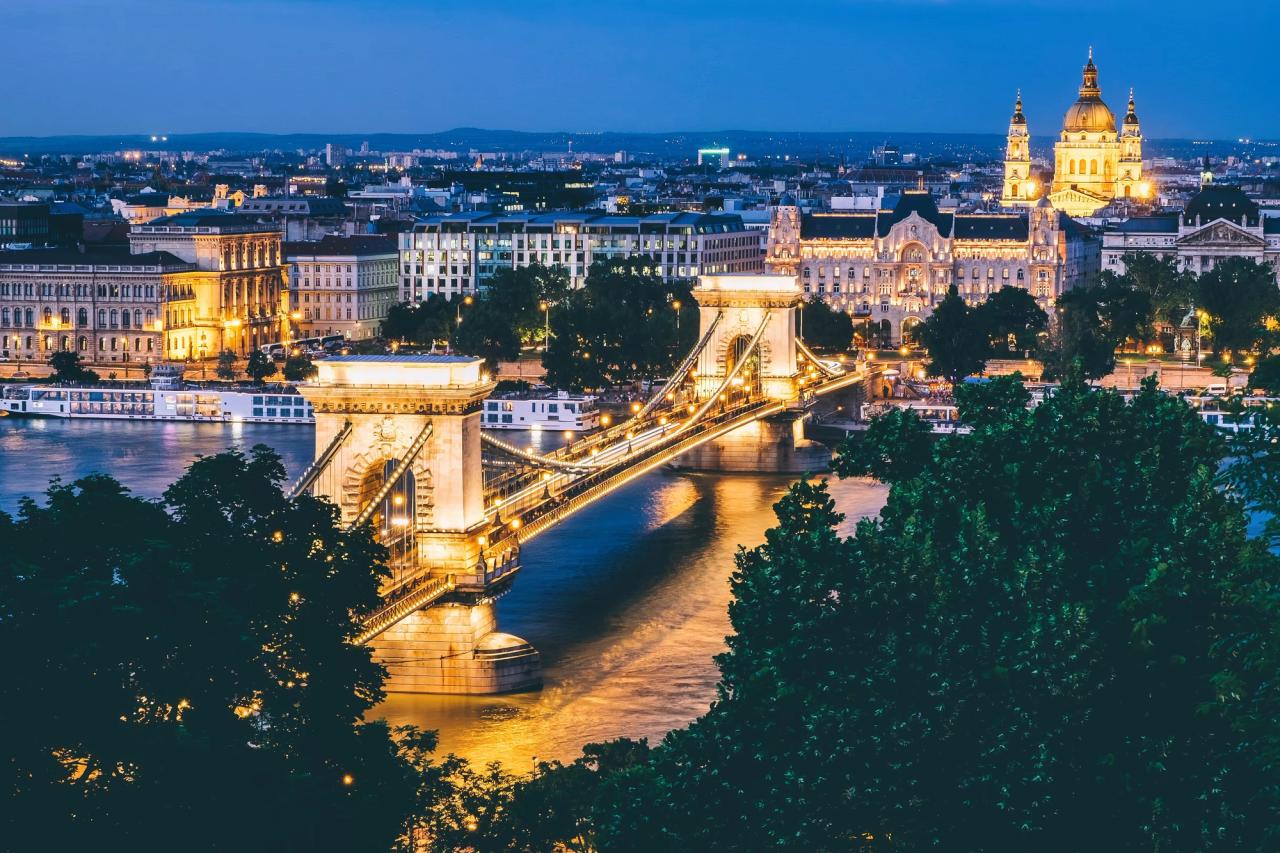

Hongarije is stilletjes een van de aantrekkelijkste bestemmingen in Europa geworden voor expats, digitale nomaden en internationale professionals die een betaalbare maar cultureel rijke levensstijl zoeken binnen de Europese Unie. Budapest scoort consistent bij de beste steden ter wereld voor digitale nomaden, met een levendig nachtleven, historische architectuur, legendarische thermale baden en een levensonderhoud dat een fractie kost van wat je in Londen, Parijs of Berlijn zou betalen. Of je nu verhuist voor werk, een carrière op afstand wilt opbouwen, studeert aan een van Hongarije's gerenommeerde universiteiten of met pensioen gaat in een land waar je geld verder strekt: in deze gids vind je alle stappen van het proces — van visa en registratie tot wonen, gezondheidszorg, bankieren en culturele integratie.
Hongarije in één oogopslag

- Bevolking
- ~9,5–9,6 miljoen
- Hoofdstad
- Budapest
- Valuta
- Hongaarse Forint (HUF)
- Gemiddeld salaris
- ~8.500.000–10.000.000 HUF per jaar (~710.000–840.000 HUF bruto/maand)
- Taal
- Hongaars (in Budapest en universiteitssteden wordt Engels veel gesproken)
- Klimaat
- Continentaal; warme zomers (25–35 °C), koude winters (−5–5 °C)
- Tijdzone
- CET (UTC+1), CEST in de zomer (UTC+2)
Waarom verhuizen naar Hongarije in 2026
- Extreem betaalbaar voor EU-begrippen: dagelijkse uitgaven, huur, uit eten en vervoer kosten aanzienlijk minder dan in West-Europa, waardoor je een hoge levenskwaliteit bereikt met een bescheiden budget.
- Vlak inkomstenbelastingtarief van 15%: Hongarije hanteert een eenvoudig, competitief vlak tarief dat zowel werknemers als zelfstandige professionals ten goede komt.
- Budapest is een topbestemming voor digitale nomaden: uitstekende coworkingruimtes, betrouwbaar snel internet, een bruisende sociale scene en de White Card (verblijfsvergunning voor digitale nomaden) maken Budapest ideaal voor mensen die op afstand werken.
- EU-lidmaatschap zonder euro: Hongarije is een volwaardig EU-lid, waardoor inwoners toegang hebben tot de interne markt, Schengenreizen en EU-rechten — terwijl de zwakkere HUF buitenlandse inkomens verder doet strekken.
- Wereldberoemde thermale badcultuur: meer dan 1.300 natuurlijke thermale bronnen voeden historische badhuizen zoals Széchenyi, Gellért en Rudas, die het hele jaar door ontspanning bieden.
- Uitstekend openbaar vervoer in Budapest: een uitgebreid metro-, tram-, bus- en trolleybusnetwerk — plus een van de langste tramlijnen van Europa — verbindt de hele hoofdstad efficiënt en voordelig.
Kosten van verhuizen naar Hongarije
Inzicht in de financiële aspecten van je verhuizing is essentieel voor een goede planning. De onderstaande tabel weerspiegelt de gebruikelijke markttarieven van medio 2025 voor zendingen naar Budapest.
| Herkomst | Geschatte kosten (EUR) | Verzendmethode |
|---|---|---|
| Binnen de EU (West-Europa) | €1.100–€2.400 | 20-voets container |
| Binnen de EU (West-Europa) | €2.000–€4.200 | 40-voets container |
| Noord-Amerika | €2.500–€5.500 | 20-voets container |
| Noord-Amerika | €4.000–€8.000 | 40-voets container |
| Luchtvracht (elke herkomst) | €3,50–€7,00+ per kg | Luchtvracht |
Toelichting op de kostenonderdelen
- Transport: €800–€3.500 afhankelijk van herkomst, afstand en de keuze voor weg-, spoor-, zee- of luchtvracht.
- Verzekering: €50–€300 afhankelijk van de opgegeven zendingwaarde en het dekkingsniveau.
- Douaneafhandeling: €130–€420+ voor documentatie, tariefbeoordeling en behandelingskosten.
- Verpakkingsmateriaal: €100–€400 voor professionele dozen, inpakmateriaal en speciale containers.
- Opslag (indien nodig): €50–€200 per maand voor korte of lange termijn opslagruimte in Budapest.
- Administratiekosten: €50–€150 voor vergunningen, certificaten en documentverwerking.
Wil je een persoonlijke schatting?
Ontvang drie gescreende offertes van verhuisbedrijven binnen 48 uur.
Visum- en verblijfsvereisten
Het immigratiestelsel van Hongarije maakt een duidelijk onderscheid tussen EU/EER-burgers en onderdanen van derde landen. Als EU-lidstaat verleent Hongarije vrij verkeer aan alle EU-, EER- en Zwitserse burgers, terwijl niet-EU-onderdanen door een gestructureerd vergunningenstelsel moeten navigeren.
Voor EU/EER/Zwitserse burgers
EU-, EER- en Zwitserse burgers hebben geen visum of verblijfsvergunning nodig om Hongarije binnen te komen, er te wonen of te werken. Als je echter van plan bent langer dan 90 dagen te blijven, moet je een registratiekaart (regisztrációs igazolás) aanvragen bij de regionale directie van het Nationaal Directoraat-Generaal voor Vreemdelingenpolitie (OIF). Je hebt nodig:
- Een geldig paspoort of nationale identiteitskaart
- Bewijs van dienstverband, zelfstandige activiteit, studie of voldoende financiële middelen
- Bewijs van ziektekostenverzekering
De registratiekaart wordt ter plekke of binnen een paar dagen verstrekt en is vijf jaar geldig. Ze bevestigt je verblijfsrecht en is onmisbaar voor toegang tot lokale diensten.
Voor onderdanen van derde landen: belangrijkste visumcategorieën
Werkvergunning / verblijfsvergunning voor arbeid
- Vereisten: een bevestigd jobaanbod van een Hongaarse werkgever die namens jou een werkvergunning aanvraagt. De werkgever moet aantonen dat er geen geschikte EU-kandidaat beschikbaar was voor de functie.
- Verwerkingstijd: 60–90 dagen na indiening.
- Duur/geldigheid: afgegeven voor maximaal 2 jaar, verlengbaar.
- Belangrijke details: de vergunning is gekoppeld aan een specifieke werkgever en functie. Van baan wisselen vereist een nieuwe aanvraag.
White Card (verblijfsvergunning voor digitale nomaden)
- Vereisten: bewijs van werk op afstand of freelancewerk voor een bedrijf of klanten buiten Hongarije. Minimaal maandelijks inkomen van ongeveer 3.000 EUR (of equivalent in HUF). Je mag geen werk verrichten voor een Hongaarse werkgever.
- Verwerkingstijd: 30–60 dagen.
- Duur/geldigheid: afgegeven voor 1 jaar, eenmalig verlengbaar voor een extra jaar (maximaal 2 jaar in totaal).
- Belangrijke details: de White Card (verblijfsvergunning voor digitale nomaden) van Hongarije heeft Budapest tot een van de aantrekkelijkste bestemmingen voor digitale nomaden in Europa gemaakt. Houders kunnen vrij reizen binnen het Schengengebied.
Verblijfsvergunning voor studenten
- Vereisten: toelatingsbewijs van een Hongaarse universiteit of erkende onderwijsinstelling. Bewijs van voldoende financiële middelen (beurs of bankafschrift) en een geldige ziektekostenverzekering.
- Verwerkingstijd: 30–60 dagen.
- Duur/geldigheid: afgestemd op de duur van de studie, doorgaans 1–5 jaar.
- Belangrijke details: studenten mogen tijdens het studiejaar tot 30 uur per week werken en voltijds tijdens vakanties.
Verblijfsvergunning voor gezinshereniging
- Vereisten: bewijs van familieband (echtgeno(o)t(e), minderjarig kind) met een Hongaarse inwoner of staatsburger. Passende huisvesting en financiële middelen moeten worden aangetoond.
- Verwerkingstijd: 60–90 dagen.
- Duur/geldigheid: gelijk aan de looptijd van de vergunning van de sponsor.
- Belangrijke details: echtgeno(o)t(en) van vergunninghouders kunnen een aparte werkvergunning aanvragen.
Adresregistratie (Lakcímkártya)
De lakcímkártya (adreskaart) is het verplichte adresregistratiedocument van Hongarije. Het is niet zomaar een formaliteit — het is de toegangspoort tot vrijwel elk administratief proces in het land. Zonder lakcímkártya kun je geen bankrekening openen, kinderen inschrijven op school, je aanmelden voor gezondheidszorg of zaken doen bij de meeste overheidsinstanties.
Benodigde documenten
- Geldig paspoort of nationaal identiteitsbewijs
- Ingevuld registratieformulier (verkrijgbaar bij het districtskantoor of online)
- Adresbewijs: ondertekend huurcontract, eigendomsakte of een schriftelijke verklaring van de eigenaar waarin toestemming wordt verleend om je op het adres in te schrijven
- Verblijfsvergunning (voor niet-EU-onderdanen) of registratiekaart (voor EU-burgers)
Het registratieproces (stap voor stap)
-
Zorg voor woonruimte en verkrijg een ondertekend huurcontract of schriftelijke toestemming van de eigenaar.
-
Ga naar het lokale districtskantoor (járási hivatal) dat bevoegd is voor jouw adres.
-
Dien het ingevulde formulier in samen met alle vereiste documenten.
-
De ambtenaar controleert de documenten en registreert je adres in het centrale register.
-
Ontvang je lakcímkártya — doorgaans direct ter plekke of binnen enkele werkdagen.
-
Informeer je werkgever, bank en verzekeraar over de gegevens van je nieuwe adreskaart.
De lakcímkártya vermeldt zowel je vaste adres (állandó lakcím) als, indien anders, je tijdelijk adres (tartózkodási hely). De meeste nieuw aangekomen expats registreren aanvankelijk alleen een tijdelijk adres.
Woonruimte vinden in Hongarije
De huurmarkt in Hongarije is in veel opzichten gunstig voor huurders: huurcontracten zijn gestandaardiseerd, er bestaan beschermingsmaatregelen tegen uitzetting en de huurprijzen behoren tot de laagste van de EU — zeker buiten Budapest. De meeste appartementen worden ongestoffeerd verhuurd, maar er zijn ook gemeubileerde opties beschikbaar in de hoofdstad, doorgaans tegen een toeslag van 20–40%.
Gemiddelde huurprijzen per grote stad (2026)
| Stad | 1 slaapkamer (centrum) | 3 slaapkamers (centrum) | Marktconcurrentie |
|---|---|---|---|
| Budapest | 180.000–300.000 HUF | 350.000–600.000 HUF | Hoog |
| Debrecen | 100.000–170.000 HUF | 180.000–300.000 HUF | Gemiddeld |
| Szeged | 90.000–150.000 HUF | 160.000–260.000 HUF | Gemiddeld |
| Pécs | 85.000–140.000 HUF | 150.000–250.000 HUF | Gemiddeld |
| Miskolc | 60.000–100.000 HUF | 100.000–180.000 HUF | Laag |
Hongaarse huurterminologie
- Bérleti díj (huur): de basishuur die de verhuurder maandelijks rekent.
- Közös költség (gemeenschappelijke kosten / onderhoudsbijdrage gebouw): een maandelijkse bijdrage die alle bewoners van een gebouw betalen voor gedeelde diensten zoals schoonmaak, liftonderhoud, gebouwverzekering en gezamenlijke nutsvoorzieningen. Doorgaans 10.000–30.000 HUF per maand.
- Rezsi (nutskosten): de gecombineerde kosten voor elektriciteit, gas, water, verwarming en internet — meestal apart van de huur in rekening gebracht.
- Kaució (borg): borgsom, doorgaans 1–2 maanden huur, terugbetaald aan het einde van de huurperiode minus eventuele schade.
Hoe vind je woonruimte
Online platforms:
- Ingatlan.com: Hongarije's grootste vastgoedportaal, gebruikt door zowel verhuurders als makelaars. Beschikbaar in het Hongaars — gebruik een browservertaler.
- Albérlet.hu: specifiek huurplatform met filters voor gestoffeerd/ongestoffeerd, wijk en prijsklasse.
- Facebook-groepen: groepen zoals "Budapest Apartments for Rent" en "Expats in Budapest Housing" zijn actief en plaatsen regelmatig beschikbare appartementen.
Lokale bronnen:
- Makelaars (ingatlanirodák) die gespecialiseerd zijn in verhuur aan expats, met name in de districten V, VI, VII en XIII van Budapest.
- Prikborden van universiteiten in Debrecen, Szeged en Pécs voor betaalbare gedeelde huisvesting.
Tips voor buitenlanders bij het zoeken naar woonruimte
- Houd rekening met de kaució (borg) plus de eerste maand huur vooraf — plan voor 2–3 maanden huur als intrekkingskosten.
- Sta altijd op een schriftelijk contract (bérleti szerződés); mondelinge afspraken bieden geen juridische bescherming.
- Controleer of de woning geregistreerd staat voor woondoeleinden; sommige commerciële panden worden illegaal onderverhuurd.
- Controleer of de közös költség en de nutskosten bij de vermelde huur zijn inbegrepen of apart in rekening worden gebracht.
- Schrijf je adres onmiddellijk na het ondertekenen van het huurcontract in voor de lakcímkártya — sommige verhuurders werken hier tegenin, maar het is jouw wettelijk recht.
Huurovereenkomst en juridische bescherming
Standaardhuurcontracten in Hongarije gelden voor een vaste termijn van 12 maanden, met een opzegtermijn van 30–60 dagen bij vroegtijdige beëindiging door een van beide partijen. Verhuurders kunnen huurders alleen via een gerechtelijk bevel uitzetten, en huurverhogingen tijdens de contractperiode zijn doorgaans niet toegestaan, tenzij uitdrukkelijk vermeld in het huurcontract. Huurders hebben het recht om kleine aanpassingen aan de woning te doen (bijv. schilderen) zonder toestemming van de verhuurder.
Waarschuwing: huurzwendel
Maak nooit geld over voordat je het appartement persoonlijk of via een betrouwbare vertegenwoordiger hebt bezichtigd. Wees op je hoede voor advertenties die aanzienlijk onder de marktprijs liggen, verhuurders die beweren in het buitenland te zijn en het pand niet kunnen tonen, of verzoeken om betaling via niet-traceerbare methoden. Gebruik gevestigde platforms en werk indien mogelijk samen met erkende makelaars.
Gezondheidszorg en verzekering
Hongarije heeft een openbaar gezondheidsstelsel (társadalombiztosítás) dat wordt gefinancierd via verplichte socialezekerheidsbijdragen, aangevuld door een groeiende private gezondheidssector. Alle inwoners die in loondienst zijn, als zelfstandige werken of anderszins verzekerd zijn, vallen onder het TAJ-kaartensysteem (Társadalombiztosítási Azonosító Jel) — het identificatienummer voor sociale zekerheid.
Openbare ziektekostenverzekering
TB
- Kosten: gefinancierd via verplichte socialezekerheidsbijdragen die van het salaris worden ingehouden (circa 18,5% van het brutosalaris, verdeeld over werkgever en werknemer).
- Dekking: bezoeken aan de huisarts, verwijzingen naar specialisten, ziekenhuisbehandeling, spoedeisende hulp, verloskundige diensten en gesubsidieerde medicijnen.
- Recht op deelname: alle werknemers, zelfstandigen, gepensioneerden, studenten en hun gezinsleden. EU-burgers kunnen de Europese Gezondheidskaart (EHIC) gebruiken tijdens tijdelijk verblijf, maar moeten zich voor langdurig verblijf registreren voor een TAJ-kaart.
- Het meest geschikt voor: langdurige inwoners die uitgebreide, betaalbare gezondheidszorg zoeken.
Private ziektekostenverzekering
- Kosten: 15.000–60.000 HUF per maand, afhankelijk van leeftijd, dekkingsniveau en aanbieder.
- Dekking: kortere wachttijden, Engelssprekende artsen, moderne faciliteiten, tandheelkundige zorg en preventieve screenings.
- Recht op deelname: beschikbaar voor alle inwoners, ongeacht arbeidsstatus.
- Het meest geschikt voor: expats die snellere toegang willen, Engelssprekend personeel en bredere dekking dan het publieke stelsel biedt.
Beste verzekeringsaanbieders
- General Biztosító (Generali): een van Hongarije's grootste verzekeraars met uitgebreide zorgplannen op maat voor expats.
- Allianz Hungária: internationale verzekeraar met lokale pakketten voor privéziekenhuiszorg, tandheelkunde en poliklinische diensten.
- UNIQA Biztosító: biedt flexibele zorgpakketten met toegang tot privéklinieken in Budapest en grote steden.
Zorgdekking regelen (tijdlijn)
-
Zorg voor werk of registreer je als zelfstandige; je werkgever registreert je bij NEAK (Nationaal Ziekenfonds).
-
Ga naar je lokale overheidsinstantie met je paspoort, lakcímkártya en arbeidscontract.
-
Ontvang je TAJ-kaart — doorgaans uitgegeven binnen 5–10 werkdagen.
-
Schrijf je in bij een huisarts (háziorvos) in jouw wijk; je mag zelf je arts kiezen.
-
Toon je TAJ-kaart bij openbare klinieken en ziekenhuizen voor gedekte behandeling.
Eigen bijdragen
- Huisartsbezoek (openbaar, met TAJ): gratis
- Huisartsbezoek (privé): 8.000–15.000 HUF
- Receptgeneesmiddelen: gedeeltelijk gesubsidieerd; eigen bijdrage varieert per medicijn, doorgaans 300–3.000 HUF
- Tandartsreiniging (privé): 10.000–25.000 HUF
- Ziekenhuisopname (openbaar, met TAJ): gedekt; kleine dagelijkse eigen bijdrage van ~1.000 HUF voor maaltijden
Ontvang een persoonlijk verhuisplan
Laat je e-mailadres achter en wij sturen je een op maat gemaakte checklist plus drie offertes van gescreende verhuisbedrijven.
Bankieren en financiën
Een bankrekening openen
- Wanneer: zodra je je lakcímkártya (adreskaart) en een geldig identiteitsbewijs hebt — het is erg moeilijk om een rekening te openen zonder bewijs van een Hongaars adres.
- Benodigde documenten: paspoort, lakcímkártya, verblijfsvergunning of registratiekaart (voor niet-Hongaren) en in sommige gevallen je TAJ-kaart of belastingnummer.
- Beste banken voor expats:
- OTP Bank: Hongarije's grootste bank met het uitgebreidste filialen- en geldautomatennetwerk; uitgebreide Engelstalige ondersteuning.
- K&H Bank: sterk digitaal bankplatform, populair onder jonge professionals en expats.
- Erste Bank: Oostenrijks eigendom; goed geïntegreerde Europese diensten en goede Engelstalige klantenservice.
- Raiffeisen Bank: betrouwbare internationale overboekingen en competitieve rekeningpakketten voor buitenlandse staatsburgers.
Het Hongaarse kredietstelsel (KHR)
Hongarije hanteert het KHR (Központi Hitelinformációs Rendszer), een centraal kredietinformatiesysteem vergelijkbaar met de SCHUFA in Duitsland. Het registreert alle lening- en creditcardgegevens. Als nieuwkomer begin je met een blanco KHR-registratie. Om een positieve geschiedenis op te bouwen, moet je kleine leningen of creditcards afsluiten en consistent aflossen. Positieve gegevens worden 5 jaar na sluiting van een rekening bewaard. Gegevens over te late betalingen en wanbetaling kunnen tot 5 jaar na afwikkeling worden bewaard.
Je belastingidentificatienummer aanvragen (Adószám)
- Wat het is: een belastingidentificatienummer (adószám) dat wordt verstrekt door de Hongaarse Belastingdienst (Nemzeti Adó- és Vámhivatal, NAV).
- Wanneer verstrekt: binnen 8–15 dagen na aanvraag; dit wordt vaak door je werkgever namens jou geregeld.
- Waarom je het nodig hebt: vereist voor dienstverband, zelfstandige activiteiten, het openen van een bankrekening, het ondertekenen van een huurcontract en het indienen van belastingaangiften.
Kenmerken en kosten van bankrekeningen
- Maandelijkse rekeningkosten: 0–2.500 HUF afhankelijk van de bank en het pakket.
- Betaalpas: doorgaans gratis bij rekening; vervangingskosten 3.000–5.000 HUF.
- Creditcard: jaarlijkse kosten 5.000–15.000 HUF; goedkeuring afhankelijk van inkomen en KHR-status.
- Internationale overboekingen (SEPA): vaak gratis of goedkoop binnen de EU. SWIFT-overboekingen: 3.000–10.000 HUF per transactie.
Betalingscultuur
Hongarije heeft contactloze betalingen snel omarmd. Contactloze kaartbetalingen en mobiele portemonnees (Apple Pay, Google Pay) worden vrijwel overal in Budapest en grote steden geaccepteerd. Kleinere winkels, markten en vestigingen buiten de steden geven echter mogelijk nog de voorkeur aan contant geld. Geldautomaten zijn er volop, maar vermijd Euronet-automaten vanwege de hoge kosten — gebruik liever geldautomaten van banken.
Kosten van levensonderhoud in Hongarije
Hongarije is een van de meest betaalbare landen van de Europese Unie, waardoor het een aantrekkelijke keuze is voor expats die een Europese levensstijl willen zonder de West-Europese prijskaartjes.
Maandelijks budgetoverzicht per stad
| Stad | Budget voor één persoon | Budget voor een gezin van 3 | Kostenniveau |
|---|---|---|---|
| Budapest | 350.000–500.000 HUF | 600.000–900.000 HUF | Gemiddeld |
| Debrecen | 280.000–400.000 HUF | 480.000–720.000 HUF | Laag–Gemiddeld |
| Szeged | 260.000–380.000 HUF | 450.000–680.000 HUF | Laag–Gemiddeld |
| Pécs | 250.000–370.000 HUF | 430.000–650.000 HUF | Laag–Gemiddeld |
| Miskolc | 220.000–320.000 HUF | 380.000–560.000 HUF | Laag |
Gedetailleerde kostenspecificatie
Wonen:
- 1-slaapkamerappartement (Budapest centrum): 180.000–300.000 HUF/maand
- 3-slaapkamerappartement (Budapest centrum): 350.000–600.000 HUF/maand
- Nutskosten (elektriciteit, gas, water, verwarming): 30.000–60.000 HUF/maand
- Internet (100+ Mbps): 5.000–8.000 HUF/maand
Boodschappen en eten:
- Wekelijkse boodschappen (1 persoon): 15.000–25.000 HUF
- Informeel restaurantmaal: 2.500–4.500 HUF
- Mid-range restaurant (twee gangen, drankje): 5.000–10.000 HUF
Vervoer:
- Maandelijks Budapest-abonnement voor openbaar vervoer: 8.950 HUF (student: ~3.450 HUF met leeftijdsverificatie)
- Benzine (per liter): 580–650 HUF
- Taxi (per kilometer): 300–400 HUF
Verzekering en gezondheidszorg:
- Private ziektekostenverzekering: 15.000–60.000 HUF/maand
- Sociale zekerheid (werknemersdeel): 18,5% van het brutosalaris
Vrije tijd en entertainment:
- Sportschoolabonnement: 10.000–25.000 HUF/maand
- Bioscoopticket: 2.000–3.500 HUF
- Toegang thermaal bad (Széchenyi): 7.500–9.500 HUF
Vergelijking met andere landen
- Vergeleken met Duitsland: 40–50% goedkoper in het algemeen; huur en uit eten zijn dramatisch lager.
- Vergeleken met Oostenrijk: 35–45% goedkoper; Wenen ligt op slechts 2,5 uur treinreizen van Budapest, maar de kosten van levensonderhoud zijn er aanzienlijk hoger.
- Vergeleken met Tsjechië (Praag): ruwweg vergelijkbaar; Budapest biedt iets goedkopere huur en eetgelegenheden, terwijl Praag marginaal lagere vervoerskosten heeft.
Taal- en cultuurtips
Heb je Hongaars nodig?
Het Hongaars (magyar nyelv) is een Fins-Oegrische taal — anders dan vrijwel alle andere Europese talen maakt het geen deel uit van de Indo-Europese taalfamilie. Het heeft verre wortels gemeen met het Fins en het Ests, maar is met beide talen onderling onverstaanbaar. Voor Engelssprekenden geldt Hongaars algemeen als een van de moeilijkste talen ter wereld om te leren.
In Budapest en universiteitssteden (Debrecen, Szeged, Pécs) wordt Engels veel gesproken onder jongeren, in de toerisme- en techsector en op multinationale werkplekken. Buiten deze omgevingen is Hongaars echter onmisbaar in het dagelijks leven — overheidsinstanties, medische afspraken, oudere generaties en landelijke gebieden functioneren vrijwel uitsluitend in het Hongaars.
Niveaus Hongaars (CEFR)
- A1 (beginners): basisbegri ppen, eten bestellen, de weg vragen. Verwacht 150–200 uur studie.
- A2 (elementair): eenvoudige gesprekken, borden lezen, eenvoudige formulieren begrijpen. Verwacht 300–400 uur.
- B1 (gemiddeld): dagelijkse situaties aanpakken, eenvoudige nieuwsartikelen lezen, basiscommunicatie op de werkvloer. Verwacht 500–700 uur.
- B2 (gevorderd gemiddeld): professionele gesprekken, media begrijpen, formele brieven schrijven. Verwacht 900–1.200 uur.
Taalleerresources
- MagyarOK: een gestructureerde leerboekserie speciaal ontworpen voor buitenlanders die Hongaars leren; veel gebruikt in taalscholen in Budapest.
- Hungarolingua: online en persoonlijke cursussen met intensieve Hongaarse taalprogramma's voor expats.
- iTalki / Preply: online platforms met moedertaalse Hongaarse tutoren beschikbaar voor individuele lessen.
- Duolingo (Hongaars): gratis app met basiswoordenschat en -grammatica; nuttig als aanvulling, maar niet voldoende op zichzelf.
Culturele normen en etiquette
Begroetingen en sociale gebruiken:
- Een handdruk is standaard in formele en zakelijke situaties. Goede vrienden begroeten elkaar met een kus op beide wangen.
- Gebruik formele titels (Dr., Prof.) en achternamen totdat je wordt uitgenodigd om de voornaam te gebruiken.
- Stiptheid wordt verwacht in professionele omgevingen; 5–10 minuten te laat komen wordt als onbeleefd beschouwd.
Eetcultuur:
- De Hongaarse keuken draait om paprika (zowel zoete als hete variëteiten), goulash (gulyás) — een rijke rundvlees- en groesentenstoofpot — en pörkölt (een dikkere vleesstoofpot).
- De wijncultuur is diep geworteld; de regio Tokaj in Hongarije produceert wereldberoemde zoete wijnen en het land telt 22 wijnregio's. Een fles wijn delen is een sociaal ritueel.
- Het is beleefd te wachten tot de gastheer begint met eten of "Jó étvágyat!" (eet smakelijk) te zeggen voordat je begint.
- Een fooi van 10–15% in restaurants is gebruikelijk; geef de fooi direct aan de ober in plaats van hem op tafel achter te laten.
Etiquette in thermale baden:
- Zwemkleding is verplicht in de meeste zwembaden; douche voor het betreden.
- Veel badhuizen hebben aparte dagen of tijden voor mannen en vrouwen — controleer de roosters vooraf.
- Je eigen handdoek en slippers meenemen is de gebruikelijke praktijk.
Sociale integratie
- Word lid van expatgroepen op Facebook (bijv. "Expats in Budapest", "Hungarians & Friends International") voor evenementen, advies en bijeenkomsten.
- Woon culturele evenementen bij zoals het Sziget Festival — een van Europa's grootste muziekfestivals, jaarlijks gehouden op Óbudai-sziget in Budapest elke augustus, met honderdduizenden bezoekers uit de hele wereld.
- Bezoek ruïnebars (romkocsma) — een uniek Budapest-fenomeen waarbij verlaten gebouwen en binnenplaatsen worden omgebouwd tot eclectische bars, restaurants en culturele ruimtes. Szimpla Kert, de originele ruïnebar, is de bekendste.
- Doe vrijwilligerswerk bij lokale organisaties of word lid van sportclubs om vriendschappen op te bouwen buiten de expatbubbel.
- Volg Hongaarse kooklessen of wijnproeverijen om op een authentieke manier contact te maken met de lokale cultuur.
Belastingverplichtingen
Als je als belastingplichtige inwoner van Hongarije wordt beschouwd — wat doorgaans wordt bepaald door meer dan 183 dagen per kalenderjaar in het land te verblijven of je primaire economische belangen in Hongarije te hebben — word je belast op je wereldwijde inkomen. Niet-inwoners worden alleen belast op inkomen dat in Hongarije is verdiend.
Hongarije's vlakke inkomstenbelastingtarief bedraagt 15%, een van de laagste in de EU. Werknemers en zelfstandigen betalen ook verplichte socialezekerheidsbijdragen voor pensioenen, gezondheidszorg en andere sociale uitkeringen. Hongarije heeft dubbelbelastingverdragen met veel landen om te voorkomen dat inkomen twee keer wordt belast.
| Belastingcomponent | Tarief / details |
|---|---|
| Persoonlijke inkomstenbelasting | 15% vlak tarief over alle belastbaar inkomen |
| Sociale zekerheid (werknemersdeel) | 18,5% van het brutosalaris |
| Sociale zekerheid (werkgeversdeel) | 13% van het brutosalaris (sociale bijdrageheffing / SZOCHO) |
| BTW (standaard) | 27% (hoogste in de EU) |
| BTW (verlaagd) | 5% (basisvoedsel, boeken, geneesmiddelen) of 18% (horeca, bepaalde diensten) |
De Hongaarse Belastingdienst (NAV) beheert alle belastingverplichtingen. De meeste werknemers worden via de loonheffing aan de bron belast; zelfstandigen doen kwartaal- of jaaraangifte.
Verhuischecklist
- Onderzoek de visumvereisten en start het aanvraagproces indien nodig.
- Vraag gecertificeerde vertalingen aan van belangrijke documenten (geboorteakte, huwelijksakte, diploma's).
- Vraag offertes op bij internationale verhuisbedrijven.
- Als je een huisdier meeneemt, start dan de tijdlijn voor vaccinaties en chippen.
- Zorg voor een jobaanbod of bevestig werkarrangementen op afstand.
- Begin met zoeken naar woonruimte op Ingatlan.com en Facebook-groepen.
- Regel ziektekostenverzekeringsdekking (EHIC voor EU-burgers, private polis voor niet-EU).
- Informeer je huidige verhuurder en werkgever over je vertrek.
- Vraag gecertificeerde (gelegaliseerde) kopieën van essentiële documenten aan.
- Rond je huurcontract af en betaal de borg.
- Verstuur je spullen of regel het transport.
- Schakel een Hongaars telefoonnummer in (prepaid simkaarten van Yettel, Telekom of Vodafone).
- Maak een map met alle essentiële documenten: paspoort, visum, huurcontract, verzekering, arbeidscontract.
- Bevestig de afleverdatum bij je verhuisbedrijf.
- Wissel een deel van je geld om naar HUF voor de eerste uitgaven.
- Download essentiële apps: BKK Futár (openbaar vervoer Budapest), Google Maps, Revolut/Wise.
- Haal de sleutels op en inspecteer je appartement; documenteer eventuele bestaande schade.
- Schrijf je adres in bij het lokale overheidskantoor voor de lakcímkártya.
- Koop een abonnement voor het openbaar vervoer.
- Richt je woning in: nutsvoorzieningen, internet en mobiele telefoonaansluiting.
- Ontvang je lakcímkártya en bewaar hem op een veilige plek.
- Schrijf je in voor je TAJ-kaart bij het NEAK-kantoor met hulp van je werkgever.
- Open een Hongaarse bankrekening bij OTP, K&H, Erste of Raiffeisen.
- Vraag je belastingidentificatienummer (adószám) op bij NAV.
- Schrijf je in bij een huisarts (háziorvos) in jouw wijk.
- Verken je buurt: markten, apotheken, routes van het openbaar vervoer.
- Woon een expatbijeenkomst of cultureel evenement bij.
- Begin met Hongaarse taallessen — zelfs de basis maakt het dagelijks leven veel gemakkelijker.
- Bezoek een thermaal bad om een van Hongarije's grootste tradities te ervaren.
- Wen aan je nieuwe routine en begin met het opbouwen van je lokale netwerk.
Waar vind je tools en bronnen
ReloAdvisor-tools:
- Volumecalculator
- Video-opname voor inventarisatie
- Verhuiskostencalculator
Officiële Hongaarse bronnen:
- Enter Hungary (immigratie-informatie): enterhungary.gov.hu
- Hongaarse Belastingdienst (NAV): nav.gov.hu
- Nationaal Ziekenfonds (NEAK): neak.gov.hu
- Openbaar vervoer Budapest (BKK): bkk.hu
Expatgemeenschappen:
- Expats in Boedapest (Facebook): facebook.com/groups/expatsinbudapest
- InterNations Hongarije: internations.org/hungary-expats
- Subreddit r/hungary: reddit.com/r/hungary
Gerelateerde gidsen:
- Verhuizen naar Oostenrijk
- Verhuizen naar Duitsland
- Verhuizen naar Tsjechië