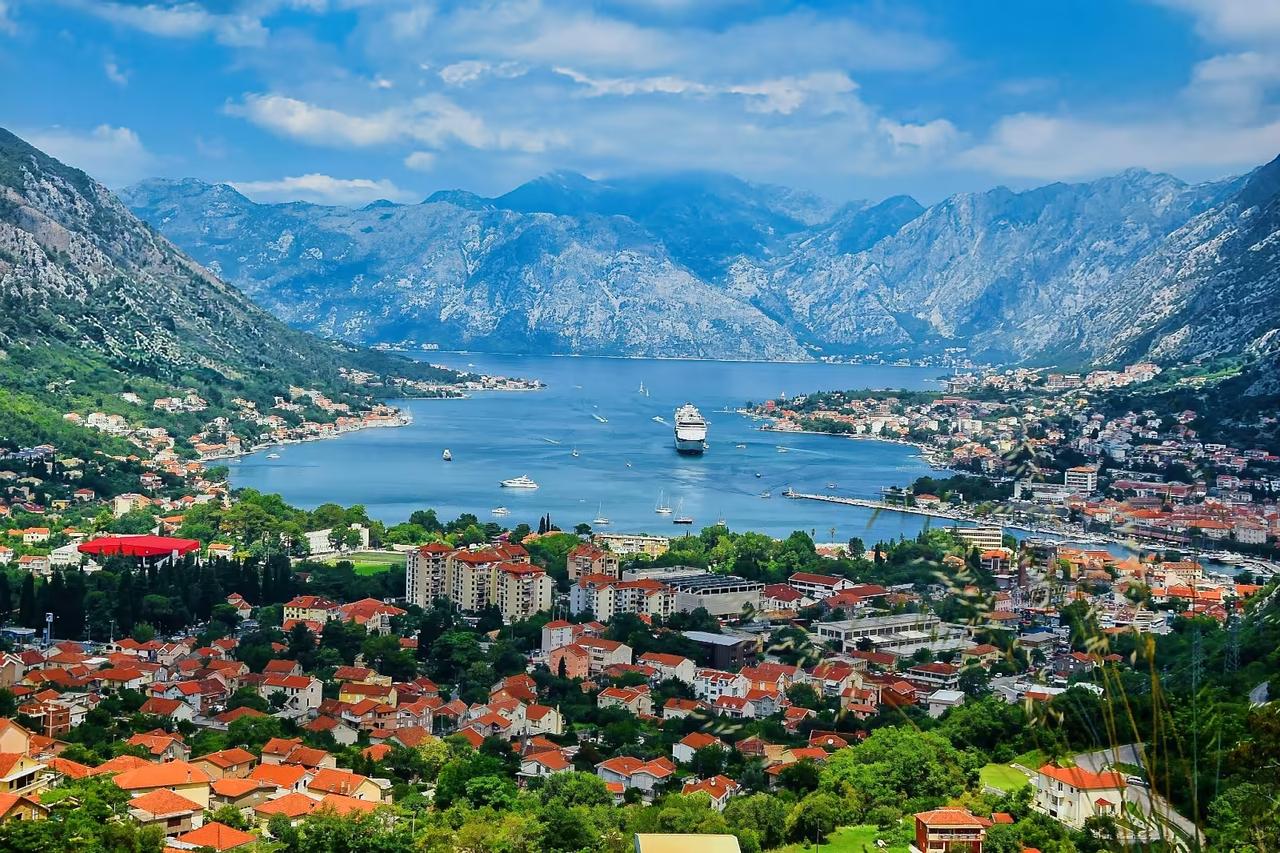

Le Monténégro est un joyau caché sur la côte Adriatique, offrant un mélange unique de style de vie méditerranéen et de charme balkanique. Que vous soyez attiré par la magnifique baie de Kotor, les villes côtières animées de Budva et Tivat ou la capitale abordable de Podgorica, cette petite nation des Balkans a quelque chose pour tout le monde. Avec son euro, son accès sans visa pour de nombreuses nationalités et son statut de candidat à l'UE, le Monténégro est devenu une destination de plus en plus populaire pour les expatriés en quête de qualité de vie sans se ruiner. Ce guide couvre tout ce que vous devez savoir pour déménager au Monténégro, des exigences de visa au logement, en passant par les soins de santé et l'intégration culturelle.
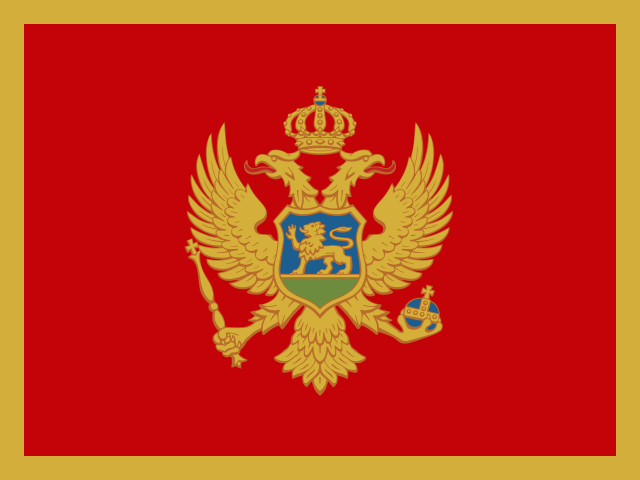
Le Monténégro en un coup d'œil
- Population
- Environ 630 000
- Capital
- Podgorica
- Devise
- euros (EUR)
- Salaire moyen
- 12 000 à 14 500 €/an (1 000 à 1 200 €/mois net)
- Langue
- Monténégrin (serbe largement parlé) ; L'anglais de plus en plus répandu dans les zones touristiques
- Climat
- Méditerranée le long de la côte ; continental à l'intérieur des terres; étés chauds, hivers doux
- Fuseau horaire
- Heure d’Europe centrale (CET, UTC+1)
Pourquoi déménager au Monténégro en 2026
- Mode de vie abordable : Le Monténégro offre l'un des coûts de la vie les plus bas d'Europe, avec des loyers dans les grandes villes nettement moins chers que leurs équivalents d'Europe occidentale, tout en conservant une excellente qualité de vie et un environnement naturel époustouflant.
- Une beauté naturelle époustouflante : depuis la spectaculaire baie de Kotor (souvent appelée le « fjord le plus au sud d'Europe », bien que géologiquement il s'agisse en fait d'un canyon fluvial submergé – une ria) jusqu'aux chaînes de montagnes de Durmitor et de Lovćen, le Monténégro offre des paysages à couper le souffle qui attirent les touristes toute l'année, offrant aux expatriés d'innombrables activités de plein air, notamment la randonnée, la voile et le ski.
- Statut de candidat à l'UE : en tant que pays candidat officiel à l'UE, le Monténégro progresse vers son adhésion, ce qui signifie un alignement accru de sa réglementation sur les normes de l'UE et des avantages potentiels à long terme pour les résidents à mesure que le processus d'adhésion se poursuit.
- Accès sans visa : les citoyens de nombreux pays, dont l'UE, les États-Unis, le Royaume-Uni, le Canada et l'Australie, bénéficient de séjours sans visa pouvant aller jusqu'à 90 jours sur une période de 180 jours, faisant du Monténégro une option accessible pour les nomades numériques et ceux qui explorent l'idée de déménager.
- Sécurité et qualité de vie : régulièrement classé parmi les pays les plus sûrs des Balkans, le Monténégro offre un style de vie détendu avec de faibles taux de criminalité, des habitants sympathiques et une attitude accueillante envers les résidents étrangers, en particulier dans les zones touristiques côtières.
- Économie et tourisme en croissance : Le tourisme étant le moteur d'une grande partie de l'économie et les investissements affluant vers l'immobilier et les infrastructures, le Monténégro offre des opportunités dans les secteurs de l'hôtellerie, de l'immobilier et des technologies émergentes, en particulier dans les villes côtières en plein développement.
Frais de déménagement au Monténégro
Comprendre les aspects financiers de votre déménagement est crucial pour une bonne planification. Le coût de la délocalisation au Monténégro dépend de votre pays d'origine, du volume de l'envoi et du mode de transport.
| Origine | Fourchette de coût estimé | Conteneur/Volume |
|---|---|---|
| Dans les Balkans (Serbie, Bosnie, Croatie) | 800 € – 1 500 € | 1 à 3 m³ |
| UE (Allemagne, Italie, France) | 1 200 € – 2 500 € | 3 à 6 m³ |
| UK | 1 500 à 3 000 € | 3 à 6 m³ |
| États-Unis (Côte Est) | 2 500 à 5 000 € | 6 à 10 m³ |
| États-Unis (côte ouest) | 3 500 à 7 000 € | 6 à 10 m³ |
Coûts des composants expliqués
- Transport : le fret routier en provenance des pays de l'UE coûte généralement entre 0,15 et 0,25 € par kilomètre pour les petites expéditions. Le fret maritime arrive aux ports de Bar ou de Kotor, puis est transporté par route jusqu'à sa destination finale.
- Assurance : L’assurance du transit maritime coûte généralement entre 1 et 3 % de la valeur déclarée des biens ménagers. Une assurance déménagement complète couvrant les dommages et les pertes pendant le transport est recommandée.
- Dédouanement : le Monténégro autorise l'importation en franchise de droits d'effets personnels usagés s'ils sont en possession depuis au moins six mois. Les frais de traitement varient généralement entre 100 € et 300 € en fonction de la taille et de la complexité de l'envoi.
- Matériaux d'emballage : 200 à 500 € selon le volume (souvent inclus dans les devis de déménagement)
- Stockage (si besoin) : 50 à 100 € par mois pour 5 m³
- Frais administratifs : 300 € à 800 € pour l'immatriculation du véhicule, les traductions, l'notarisation
Conseils pour économiser de l'argent : utilisez un conteneur partagé (30 à 50 % d'économies), apportez des articles essentiels comme bagages accompagnés, déménagez hors saison (octobre-avril) et utilisez le fret routier pour les origines de l'UE.
Cas concret : « J'ai déménagé de Belgrade, en Serbie, à Budva, au Monténégro, en mars 2025 avec environ 4 mètres cubes d'articles ménagers en utilisant un service de conteneur partagé. Le coût total, y compris le dédouanement et la livraison à mon nouvel appartement, était d'environ 950 €, arrivé en une semaine. L'entreprise de déménagement a géré tous les documents, rendant le processus étonnamment fluide pour un déménagement transfrontalier. — Marko T., déménagé en mars 2025
Besoin d'un devis personnalisé ?
Obtenez trois devis vérifiés d’entreprises de déménagement en moins de 48 heures.
Exigences de visa et de résidence
Le Monténégro maintient une politique d'immigration relativement ouverte par rapport à de nombreux pays de l'UE, avec un accès sans visa pour de nombreuses nationalités et un système de permis de séjour simple pour ceux qui envisagent de rester plus de 90 jours.
Pour les citoyens de l'UE
Les citoyens de l'UE, de l'EEE et de la Suisse peuvent entrer au Monténégro sans visa pour une durée maximale de 90 jours (avec un passeport ou une carte d'identité nationale). Pour les séjours au-delà de 90 jours, ils doivent demander un titre de séjour temporaire. Comme le Monténégro n'est pas membre de l'UE, les permis de travail sont toujours techniquement requis, bien que le processus soit généralement simplifié pour les ressortissants de l'UE/EEE/Suisse, et dans la pratique, le permis de séjour sert souvent de base à l'autorisation de travail.
Pour les citoyens non européens : principales catégories de visa
Séjour sans visa (90 jours)
- À qui s’applique-t-il : Citoyens de l’UE, des États-Unis, du Royaume-Uni, du Canada, de l’Australie et de nombreux autres pays
- Durée : 90 jours sur toute période de 180 jours
- Détails clés : Cela permet des visites de courte durée pour le tourisme ou les affaires. Il ne peut être prolongé au-delà de la limite de 90 jours sans quitter le pays pendant au moins 90 jours. Convient aux nomades numériques explorant initialement le Monténégro ou à ceux qui souhaitent une période d'essai avant de s'engager dans la résidence.
Permis de séjour temporaire (Privermeni Boravak)
- Exigences : Passeport valide, justificatif de logement (contrat de location ou titre de propriété), justificatif de moyens financiers (environ 350 € par mois), assurance maladie et vérification d'antécédents criminels claire du pays d'origine.
- Délai de traitement : 30 à 90 jours
- Durée/validité : 1 à 5 ans, renouvelable
- Détails clés : Obligatoire pour tout séjour au-delà de 90 jours. Doit être demandé auprès du ministère de l'Intérieur (Ministarstvo unutrašnjih poslova) soit avant l'arrivée, soit dans les 10 jours suivant le dépassement de la période d'exemption de visa. L’emploi, l’entreprise ou le parrainage familial sont des motifs courants de candidature.
Permis de travail (Dozvola za Rad)
- Exigences : Offre d'emploi d'un employeur monténégrin, contrat de travail valide, justificatif de qualifications
- Délai de traitement : 30 à 60 jours
- Durée/validité : Lié au contrat de travail, renouvelable
- Détails clés : L'employeur doit démontrer que le poste ne peut pas être pourvu par un citoyen local ou européen. Les permis de travail sont traités par l'intermédiaire du Bureau pour l'emploi du Monténégro (Zavod za zapošljavanje).
Citoyenneté par investissement (Sticanje Državljanstva)
- Exigences : investissement immobilier (minimum 450 000 €) ou contribution gouvernementale de 2 000 000 € au Fonds de développement monténégrin
- Délai de traitement : 6 à 36 mois
- Durée/validité : Citoyenneté complète avec passeport
- Détails clés : le programme de citoyenneté par investissement du Monténégro a été officiellement clôturé en décembre 2022 et n'a pas été rétabli depuis 2026. Comme alternative, le Monténégro a introduit début 2026 un programme de résidence basé sur la propriété exigeant un investissement immobilier minimum de 150 000 €, qui peut conduire à la résidence permanente et éventuellement à la citoyenneté via la voie de naturalisation standard de 10 ans (5 ans temporaires + 5 ans permanents).
Processus d'inscription : JMBG et enregistrement de l'adresse
À son arrivée au Monténégro avec un permis de séjour, tout étranger doit remplir deux enregistrements essentiels.
Qu’est-ce que JMBG ?
Le JMBG (Jedinstveni Matični Broj Građanina) est un numéro d'identification unique attribué à chaque citoyen et résident monténégrin. Il fonctionne de la même manière qu'un numéro d'identification national et est essentiel pour pratiquement toutes les démarches administratives au Monténégro. Les étrangers reçoivent le JMBG lors de l'enregistrement de leur résidence temporaire ou permanente.
Documents requis
- Passeport valide avec cachet d'entrée
- Permis de séjour temporaire (ou preuve de statut sans visa si la demande est toujours en cours)
- Preuve d'hébergement (contrat de location, acte de propriété ou réservation d'hôtel)
- Formulaire de demande dûment rempli (disponible au poste de police local ou sur le portail électronique du gouvernement)
- Une photo format passeport
Le processus d'inscription (étape par étape)
-
Arrivée au Monténégro – Assurez-vous que votre passeport est tamponné à la frontière.
-
Hébergement sécurisé – Obtenez un contrat de location.
-
Demande de résidence temporaire – Soumettez la demande au poste de police ou au ministère de l'Intérieur (traitement de 30 à 90 jours).
-
Obtenez JMBG – Visitez le bureau de l’administration locale une fois la résidence approuvée (5 à 10 jours ouvrables).
-
Inscrivez-vous auprès de l'administration fiscale – Demandez un PIB (numéro d'identification fiscale) pour l'emploi et les opérations bancaires.
Délai : généralement 2 à 4 mois entre l'arrivée et la documentation complète.
Trouver un logement au Monténégro
Le marché locatif du Monténégro varie considérablement entre les hauts lieux touristiques côtiers et la capitale intérieure. Alors que Podgorica offre les options les plus abordables et la plus grande disponibilité, les villes côtières comme Budva, Kotor et Tivat proposent des prix plus élevés, en particulier pendant les mois d'été.
Loyers moyens par ville (2026)
| Ville | 1 chambre (centre-ville) | 2 chambres (centre-ville) | 3 chambres (centre-ville) | Compétitivité du marché |
|---|---|---|---|---|
| Podgorica | 250 € – 450 € | 350 € – 600 € | 500 à 800 € | Modéré |
| Budva | 350 € – 700 € | 500 € – 1 000 € | 700 € – 1 400 € | Haut |
| Kotor | 300 € – 600 € | 450 € – 850 € | 600 € – 1 100 € | Haut |
| Tivat | 280 € – 550 € | 400 € – 750 € | 550 € – 1 000 € | Modéré-élevé |
| Herceg Novi | 250 € – 500 € | 350 € – 650 € | 450 € – 900 € | Modéré |
| Nikšić | 180 € – 350 € | 250 € – 500 € | 350 € – 650 € | Faible |
Terminologie des loyers locaux
- Stan (Стан) : Le mot monténégrin pour « appartement ». Vous verrez les annonces faisant référence à "stan u najmu" (appartement à louer).
- Dépôt (Депозит) : Dépôt de garantie, généralement 1 à 2 mois de loyer. Les propriétaires exigent généralement ce dépôt remboursable contre les dommages.
- Prijevremeni Stanarin : Résiliation anticipée. De nombreux baux incluent des dispositions de résiliation anticipée avec un préavis de 30 à 60 jours.
- Režijski Troškovi (Режијски трошкови) : frais de services publics, souvent payés séparément du loyer. Ceux-ci comprennent l’électricité, l’eau et le chauffage (particulièrement important dans les bâtiments plus anciens).
- Prazan Stan contre Namešten Stan : Appartement vide contre appartement meublé. Les locations entièrement meublées entraînent une prime de 15 à 30 %.
Comment trouver un logement
Plateformes en ligne :
- Nekretnina.me : le plus grand portail immobilier du Monténégro, avec de nombreuses annonces de location et de vente dans toutes les grandes villes.
- MonténégroProspects.com : agence immobilière établie proposant des annonces, des locations et des propriétés en anglais à vendre.
- Groupes Facebook : "Stanovi Podgorica", "Stanovi Budva" et des groupes locaux similaires sont très actifs et répertorient souvent les propriétés avant qu'elles n'apparaissent sur les principaux portails.
- Agences immobilières : les agences situées dans les zones touristiques servent facilement les clients anglophones. Les frais d'agence typiques sont d'un mois de loyer.
Ressources locales :
- Petites annonces dans les journaux locaux (en particulier dans les petites villes)
- Bouche à oreille : les réseaux personnels sont précieux dans les petites communautés
- Se promener dans les quartiers et appeler les numéros de téléphone sur les panneaux "Izdaje se stan" (Appartement à louer)
Conseils aux étrangers pour trouver un logement
- Commencez tôt dans les zones côtières : à Budva et Kotor, réservez un logement avant ou après la haute saison estivale (de juin à septembre), lorsque la disponibilité est plus élevée et les prix plus négociables.
- Vérifiez l’infrastructure : les bâtiments plus anciens peuvent manquer d’isolation, de chauffage ou de pression d’eau fiable. Renseignez-vous sur les systèmes de chauffage (le chauffage central est rare en dehors de Podgorica).
- Négocier des baux annuels : les propriétaires préfèrent les locataires à long terme et offrent souvent des réductions de 10 à 20 % pour les engagements de 12 mois.
- Vérifiez l'identité du propriétaire : demandez des copies de l'acte de propriété (liste vlasnički) et de la pièce d'identité du propriétaire pour confirmer qu'il est le propriétaire ou l'agent autorisé.
- Comprendre la configuration des services publics : les nouveaux locataires paient souvent des cautions aux sociétés de services publics (Elektroprivreda pour l'électricité, compagnie locale des eaux pour l'eau). Budget 50 à 100 € de dépôts.
Contrat de location et protection juridique
La loi monténégrine sur la location offre des protections de base aux locataires. Les baux résidentiels standard durent généralement de 1 à 5 ans avec renouvellement automatique, sauf résiliation avec un préavis approprié. Les principales protections comprennent :
- Délai de préavis : 30 à 90 jours selon les conditions du bail
- Dépôts de garantie : Légalement plafonnés à 2 mois de loyer pour les appartements non meublés, 3 mois pour les appartements meublés
- Augmentations de loyer : Ne peuvent être augmentées pendant la durée du bail sans accord mutuel
- Processus d'expulsion : nécessite une ordonnance du tribunal et une cause documentée (non-paiement, violation du bail)
Recommandé : Exigez toujours un contrat de location écrit (ugovor o zakupu), même pour les locations à court terme. Les accords verbaux, bien que techniquement contraignants, offrent des recours limités en cas de litige.
Attention : arnaques à la location
Les escroqueries à la location sont de plus en plus courantes au Monténégro, ciblant particulièrement les étrangers effectuant des recherches en ligne :
- Ne payez jamais avant de visionner : insistez pour un appel vidéo ou une visualisation en personne avant d’envoyer de l’argent.
- Vérifier la propriété : demandez à voir l'acte de propriété et la pièce d'identité du propriétaire. Les fraudeurs utilisent souvent des photos d’annonces volées.
- Évitez les transactions en espèces : utilisez les virements bancaires avec des références claires pour le loyer et les cautions.
- Trop beau pour être vrai : les prix de location à Budva et Kotor nettement inférieurs aux prix du marché sont presque toujours des arnaques.
Santé et assurance
Le système de santé du Monténégro combine un modèle de couverture publique universelle avec un secteur privé en croissance. Comprendre le système est essentiel pour tous les résidents, car les coûts des soins de santé peuvent être importants sans une couverture adéquate.
Assurance maladie publique
- Système : Le Fonds d'assurance maladie (Fond za zdravstveno osiguranje) offre une couverture universelle à tous les résidents monténégrins grâce à des cotisations obligatoires. Il s’agit d’un système public d’assurance maladie comparable aux autres services de santé européens.
- Coût : Les salariés cotisent environ 10 % pour l'assurance pension et l'assurance invalidité, plus 0,5 % pour l'assurance chômage. Les employeurs contribuent à hauteur d'environ 6 % (5,5 % de pension/invalidité + 0,5 % de chômage). Les cotisations d'assurance maladie sont calculées séparément. Les indépendants paient la totalité de la cotisation basée sur les revenus déclarés (cotisation minimale basée sur le salaire moyen).
- Couverture : L'assurance publique couvre les visites chez le médecin généraliste, les consultations spécialisées, les traitements hospitaliers, les interventions chirurgicales, les soins de maternité et les médicaments prescrits. Les soins dentaires sont partiellement couverts pour les procédures de base.
- Admissibilité : Tous les résidents légaux ayant une résidence enregistrée (prijavljeni boravak) ont droit à l'assurance maladie publique. Les membres de la famille des résidents salariés sont couverts par la contribution du principal soutien économique.
- Idéal pour : les résidents de longue durée, les salariés et ceux qui envisagent de rester indéfiniment au Monténégro et qui souhaitent une couverture complète à un coût permanent minimal.
Assurance maladie privée
- Coût : Les primes d’assurance maladie privée varient de 300 à 800 € par an selon le niveau de couverture et l’âge. Les polices d'assurance complètes pour expatriés avec une couverture internationale peuvent coûter entre 1 500 et plus de 3 000 € par an.
- Couverture : L'assurance privée offre des temps d'attente plus courts, un accès aux cliniques privées de Podgorica et des villes côtières, un personnel anglophone et une couverture dentaire et optique plus complète. Certaines politiques incluent l'évacuation vers des centres médicaux dans les pays voisins.
- Admissibilité : Ouvert à tous les résidents, quel que soit leur statut d'inscription. Les conditions préexistantes peuvent être exclues ou entraîner des primes plus élevées.
- Idéal pour : les expatriés qui donnent la priorité aux soins de santé anglophones, ceux qui doivent voyager à l'étranger et ceux qui souhaitent un accès plus rapide à des spécialistes sans temps d'attente dans le système public.
Principaux fournisseurs d'assurance
- Fonds d'assurance maladie (Fond za zdravstveno osiguranje) : Le système public. Visitez les succursales de chaque municipalité. site internet : fzocg.me
- Dunav Insurance : Grand assureur privé monténégrin proposant des polices de santé pour les résidents et les étrangers.
- Generali Monténégro : assureur international proposant des forfaits santé complets disponibles en anglais.
- Triglav osiguranje : Assureur régional proposant des plans de santé privés compétitifs.
Obtenir une couverture santé (chronologie)
-
Obtenez JMBG – Votre numéro de citoyen unique est requis pour toutes les interactions avec le système public.
-
Enregistrer la résidence – Visitez le poste de police local pour enregistrer votre adresse. Cela déclenche votre éligibilité à l’assurance publique.
-
Visitez le bureau des impôts – Obtenez votre numéro d’identification fiscale si ce n’est pas déjà fait.
-
Faites votre demande à la succursale de la Caisse d'assurance maladie – Soumettez le contrat de travail ou une preuve de revenu d'un travail indépendant au bureau de la Caisse d'assurance maladie le plus proche.
-
Recevez une carte d'assurance – Dans un délai de 2 à 4 semaines, vous recevrez votre zdravstvena knjižica (carnet d'assurance maladie), vous permettant d'accéder aux soins de santé publics.
Pour les assurances privées : faites votre demande directement via le site Web ou l'agent de l'assureur. La couverture commence généralement dans les 48 à 72 heures.
Frais remboursables
- Visites chez le médecin (système public, couvertes) : 0 € avec carte d'assurance
- Visites chez le médecin (clinique privée) : 30 à 80 €
- Consultation spécialisée : 50 € – 150 €
- Médicaments sur ordonnance : 5 € à 50 € (partiellement subventionnés)
- Examen dentaire : 30 à 60 € (non pris en charge par l'assurance publique)
- Journée d'hospitalisation : 0 à 50 € (public), 150 à 400 € (privé)
- Traitement d'urgence : couvert par le système public
Obtenez un plan de déménagement personnalisé
Déposez votre e-mail et nous vous enverrons une liste de contrôle personnalisée ainsi que trois devis de déménageurs agréés.
Banque et Finance
Ouverture d'un compte bancaire
- Quand : Vous pouvez ouvrir un compte bancaire avec simplement votre passeport et une preuve d'arrivée (réservation d'hôtel ou contrat de location). Cependant, un JMBG rationalise considérablement le processus et débloque des services bancaires complets.
- Documents requis : Passeport valide, justificatif de domicile (contrat de location ou réservation d'hôtel acceptable dans un premier temps) et justificatif de revenus ou d'emploi. Certaines banques peuvent demander une référence à votre banque d'origine.
- Chronologie : le compte de base peut être ouvert en 1 à 2 heures. Les services complets, y compris les facilités de découvert et les produits de crédit, nécessitent 2 à 4 semaines après l'affectation de JMBG.
Meilleures banques pour les expatriés
- Crnogorska Komercijalna Banka (CKB) : la plus grande banque du Monténégro, qui fait partie du groupe OTP. Excellente assistance en anglais, services complets et vaste réseau de succursales. Largement considérée comme la banque la plus conviviale pour les expatriés.
- NLB Banka : banque slovène avec une forte présence dans la région. Offre des taux hypothécaires compétitifs et de bonnes plateformes bancaires en ligne.
- Erste Bank : banque autrichienne offrant des niveaux de service haut de gamme. Particulièrement populaire auprès des expatriés de l’UE. Conseillers anglophones disponibles dans les principales agences.
- Hipotekarna Banka : banque monténégrine proposant des taux compétitifs sur l'épargne et les dépôts. Idéal pour les dépôts à terme.
- Prva Banka Crne Gore : L'une des plus anciennes banques monténégrines proposant de solides services bancaires de détail et d'affaires.
Qu’est-ce que JMBG encore ?
Le JMBG (Jedinstveni Matični Broj Građanina – Numéro de citoyen unique) est votre numéro d’identification à vie au Monténégro. Vous en avez besoin pour :
- Ouverture de comptes bancaires (fonctionnalité complète)
- Emploi et inscription fiscale
- Achats et enregistrements de propriétés
- Inscription à l'assurance maladie
- Configuration du compte utilitaire
- Contrats de téléphonie mobile
Demandez votre JMBG au bureau de l'administration locale après avoir reçu la confirmation de votre titre de séjour.
Obtenir votre numéro d'identification fiscale (PIB)
- Qu'est-ce que c'est : Le PIB (Poreski identifikacioni broj) est votre numéro d'identification fiscale, requis pour tout emploi, activité commerciale et transaction immobilière au Monténégro.
- Une fois émis : après avoir reçu le JMBG, faites votre demande dans n'importe quel bureau de l'administration fiscale (Poreska uprava). Le traitement prend 3 à 7 jours ouvrables.
- Pourquoi vous en avez besoin : Les employeurs ne peuvent pas traiter la paie sans ce système. Les banques l'exigent pour les produits de crédit. Tous les contrats et accords y font référence.
Caractéristiques et coûts du compte bancaire
- Frais mensuels : 0 € à 5 € (la plupart des comptes de base sont gratuits)
- Carte de débit : 0 à 3 € par an (certaines banques renoncent entièrement)
- Carte de crédit : 10 à 30 € par an (options Visa/Mastercard)
- Virements internationaux (SEPA) : 5 à 15 € par virement
- Virements internationaux (non SEPA) : 15 à 40 € par virement
- Retraits aux distributeurs automatiques : gratuits aux distributeurs automatiques de la banque ; 1 à 3 € dans les autres banques
Culture de paiement
- Les espèces restent reines : même si l'acceptation des cartes se développe, les espèces restent largement préférées, en particulier dans les petites villes, les marchés et les établissements familiaux.
- Acceptation de la carte : universelle dans les hôtels, restaurants et supermarchés de Podgorica et des zones touristiques. De plus en plus courant à Budva et Kotor. Moins fiable dans les petites villes et les zones rurales.
- Paiements sans contact : largement disponibles dans les établissements modernes. Visa PayWave et Mastercard Contactless acceptés.
- Paiements mobiles : Apple Pay et Google Pay se développent mais ne sont pas universellement acceptés. Équivalents monténégrins comme mPAY disponibles auprès des banques locales.
Coût de la vie au Monténégro
Répartition du budget mensuel par ville
| Ville | Personne seule (hors loyer) | Personne seule (avec loyer) | Famille de 3 personnes (hors loyer) | Famille de 3 personnes (avec loyer) | Niveau de coût |
|---|---|---|---|---|---|
| Podgorica | 400 € – 550 € | 650 € – 950 € | 700 € – 950 € | 1 100 € – 1 550 € | Très abordable |
| Budva | 500 à 700 € | 850 € – 1 400 € | 850 € – 1 150 € | 1 300 € – 2 100 € | Modéré |
| Kotor | 450 € – 650 € | 750 € – 1 250 € | 750 € – 1 000 € | 1 150 € – 1 850 € | Modéré |
| Tivat | 450 € – 600 € | 730 € – 1 150 € | 700 € – 950 € | 1 100 € – 1 700 € | Modéré |
| Herceg Novi | 400 € – 550 € | 650 € – 1 050 € | 650 € – 900 € | 1 000 € – 1 500 € | Abordable |
| Nikšić | 350 € – 450 € | 530 € – 800 € | 550 € – 750 € | 800 € – 1 200 € | Très abordable |
Ventilation détaillée des coûts
Logement:
- Appartement 1 chambre (centre-ville) : 250 € – 700 €+ mensuel
- Appartement 1 chambre (hors centre) : 180 – 450 €
- Appartement 3 chambres (centre-ville) : 500 € – 1 400 €
- Charges (électricité, eau, chauffage) : 80 à 200 €
- Internet (haut débit illimité) : 25 à 40 €
- Forfait mobile : 10 à 25 €
Épicerie et nourriture :
- Courses hebdomadaires (personne seule) : 40 à 70 €
- Courses mensuelles (personne seule) : 160 € – 280 €
- Repas au restaurant (casuel) : 6 € – 12 €
- Repas au restaurant (milieu de gamme, trois plats) : 15 € – 30 €
- Café (café) : 1,50 € – 3 €
- Lait (1 litre) : 0,90 € – 1,30 €
- Pain (miche) : 0,80 € – 1,50 €
- Oeufs (12) : 2 à 3 €
Transport:
- Abonnement mensuel de transports en commun : 30 à 45 €
- Taxi (tarif de base) : 2 à 3 €
- Taxi (par km) : 0,80 € – 1,20 €
- Carburant (1 litre d'essence) : 1,40 € – 1,60 €
- Assurance automobile (multirisque) : 300 à 600 €/an
Divertissement et loisirs :
- Billet de cinéma : 6 € – 10 €
- Abonnement salle de sport : 25 € à 60 €/mois
- Terrain de tennis/sport : 10 à 20 €/heure
- Bière (brasserie/pub) : 2 à 4 €
- Cocktail (bar de plage) : 5 à 10 €
Comparaison avec d'autres pays
- vs Espagne : environ 30 à 40 % moins cher dans l'ensemble
- vs Croatie : similaire sur la côte, 15 à 20 % moins cher à Podgorica
- vs Serbie : 10 à 20 % plus cher, mais inférieur à celui des sites comparables de l'Adriatique
- vs Allemagne : coûts environ 50 à 65 % inférieurs dans toutes les catégories
Conseils linguistiques et culturels
Avez-vous besoin du Monténégrin ?
La réponse honnête est : cela dépend de l’endroit où vous vivez et travaillez.
À Podgorica et dans les grandes villes, vous pouvez bien vous débrouiller avec l'anglais dans les milieux professionnels, les restaurants et les magasins destinés aux touristes. Cependant, en dehors de ces contextes, la maîtrise de l’anglais diminue considérablement, notamment chez les résidents plus âgés et dans les zones rurales.
Dans les zones touristiques côtières (Budva, Kotor, Tivat, Herceg Novi), l'anglais est plus largement parlé en raison du tourisme intense. Vous rencontrerez des menus, une signalisation et du personnel en anglais dans la plupart des entreprises hôtelières.
Dans les petites villes et les zones rurales, attendez-vous à un anglais limité. Le serbe (qui partage une grande intelligibilité mutuelle avec le monténégrin) est souvent utilisé comme lingua franca.
Recommandation : apprenez au minimum les salutations et les expressions transactionnelles de base en serbe/monténégrin. Cela démontre du respect et améliore considérablement les interactions quotidiennes.
Niveaux de langue monténégrine (CECR)
- A1 (débutant) : 40 à 60 heures. Peut se présenter, demander son chemin et gérer des transactions de base. Indispensable pour naviguer dans les magasins, les marchés et les taxis.
- A2 (élémentaire) : 120 à 180 heures. Peut décrire votre routine quotidienne, prendre des rendez-vous, discuter de sujets d'actualité simples dans la langue locale. Suffisant pour la plupart des situations quotidiennes si l’on parle lentement.
- B1 (intermédiaire) : 200 à 300 heures. Peut tenir des conversations sur des sujets familiers, décrire des expériences et des événements, discuter d’opinions avec une certaine aisance. Permet des interactions professionnelles en serbe/monténégrin.
- B2 (intermédiaire supérieur) : 350 à 400 heures. Peut interagir avec un certain degré de spontanéité, comprendre les films et les médias avec un effort modéré et exprimer couramment ses idées sur des sujets abstraits.
Ressources d'apprentissage des langues
- Duolingo : Bon pour le vocabulaire de base ; inclut le serbe comme représentant du monténégrin.
- Pimsleur serbe : Excellent pour la prononciation et les bases parlées.
- Écoles de langues locales : Podgorica et les villes côtières disposent d'écoles de langues proposant des cours de serbe/monténégrin pour les étrangers, généralement entre 8 et 15 € de l'heure.
- Échanges de conversations : les groupes Facebook comme « Expats au Monténégro » répertorient souvent des partenaires d'échange linguistique.
Normes culturelles et étiquette
Culture du café (Kafa) :
- Le Monténégro prend le café très au sérieux. Le rituel du « café turc » (turska kafa) est au cœur de la vie sociale : on vous proposera fréquemment du café et il est considéré comme impoli de refuser.
- Le café prend du temps. Les visites durent souvent une heure ou plus autour d'un café sans discuter d'affaires.
- La bonne réponse à « Hoćete li kafu ? » (Voulez-vous du café ?) est presque toujours « Da, hvala » (Oui, merci).
Hospitalité:
- Les Monténégrins sont réputés pour leur hospitalité. Il est courant d'être invité chez quelqu'un pour prendre un café ou un repas peu de temps après l'avoir rencontré.
- Lorsque vous visitez une maison, apportez un petit cadeau (fleurs, bonbons ou vin). Même quelque chose de modeste est apprécié.
- Les hôtes insisteront souvent pour que vous mangiez davantage. Il est poli d’accepter au moins une petite portion.
les formulaires sont importants :
- Utilisez une adresse formelle (vi en serbe/croate, similaire au « vous » français) jusqu'à ce que vous soyez invité à utiliser des prénoms.
- Saluez les commerçants en entrant et dites « Ćao » (ciao comme bonjour/au revoir, emprunté à l'italien) en sortant des petits magasins.
- Habillez-vous modestement lorsque vous visitez des sites religieux : les églises orthodoxes et les mosquées exigent que les femmes aient les épaules et les genoux couverts.
Équilibre travail-vie personnelle :
- Les déjeuners d'affaires sont courants et peuvent durer de 2 à 3 heures. Ce n’est pas un signe d’inefficacité mais plutôt la façon dont les relations se construisent.
- Les heures de bureau peuvent commencer plus tard (8h00 ou 9h00) et se prolonger plus tard que prévu. La patience est valorisée plutôt que la précipitation.
- Août est effectivement un mois fermé : de nombreuses entreprises ferment complètement alors que le pays tout entier semble se diriger vers la côte.
Intégration sociale
- Rejoignez des clubs sportifs : les clubs de voile, les groupes de randonnée et les salles de sport sont d'excellents moyens de rencontrer des habitants partageant les mêmes intérêts.
- Apprenez la langue : même les bases du serbe/monténégrin améliorent considérablement l'intégration et sont véritablement appréciées.
- Adoptez le plein air : les Monténégrins sont des gens actifs en plein air : rejoignez d'autres personnes parcourant les sentiers du Durmitor ou naviguant dans la baie de Kotor.
- Assistez aux festivals locaux : du festival de jazz de Budva aux célébrations traditionnelles du village, les événements locaux offrent une immersion culturelle authentique.
- Communautés d'expatriés : des groupes Facebook actifs et des rencontres existent dans les grandes villes.
Termes locaux clés :
- JMBG : numéro d'identification de citoyen unique (obligatoire pour toutes les démarches officielles)
- PIB : Numéro d'identification fiscale
- Stan : Appartement
- Prijavljeni boravak : résidence enregistrée
- Privremeni boravak : Permis de séjour temporaire
- Fond za zdravstveno osiguranje: Fonds public d'assurance maladie
- Poreska uprava : Administration fiscale
- Kafa : Café (le style turc est turska kafa)
Liste de contrôle de déménagement
Avant de déménager (3 à 1 mois)
- Exigences de visa de recherche pour votre nationalité
- Demander un permis de séjour temporaire si vous restez au-delà de 90 jours
- Réserver un hébergement temporaire pour l'arrivée
- Obtenir une vérification des antécédents criminels (pour le permis de séjour)
- Obtenez un permis de conduire international
Deux premières semaines
- Enregistrez votre adresse auprès de la police locale (dans les 10 jours)
- Demander un JMBG (numéro de citoyen unique) une fois la résidence approuvée
- Visitez l'administration fiscale pour le PIB (numéro d'identification fiscale)
- Compte bancaire ouvert avec passeport et justificatif de domicile
- S'inscrire à une assurance maladie (publique ou privée)
- Localisez le supermarché, la pharmacie et la clinique les plus proches
Premier mois
- Signer un bail à long terme
- Configurer des utilitaires à votre nom
- Explorez le quartier et les services les plus proches
- Connectez-vous avec les communautés d'expatriés
Où trouver des outils et des ressources
Outils ReloAdvisor :
- Calculateur de volumes
- Enquête vidéo
- Calculateur de frais de déménagement
Ressources officielles du Monténégro :
- Ministère de l'Intérieur (Ministarstvo unutrašnjih poslova) : mup.gov.me
- Administration fiscale (Poreska uprava) : poreskauprava.gov.me
- Caisse d'Assurance Maladie : fzocg.me
- Organisation touristique du Monténégro : montenegro.travel
Communautés d'expatriés :
- Groupe Facebook "Expats au Monténégro" (plus de 4 000 membres)
- Groupe Facebook "Digital Nomads Monténégro"
- Reddit : r/montenegro (communauté active pour les expatriés)
Guides connexes :
- S'installer en Croatie : guide complet de l'expatrié
- S'installer en Serbie : guide complet de l'expatrié
- ReloAdvisor : Louer dans les Balkans
Ce guide a été mis à jour pour la dernière fois en 2026 et reflète la réglementation, les coûts et les conditions de vie en vigueur au Monténégro. Les exigences, les coûts et les réglementations en matière de visa peuvent changer : vérifiez toujours les informations actuelles auprès des sources officielles du gouvernement monténégrin avant de prendre des décisions de réinstallation.