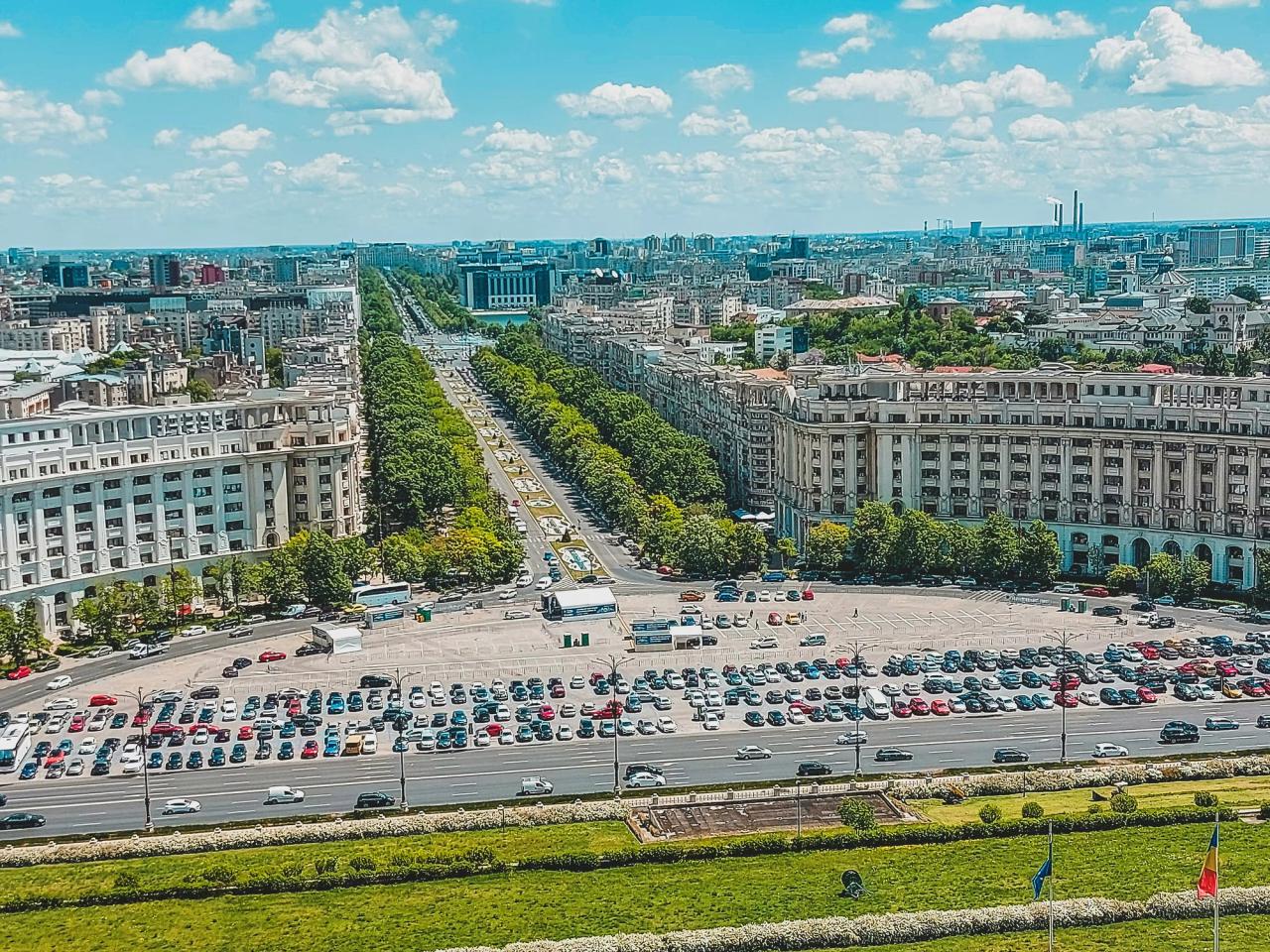
Bucarest es la capital y la ciudad más grande de Rumanía — un lugar donde la arquitectura de la Belle Époque se encuentra con los monumentos de la era soviética y los campus tecnológicos de cristal. Conocida como "la Pequeña París" en el período de entreguerras, la ciudad se ha reinventado como una de las capitales más asequibles de Europa con un sector de startups y TI en rápido crecimiento. El distrito de Lipscani bulle de vida nocturna, el Parque Herastrau ofrece un escaparate orillas del lago, y el monumental Palacio del Parlamento te recuerda que esta ciudad tiene capas de historia en cada esquina. Si quieres una ciudad europea con bajos costos de vida, cultura vibrante y una comunidad cada vez más amigable con el inglés, Bucarest merece una seria consideración.
Bucarest en Resumen

- Población
- ~1,7 millones (ciudad), ~2,3 millones (área metropolitana)
- Región
- Muntenia, sur de Rumanía
- Conocida Por
- Palacio del Parlamento, Centro Antiguo (Lipscani), creciente escena tecnológica
- Alquiler Promedio (1 hab)
- 500–750 €/mes
- Salario Promedio
- ~1.400–1.500 €/mes neto (~7.000–7.500 RON)
- Comunidad de Expatriados
- Creciente — fuerte en TI, finanzas y educación
Por Qué Mudarse a Bucarest
- Extremadamente asequible para una capital europea: El alquiler, la gastronomía y el transporte cuestan una fracción de lo que pagarías en Berlín, París o Ámsterdam, pero aún así disfrutas de un estilo de vida cosmopolita.
- Sector tecnológico en auge: Bucarest es hogar de miles de empresas de TI y un número creciente de startups, lo que la convierte en un imán para desarrolladores, ingenieros y nómadas digitales.
- Rica escena cultural: Desde el masivo Palacio del Parlamento hasta docenas de teatros, galerías y festivales de música, siempre hay algo happening.
- Ubicación en Europa Central: Las aerolíneas de bajo costo conectan Bucarest con la mayoría de las principales ciudades europeas en menos de tres horas, haciendo que los viajes de fin de semana sean fáciles y económicos.
- Internet rápido: Rumanía se encuentra entre los primeros países del mundo en velocidad de internet — las conexiones de fibra son estándar y cuestan menos de 12 €/mes.
- Comunidad internacional creciente: La población de expatriados se expande año tras año, trayendo restaurantes internacionales, servicios en inglés y una escena social más cosmopolita.
Encontrar vivienda en Bucarest
Bucarest tiene uno de los mercados de alquiler más dinámicos de Europa del Sureste. Una gran parte del parque inmobiliario consiste en bloques de apartamentos de la era comunista (blocuri) que han sido renovados, mezclados con nuevos desarrollos en el norte y oeste de la ciudad. La competencia por apartamentos modernos bien ubicados ha aumentado a medida que más expatriados y trabajadores remotos llegan, pero los precios siguen siendo muy inferiores a los estándares de Europa Occidental.
Alquileres promedio
| Barrio | 1 Habitación | 3 Habitaciones | Característica |
|---|---|---|---|
| Centru Vechi (Centro Histórico) | €500–€700 | €900–€1,300 | Histórico, animada vida nocturna, caminable |
| Dorobanți | €550–€750 | €1,000–€1,500 | Prestigioso, embajadas, calles tranquilas |
| Floreasca | €500–€700 | €900–€1,400 | Moderno, parques junto al lago, cafés de tendencia |
| Militari | €300–€450 | €550–€800 | Económico, buen acceso al metro |
| Titan | €320–€480 | €600–€850 | Residencial, parques, orientado a familias |
| Herăstrău / Aviatorilor | €600–€900 | €1,200–€1,800 | Verde, junto al lago, ubicación premium |
Los alquileres en Bucarest han aumentado aproximadamente un 10–15% interanual desde 2023, impulsados por la demanda tanto de locales como de internacionales. Aún así, un apartamento de una habitación cerca del centro cuesta aproximadamente la mitad de lo que pagarías en Praga o Budapest, y mucho menos en París o Ámsterdam.
Cómo encontrar vivienda
- Imobiliare.ro: El mayor portal inmobiliario de Rumanía con filtros en inglés y búsqueda basada en mapas.
- OLX.ro: Sitio de clasificados donde muchos propietarios publican directamente — bueno para evitar comisiones de agentes.
- Storia.ro: Agregador que recopila anuncios de múltiples fuentes y te permite comparar precios por barrio.
- Grupos de Facebook: Busca "Apartments for Rent Bucharest" o "Expats in Bucharest" para ver listados directos y recomendaciones.
- Agentes inmobiliarios locales: Los agentes suelen cobrar una mensualidad como comisión. Pueden ser útiles si no hablas rumano y quieres que alguien se encargue de las negociaciones.
Consejos para extranjeros
- Visita siempre el piso en persona antes de firmar: las fotos pueden ser engañosas y algunos anuncios están desactualizados.
- Prepárate a pagar entre uno y tres meses de alquiler como depósito de seguridad, más el primer mes por adelantado.
- Los contratos suelen ser de 12 meses; existen opciones a corto plazo, pero cuestan entre un 20 % y un 40 % más.
- Confirma si los suministros (electricidad, gas, internet) están incluidos en el alquiler: por lo general no lo están y pueden sumar 100-180 €/mes adicionales.
- Pregunta por el sistema de calefacción del edificio: algunos bloques antiguos usan calefacción central (RADET), que puede ser menos predecible que las caleras de gas individuales.
Guía de barrios
Bucarest está dividida en seis sectores administrativos, pero los locales piensan en barrios más que en números de sector. Estos son los barrios donde tienden a instalarse los extranjeros:
- Lipscani (Ciutatveche): El núcleo histórico — calles empedradas, bares, restaurantes y energía constante. Ideal para jóvenes profesionales y personas sociables que quieren estar en el centro de la acción. Los alquileres son de rango medio a alto en Bucarest.
- Dorobanți: Calles tranquilas y arboladas, rodeadas de embajadas y villas de antes de la guerra. Popular entre diplomáticos, familias y profesionales que buscan elegancia sin el ruido. Alquileres de gama alta, a poca distancia caminando del mercado de Piața Dorobanți.
- Floreasca: Una zona residencial moderna cerca del Parque Herastrau. Buenos cafés, gimnasios y apartamentos contemporáneos. Atrae a jóvenes profesionales y parejas que buscan espacios verdes sin salir de la ciudad.
- Militari: Al oeste del centro, con los alquileres más asequibles de la ciudad. Bien conectado por metro (línea M1) y tranvía. Una opción práctica para expatriados con presupuesto ajustado, estudiantes y cualquiera que no necesite estar en el centro.
- Titan: Al este del centro, alrededor del Parque Titan y el Parque IOR — dos de los espacios verdes más grandes de la ciudad. Ritmo relajado, precios moderados y buen acceso al metro (línea M1). Popular entre familias y quienes buscan más espacio por menos dinero.
- Herăstrău / Aviatorilor: Rodeando el parque más grande de Bucarest, esta zona ofrece vida al aire libre con paseos junto al lago, restaurantes elegantes y rápido acceso al centro de la ciudad mediante las estaciones de metro de Aviatorilor y Aurel Vlaicu. Alquileres premium, popular entre profesionales senior y familias de expatriados.
Costo de vida en Bucarest
Bucarest es una de las capitales más asequibles de la Unión Europea. Un estilo de vida cómodo es posible con €1.000–€1.300/mes, y los expatriados que vienen de Europa Occidental o Norteamérica notarán ahorros significativos en alquiler, comidas y transporte.
Desglose del presupuesto mensual
| Categoría | Rango de presupuesto (EUR) |
|---|---|
| Alquiler (1 dormitorio, centro) | €500–€750 |
| Servicios públicos | €100–€180 |
| Internet | €8–€12 |
| Comestibles | €150–€250 |
| Transporte (pase de metro) | €15–€25 |
| Comidas fuera (4x/mes) | €60–€100 |
| Ocio/Gimnasio | €30–€50 |
| Total | €765–€1.320 |
Una pareja que comparte un apartamento de un dormitorio puede mantener realísticamente los costos mensuales totales por debajo de 1.500 € mientras cena fuera con regularidad y disfruta de la ciudad. Las familias deberían presupuestar entre 2.000 € y 2.800 € dependiendo de la escolarización y el tamaño del apartamento.
Costos diarios
- Café (espresso): 7–12 RON (1,50–2,50 €)
- Almuerzo (restaurante casual): 30–50 RON (6–10 €)
- Abono de transporte mensual (metro + autobús): 75–125 RON (15–25 €)
- Cerveza (bar): 10–18 RON (2–3,50 €)
- Entrada de cine: 25–40 RON (5–8 €)
- Cuota de gimnasio: 120–250 RON (25–50 €)
- 1 kg de pechuga de pollo: 25–35 RON (5–7 €)
- Pan de barra: 5–8 RON (1–1,60 €)
București utiliza leul rumano (RON). A principios de 2026, 1 EUR ≈ 5 RON. Las tarjetas de crédito y débito son ampliamente aceptadas, aunque los vendedores pequeños, los mercados y algunos taxis a veces prefieren el efectivo. Los cajeros automáticos están en todas partes, pero cuidado con los tipos de cambio desfavorables: usa cajeros de bancos (no Euronet) o paga con tarjeta siempre que sea posible.
Desplazarse por Bucarest
Bucarest cuenta con uno de los sistemas de metro más densos de Europa del Este, complementado por una extensa red de transporte superficial. Desplazarse sin coche es fácil y barato.
- Transporte público: El metro tiene cinco líneas (M1–M5) que cubren 64 estaciones en toda la ciudad (80,1 km de vía). La M5 (Drumul Taberei) se abrió completamente en septiembre de 2020, añadiendo acceso directo a los barrios occidentales. Un pase mensual cuesta entre 15 y 25 €. Ten en cuenta que el metro (operado por Metrorex) y el transporte superficial (operado por STB) utilizan sistemas separados: puedes comprar un Activ Pass unificado, pero la mayoría de la gente compra pases de metro y de transporte superficial por separado. El transporte superficial es más concurrido y más lento debido al tráfico, pero la red de autobuses y tranvías llega a zonas que el metro no cubre. Los trenes del metro pasan cada 3-5 minutos en horas punta.
- Transporte bajo demanda: Bolt y Uber son ampliamente utilizados, económicos en comparación con otros países europeos y fiables. Un trayecto a través de la ciudad suele costar entre 3 y 6 €.
- Bicicleta: La ciudad es plana, lo que hace que la bicicleta sea práctica para distancias cortas. Las carriles bici están en expansión, pero todavía son limitados en muchas zonas. Aplicaciones de alquiler como Lime y Bolt ofrecen bicicletas y patinetes eléctricos.
- Conducir: El tráfico es intenso en las horas punta (8-10 AM y 5-7 PM) y el aparcamiento en el centro es escaso y caro. La mayoría de los expatriados confían en el transporte público y los servicios de transporte bajo demanda en lugar de tener un coche. Si conduces, ten en cuenta que la cultura de conducción rumana puede ser agresiva: mantente alerta.
- Aeropuerto: El Aeropuerto Internacional Henri Coandă (OTP) está a 17 km al norte del centro. Vuelos directos conectan con la mayoría de las capitales europeas y varias ciudades del Medio Oriente y el norte de África. El tren express a Gara de Nord tarda unos 25 minutos; el autobús 783 funciona 24/7 y tarda 40-50 minutos.
- Trenes interciudad: CFR Călători opera trenes a Brașov (2,5 horas, ruta escénica a través de los Cárpatos), Cluj-Napoca (7-9 horas) y Constanța (2,5 horas hasta la costa del Mar Negro). FlixBus y otros operadores privados ofrecen autobuses interurbanos más baratos.
Sanidad en Bucarest
El sistema de salud pública de Rumania es universal pero está subfinanciado, y la mayoría de los expatriados optan por la atención privada, que es asequible y de alta calidad.
- Hospitales públicos: Las principales instalaciones incluyen el Hospital Universitario Elias, el Hospital Clínico Colțea y el Hospital de Urgencia Floreasca. Los tiempos de espera pueden ser largos y el inglés no siempre se habla.
- Clínicas privadas: MedLife, Regina Maria, Sanador y Gral Medical ofrecen instalaciones modernas, tiempos de espera cortos y médicos que hablan inglés en todas las especialidades. Una consulta con un médico de cabecera generalmente cuesta 150–300 RON (30–60 €).
- Médicos que hablan inglés: Ampliamente disponibles en clínicas privadas, especialmente en dermatología, odontología, ginecología y atención primaria.
- Farmacias: Las cadenas Farmacia Tei, Catena y Dona están en casi todas las calles principales. Muchos farmacéuticos hablan inglés básico. Los requisitos para las recetas son similares a los de otros países de la UE.
- Atención dental: Rumania es un destino popular para el turismo dental: la calidad es alta y los precios son una fracción de los de Europa Occidental. Una limpieza cuesta entre 20 y 40 €; los implantes y coronas son entre un 50 % y un 70 % más baratos que en el Reino Unido o Alemania.
- Número de emergencia: 112 (línea de emergencia paneuropea, conecta con ambulancia, policía y bomberos).
- Seguro de salud: Los ciudadanos de la UE pueden usar la Tarjeta Europea de Seguro de Salud (TESS) para estancias cortas. Para la residencia a largo plazo, inscribirse en la CNAS (Casa Națională de Asigurări de Sănătate) o comprar un seguro privado (entre 50 y 150 € al mes dependiendo de la cobertura). Muchos empleadores ofrecen seguro de salud privado como beneficio.
Bucarest para Familias
Bucarest es cada vez más familiar, con una infraestructura en mejora para padres e hijos. Las escuelas internacionales ofrecen educación de calidad, los parques y áreas de juegos son abundantes, y las clínicas pediátricas privadas brindan atención en inglés. El principal desafío para las familias es navegar la burocracia (inscripción escolar, permisos de residencia), lo cual es más fácil con un consultor de reubicación.
Recibe un plan de mudanza personalizado
Deja tu email y te enviaremos una checklist a medida y tres presupuestos de empresas verificadas.
Cultura y estilo de vida
Bucarest es una ciudad de contrastes: encontrarás iglesias ornamentadas del siglo XIX junto a edificios de apartamentos brutalistas, y jardines de monasterios silenciosos a pocas cuadras de vibrantes barras en la azotea. El calendario cultural está lleno durante todo el año, desde el festival de música clásica George Enescu en septiembre hasta fines de semana de arte callejero y cine al aire libre en verano.
- Vida nocturna en el casco antiguo (Lipscani): El histórico distrito de Lipscani es el epicentro: docenas de bares, clubes y venues de música en vivo agrupados en una cuadrata caminable de calles del siglo XVIII. Está animado todos los días de la semana, no solo los fines de semana.
- Palacio del Parlamento: El segundo edificio administrativo más grande del mundo después del Pentágono. Construido bajo Ceaușescu, tiene 1.100 habitaciones y tomó 700 arquitectos para diseñarlo. Los tours funcionan diariamente y son esenciales para comprender la compleja historia de la ciudad.
- Parque Herastrau (Parque Rey Miguel I): El pulmón verde de Bucarest — 187 hectáreas de lagos, jardines y senderos caminables alrededor del Lago Herăstrău. Alquila un remo en verano, corre los 6 km del sendero perimetral, o visita el Museo al Aire Libre Muzeul Satului en su borde, que muestra casas tradicionales rumanas de cada región.
- Arte callejero y galerías: El barrio creativo alrededor de Strada Arthur Verona alberga murales, galerías temporales y el festival anual Street Delivery. El cercano MNAC (Museo Nacional de Arte Contemporáneo) está alojado en un ala del Palacio del Parlamento.
- Teatros y música: Bucarest tiene más de 20 teatros, incluyendo el Teatro Nacional Rumano y el histórico Teatro Odeon. La escena de música en vivo va desde clubes de jazz hasta venues electrónicos en espacios industriales reconvertidos.
Comida y restaurantes
- Prueba mămăligă (polenta con queso y crema agria), sarmale (rollo de repollo relleno de cerdo picado y arroz), ciorbă de burtă (sopa de callos) y mici (salchillas a la parrilla sin piel) — la comida callejera nacional de facto.
- El distrito de Lipscani y la zona de Floreasca son las mejores zonas para una gastronomía diversa — desde tradicionales tabernas rumanas hasta sushi, ramen, bistros veganos y tiendas de kebab medio oriental.
- Comidas económicas: Un menú abundante (meniul zilei) en un restaurante local cuesta 25-40 RON (5-8 €) e incluye habitualmente una sopa, un plato principal y, en ocasiones, una bebida.
- Bucarest tiene una creciente escena de café especializado: prueba Origo, M60 o Artichoke Social House para cafés de tueste fresco.
- Para hacer la compra, Mega Image y Carrefour son las cadenas de supermercados más comunes. Los mercados de agricultores como Obor ofrecen productos frescos a precios más bajos y una experiencia más local.
Comunidad de expatriados
- Encuentros: "Expats in Bucharest" e "Internations Bucharest" organizan eventos sociales regulares, noches de networking y excursiones de fin de semana.
- Intercambios de idiomas: Varios bares del Casco Histórico organizan tardes semanales de intercambio rumano-inglés, una forma divertida de conocer locales y mejorar tu rumano.
- Espacios de coworking: Impact Hub, Mindspace, TechHub y Commons atraen a nómadas digitales y al ecosistema startup con escritorios flexibles, eventos y programas comunitarios.
- Deporte y aire libre: Clubes de running, gimnasios CrossFit y grupos de senderismo de fin de semana en los cercanos Cárpatos ofrecen formas activas de crear un círculo social. Bucarest también tiene una creciente comunidad de esports.
Mercado laboral en Bucarest
Bucarest es el motor económico de Rumanía, generando aproximadamente una cuarta parte del PIB del país. El mercado laboral ha cambiado hacia los servicios y la tecnología durante la última década.
- Principales industrias: TI y desarrollo de software, automotriz, finanzas y banca, servicios compartidos / BPO, comercio minorista, farmacéutica, energía.
- Principales empleadores: UiPath (automatización robótica de procesos), Bitdefender (ciberseguridad), Oracle, IBM, Amazon, ING Bank, Renault Group (vía Dacia), Microsoft, Accenture, Genpact.
- Salarios promedio por sector:
| Sector | Neto Mensual Promedio (EUR) |
|---|---|
| TI / Desarrollo de Software | €1.500–€3.000 |
| Finanzas / Banca | €1.000–€2.000 |
| Marketing / Creativo | €800–€1.400 |
| Educación / Idiomas | €600–€1.200 |
| Hostelería / Comercio | €450–€800 |
Los salarios del sector TI son competitivos frente a algunas ciudades de Europa Occidental, especialmente para desarrolladores senior e ingenieros DevOps. Rumanía ofrecía anteriormente un impuesto sobre la renta del 0% para desarrolladores de TI, pero esta facilidad se reformó significativamente a partir de 2024-2025: el beneficio ahora está restringido a desarrolladores en sectores estratégicos (defensa, seguridad nacional, infraestructura crítica). Para la mayoría de los desarrolladores, se aplica el impuesto estándar del 10%. Consulta siempre la legislación fiscal actual, ya que la política fiscal rumana cambia con frecuencia.
- Recursos para buscar empleo: LinkedIn (el más usado para roles profesionales), eJobs.ro, BestJobs.ro, Hipo.ro (graduados y roles junior) y plataformas remotas como WeWorkRemotely y RemoteOK para posiciones tecnológicas.
Educación en Bucarest
- Escuelas internacionales: American International School of Bucharest (AISB), British School of Bucharest, Mark Twain International School, Cambridge School of Bucharest. La matrícula oscila entre €8.000–€22.000/año según el nivel escolar.
- Universidades: Universidad de Bucarest, Universidad Politécnica de Bucarest (fuerte en ingeniería y CS), ASE (Universidad de Estudios Económicos de Bucarest), Universidad Carol Davila de Medicina. Varias ofrecen programas en inglés y francés.
- Preescolar y kinder: Jardines de infancia privados con programas en inglés o bilingües son comunes en barrios con alta población de expatriados como Dorobanți y Floreasca.
- Escuelas de idiomas: El Institutul Limbii Române ofrece cursos acreditados de rumano para extranjeros. Los tutores privados cobran entre 50 y 100 RON/hora (10–20 €). También hay muchas escuelas de idiomas de inglés, francés y alemán.
Burocracia y consejos administrativos
La burocracia rumana puede ser lenta y con mucho papeleo. Esto es lo que debes esperar:
- Registro de residencia: Los ciudadanos no comunitarios deben registrarse en la Inspección General para la Inmigración (Inspectoratul General pentru Imigrări) dentro del plazo indicado en su visado. Los ciudadanos comunitarios que se estén más de 90 días deben registrarse en el ayuntamiento local y obtener un certificado de registro.
- NIF (CNP): Tu código numérico personal (Cod Numeric Personal) es esencial para el empleo, los bancos, la atención sanitaria e incluso los gimnasios. Se emite al registrarte tu residencia o comenzar a trabajar.
- Cultura de papeleo: Muchos procesos oficiales aún requieren visitas presenciales, documentos sellados y traducciones notariadas. Reserva tiempo adicional y paciencia. Contratar a un consultor o abogado local para la primera ronda de trámites es común y vale la pena.
- Progreso digital: Rumania está digitalizando gradualmente los servicios públicos. Algunas declaraciones fiscales y registros de dirección ahora se pueden hacer en línea a través de los portales de ANAF y GHISEUL.ro.
Lista de verificación para mudarse a Bucarest
- Confirmar los requisitos de visado o permiso de residencia para tu nacionalidad (las normas de la UE y no comunitaria difieren)
- Reunir documentos apostillados (acta de nacimiento, títulos académicos, certificado de matrimonio)
- Gestionar un seguro médico válido en Rumania (o solicitar la TARIF si eres ciudadano de la UE)
- Investigar barrios y seleccionar apartamentos en línea
- Crear una cuenta en Wise o Revolut para transferencias fáciles de EUR a RON
- Descargar las apps de Bolt y Uber: las usarás desde el primer día
- Aprender algunas frases en rumano (Mulțumesc = gracias, Buna ziua = buenos días)
- Registrar tu dirección en la comisaría local o el ayuntamiento (obligatorio para ciudadanos no comunitarios; recomendado para ciudadanos de la UE que se queden a largo plazo)
- Obtener una tarjeta SIM local (Vodafone, Orange o Digi — disponible en el aeropuerto, centros comerciales y quioscos)
- Abrir una cuenta bancaria (trae pasaporte y prueba de dirección — Banca Transilvania y BCR son expatriado-amigables)
- Comprar una tarjeta de metro (tarjeta Activ recargable en cualquier estación de metro de Metrorex — nota: el transporte superficial STB usa un sistema separado, así que podrías necesitar una tarjeta separada o un Activ Pass unificado)
- Ubicar la farmacia, supermercado y hospital/clínica más cercanos a tu apartamento
- Instalar internet en casa — Digi y Vodafone ofrecen planes de fibra desde 8–12 €/mes
- Solicitar un número de identificación fiscal (CNP) a través de ANAF
- Registrarse con un médico local o clínica privada
- Firmar un contrato de larga estancia si comenzaste con alojamiento temporal (Airbnb, Booking)
- Unirte a al menos un grupo de expatriados o local (Internations, comunidades de Facebook)
- Explorar la ciudad — visita Lipscani, el Parque Herastrau y el Palacio del Parlamento
- Abrir una cuenta de servicios públicos a tu nombre si tu propietario lo requiere
Guías relacionadas
- [Mudarse a Rumanía] — guía completa del país que cubre visados, impuestos y costumbres
- [Mudarse a Cluj-Napoca] — la segunda ciudad en auge de Rumanía y hub tecnológico
- [Mudarse a Timișoara] — capital cultural del oeste de Rumanía y Capital Europea de la Cultura 2023