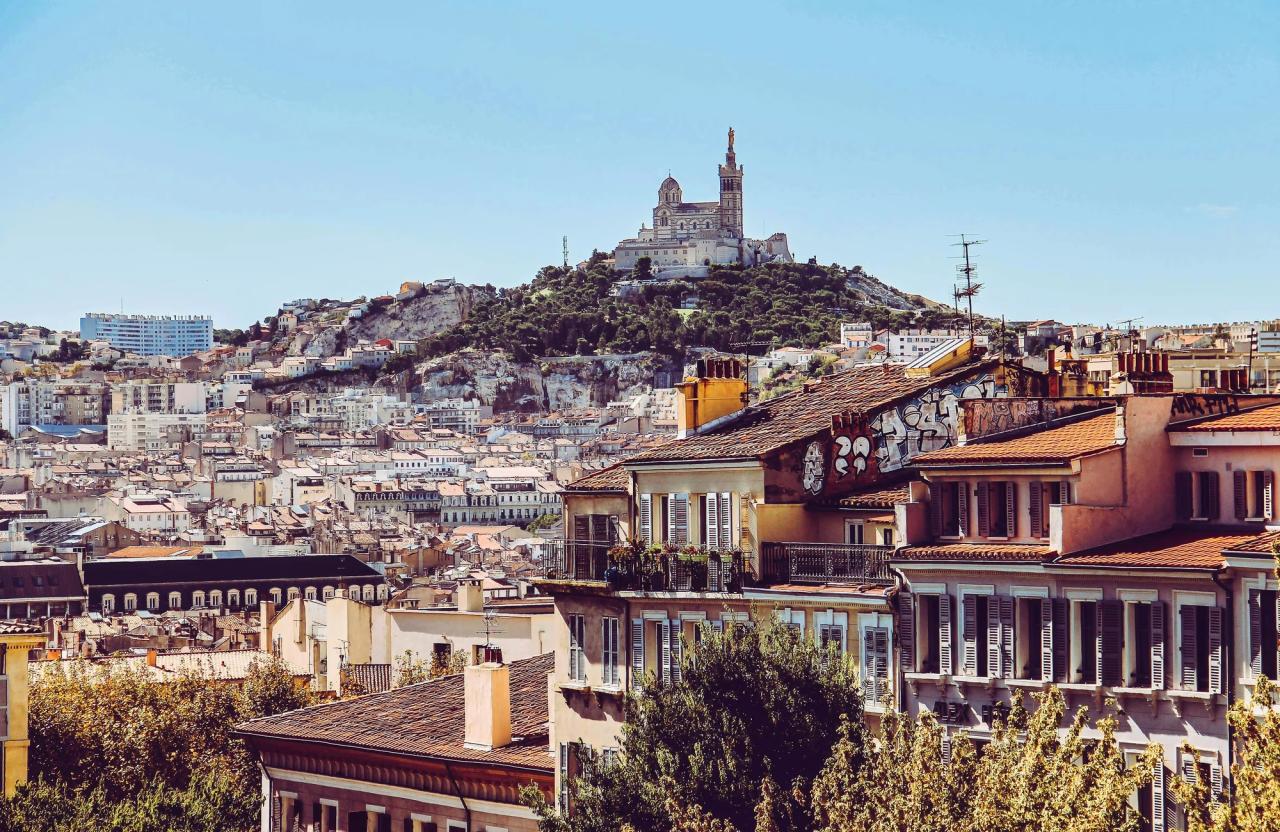
Marsella es la segunda ciudad más grande de Francia y la más antigua: un puerto mediterráneo soleado y auténtico, con una energía cruda que no encontrará en ningún otro lugar del país. Atrae a expatriados que buscan vida costera, alquileres asequibles y un ambiente multicultural sin renunciar a los servicios de una gran ciudad. La oferta gastronómica es excepcional, la costa es impresionante (el parque nacional de los Calanques está a pocos minutos) y el coste de vida es el más bajo entre las grandes ciudades francesas.
Marsella ha dejado atrás su antigua reputación en la última década. La designación como Capital Europea de la Cultura en 2013 impulsó una ola de renovación: nuevos museos, paseos marítimos rehabilitados y un sector tecnológico en crecimiento. Hoy es una de las ciudades más estimulantes de Francia para quienes buscan sol, mar y buena relación calidad-precio. Su energía es inconfundible: cruda, auténtica e inolvidable.
Marsella de un vistazo
- Población
- 870.000 (ciudad), 1,9 millones (área metropolitana)
- Región
- Provenza-Alpes-Costa Azul
- Conocida por
- Puerto mediterráneo, Calanques, bouillabaisse
- Alquiler medio (1 dormitorio)
- €650 – €1,100
- Salario medio
- 2.000 – 2.500 €/mes netos
- Comunidad expatriada
- Diversa: norteafricana, británica, italiana y un sector tecnológico en crecimiento
- Clima
- Mediterráneo; veranos cálidos y secos, inviernos suaves, más de 300 días de sol
- Idioma
- Francés (el inglés es menos habitual fuera de las zonas turísticas y expatriadas)
Por qué mudarse a Marsella
- Alquileres más bajos entre las grandes ciudades: un piso de un dormitorio en el centro cuesta un 40–50 % menos que en París.
- Clima mediterráneo: más de 300 días de sol al año, inviernos suaves y el parque nacional de los Calanques a pocos minutos para senderismo, natación y kayak.
- Identidad multicultural: un auténtico crisol con comunidades norteafricanas, comorense, italiana, armenia y griega que definen el carácter de la ciudad.
- Infraestructura en mejora: la red de tranvías se está ampliando, el frente marítimo se ha renovado (La Joliette, Docks) y el sector tecnológico crece rápidamente.
- Vida costera: playas dentro de la ciudad (Prado, Borély), vela y fácil acceso a Córcega en ferry.
- Capital gastronómica: marisco excepcional, cocina norteafricana y provenzal a precios muy asequibles.
Buscar vivienda en Marsella
Alquileres medios
| Barrio | 1 dormitorio | 3 dormitorios | Carácter |
|---|---|---|---|
| Le Panier (1.º) | 750 – 1.100 € | 1.400 – 2.200 € | El barrio más antiguo, bohemio, con cuestas |
| Vieux Port / Canebière (1.º/2.º/6.º) | 800 – 1.200 € | 1.600 – 2.400 € | Céntrico, frente al mar, animado |
| Prado / Endoume (8.º) | 700 – 1.050 € | 1.300 – 2.100 € | Acceso a la playa, residencial, más tranquilo |
| La Joliette (2.º) | 600 – 900 € | 1.100 – 1.700 € | Moderno, renovado, buena relación calidad-precio |
| Saint-Victor (7.º) | 700 – 1.000 € | 1.300 – 2.000 € | Tranquilo, cerca del mar, ideal para familias |
| Cours Julien (6.º) | 650 – 950 € | 1.200 – 1.800 € | Arte urbano, vida nocturna, ambiente joven |
Los alquileres son notablemente más bajos que en París, Lyon o Burdeos. Los distritos 8.º y 7.º ofrecen la mejor relación calidad-precio. Le Panier tiene encanto, pero los edificios son más antiguos y las calles tienen fuertes pendientes. La Joliette es la zona con mejor relación calidad-precio cerca del centro.
Cómo buscar vivienda
- Leboncoin: la plataforma más popular en Marsella; los propietarios publican directamente aquí. Consúltela varias veces al día.
- SeLoger: útil para filtrar por barrio y estado amueblado/sin amueblar.
- Bien'ici: plataforma oficial con anuncios verificados.
- Logic-Immo: otra plataforma popular con buena cobertura en Marsella.
- El mercado de alquiler de Marsella se mueve rápido: responda a los anuncios en cuestión de horas y tenga su expediente preparado.
Consejos para expatriados
- Su expediente debe incluir las tres últimas nóminas (o justificante de ahorros), la notificación fiscal, el documento de identidad y, si es necesario, una carta de avalista.
- Evite los pisos en plantas bajas de edificios antiguos sin comprobar la humedad y la seguridad.
- Los distritos 8.º y 7.º ofrecen la mejor calidad de vida para familias; los distritos 1.º y 6.º son ideales para solteros y parejas.
- La Joliette es la zona con mejor relación calidad-precio para los recién llegados que buscan vivienda moderna cerca del centro.
- Compruebe la orientación del piso: las viviendas orientadas al sur se calientan mucho en verano sin aire acondicionado.
Guía de barrios
- Le Panier (1.º): el barrio más antiguo de Francia. Calles estrechas, tiendas de artesanos, fachadas coloridas y una fuerte comunidad local. Con encanto, pero con cuestas pronunciadas y aparcamiento limitado. Los turistas lo visitan de día; por la noche es más tranquilo.
- Vieux Port / Canebière (1.º/2.º/6.º): el corazón palpitante de Marsella. Mercados de pescado, restaurantes y la icónica Notre-Dame de la Garde visible en lo alto. Céntrico pero turístico en la zona del puerto. El bulevar de la Canebière es la arteria principal de Marsella.
- Prado / Endoume (8.º): playas, parques y un ambiente residencial más tranquilo. Popular entre familias y profesionales que desean vivir junto al mar. El parque Borély es uno de sus grandes atractivos, con su lago y jardines.
- La Joliette (2.º): una zona portuaria renovada con pisos modernos, el centro comercial Docks y el museo MuCEM. La mejor relación calidad-precio del centro y cada vez más popular entre jóvenes profesionales.
- Saint-Victor (7.º): un barrio tranquilo y montañoso cerca del mar, con buenos colegios y mercados locales. Excelente para familias. Cerca de la Abadía de Saint-Victor y la Corniche.
- Cours Julien (6.º): el centro creativo y de vida nocturna: arte urbano por todas partes, bares independientes, salas de música en directo y tiendas vintage. Muy popular entre jóvenes expatriados y artistas. Animado, pero ruidoso.
Coste de vida en Marsella
Desglose del presupuesto mensual
| Categoría | Rango presupuestario |
|---|---|
| Alquiler (1 dormitorio, centro) | 750 – 1.100 € |
| Suministros | 100 – 160 € |
| Internet | 20 – 40 € |
| Comestibles | 210 – 340 € |
| Transporte | 52,00 € (mensual RTM) |
| Comer fuera (4 veces/mes) | 100 – 175 € |
| Ocio/Gimnasio | 25 – 45 € |
| Total | 1.257 – 1.912 € |
Gastos diarios
- Café (expreso): 1,20 – 1,80 €
- Almuerzo (restaurante informal): 11 – 16 €
- Abono mensual de transporte (RTM): 52,00 €
- Cerveza (de barril, bar): 5 – 7 €
- Entrada de cine: 9 – 12 €
- Baguette: 1,00 – 1,30 €
- Pan bagnat (sándwich local): 5 – 8 €
- Pastis (licor de anís local): 3 – 5 €
Desplazarse por Marsella
- Transporte público: la RTM opera 2 líneas de metro, 3 de tranvía y una amplia red de autobuses. El abono mensual cuesta 52,00 € y cubre todas las zonas. La línea 3 de tranvía (inaugurada en 2015) es una incorporación reciente que mejora la cobertura, y nuevas líneas BHNS (Bus à Haut Niveau de Service) han ampliado la red.
- Bicicleta: el servicio de bicicletas compartidas Le Vélo está disponible, aunque el terreno accidentado de algunas zonas limita su uso. Los carriles bici costeros a lo largo de la Corniche Kennedy se están ampliando y ofrecen vistas pintorescas.
- Coche: Marsella es más amable con el automóvil que París, pero aparcar en Le Panier y el Vieux Port es difícil. Un coche resulta muy útil para explorar los Calanques, los pueblos de la Provenza y hacer escapadas de fin de semana.
- Aeropuerto: Marsella-Provenza (MRS), a 25 km al noroeste, con vuelos a Europa y el norte de África. El autobús lanzadera hasta la Gare Saint-Charles tarda 25 minutos.
- Desplazamientos interurbanos: TGV a París en 3 h 20, a Lyon en 1 h 50 y a Niza en 2 h 30. Los ferris a Córcega (6 h), Cerdeña y el norte de África salen del puerto comercial.
Sanidad en Marsella
- Hospitales y clínicas: Hôpital de la Timone (gran hospital universitario), Hôpital Nord, Clinique Bouchard, Hôpital Européen y Clinique Béauregard. Tanto los centros públicos como los privados están bien equipados.
- Médicos de habla inglesa: disponibles a través de Doctolib, filtrando por idioma. Hay varios consultorios internacionales en los distritos 8.º y 6.º.
- Farmacias: abundantes en toda la ciudad, identificadas con la cruz verde. Los farmacéuticos pueden asesorar sobre problemas de salud leves, vacunas y medicamentos sin receta.
- Número de emergencias: 15 (SAMU) o 112.
Recibe un plan de mudanza personalizado
Deja tu email y te enviaremos una checklist a medida y tres presupuestos de empresas verificadas.
Cultura y estilo de vida
- Estilo de vida mediterráneo: cenas al aire libre, cultura de playa y un ritmo de vida más pausado. Los lugareños hacen almuerzos largos y disfrutan del paseo vespertino por la Corniche Kennedy.
- MuCEM: el Museo de las Civilizaciones de Europa y del Mediterráneo es un hito costero impresionante y una visita obligada para los recién llegados. La colección permanente es gratuita.
- Calanques: las calizas calas entre Marsella y Cassis forman un parque nacional, un paraíso para el senderismo, el baño y el piragüismo. Accesibles en autobús desde el centro de la ciudad.
- Fútbol: el Olympique de Marsella (OM) es una institución cultural. Los días de partido en el Stade Vélodrome (67.000 localidades) son eléctricos y unifican la ciudad.
- Parques Longchamp y Borély: espacios verdes para correr, hacer picnics y relajarse los fines de semana. El parque Borély también tiene un lago, un jardín botánico y acceso a las playas del Prado.
Gastronomía y restaurantes
- Imprescindibles: bouillabaisse (estofado tradicional de pescado), panisse (buñuelos de garbanzo), navettes (galletas de flor de azahar) y aïoli.
- Mejores zonas: Le Panier para bistros, Cours Julien para restaurantes de moda y el Vieux Port para marisco con vistas.
- Opciones económicas: los restaurantes norteafricanos ofrecen generosos platos de cuscús y tajín por 10–14 €. La zona del mercado de Noailles tiene comida barata y excelente.
- El mercado de pescado del Vieux Port cada mañana es una institución marsellesa: compre pescado fresco directamente a los pescadores.
- El agua del grifo en Marsella es potable y de excelente calidad.
Comunidad expatriada
- InterNations Marsella y Expats in Marseille (Facebook) son grupos activos con eventos regulares.
- La Maison des Associations organiza intercambios de idiomas y eventos culturales por toda la ciudad.
- Las comunidades británica, estadounidense e italiana cuentan con sólidas redes sociales, especialmente en el distrito 8.º. La comunidad de rugby también conecta a los expatriados.
Mercado laboral en Marsella
- Principales industrias: logística portuaria, turismo, servicios marítimos, tecnología digital, aeronáutica (en las cercanías de Istres y Aix-en-Provence) y energías renovables.
- Principales empleadores: CMA CGM (transporte marítimo), Airbus (en las cercanías de Marignane), La Provence (medios de comunicación) y nuevas startups en el distrito de innovación de La Joliette, parte de la red La French Tech Marseille.
- Salarios medios por sector:
| Sector | Media neta mensual |
|---|---|
| Tecnología / TI | 2.200 – 3.500 € |
| Logística / Marítimo | 1.800 – 2.800 € |
| Turismo / Hostelería | 1.500 – 2.000 € |
| Sanidad | 2.000 – 3.200 € |
| Ingeniería | 2.400 – 3.800 € |
- Recursos de búsqueda de empleo: France Travail (anteriormente Pôle Emploi), Welcome to the Jungle, LinkedIn Francia, Indeed Francia y la red Aix-Marseille French Tech.
Educación en Marsella
- Colegios internacionales: International Bilingual School of Provence, École Internationale de Marseille y Lycée Périer (secciones europeas).
- Universidades: Aix-Marseille Université (una de las más grandes de Francia, con 80.000 estudiantes), Kedge Business School y École Centrale de Marseille.
- Escuelas de idiomas: Alliance Française Marseille Provence, Institut Saint-Charles, Azurlingua y Easy-French.
Lista de tareas para mudarse a Marsella
- Obtener el visado correcto (VLS-TS o pasaporte talento)
- Investigar los barrios y hacer una lista de 2-3 para la búsqueda
- Preparar el expediente de alquiler (DossierFacile es gratuito)
- Empiece a aprender francés básico — aquí es más importante que en París
- Valide su visado en línea (plataforma ANEF)
- Abra una cuenta bancaria (Crédit Mutuel, CIC o un banco en línea como Boursorama)
- Compre un bono de transporte RTM en cualquier estación de metro
- Consiga un número de teléfono francés (Free Mobile por 19,99 €/mes)
- Regístrese en la CPAM para la seguridad social
- Firme su contrato de alquiler y dé de alta los suministros (EDF, agua)
- Explore su mairie (ayuntamiento de distrito) para conocer los servicios y asociaciones para residentes
- Visite el Vieux Port (Puerto Viejo) y familiarícese con su barrio
- Abra una cuenta de ahorro (Livret A) para obtener intereses exentos de impuestos
- Reciba su número de seguridad social y solicite la carte Vitale
- Contrate un seguro complementario (mutuelle)
- Inscriba a sus hijos en las escuelas locales, si corresponde
- Explore los Calanques y las localidades cercanas (Cassis, Aix-en-Provence)
- Pruebe una auténtica bouillabaisse en un restaurante de prestigio junto al puerto
Consejos de seguridad para expatriados
- El centro de la ciudad (Vieux Port, Prado, Cours Julien) es generalmente seguro: tome las precauciones habituales.
- Evite los barrios del norte (distritos 13, 14 y 15) por la noche, a menos que conozca bien la zona.
- Puede haber pequeños hurtos cerca del Vieux Port y en autobuses concurridos: mantenga los bolsos cerrados y los objetos de valor ocultos.
- Utilice el pago sin contacto; está muy extendido en toda Marsella.
- Regístrese en su embajada para recibir asistencia de emergencia. El número de emergencia francés 112 funciona desde cualquier teléfono.
- El agua del grifo de Marsella es potable y de excelente calidad.
Trabajo a distancia y coworking
- La Cantine: Espacio de coworking popular, orientado a la tecnología, en el centro de la ciudad.
- Coworking Marseille: Membresías flexibles en varias ubicaciones.
- WIMBY: Espacio de coworking creativo cerca del puerto.
- Cultura de café: muchos cafés aceptan a trabajadores con portátil — pida un café y instálese. Puede que los enchufes sean escasos.
- Las velocidades de internet promedian entre 80 y 200 Mbps, y la fibra se extiende por toda la ciudad.
Consejos prácticos para recién llegados
- El agua del grifo es potable en toda Marsella; no necesita agua embotellada.
- El domingo es más tranquilo que los días laborables: la mayoría de las tiendas cierran, excepto las boulangeries (panaderías) y algunos supermercados.
- Los bancos franceses cobran comisiones mensuales (2–8 €/mes): compare las ofertas antes de abrir una cuenta.
- El año fiscal francés va de enero a diciembre: las declaraciones de la renta se presentan en primavera por el año anterior.
- El reciclaje es obligatorio: separe el vidrio (contenedores verdes), el plástico y el papel (contenedores amarillos) y los residuos generales.
Idioma e integración
- El francés es más imprescindible en Marsella que en París: la vida diaria, la burocracia y las relaciones sociales funcionan en francés.
- Clases de francés gratuitas a través de la OFII tras la validación del visado.
- Alliance Française Marseille Provence ofrece cursos intensivos y vespertinos.
- La Maison des Associations organiza intercambios de idiomas y eventos de integración cultural.
- Las comunidades norteafricanas y comorenses ofrecen conexiones culturales adicionales para los hablantes de árabe.
Guías relacionadas
- [Mudarse a Francia] — guía completa del país
- [Mudarse a París] — guía de la capital de Francia
- [Mudarse a Lyon] — guía de la capital gastronómica
- [Mudarse a Toulouse] — polo aeroespacial del sur