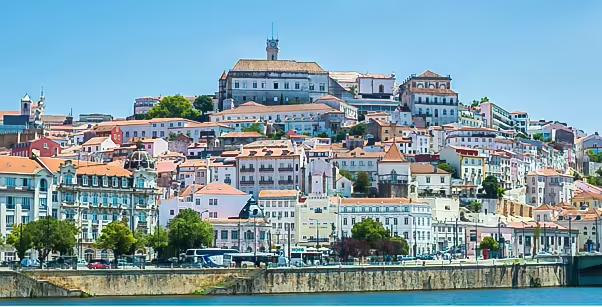

Coimbra is Portugal's historic university city, perched along the Mondego River in the centre of the country. Home to one of the oldest universities in continuous operation in the world — founded in 1290 — the city pulses with student energy, academic tradition, and a literary soul. It offers a quieter, more affordable alternative to Lisbon or Porto while still providing cultural richness, solid infrastructure, and a growing expat presence. Coimbra suits academics, retirees seeking peace, and anyone who values history and affordability over nightlife intensity.
Coimbra at a Glance

- Population
- ~140,000 (city), ~430,000 (metro area)
- Region
- Coimbra district, Centro region
- Known For
- University of Coimbra (UNESCO), fado de Coimbra, Joanina Library
- Average Rent (1BR)
- €500–€750 (city center)
- Average Salary
- €1,000–€1,400 net/month
- Expat Community
- Smaller but growing — academics, retirees, and remote workers
Why Move to Coimbra
- Affordability: Rent and daily costs are significantly lower than Lisbon or Porto. A comfortable lifestyle is achievable on a modest budget.
- Academic atmosphere: The university shapes the city — bookshops, libraries, lectures, and cultural events are everywhere. Intellectual stimulation is built into daily life.
- Central location: Coimbra sits on the main Lisbon–Porto rail line, putting both cities within 1–2 hours by train. The coast is 30 minutes west.
- Quality of life: Slower pace, low crime, walkable centre, and a genuine small-city feel without being isolated.
- Heritage: UNESCO-listed university buildings, the stunning Joanina Library (home to over 300,000 rare volumes), and the Roman ruins of Conimbriga nearby.
- Growing tech scene: Feedzai, Critical Software, and a developing tech park give Coimbra a small but genuine tech economy alongside the academic sector.
Finding Housing in Coimbra
Average Rents
| Neighborhood | 1-Bedroom | 3-Bedroom | Character |
|---|---|---|---|
| Alta (University Hill) | €500–€700 | €1,000–€1,500 | Historic core, student-heavy, steep streets, iconic views |
| Baixa (Lower Town) | €550–€750 | €1,100–€1,600 | Commercial centre, shops, cafés, walkable and lively |
| São Martinho do Bispo | €450–€600 | €900–€1,300 | Residential, suburban feel, families, good value |
| Taveiro/Arzila | €400–€550 | €800–€1,100 | Outskirts, very affordable, car recommended |
| Santa Clara | €450–€650 | €900–€1,400 | South bank, quieter, near parks, student and family mix |
| Eiras/Solum | €450–€600 | €900–€1,250 | Modern developments, shopping centres, practical living |
How to Find Housing
- Idealista.pt: Primary platform for rental listings in Coimbra. Good map filtering.
- OLX Portugal: Often has direct-from-owner listings that don't appear elsewhere.
- University bulletin boards: Both physical boards on campus and online groups for student and faculty housing.
- CustoJusto: Another local classifieds platform worth checking.
- Local tip: September is the hardest month to find housing due to the academic year start. Search early or wait until October.
Tips for Expats
- Student areas offer cheap rooms (€250–€350/month) but noise levels spike during academic term.
- Many landlords accept informal agreements — insist on a written contract for residency and tax purposes.
- Coimbra is hilly. If mobility is a concern, focus on Baixa, São Martinho, or Eiras for flatter terrain.
- Deposit is typically one to two months' rent.
- Furnished apartments are less common than in Lisbon but available — expect to pay 10–20% more.
- Check water heating — some older buildings use electric water heaters that can be slow and costly.
Neighborhoods Guide
- Alta (University Hill): The historic heart. Steep, cobblestoned, and atmospheric. Home to the University of Coimbra, Sé Velha (old cathedral), and the Joanina Library. Rents are moderate. Best for students, academics, and those who want to live inside history.
- Baixa (Lower Town): The commercial centre below the hill. Flat, walkable, full of shops, restaurants, and Praça do Comércio. Good for professionals and anyone who wants convenience without the climb.
- Santa Clara: Across the Mondego River. Quieter, greener, with the Santa Clara-a-Nova monastery and riverside parks. Popular with families and postgrads. Slightly cheaper rents.
- São Martinho do Bispo: A well-connected suburb west of the centre. Supermarkets, schools, and bus links. Practical, affordable, and unpretentious. Good for families on a budget.
- Eiras/Solum: Modern residential area with shopping centres and newer apartment blocks. Easy parking, flat terrain, and direct bus routes to the university. Popular with young professionals.
- Taveiro/Arzila: Rural outskirts with very low rents. Requires a car. Best for those who want maximum space and quiet on a tight budget.
- Tovim/Portela: Emerging residential area south of the centre with newer housing, sports facilities, and growing retail. Good middle ground between central living and suburban prices.
Cost of Living in Coimbra
Monthly Budget Breakdown
| Category | Budget Range |
|---|---|
| Rent (1BR, center) | €500–€750 |
| Utilities | €80–€120 |
| Internet | €28–€38 |
| Groceries | €200–€280 |
| Transport | €30 (monthly bus pass) |
| Dining out (4x/month) | €80–€140 |
| Leisure/Gym | €25–€45 |
| Total | €943–€1,403 |
Day-to-Day Costs
- Coffee (bica): €0.70–€1.00
- Lunch (student canteen/prato do dia): €6–€8
- Monthly bus pass (SMTUC): €30
- Beer (bar): €2–€3
- Cinema ticket: €6–€7.50
- Loaf of bread: €1.00–€1.50
- 1 litre of milk: €0.70–€0.95
- Dozen eggs: €1.80–€2.50
- Gym membership: €25–€40/month
Getting Around Coimbra
- Public transport: SMTUC runs the city bus network. A monthly pass costs around €30. Coverage is decent in the urban area but limited to evenings and weekends in outer suburbs.
- Cycling: Possible but hilly in the centre. Flat riverside paths along the Mondego are good for cycling. E-bikes are growing in popularity.
- Driving: Coimbra is compact enough that a car is unnecessary for daily life. Useful for exploring the surrounding countryside, Serra da Lousã, and coastal towns like Figueira da Foz.
- Airport: No commercial airport. Porto Airport (OPO) is 1.5 hours north, Lisbon Airport (LIS) is 2 hours south. Both reachable by train or bus.
- Intercity: Coimbra-B station is a major hub on the Lisbon–Porto line. Alfa Pendular high-speed trains reach Lisbon in under 2 hours, Porto in about 1 hour. Regular trains to Aveiro, Figueira da Foz, and Guarda.
- Taxis and ride-hailing: Taxis are affordable. Bolt operates in Coimbra and is cheaper than traditional taxis.
Healthcare in Coimbra
- Hospitals/Clinics: Hospital da Universidade de Coimbra (HUC) — one of Portugal's leading teaching hospitals. Hospital Pediátrico for children. Several private clinics including CUF Coimbra and Hospital da Luz.
- English-speaking doctors: Available at HUC and private clinics. Medical staff at the university hospital are often internationally trained.
- Pharmacies: Widely available throughout the city, identified by green cross signage.
- Emergency number: 112.
- Private insurance: Useful for faster specialist access. Plans from Multicare or Médis cost €25–€60/month depending on coverage and age.
Get a personalised relocation plan
Drop your email and we'll send a tailored checklist plus three quotes from vetted movers.
Culture & Lifestyle
- Fado de Coimbra: Distinct from Lisbon fado — traditionally performed only by men in academic dress, often serenading under the window of a loved one. Venues include À Capella (a converted chapel) and various fado houses in the Alta.
- University traditions: Queima das Fitas (Burning of the Ribbons) in May is a week-long festival of concerts and ceremonies. The academic year shapes the city's rhythm.
- Literary heritage: The city inspired the poetry of Fernando Pessoa and António Nobel. Bookshops and literary cafés are woven into daily life.
- River life: The Mondego River offers walks, kayak rentals, and green parks along both banks. The Choupal National Forest provides shaded trails minutes from the centre.
- Conimbriga: A well-preserved Roman archaeological site 20 minutes south by car — mosaics, baths, and a museum make it an excellent day trip.
Food & Dining
- Leitão da Bairrada: Suckling pig is the regional speciality — crispy, slow-roasted, and iconic. Restaurants in nearby Mealhada are the go-to destination.
- Pastéis de Santa Clara: A local almond and egg-yolk pastry unique to Coimbra. Find them at convents and pastry shops near the Sé.
- Student canteens: University canteens (cantinas) serve full meals for around €3.50 and are open to some non-students. Praça do Comércio has affordable lunch spots.
- Mercado D. Pedro V: The central market with fresh produce, fish, and flowers. Great for budget grocery shopping.
- Wine: The nearby Bairrada wine region produces excellent reds and the famous sparkling wine. Bottles are affordable — €4–€8 for good quality.
Expat Community
- Smaller than Lisbon or Porto but active. InterNations has a Coimbra group. Facebook groups like "Expats in Coimbra" help with housing and bureaucracy.
- The university draws international academics and researchers, creating a natural expat network.
- Language exchange meetups happen regularly at cafés in the Baixa.
- The city is small enough that you quickly recognize faces and build genuine community.
- Erasmus students bring seasonal energy and international events throughout the academic year.
Working Remotely in Coimbra
- Coworking spaces: NÓS (near the river), Instituto Pedro Nunes incubator, and a handful of smaller spaces. Limited but growing.
- Café working: Plenty of quiet cafés with Wi-Fi. The Baixa area has the best options.
- Internet: Fibre coverage is good in the urban area. Average speeds of 100–300 Mbps.
- Challenges: Smaller coworking scene and no direct airport are the main drawbacks for remote workers.
Job Market in Coimbra
- Main industries: Education and research, healthcare, technology (growing tech park), public administration, manufacturing.
- Major employers: University of Coimbra, CHUC (hospital centre), Critical Software, Feedzai (AI/fintech), Siemens (nearby), municipal government.
- Average salaries by sector:
| Sector | Average Net Monthly |
|---|---|
| Tech/IT | €1,200–€2,000 |
| Education | €1,000–€1,500 |
| Healthcare | €1,100–€1,800 |
| Public Sector | €900–€1,300 |
| Hospitality | €750–€1,000 |
- Job search resources: Net-Empregos, Landing.jobs, LinkedIn Portugal, university job board (Candidaturas).
Education in Coimbra
- International schools: Limited. Colégio Rainha Santa Isabel offers bilingual programmes. For full international curricula, families sometimes commute to Lisbon or Porto options.
- Universities: University of Coimbra (one of Europe's oldest, strong in law, medicine, sciences, engineering, and humanities). Instituto Politécnico de Coimbra for applied sciences.
- Language schools: University of Coimbra's language centre offers Portuguese courses. Private schools like International House Coimbra provide additional options.
- Public schools: Free and well-distributed. Coimbra's public schools generally perform above national averages.
Moving Checklist for Coimbra
Before Arriving
- Apply for your visa (D7, work, or student visa) at the Portuguese consulate
- Obtain your NIF (tax number) — essential for renting and banking
- Open a Portuguese bank account (Millennium BCP or ActivoBank)
- Join Coimbra housing groups on Facebook and check Idealista
- Research which parishes suit your needs and budget
- If university-affiliated, contact the international office for housing support
First Week
- Register at the local Câmara Municipal for residency documentation
- Get a SMTUC bus card at the main bus terminal
- Set up a Portuguese phone number (MEO or NOS have good coverage in the Centro region)
- Explore the Baixa and Alta on foot to learn the layout
- Visit the nearest pharmacy and health centre for reference
First Month
- Register at a centro de saúde (health centre) for public healthcare access
- Apply for your residency card through AIMA
- Attend a language exchange or expat meetup to build your network
- Visit nearby towns — Condeixa, Lousã, Penela, and Figueira da Foz
- Set up utilities if not included in rent (EDP for electricity, Águas de Coimbra for water)
- Register for Portuguese language classes
- Explore the Mondego riverside and Choupal forest on foot
- Visit the Mercado D. Pedro V for fresh produce and local atmosphere
Frequently asked
Nightlife & Entertainment
- Student bars: Coimbra's nightlife revolves around student bars and tascas in the Baixa and Alta. Cheap drinks and lively crowds during term time.
- À Capella: A converted chapel turned fado venue — atmospheric and unique.
- Queima das Fitas: The May student festival brings a week of concerts and street parties. The biggest event on Coimbra's calendar.
- Clubs: Salão Brazil and Via Latina are the main late-night spots. Scene is smaller than Lisbon or Porto but energetic during university terms.
- Cinema: Teatro Académico de Gil Vicente screens films and hosts performances. The Forum Coimbra cinema shows mainstream releases.
Weather & Climate
| Season | Temperature | Conditions |
|---|---|---|
| Spring (Mar–May) | 14–22°C | Mild, occasional rain, green landscapes |
| Summer (Jun–Sep) | 25–38°C | Hot, dry, can be intense in August |
| Autumn (Oct–Nov) | 13–20°C | Pleasant, increasing rain, golden light |
| Winter (Dec–Feb) | 5–15°C | Cool, foggy mornings, frequent rain |
Language Tips
- Greetings: Olá (hello), bom dia (good morning), boa tarde (good afternoon), boa noite (good evening).
- Essentials: Obrigado/a (thank you), por favor (please), com licença (excuse me), desculpe (sorry).
- Useful: Quanto custa? (How much?), fala inglês? (Do you speak English?), a conta, por favor (the bill, please).
- Academic Portuguese: The university has its own traditions and vocabulary — "praxe" (initiation rituals), "traje" (the black academic outfit), and "Queima" (the end-of-year festival) are terms you will hear constantly.
- Tip: Coimbra's slower pace gives you more opportunities to practice Portuguese in real-life situations than Lisbon's tourist-heavy environment.
- Portuguese courses at UC: The University of Coimbra runs summer intensive courses and semester-long programmes for international students and residents. Well-regarded and affordable.
Related Guides
- [Moving to Portugal] — comprehensive country guide covering visas, taxes, and residency
- [Moving to Porto] — guide to Portugal's second city, 1 hour north
- [Moving to Lisbon] — Portugal's capital, under 2 hours south by train