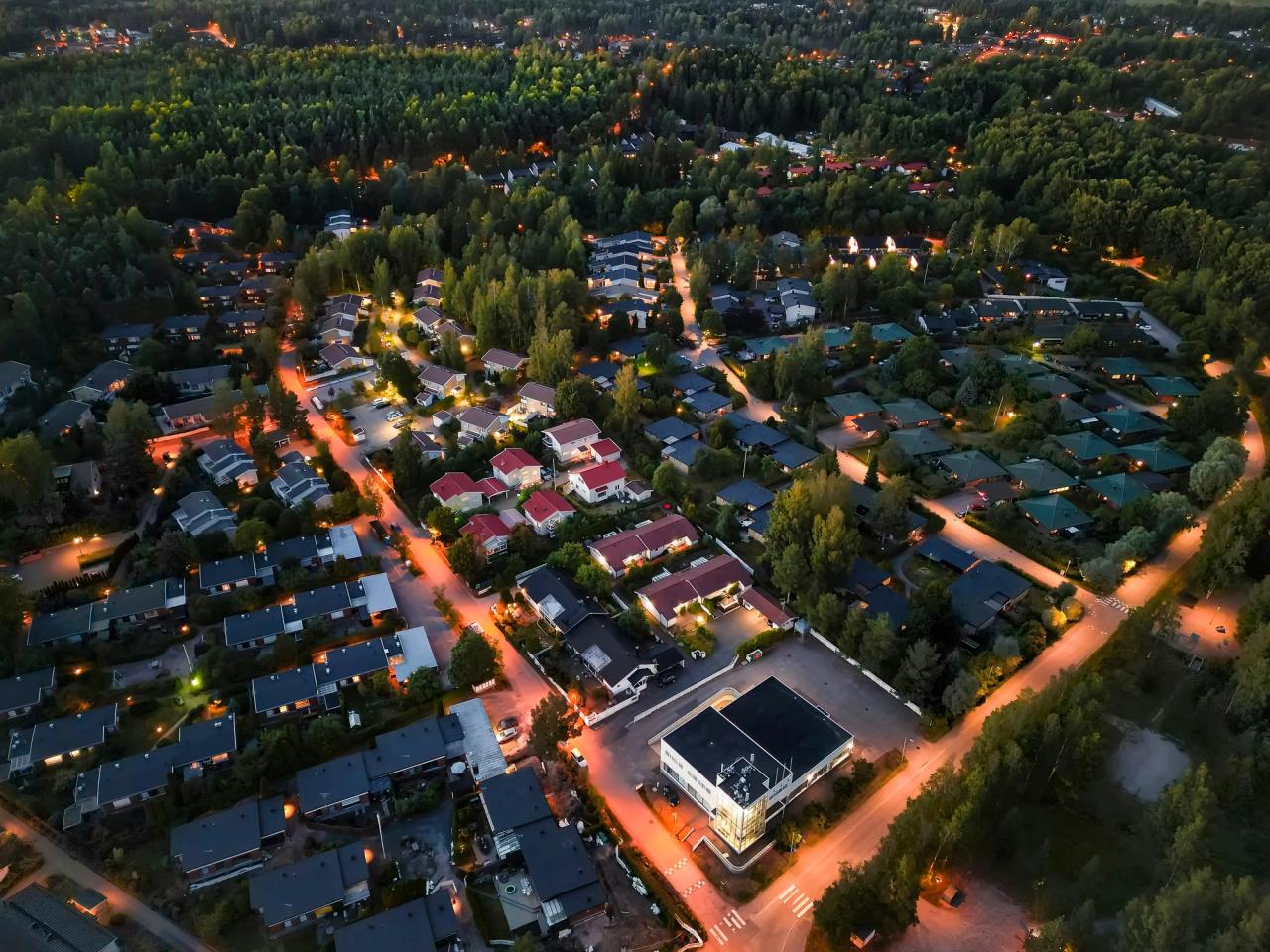
Espoo is Finland's second-largest city and the beating heart of the country's technology sector, sitting directly west of Helsinki along the northern shore of the Gulf of Finland. Home to Aalto University's Otaniemi campus, Nokia's headquarters, and a dense cluster of startups and R&D labs in Keilaniemi, Espoo draws engineers, researchers, and digital nomads from across the globe. Unlike Helsinki's compact urban core, Espoo spreads across five distinct city centers — Tapiola, Leppävaara, Espoon Keskus, Matinkylä, and Espoonlahti — each with its own identity, all woven together by the Länsimetro line, coastal trails, and the vast Nuuksio National Park on its western edge. If you want Helsinki-proximate living with more space, lower rents, and a direct line into Finland's innovation economy, Espoo is the move.
Espoo at a Glance
Population
~325,000 (part of ~1.6M Helsinki metropolitan area)
Region
Uusimaa, Southern Finland
Known For
Aalto University, Nokia HQ, Nuuksio National Park, Otaniemi tech hub
Average Rent (1BR)
€750–€1,100
Average Salary
€3,200–€4,000 net/month (tech sector higher)
Expat Community
Large and growing; strong in Otaniemi/Keilaniemi due to tech and academia
Why Move to Espoo
Tech and innovation epicenter: The Otaniemi–Keilaniemi corridor hosts Nokia, Rovio, Supercell alumni networks, Aalto University, and dozens of deep-tech startups — making Espoo one of Northern Europe's densest innovation clusters.
Nature within city limits: Nuuksio National Park offers marked hiking trails, lakeside shelters, and wilderness camping just 30 minutes by bus from Tapiola — a rarity for a city of this size.
More affordable than Helsinki: Rents run 10–20% lower than comparable Helsinki neighborhoods while keeping commute times under 25 minutes via metro.
Bilingual and internationally oriented: Finland is officially bilingual in Finnish and Swedish, and Espoo has one of the country's highest proportions of Swedish speakers alongside a large international community, meaning English works in nearly every daily situation.
Family-friendly infrastructure: Espoo consistently ranks among Finland's safest cities, with well-funded public daycare (päiväkoti), extensive parks, and school systems that support both Finnish- and Swedish-language instruction as well as international IB programs.
Coastal and archipelago access: With 58 km of Baltic Sea coastline and 165 islands, Espoo offers sailing, kayaking, and beach life in summer — the Soukka and Kivenlahti boat connections make island-hopping a weekend routine rather than a vacation activity.
Finding Housing in Espoo
Average Rents
Neighborhood
1-Bedroom
3-Bedroom
Character
Tapiola
€900–€1,200
€1,600–€2,200
Garden city architecture, cultural venues, premium area
Leppävaara
€800–€1,100
€1,400–€1,900
Transport hub, busy commercial center, good value
Matinkylä
€800–€1,050
€1,400–€1,800
Shopping hub, metro terminus, family-oriented
Otaniemi
€700–€1,000
€1,200–€1,700
Student and researcher housing, campus vibe
Espoon Keskus
€650–€900
€1,100–€1,600
Affordable, quieter, undergoing redevelopment
Haukilahti
€850–€1,150
€1,500–€2,100
Seaside living, residential, popular with families
Espoonlahti
€750–€1,000
€1,300–€1,800
Suburban, near Jorvi Hospital, growing area
Soukka/Kivenlahti
€700–€950
€1,200–€1,700
Affordable coastal, metro access, quieter
How to Find Housing
Vuokraovi.com: The largest rental listing site in Finland; filter by Espoo and metro proximity for the best results.
Oikotie.fi: Premium portal used by private landlords and agencies; has English-language listings for the Helsinki metro area.
HOAS (Helsinki Foundation for Student Housing): If you are enrolled at Aalto University or another institution, HOAS offers subsidized apartments in Otaniemi and Leppävaara.
Etuovi.com: Broad listing site that includes both rentals and properties for purchase across Espoo.
Facebook groups: "Apartments in Helsinki/Espoo" and "Vuokra-asunnot Helsinki/Espoo/Vantaa" are active markets for sublets and direct-from-landlord deals.
Tips for Expats
Register with Maistraatti (Local Register Office) at your Espoo address within the first weeks — your municipality of registration determines healthcare access, taxation, and voting rights.
Landlords typically require proof of income or a Finnish guarantor; a local employment contract satisfies most requirements.
Most apartments come with a refrigerator and stove/oven included; tenants usually supply their own dishwasher, washing machine, and light fixtures.
Heating is almost always district heating (kaukolämpö) and included in the utilities or rent — Finnish winters are no joke, but indoor temperatures are consistently warm.
Rental contracts are typically open-ended (toistaiseksi voimassa) with a one-month notice period for the tenant; fixed-term contracts (määräaikainen) are also common but harder to break early.
Expect to pay a deposit of 1–3 months' rent; HOAS student housing deposits are lower, typically €200–€500.
If your rent is above market rate, you can request a rent reduction through the Espoon vuokralautakunta (Espoo Rent Board) — a free municipal service that mediates disputes between tenants and landlords.
Neighborhoods Guide
Tapiola: The original "garden city," designed in the 1950s with modernist architecture nestled among forests and coastline. Home to the EMMA (Espoo Museum of Modern Art), the Espoo Cultural Centre, and the WeeGee exhibition centre. Rents are among Espoo's highest. Ideal for professionals and culture lovers who want green surroundings with metro access.
Leppävaara: Espoo's busiest transport hub — the Leppävaara train station connects to Helsinki Central in 12 minutes, and the Sello shopping center sits directly above it. Dense residential blocks, sports facilities (Leppävaara Sports Park), and a wide mix of restaurants. Good for commuters and families who want convenience.
Otaniemi: The Aalto University campus district and Finland's largest concentration of tech companies and research labs. Teekkarikylä (student village) housing dominates, but new residential towers in Keilaniemi add non-student options. Best for students, researchers, and startup employees who want to live where they work.
Matinkylä: The western terminus of the Länsimetro line, centered on the massive Iso Omena shopping center (expanded in 2016 with a library, health center, and cultural services under one roof). Densely built but well-served by transit. Popular with families thanks to schools, parks, and the nearby coastal areas.
Espoon Keskus: The administrative center of Espoo, more affordable and less polished than Tapiola or Leppävaara. The Espoo Cathedral (Espoon tuomiokirkko), dating to the 1480s, anchors the historic village core. Undergoing major redevelopment with new residential and commercial projects. Good for budget-conscious renters.
Haukilahti/Westend: Coastal neighborhoods east of Tapiola with waterfront properties, small-boat harbors, and quiet residential streets. Westend is one of the wealthiest postal code areas in Finland. Rents are high, but you get sea views and a suburban feel within 20 minutes of Helsinki by bus or car.
Espoonlahti: The southwestern city center, anchored by the Länsimetro's Espoonlahti station and the Espoonlahti shopping center. Close to Jorvi Hospital, making it convenient for healthcare workers. The nearby Haukilahti beach and coastal path add recreational appeal. Rents are moderate and the area is popular with families who want coastal access without Tapiola prices.
Soukka and Kivenlahti: The southernmost and most affordable metro-served neighborhoods in Espoo. Kivenlahti is the current western terminus of the Länsimetro, opened in December 2022. Both areas are quiet, residential, and close to the coast — ideal for budget-focused renters who still want metro access to Helsinki. The Espoo archipelago boat jetty at Kivenlahti connects to island destinations in summer.
Cost of Living in Espoo
Monthly Budget Breakdown
Category
Budget Range
Rent (1BR, center)
€800–€1,100
Utilities (electricity, water, district heating)
€80–€150
Internet
€20–€35
Groceries
€250–€400
Transport (HSL AB zone)
€55–€65
Dining out (4x/month)
€100–€180
Leisure/Gym
€40–€80
Total
€1,345–€2,010
Day-to-Day Costs
Coffee (espresso): €3.00–€4.00
Lunch (casual, e.g., Sello food court): €10–€14
Monthly transport pass (HSL AB zone): €62
Beer (bar, 0.5L): €7–€9
Cinema ticket: €14–€17
Gym membership (Elixia or Fitness24Seven): €30–€55/month
GP visit (private clinic, before Kela reimbursement): €70–€120
Groceries (K-Citymarket Sello or Prisma Matinkylä): comparable to Helsinki pricing
Kauppahalli (market hall) produce: seasonal and often cheaper than supermarkets in summer
Getting Around Espoo
Public transport: Espoo is served by the HSL (Helsinki Regional Transport Authority) network. The Länsimetro extension opened in two phases — Ruoholahti–Matinkylä in November 2017 and Matinkylä–Kivenlahti in December 2022 — connecting Espoo to Helsinki via Keilaniemi, Aalto University, Tapiola, and onwards to Helsinki Central Station. HSL AB zone monthly pass costs €62 and covers all Espoo metro, bus, and commuter train rides within the zone.
Commuter trains: The L, A, E, and U trains stop at Leppävaara, Espoo, Kauniainen, and Kilo — Leppävaara to Helsinki Central is roughly 12 minutes.
Cycling: Espoo has an expanding network of baana (separated cycling paths). The coastal route from Haukilahti to Helsinki is popular with commuters. City bikes are available through the HSL system from April to October.
Driving: Kehä I (Ring Road I) runs east–west through Espoo connecting to Helsinki and Vantaa; Kehä III (Ring Road III) passes through northern Espoo. Rush-hour congestion on Kehä I and the Länsiväylä (Western Highway) is significant — most commuters prefer the metro or train. Parking in Tapiola and Leppävaara centers is paid and often requires a permit in residential areas.
Airport: Helsinki-Vantaa Airport (HEL) is 25–35 minutes by car or roughly 45 minutes by train (via Helsinki Central) from central Espoo. Direct bus connections also operate from Espoo. The airport serves as Finland's main international gateway with direct flights across Europe, Asia, and North America.
Intercity: Long-distance trains depart from Helsinki Central; Leppävaara station also serves some Turku-bound trains. Buses to Turku and other western Finnish cities depart from Kamppi (Helsinki). The E18 motorway connects Espoo westward to Turku (1.5 hours) and eastward to Helsinki and onwards to St. Petersburg (visa required).
Ferry connections: The Tallinn (Estonia) ferry terminal in Helsinki is reachable by metro in under 30 minutes from Espoo — Tallinn is a 2-hour fast ferry ride away, making it a popular day trip or weekend destination for Espoo residents. Stockholm ferries depart from Helsinki's Katajanokka and West harbors.
Healthcare in Espoo
Hospitals/Clinics: Espoo is part of the HUS (Hospital District of Helsinki and Uusimaa). Jorvi Hospital in Espoonlahti handles emergency and specialist care. Each district (Tapiola, Leppävaara, Matinkylä, Espoon Keskus) has its own terveysasema (health station) for primary care.
English-speaking doctors: Widely available at private clinics such as Mehiläinen (Leppävaara, Tapiola), Terveystalo (multiple Espoo locations), and Aava (Sello). Public health stations also have English-speaking staff, though wait times for non-urgent appointments can be 1–3 weeks.
Kela (Social Insurance Institution): Once registered at Maistraatti, apply for Kela coverage. Kela reimburses a portion of private doctor visits and medication costs. Your municipality of residence determines which public health station you are assigned to.
Pharmacies: Apteekki (pharmacies) are found in every major shopping center — Sello (Leppävaara), Iso Omena (Matinkylä), and the Tapiola center. The Yliopiston Apteekki chain often has English-speaking staff. Over-the-counter pain relievers and basic medications are only sold at pharmacies, not in supermarkets.
Dental care: Public dental services (hammaslääkäri) are available through the City of Espoo for registered residents, though wait times can be long. Private dental clinics (e.g., Hammas Mehiläinen, Oral) offer faster service at €60–€120 per check-up, partially reimbursed by Kela.
Emergency number: 112 (uniform across Finland and the EU for police, fire, and ambulance).
Get a personalised relocation plan
Drop your email and we'll send a tailored checklist plus three quotes from vetted movers.
Culture and Lifestyle
Nuuksio National Park: Over 50 km of marked trails, campfire sites, and lake swimming spots inside Espoo's city limits. Accessible by bus 85 from Leppävaara or bus 28 from Espoon Keskus. The Haukankierros trail is a manageable 3.8 km loop for beginners.
EMMA (Espoo Museum of Modern Art): Located in the WeeGee building in Tapiola, EMMA holds Finland's largest collection of modern art alongside rotating international exhibitions. The same building houses the KAMU Espoo City Museum and the Finnish Museum of Horology.
Coastal and archipelago life: Espoo has 58 km of Baltic coastline and 165 islands. The Espoo Rantaraitti (coastal trail) runs for 12 km from Haukilahti to Saunalahti, passing beaches, marinas, and the Espoo archipelago boat connections at Soukka and Kivenlahti.
Sauna culture: Espoo has public saunas (e.g., at various swimming halls) and many apartment buildings include a shared sauna and laundry room (pesutupa) that residents book in advance. The Finnish sauna tradition is a social cornerstone — colleagues, neighbors, and friends regularly sauna together.
Sports and recreation: The Leppävaara Sports Park includes a stadium, swimming hall, and outdoor tracks. Espoo's 200 km of maintained cross-country ski trails are groomed in winter, and the city maintains outdoor ice rinks and swimming beaches in summer.
Events and festivals: The Espoo Day (Espoon päivä) in late August celebrates the city with open-door events across all five city centers. The April Jazz festival in Tapiola draws Nordic and international performers each spring. We Love Espoo community events run year-round in different neighborhoods.
Food and Dining
Finnish staples: karjalanpiirakka (Karelian pasties), lihapullat (Finnish meatballs), and fresh Baltic herring appear on most menus.
Best areas for dining: Sello (Leppävaara) has a large food court with international options; Iso Omena (Matinkylä) offers everything from Nepalese to sushi; Tapiola's central area has upscale Finnish and Nordic restaurants.
Budget options: University cafeterias (Unicafe at Aalto), supermarket hot-food counters at K-Citymarket and Prisma, and lunch deals (lounas) at local restaurants typically cost €9–€12 and include salad bar, bread, and coffee.
Specialty and international: The Piato restaurant at Aalto's Dipoli building is known for Finnish fine dining at reasonable lunch prices. Halal and Asian grocery stores cluster along Kehä I near Leppävaara, reflecting Espoo's diverse population.
Seasonal food events: The Espoo Wine Festival in autumn and the Kauniainen (neighboring enclave) Christmas market draw visitors from across the metropolitan area. Berry-picking (mustikka, lakka) in Nuuksio is a free summer tradition.
Expat Community
International House Helsinki (IHH): Though based in Helsinki, IHH serves the entire metropolitan area with integration advising, events, and networking for newcomers.
Aalto University international networks: The Aalto student unions (AYY and TOKYO) organize events, and the Aalto Startup Center runs programs open to non-students.
Espoo International School (EIS): Located in Leppävaara, it draws international families and has an active parent community that organizes social events.
Meetup groups: "Espoo Expats," "Helsinki/Espoo Tech Meetups," and "Nordic Nomads" are active on Meetup.com for social and professional networking.
Language exchanges: HelFi Mix (Helsinki-Espoo language exchange) runs weekly events at rotating Espoo and Helsinki venues where you can practice Finnish with locals.
Sports clubs: Joining a local sports club (urheiluseura) is a reliable way to meet Finns socially. Espoo has clubs for football (FC Espoo), ice hockey (Espoo Blues), orienteering, and running. Espoon Pesis plays pesäpallo (Finnish baseball), while EsBo is a local bandy club.
Volunteering: The Espoo chapter of the Finnish Red Cross (Punainen Risti) and local church communities welcome international volunteers and provide another route into the local social fabric.
Job Market in Espoo
Main industries: Information technology, telecommunications, engineering, gaming, deep tech, clean energy, biotechnology, and higher education research.
Major employers: Nokia (Karaportti HQ in Keilaniemi), Aalto University, KONE (headquarters in Keilaniemi), Neste (headquarters in Keilaniemi), Fortum, Rovio Entertainment, Supercell (Helsinki-adjacent), Tietoevry, and numerous startups in the Aalto Startup Center and SLUSH ecosystem. Microsoft's Finland development center also operates in the Keilaniemi area.
Freelancing and entrepreneurship: Finland makes it straightforward to start a business as an expat. A limited liability company (Oy) requires €2,500 in initial share capital. The City of Espoo's business development team (Espoo Business Hub) offers free advising to international founders setting up in the Otaniemi–Keilaniemi innovation ecosystem.
Average salaries by sector:
Sector
Monthly Gross
Monthly Net (approx.)
Software engineer
€4,000–€6,500
€2,800–€4,200
Data scientist
€3,800–€6,000
€2,700–€3,900
Mechanical engineer
€3,500–€5,000
€2,500–€3,400
University researcher
€3,000–€4,500
€2,200–€3,200
Marketing manager
€3,500–€5,500
€2,500–€3,700
UX/Product designer
€3,500–€5,500
€2,500–€3,700
Administrative role
€2,500–€3,500
€1,900–€2,500
Job search resources: Duunitori.fi, Oikotie Työpaikat, LinkedIn (dominant in Finnish tech recruiting), Aalto CareerWeb (if affiliated with the university), and TE-palvelut (Public Employment and Business Services) which offers support to registered job seekers.
Networking: The Otaniemi campus hosts regular meetups and hackathons; the Aalto Startup Center and Junction (Finland's largest hackathon) are key networking events. SLUSH, held annually in Helsinki, draws investors and startups from across the world and is a 20-minute metro ride from Espoo.
Work culture: Finnish workplaces emphasize flat hierarchies, punctuality, and direct communication. Overtime is rare — the culture respects your free time. Most tech companies in Espoo use English as their working language, though Swedish and Finnish proficiency is valued in client-facing roles.
Education in Espoo
International schools: Espoo International School (EIS) in Leppävaara offers IB (International Baccalaureate) programs from primary through diploma level. The English School in Helsinki also accepts Espoo residents and is reachable by metro.
Universities: Aalto University is the centerpiece — formed by the 2010 merger of Helsinki University of Technology, Helsinki School of Economics, and University of Art and Design Helsinki, it ranks among Europe's top universities for technology, business, and design. Its Otaniemi campus is a landmark of Finnish functionalist architecture designed by Alvar Aalto.
Language schools: Adult education center Espoon työväenopisto (Espoo Workers' Institute) offers Finnish and Swedish courses. For additional options, Eira High School for Adults is available in Helsinki. The City of Espoo provides free Finnish courses (kotoutumiskoulutus, or integration training) for registered residents through employment offices.
Daycare (päiväkoti): The City of Espoo provides subsidized daycare for all residents; fees are income-based, capped at roughly €300/month. Early childhood education in English is available at select päiväkoti locations, including those near Aalto University.
Vocational education: Omnia, the Espoo-based joint authority of education, offers vocational programs (some in English) in technology, business, and healthcare — a pathway for spouses or career-changers seeking Finnish-recognized qualifications.
Public schools (peruskoulu): Children attend the school in their catchment area; instruction is in Finnish or Swedish depending on the school. If your child does not speak either language, preparatory education (valmistava opetus) is provided for one year before mainstream integration.
Moving Checklist for Espoo
Before Arriving
Secure a job offer or university admission — this simplifies everything from residence permits to housing applications.
Apply for a residence permit (oleskelulupa) through the Finnish Immigration Service (Migri) if you are a non-EU/EEA citizen; EU citizens register their right of residence instead.
Book temporary accommodation for your first 2–4 weeks (Airbnb or hotel near a metro station in Tapiola or Leppävaara).
Obtain a Finnish personal identity code (henkilötunnus) — your employer or Migri can initiate this; you will need it for banking, tax registration, and healthcare.
Research housing on Vuokraovi.com and Oikotie.fi; set up alerts for your target neighborhoods.
Get international driving permit if planning to drive; EU licenses are valid as-is, others must be exchanged within two years of registration.
Obtain travel insurance that covers your first weeks in Finland — Kela coverage only kicks in after municipality registration.
Notify your home country's tax authority of your departure if applicable; Finland has tax treaties with most countries to avoid double taxation.
Prepare certified translations of birth certificates, marriage certificates, and academic diplomas — you may need them for Maistraatti registration and school enrollment.
First Week
Visit Maistraatti (Local Register Office) in person at Espoon Keskus to register your address and municipality of residence — bring your passport, residence permit, and rental contract.
Open a Finnish bank account (Nordea, OP, or Danske Bank all have branches in Leppävaara and Tapiola) — you will need your henkilötunnus and a registered address.
Register with the DVV (Digital and Population Data Services Agency) for your digital identity, which enables access to Finnish e-services including online banking and tax filing.
Download the HSL app and buy an AB zone travel card or set up mobile ticketing.
Buy a prepaid SIM (Elisa, DNA, or Telia — available at R-Kioski in any shopping center) until you have a bank account for a monthly plan.
Visit your assigned terveysasema (health station) to register as a patient — this speeds up future appointment booking.
Download the Wilma app if you have school-age children — it is the platform used by Espoo schools for communication between teachers and parents.
First Month
Apply for a Kela (Social Insurance Institution) card online or at a service point — you need your henkilötunnus, address registration, and proof of employment or studies.
Register at your assigned terveysasema (health station) in your Espoo district.
Enroll in a Finnish language course through Espoon työväenopisto or inquire about kotoutumiskoulutus (integration training) through your local TE office.
Set up home insurance (kotivakuutus) — required by most landlords; compare offers from If, Pohjola, or LähiTapiola.
Apply for a library card at the Espoo City Library (Helmet network) — free access to books, e-media, and study spaces; the Iso Omena library branch is one of the most modern in the country.
If you have children, apply for a päiväkoti (daycare) spot through the City of Espoo's e-services — submit the application at least four months before the needed start date.
File your tax card (verokortti) with your employer — the Finnish Tax Administration (Vero) calculates your rate based on expected annual income; you can adjust it online at Vero.fi.
Register to vote in municipal elections if you are an EU/EEA or Nordic citizen — non-EU permanent residents who have had a municipality of residence in Finland for two years are also eligible.
Consider joining a local union (ammattiliitto) relevant to your field — Finnish unions provide unemployment insurance (työttömyyskassa), legal advice, and salary negotiation support. Membership typically costs 1–2% of gross salary.
Frequently asked
Related Guides
[Moving to Finland] — comprehensive country guide covering visas, taxation, and national systems
[Moving to Helsinki] — the capital city next door, for those weighing Espoo against a more urban lifestyle
[Moving to Tampere] — Finland's third-largest city, an alternative tech hub further north
R
ReloAdvisor Team
ReloAdvisor has helped thousands of expats relocate across Europe. Our guides are built on current regulations, verified expat experience, and working relationships with licensed movers, relocation lawyers, and visa specialists.