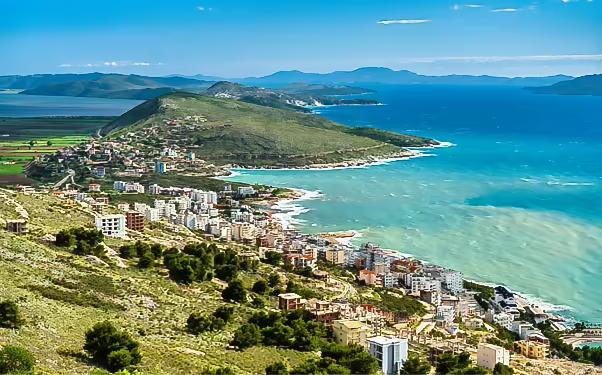
Sarandë is a sun-drenched coastal city on the Albanian Riviera, tucked between turquoise Ionian waters and steep green hillsides just north of the Greek border. Famous for its crystal-clear beaches, proximity to the UNESCO World Heritage site of Butrint, and a laid-back Mediterranean lifestyle that costs a fraction of what you would pay across the water in Corfu, Sarandë draws digital nomads, retirees, and adventure seekers looking for an affordable seaside base with easy access to both Albania and Greece. The city swells in summer with tourists and quietens in winter, giving year-round residents a peaceful rhythm that larger cities cannot match. Whether you are chasing an early retirement by the sea, launching a remote-work chapter, or simply tired of overpriced coastal cities elsewhere in Europe, Sarandë delivers big Mediterranean energy on a modest budget.
Sarandë at a Glance
- Population
- ~20,000 (municipality ~23,000, per 2023 census)
- Region
- Vlorë County, southern Albania
- Known For
- Albanian Riviera beaches, Butrint UNESCO site, Blue Eye Spring
- Average Rent (1BR)
- 25,000–40,000 ALL/month
- Average Salary
- ~60,000 ALL/month net
- Expat Community
- Small but growing; seasonal international crowd in summer
Why Move to Sarandë
- Mediterranean climate: Over 300 days of sunshine per year with hot summers and mild winters, ideal for an outdoor lifestyle year-round.
- Affordable coastal living: Beachfront living at a fraction of the cost of Italy, Greece, or Croatia, with rents and daily expenses among the lowest on the Mediterranean.
- Natural and historical richness: The UNESCO ruins of Butrint, the mesmerizing Blue Eye Spring, and the Ksamil islands are all within a 30-minute drive.
- Gateway to Greece: The Greek island of Corfu is a 30-minute ferry ride away, offering easy weekend trips and access to EU healthcare and shopping.
- Relaxed pace of life: A walkable waterfront promenade, fresh seafood daily, and a community that values slow living over hustle culture.
Finding Housing in Sarandë
The rental market in Sarandë is driven heavily by seasonal tourism. Many landlords prefer short-term summer lets at premium prices, so securing a long-term lease requires persistence and timing. The best deals are found between October and March, when demand drops and landlords are eager to fill empty apartments. A typical lease runs 12 months with a security deposit of 1–2 months' rent paid upfront alongside the first month. Utilities — electricity, water, internet — are almost always paid separately and are not included in the listed rent.
Average Rents
| Neighborhood | 1-Bedroom | 3-Bedroom | Character |
|---|---|---|---|
| City Centre / Lungomare | 30,000–40,000 ALL | 55,000–75,000 ALL | Lively waterfront strip with restaurants, cafés, and sea views |
| Kodër / Upper Town | 22,000–30,000 ALL | 40,000–55,000 ALL | Hillside area with panoramic views and quieter streets |
| Ksamil | 25,000–38,000 ALL | 45,000–65,000 ALL | Resort-style village 15 km south, close to beaches and Butrint |
| Rruga e Flamurit | 25,000–33,000 ALL | 42,000–58,000 ALL | Residential zone with local shops and family-friendly amenities |
| Çuka / Outskirts | 18,000–25,000 ALL | 32,000–45,000 ALL | Budget-friendly, peaceful, further from the coast |
How to Find Housing
- MerrJep.al: Albania's largest classifieds site; most private rental listings appear here first.
- Gazeta Shqip / local Facebook groups: Join groups like "Sarandë Apartments" or "Saranda Rentals" for real-time postings from landlords.
- Walk the neighborhood: Many landlords advertise with handwritten signs in windows, especially in the centre and along Lungomare — calling directly can secure better rates.
- Ask at local cafés: Baristas and shop owners often know who is renting and can connect you with landlords.
Tips for Expats
- Negotiate rent — listed prices are almost always flexible, especially outside peak summer months (June–August).
- Insist on a written contract (even a simple one in Albanian) to protect your deposit and clarify utility responsibilities.
- Verify that the property has a functioning water cistern and reliable electricity, as supply can fluctuate in older buildings.
- Be cautious of seasonal price spikes: landlords in the centre and Ksamil may double asking prices for summer leases. Sign a 12-month contract to lock in a fair rate.
- Furnished apartments are more common than unfurnished, which saves setup costs but usually means slightly higher rent.
Neighborhoods Guide
Choosing the right neighborhood in Sarandë depends on your lifestyle, budget, and whether you plan to stay year-round or seasonally. The city is small enough that nothing is truly far, but each area has a distinct character. Here are five neighborhoods worth considering:
- City Centre / Lungomare: The beating heart of Sarandë, right along the promenade. Best for social expats, short-term renters, and anyone who wants to walk everywhere. Higher rents but unbeatable location and the highest concentration of restaurants and nightlife. Expect noise in summer from beach bars and late-night foot traffic.
- Kodër (Upper Town): Perched above the centre with sweeping bay views. Quieter, cooler in summer, and cheaper. Great for remote workers and retirees who value peace and scenery over proximity to the beach. The steep walk up is good exercise but can be challenging in midday heat.
- Ksamil: A separate beach village 15 minutes south by car or bus. Resort feel in summer, deserted in winter. Perfect for beach lovers who do not mind being outside the main city and who enjoy the proximity to the Ksamil islands and Butrint. Limited winter services — some restaurants and shops close entirely from November to April.
- Rruga e Flamurit: A practical residential street running inland from the coast. Good for families and long-term renters who want local life without tourist-season noise. Grocery shops, bakeries, and schools are all walkable. Rents are moderate and the area has a genuine Albanian neighborhood feel.
- Çuka and surroundings: Rural-adjacent areas on the outskirts with the lowest rents. Best for those with a car who prefer countryside calm and do not mind being a 10–15 minute drive from the sea. Olive groves and quiet lanes define the character here. Properties tend to be larger, often with garden space.
Cost of Living in Sarandë
Sarandë is one of the most affordable coastal cities in Europe. A single person can live comfortably on 70,000–100,000 ALL per month, including rent — a budget that would barely cover rent alone in most Western European cities. Groceries are cheap, dining out is a daily possibility rather than a luxury, and entertainment costs are minimal.
Monthly Budget Breakdown
| Category | Budget Range (ALL) |
|---|---|
| Rent (1BR, centre) | 30,000–40,000 |
| Utilities (electricity, water, gas) | 5,500–8,500 |
| Internet (60+ Mbps) | 1,500–2,500 |
| Groceries | 18,000–25,000 |
| Transport (fuel/bus) | 3,000–6,000 |
| Dining out (4x/month) | 6,000–10,000 |
| Leisure / gym / beach | 2,000–5,000 |
| Total | 68,000–98,500 |
Day-to-Day Costs
Living in Sarandë means everyday expenses are a fraction of what you would pay in Western or even Central Europe. Fresh produce from local markets is especially cheap, and eating out is often comparable to cooking at home.
- Coffee (espresso): 100–150 ALL
- Lunch (casual restaurant): 600–1,000 ALL
- Dinner (mid-range, two courses): 1,200–2,000 ALL
- Monthly bus pass: 2,000–3,000 ALL
- Beer (bar): 200–350 ALL
- Wine (glass, restaurant): 250–450 ALL
- Cinema ticket: 600–800 ALL (limited screenings; Corfu has more options)
- Fresh fish at the market: 800–1,500 ALL/kg
- Bread (bakery): 80–120 ALL
- Monthly gym membership: 2,500–5,000 ALL
- Bottle of water (1.5L): 50–80 ALL
- Loaf of white bread: 80–120 ALL
- Taxi ride (within centre): 300–500 ALL
Getting Around Sarandë
Sarandë is a compact city, and most daily errands can be handled on foot within the centre. For exploring the wider Riviera or reaching nearby attractions, you will need transport options beyond walking.
- Walking: The centre is flat and walkable, with most restaurants, shops, and the beach within a 15-minute walk of the Lungomare promenade. The hillside Kodër area requires steeper climbs.
- Public transport: Minibuses (furgons) connect Sarandë to Ksamil, Butrint, and nearby villages for 100–200 ALL per ride. There is no formal city bus network — the city centre is compact and walkable. Furgons depart when full rather than on a fixed schedule, so patience is required.
- Taxis: Available throughout the city. A ride within the centre costs 300–500 ALL. Taxis to Ksamil run approximately 1,000–1,500 ALL. Agree on the fare before departure as meters are not always used.
- Cycling: Flat along the waterfront, hilly inland. E-bikes are growing in popularity but rental infrastructure is limited. Bring your own if cycling is a priority.
- Driving: Roads are generally good along the coast (SH8 highway). Parking can be scarce in summer when tourist traffic peaks. A car is useful for exploring the Riviera and reaching hidden beaches like Gjipe and Himarë. Fuel costs approximately 170–190 ALL per litre.
- Airport: Sarandë has no airport. The nearest is Corfu International (CFU) in Greece, reached by a 30-minute ferry from Sarandë port. Tirana International Airport (TIA) is about 4.5 hours by car via the SH4 and A2 motorways.
- Intercity buses: Buses run to Tirana (~5 hours, 1,200–1,800 ALL), Vlorë (~2.5 hours, 600–900 ALL), and Gjirokastër (~1.5 hours, 300–500 ALL). Ferries connect to Corfu multiple times daily in summer (2,000–3,500 ALL one way).
Healthcare in Sarandë
Accessing healthcare in Sarandë is straightforward for routine needs, though specialist care requires travel to larger cities. The local system covers basics well, and the proximity to Corfu gives residents a valuable backup option for faster private care.
- Hospitals/Clinics: Sarandë Regional Hospital provides basic and emergency care. For specialist treatment, many residents travel to Tirana or cross to Corfu for faster access to private clinics. A handful of private general-practice clinics operate in the city centre with shorter wait times than the public hospital.
- English-speaking doctors: Limited in Sarandë itself. Private clinics in Tirana and Corfu are better options for English speakers. Some doctors in Sarandë speak Greek, which helps bilingual expats. Asking at pharmacies for English-speaking practitioners is a practical first step.
- Pharmacies: Widely available along the main streets, open during regular business hours with some on-call night pharmacies. Common medications are affordable and often sold without a prescription. Pharmacists are generally knowledgeable and can advise on minor ailments.
- Health insurance: Albania's public health insurance (Sigurimi i Detyrueshëm Shëndetësor) covers residents. Many expats supplement with private insurance or use Corfu's private hospitals for non-emergency care. International health insurance policies are accepted at private clinics in Tirana.
- Dental care: Private dental clinics in Sarandë offer quality care at a fraction of Western European prices. A routine checkup and cleaning typically costs 2,000–4,000 ALL. More complex procedures are also available locally.
- Emergency number: 127 (ambulance), 129 (police), 128 (fire)
Get a personalised relocation plan
Drop your email and we'll send a tailored checklist plus three quotes from vetted movers.
Utilities & Infrastructure
Setting up utilities in Sarandë is straightforward but requires some local knowledge. Most services are paid monthly, and bills are delivered in paper form or available at payment offices.
- Electricity: Provided by OSHEE (Operatori i Shpërndarjes së Energjisë Elektrike). Monthly bills typically run 3,000–6,000 ALL depending on usage and season (air conditioning in summer increases costs). Occasional outages can happen, especially in older buildings — a small UPS is useful for remote workers.
- Water: Supplied by the local water company. Monthly cost is around 500–1,500 ALL. Some buildings have rooftop water tanks to compensate for intermittent supply during peak summer demand.
- Internet: Two main providers — ALBtelecom and Abcom — offer fiber and ADSL connections. Fiber packages with 60–100 Mbps cost 1,500–2,500 ALL/month. Installation is quick, usually within a few days of signing up.
- Gas: LPG bottles are common for cooking and heating in apartments that lack central gas supply. Bottles cost approximately 1,000–1,500 ALL and are delivered by local suppliers.
- Waste collection: Municipal waste collection operates on regular schedules. Recycling infrastructure is limited, though some community-led initiatives exist.
Culture & Lifestyle
Living in Sarandë means embracing a rhythm set by the sun, the sea, and the seasons. The culture is a blend of Albanian tradition and Mediterranean ease, with a noticeable Greek influence thanks to the proximity of the border and the large Greek-Albanian community in the south.
- Beach culture: Life revolves around the sea — swimming, sunbathing, and seaside dining dominate from May to October. The waterfront promenade (Lungomare) is the social spine of the city.
- Historical day trips: Butrint National Park (UNESCO), the ancient city of Phoenice, and Gjirokastër's Ottoman castle town (also UNESCO) are all within easy reach. The Blue Eye Spring, a hypnotic natural water source, is a 20-minute drive inland.
- Nightlife: Modest but lively in summer with beach bars and open-air clubs along the promenade. Winters are quiet — most socializing happens in cafés and restaurants.
- Festivals and events: The Sarandë Summer Festival brings music, dance, and street food to the waterfront in July and August. Local religious celebrations (Orthodox Easter, Bajram) are colorful community events.
- Outdoor activities: Hiking in the hills above the city, kayaking along the coast, snorkeling near Ksamil, and day trips to the Llogara National Park pass for paragliding and mountain trails.
Food & Dining
Sarandë's dining scene revolves around the sea. The waterfront promenade is lined with restaurants serving fresh catches daily, and the local food culture rewards those who eat seasonally and locally.
- Fresh seafood is the star: grilled octopus, sea bass, mussels, and shrimp are staples at waterfront restaurants. Prices are lowest at the morning fish market near the harbour.
- Try tavë kosi (lamb baked in yogurt), a national dish found in most traditional restaurants, and byrek (flaky pastry filled with cheese, spinach, or meat) from local bakeries — a filling snack for under 100 ALL.
- Budget meals at local grills cost 400–700 ALL; a seafood dinner for two at a mid-range restaurant runs 2,500–4,000 ALL. Street food options like qofte (grilled meatballs) and sufllaqe (wraps) are cheap and delicious.
- The best dining stretches along the Lungomare and the side streets behind the port. For the freshest fish, visit the morning market near the harbour. Inland restaurants often offer hearty meat dishes at lower prices.
- Albanian wine and raki (grape brandy) are local staples. Try a glass of Çobo or Luani wine with your meal. Raki is often offered free as a welcome drink at traditional restaurants.
Expat Community
Sarandë's expat scene is small but genuine. Unlike larger cities where expats cluster in parallel social circles, Sarandë's tight-knit community means newcomers integrate quickly — both with other internationals and with locals.
- A small but welcoming mix of digital nomads, retirees, and seasonal workers from Italy, Greece, Germany, and the UK.
- Facebook groups like "Expats in Sarandë" and "Albanian Riviera Digital Nomads" are the main online hubs for questions, meetups, and apartment listings. These groups are most active from April to October.
- Language exchange meetups happen occasionally in summer at cafés along the promenade. Some expats organize informal weekly gatherings at specific bars — check the Facebook groups for current details.
- Volunteer opportunities with local environmental groups cleaning beaches and protecting Butrint provide a meaningful way to connect with the community and contribute to preserving the area's natural beauty.
- The Corfu ferry connection means expats in Sarandë can easily access a broader international community on the Greek island, including shopping at EU-standard supermarkets and accessing additional healthcare options.
Job Market in Sarandë
The job market in Sarandë is seasonal and heavily reliant on tourism. Year-round employment opportunities are limited outside hospitality, construction, and small business. Most expats living in Sarandë earn their income remotely or through freelance work, making the city better suited for those with location-independent careers.
- Main industries: Tourism and hospitality (seasonal peak June–September), real estate, fishing, agriculture (olives, citrus), and construction. The construction sector has grown significantly due to increased investment along the Albanian Riviera.
- Major employers: Hotels, restaurants, tour operators, construction firms, and small retail businesses. Larger employers are rare; most jobs are with SMEs or family-run operations.
- Remote work: Sarandë is increasingly popular with remote workers thanks to affordable living, improving internet, and a stunning work environment. Coworking spaces are emerging but most nomads work from cafés or home. The relaxed pace and low cost of living make it attractive for freelancers, developers, writers, and online entrepreneurs.
- Average salaries by sector:
| Sector | Monthly Net (ALL) |
|---|---|
| Hospitality (seasonal) | 35,000–55,000 |
| Retail / services | 30,000–45,000 |
| Construction | 45,000–65,000 |
| Tourism / guiding | 40,000–60,000 |
| Remote / freelance | Varies widely |
- Job search resources: MerrJep.al, Gjirafa.com, local Facebook job groups, and walk-in applications at hotels and restaurants during spring hiring season. Networking in person is often more effective than online applications in a small city like Sarandë. Seasonal hiring typically begins in March–April for the summer tourist season.
Education in Sarandë
Education options in Sarandë are limited compared to Tirana, but the city provides solid basics for families with school-age children. For families prioritizing international curricula, supplementary online schooling or relocation to Tirana may be necessary.
- International schools: No full international schools in Sarandë itself. The nearest options are in Tirana (approximately 4.5 hours away). Some families use online schooling or homeschooling as alternatives, particularly for older children pursuing IB or British/American curricula.
- Public schools: Local Albanian-language public schools are available for primary and secondary education. Quality varies; families seeking strong bilingual education often supplement with private tutoring or online platforms. School enrollment requires proof of residence and vaccination records.
- Preschool and kindergarten: Several private kindergartens operate in the city centre, offering care for children aged 3–6. Monthly fees range from 10,000–20,000 ALL depending on hours and services.
- Universities: Aleksandër Moisiu University in Durrës and the University of Vlorë are the nearest higher-education institutions. A local branch of the University of Vlorë offers some programs in Sarandë, mainly in tourism and business.
- Language schools: Albanian language courses are available through private tutors. Greek and English language instruction is common given the proximity to the Greek border. Some informal language exchange groups meet during summer months.
Moving Checklist for Sarandë
Before Arriving
- [ ] Confirm visa or residence permit requirements for Albania
- [ ] Secure housing — book at least a temporary rental for the first month
- [ ] Prepare notarized inventory of household goods for customs clearance
- [ ] Arrange pet documentation (microchip, rabies vaccination, health certificate)
- [ ] Get an international driving permit or plan for license exchange
- [ ] Research health insurance options — public or private
First Week
- [ ] Register your address with the local Bashkia (municipality)
- [ ] Open a bank account at BKT, Raiffeisen, or Credins Bank
- [ ] Obtain a NIPT tax identification number from the Albanian Tax Authority
- [ ] Register with a health insurance provider
- [ ] Buy a local SIM card (Vodafone Albania, One) for data and calls
- [ ] Walk the city to get oriented — find your nearest pharmacy, bakery, and supermarket
First Month
- [ ] Explore neighborhoods and negotiate a longer-term rental lease
- [ ] Set up utilities (electricity, water, internet) in your name
- [ ] Visit Butrint, Blue Eye Spring, and Ksamil beaches to settle into the area
- [ ] Connect with the local expat community online and in person
- [ ] Familiarize yourself with the ferry schedule to Corfu
- [ ] Start learning basic Albanian phrases — even a little goes a long way
Related Guides
- [Moving to Albania] — comprehensive country guide
- [Moving to Tirana] — capital city guide
- [Moving to Vlorë] — nearby coastal city guide
- [Moving to Durrës] — port city and beach destination