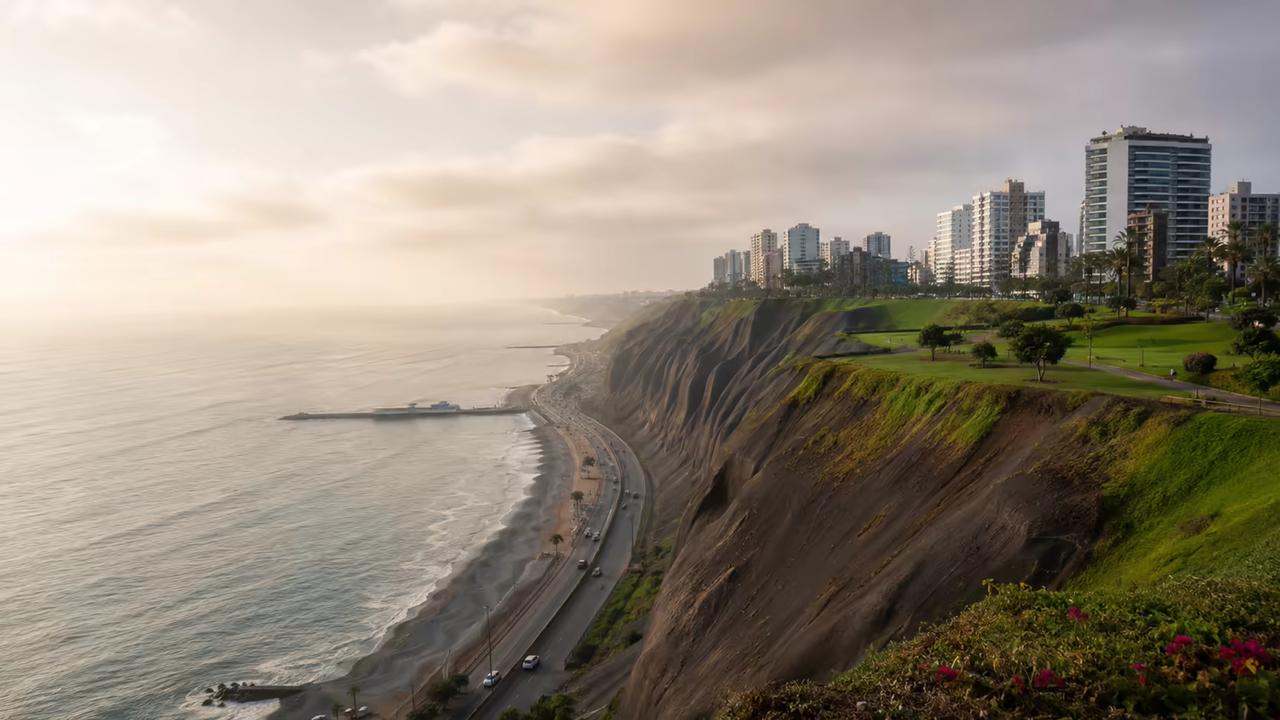

Lima is Peru's sprawling capital, home to roughly a third of the country's population and the undisputed economic, cultural, and culinary heart of the nation. Perched along the Pacific coast, the city blends colonial architecture with modern glass towers, world-class restaurants with street-side ceviche stalls, and desert cliffs with surfable waves. Whether you're relocating for work, study, or a change of pace, Lima offers a cost of living well below most Western capitals alongside a rich quality of life — if you know where to look.
With over 11 million residents, Lima is a megacity that can feel overwhelming at first. Traffic is heavy, the winter sky is grey for months on end, and bureaucracy moves slowly. But dig a little deeper and you'll find welcoming neighborhoods, some of the best food on the planet, and a growing community of international professionals who've made the city their home. This guide covers everything you need to know before making the move.
Lima at a Glance

- Population
- ~11.3 million (metro area, 2023 projection)
- Region
- Lima Province / Lima Region
- Known For
- Gastronomy capital of South America, colonial historic centre, Pacific coastal lifestyle
- Average Rent (1BR)
- PEN 1,700–3,200/month (city centre); PEN 800–2,400 outside centre
- Average Salary
- PEN 2,000–3,500/month net (avg ~PEN 2,200; entry-to-mid level)
- Expat Community
- Large and growing — digital nomads, diplomats, NGO workers, language teachers
- Climate
- Desert coastal: 14–28 °C year-round, almost no rain
- Language
- Spanish (Quechua spoken in some migrant communities)
- Time Zone
- PET (UTC−5), no daylight saving
- Internet
- 60–100 Mbps fibre widely available, PEN 80–130/month
- Emergency Numbers
- 105 (police), 116 (fire), 911 (general)
Why Move to Lima
- World-class food scene: Lima consistently tops lists as the culinary capital of Latin America, with everything from Michelin-calibre tasting menus to PEN 8 street-side anticuchos. Central, Maido, and Astrid y Gastón are internationally acclaimed.
- Affordable cost of living: Rent, groceries, and transport cost a fraction of what you'd pay in Santiago, Bogotá, or Mexico City, let alone European or North American cities.
- Mild year-round climate: The coastal desert climate means temperatures rarely drop below 14 °C or rise above 28 °C — no heating bills, no air conditioning needed.
- Growing tech and startup scene: Miraflores and San Isidro host a rising number of co-working spaces, accelerators, and international remote workers.
- Gateway to Peru: Weekend trips to Cusco, the Sacred Valley, Máncora beaches, or the Amazon basin are all accessible via short domestic flights.
- Friendly locals: Limeños are known for their warmth and curiosity toward foreigners. Making local friends is easier here than in many Latin American capitals.
- Rich culture: From pre-Inca archaeological sites within city limits to world-class museums and a thriving contemporary art scene, Lima offers cultural depth that many expats don't expect.
Finding Housing in Lima
Average Rents
| Neighborhood | 1-Bedroom | 3-Bedroom | Character |
|---|---|---|---|
| Miraflores | PEN 2,000–3,200 | PEN 4,500–7,000 | Upscale, walkable, expat favourite |
| Barranco | PEN 1,600–2,800 | PEN 3,500–6,000 | Bohemian, nightlife, art galleries |
| San Isidro | PEN 2,200–3,500 | PEN 5,000–8,000 | Business district, quieter, leafy parks |
| Jesús María | PEN 1,200–2,000 | PEN 2,800–4,500 | Central, good value, local feel |
| La Molina | PEN 1,400–2,400 | PEN 3,200–5,500 | Suburban, families, gated communities |
| Surco | PEN 1,500–2,500 | PEN 3,000–5,000 | Balanced urban-suburban, malls and universities |
| Lince | PEN 1,000–1,800 | PEN 2,200–3,800 | Budget-friendly, central, up-and-coming |
| San Borja | PEN 1,400–2,200 | PEN 3,000–4,800 | Residential, family-oriented, hospitals nearby |
How to Find Housing
- Urbania.pe: The dominant rental platform in Peru; filter by neighborhood, price, and furnished status. Most listings include photos and floor plans.
- CompartoDepto / Roomgo: Roommate-matching services popular with younger expats and students. Expect PEN 600–1,200/month for a shared room.
- Facebook groups: "Expats in Lima" and "Departamentos en Lima" post listings daily — often before they appear on portals.
- Local tip: Many landlords prefer cash deposits (1 month) and may not accept foreign credit references. Bring your CE (Carné de Extranjería) or passport and proof of income to viewings.
- Real estate agents: Useful if you want furnished apartments with bilingual support. Commission is typically one month's rent, paid by the tenant.
Tips for Expats
- Always visit in person before signing — photos can be misleading, especially in older buildings.
- Negotiate: listed prices often have 5–10% wiggle room, especially for longer leases.
- Confirm whether gastos comunes (building maintenance fees) are included — they can add PEN 100–400/month.
- Furnished apartments are common in Miraflores and Barranco; elsewhere, expect to supply your own furniture.
- Lease contracts typically run 12 months. Breaking early usually means forfeiting your deposit.
- Check water pressure and hot water systems before signing — older buildings sometimes have unreliable gas heaters (termas).
- Ask about building security (porteros, CCTV, controlled access) — this varies significantly between buildings.
- Verify the apartment has an escritura pública (legal title) — informal sublets can cause problems later.
Neighborhoods Guide
- Miraflores: The default expat landing zone. Safe, walkable, full of cafés, co-working spaces, and ocean views from the Malecón cliffs. Rent is highest in Lima but still affordable by global standards. Larcomar shopping centre and Parque Kennedy are social hubs. Excellent for singles, first-time visitors, and anyone who wants a self-contained lifestyle with everything within walking distance.
- Barranco: Lima's artsy, bohemian quarter. Street murals, live music bars, and a younger crowd. Slightly cheaper than Miraflores but increasingly gentrified. The Puente de los Suspiros and the MATE photography museum are local landmarks. Best for creatives, nightlife lovers, and anyone who prefers character over polish. The coastal Malecón walk connects Barranco directly to Miraflores.
- San Isidro: The financial district. Quieter evenings, excellent restaurants, and proximity to embassies and corporate offices. Ideal for professionals and families. Bosque El Olivar offers a rare green escape with centuries-old olive trees. The area feels more "grown-up" than Miraflores — think suits rather than surfboards.
- Jesús María: A solid mid-range option with a local vibe, good hospitals, and easy access to the Metropolitano bus line. Great value for the location. Close to the Mercado de Surquillo for fresh produce and budget eats. Less polished than Miraflores but far more authentic — you'll be one of very few foreigners on your block.
- La Molina: A green, suburban district east of the city centre. Popular with families who want space, parks, and international schools — but you'll need a car or ride-hailing app. Quieter nightlife, more space per sol, and gated residential complexes. Feels almost like a different city compared to coastal Lima.
- Surco (Santiago de Surco): A balanced pick between urban and suburban. Shopping malls (Jockey Plaza), universities (Universidad de Lima), and a growing restaurant scene at moderate prices. Popular with young professionals and students. A practical middle ground if Miraflores feels too expensive and La Molina too remote.
- Lince: An often-overlooked district bordering Miraflores and San Isidro. Lower rents, local markets, and improving infrastructure make it a strong option for budget-conscious expats who still want central access. You can walk to Miraflores in 15 minutes.
- San Borja: Residential, family-oriented, and home to several hospitals and the Estadio Nacional. A quieter alternative to San Isidro with solid transport links and good parks. The Paseo de la República avenue connects it to the rest of the city efficiently.
Cost of Living in Lima
Monthly Budget Breakdown
| Category | Budget Range (PEN) |
|---|---|
| Rent (1BR, centre) | 2,000–3,200 |
| Utilities (electric, water, gas) | 150–300 |
| Internet (60–100 Mbps) | 80–130 |
| Groceries | 600–1,000 |
| Transport (Metropolitano + buses/taxis) | 120–200 |
| Dining out (4x/month) | 200–500 |
| Leisure/Gym | 80–200 |
| Mobile phone (prepaid) | 20–50 |
| Health insurance (private) | 150–300 |
| Total | 3,180–5,480 |
A single expat can live comfortably in Lima on PEN 4,000–5,000/month. Couples sharing an apartment can reduce per-person costs to around PEN 3,000–3,500 each. Families with children in international schools should budget PEN 8,000–12,000/month.
Day-to-Day Costs
- Coffee (café latte): PEN 10–16
- Lunch (menú del día): PEN 8–15
- Monthly Metropolitano pass: PEN 60–100
- Beer (bar, local): PEN 10–18
- Cinema ticket: PEN 18–30
- Loaf of bread (bakery): PEN 4–7
- 1 litre of milk: PEN 5–7
- Dozen eggs: PEN 7–10
- Taxi across Miraflores (Uber): PEN 8–15
- Gym membership (mid-range): PEN 80–150/month
- Bottle of water (1.5L): PEN 2–4
- Fast food combo meal: PEN 20–29
- Doctor visit (private clinic): PEN 80–200
- Haircut (barbershop): PEN 15–30
- Laundry service (per kg): PEN 5–10
- Internet café (per hour): PEN 3–5
- SIM card + prepaid top-up: PEN 10–20
- Parking garage (per hour, Miraflores): PEN 5–15
Getting Around Lima
- Metropolitano: A bus rapid transit (BRT) line running north–south along the coast. Fast and cheap (PEN 2.00–3.00 per ride), but crowded at rush hour. A rechargeable card is required — buy one at any station for PEN 5. Runs from 5 AM to 11 PM.
- Combis and fixed-route taxis: Shared minibuses fill gaps the Metropolitano doesn't cover. Routes can be confusing for newcomers. Negotiate fares in advance — rides typically cost PEN 3–8. Not recommended after dark.
- Ride-hailing apps: Uber, DiDi, and InDrive all operate in Lima and are the most reliable option for newcomers unfamiliar with informal routes. Expect PEN 8–20 for most in-city trips. InDrive allows fare negotiation. Beat is another local option.
- Cycling: Miraflores and Barranco have bike lanes along the Malecón, but cycling in traffic-heavy areas is not recommended for beginners. Bike rental shops operate along the Malecón for short rides.
- Driving: Not recommended for newcomers. Traffic is aggressive, parking is scarce, and many drivers ignore lane markings. If you must drive, avoid rush hours (7–9 AM, 5–8 PM). Parking in Miraflores and San Isidro costs PEN 5–15/hour in garages.
- Jorge Chávez International Airport (LIM): Peru's main international hub, recently expanded with a new terminal. Direct flights to Miami, Madrid, Bogotá, Santiago, Mexico City, and major Latin American cities. Located in Callao, about 30–45 minutes from Miraflores by taxi (PEN 40–70 via Uber).
- Intercity: Long-distance buses (Cruz del Sur, Oltursa, Ittsa) connect Lima to Arequipa (15 hrs), Cusco (20 hrs), Trujillo (8 hrs), and northern beach towns comfortably. VIP seats with meals are available on premium routes. Bus terminals are concentrated in the Javier Prado and Atocongo areas.
Banking and Money
Opening a bank account in Lima is straightforward once you have your CE (Carné de Extranjería). Requirements typically include:
- Valid passport and CE
- Proof of address (rental contract or utility bill)
- Sometimes proof of employment or income
Major banks: BCP (Banco de Crédito del Perú) is the largest and most accessible. Interbank and BBVA are also popular with expats. BCP's Yape and Interbank's Plin apps are the dominant mobile payment platforms — nearly everyone uses them, from street vendors to restaurants.
Account types: Most expats open a cuenta de ahorros (savings account), which comes with a debit card and online banking. Credit cards require a longer credit history or a depósito a plazo fijo (fixed deposit) as collateral.
Wiring money internationally: Incoming transfers cost PEN 20–50 per transaction depending on the bank. Wise (TransferWise) and Revolut offer significantly better exchange rates than traditional banks for converting USD/EUR to PEN. Many expats maintain a foreign account for international income and transfer monthly to their Peruvian account.
Cash culture: Lima is still heavily cash-based outside malls and upscale restaurants. Always carry small bills (PEN 10 and PEN 20) — many vendors cannot break PEN 50 or PEN 100 notes.
Planning your move?
Tell us about your move to compare quotes from international moving companies.
Healthcare in Lima
- Major hospitals: Clínica Ricardo Palma (Miraflores), Clínica Anglo Americana (San Isidro), Hospital Nacional Edgardo Rebagliati Martins (public, high quality), Hospital Nacional Guillermo Almenara Irigoyen (public), Clínica Delgado (Miraflores), Clínica Javier Prado (San Isidro).
- English-speaking doctors: Widely available in private clinics, especially in Miraflores and San Isidro. Many specialists trained abroad in the US, Spain, or Argentina. Booking is usually done by phone or WhatsApp.
- Pharmacies: InkaFarma and MiFarma are on nearly every block. Most medications are available over the counter at low cost. Prescription drugs are significantly cheaper than in Europe or the US. Some medications that require prescriptions abroad are sold freely here.
- Dental care: Private dental clinics in Miraflores and San Isidro offer high-quality care at a fraction of Western prices. A cleaning costs PEN 80–150; a filling PEN 100–250. Many expats time dental work for their Lima stay.
- Emergency number: 105 (police), 116 (fire), SAMU (ambulance) — or dial 911 for general emergencies. Response times vary by district; Miraflores and San Isidro are fastest.
- Private health insurance: Plans from Rímac, Pacífico, or MAPFRE start at PEN 150–300/month for basic individual coverage. International policies (Cigna, Allianz) also accepted at top clinics. EsSalud (public) is available to employees with formal contracts — employer contributes 9% of salary.
- Mental health: Therapists and psychiatrists are available in private practice. Sessions cost PEN 100–250. English-speaking therapists are found through expat networks and referrals.
Visas and Residency
Most nationalities receive a 90-day tourist stamp on arrival. To stay longer, you'll need a visa or residence permit. Common options include:
- Work Visa: Requires a job offer from a Peruvian employer who sponsors the application through Migraciones. Processing takes 2–4 weeks.
- Student Visa: For those enrolled in accredited Peruvian institutions. Requires proof of enrollment and financial means.
- Retirement Visa (Rentista): For those with a stable foreign pension/income (approximately USD 1,000/month or equivalent — check current requirements with Migraciones). Popular with retirees from North America and Europe.
- Investor Visa: For those making a qualifying investment in a registered Peruvian business (minimum amount varies — check current requirements with Migraciones). Requires proof of investment and business registration.
- Family Reunification: For those with a Peruvian spouse, partner, or dependent children. Requires marriage or birth certificates apostilled and translated.
- Permanent Residence: Available after 3 consecutive years of temporary residency. Grants most rights except voting.
Processing times vary from 2–8 weeks depending on the visa type and the completeness of your documentation. Start gathering apostilled documents (birth certificate, criminal background check, degree certificates) well before your move date. Migraciones is known for changing requirements without notice — check their website or consult a local immigration lawyer.
All visa details: https://www.migraciones.gob.pe/ Appointments and applications: https://agenciavirtual.migraciones.gob.pe/
Culture & Lifestyle
- Gastronomy: Lima's food scene is its crown jewel — from ceviche at La Mar to Nikkei (Japanese-Peruvian) fusion at Maido. The city hosts Mistura, one of the world's largest food festivals, annually. Lima has multiple restaurants ranked in the World's 50 Best list, including Central (frequently named best restaurant in the world).
- Surfing and outdoors: The Costa Verde cliffs offer year-round surf breaks, paragliding, and coastal running paths. Beaches in Miraflores and Barranco are popular for beginner surfers; Punta Hermosa (45 min south) has bigger swells for experienced riders.
- Nightlife: Barranco leads with live music, peñas (traditional music venues), and cocktail bars; Miraflores offers rooftop lounges and clubs. Thursday through Saturday are peak nights. Last call is typically 3–4 AM. Cover charges range from free to PEN 30–50.
- Museums and history: The Larco Museum (pre-Columbian art in a stunning 18th-century mansion), MALI (Museo de Arte de Lima), the catacombs at San Francisco convent (holding 70,000+ remains), and Huaca Pucllana (pre-Inca adobe pyramid in the middle of Miraflores) are must-visits.
- Sports: Football is king — Alianza Lima and Universitario de Deportes have fierce local rivalries. Surfing, volleyball, paddle tennis, and running along the Malecón are also popular. The Estadio Nacional in San Borja hosts major matches and concerts.
- Religious culture: Peru is predominantly Catholic. Churches and religious festivals (especially Semana Santa and Señor de los Milagros in October) are woven into daily life. The purple banners of Señor de los Milagros appear throughout the city every October.
Food & Dining
- Must-try dishes: Ceviche (raw fish cured in lime juice), lomo saltado (stir-fried beef with rice and fries), ají de gallina (creamy chicken in yellow pepper sauce), causa limeña (layered potato terrine), anticuchos (grilled beef heart skewers), pollo a la brasa (rotisserie chicken — Peru's unofficial national dish), arroz con pato (duck with rice and cilantro).
- Best dining districts: Miraflores (gourmet), Barranco (fusion), Surquillo (market-fresh, budget-friendly), La Victoria (Chinatown — chifa cuisine, a Peruvian-Chinese fusion unique to Lima).
- Budget eating: Menú del día set lunches cost PEN 8–15 and include a starter, main, and drink — available at nearly every neighbourhood restaurant. This is the single best value meal in Lima. Breakfast set menus (desayuno) cost PEN 6–12.
- Tipping: 10% is standard in sit-down restaurants. Not expected at street stalls or market eateries. Some upscale restaurants include service automatically.
- Delivery apps: Rappi, PedidosYa, and Uber Eats all operate in Lima with wide restaurant coverage. Delivery fees are typically PEN 2–5.
Expat Community
- Meetup groups: "Lima Expat Network," "Internations Lima," and language exchange events run weekly. Facebook and WhatsApp are the primary coordination tools — join groups before arriving.
- Co-working spaces: WeWork (San Isidro), Urban Station, Selina (Miraflores), and Trebol Cowork (Barranco) all cater to remote workers. Day passes cost PEN 30–60; monthly memberships PEN 300–700. Most offer fast Wi-Fi, printing, and free coffee.
- Language exchanges: Tandem meetups at cafés in Miraflores and Barranco happen most weekends — a great way to practise Spanish and meet locals. Spanglish Lima is a popular structured event where you alternate between English and Spanish in timed rounds.
- Religious and cultural organizations: Several international churches, a synagogue, and a mosque serve Lima's diverse communities. The British, American, and German cultural centres host regular events, film screenings, and classes.
- Sports and social clubs: Running groups meet along the Malecón most mornings. Surf schools in Barranco offer lessons from PEN 80–150. CrossFit and martial arts gyms have large expat memberships.
Job Market in Lima
- Main industries: Mining and energy (Peru is a top global producer of copper, silver, and zinc), finance and banking, tech and digital services, tourism and hospitality, manufacturing, agriculture exports (avocados, blueberries, quinoa).
- Major employers: Banco de Crédito del Perú (BCP), LATAM Airlines, Southern Copper, Belcorp, Interbank, Alicorp, Ferreycorp, BBVA Perú, Backus (AB InBev subsidiary).
- Average salaries by sector:
| Sector | Monthly Net (PEN) |
|---|---|
| IT / Software | 4,000–8,000 |
| Finance / Banking | 3,500–7,000 |
| Marketing / Communications | 2,500–5,000 |
| Hospitality / Tourism | 1,800–3,500 |
| Education (language teaching) | 2,000–4,000 |
| Mining / Engineering | 5,000–12,000 |
| Construction | 2,500–5,000 |
| Healthcare | 3,000–7,000 |
- Job search resources: Bumeran.com.pe, CompuTrabajo Perú, LinkedIn (widely used for professional roles), and networking at expat events. Many mid-to-senior roles are filled through personal connections rather than public postings.
- Freelancing note: Many remote workers live in Lima on foreign contracts. You'll need a RUC (tax ID) from SUNAT if invoicing locally or working with Peruvian clients. During the first 3 years of residency, foreigners may only be taxed on Peruvian-sourced income.
- Networking tip: Lima's professional scene is relationship-driven. Attending industry meetups and expat networking events is often more effective than cold-applying online. The American Chamber of Commerce (AmCham Peru) and British Chamber host regular business events.
Education in Lima
- International schools: Markham College (Miraflores, British curriculum, founded 1946, one of the most prestigious schools in South America), Colegio Franklin D. Roosevelt (La Molina, American curriculum), Colegio Italiano Antonio Raimondi (San Isidro, bilingual Italian-Spanish), Cambridge College (San Isidro, bilingual English-Spanish). Tuition ranges from PEN 2,000–6,000/month depending on grade level and school. Waitlists are common at the top schools — apply 6–12 months in advance.
- Universities: Pontificia Universidad Católica del Perú (PUCP, top-ranked nationally and regionally, strong in engineering and humanities), Universidad del Pacífico (business and economics), Universidad de Lima, Universidad Peruana Cayetano Heredia (health sciences). Foreign degrees need to be revalidated through SUNEDU for local employment.
- Language schools: El Sol, Peruwayna, and ICPI all offer intensive Spanish courses popular with expats — expect PEN 1,200–2,500 for a 4-week programme. Group classes are cheaper; private tutoring runs PEN 40–80/hour. Online options (Baselang, iTalki) are popular for pre-arrival study. Quechua classes are also available at PUCP.
Utilities and Connectivity
- Electricity: Supplied by Luz del Sur (south Lima) or Enel (north/centre). Monthly bills average PEN 80–180 depending on usage. No heating or air conditioning is needed for most of the year — a major cost saving compared to other capitals. Bills arrive monthly and can be paid at banks, pharmacies, or online.
- Water: SEDAPAL is the municipal water provider. Tap water is not potable — budget PEN 15–30/month for bottled or filtered water (garrafones delivered to your door). Water pressure can be inconsistent in older buildings and higher floors.
- Internet: Major providers are Claro, Movistar, and Win. Plans with 60–100 Mbps cost PEN 80–130/month. Fibre is available in most expat neighborhoods. Connection quality is generally reliable, though brief outages during storms are possible. Mobile data (4G) is fast and cheap as a backup.
- Gas: Supplied by solane tanks (balones de gas, ~PEN 35–50 per refill) or piped natural gas via Cálidda. Monthly cooking gas costs PEN 20–50. Gas water heaters (termas) are common — check they work before signing a lease.
- Waste collection: Organized by district municipalities. Recycling infrastructure is limited but improving in Miraflores and Barranco. Composting services are emerging in some neighborhoods. Waste collection days and schedules vary by district.
- Mobile networks: Claro has the best coverage nationwide; Movistar is a close second; Bitel is the cheapest option. All offer prepaid plans from PEN 20/month with data. SIM cards are available at any street kiosk with just a passport.
Practical Tips for Newcomers
- Language prep: Even basic Spanish (A1–A2) transforms your first weeks. Learn numbers, directions, and food vocabulary before arriving. Local slang can be confusing — "chévere" (cool), "bacán" (awesome), and "causa" (friend) are everyday terms.
- Safety basics: Use ride-hailing apps at night rather than hailing cabs on the street. Keep your phone in your front pocket in crowded areas. Make copies of your passport, CE, and bank cards. Register with your embassy.
- Dress code: Lima is casual but appearance matters. Business meetings call for smart casual or formal wear. Everyday dress is jeans and a shirt — no need for suits outside corporate environments.
- Seasonal planning: Book trips to the coast (Máncora, Paracas) during the grey winter months (June–August). Visit Cusco and the highlands during Lima's sunny summer (December–March) for the best weather at altitude.
- Electricity: Lima uses Type A and Type C plugs (same as US and European two-pin). Voltage is 220V — US appliances rated for 120V only will need a converter or transformer. Bring a universal adapter for the first weeks.
- Altitude warning: Lima is at sea level. If you travel to Cusco (3,400m) or Arequipa (2,335m), expect altitude sickness. Take it easy the first day, drink coca tea, and consult a doctor about acetazolamide if needed.
- Noise: Lima is louder than most Western cities. Construction, car alarms, barking dogs, and music from nearby businesses are constant. Earplugs or a white noise machine are essential for light sleepers.
- Humidity and mold: During winter (May–November), coastal humidity can cause mold in poorly ventilated apartments. Choose a place with good airflow or use a dehumidifier (PEN 150–300 to buy locally).
What to Bring
- Clothing: Layers are key. Lima's winter feels colder indoors than out (no central heating). Bring a warm fleece or light jacket, even though temperatures rarely go below 14 °C. Summer requires light, breathable clothing and sunscreen (UV is strong despite cloud cover).
- Electronics: Bring a laptop, universal power adapter, and a portable charger. Electronics in Peru are 15–30% more expensive than in the US or Europe due to import taxes. Buy before arriving if possible.
- Medications: Bring a supply of any prescription medications with a doctor's note. While pharmacies are everywhere, specific brands may not be available. Over-the-counter basics (painkillers, allergy meds) are cheap and easy to find.
- Documents: Carry original apostilled documents plus digital backups stored in the cloud. Keep physical copies of your passport, visa, insurance policy, and driving licence in a separate location from the originals.
- Cash: Bring USD 200–500 in cash for the first week before your bank account is set up. Exchange at licensed casas de cambio or banks — never with street changers.
Moving Checklist for Lima
- Confirm visa type and gather apostilled documents (birth certificate, criminal background check, degree)
- Secure housing or book temporary accommodation (Airbnb in Miraflores is easiest for the first month)
- Arrange international health insurance or confirm employer coverage
- Ship belongings and prepare SUNAT customs paperwork (inventory list, proof of ownership, items owned 6+ months for duty-free import)
- Notify your home bank and set up a Wise or Revolut account for PEN transfers
- Start basic Spanish study — even A1 level helps enormously on arrival
- Research your target neighborhood and visit forums for current rent benchmarks
- Register with Migraciones and apply for your CE (Carné de Extranjería)
- Get a local SIM card (Claro, Movistar, or Bitel — all offer prepaid plans from PEN 20/month)
- Open a bank account (BCP, Interbank, or BBVA require CE + proof of address; some allow passport-only accounts for the first 90 days)
- Familiarize yourself with Metropolitano and download Uber/DiDi/InDrive
- Buy a Metropolitano rechargeable card from any station
- Locate the nearest pharmacy (InkaFarma/MiFarma), hospital, and police station to your apartment
- Register your home country's emergency number and embassy contact in your phone
- Finalize long-term housing and register utility accounts (SEDAPAL for water, Luz del Sur or Enel for electricity)
- Register your tax number (RUC) with SUNAT if self-employed or freelancing
- Join an expat group or language exchange to build your local network
- Explore your neighborhood on foot — Lima rewards walking (in the right areas)
- Register with your home country's embassy or consulate in Lima
- Set up internet service (Claro, Movistar, or Win — fibre installation takes 3–7 days)
- Open a Peruvian savings account (cuenta de ahorros) for local bill payments and transfers
- Set up Yape (BCP) or Plin (Interbank) for mobile payments — most vendors accept them
- Find a local accountant (contador) if self-employed or freelancing
- Explore local markets (Surquillo, Mercado de Surquillo) for affordable fresh produce
Lima is generally safe in expat-heavy neighborhoods like Miraflores, Barranco, and San Isidro, which have private security and well-lit streets. Petty crime (phone snatching, pickpocketing) occurs in crowded areas and on public transport. Avoid displaying expensive items in unknown districts and use ride-hailing apps at night. The historic centre (Cercado de Lima) is best visited during the day. Avoid the far north and south districts (Comas, San Juan de Lurigancho, Villa El Salvador) unless you have local knowledge. Register your presence with your embassy for travel alerts.
Yes — day-to-day life in Lima requires at least conversational Spanish. English is spoken in upscale hotels, some restaurants, and multinational offices, but government offices, landlords, taxi drivers, and most shopkeepers operate entirely in Spanish. Budget 3–6 months of classes to reach functional fluency. Apps like Duolingo help with basics but won't prepare you for rapid Limeño Spanish, which is fast and full of local slang (jerga).
The currency is the Peruvian Sol (PEN). ATMs are widely available (BCP and Interbank charge the lowest fees). Credit cards are accepted in malls, supermarkets, and upscale restaurants, but markets, combis, and small eateries are cash-only. Wise and Revolut cards work well for favourable exchange rates. Avoid street money changers — use banks or licensed exchange houses (casas de cambio). Current rates hover around PEN 3.4–3.5 per USD 1 and PEN 3.8–4.0 per EUR 1. Always carry small bills — many vendors cannot break PEN 50 or PEN 100 notes.
Foreigners can access both public (EsSalud/SIS) and private healthcare. Most expats choose private clinics, which offer short wait times and English-speaking staff. A consultation costs PEN 80–200 privately. International health insurance is recommended; local plans from Rímac or Pacífico start around PEN 150–300/month for basic coverage. Dental and optical care are also affordable — a filling costs PEN 100–250 at a private clinic. Prescription medications are significantly cheaper than in Europe or the US, and many are available over the counter.
You can drive with a foreign licence for up to 6 months after entering Peru. After that, you must obtain a Peruvian driver's licence through your local municipality (Municipalidad). Driving in Lima is chaotic — lane markings are suggestions, honking is constant, and motorbikes weave through traffic unpredictably. Most expats rely on Uber, DiDi, or the Metropolitano instead. If you do drive, avoid rush hours (7–9 AM, 5–8 PM) and always lock your doors. International driving permits (IDP) are accepted but not strictly required if your licence is in Spanish or has a Spanish translation.
Lima has a desert-coast climate split into two distinct seasons. From May to November (winter/garúa), skies are overcast, humidity is high, and temperatures sit around 14–18 °C. From December to April (summer), it's sunny and warm at 20–28 °C. It almost never rains — drizzle in winter is the closest it gets. The grey winter months can affect mood, so many expats plan beach trips to Máncora or weekend escapes to the highlands during this period. Miraflores and Barranco tend to be slightly sunnier than inland districts like La Molina or San Borja.
Apply through Migraciones (migraciones.gob.pe) after entering on an appropriate visa. You'll need your passport, visa, proof of address, and a criminal background check apostilled from your home country. Processing takes 4–8 weeks. The CE is essential for banking, signing leases, and formal employment. Keep your receipt (ficha de recepción) — you can use it as temporary proof of residency while the card is being processed. Renewal is annual for temporary residents. Lost or stolen cards must be reported to Migraciones and the police before a replacement is issued.
Yes — Lima is increasingly popular with remote workers. Fast internet (60–100 Mbps fibre), affordable co-working spaces (PEN 30–60/day), and a low cost of living make it attractive. Miraflores and Barranco have the best infrastructure for nomads, with walkable streets, reliable cafés, and strong expat networks. The main downsides are the grey winter months (May–November) and occasional power outages in older buildings. A typical nomad budget is PEN 4,000–6,000/month for a comfortable lifestyle including rent, food, co-working, and leisure. The time zone (UTC−5) works well for US-based remote teams.
Most expats use sea freight (4–7 weeks) through the Port of Callao. A 20-ft container from Europe or the US typically costs USD 2,100–2,900. Used household goods owned for 6+ months may qualify for duty-free import under SUNAT regulations, provided they arrive within 120 days of your move. Prepare a detailed inventory, your passport, visa, and proof of prior residency abroad for customs clearance. Air freight is faster but significantly more expensive — often several thousand USD for a small shipment. New items, vehicles, alcohol, and luxury goods are subject to import duties of 6–25% plus 18% VAT (IGV).
Pets must be microchipped, vaccinated against rabies, and accompanied by a Sanitary Import Certificate from SENASA (Servicio Nacional de Sanidad Agraria). A rabies antibody blood test may be required for animals from non-approved countries. Entry is only permitted through designated ports such as Jorge Chávez International Airport. Cats and dogs are the most common imports; exotic species require additional permits. Budget 2–4 weeks for paperwork and start the process well before your departure date. Many Lima apartments accept pets, but always confirm with the landlord — some buildings have weight or breed restrictions.
If you live in Peru for more than 183 days per year, you become a tax resident and are generally taxed on worldwide income. Income tax rates are progressive: 8%–30%. During the first 3 years of residency, foreigners may only be taxed on Peruvian-sourced income. Social contributions (pension via ONP or AFP, EsSalud health insurance) total roughly 13–15% for employees, with employers contributing an additional 9% for EsSalud. Peru has double tax treaties with 10+ countries, including Brazil, Chile, Canada, Mexico, and Switzerland. Self-employed expats need a RUC from SUNAT and file monthly declarations. Hiring a local accountant (contador) is strongly recommended — expect to pay PEN 100–300/month.
Tap water in Lima is not safe to drink. Most residents use garrafones (18-litre purified water jugs) delivered to their door for PEN 5–10 each, or install under-sink filtration systems (PEN 200–500 one-time cost). Bottled water is cheap and available everywhere. Brushing teeth with tap water is generally fine, but avoid swallowing it. This is one of the small ongoing costs newcomers often overlook in their budget.
Related Guides
- [Moving to Peru] — comprehensive country guide with visa, customs, and tax details
- [Moving to Cusco] — highland city guide for expats and digital nomads
- [Moving to Arequipa] — the White City's housing, jobs, and lifestyle