Mexico City is one of the largest and most dynamic urban centers on the planet—a sprawling megalopolis of 22 million people where ancient Aztec ruins sit beside gleaming skyscrapers, and street tacos cost less than a coffee in London. If you're a creative professional, remote worker, or entrepreneur looking for culture, affordability, and year-round mild weather without the beach-resort clichés, Mexico City delivers in ways few other cities can. It's not without its challenges—air pollution, traffic, and bureaucracy can test your patience—but for expats who do their homework, the quality of life here is hard to beat.
Mexico City at a Glance
- Population
- ~9.2 million (city) / ~22 million (metro area)
- Region
- Valley of Mexico, Central Mexico
- Known For
- World-class food scene, rich pre-Hispanic history, vibrant arts and nightlife
- Average Rent (1BR)
- MXN 10,000–18,000/month (center)
- Average Salary
- MXN 15,000–25,000/month (net, mid-level professional)
- Expat Community
- Large and diverse — Americans, Europeans, Argentinians, Colombians, and a growing digital nomad scene
Why Move to Mexico City
- Cost of living: Your money stretches far here. A comfortable lifestyle on MXN 30,000–45,000/month is realistic for a single person, including rent in a desirable neighborhood.
- Cultural depth: Over 150 museums, UNESCO World Heritage Sites, and a food scene that rivals any global capital — from Michelin-worthy restaurants to legendary street stalls.
- Year-round mild climate: At 2,240m elevation, temperatures hover between 12°C and 26°C year-round. No extreme heat, no freezing winters.
- Connectivity: Two international airports (MEX/AICM and AIFA/NLU) with direct flights to every major city in the Americas and Europe. Excellent coworking infrastructure for remote workers.
- Growing tech and startup scene: Major employers like Google, Amazon, and Rappi have large offices here, and the local startup ecosystem is booming.
Finding Housing in Mexico City
Average Rents
| Neighborhood | 1-Bedroom | 3-Bedroom | Character |
|---|---|---|---|
| Roma / Condesa | MXN 14,000–22,000 | MXN 28,000–45,000 | Tree-lined streets, trendy cafes, walkable, most popular with expats |
| Polanco | MXN 18,000–30,000 | MXN 35,000–60,000 | Upscale, corporate offices, luxury shopping, embassy district |
| Coyoacán | MXN 10,000–16,000 | MXN 20,000–32,000 | Bohemian, Frida Kahlo's neighborhood, quieter, family-friendly |
| Santa Fe | MXN 14,000–24,000 | MXN 28,000–50,000 | Modern, business district, malls, newer apartments |
| Centro Histórico | MXN 8,000–14,000 | MXN 16,000–26,000 | Historic, bustling, affordable, walkable to landmarks |
How to Find Housing
- Inmuebles24: The largest Mexican property portal — most listings are here.
- Facebook Groups: Search "Rentas CDMX" or "Expats in Mexico City Housing" for direct landlord listings.
- Homie.mx: Digital rental platform popular with younger tenants; no aval (guarantor) required in many cases.
- Local tip: Many landlords require an aval — a Mexican property owner who guarantees your lease. As a foreigner, you can often negotiate around this by offering 2–3 months' deposit or using a platform like Homie that skips the aval requirement entirely.
Tips for Expats
- Always visit in person before signing — photos can be misleading.
- Confirm whether utilities are included; most rentals list them separately.
- Negotiate: listed prices in Mexico City often have 5–10% wiggle room.
- Get a contract in Spanish and have it reviewed by a bilingual lawyer if needed.
Neighborhoods Guide
- Roma / Condesa: The default expat hub. Walkable, leafy, packed with restaurants and mezcalerías. Rent is higher than average but still affordable by international standards. Best for singles and couples in their 20s–40s.
- Polanco: The upscale option. Think high-end restaurants, luxury boutiques, and corporate towers. Popular with executive expats and families who want a polished, safe environment.
- Coyoacán: South of the center, this artsy neighborhood feels like a small town. Cobblestone streets, markets, parks, and the Frida Kahlo Museum. Quieter and more affordable — great for families and creatives.
- Santa Fe: A modern business district on the western edge of the city. Glass towers, big malls, gated communities. Feels disconnected from "real" Mexico City but offers convenience and security.
- Centro Histórico: The beating heart of the city around the Zócalo. Cheapest rents in the core, but noisy and hectic. Best for adventurous expats who want to be immersed in history and street life.
- Del Valle / Nápoles: A middle-ground option — residential, well-connected by metro, good restaurants, and lower rents than Roma/Condesa. Increasingly popular with expats who want value without sacrificing walkability.
Cost of Living in Mexico City
Monthly Budget Breakdown
| Category | Budget Range |
|---|---|
| Rent (1BR, center) | MXN 10,000–18,000 |
| Utilities | MXN 800–1,500 |
| Internet | MXN 400–700 |
| Groceries | MXN 4,000–6,000 |
| Transport | MXN 500–1,000 |
| Dining out (4x/month) | MXN 2,000–4,000 |
| Leisure/Gym | MXN 500–1,200 |
| Total | MXN 18,200–32,400 |
Day-to-Day Costs
- Coffee (specialty): MXN 55–80
- Lunch (comida corrida): MXN 80–130
- Monthly transport pass (Metro + Metrobús): MXN 250–400
- Beer (bar): MXN 45–75
- Cinema ticket: MXN 80–100
Getting Around Mexico City
- Public transport: The Metro is one of the cheapest in the world at MXN 5 per ride, covering 12 lines and 195 stations. The Metrobús (BRT) and Tren Ligero supplement coverage. A rechargeable card works across all systems.
- Cycling: Ecobici is the city's bike-share system with 450+ stations across central neighborhoods. MXN 500/year for unlimited 45-minute rides.
- Driving: Not recommended for daily use — traffic is severe and parking is expensive and scarce. Uber, DiDi, and InDriver are reliable and affordable alternatives.
- Airport: Benito Juárez International Airport (MEX) handles 50+ million passengers/year with direct connections to North America, Europe, and Latin America. A new airport, AIFA, opened in 2022 for domestic and some international flights.
- Intercity: First-class buses (ADO, ETN, Primera Plus) connect to Puebla (2 hrs), Guadalajara (6 hrs), and Oaxaca (5 hrs) comfortably. Domestic flights are cheap via Volaris and VivaAerobus.
Healthcare in Mexico City
- Hospitals/Clinics: Top private hospitals include Hospital Ángeles, Hospital ABC, and Médica Sur. Public healthcare (IMSS) is available for formally employed residents. Private consultations typically cost MXN 500–1,200, and specialist visits run MXN 800–2,000.
- English-speaking doctors: Widely available in private hospitals and clinics in Roma, Polanco, and Condesa. Many specialists trained in the US or Europe. Booking through platforms like Doctoralia or hospital apps is straightforward.
- Health insurance: Private health insurance from providers like GNP, MetLife, or international plans (Cigna, Allianz) cost MXN 1,500–5,000/month depending on age and coverage. IMSS contributions are mandatory for formally employed workers and cover basic care, but wait times can be long.
- Pharmacies: Farmacias Similares, Farmacias del Ahorro, and Farmacias Guadalajara are on nearly every block. Many medications are available over the counter at a fraction of US prices. Consultation with a pharmacy doctor costs as little as MXN 35–50.
- Emergency number: 911 (same as the US). Cruz Roja (Red Cross) can be reached at 065.
Planning your move?
Tell us about your move to compare quotes from international moving companies.
Culture & Lifestyle
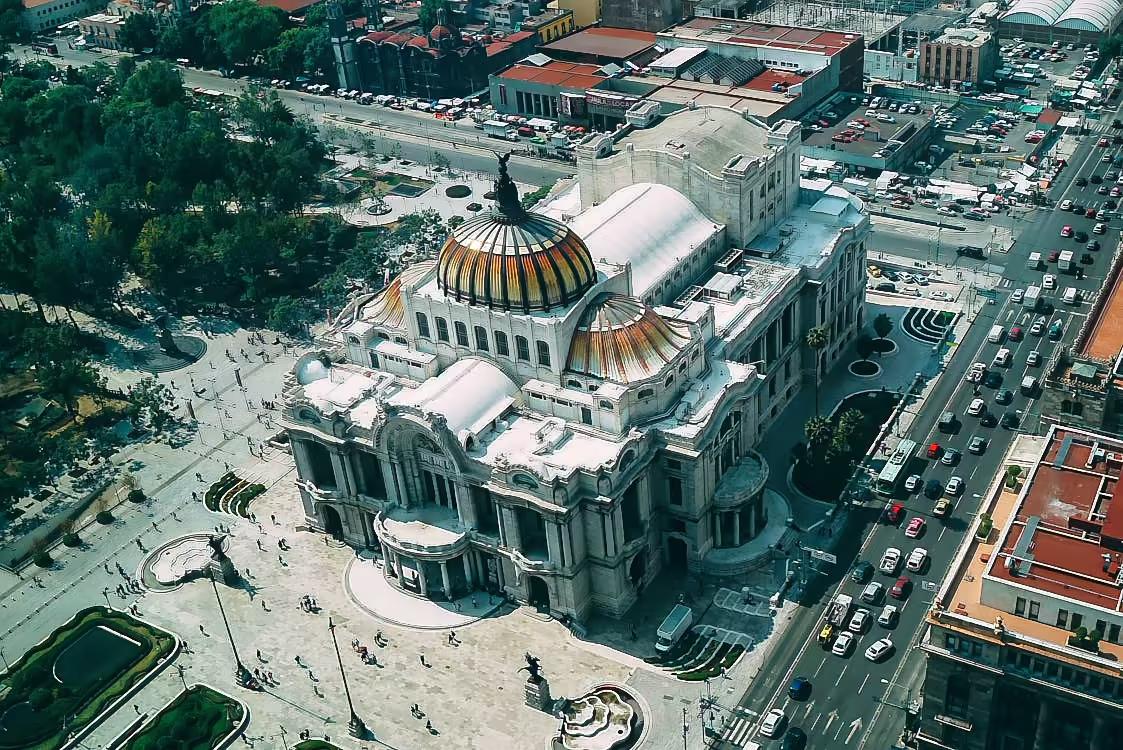
- Arts and museums: The Museo Nacional de Antropología, Palacio de Bellas Artes, and Museo Soumaya are world-class. Free or low-cost entry is standard at public museums on Sundays.
- Nightlife: Zona Rosa, Roma, and Condesa offer everything from mezcal bars to rooftop clubs. Live music is everywhere — jazz, cumbia, rock en español.
- Parks and outdoors: Chapultepec Park is one of the largest urban parks in the Western Hemisphere. Weekend hikes in the nearby Desierto de los Leones or Nevado de Toluca are popular escapes.
- Safety: Mexico City's central neighborhoods are generally safe for expats, but petty crime (phone theft, pickpocketing) is common. Avoid displaying valuables and use ride-hailing apps at night.
Food & Dining
- Street food: Tacos al pastor (MXN 15–25 each), tamales, quesadillas, and tlayudas are staples. The best street food is often found at puestos (stands) with long lines.
- Fine dining: Mexico City has multiple entries on the World's 50 Best Restaurants list — Pujol, Quintonil, and Contramar are must-tries.
- Budget eating: Comida corrida (set lunch menus) at neighborhood eateries run MXN 80–130 for soup, main course, drink, and dessert.
Expat Community
- Meetup and Facebook groups: "Expats in Mexico City," "Digital Nomads CDMX," and language exchange groups meet weekly.
- Coworking spaces: WeWork, IOS Offices, and local options like Centraal and Público are popular in Roma and Polanco.
- Language exchanges: Free intercambios happen at bars across Roma and Condesa almost every night of the week.
Job Market in Mexico City
- Main industries: Technology, finance, manufacturing, media, automotive, tourism
- Major employers: Google, Amazon, Microsoft, BBVA, CEMEX, América Móvil, Rappi
- Average salaries by sector:
| Sector | Monthly Net (MXN) |
|---|---|
| Software Engineering | MXN 30,000–60,000 |
| Marketing / Communications | MXN 15,000–30,000 |
| Finance / Banking | MXN 25,000–55,000 |
| Education (English teacher) | MXN 12,000–22,000 |
| Hospitality / Tourism | MXN 10,000–18,000 |
- Job search resources: OCC Mundual, LinkedIn Mexico, Computrabajo, Indeed Mexico, and Glassdoor MX
Education in Mexico City
- International schools: American School Foundation (ASF), Liceo Mexicano Japonés, Edron Academy (IB curriculum), Peterson School
- Universities: UNAM (top public university, UNESCO-listed campus), Tecnológico de Monterrey (ITESM), Universidad Iberoamericana
- Language schools: International House, Spanish Immersion Mexico, UNAM's CEPE (Centro de Enseñanza para Extranjeros) — one of the best-value Spanish programs in the world
Moving Checklist for Mexico City
- Secure a valid visa (Temporary Resident Visa recommended)
- Research neighborhoods and shortlist apartments online
- Arrange international health insurance or confirm IMSS eligibility
- Obtain apostilled documents (birth certificate, marriage certificate)
- Book temporary accommodation for your first 2–4 weeks
- Activate a Mexican SIM card (Telcel or AT&T Mexico)
- Open a bank account (BBVA, Banorte, or digital options like Nu or Mercado Pago)
- Apply for your CURP (Unique Population Registry Code)
- Register your address with your country's embassy
- Get a rechargeable Metro card and Ecobici subscription
- Find and sign a long-term rental
- Apply for RFC (tax ID) if working locally
- Set up utilities (CFE for electricity, SACMEX for water)
- Register with IMSS if employed formally
- Explore your neighborhood — find your local market, pharmacy, and taquería
Visa & Residency
- Tourist visa (FMM): Most nationalities receive 180 days on arrival. Cannot legally work for a Mexican employer but widely used by remote workers.
- Temporary Resident Visa: Apply at a Mexican consulate abroad. Requires proof of income (MXN 50,000+/month) or savings (MXN 800,000+). Valid for one year, renewable up to four years.
- Permanent Resident Visa: For retirees or those with 4+ consecutive years as a temporary resident. Higher income/savings thresholds apply.
- Work Visa: Employer-sponsored through INM (Instituto Nacional de Migración). The company initiates the process.
- More info: gob.mx/sre for visa types; gob.mx/inm for appointments and applications.
Moving to Other Major Mexican Cities
Mexico City is the most popular destination, but several other cities attract significant expat communities and offer distinct advantages. Here's a quick comparison:
| City | 1BR Rent (center) | Monthly Budget (single) | Best For |
|---|---|---|---|
| Mexico City | MXN 10,000–18,000 | MXN 25,000–40,000 | Culture, food scene, tech jobs, nightlife |
| Guadalajara | MXN 7,000–13,000 | MXN 18,000–30,000 | Tech industry, tequila culture, warm climate |
| Monterrey | MXN 8,000–15,000 | MXN 22,000–35,000 | Business, manufacturing, higher salaries |
| Mérida | MXN 7,000–12,000 | MXN 15,000–25,000 | Safety, retirees, colonial charm |
| Puebla | MXN 6,000–11,000 | MXN 15,000–24,000 | Affordability, food, proximity to CDMX |
| Cancún | MXN 8,000–16,000 | MXN 20,000–32,000 | Beach lifestyle, tourism jobs, diving |
Guadalajara
Mexico's second-largest city (~5.3 million metro) is the birthplace of tequila and mariachi, and an emerging tech hub nicknamed "Mexico's Silicon Valley." Rents are 30–40% lower than CDMX. The Chapultepec Avenue area and Providencia are popular with expats. Intel, HP, and Oracle have major operations here, and the local startup scene is growing fast. The climate is warmer than CDMX — expect hot, dry summers and mild winters. The expat community is smaller but tight-knit, centered around coworking spaces and language exchange groups.
| Neighborhood | 1-Bedroom | Character |
|---|---|---|
| Chapultepec / Vallarta | MXN 8,000–14,000 | Walkable, restaurants, nightlife, closest to Roma/Condesa vibe |
| Providencia | MXN 9,000–15,000 | Residential, safe, popular with families and professionals |
| Tlaquepaque | MXN 6,000–10,000 | Artisan town feel, galleries, cheaper, 20 min from center |
| Zapopan | MXN 7,000–13,000 | Modern malls, gated communities, tech offices |
Monterrey
The industrial powerhouse of northern Mexico (~5.3 million metro). Home to major corporations (CEMEX, FEMSA, Alfa) and Tecnológico de Monterrey. Salaries here are among the highest in Mexico — software engineers can earn MXN 40,000–70,000/month. Rents in San Pedro Garza García rival Polanco, but the city offers less cultural richness than CDMX or Guadalajara. The climate is hot — summers regularly exceed 35°C. Best for professionals in manufacturing, finance, and business who prioritize earning potential over lifestyle.
| Neighborhood | 1-Bedroom | Character |
|---|---|---|
| San Pedro Garza García | MXN 12,000–22,000 | Upscale, safest area, corporate offices |
| Centro / Barrio Antiguo | MXN 6,000–11,000 | Historic, walkable, nightlife, affordable |
| Cumbres | MXN 7,000–13,000 | Suburban, family-friendly, gated communities |
| Valle Oriente | MXN 9,000–16,000 | Modern apartments, near shopping and offices |
Mérida
Consistently ranked as Mexico's safest city. A colonial gem in the Yucatán with a growing expat community, affordable rents (MXN 7,000–12,000 for a 1BR), and proximity to cenotes and Mayan ruins. Slower pace of life — ideal for retirees and remote workers. The city has invested heavily in cultural infrastructure, and its Noche Mexicana street festivals and regional cuisine (cochinita pibil, panuchos, papadzules) are legendary. English is more widely spoken here than in most Mexican cities thanks to the large expat population. The downside: it's hot and humid year-round, and the nearest beach is about 30 minutes away.
Puebla
Two hours from Mexico City, Puebla offers colonial architecture, excellent food (the birthplace of mole poblano), and significantly lower costs. Strong manufacturing sector — Audi and Volkswagen have major plants here, creating jobs in engineering and supply chain. Less international than other cities on this list but increasingly popular with Mexican professionals and expats who want city amenities without the CDMX chaos. The climate is slightly cooler than Mexico City due to higher elevation.
Cancún / Playa del Carmen
Beach living with established expat infrastructure. Higher rents in the Hotel Zone (MXN 12,000–20,000 for a 1BR) but affordable in downtown Cancún or nearby Playa del Carmen (MXN 8,000–14,000). Tourism is the main industry, so job opportunities are seasonal and concentrated in hospitality, diving instruction, and real estate. The Riviera Maya attracts a different expat profile — more beach-focused, less corporate. Hurricanes are a risk from June through November. Best for those who prioritize tropical lifestyle, diving, and don't need a traditional career track.
The central and southern neighborhoods where most expats live — Roma, Condesa, Polanco, Coyoacán — are generally safe. Standard precautions apply: avoid walking alone late at night in unfamiliar areas, don't flash expensive electronics, and use ride-hailing apps rather than street taxis. Most expats report feeling safe in their daily routines.
A single person can live well on MXN 25,000–40,000/month (roughly USD 1,400–2,200), including rent in a desirable neighborhood, regular dining out, and entertainment. Couples can budget MXN 40,000–60,000/month comfortably. Families with children in international schools should budget MXN 70,000+/month.
You can survive with English in expat-heavy neighborhoods like Roma and Condesa, but daily life is significantly easier — and cheaper — with conversational Spanish. Government offices, most landlords, and many services operate exclusively in Spanish. Investing in language classes (UNAM's CEPE program costs around MXN 5,000–8,000/semester) pays off quickly.
Many remote workers enter Mexico on a 180-day tourist visa (FMM) and work for foreign employers without issue. However, this operates in a legal gray area — Mexico does not currently have a dedicated digital nomad visa. If you plan to stay long-term or work for a Mexican employer, a Temporary Resident Visa is the proper route.
The CURP (Clave Única de Registro de Población) is Mexico's unique population registry code — think of it as a national ID number. You'll need it for banking, tax registration, employment contracts, healthcare enrollment, and even some rental agreements. It's free to obtain at any RENAPO office or online through the gob.mx portal.
Mexico City has excellent internet infrastructure in most central neighborhoods. Fiber-optic connections from Totalplay, Izzi, and Telmex offer speeds of 100–500 Mbps for MXN 400–700/month. Coworking spaces typically provide redundant connections. Mobile data (Telcel, AT&T Mexico) is fast and affordable — unlimited plans start around MXN 400/month.
October through April is the dry season with the best weather — warm days, cool nights, and minimal rain. Avoid moving during June–September if possible, as the rainy season brings afternoon downpours that can complicate logistics and apartment hunting. December and January are festive but some services slow down around holidays.
You must apply at a Mexican consulate in your home country before arriving. Requirements typically include proof of monthly income of at least MXN 50,000 (or equivalent savings of MXN 800,000+ over the past 12 months), a valid passport, completed application form, and passport photos. The visa is initially granted for one year and renewable for up to four years. Processing takes 2–4 weeks. Once in Mexico, you must exchange the visa sticker for a resident card at an INM office within 30 days.
Yes, with some planning. International schools like ASF and Edron Academy offer strong curricula but cost MXN 150,000–350,000/year. Family-friendly neighborhoods include Coyoacán, Del Valle, and parts of Polanco — all with parks, pedestrian streets, and kid-friendly restaurants. Healthcare through private hospitals is excellent. The main concerns for families are air quality (especially March–May), traffic safety, and altitude adjustment for young children. Most expat families report high satisfaction with daily life and access to outdoor activities on weekends.
Most landlords in Mexico require a fiador or aval — a Mexican property owner who co-signs your lease and guarantees payment. As a foreigner without local property-owning contacts, this is the biggest housing hurdle. Workarounds include: offering 3–6 months' deposit upfront, using digital platforms like Homie that replace the aval with a deposit insurance policy, or renting from expat-friendly landlords who accept foreign bank statements instead. Always insist on a written lease (contrato de arrendamiento) and confirm it's registered with the SAT (tax authority) to protect your rights.
Related Guides
- [Moving to Mexico] — comprehensive country guide covering visas, customs, taxes, and residency
- [Moving to Guadalajara] — city guide for Mexico's tech and cultural hub
- [Moving to Mérida] — the safest city in Mexico for expats and retirees