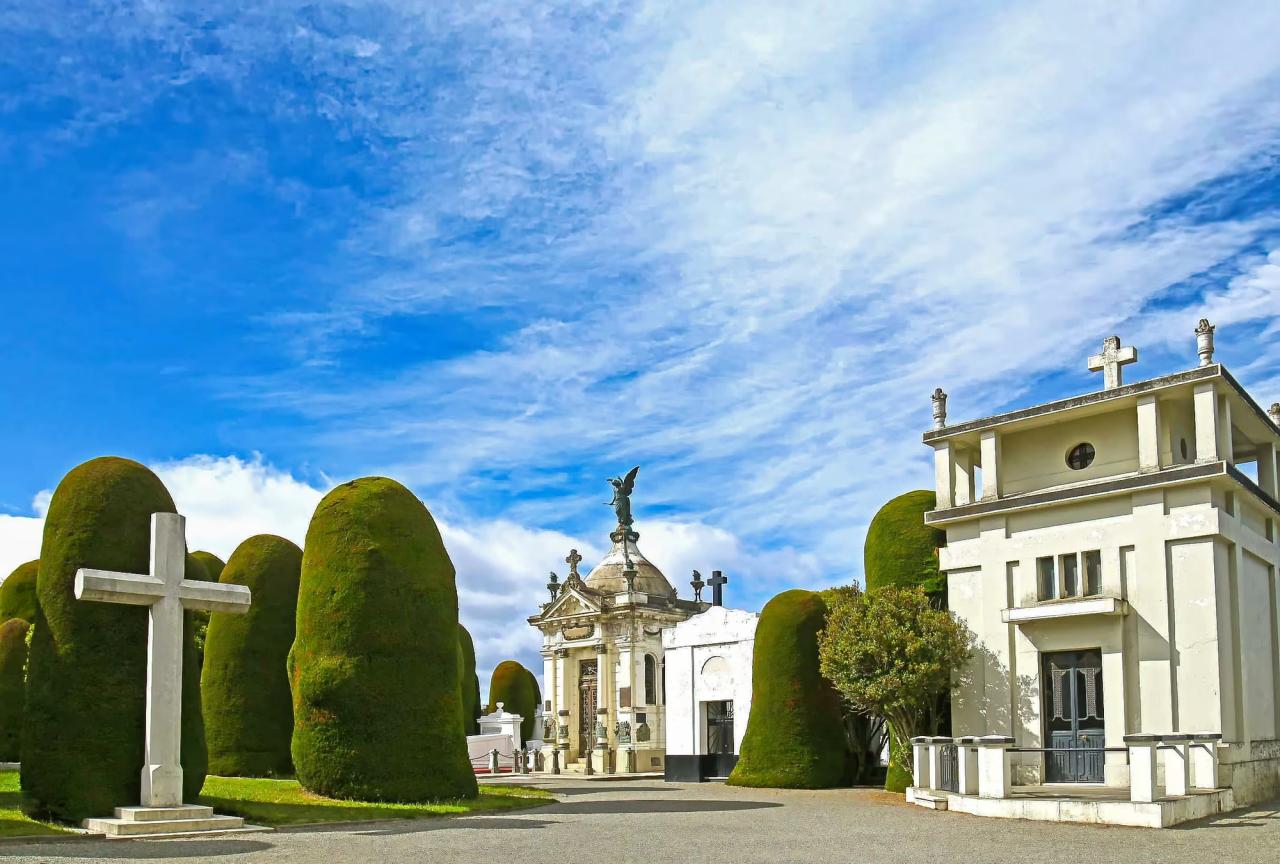
Punta Arenas sits on the north shore of the Strait of Magellan (Estrecho de Magallanes) at roughly 53 degrees south latitude, making it one of the southernmost cities in the world and the capital of Chile's Magallanes Region. Roughly 2,400 km south of Santiago, it has no rail link to the rest of Chile — you either fly or drive through Argentine Patagonia. The city is the primary departure point for Antarctic expeditions and the gateway to Torres del Paine National Park, one of the most spectacular protected landscapes on the planet. Life here revolves around tourism, petroleum extraction through the state company ENAP, a Chilean naval base, and the benefits of a Zona Franca — a free economic zone that allows duty-free imports and reduced taxes on many goods. The expat community is small, composed mostly of tourism workers, scientists heading to or returning from Antarctica, and a handful of petroleum-sector and military families. The climate is subpolar oceanic — winters are long and dark, summers are brief and bright, and the wind never really stops. The city's Croatian immigrant heritage, sheep-farming estancias, and position on one of history's most important maritime routes give it a cultural identity found nowhere else in Chile. If you want to live at what locals call "the end of the world," this is your guide.
Punta Arenas at a Glance

- Population
- ~132,000 (2024 census, commune)
- Region
- Región de Magallanes y de la Antártica Chilena
- Known For
- Strait of Magellan, gateway to Antarctica, Torres del Paine access
- Average Rent (1BR)
- CLP 350,000–550,000/month
- Average Salary
- CLP 780,000–950,000/month (net)
- Expat Community
- Small — tourism workers, Antarctic researchers, petroleum and military families
- Climate
- Subpolar oceanic — cold, windy year-round; snow possible any month
- Nearest Major City
- No major Chilean city nearby — Santiago is 2,400 km north (3.5h by air)
Why Move to Punta Arenas
- Zona Franca benefits: The free economic zone means many imported goods — electronics, vehicles, appliances, alcohol — are available duty-free, partially offsetting the premium that remoteness normally adds to consumer prices in Patagonia.
- Torres del Paine on your doorstep: The park is roughly three to four hours north by road, giving you weekend access to world-class trekking, glaciers, and wildlife in one of the planet's most dramatic landscapes.
- Gateway to Antarctica: Regular expedition departures from the port put you among the few people on Earth who can treat an Antarctic voyage as a seasonal routine.
- Small-city safety and community: With roughly 132,000 residents, Punta Arenas has low violent crime rates, short commutes, and a community where people know each other — a stark contrast to Santiago's sprawl and congestion.
- Wildlife on the doorstep: Magellanic penguins colony at Isla Magdalena (a short boat trip across the Strait), the rookery at nearby Seno Otway, guanacos on the road to Torres del Paine, and condors soaring over the steppe make this region one of the richest for wildlife viewing in South America.
- A lifestyle unlike anywhere else: Living at the end of the continental world, where the next major city in any direction is hundreds of kilometers away, creates a self-reliant, tight-knit community culture that many residents find deeply rewarding once they adapt to the isolation.
Finding Housing in Punta Arenas
Average Rents
| Neighborhood | 1-Bedroom | 3-Bedroom | Character |
|---|---|---|---|
| Centro (downtown) | CLP 400,000–550,000 | CLP 600,000–850,000 | Walking distance to Plaza Muñoz Gamero, banks, and services; mostly apartments |
| Prat / Playa Norte | CLP 350,000–500,000 | CLP 550,000–800,000 | Residential streets near the Costanera waterfront; scenic Strait views |
| Barrio Inglés | CLP 380,000–520,000 | CLP 580,000–820,000 | Historic zone with older architecture, local shops, and cafes |
| Pedro Aguirre Cerda / Los Ciervos | CLP 280,000–400,000 | CLP 450,000–650,000 | Suburban, family-friendly, more yard space; longer walk or bus ride to center |
| Zona Franca periphery | CLP 300,000–420,000 | CLP 480,000–680,000 | Near the duty-free commercial zone; newer builds with better insulation |
| Cerro de la Cruz / hillside areas | CLP 320,000–460,000 | CLP 500,000–700,000 | Elevated residential streets with panoramic views of the Strait and city; some steep access roads |
How to Find Housing
- Portal Inmobiliario (portalinmobiliario.com): The dominant national real estate listings site in Chile. Filter by "Punta Arenas" and set your budget. Most local agencies post their inventory here.
- Facebook groups: Search "Arriendos Punta Arenas" — landlords and small agencies post directly, sometimes without requiring a realtor fee. Response times on Facebook are often faster than through formal listings.
- Local agencies: Firms such as Inmobiliaria Patagonia and Inmobiliaria Magallanes operate offices near the centro and can guide you through available rentals. Expect to pay one month's rent as an agency commission.
- Word of mouth: In a city this size, many rentals never appear online. Ask colleagues, neighbors, or your hotel host if they know of available apartments — personal connections open doors that listings do not.
Tips for Expats
- Landlords will ask for your RUT (Rol Único Tributario — your Chilean tax identification number, issued by the Servicio de Impuestos Internos) or, if you do not yet have one, a passport plus a guarantee deposit equal to three to six months' rent. Some landlords accept a third-party guarantor (aval) based in Chile.
- Leases typically run 12 months. Short-term furnished rentals aimed at seasonal tourism workers are available but cost 20–40 percent more than unfurnished units.
- Heating is critical. Confirm that any apartment has a reliable system — pellet stoves (estufas a pellet), natural gas, or electric heaters. Winter energy bills can exceed CLP 80,000 per month.
- Ask whether the building has adequate insulation. Many older structures in Punta Arenas were built before modern energy standards, and poor insulation combined with constant wind makes interiors uncomfortable without serious heating.
- Double-glazed windows make an enormous difference. If you are choosing between two comparable apartments, the one with better window seals and insulation will save you significant money and discomfort over a Patagonian winter.
- Hot water systems vary — some buildings use gas califonts (on-demand water heaters), others have electric tanks. Gas califonts are more economical but require a gas connection and ventilation. Confirm what the apartment has before signing.
Neighborhoods Guide
- Centro: Best for singles and couples who want to walk everywhere. You will be close to Plaza Muñoz Gamero with its monument to Ferdinand Magellan and the local sheep-industry history, the municipal market, banks, and the main bus terminal for regional routes. Rents are the highest in the city but still moderate by Chilean national standards. Wind funneled between downtown buildings is a constant presence. Most restaurants, shops, and services are within a 15-minute walk.
- Prat / Playa Norte: Ideal for anyone who values waterfront views along the Costanera del Estrecho. The area mixes houses and low-rise apartment blocks. You can watch ships transit the Strait of Magellan from your window. Quieter than the centro at night, with easier parking. The Costanera waterfront path is popular for evening walks during the long summer twilights.
- Barrio Inglés: Named for the British immigrant influence during the sheep-boom era, this historic pocket has character and a slower pace. Good for expats who appreciate older architecture and proximity to cafes. Parking can be tight on narrow streets. The area is compact and easy to explore on foot, with a handful of longstanding family-run businesses that have operated for decades.
- Pedro Aguirre Cerda / Los Ciervos: The main suburban residential zones, popular with Chilean families. Larger lots, detached houses, and more yard space. You will need a car or rely on local bus routes, which run less frequently than in the centro. Best value per square meter in the city. These neighborhoods feel more spacious and quieter than the downtown core, and many properties include garages — a real advantage during snowy winter months when street parking becomes difficult.
- Zona Franca periphery: Practical for households that do heavy shopping at the duty-free commercial area or work in the petroleum sector northeast of town. More commercial than residential in feel, but newer construction often means better insulation — a real advantage in Patagonian winters. Good for families prioritizing modern build quality over a central address.
- Cerro de la Cruz / hillside areas: The streets climbing the hills west and south of downtown offer panoramic views across the Strait of Magellan and the city below, including the landmark Cerro de la Cruz viewpoint. Mix of older and newer homes on quiet streets. Some access roads are steep and can become difficult during winter snow and ice. Best suited for residents with a vehicle.
Cost of Living in Punta Arenas
Monthly Budget Breakdown
| Category | Budget Range |
|---|---|
| Rent (1BR, center) | CLP 400,000–550,000 |
| Utilities (electricity, gas, water, waste) | CLP 60,000–100,000 |
| Internet (fiber or DSL) | CLP 20,000–35,000 |
| Groceries | CLP 200,000–300,000 |
| Transport (local buses) | CLP 15,000–25,000 |
| Dining out (4x/month) | CLP 40,000–80,000 |
| Leisure / Gym | CLP 25,000–50,000 |
| Total | CLP 760,000–1,140,000 |
Day-to-Day Costs
- Coffee (café): CLP 2,000–3,500
- Lunch at a local restaurant (almuerzo): CLP 4,500–7,000
- Monthly transport pass: CLP 20,000
- Beer at a bar (cerveza): CLP 2,500–4,500
- Cinema ticket: CLP 4,000–6,000
- Kilogram of apples: CLP 1,500–2,500
- Loaf of bread (marraqueta): CLP 1,200–1,800
- Dozen eggs: CLP 3,000–4,500
- Liter of milk: CLP 1,000–1,500
- Taxi ride within city (base fare): CLP 2,000–3,500
- Gym membership (monthly): CLP 20,000–40,000
- Domestic flight to Santiago (one way): CLP 120,000–350,000 depending on season and booking advance
- Centolla (king crab) main at a mid-range restaurant: CLP 15,000–25,000
- Pellet fuel (15 kg bag for heating): CLP 6,000–9,000
Groceries cost measurably more than in Santiago because most fresh produce and packaged goods are shipped in by sea or flown in. The Zona Franca partially offsets this for electronics, alcohol, and imported goods, but everyday staples like fruits and vegetables carry a noticeable premium. A practical approach many locals follow is to buy non-perishables and household goods in bulk at the Zona Franca, while purchasing fresh items at the municipal market (Mercado Municipal) on calle Bories, where prices are often better than at the supermarket chains.
Getting Around Punta Arenas
- Public transport: The city relies on privately operated minibuses (micros). A single fare is roughly CLP 600–700 paid in cash on board — there is no integrated smart-card system. Routes cover the main residential areas and connect the centro to the Zona Franca and the airport road. Service frequency drops noticeably in the evening and on Sundays. There is no metro or tram system.
- Taxis and ride-hailing: Traditional taxis are plentiful and relatively inexpensive — a ride within the city typically costs CLP 2,000–4,000. Colectivos (shared taxis following fixed routes, identified by their numbered rooftop signs) cost slightly more than a bus but are faster and more comfortable. Ride-hailing apps such as inDrive operate in Punta Arenas but with fewer drivers than in larger Chilean cities.
- Cycling: Feasible only in summer (December–March). The constant wind and winter ice make cycling impractical for much of the year. Dedicated bike lanes are rare. If you do cycle, carry windproof layers even on calm mornings — conditions change rapidly.
- Driving: Roads within the city are well maintained. Street parking is generally free outside the centro. Four-wheel-drive vehicles are common and useful for the gravel roads outside town and for winter driving conditions. Fuel is slightly cheaper than the national average thanks to the Zona Franca. Snow chains are essential from May through September — rental cars and private vehicles alike should carry them. Roads to Torres del Paine and the Argentine border can close temporarily during severe winter storms.
- Airport: Presidente Carlos Ibáñez del Campo International Airport (PUQ) is about 20 km north of the city. LATAM and Sky Airline operate daily flights to Santiago (roughly 3.5 hours). Seasonal routes sometimes connect directly to Puerto Montt and Concepción. Book early — flights to and from Punta Arenas are among the most expensive domestic routes in Chile, and round-trip fares from Santiago regularly exceed CLP 200,000 even when booked weeks in advance. A taxi from the airport to the centro costs roughly CLP 12,000–18,000; shared shuttle vans are cheaper at about CLP 5,000 per person.
- Intercity: There is no rail service to or from Punta Arenas — the city is entirely isolated from Chile's limited rail network. Long-distance buses run to Puerto Natales (about 2.5–3 hours north) and to Argentina — Río Gallegos is roughly 4 hours east. Ushuaia is reachable via a longer route through Tierra del Fuego that includes a ferry crossing at Punta Delgada–Bahía Azul over the Strait of Magellan. The only road connection to the rest of Chile requires crossing into Argentina via Route 255, passing through Argentine customs, driving south through Argentine Patagonia, and re-entering Chile. Border crossings can be slow during peak summer travel — allow extra time in January and February.
Healthcare in Punta Arenas
- Hospitals and clinics: Hospital Regional de Punta Arenas (Dr. Lautaro Navarro Avaria) is the main public hospital and the only full-service acute-care facility in the Magallanes Region. Clínica Magallanes and Clínica San José provide private outpatient and specialist services. For complex procedures — advanced oncology, certain surgeries, specialized diagnostics — patients are routinely transferred to Santiago, a flight of at least 3.5 hours.
- Health insurance: Residents with a RUT who are formally employed are automatically enrolled in Fonasa (Fondo Nacional de Salud — Chile's public health insurance fund), which covers public hospital visits and subsidized private care. Higher-income residents and most expats prefer an Isapre (Instituciones de Salud Previsional — Chile's private health insurers), which offer faster access to private clinics and shorter wait times, though at higher monthly premiums (CLP 80,000–250,000 depending on plan and coverage level).
- English-speaking doctors: Very limited. Most physicians speak only Spanish. The tourism industry and the Antarctic program maintain a handful of English-speaking medical contacts; your embassy may also keep a referral list.
- Dental care: Private dental clinics in the centro offer good-quality care at prices significantly lower than in Europe or North America. A standard cleaning costs CLP 25,000–40,000. No Fonasa or Isapre enrollment is required for private dental services — you simply pay out of pocket.
- Pharmacies: Cruz Verde, Salcobrand, and Ahumada all operate branches in the centro. At least one location maintains Sunday and after-hours service. Carry your Cédula de Identidad (Chilean national ID card, issued by the Registro Civil) or passport when purchasing prescription medications.
- Emergency number: 131 (ambulance — SAMU). 133 for police (Carabineros). 132 for fire department.
Get a personalised relocation plan
Drop your email and we'll send a tailored checklist plus three quotes from vetted movers.
Culture and Lifestyle
- Extreme daylight variation: At 53 degrees south, seasonal shifts are dramatic. In December and January, the sun rises around 4:30 AM and sets close to 10:30 PM. In June, expect roughly seven hours of daylight — sunrise around 9:30 AM, sunset by 4:00 PM. Plan routines and mental health strategies around these extremes.
- Wind as a constant: The city averages wind speeds of 25–30 km/h and regularly experiences gusts above 80 km/h. Locals chain their trash bins to posts, walk at an angle, and learn never to leave an umbrella deployed. Wind-resistant outer layers are not optional — they are daily wear for much of the year.
- Croatian heritage: A significant portion of Punta Arenas residents descend from Croatian immigrants who arrived in the late 19th and early 20th centuries to work in sheep farming. Croatian surnames are common throughout the city, and cultural influences appear in local cuisine, social clubs, and annual community traditions.
- Sheep and estancia culture: The surrounding countryside is dotted with estancias — large sheep ranches dating back to the wool boom of the 1800s. Lamb is the dominant local meat, and asado de cordero al palo (spit-roasted lamb over an open fire) is the region's signature dish.
- Museums and heritage: The Nao Victoria Museum on the outskirts of the city houses a full-size replica of Magellan's nao Victoria and other historic vessels — a hands-on way to understand the maritime history that shaped the region. The Museo Salesiano Maggiorino Borgatello, run by the Salesian order, covers natural history, indigenous peoples of Patagonia, and regional ethnography. Both are worth visiting early in your stay to ground yourself in the local context.
- Magellanic penguins and wildlife: The Isla Magdalena penguin colony, reachable by a 30-minute boat ride across the Strait of Magellan during the breeding season (October–March), hosts tens of thousands of Magellanic penguins and is one of the most accessible large penguin colonies in the world. The smaller rookery at Seno Otway, about 65 km northwest of the city, is reachable by road year-round. Guanacos, foxes, condors, and occasionally rheas are spotted along the highways outside town.
Food and Dining
- Local specialties center on Patagonian lamb (cordero), king crab (centolla) pulled from the southern channels, and southern hake (merluza austral). Restaurants along calle Bories and the blocks near Plaza Muñoz Gamero offer the densest concentration of dining options in the city.
- Punta Arenas has a strong cafe culture despite its size, with several roasters and bakeries in the centro serving good coffee and kuchen — a German-style fruit cake that reflects the broader European immigrant influence across southern Chile and Argentina.
- For budget meals, look for the menú del día (set lunch) posted on chalkboards outside neighborhood restaurants — typically CLP 4,500–6,000 for soup, a main course, and a drink. This is the most economical way to eat a full midday meal.
- Seafood is excellent and relatively affordable given the city's position on the Strait. Centolla (king crab) is a local luxury — expect to pay CLP 15,000–25,000 for a centolla main at a mid-range restaurant, far less than you would pay for the same dish exported to Santiago or abroad.
- The Zona Franca commercial area has larger grocery stores and bulk-buying options that save money on staples and imported goods.
Expat Community
- The expat community is small and somewhat transient. Most foreign residents work in tourism (especially during the October–March high season), scientific research linked to the Chilean Antarctic Institute (INACH), or the petroleum and gas sector with ENAP and its contractors.
- The Centro de Visitantes y Convenciones occasionally hosts English-language events and public talks connected to Antarctic science programs — a good informal networking opportunity.
- There is no formal language-exchange meetup. Social connections typically form through workplace contacts, the local trekking and outdoor community, or the Rotary Club of Punta Arenas, which includes a few international members.
- The city's small size means the expat grapevine works fast — once you meet one or two foreign residents, introductions to the wider group tend to follow organically. The seasonality of the tourism industry means the community swells from October to March and contracts during the winter low season.
- Online, search for "Expats en Punta Arenas" on Facebook. The group is not large, but members are responsive and can help with practical questions about housing, bureaucracy, and local services.
Job Market in Punta Arenas
- Main industries: Tourism (hotels, tour operators, expedition logistics), petroleum extraction and refining (ENAP), Chilean Armed Forces (naval base and regional military command), public sector (regional government administration), fishing and aquaculture, and port services.
- Seasonal work: The tourism high season from October to March creates a surge in demand for bilingual guides, hospitality staff, drivers, and expedition support workers. Many positions are filled by seasonal workers from Santiago and abroad. If you speak English and Spanish, your chances of landing a tourism job during this period are strong.
- Major employers: ENAP (Empresa Nacional del Petróleo), the regional health service (Servicio de Salud Magallanes), LATAM and Sky Airline ground operations, INACH (Instituto Antártico Chileno), and a cluster of Torres del Paine and Antarctic tour operators headquartered in the city.
- Average salaries by sector:
| Sector | Monthly Net (CLP) |
|---|---|
| Tourism / hospitality | 550,000–750,000 |
| Petroleum (ENAP and contractors) | 1,000,000–1,800,000 |
| Public sector / government | 700,000–1,100,000 |
| Education | 650,000–950,000 |
| Healthcare | 700,000–1,200,000 |
- Job search resources: The national portals Trabajando.cl and Laborum.com list local positions. For tourism jobs, approach tour operators directly on calle Roca and calle Bories — many hire seasonally and fill positions by word of mouth. ENAP contractor roles are typically advertised through Santiago-based engineering and services firms. Networking matters in a small city; personal introductions and referrals often carry more weight than an online application.
- Work permits: If you are not a Chilean citizen or permanent resident, you need a work visa or a Temporary Residence visa with work authorization. Apply through the Extranjería before arriving, or begin the process at the Chilean consulate in your home country. Processing times vary from a few weeks to several months depending on nationality and visa type. Working on a tourist visa is illegal and can result in fines and deportation — ensure your paperwork is in order before starting any employment.
Education in Punta Arenas
- International schools: There are no dedicated international schools in Punta Arenas. The Colegio Británico de Punta Arenas offers a bilingual Spanish-English curriculum rooted in the city's British heritage from the sheep-farming era and is the closest equivalent for families seeking English-language exposure. The school follows the Chilean national curriculum with enhanced English instruction and is located in the central area of the city.
- Universities: Universidad de Magallanes (UMAG) is the regional public university, offering undergraduate and graduate programs with noted research strengths in Antarctic science, marine biology, and Patagonian ecosystems. Universidad Santo Tomás and Universidad Andrés Bello maintain satellite campuses in the city for select programs.
- School system note: Chilean public schools teach exclusively in Spanish. If your children are not fluent, the Colegio Británico or private tutoring are the primary options for easing the transition. The school year runs from March to December in Chile, with a two-week winter break in July — plan enrollment timing accordingly.
- Language schools: No dedicated language school serves the general public. Private Spanish tutors can be found through UMAG's language department or via classified ads on local Facebook groups. The Colegio Británico occasionally offers community English classes for adults.
Moving Checklist for Punta Arenas
- Confirm your visa type — tourist (up to 90 days for eligible nationalities), Temporary Residence (for work, study, or family reunification), or another category — and submit your application through the Chilean Extranjería portal or the nearest Chilean consulate.
- Obtain your RUT (Rol Único Tributario) from the Servicio de Impuestos Internos (SII) — this tax identification number is required for renting an apartment, opening a bank account, signing a phone contract, and practically every official transaction in Chile.
- Book your flight to Presidente Carlos Ibáñez del Campo Airport (PUQ) well in advance. Domestic flights to Punta Arenas are among the most expensive in Chile and fill up quickly during peak tourism season (October–March).
- Arrange temporary accommodation for your first two to four weeks — a hotel or guesthouse in the centro — while you search for a long-term rental on the ground.
- Pack for extreme wind and cold: waterproof and windproof outer layers, thermal base layers, insulated boots, and gloves. Even in summer, wind chill is significant and temperatures rarely exceed 15°C.
- If bringing pets, complete microchipping, rabies vaccination, and a veterinary health certificate endorsed by your country's agricultural authority well before departure. Chilean SAG (Servicio Agrícola y Ganadero) enforces import requirements strictly.
- Prepare a detailed inventory of household goods you plan to ship. Used personal items owned for six or more months qualify for duty-free import under Chilean law — submit the inventory with your customs declaration.
- Notify your bank of your relocation and ensure online access is set up for international transfers. Opening a Chilean bank account from abroad is generally not possible.
- Make copies of all important documents (passport, birth certificate, marriage certificate, diplomas, medical records) and have them apostilled in your home country. Chile requires apostilled documents for many residency and employment procedures.
- Research health insurance options — decide whether you will enroll in Fonasa through employment or contract an Isapre plan independently, and budget accordingly.
- Register your arrival with the PDI (Policía de Investigaciones de Chile) at the airport or the local office within 30 days — this step is mandatory for all foreigners entering Chile on a residence visa.
- Apply for your Cédula de Identidad (Chilean national ID card) at the Registro Civil office in the centro. Bring your passport and visa confirmation. This card is your primary identification document in Chile and is required for virtually all bureaucratic processes.
- Open a bank account at Banco de Chile, Santander, or Banco BCI. You will need your RUT, Cédula de Identidad (or passport with visa stamp), and proof of a local address such as a rental contract or utility bill.
- Purchase a local SIM card from Movistar, Entel, or Claro at kiosks in the centro so you have a Chilean phone number for housing calls and official contacts.
- Visit the Zona Franca to familiarize yourself with duty-free shopping options for winter clothing, appliances, and bulk household supplies you may need to set up your new home.
- Register your Chilean address with the Extranjería if your visa category requires it — some Temporary Residence visas mandate that you report your residential address within 30 days of arrival.
- Locate the nearest Cruz Verde, Salcobrand, or Ahumada pharmacy to your accommodation and confirm their hours. Knowing the late-night pharmacy rotation (farmacia de turno) is useful for off-hours needs.
- Secure a long-term rental lease. Provide your RUT, proof of income or an employment contract, and arrange either a Chilean guarantor (aval) or a cash deposit acceptable to the landlord.
- Register with Fonasa through your employer's payroll, or independently enroll in an Isapre plan for private health coverage. You cannot access the public healthcare system without being formally affiliated.
- Enroll any school-age children at the Colegio Británico or a local municipal school. Bring translated and apostilled school records from your home country.
- If you plan to drive, visit the Municipalidad de Punta Arenas to begin exchanging your foreign license for a Chilean license. The process may require a medical exam, a written test, and a practical driving test depending on your country of origin.
- Set up home heating immediately — purchase or arrange delivery of pellet fuel, confirm your gas connection, or buy supplemental electric heaters. Autumn temperatures arrive quickly, and an unheated Patagonian apartment is uninhabitable.
- Build a social network through a gym, a local hiking or climbing group, the Rotary Club, or workplace connections — isolation is the biggest lifestyle challenge in a small city this far from everywhere.
- Set up a Chilean payment method for recurring bills (electricity, water, internet) via your bank's online platform. Most utility companies in Punta Arenas accept automatic debit (cargo automático) from a Chilean checking account, which avoids late-payment issues during travel.
- If you shipped household goods, follow up with Aduanas (Chilean Customs) on the status of your shipment and ensure all duty-free import paperwork is in order. Delays at the port of entry are common for goods destined for the Magallanes Region due to additional inspections.
Related Guides
- [Moving to Chile] — comprehensive country guide covering visa types, tax obligations, and national healthcare system
- [Moving to Puerto Natales] — the smaller town two hours north, closer to Torres del Paine, with a different pace and cost structure
- [Moving to Santiago] — Chile's capital and the city most Punta Arenas residents fly through for connections to the rest of the country and the world
Last updated: 2026