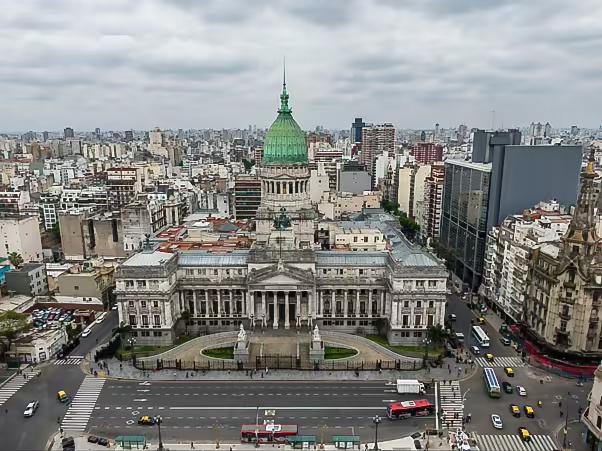
Buenos Aires is a city that moves to its own rhythm — literally. The birthplace of tango, Argentina's capital blends faded European grandeur with a raw, creative energy that draws artists, entrepreneurs, and remote workers from around the world. With affordable living by global standards, legendary steak culture, and neighborhoods ranging from leafy Palermo to bohemian San Telmo, Buenos Aires rewards those willing to navigate its complexities: a byzantine currency system, occasional bureaucracy, and an economy that reinvents itself every few years. If you can roll with the punches, few cities offer this much character per square meter.
Buenos Aires at a Glance

- Population
- ~3.1 million (city) / ~15.5 million (metro area)
- Region
- Autonomous City of Buenos Aires (CABA)
- Known For
- Tango, steak, European-style architecture
- Average Rent (1BR)
- USD $400–$800
- Average Salary
- USD $600–$900/month net
- Expat Community
- Large and diverse — strong European, North American, and Latin American presence
Why Move to Buenos Aires
- Affordable by global standards: A comfortable lifestyle costs a fraction of what you'd spend in London, New York, or Sydney, especially if you earn in foreign currency.
- Cultural depth: Over 300 theaters, world-class museums like MALBA, live tango on every corner in San Telmo, and a literary café tradition rivaling Paris.
- Food and nightlife: Steak is a way of life here — parrillas serve enormous cuts at low prices. Dinner starts at 10 PM; clubs open at 2 AM. The city never hurries.
- Strong expat network: Buenos Aires has one of Latin America's largest and most organized expat communities, with regular meetups, language exchanges, and coworking spaces throughout Palermo and Colegiales.
Finding Housing in Buenos Aires
Average Rents
| Neighborhood | 1-Bedroom | 3-Bedroom | Character |
|---|---|---|---|
| Palermo | $550–$850 | $1,000–$1,800 | Trendy, walkable, parks and nightlife |
| Recoleta | $600–$950 | $1,200–$2,200 | Upscale, historic, quiet elegance |
| San Telmo | $400–$650 | $750–$1,300 | Bohemian, cobblestone streets, antiques |
| Belgrano | $450–$750 | $900–$1,600 | Residential, family-friendly, Chinatown |
| Colegiales | $400–$650 | $800–$1,400 | Emerging, quiet, good value |
| Villa Crespo | $350–$600 | $700–$1,200 | Up-and-coming, local feel, artisan shops |
How to Find Housing
- Zonaprop: Argentina's largest rental platform — most locals use it. Listings in Spanish.
- Argenprop: Similar to Zonaprop with slightly different inventory.
- Airbnb (long-stay): Useful for the first 1–3 months while you search in person.
- Facebook groups: "Expats in Buenos Aires" and "Apartments Buenos Aires" have frequent direct-from-owner listings.
- MercadoLibre occasionally has rental listings as well.
Tips for Expats
- Always negotiate. Listed prices in Buenos Aires often have 10–15% wiggle room.
- Demand a written contrato (lease). Verbal agreements are common but risky.
- Budget for a deposit (1–2 months) plus the first month upfront.
- Be aware of the DNI system — landlords increasingly ask for a DNI (Documento Nacional de Identidad) or at minimum your CDI (Clave de Identificación). Having one speeds up every transaction.
- Furnished apartments cost 20–40% more but save you from buying everything on arrival.
Neighborhoods Guide
- Palermo Soho & Palermo Hollywood: The epicenter of Buenos Aires expat life. Boutique shops, brunch spots, street art, coworking spaces. Higher rents but walkable to everything. Best for young professionals and digital nomads.
- Recoleta: Grand Parisian-style avenues, the famous cemetery, high-end dining. Quieter at night, excellent public transit. Best for professionals and retirees who value elegance.
- San Telmo: Sunday antiques market on Calle Defensa, tango milongas, crumbling-but-beautiful architecture. Gritty charm. Best for creatives and budget-conscious expats.
- Belgrano: Leafy streets, excellent schools, a small Chinatown (Barrio Chino), and a calmer pace. Best for families and those seeking a quieter base.
- Colegiales: The "forgotten" middle child between Palermo and Belgrano. Rapidly gentrifying, cheaper rents, great local bakeries. Best for long-term residents who want value.
- Villa Crespo: Once overlooked, now buzzing with craft beer bars, empanada joints, and young Argentines priced out of Palermo. Best for those who want authenticity on a budget.
Cost of Living in Buenos Aires
Monthly Budget Breakdown
| Category | Budget Range (USD) |
|---|---|
| Rent (1BR, center) | $450–$800 |
| Utilities | $80–$200 |
| Internet (100 Mbps) | $20–$50 |
| Groceries | $150–$250 |
| Transport (SUBE card) | $15–$25 |
| Dining out (4x/month) | $80–$150 |
| Leisure/Gym | $30–$60 |
| Total | $900–$1,650 |
Day-to-Day Costs
- Coffee (cortado): $1.50–$3
- Lunch (menú del día): $4–$8
- Monthly transport pass (SUBE): $15–$25
- Beer (pint, bar): $2.50–$5
- Cinema ticket: $5–$14
- Steak dinner for two (parrilla): $20–$40
Currency Reality: The Blue Dollar and Beyond
Buenos Aires has one of the world's most unusual currency situations. Argentina operates multiple exchange rates simultaneously:
- Official rate: The rate banks and formal institutions use. Often significantly overvalued.
- Blue dollar (dólar blue): The informal parallel rate, widely used in cash transactions. Historically 20–50% better than the official rate.
- MEP/Bolsa rate: A legal parallel rate accessed through buying and selling bonds in a local brokerage account. Close to the blue rate.
- Tarjeta (card) rate: What you pay when using a foreign credit card. Falls between the official and blue rates.
- CCL (Contado con Liquidación): Used for moving money out of Argentina. Obtained through buying local assets and selling them abroad.
Practical advice: Bring USD cash and exchange at trusted cuevas (informal exchange houses) or via local contacts. Use services like Western Union which often offer near-blue rates. Always check the current ARS/USD spread before converting — the gap fluctuates weekly and can significantly impact your purchasing power.
Inflation and Economic Volatility
Argentina's economy is defined by chronic inflation. Annual inflation exceeded 200% in 2023 but has since fallen to ~33% (as of early 2026), though prices still shift frequently and remain volatile. For expats, this creates both challenges and opportunities:
- If you earn in USD: Inflation works in your favor. Your foreign currency buys more pesos each month, effectively giving you a raise. Many digital nomads and remote workers live extremely well on modest foreign salaries.
- If you earn in ARS: Inflation erodes purchasing power fast. Negotiate salary adjustments quarterly if possible, and keep savings in hard currency.
- Practical tips: Pay rent monthly rather than annually (lock in shorter lease terms). Buy durable goods soon after converting currency. Monitor dólar blue rates on sites like Ámbito Financiero or DolarHoy. Prices at supermarkets and restaurants change frequently — what cost ARS 5,000 last month may be ARS 6,500 today.
Getting Around Buenos Aires
- Subway (Subte): Six lines covering the central city. Cheap (under $0.50/ride with SUBE card), fast, and crowded during rush hours.
- Buses (colectivos): Extensive network covering the entire city and suburbs. Use the SUBE rechargeable card. Google Maps and the Cómo Llego app provide real-time routes.
- Cycling: Buenos Aires has 250+ km of protected bike lanes. The Ecobici bike-share system offers free short rides for residents.
- Taxis & Ride-hailing: Taxis are plentiful and metered. Uber operates but in a legal grey area — Cabify is the locally licensed alternative.
- Driving: Not recommended in the city center. Parking is scarce, traffic is aggressive, and public transport is excellent.
- Airport: Ezeiza International Airport (EZE) is 35 km from the center. Aeroparque (AEP) handles domestic and regional flights from the waterfront.
- Intercity travel: Retiro bus terminal connects to every major Argentine city. Long-distance buses (cama and semi-cama seats) are comfortable and affordable — a 12-hour overnight bus to Mendoza costs USD $25–$50. Domestic flights through Aerolíneas Argentinas connect Buenos Aires to Patagonia, Iguazú, and the northwest.
Healthcare in Buenos Aires
- Public hospitals: Free for all residents including foreigners. Quality varies — Hospital de Clínicas is well-regarded but crowded.
- Private healthcare (prepagas): OSDE, Swiss Medical, and Galeno are the major providers. Plans run USD $80–$250/month depending on coverage level. Widely preferred by expats.
- English-speaking doctors: Readily available in Palermo, Recoleta, and Belgrano private clinics. Many studied abroad.
- Pharmacies: Farmacity is the major chain, open 24/7 at many locations. Prescription requirements are more relaxed than in the US.
- Emergency number: 107 (SAME ambulance service)
Planning your move?
Tell us about your move to compare quotes from international moving companies.
Culture & Lifestyle
- Tango: Not just a tourist show — tango is lived. Attend a milonga (social dance) at Salon Canning or La Viruta. Lessons are cheap (USD $5–$10).
- Mate culture: You'll see people sipping mate from gourds everywhere — in parks, on buses, at work. Accepting an offered mate is a sign of trust.
- Football: River Plate and Boca Juniors are religion here. Catching a Superclásico is unforgettable (and intense — go with a local).
- Literature and cafés: Buenos Aires has more bookstores per capita than almost any city. Historic cafés like Café Tortoni and El Gato Negro are institutions. The city hosts an annual book fair (Feria del Libro) that draws over a million visitors.
- Architecture: Walking Buenos Aires feels like strolling through a time-lapse of European styles — Beaux-Arts palaces in Recoleta, Art Deco towers on Avenida Corrientes, colorful Caminito houses in La Boca, and brutalist apartment blocks in the outer barrios.
Food & Dining
- Parrillas: The backbone of Porteño dining. Don Julio, La Cabrera, and El Desnivel offer very different experiences at very different price points.
- Empanadas: Cheap, everywhere, and endlessly varied by province. Budget lunch for under USD $3.
- Pizza: Argentine pizza is thick, cheese-heavy, and unique — try Güerrin on Corrientes.
- Best dining areas: Palermo Soho, San Telmo, and the Corrientes Avenue theater district.
- Budget options: Menú del día (set lunch) at local restaurants runs USD $4–$7 for a main, drink, and dessert.
Expat Community
- Meetup.com Buenos Aires: Regular language exchanges, hiking groups, and social events.
- Internations Buenos Aires: Structured networking events for expats.
- Coworking spaces: AreaTres, Urban Station, and WeWork in Palermo are popular with remote workers.
- Facebook groups: "Expats in Buenos Aires" (10,000+ members) is the main hub for questions and housing.
Job Market in Buenos Aires
- Main industries: Agriculture and agribusiness, technology, finance, tourism, education (ESL teaching).
- Tech scene: Buenos Aires is Latin America's second-largest tech hub after São Paulo. MercadoLibre, Globant, and Auth0 were all founded here.
- Average salaries: Tech USD $1,000–$2,500/month; ESL teaching USD $600–$1,200/month; hospitality USD $400–$700/month.
- Job search resources: LinkedIn, Computrabajo, Bumeran, and ZonaJobs are the main platforms.
- Freelancing note: Many expats work remotely for foreign employers, sidestepping local salary levels entirely.
Education in Buenos Aires
- International schools: Lincoln International School (Belgrano), Asociación Escuelas Lincoln, and St. George's College. Tuition ranges from USD $8,000–$25,000/year.
- Universities: Universidad de Buenos Aires (UBA) is free and world-ranked. Universidad de San Andrés and Universidad Torcuato Di Tella are top private options.
- Language schools: International House, Academia Buenos Aires, and numerous private tutors offer Spanish classes. Budget USD $150–$400/month for group or private lessons.
Taxes and Bureaucracy
Tax Residency
If you stay in Argentina for 183 days or more in a calendar year, you become a tax resident and are subject to taxation on worldwide income. Argentina's income tax (Impuesto a las Ganancias) uses progressive rates from 5% to 35%. Freelancers and self-employed individuals must register with AFIP and file quarterly.
- CUIT/CUIL: Required tax ID for any formal work. Apply at your local AFIP office with your passport, DNI, and proof of address.
- Monotributo: A simplified tax regime for freelancers and small earners. Monthly payments range from USD $15–$100 depending on your category. Many expat freelancers use this.
- Double taxation treaties: Argentina has agreements with over 30 countries (including the US, UK, Spain, Germany, and France) to prevent being taxed twice on the same income.
Bureaucracy Survival Tips
Argentine bureaucracy is notoriously slow and paperwork-heavy. Expect to visit offices multiple times, bring extra copies of every document, and exercise patience.
- Always bring your passport, DNI (if you have one), and proof of address to any government office.
- Documents from abroad must be apostilled and translated by a certified traductor público.
- Lines at DNM, AFIP, and Registro Civil can take hours. Arrive early (before opening) or use the online appointment system where available.
- Keep digital scans of every document — offices frequently lose paperwork.
- Having a local friend or hire a gestor (bureaucratic fixer) can save weeks of frustration. Gestores typically charge USD $50–$150 per task.
Moving Checklist for Buenos Aires
- Secure temporary housing (Airbnb or short-term rental in Palermo or San Telmo)
- Gather apostilled documents (birth certificate, degree, criminal background check)
- Research visa options at Dirección Nacional de Migraciones (DNM)
- Obtain travel health insurance covering your first 1–3 months
- Bring USD cash for initial exchange (the blue dollar rate matters)
- Download essential apps: Google Maps, Cabify, Mercado Pago, Cómo Llego
- Get a local SIM card (Personal, Claro, or Movistar — cheap and immediate)
- Load a SUBE card at any kiosco for public transport
- Open a bank account or set up a digital wallet (Mercado Pago is essential)
- Visit DNM to begin your residency application
- Explore your neighborhood on foot — learn your local kiosco, panadería, and parrilla
- Find a trusted cueva or Western Union for currency exchange
- Apply for your DNI (Documento Nacional de Identidad) through Registro Nacional de las Personas
- Obtain your CUIT/CUIL tax ID from AFIP if working locally
- Sign a long-term lease with a written contrato
- Enroll in a prepaga (private health insurance) plan
- Join at least one expat group or language exchange
- Set up Mercado Pago for QR-code payments (used everywhere from kioscos to restaurants)
Most nationalities can enter Argentina visa-free for 90 days. To stay longer, you must apply for residency through the Dirección Nacional de Migraciones (DNM). Common paths include work visas, student visas, and temporary residency for retirees or those with passive income. Overstaying your tourist stamp results in fines payable at the airport on departure.
The DNI (Documento Nacional de Identidad) is Argentina's national ID card. As a foreign resident, you receive one upon approval of your residency. It is essential for signing leases, opening bank accounts, getting a prepaid phone plan, and virtually every formal transaction. Without a DNI, many processes become significantly harder. Apply through the Registro Nacional de las Personas as soon as your residency is approved.
Argentina has multiple exchange rates. The official bank rate is often 20–50% worse than the informal "blue dollar" rate. The most practical strategies for expats are: bring USD cash and exchange at trusted cuevas, use Western Union transfers (which often settle near the blue rate), or access the MEP rate through a local brokerage account. Credit card purchases from abroad use a rate called the "tarjeta" rate, which falls somewhere in between. Always check the current spread before converting large amounts.
Buenos Aires is generally safer than many Latin American capitals, but petty crime is common. Watch for phone snatching (motochorros on motorcycles), pickpocketing in crowded areas like San Telmo's Sunday market, and tourist-targeted scams in La Boca. Avoid flashing expensive electronics, use Cabify rather than hailing cabs late at night, and keep copies of your passport separate from the original. Violent crime against expats is rare.
Yes — $1,500/month provides a comfortable lifestyle in Buenos Aires as a single person. This covers a one-bedroom in a good neighborhood, regular dining out, private health insurance, and leisure activities. Couples can manage on $2,000–$2,500/month. Families with international school tuition will need $3,500+/month. The key variable is your exchange rate — earning in USD and spending in pesos makes Buenos Aires exceptionally affordable.
You can survive without Spanish, but you cannot thrive without it. Bureaucracy, landlords, doctors at public hospitals, and most daily interactions operate in Spanish. Palermo and Recoleta have more English speakers, and younger Argentines often speak some English, but official processes, contracts, and neighborhood life all require functional Spanish. Budget for classes — they're cheap compared to other major cities.
Argentina offers free public healthcare to all residents, including foreigners. However, public hospitals are often overcrowded. Most expats opt for private health insurance (prepagas) through providers like OSDE or Swiss Medical at USD $80–$250/month. Private clinics in Palermo and Recoleta offer excellent care, and many doctors trained in Europe or the US. Pharmacies are ubiquitous — Farmacity locations are open 24/7.
Inflation in Argentina is currently around 33% annually (early 2026), down significantly from the 100–200%+ seen in 2023–2024. Prices still change frequently and remain volatile. Prices for groceries, dining, and services increase frequently — sometimes weekly. For expats earning in foreign currency, this means your money goes further each month as the peso weakens. For those paid in pesos, it means constantly adjusting budgets. Practical advice: monitor dólar blue rates, pay rent in shorter cycles, convert USD to pesos in smaller batches rather than all at once, and expect menu prices to change between visits to the same restaurant.
Yes — foreign nationals can buy property in Argentina without restrictions, including in Buenos Aires. You will need a CDI (Clave de Identificación) tax number, which AFIP can issue even without full residency. Transaction costs include notary fees (1–2%), real estate agent commission (3–5%), and a transfer tax (around 1.5%). Many expats buy in cash since mortgage availability for foreigners is essentially nonexistent. Title insurance is uncommon, so hire an independent escribano (notary) to verify the title chain.
Palermo Soho and Palermo Hollywood are the clear favorites for digital nomads. They offer the highest concentration of coworking spaces (AreaTres, Urban Station, WeWork), reliable cafés with fast WiFi, and a walkable layout with restaurants, gyms, and nightlife. Villa Crespo is a close second — slightly cheaper rent, fewer tourists, and only a 10-minute walk from Palermo. San Telmo suits those who prefer grittier charm but internet speeds can be less reliable in older buildings.
Buenos Aires can be excellent for families, though it requires planning. Public parks like Parque Las Heras, Bosques de Palermo, and the Jardín Botánico are outstanding. International schools (Lincoln, St. George's) offer strong curricula but are expensive. Healthcare is excellent through private prepagas. Belgrano and Núñez are the most family-oriented neighborhoods — quieter streets, good schools, and a residential feel. The main downsides are inflation uncertainty and bureaucratic complexity when setting up residency for children.
Related Guides
- [Moving to Argentina] — comprehensive country guide
- [Moving to Córdoba] — Argentina's second city
- [Moving to Mendoza] — wine country living
- [Moving to Montevideo] — just across the Río de la Plata