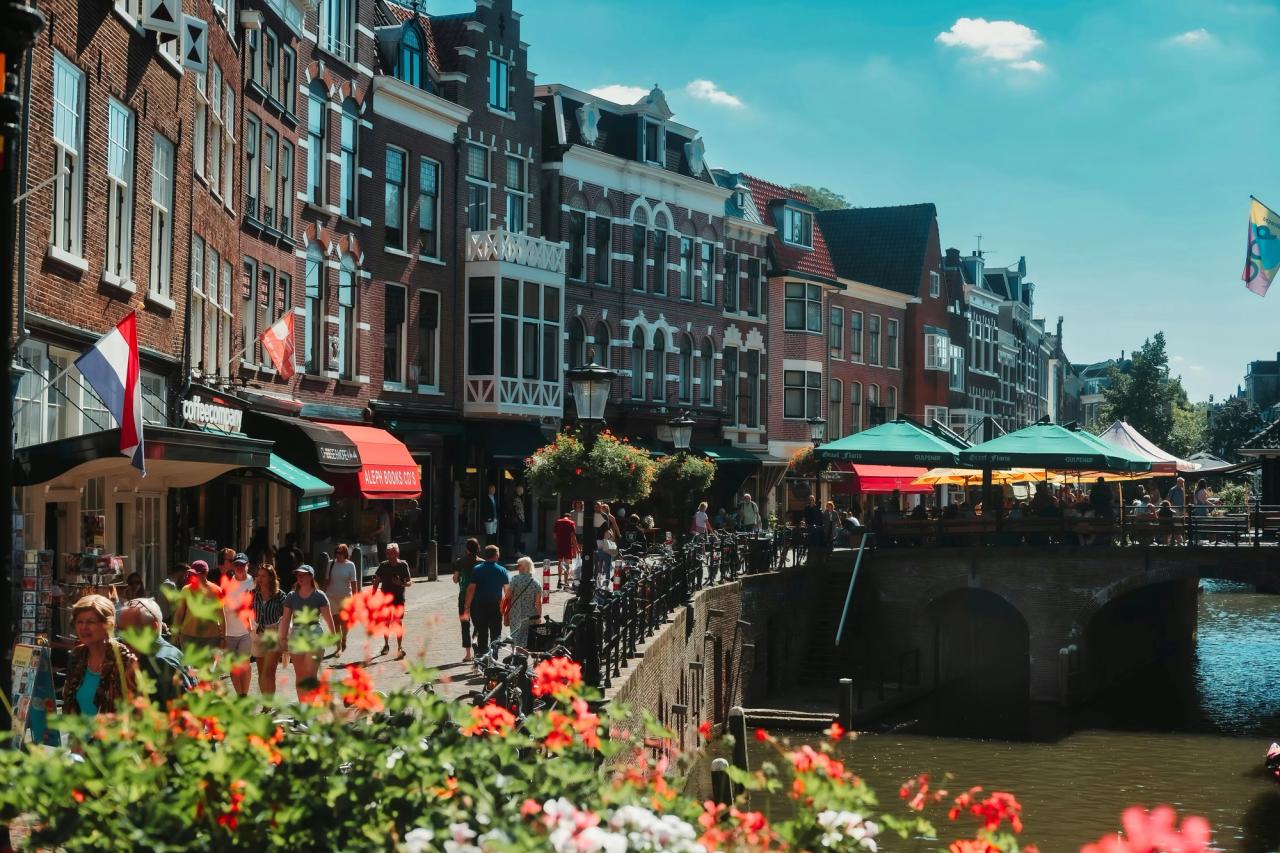
Utrecht est le cœur battant des Pays-Bas — littéralement, puisqu'elle se trouve au centre géographique et ferroviaire du pays. Dotée de la plus haute tour d'église du pays, la Domtoren de 112 mètres, et de la plus grande université de la nation, Utrecht allie charme médiéval et énergie jeune et innovante. Les célèbres caves de quai le long du canal Oudegracht abritent des restaurants éclairés aux chandelles, tandis qu'un secteur technologique en plein essor et des connexions ferroviaires imbattables attirent les professionnels qui souhaitent des salaires amstellodamois sans les prix d'Amsterdam. Pour les expatriés en quête d'une ville authentiquement néerlandaise avec une touche internationale, Utrecht répond présente sur tous les fronts.
Utrecht en un coup d'œil
- Population
- ~365 000 (commune), 660 000 aire métropolitaine
- Région
- Utrecht, centre des Pays-Bas
- Connue pour
- Tour Dom, canaux médiévaux, vie étudiante, nœud ferroviaire central
- Loyer moyen (1 chambre)
- 1 150–1 850 € (centre-ville), 850–1 300 € (périphérie)
- Salaire moyen
- 2 700 € net/mois
- Communauté expatriée
- Communauté technologique et universitaire en croissance, jeunes professionnels
Pourquoi s'installer à Utrecht
- Situation centrale imbattable : Utrecht Centraal est la plus grande gare ferroviaire des Pays-Bas. Amsterdam est à 27 minutes, Schiphol à 27 minutes, Rotterdam à 35 minutes, La Haye à 30 minutes et Eindhoven à 1h05. Aucune autre ville néerlandaise n'offre un accès aussi pratique à l'ensemble du pays, ce qui en fait un choix idéal pour les professionnels amenés à voyager.
- Énergie universitaire : L'Université d'Utrecht attire plus de 30 000 étudiants et chercheurs internationaux, insufflant à la ville une vitalité intellectuelle, des cafés animés, des événements culturels et une véritable ouverture aux nouveaux arrivants qui la distingue des villes néerlandaises plus repliées sur elles-mêmes.
- Technologie et innovation : La ville abrite les bureaux de Salesforce, Booking.com (opérations), Adyen (équipes techniques), ainsi qu'une scène startup en pleine croissance concentrée dans le Utrecht Science Park et le quartier créatif Werkspoorkwartier. Le secteur technologique y progresse plus rapidement que dans la plupart des villes néerlandaises.
- Beauté historique : La Tour Dom, les caves de quai le long de l'Oudegracht et le quartier de la cathédrale du XIIIe siècle forment l'un des centres-villes les plus photogéniques des Pays-Bas — bien moins bondé de touristes qu'Amsterdam, il préserve une atmosphère locale authentique.
- Qualité de vie : Utrecht figure régulièrement parmi les meilleures villes néerlandaises en matière de qualité de vie. D'excellentes écoles, des quartiers sûrs, de vastes espaces verts et une échelle urbaine humaine en font une ville idéale pour les familles et les professionnels en quête d'équilibre.
- Coût abordable : Les loyers sont de 20 à 30 % inférieurs à ceux d'Amsterdam, tandis que les salaires dans les secteurs de la technologie, de la santé et de l'université restent compétitifs. Les restaurants et les loisirs sont également légèrement moins chers, et la population étudiante garantit de bons rapports qualité-prix dans tous les domaines.
Trouver un logement à Utrecht
Loyers moyens
| Quartier | 1 chambre | 3 chambres | Caractère |
|---|---|---|---|
| Binnenstad | 1 400–2 100 € | 2 200–3 000 € | Cœur médiéval, vue sur la Tour Dom, restaurants au bord du canal |
| Wittevrouwen | 1 200–1 700 € | 1 800–2 500 € | Proche de l'université, rues verdoyantes, adapté aux étudiants |
| Lombok | 1 000–1 500 € | €1,500–€2,200 | Multiculturel, énergie créative, abordable |
| Oudwijk | €950–€1,400 | €1,400–€2,000 | Résidentiel calme, maisons hollandaises traditionnelles, familles |
| Leidsche Rijn | €850–€1,300 | €1,300–€1,900 | Quartier neuf moderne, orienté familles |
| Overvecht | €750–€1,100 | €1,100–€1,600 | Banlieue nord, diversifié, le plus abordable |
Comment trouver un logement
- Pararius et Funda : les principaux portails de location avec interfaces en anglais couvrant Utrecht et les villes environnantes. Mis à jour quotidiennement avec de nouvelles annonces.
- SSH Utrecht : organisme de logement étudiant pour les locations liées à l’université — propose également des options de court séjour pour les chercheurs expatriés et le personnel invité.
- Groupes Facebook : « Utrecht Housing », « Expats in Utrecht » et « Rooms/Utrecht » publient régulièrement des logements disponibles avant qu’ils n’apparaissent sur les plateformes grand public.
- Agences immobilières : Lokale Makelaars et les agents spécialisés sur Utrecht gèrent des annonces adaptées aux expatriés et peuvent accélérer considérablement vos recherches.
Conseils pour les expatriés
- L’université crée des pics de demande saisonniers — évitez de chercher en août/septembre si possible. Cherchez en été pour profiter des meilleures options pour la rentrée de septembre.
- Wittevrouwen et Oudwijk conviennent aux universitaires et aux familles ; Lombok offre des options diversifiées et abordables ; Leidsche Rijn propose des logements neufs modernes avec des parcs et des écoles.
- L’exigence de revenus est généralement de 3× le loyer mensuel. Préparez votre contrat de travail, vos relevés bancaires et les copies de votre passeport dans un seul dossier.
- Les charges sont souvent exclues du loyer affiché — prévoyez un supplément de 120 à 190 €/mois pour le gaz, l’électricité et l’eau selon la performance énergétique du logement.
- Envisagez un logement temporaire via HousingAnywhere ou les séjours courts SSH pour chercher sans pression de temps.
Guide des quartiers
- Binnenstad : le cœur médiéval avec vue sur la tour Dom, le canal emblématique Oudegracht et les restaurants de caves sur quai qu’on ne trouve nulle part ailleurs au monde. Des loyers plus élevés, mais un emplacement incomparable pour ceux qui veulent vivre à l’intérieur du ring historique et tout faire à pied.
- Wittevrouwen : prisé par les étudiants et les universitaires pour sa proximité avec les bâtiments de l’Université d’Utrecht. Des rues bordées d’arbres, des cafés chaleureux et des loyers modérés créent une ambiance intellectuelle et décontractée. Excellent pour les jeunes professionnels.
- Lombok : le quartier le plus multiculturel d’Utrecht — boulangeries turques, restaurants surinamiens, boutiques de design indépendantes et une forte communauté créative. Abordable selon les standards utrechtlois et de plus en plus branché chez les jeunes créatifs.
- Oudwijk : calme et résidentiel avec ses maisons hollandaises traditionnelles à pignons, ses commerces familiaux et une véritable atmosphère de quartier. Populaire auprès des familles en quête d’authenticité sans l’agitation étudiante de Wittevrouwen.
- Leidsche Rijn : le quartier le plus récent d’Utrecht — complexes d’appartements modernes, excellentes écoles, aires de jeux et le parc Leidsche Rijn. Idéal pour les familles qui veulent de l’espace et le confort du neuf à des loyers plus bas, avec de bonnes connexions vers le centre.
- Overvecht : le quartier le plus abordable, avec une communauté diversifiée et de bonnes connexions en tram vers le centre. En pleine amélioration grâce aux nouveaux investissements dans les espaces publics, les équipements et les programmes de rénovation du logement.
Coût de la vie à Utrecht
Répartition du budget mensuel
| Catégorie | Fourchette de budget |
|---|---|
| Loyer (T1, centre) | €1,150–€1,850 |
| Charges | €120–€190 |
| Internet | 30–47 € |
| Courses alimentaires | 230–380 € |
| Transport (abonnement U-OV) | 85–115 € |
| Restaurants (4×/mois) | 65–100 € |
| Loisirs/Salle de sport | 28–50 € |
| Total | 1 800–2 800 € |
Dépenses courantes
- Café : 2,50–4 € (café de spécialité dans le centre ; options plus simples autour de 2,50 €)
- Déjeuner (sur le pouce) : 7–12 € (les cafés étudiants proposent des formules déjeuner ; plats du jour dans les quartiers d'affaires)
- Abonnement de transport mensuel : 85–115 € (U-OV trajets illimités en bus et tram)
- Bière (bar) : 4–6 € (bars étudiants dans la fourchette basse, terrasses sur la place Neude dans la fourchette haute)
- Place de cinéma : 12–15 € (Springhuis art et essai et multiplexe Kinepolis)
- Abonnement salle de sport : 28–50 € (Basic Fit pour les petits budgets, centre sportif universitaire au rapport qualité-prix excellent)
Se déplacer à Utrecht
- Transports en commun : U-OV exploite les bus et trams dans toute la ville. Abonnement mensuel : 85–115 €. La OV-chipkaart est indispensable pour tous les transports publics néerlandais. Le centre-ville compact d'Utrecht permet de rejoindre de nombreuses destinations à pied.
- Vélo : Utrecht est une ville cycliste par excellence. Le terrain plat, les pistes cyclables dédiées et un centre-ville compact permettent de rejoindre n'importe quel point de la ville en 15 à 25 minutes à vélo. Vélos d'occasion à partir de 80–150 € via marktplaats.nl ou dans les boutiques locales. Le plus grand parking à vélos du monde, à la gare Centraal, peut accueillir plus de 22 000 vélos.
- Voiture : Le centre-ville privilégie les piétons et les cyclistes. Les permis de stationnement sont chers et les places limitées. La plupart des habitants utilisent le vélo et les transports en commun au quotidien ; les services d'autopartage répondent aux besoins occasionnels.
- Aéroport : Schiphol est à 27 minutes en Intercity direct. L'aéroport de Rotterdam-La Haye est également accessible en 45 minutes en train.
- Trains intercités : Utrecht Centraal est la plaque tournante ferroviaire des Pays-Bas — Amsterdam 27 min, Schiphol 27 min, Rotterdam 35 min, La Haye 30 min, Eindhoven 1 h 05. Bruxelles est accessible en moins de 2 heures via les correspondances Eurostar depuis Rotterdam ou Schiphol.
Santé à Utrecht
- Hôpitaux/Cliniques : L'UMC Utrecht est l'un des principaux hôpitaux universitaires des Pays-Bas, doté de services de recherche et de traitement spécialisés dans pratiquement toutes les disciplines. Le St. Antonius Hospital (Nieuwegein) et le Diakonessenhuis offrent d'excellents soins généraux avec des services d'urgence ouverts 24 h/24 et 7 j/7.
- Médecins anglophones : Faciles à trouver via zorgkaartnederland.nl. Beaucoup d'expatriés s'inscrivent au centre de santé international de l'UMC Utrecht ou dans des cabinets de médecine générale à proximité qui accueillent une clientèle internationale. Les médecins généralistes anglophones sont courants dans les quartiers centraux.
- Pharmacies : Des apotheken (pharmacies) dans tous les quartiers, généralement ouvertes du lundi au samedi. Pharmacie de garde : appelez le 030-608 1260 pour connaître les pharmacies de garde le soir et le week-end.
- Numéro d'urgence : 112 (police, pompiers, ambulance). Conseil médical non urgent : 0900-8844.
Recevez un plan de demenagement personnalise
Laissez votre e-mail et nous vous enverrons une checklist adaptee ainsi que trois devis de demenageurs verifies.
Culture et art de vivre
- Tour Dom et patrimoine médiéval : La tour Dom, haute de 112 mètres, est le plus haut clocher des Pays-Bas et le symbole incontesté d'Utrecht. Gravissez ses 465 marches pour une vue panoramique sur la ville et la campagne environnante. Les caves de quai uniques de l'Oudegracht — terrasses et restaurants en contrebas au bord de l'eau — sont uniques au monde et définissent l'identité de la ville.
- Vie étudiante : Plus de 30 000 étudiants animent une scène de bars dynamique, une programmation culturelle et des événements réguliers tout au long de l'année universitaire. La place Neude et les rues environnantes en sont le cœur social, avec leurs cafés, salles de concert, cinémas indépendants et le cinéma d'art et essai Louis Hartlooper Complex.
- Festivals : Utrecht accueille le Festival du cinéma des Pays-Bas (septembre), le festival de musique Le Guess Who? (novembre, dédié aux musiques expérimentales et du monde), le festival de danse contemporaine Springdance, ainsi que les festivités animées du Koningsdag le long des canaux, avec marchés et concerts en plein air.
- Espaces verts : Le Griftpark propose des loisirs en plein cœur de ville avec des aires de jeux, une ferme pour enfants et une terrasse en hauteur. Le parc national de l'Utrechtse Heuvelrug se trouve à 20 minutes à l'est pour des randonnées et balades à vélo à travers forêts et landes. Le Kasteel de Haar — le plus grand château des Pays-Bas — est à un court trajet à vélo et accueille des événements saisonniers. La zone naturelle de Rhijnauwen, longeant la rivière Kromme Rijn, offre des promenades et des parcours de pique-nique pittoresques.
Banque et fiscalité
- Banque : Le système bancaire néerlandais est simple et efficace. ING, ABN AMRO et Rabobank sont les trois banques traditionnelles présentes dans tout Utrecht. Le siège mondial de Rabobank se trouve à Utrecht. Bunq propose des services bancaires via application, populaires auprès des jeunes expatriés. iDEAL — le système national de paiement en ligne — est utilisé pour pratiquement tout le commerce en ligne ; il faut un compte bancaire néerlandais pour l'utiliser.
- Impôt sur le revenu : Les Pays-Bas appliquent un barème d'imposition progressif. En 2026, les revenus jusqu'à environ 38 000 € sont taxés à 36,97 %, au-delà à 49,50 %. La règle des 30 % réduit le taux effectif pour les expatriés éligibles recrutés à l'étranger. Le personnel universitaire peut bénéficier de dispositions fiscales spécifiques via la « règle des 30 % pour les chercheurs » — renseignez-vous auprès du service RH de votre établissement.
- TVA et coûts pour le consommateur : La TVA (BTW) est incluse dans tous les prix affichés — le prix affiché est le prix payé. Le taux normal est de 21 % ; le taux réduit de 9 % s'applique à l'alimentation, aux livres et à certains services.
Bases de la langue néerlandaise pour la vie quotidienne
- Hallo / Hoi — Bonjour / Salut
- Dank je wel — Merci
- Alstublieft — S'il vous plaît / Tenez
- Spreekt u Engels? — Parlez-vous anglais ?
- Ik zou graag... — Je voudrais...
- Tot ziens — Au revoir
- Pinnen? — Puis-je payer par carte ?
- Gezellig — Cosy / convivial (vous entendrez ce mot constamment)
Utrecht est plus néerlandophone qu'Amsterdam au quotidien. Si l'anglais fonctionne partout, les habitants apprécient sincèrement les efforts, même élémentaires, en néerlandais, et l'importante population étudiante offre de nombreuses possibilités d'échanges linguistiques.
Internet et Mobile
- Internet à domicile : les principaux fournisseurs sont Ziggo (câble), KPN (fibre/DSL) et T-Mobile (fibre). Comptez 30–47 €/mois pour 100 à 500 Mbps. La fibre est disponible dans la plupart des quartiers centraux. Les contrats durent généralement 12 mois.
- Mobile : KPN, Vodafone et T-Mobile sont les principaux opérateurs. Des cartes SIM prépayées sont disponibles en supermarché à partir de 10 €. Les forfaits mensuels avec données commencent à 15–25 €. L'itinérance EU est incluse.
- Wi-Fi public : largement disponible dans les cafés, les bibliothèques et les bâtiments universitaires. L'Université d'Utrecht propose le Wi-Fi eduroam sur tous ses campus.
Garde d'enfants et parentalité
- Crèche (kinderdagverblijf) : subventionnée par le gouvernement néerlandais (kinderopvangtoeslag). Les coûts mensuels s'élèvent à 1 600–2 200 € pour une garde à temps plein avant subvention — légèrement inférieurs à Amsterdam. Faites votre demande auprès du Belastingdienst après votre inscription au Gemeente Utrecht.
- Garde périscolaire (BSO) : disponible pour les enfants de 4 à 12 ans, généralement 500–800 €/mois avant subvention.
- Vie de famille : Utrecht est une ville idéale pour les familles. L'aire de jeux et la ferme pédagogique du Griftpark, le musée Nijntje (Miffy) pour les jeunes enfants, les balades à vélo le long des canaux et le château de Kasteel de Haar en font un environnement riche. La taille compacte de la ville fait que l'école, les parcs et les commerces sont tous accessibles à vélo.
Déchets et recyclage
- Déchets ménagers : Utrecht utilise un système de conteneurs enterrés. Vous ouvrez les conteneurs avec votre carte municipale (milieupas). Restafval (déchets résiduels), GFT (déchets organiques) et PMD (plastique/métal/cartons de boissons) sont séparés. Le papier et le verre vont dans des conteneurs de rue dédiés.
- Encombrants : planifiez un enlèvement gratuit via le site web de la municipalité pour les objets volumineux.
- Seconde main : Marktplaats.nl est l'équivalent néerlandais de Craigslist — achetez et vendez des occasions localement. Utrecht possède d'excellentes kringloopwinkels (boutiques de seconde main) pour les meubles et les articles ménagers.
Espaces de coworking
- De Stadstuin : espace de coworking créatif prisé par les indépendants et les petites startups, dans un bâtiment industriel rénové.
- Seats2Meet Utrecht Centraal : espace de réunion et de coworking flexible à l'intérieur de la gare — parfait pour les navetteurs.
- UtrechtInc : incubateur de startups lié à l'université, offrant des espaces de bureaux, du mentorat et un accès au réseau de recherche de l'Université d'Utrecht.
Gastronomie et restaurants
- Spécialités locales : Utrechtse blaf (un ragoût de viande épicé), bières brassées localement par la brasserie De Leckere, stroopwafels fraîches du marché de Vredenburg et fromage de Gouda de la région environnante. La ville possède également d'excellents restaurants indonésiens de rijsttafel, reflets de l'héritage colonial néerlandais.
- Meilleurs quartiers pour manger : les caves de quai de l'Oudegracht pour une expérience culinaire unique au bord du canal dans des caves voûtées, Voorstraat pour une cuisine internationale variée, la place Neude pour ses cafés en terrasse et l'animation, et Twijnstraat pour ses épiceries artisanales et ses bistrots intimistes.
- Options économiques : les cafétérias universitaires ouvertes au public proposent des repas à moins de 7 €, les plats du jour (dagschotel) à partir de 8 € dans les restaurants locaux, les marchés hebdomadaires de Vredenburg pour les produits frais et la street food, et les supermarchés pour des plats préparés à moins de 6 €.
Communauté expat
- Groupes Meetup : InterNations Utrecht (événements mensuels), Utrecht Expat Group (rencontres sociales, randonnées, vélo) et Internationals Utrecht, qui couvre tout, du sport au networking professionnel en passant par la parentalité.
- Réseaux universitaires : le bureau international de l'Université d'Utrecht et ses différentes facultés organisent des semaines d'intégration, des programmes de parrainage et des événements sociaux pour les étudiants et le personnel internationaux. Ces réseaux dépassent largement le cadre académique pour s'étendre à la vie sociale.
- Échanges linguistiques : des groupes de conversation en néerlandais hebdomadaires dans les cafés et les centres communautaires. Le ROC propose des cours du soir abordables à plusieurs niveaux. Les applications de tandem linguistique mettent en contact les internationaux avec des locuteurs néerlandophones pour des échanges mutuels.
Marché de l'emploi à Utrecht
- Principaux secteurs : technologie et services informatiques, enseignement et recherche académique, santé et sciences du vivant (concentrés autour du Utrecht Science Park), secteurs créatifs et design, services financiers (siège de la Rabobank) et administration publique.
- Principaux employeurs : l'Université d'Utrecht et l'UMC Utrecht, Salesforce, Booking.com (opérations), Rabobank (siège mondial), KPN, ProRail, Capgemini et de nombreuses startups dans le Werkspoorkwartier et le Science Park.
| Secteur | Net mensuel (estimé) | Référence brut annuel |
|---|---|---|
| Tech/IT | 3 000–5 000 € | 45 000–78 000 € |
| Santé/Recherche | 2 800–4 200 € | 42 000–65 000 € |
| Enseignement/Recherche universitaire | 2 400–3 800 € | 36 000–58 000 € |
| Création/Design | 2 600–4 000 € | 38 000–62 000 € |
| Hôtellerie-restauration | 1 900–2 600 € | 28 000–40 000 € |
- Ressources pour la recherche d’emploi : LinkedIn avec filtres en anglais, Indeed.nl, le portail d’offres d’emploi de l’Université d’Utrecht (postes académiques), Undutchables.nl (offres en anglais), ainsi que des cabinets de recrutement spécialisés comme Michael Page et Robert Walters.
L’enseignement à Utrecht
- Écoles internationales : International School of Utrecht (ISU, programme du Baccalauréat International). Frais : 3 500–15 000 €/an. Places limitées — inscrivez-vous bien à l’avance, surtout pour le secondaire.
- Universités : Université d’Utrecht (intensive en recherche, régulièrement classée parmi les 50 meilleures d’Europe, forte en sciences, sciences humaines et sociales), HKU University of Applied Sciences (arts et industries créatives) et HU University of Applied Sciences Utrecht (commerce, santé, éducation). De nombreux cursus à tous les niveaux sont dispensés en anglais.
- Écoles de langues : le ROC pour des cours de néerlandais abordables à plusieurs niveaux, des écoles privées comme Taalhuis Utrecht et Koentact pour des programmes intensifs, et les centres de langues universitaires pour le néerlandais académique et la certification Nt2.
Liste de contrôle pour un déménagement à Utrecht
- Trouver un emploi ou obtenir une admission universitaire
- Vérifier les exigences financières actuelles pour le visa étudiant (environ 12 000–13 000 €/an ; consultez ind.nl pour les chiffres à jour)
- Prévoir un logement temporaire (SSH short-stay, Airbnb ou HousingAnywhere) pour les 4 à 6 premières semaines
- Préparer le dossier de location : justificatifs de revenus (3× le loyer), contrat de travail, passeport, relevés bancaires
- Comparer les assureurs maladie sur Independer.nl ou Zorgwijzer.nl
- Étudier les quartiers en fonction de la proximité avec l’université, le parc technologique ou le lieu de travail
- S’inscrire à la Gemeente Utrecht pour obtenir votre BSN (obligatoire dans les 5 jours suivant l’arrivée pour les séjours de plus de 4 mois)
- Ouvrir un compte bancaire néerlandais (ING, ABN AMRO, Rabobank ou Bunq)
- Activer l’assurance maladie (basisverzekering, 132–155 €/mois)
- Acheter une OV-chipkaart pour les transports en commun — procurez-vous une carte personnelle pour les options d’abonnement mensuel
- Trouver un logement permanent — Wittevrouwen pour les universitaires, Lombok pour la diversité, Leidsche Rijn pour les familles
- S’inscrire chez un huisarts (médecin généraliste) proche de chez vous via le centre de santé local
- Demander un titre de séjour si vous êtes ressortissant non-UE
- S’inscrire à des cours de néerlandais — même des notions de base améliorent considérablement les interactions du quotidien et témoignent d’un engagement envers l’intégration
Guides associés
- [S’installer aux Pays-Bas] — guide complet du pays couvrant les visas, la fiscalité et la culture nationale
- [Moving to Amsterdam] — la scène culturelle dynamique de la capitale néerlandaise et son pôle d’affaires international
- [Moving to Rotterdam] — la ville portuaire des Pays-Bas, avec son architecture moderne et ses coûts plus bas
- [Moving to Eindhoven] — le pôle technologique Brainport et ses opportunités de carrière dans la haute technologie
- [Moving to The Hague] — la capitale politique avec ses organisations internationales et la plage de Scheveningen