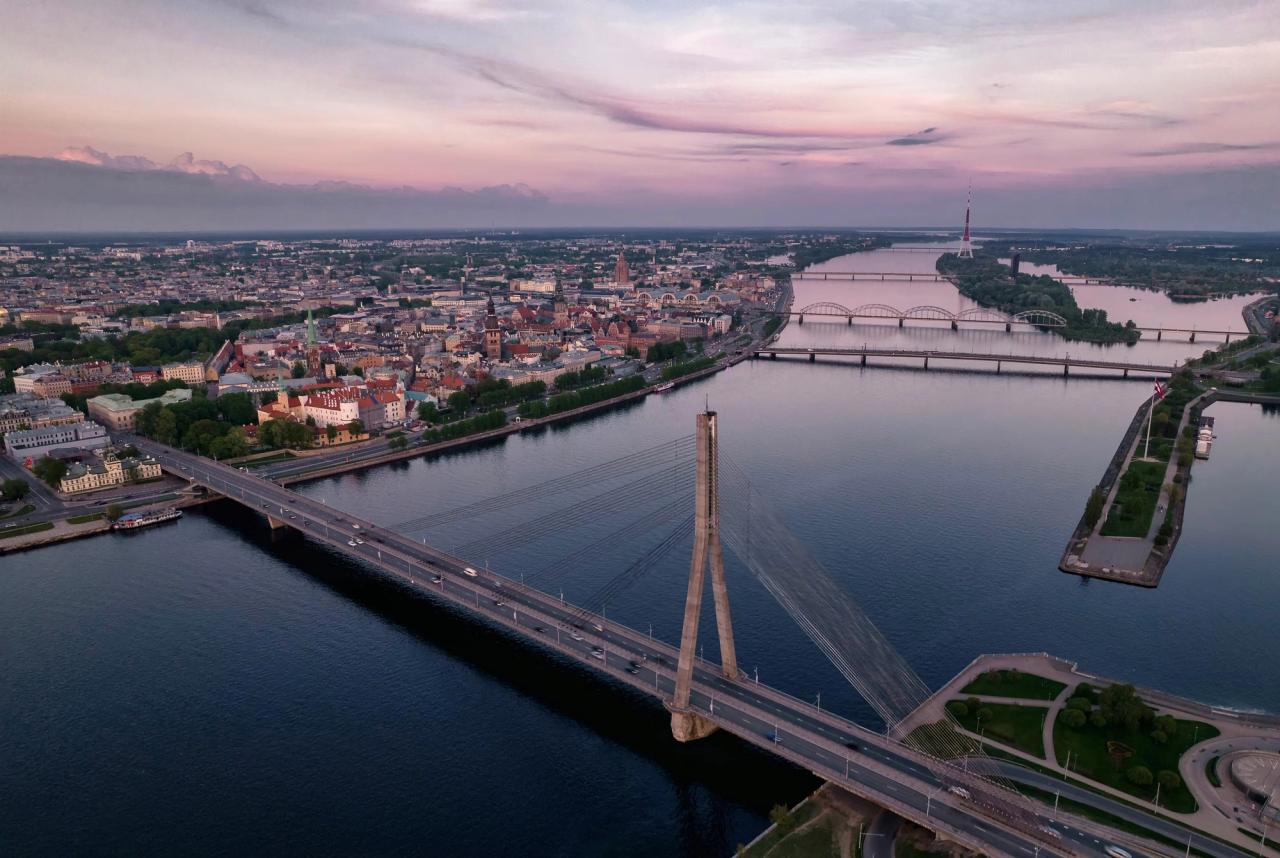
La Lettonie est l'un des secrets les mieux gardés d'Europe pour les expatriés — une petite nation baltique d'environ 1,8 million d'habitants qui allie un coût de la vie abordable, une magnifique architecture Art Nouveau dans sa capitale Riga, un secteur technologique en plein essor et un lien profond avec la nature. Que vous soyez un citoyen de l'EU profitant de la libre circulation, un entrepreneur numérique explorant le visa startup, ou un professionnel attiré par l'économie émergente du pays, ce guide vous accompagne à travers chaque étape pratique de votre installation en Lettonie. De l'enregistrement de la résidence aux soins de santé, en passant par le logement, la banque et l'intégration culturelle, vous trouverez des informations claires et à jour pour planifier votre déménagement en toute confiance.
La Lettonie en un coup d'œil

- Population
- ~1,86 million (2025)
- Capitale
- Riga
- Monnaie
- Euro (EUR) — adopté en 2014
- Salaire moyen
- ~€20 000–€22 000 par an
- Langue
- Letton (officiel) ; le russe est largement parlé ; l'anglais est courant chez les jeunes résidents et à Riga
- Climat
- Tempéré — hivers froids (jusqu'à −20 °C), étés doux à chauds (jusqu'à +30 °C)
- Fuseau horaire
- EET (UTC+2) / EEST (UTC+3 en été)
Pourquoi s'installer en Lettonie en 2026
- Un coût de la vie très abordable : la Lettonie reste l'un des États membres de l'EU les moins chers, avec des loyers, des courses et des transports nettement moins chers qu'en Europe occidentale.
- Un secteur tech et startup en plein essor : Riga est devenue un pôle régional pour les startups, soutenu par des programmes gouvernementaux comme le visa startup et des espaces de coworking dans tout le centre-ville.
- Appartenance à l'EU et libre circulation : membre de l'EU depuis 2004 et de Schengen depuis 2007, la Lettonie offre aux citoyens de l'EU une résidence simple et donne à tous les résidents un accès facile pour voyager et travailler à travers l'Europe.
- Un pays sûr : la Lettonie figure régulièrement parmi les pays les plus sûrs d'Europe, avec un faible taux de criminalité violente et un fort sentiment communautaire, notamment en dehors des grandes villes.
- Une architecture et une nature époustouflantes : le quartier Art Nouveau de Riga est classé au patrimoine mondial de l'UNESCO, et le littoral, les forêts et les parcs nationaux de la Lettonie en font un paradis pour les amoureux de la nature.
- De riches traditions culturelles : du festival de la Saint-Jean Jāņi à une profonde culture du sauna (pirts), la Lettonie offre un mode de vie unique ancré dans des traditions séculaires.
Coûts du déménagement vers la Lettonie
Le coût de votre déménagement dépend du volume d'envoi, de l'origine et du mode de transport. Vous trouverez ci-dessous les tarifs typiques du marché au début de 2026.
| Origine | Fourchette de coût estimée | Conteneur/Volume |
|---|---|---|
| Royaume-Uni / Europe occidentale | €1 800–€3 200 | Conteneur 20 pieds (FCL) |
| Royaume-Uni / Europe occidentale | €3 000–€5 000 | Conteneur 40 pieds (FCL) |
| Amérique du Nord (Côte Est) | €2 500–€4 500 | Conteneur 20 pieds (FCL) |
| Amérique du Nord (Côte Est) | €4 000–€6 500 | Conteneur 40 pieds (FCL) |
| Dans les pays baltes / nordiques | €800–€1 800 | Groupage (LCL) ou petit camion |
| Fret aérien (~1 m³) | €1 500–€4 000+ | Petit envoi urgent |
Détail des coûts composants
- Transport : €1 200–€3 500 selon la distance et le mode (le fret maritime est le moins cher pour les déménagements intercontinentaux).
- Assurance : généralement 1 à 3 % de la valeur déclarée des biens ; fortement recommandée pour les envois internationaux.
- Dédouanement : €150–€400 pour les envois ménagers standard, davantage pour les chargements complexes.
- Matériaux d'emballage : €100–€300 s'ils ne sont pas inclus dans le devis de votre déménageur.
- Stockage (si nécessaire) : €50–€150 par mois pour une petite unité à Riga.
- Frais administratifs : €50–€200 pour la documentation, la notarisation et les traductions.
Règles douanières et de droits
Si vous vous installez en Lettonie, vous pouvez bénéficier de l'importation en franchise de droits de vos effets ménagers usagés. Pour être éligible :
- Les articles doivent avoir été possédés et utilisés pendant au moins 6 mois avant l'expédition.
- Les marchandises doivent arriver dans les 12 mois suivant votre arrivée en Lettonie.
- Vous aurez besoin d'une liste d'inventaire détaillée, de votre passeport, d'un visa ou d'un permis de séjour valide, ainsi que d'une preuve de résidence antérieure à l'étranger (par exemple, contrat de location, factures de services).
Les articles neufs, les véhicules, l'alcool, le tabac ou les marchandises commerciales peuvent être soumis aux droits d'importation lettons (0 à 12 % sur la valeur CIF) plus 21 % de TVA sur la valeur en douane incluant le fret et l'assurance.
Besoin d'une estimation personnalisée ?
Obtenez trois devis de déménageurs vérifiés en moins de 48 heures.
Conditions de visa et de résidence
Les règles d'immigration de la Lettonie dépendent de votre nationalité. En tant que membre de l'EU et de l'espace Schengen, la Lettonie applique des règles différentes aux citoyens de l'EU/EEE et aux ressortissants de pays tiers.
Pour les citoyens de l'EU/EEE
Les citoyens de l'EU et de l'EEE ont le droit de vivre et de travailler en Lettonie sans visa. Cependant, vous devez enregistrer votre résidence auprès du Bureau des affaires de citoyenneté et de migration (Pilsonības un migrācijas lietu pārvalde — PMLP) si vous prévoyez de rester plus de trois mois. Lors de votre enregistrement, vous recevez un personas kods (code personnel), qui est le numéro d'identité national letton utilisé pour la fiscalité, la santé, la banque et toutes les démarches officielles.
Pour les ressortissants non-EU : principales catégories de visa
Visa de travail et permis de séjour
- Conditions : offre d'emploi confirmée d'un employeur letton ; l'employeur doit démontrer que le poste ne pouvait pas être pourvu par un citoyen letton ou de l'EU.
- Délai de traitement : 1 à 3 mois.
- Durée : délivré initialement pour une durée maximale d'1 an, renouvelable.
- Informations clés : votre employeur engage généralement la procédure auprès du PMLP.
Visa Startup
- Conditions : idée d'entreprise innovante approuvée par un incubateur ou un fonds d'investissement letton désigné ; justificatif de fonds disponibles d'au moins 5 000 €.
- Délai de traitement : environ 1 à 2 mois.
- Durée : jusqu'à 3 ans avec renouvellement annuel.
- Informations clés : destiné aux entrepreneurs de la tech et de l'innovation ; une voie très prisée grâce à l'écosystème startup en pleine croissance en Lettonie.
Visa étudiant
- Conditions : lettre d'admission d'un établissement d'enseignement letton reconnu ; justificatif de ressources suffisantes et d'assurance maladie.
- Délai de traitement : 1 à 2 mois.
- Durée : liée à la durée du programme d'études.
- Informations clés : les étudiants peuvent travailler jusqu'à 20 heures par semaine pendant l'année scolaire.
Visa de regroupement familial
- Conditions : justificatif de lien familial avec un citoyen letton ou un résident légal ; revenus et logement suffisants.
- Délai de traitement : 1 à 3 mois.
- Durée : correspond à la durée du titre de séjour du garant.
- Informations clés : concerne les conjoints, les enfants mineurs et, dans certains cas, les parents à charge.
Visa de long séjour (D) et titre de séjour temporaire
- Conditions : varie selon l'objet (emploi, études, investissement, famille). Exige généralement un justificatif de ressources financières, une assurance maladie et un casier judiciaire vierge.
- Délai de traitement : 1 à 3 mois pour les titres de séjour ; les visas de long séjour peuvent être accordés plus rapidement.
- Durée : les titres de séjour temporaires sont délivrés pour une durée maximale de 5 ans ; les visas de long séjour, pour une durée maximale d'1 an.
- Obtenez ou légalisez vos documents. Faites traduire votre passeport, acte de naissance, acte de mariage (le cas échéant) et tout autre document justificatif en letton par un traducteur certifié.
- Trouvez un logement. Vous devez disposer d'une adresse enregistrée avant de déposer votre demande — un contrat de location signé ou un titre de propriété.
- Déposez votre demande auprès du PMLP. Prenez rendez-vous à l'Office des affaires de citoyenneté et de migration. Soumettez votre dossier, vos pièces justificatives et vos données biométriques.
- Recevez votre personas kods. Une fois la demande approuvée, vous recevez un code d'identité personnel. Ce numéro unique est utilisé dans l'ensemble des systèmes gouvernementaux et financiers.
- Inscrivez-vous auprès du Service des recettes de l'État (VID). Cette démarche vous enregistre à des fins fiscales et associe votre personas kods au système fiscal.
- Inscrivez-vous auprès du Service national de santé (NVD). Si vous êtes salarié ou remplissez autrement les conditions requises, cette démarche vous inscrit au système de santé public.
Trouver un logement en Lettonie
Le marché locatif letton est accessible et nettement moins cher que dans la plupart des capitales d'Europe occidentale. La majorité des contrats de location sont de 12 mois, et les propriétaires exigent généralement une caution équivalant à un ou deux mois de loyer. Les charges — électricité, eau, chauffage et internet — s'ajoutent habituellement au loyer de base et doivent être budgétisées séparément, surtout pendant les mois d'hiver où les frais de chauffage augmentent.
Loyers moyens par grande ville (2026)
| Ville | 1 chambre (centre-ville) | 1 chambre (hors centre) | 3 chambres (centre-ville) | Compétitivité du marché |
|---|---|---|---|---|
| Riga | €400–€600 | €280–€420 | €700–€1,100 | Modéré — plus grand marché |
| Daugavpils | €200–€350 | €150–€250 | €350–€550 | Bas — abordable, en croissance |
| Liepāja | €250–€400 | €180–€300 | €400–€650 | Bas à modéré — attrait côtier |
| Jelgava | €250–€380 | €180–€280 | €400–€600 | Bas — ville universitaire |
| Jūrmala | €350–€550 | €250–€400 | €600–€950 | Modéré — zone balnéaire |
Terminologie locative lettone
- Īres maksa : prix du loyer — le montant mensuel de base versé au propriétaire.
- Komunālie maksājumi : charges locatives — couvre collectivement l'eau, l'électricité, le gaz/chauffage, l'enlèvement des ordures et l'entretien de l'immeuble. Cela peut représenter €100 à €300 par mois selon la saison et le type de bâtiment.
- Drošības nauda : caution — généralement l'équivalent d'un à deux mois de loyer, remboursable en fin de bail si aucun dégât n'est constaté.
Comment trouver un logement
Plateformes en ligne :
- SS.com : le plus grand site de petites annonces de Lettonie ; la référence pour les offres de location dans toutes les villes.
- City24.lv : portail immobilier dédié avec des filtres par meublé/non meublé, fourchette de prix et localisation.
- Groupes Facebook : des groupes comme « Apartments in Riga » et « Expats in Riga » sont actifs et proposent des annonces directement déposées par des propriétaires.
Ressources locales :
- Les agences immobilières locales (nekustamā īpašuma aģentūras) peuvent vous aider dans les négociations et la vérification du bail.
- Les services de logement des universités accompagnent les étudiants internationaux dans leur recherche de logement.
Conseils pour les étrangers en recherche de logement
- Visitez toujours l'appartement en personne ou via une visite vidéo en direct avant de verser quoi que ce soit.
- Vérifiez que le propriétaire est bien le titulaire enregistré — demandez à consulter l'extrait du Zemesgrāmata (registre foncier).
- Clarifiez si les komunālie maksājumi sont inclus dans le loyer affiché.
- Obtenez le contrat de bail en letton et en anglais (ou dans votre langue maternelle) pour éviter tout malentendu.
- Enregistrez votre adresse auprès de la municipalité locale après la signature — c'est une obligation légale et indispensable pour obtenir votre personas kods.
Contrat de location et protection juridique
Les baux en Lettonie sont régis par le Code civil (Civillikums). Points clés :
- Les contrats écrits sont vivement recommandés et doivent préciser le montant du loyer, la date de paiement, les conditions de dépôt de garantie, le délai de préavis et les responsabilités d'entretien.
- Le préavis standard est de 1 à 3 mois, selon le contrat.
- Les propriétaires ne peuvent pas expulser des locataires sans procédure judiciaire appropriée et l'intervention d'un tribunal.
- Les augmentations de loyer en cours de bail ne sont généralement pas autorisées, sauf mention contraire dans le contrat.
Attention : arnaques à la location
- Ne virez jamais d'argent sur un compte à l'étranger avant d'avoir visité le bien.
- Méfiez-vous des annonces affichant un prix bien inférieur au marché — c'est la tactique d'arnaque la plus répandue.
- Évitez les propriétaires qui refusent de vous rencontrer en personne ou de fournir une preuve de propriété.
- Utilisez des plateformes reconnues et, dans la mesure du possible, des agences disposant d'un bureau physique.
Santé et assurance
Le système de santé letton est financé par des cotisations sociales obligatoires et géré par le Service national de santé (Nacionālais veselības dienests — NVD) sous la tutelle du ministère de la Santé (Veselības ministrija). Le système comporte deux niveaux : un système public financé par l'État et un secteur privé en plein essor.
Assurance maladie publique
- Coût : pris en charge par les cotisations de sécurité sociale obligatoires prélevées sur votre salaire (environ 10,5 % à la charge du salarié). Aucune prime supplémentaire pour les employés.
- Couverture : consultations chez le médecin généraliste, orientations vers des spécialistes, soins hospitaliers, médicaments subventionnés, services d'urgence et soins de maternité.
- Éligibilité : tous les salariés titulaires d'un contrat de travail letton, leurs ayants droit, les retraités, les étudiants et les demandeurs d'emploi enregistrés.
- Idéal pour : toute personne employée en Lettonie — automatique et complet pour les soins essentiels.
Assurance maladie privée
- Coût : 30 € à 150 € par mois selon l'âge, le niveau de couverture et l'assureur.
- Couverture : délais d'attente réduits, accès aux cliniques privées, choix plus large de spécialistes, soins dentaires et services bien-être souvent exclus du système public.
- Éligibilité : ouverte à tous ; souvent proposée comme avantage salarial.
- Idéal pour : les expatriés souhaitant un accès plus rapide aux spécialistes, des médecins anglophones et une couverture dentaire et ophtalmologique plus étendue.
Principaux assureurs
- BTA Baltic Insurance Company : l'un des plus grands assureurs des pays baltes ; propose des formules d'assurance santé et habitation pour les expatriés.
- ERGO : assureur paneuropéen avec une forte présence en Lettonie ; formules collectives très prisées pour les salariés d'entreprise.
- If Apdrošināšana : propose une assurance santé individuelle flexible avec accès aux cliniques privées de Riga.
- Balta (groupe PZU) : formules individuelles compétitives avec options dentaire et optique.
Accéder à la couverture médicale (calendrier)
-
Commencez votre emploi ou inscrivez-vous en tant qu'indépendant. Les cotisations sociales débutent dès le premier versement de salaire.
-
Recevez votre personas kods auprès du PMLP lors de l'enregistrement de votre résidence.
-
Inscrivez-vous auprès du NVD. Votre employeur s'occupe généralement de cette démarche, en associant votre personas kods au système de santé.
-
Choisissez un médecin généraliste (ģimenes ārsts). Sélectionnez un médecin de famille dans n'importe quelle clinique publique — c'est votre premier interlocuteur pour tous les soins non urgents.
-
Recevez votre Carte européenne d'assurance maladie (CEAM) si vous êtes citoyen de l'EU, vous permettant d'accéder aux soins dans toute l'EU.
Frais à la charge du patient (système public)
- Consultation chez le généraliste : gratuite (sur orientation) ; une petite participation de 5 € à 10 € peut s'appliquer dans certaines cliniques.
- Consultation spécialisée : 10 € à 30 € avec orientation ; plus élevée sans orientation.
- Ordonnances : subventionnées — la participation varie de 0,50 € à 15 € selon le médicament.
- Soins dentaires : essentiellement privés ; actes de base de 20 € à 100 €, actes complexes bien plus élevés.
- Séjour hospitalier : pris en charge par le système public ; les chambres privées peuvent engendrer des frais supplémentaires.
Obtenez un plan de déménagement personnalisé
Laissez votre adresse e-mail et nous vous enverrons une liste de contrôle personnalisée ainsi que trois devis de déménageurs sélectionnés.
Banque et finances
La Lettonie dispose d'un secteur bancaire moderne et bien réglementé. Le pays a adopté l'euro en 2014, et ses banques se conforment aux réglementations bancaires de l'EU sous la supervision de la Latvijas Banka (la Banque de Lettonie, qui a absorbé l'ancienne FKTK en janvier 2023) et de la Banque centrale européenne.
Ouvrir un compte bancaire
- Quand : dès que vous disposez d'un contrat de location signé et de votre personas kods — idéalement dans les deux premières semaines suivant votre arrivée.
- Documents requis :
- Passeport ou carte nationale d'identité
- Visa ou titre de séjour en cours de validité (pour les ressortissants non-EU)
- Personas kods (code personnel)
- Justificatif de domicile en Lettonie (contrat de location ou facture de service public)
- Justificatif d'emploi, de source de revenus ou de statut étudiant (selon la banque)
Meilleures banques pour les expatriés
- Swedbank : la plus grande banque de Lettonie ; vaste réseau d'agences et de distributeurs automatiques ; services bancaires en ligne et application mobile entièrement en anglais.
- SEB Banka : banque solide pour les entreprises et les particuliers ; bon support en anglais ; très prisée des expatriés scandinaves.
- Citadele : banque dont le siège est en Lettonie, avec une application moderne et des frais de virement international compétitifs.
- Luminor : banque panbaltique née de fusions ; plateforme de banque numérique solide et services aux expatriés en développement.
Votre Personas Kods (code personnel)
Le personas kods est le numéro d'identité national unique de la Lettonie, délivré à chaque résident. Il s'agit d'un code à 11 chiffres structuré selon la date de naissance et un numéro de séquence. Vous le recevez lors de l'enregistrement de votre résidence auprès du PMLP. Il tient lieu de :
- Numéro d'identification fiscale (NIF)
- Numéro de sécurité sociale
- Identifiant dans le système de santé
- Clé d'enregistrement bancaire et financier
Sans personas kods, vous ne pouvez pas ouvrir de compte bancaire, signer un contrat de travail, accéder au système de santé public ou effectuer la plupart des démarches officielles.
Caractéristiques et coûts d'un compte bancaire
- Frais mensuels : 0 € à 5 € selon la banque et le type de compte (beaucoup proposent des comptes de base gratuits la première année).
- Carte de débit : généralement incluse gratuitement avec le compte.
- Carte de crédit : disponible après avoir constitué un historique de compte ; frais annuels de 10 € à 30 €.
- Virements internationaux (SEPA) : gratuits ou frais minimes au sein de l'EU.
- Virements internationaux (SWIFT) : 15 € à 40 € par transaction.
Culture du paiement
La Lettonie est un pays favorable aux paiements par carte. Les paiements sans contact (carte et mobile) sont largement acceptés, même dans les petits commerces et les marchés. Les espèces sont encore utilisées dans certaines zones rurales et les marchés en plein air. Les applications de paiement mobile telles que l'application de Swedbank, Apple Pay et Google Pay sont courantes. La banque en ligne est le moyen standard pour payer ses factures et gérer ses finances.
Coût de la vie en Lettonie
La Lettonie offre l'un des coûts de la vie les plus bas de l'EU, ce qui la rend attractive pour les expatriés, les retraités et les télétravailleurs.
Répartition du budget mensuel par ville
| Ville | Budget pour une personne | Budget pour une famille de 3 personnes | Niveau de coût |
|---|---|---|---|
| Riga | €900–€1,400 | €1,800–€2,800 | Bas à modéré |
| Daugavpils | €650–€1,000 | €1,300–€2,000 | Bas |
| Liepāja | €700–€1,100 | €1,400–€2,200 | Bas |
| Jelgava | €700–€1,100 | €1,400–€2,100 | Bas |
| Jūrmala | €850–€1,300 | €1,700–€2,600 | Bas à modéré |
Détail des coûts
Logement :
- Appartement 1 chambre (Riga, centre-ville) : €400–€600/mois
- Appartement 3 chambres (Riga, centre-ville) : €700–€1,100/mois
- Charges (chauffage, eau, électricité, ordures) : €100–€300/mois (plus élevées en hiver)
- Internet (100 Mbit/s+) : €15–€25/mois
Alimentation :
- Courses hebdomadaires (1 personne) : €40–€65
- Repas en restaurant décontracté : €8–€15
- Restaurant moyen de gamme (2 plats, boissons) : €25–€45 par personne
Transports :
- Abonnement mensuel aux transports en commun (Riga) : €30–€50
- Ticket de bus/tramway unique : €1.15–€2.00
- Carburant (1 litre) : €1.60–€1.80
- Assurance auto (annuelle, de base) : €150–€400
Assurances et santé :
- Santé publique : gratuite (couverte par les cotisations sociales)
- Assurance maladie privée : €30–€150/mois
Loisirs et divertissement :
- Abonnement salle de sport : €25–€50/mois
- Place de cinéma : €7–€10
- Services de streaming : €8–€15/mois
Comparaison avec d'autres pays
- vs Allemagne : la Lettonie est environ 40 à 50 % moins chère dans la plupart des catégories, notamment le loyer et les repas au restaurant.
- vs Royaume-Uni : le coût de la vie global est environ 50 à 60 % moins élevé ; le loyer peut être jusqu'à 70 % moins cher en dehors de Riga.
- vs Estonie (pays voisin) : comparable — la Lettonie est légèrement moins chère pour le loyer et les courses, tandis que l'Estonie est en avance pour les salaires moyens.
- vs Pologne (pays voisin) : niveaux de coûts similaires, la Lettonie étant légèrement moins chère pour le logement mais plus élevée pour certains produits importés.
Langue et conseils culturels
Le letton est-il nécessaire ?
Le letton (latviešu valoda) est la seule langue officielle et est indispensable pour les démarches administratives, les documents juridiques et une intégration complète. À Riga, vous pouvez vous débrouiller en anglais dans la plupart des commerces, restaurants et auprès des jeunes. Cependant, en dehors de la capitale et dans vos démarches avec les administrations, le letton est nécessaire. L'apprentissage de la langue, même à un niveau de base, est très apprécié des locaux et améliore considérablement votre quotidien.
Niveaux de langue lettone (CECRL)
- A1 (Débutant) : salutations de base, commander à manger, les chiffres. Accessible en 3 à 6 mois d'apprentissage régulier.
- A2 (Élémentaire) : conversations simples, comprendre les panneaux, e-mails basiques. 6 à 12 mois.
- B1 (Intermédiaire) : aborder des sujets du quotidien, naviguer dans la bureaucratie, suivre des informations simples. 12 à 24 mois.
- B2 (Intermédiaire supérieur) : communication professionnelle, compréhension de la majorité des médias, interactions sociales nuancées. 2 à 3 ans.
Ressources pour apprendre le letton
- Agence de la langue lettone (Latviešu valodas aģentūra) : propose des cours gratuits et subventionnés pour les immigrants.
- Cours de langues de l'Université de Lettonie : programmes intensifs pour les étudiants internationaux et les professionnels.
- Duolingo et Memrise : proposent des cours de letton en autodidacte pour les débutants.
- Centres communautaires locaux : de nombreuses municipalités offrent des cours de letton gratuits aux résidents enregistrés.
Normes culturelles et étiquette
Réservé, mais sincère :
- Les Lettons sont souvent décrits comme réservés ou discrets lors d'une première rencontre. Ce n'est pas de la froideur — c'est une norme culturelle. Une fois la confiance établie, les Lettons sont chaleureux, loyaux et généreux.
- Évitez les comportements bruyants ou trop expressifs en public, surtout dans les transports en commun.
Nature et vie en plein air :
- L'identité lettone est profondément liée à ses forêts, ses rivières et son littoral. La randonnée, la cueillette de champignons et de baies ainsi que la baignade dans les lacs font partie des loisirs nationaux.
- Le respect de la nature est une valeur fondamentale — jeter des déchets ou endommager les sites naturels est fortement mal vu.
Fête de la Saint-Jean (Jāņi) :
- Célébrée dans la nuit du 23 au 24 juin, Jāņi (prononcé « yah-nyee ») est la fête la plus importante de Lettonie. Les gens se réunissent pour chanter des chants folkloriques, manger du fromage, boire de la bière, allumer des feux de joie et veiller toute la nuit pour accueillir le lever du soleil. Assister à Jāņi est l'une des meilleures façons de découvrir la culture lettone.
Culture du sauna (Pirts) :
- Le pirts letton (sauna) est un rituel traditionnel, et non simplement une activité récréative. Il consiste à chauffer un sauna au bois, à utiliser des branches de bouleau ou de chêne (slotiņas) pour de douces percussions, à se baigner dans de l'eau froide ou de la neige, puis à se détendre. Cette pratique est considérée comme purificatrice pour le corps et l'esprit. De nombreuses maisons, surtout à la campagne, disposent d'un pirts privé.
Offrir des cadeaux :
- Lorsque vous êtes invité chez quelqu'un, apportez des fleurs (en nombre impair — les nombres pairs sont réservés aux funérailles), des chocolats ou une bouteille de vin. Enlevez vos chaussures à l'entrée, sauf indication contraire.
Intégration sociale
- Rejoignez des groupes d'expatriés sur Facebook (par exemple, « Expats in Riga », « Internationals in Latvia »).
- Participez aux événements locaux — Riga accueille de nombreux festivals, marchés et manifestations culturelles tout au long de l'année.
- Faites du bénévolat auprès d'organisations locales ou de groupes environnementaux pour rencontrer des Lettons.
- Participez à des échanges linguistiques — un moyen populaire de pratiquer le letton et d'aider d'autres personnes à apprendre votre langue.
- Fréquentez les pubs, saunas et événements communautaires locaux — les liens informels sont la façon dont la plupart des amitiés lettones se nouent.
Conduite et importation de véhicule
Règles relatives au permis de conduire
- Les permis EU/EEE sont valables en Lettonie et peuvent être échangés sans examen supplémentaire.
- Les permis non-EU (par exemple, des États-Unis, du Canada, d'Australie ou du Japon) doivent généralement être échangés dans les 12 mois suivant l'obtention de la résidence lettone. Selon le pays émetteur, un examen théorique et/ou pratique peut être requis.
- Les échanges sont gérés par la Direction de la sécurité routière (CSDD).
Importer un véhicule
Si vous amenez une voiture en Lettonie, vous devez la déclarer en douane. Des droits d'importation et une TVA de 21 % peuvent s'appliquer, sauf si vous bénéficiez d'exonérations liées au déménagement. Les véhicules doivent satisfaire aux normes de sécurité et d'émissions de l'EU et nécessitent un contrôle technique et une immatriculation auprès du CSDD avant d'être autorisés à circuler.
Déménager avec des animaux de compagnie
Les animaux de compagnie doivent être identifiés par micropuce, vaccinés contre la rage et accompagnés des documents requis délivrés par le Service de l'alimentation et du service vétérinaire (Pārtikas un veterinārais dienests — PVD) relevant du ministère de l'Agriculture. Un test de titrage des anticorps antirabiques valide peut être exigé selon le pays d'origine. Tous les animaux de compagnie doivent arriver par des points d'entrée EU agréés, tels que l'aéroport international de Riga (RIX) ou d'autres postes de contrôle frontalier EU désignés.
Liste de contrôle du déménagement
- Renseignez-vous sur les exigences en matière de visa/résidence et commencez votre demande
- Demandez des devis à au moins trois entreprises de déménagement international
- Commencez à désencombrer — vendez, donnez ou jetez les objets qui ne valent pas la peine d'être expédiés
- Commencez à apprendre quelques expressions de base en letton
- Obtenez des traductions certifiées de vos documents clés (acte de naissance, acte de mariage, diplômes)
- Confirmez votre entreprise de déménagement et la date d'expédition
- Souscrivez une assurance maladie pour vos premiers mois en Lettonie (privée ou CEAM si vous êtes citoyen EU)
- Recherchez des options de logement dans la ville de destination
- Informez votre banque actuelle et vos fournisseurs de services de votre déménagement
- Rassemblez tous vos documents originaux : passeport, approbation de visa, contrat de travail, contrat de location
- Finalisez votre logement — signez un bail ou confirmez un hébergement temporaire
- Expédiez vos affaires (le fret maritime prend 3 à 5 semaines depuis la plupart des pays d'origine)
- Mettez en place le suivi de courrier depuis votre adresse actuelle
- Téléchargez des cartes hors connexion et des applications de traduction
- Préparez un bagage à main avec les documents essentiels, vos médicaments et vos objets de valeur
- Confirmez les détails de votre arrivée avec votre propriétaire ou hébergement temporaire
- Informez votre ambassade ou consulat en Lettonie de votre arrivée
- Assurez-vous d'avoir des euros en espèces pour les premières dépenses (les distributeurs automatiques sont très répandus, mais les espèces sont utiles le premier jour)
- Sauvegardez tous vos documents importants sous forme numérique
- Passez les douanes si vous transportez des biens — ayez votre inventaire et vos documents à portée de main
- Récupérez vos clés et inspectez votre logement
- Achetez une carte SIM locale (LMT, Tele2 et Bite sont les principaux opérateurs)
- Repérez le supermarché, la pharmacie et les arrêts de transports en commun les plus proches
- Enregistrez votre résidence auprès du PMLP et obtenez votre personas kods
- Ouvrez un compte bancaire chez Swedbank, SEB, Citadele ou Luminor
- Inscrivez-vous auprès du Service des recettes de l'État (VID) à des fins fiscales
- Inscrivez-vous auprès du Service national de santé (NVD) et choisissez un médecin de famille
- Enregistrez votre adresse auprès de la municipalité locale
- Mettez en place l'internet à domicile et les services publics
- Inscrivez-vous à un cours de letton
- Explorez votre quartier et votre ville — visitez le quartier Art Nouveau de Riga, le marché central et la vieille ville
- Rejoignez au moins un groupe d'expatriés ou de la communauté locale
- Prenez connaissance de votre contrat de travail, de votre salaire et de vos retenues fiscales
- Organisez l'inscription scolaire de vos enfants, le cas échéant
- Immatriculez votre véhicule ou entamez la procédure d'échange de permis si vous conduisez
Où trouver des outils et des ressources
Outils ReloAdvisor :
- Calculateur de volume
- Visite vidéo
- Calculateur de coût de déménagement
Ressources officielles lettones :
- Office des affaires de citoyenneté et de migration (PMLP) : www.pmlp.gov.lv
- Service des recettes de l'État (VID) : www.vid.gov.lv
- Service national de santé (NVD) : www.vmnvd.gov.lv
- Agence d'investissement et de développement de Lettonie (LIAA) : www.liaa.gov.lv
Communautés d'expatriés :
- Expats in Riga (groupe Facebook)
- Internationals in Latvia (groupe Facebook)
- InterNations Latvia : www.internations.org
Guides connexes :
- Déménager en Estonie
- Déménager en Lituanie
- Déménager en Pologne