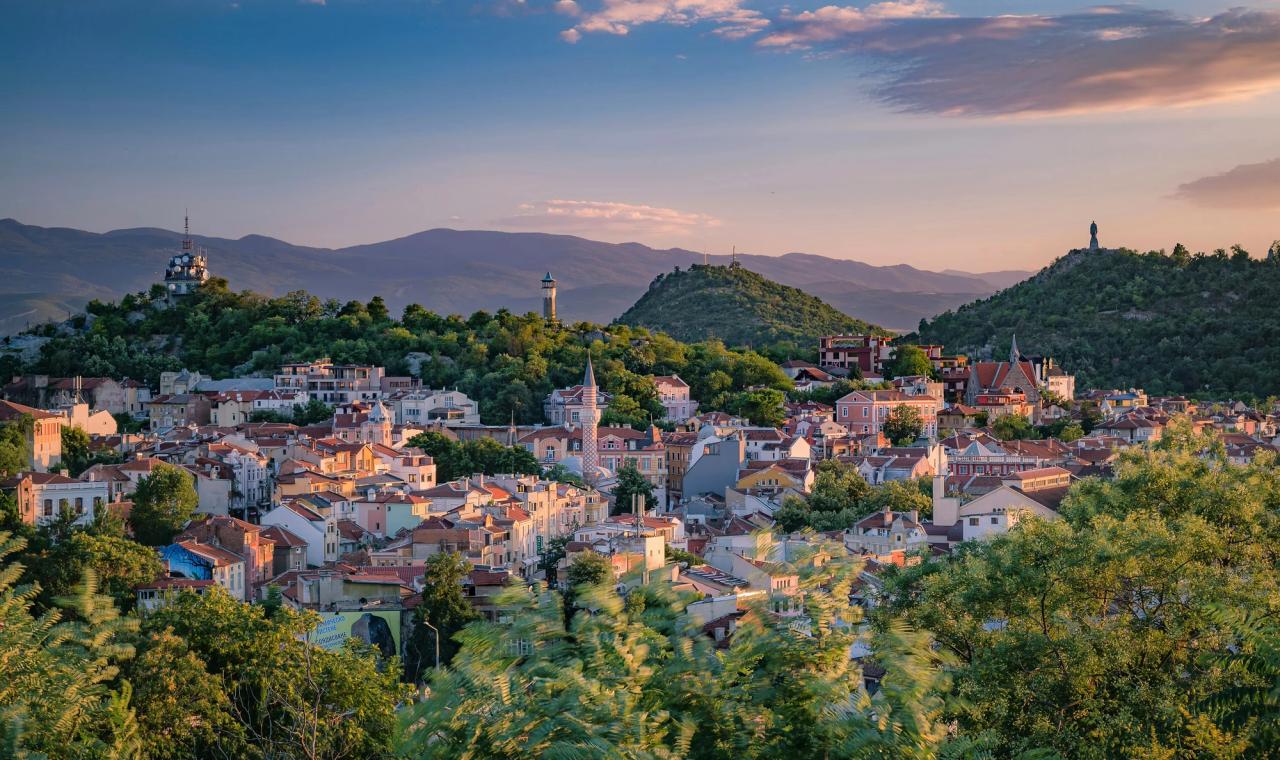
Deuxième ville de Bulgarie et l'un des plus anciens établissements humains continûment habités d'Europe, Plovdiv superpose 6 000 ans d'histoire dans un centre-ville compact et praticable à pied. Des ruines romaines côtoient sur les collines des maisons de la Renaissance peintes, tandis que le quartier artistique de Kapana fourmille de cafés de spécialité et de festivals de street-food. Nommée Capitale européenne de la culture en 1999 et 2019, Plovdiv attire les nomades numériques, les retraités et les professionnels créatifs en quête d'une profondeur culturelle véritable à certains des plus bas coûts de vie de l'EU. Si Sofia vous semble trop étendue et la côte de la mer Noire trop saisonnière, Plovdiv offre un juste équilibre de qualité de vie toute l'année, de prix abordables et d'un caractère authentique.
L'attrait de la ville n'a cessé de croître depuis la désignation de Capitale européenne de la culture, qui a apporté des espaces publics rénovés, des infrastructures améliorées et une vague d'attention internationale qui ne s'est pas essoufflée. Que vous soyez séduit par l'amphithéâtre romain qui donne encore des concerts sous les étoiles, les ruelles pavées de la vieille ville ou simplement la perspective de vivre confortablement avec moins de 1 700 BGN par mois, Plovdiv offre une qualité de vie difficile à égaler à ce prix n'importe où en Europe.
Plovdiv en un coup d'œil
- Population
- ~330 000 (ville) / ~540 000 (aire urbaine)
- Région
- Province de Plovdiv, plaine de Thrace septentrionale
- Célèbre pour
- L'amphithéâtre romain de la vieille ville, le quartier artistique de Kapana, Capitale européenne de la culture (1999 et 2019)
- Monnaie
- Lev bulgare (BGN), indexé à ~1,96 BGN = 1 EUR
- Loyer moyen (T2)
- 450–800 BGN (230–410 €)
- Salaire moyen
- ~1 850 BGN/mois net
- Communauté expatriée
- Petite mais en croissance ; mélange de télétravailleurs, de retraités et de professionnels de l'EU
- Climat
- Continental — étés chauds (30–36 °C), hivers froids (-5 à 5 °C)
- Langue
- Bulgare ; l'anglais est largement parlé dans le centre et parmi les jeunes résidents
- Sécurité
- Faible taux de criminalité selon les normes européennes ; vols à la tire dans les zones touristiques
Pourquoi s'installer à Plovdiv
- Coût de vie abordable : Plovdiv est nettement moins chère que Sofia pour les loyers, les courses et les repas au restaurant — les budgets mensuels y sont de 20 à 30 % inférieurs. Une vie confortable est envisageable avec 1 200 à 1 700 BGN par mois. Manger régulièrement au restaurant ne mettra pas à mal un budget modeste.
- Richesse culturelle : De l'amphithéâtre romain encore utilisé pour des concerts aux galeries de Kapana et aux fresques de street-art, le calendrier culturel dépasse largement ce qu'on attend d'une ville de cette taille. Les titres de Capitale européenne de la culture (1999 et 2019) ont apporté des améliorations durables des infrastructures et une visibilité internationale pérenne.
- Quartier praticable à pied : La vieille ville, le principal boulevard piéton (Knyaz Alexander I) et Kapana sont tous accessibles en moins de 15 minutes à pied les uns des autres. La plupart des courses du quotidien ne nécessitent pas de voiture.
- Un rythme plus détendu avec des commodités urbaines : Vous bénéficiez de théâtres, d'espaces de coworking et de bons hôpitaux sans les embouteillages ni la concurrence immobilière de Sofia. Le centre-ville est animé sans jamais être oppressant.
- Situation stratégique : Sofia se trouve à 150 km au nord, Thessalonique à 300 km au sud et Istanbul est accessible en train pour un week-end. Les montagnes des Rhodopes et la station de ski de Pamporovo sont à moins de deux heures de route.
- Avantages liés à l'adhésion à l'EU : En tant qu'État membre de l'EU, la Bulgarie offre la libre circulation aux citoyens européens, et le coût de vie de Plovdiv en fait l'une des bases les plus abordables au sein de l'Union. Le taux d'impôt sur le revenu forfaitaire de 10 % constitue un attrait supplémentaire pour les freelances et les télétravailleurs.
- Scène technologique en plein essor : Un secteur IT en expansion signifie des opportunités de réseautage, des meetups et une communauté de professionnels internationaux au-delà des cercles expatriés traditionnels. La ville accueille régulièrement des événements tech et des hackathons.
Trouver un logement à Plovdiv
Le marché locatif à Plovdiv est favorable aux propriétaires mais reste simple pour les expatriés. La plupart des appartements sont loués non meublés ou semi-meublés. Les options meublées existent mais se négocient à un prix supérieur. La demande est au plus fort en été et au début de l'automne ; commencer vos recherches à la fin de l'automne ou en hiver peut donc permettre de décrocher de meilleures offres.
Loyers moyens
| Quartier | T2 (BGN) | T4 (BGN) | Caractéristiques |
|---|---|---|---|
| Kapana / Centre | 550–900 | 1 000–1 600 | Praticable à pied, animé, près de la vie nocturne et des restaurants |
| Vieille ville (Starinna Chast) | 600–850 | 1 100–1 600 | Charme historique, rues pavées, pittoresque mais plus cher |
| Trakia | 400–600 | 650–1 000 | Grand quartier résidentiel, adapté aux familles, bien desservi |
| Quartier Sud (Yuzhen) | 450–650 | 750–1 100 | Immeubles modernes, près du canal d'aviron et des parcs |
| Zapaden (Ouest) | 350–550 | 600–900 | Économique, plus calme, parc immobilier récent |
Comment trouver un logement
- Imot.bg et OLX.bg : Les plus grands sites d'annonces bulgares ; filtrez par quartier et par prix. Imot.bg propose généralement davantage d'annonces professionnelles ; OLX est plutôt orienté vers les propriétaires privés.
- Groupes Facebook : Cherchez « Plovdiv Apartments for Rent » ou « Plovdiv Expats » — les propriétaires publient directement. Les délais de réponse sont rapides, surtout au printemps et au début de l'automne.
- Agences locales : Yavlena et Address sont des options fiables ; prévoyez une commission d'un mois de loyer. Les agences gèrent les contrats et peuvent négocier en votre nom.
Conseils pour les expatriés
- Négociez — les prix affichés laissent souvent une marge de 5 à 10 %, surtout en dehors de la saison touristique estivale lorsque la demande locative courte durée baisse.
- Exigez un contrat écrit (договор за наем) même pour les locations privées ; il protège les deux parties et est nécessaire pour l'enregistrement de votre adresse.
- Prévoyez un dépôt de garantie remboursable d'un à deux mois de loyer. Certains propriétaires acceptent un dépôt moins élevé si vous payez plusieurs mois d'avance.
- Vérifiez les systèmes de chauffage avant de signer — les bâtiments anciens peuvent dépendre de radiateurs électriques plutôt que du chauffage central, ce qui fait grimper les factures d'hiver.
- Confirmez si les charges sont incluses dans le loyer affiché ; de nombreuses annonces bulgares indiquent le loyer hors électricité et eau.
- Visitez les appartements en personne avant de vous engager. Les photos sur les sites d'annonces peuvent être obsolètes et certains propriétaires publient le même logement sur plusieurs plateformes.
- Envisagez d'abord une location courte durée (1 à 3 mois via Airbnb ou Booking) pour explorer les quartiers avant de vous engager sur un bail d'un an.
Guide des quartiers
- Kapana / Centre : Le cœur de la ville. Cafés, bars et rue piétonne principale sont à votre porte. Idéal pour les célibataires et les couples qui veulent tout à portée de marche. Des festivals gastronomiques et des concerts en plein air y ont lieu régulièrement le week-end. Des loyers dans la moyenne supérieure, avec l'avantage d'avoir restaurants, commerces et vie nocturne littéralement à votre porte.
- Vieille ville (Starinna Chast) : Quartier sur les hauteurs candidat au patrimoine mondial de l'UNESCO, avec ses maisons peintes de la Renaissance, ses rues pavées et son amphithéâtre romain. Plus calme la nuit, ruelles pavées escarpées — plein de charme mais pas idéal pour les personnes à mobilité réduite. Les loyers plus élevés reflètent la vue et le prestige. De nombreux bâtiments sont des sites patrimoniaux protégés, ce qui limite les possibilités de rénovation.
- Trakia : Micro-quartier de l'époque soviétique qui s'est considérablement modernisé. Grandes surfaces, écoles, jardins d'enfants et cours verdoyantes. Relié au centre par des bus fréquents en moins de 15 minutes. Populaire auprès des familles et des résidents de longue durée. Les loyers les plus bas à proximité du centre. Le quartier dispose de ses propres centres commerciaux et cliniques médicales.
- Quartier Sud (Yuzhen) : Près du canal d'aviron et du parc de Lauta — un favori des coureurs et cyclistes. Un mélange d'anciens immeubles préfabriqués et de constructions récentes de moyenne hauteur. Un bon compromis entre espace, verdure et coût pour les professionnels qui n'ont pas besoin d'être au centre. La scène de cafés et restaurants est en plein développement.
- Zapaden (Ouest) : Quartier émergent avec des bâtiments récents, des prix plus bas et le Plovdiv Mall à proximité. Bien desservi par les lignes de bus du boulevard Hristo Botev. Attire les jeunes professionnels et les locataires soucieux de leur budget qui recherchent des appartements modernes sans la prime du centre. Les commerces de proximité locaux sont encore en développement.
- Marasha : Quartier compact entre le centre et Trakia. Rues résidentielles tranquilles bordées d'arbres et facile accès au tram. Une option intermédiaire solide qui a un atmosphère locale plutôt qu'expatriée. Idéal pour ceux qui veulent un point de chute calme avec un accès rapide au centre.
- Filipovo : Au nord du centre, Filipovo est un quartier ouvrier proposant certains des loyers les plus bas de la ville. Parc immobilier ancien mais infrastructures en amélioration. Bonnes connexions en bus ; idéal pour les résidents à long terme soucieux de leur budget qui ne sont pas contrariés de se trouver à 20 minutes du centre.
Coût de la vie à Plovdiv
Plovdiv est l'une des villes les plus abordables de l'UE. Une personne seule peut y vivre confortablement avec 1 200–1 700 BGN par mois, loyer compris. Les couples peuvent partager les frais et bien vivre avec 2 000–2 800 BGN à deux. Les économies les plus importantes par rapport à l'Europe de l'Ouest concernent le logement, la restauration et les transports.
Répartition du budget mensuel
| Catégorie | Fourchette budgétaire (BGN) | Fourchette budgétaire (EUR) |
|---|---|---|
| Loyer (T2, centre) | 550–900 | 280–460 € |
| Charges | 120–200 | 60–100 € |
| Internet (fibre) | 25–35 | 13–18 € |
| Alimentation | 300–450 | 155–230 € |
| Transports (abonnement mensuel) | 50–60 | 26–31 € |
| Restaurants (4 fois/mois) | 120–200 | 60–100 € |
| Loisirs / Salle de sport | 50–80 | 26–41 € |
| Total | 1 215–1 925 | 620–985 € |
Coûts au quotidien
- Café (cappuccino) : 4–6 BGN (2–3 €)
- Déjeuner (restaurant classique) : 12–18 BGN (6–9 €)
- Abonnement de transport mensuel : 50 BGN (26 €)
- Bière (bar, 500 ml) : 4–6 BGN (2–3,10 €)
- Place de cinéma : 14–18 BGN (7–9 €)
- Abonnement salle de sport (mensuel) : 50–85 BGN (25–43 €)
- Miche de pain : 1,50–2,50 BGN (0,75–1,30 €)
- Eau en bouteille 1,5 L : 0,70–1,00 BGN (0,35–0,50 €)
- Dîner pour deux (milieu de gamme) : 60–90 BGN (30–46 €)
- Forfait mobile mensuel (10 Go) : 15–20 BGN (8–10 €)
- Taxi (trajet de 5 km) : 5–8 BGN (2,50–4 €)
- Lessive (par machine, laverie) : 6–10 BGN (3–5 €)
Se déplacer à Plovdiv
Plovdiv est suffisamment compacte pour que la plupart du centre-ville se parcourt à pied. Le principal boulevard piéton s'étend sur plus d'un kilomètre, bordé de boutiques, de cafés et de sites historiques. Pour les trajets vers les quartiers périphériques, les transports en commun et les taxis restent abordables. Une voiture est rarement nécessaire au quotidien, mais pratique pour les excursions du week-end.
- Transports en commun : Un réseau de bus et de trolleybus dessert la ville. Un trajet coûte environ 1,50 BGN ; un abonnement mensuel coûte environ 50 BGN. La fréquence est bonne sur les lignes principales (toutes les 5–10 minutes) mais moins fiable dans les quartiers périphériques. Le paiement se fait par carte sans contact ou via des billets papier achetés au conducteur ou dans des kiosques. Le réseau est basique comparé à celui des grandes villes, mais suffisant pour se déplacer.
- Vélo : Le relief plat d'une grande partie de la ville rend le vélo pratique pour les trajets domicile-travail. Le parc du Canal d'Aviron dispose de pistes cyclables dédiées, et de nouvelles bandes cyclables sont aménagées le long des rues principales. Le vélo en libre-service est limité mais en développement ; des loueurs privés sont disponibles en saison. Les infrastructures cyclables s'améliorent, mais restent encore en deçà des standards de l'Europe de l'Ouest.
- VTC et taxis : Les taxis sont équipés d'un compteur et sont bon marché — une course traversant la ville dépasse rarement 8–12 BGN. Bolt et des applications locales proposent des services de VTC. Vérifiez toujours que le compteur est en marche ou convenez du prix avant de partir. Uber ne fonctionne pas en Bulgarie ; Bolt est la principale alternative.
- Conduite : La circulation est gérable selon les standards européens. Le stationnement en rue est payant dans le centre (~2 BGN/heure) ; les parkings souterrains coûtent 4–6 BGN/jour. Une voiture sert principalement pour les excursions du week-end dans les montagnes des Rhodopes, au monastère de Batchkovo ou sur la côte. Le carburant coûte environ 2,50–2,80 BGN par litre. Le comportement au volant peut être imprévisible — la conduite défensive est recommandée.
- Aéroport : L'aéroport de Plovdiv (PDV) assure des vols saisonniers et charter, principalement vers l'Europe de l'Ouest en été. La plupart des expatriés utilisent l'aéroport de Sofia (SOF), accessible en 1 h 30–2 heures en voiture ou par des bus fréquents. L'aéroport de Sofia propose des vols directs vers la plupart des grandes villes européennes toute l'année.
- Liaisons interurbaines : Des bus et trains réguliers relient Plovdiv à Sofia (~2 h 30 en bus, plus longtemps en train), Burgas (~3 h) et Varna (~4 h). Des bus internationaux desservent Thessalonique (4–5 h) et Istanbul (6–7 h). La réservation de bus en ligne via des plateformes comme Busbud ou Infobus est simple. Le train est pittoresque mais plus lent — la ligne Sofia–Plovdiv prend environ 4 heures à travers un relief montagneux.
Santé à Plovdiv
Les soins de santé à Plovdiv sont abordables et accessibles. Les cliniques privées offrent des soins modernes avec des délais d'attente plus courts que le système public. Des médecins anglophones sont disponibles dans la plupart des spécialités, et la communauté expatriée partage activement ses recommandations. Les soins dentaires offrent un rapport qualité-prix particulièrement intéressant.
- Hôpitaux/Cliniques : L'hôpital universitaire Saint-Georges est le plus grand établissement public et gère les urgences. Les cliniques privées comme Medline Clinic et Centre Hospitalier proposent des rendez-vous plus rapides, des équipements modernes et un personnel anglophone. Le tourisme dentaire est courant — les dentistes de Plovdiv sont réputés et facturent une fraction des prix d'Europe de l'Ouest. Un détartrage coûte 30–60 BGN ; les actes complexes coûtent entre 200 et 500 BGN. La plupart des cliniques privées acceptent les patients sans rendez-vous pour les problèmes mineurs.
- Médecins anglophones : Disponibles dans les cliniques privées, notamment en dermatologie, dentisterie, gynécologie et médecine générale. Les groupes Facebook d'expatriés tiennent à jour des listes de recommandations. Il est conseillé de prendre rendez-vous à l'avance pour les spécialistes, en particulier les dermatologues et gynécologues.
- Pharmacies : Très répandues et ouvertes à des horaires étendus (certaines ouvrent 24 h/24). La plupart des médicaments courants sont abordables et disponibles sans ordonnance. Dans le centre, une pharmacie n'est jamais à plus de quelques minutes de marche.
- Assurance maladie : Les citoyens de l'UE peuvent utiliser leur CEAM pour les soins d'urgence. Les ressortissants non européens et les résidents à long terme souscrivent généralement une assurance privée — les cotisations varient de 30 à 80 BGN/mois selon la couverture. Le fonds national de santé (NZOK) est une option pour ceux qui sont formellement employés en Bulgarie.
- Numéro d'urgence : 112 (européen). Les temps de réponse dans le centre-ville sont raisonnables ; les quartiers périphériques peuvent attendre plus longtemps.
- Santé mentale : Des thérapeutes et conseillers anglophones exercent en libéral. Les plateformes de thérapie en ligne sont également devenues populaires au sein de la communauté expatriée. La stigmatisation autour de la santé mentale diminue chez les jeunes Bulgares, et les ressources se développent.
- Soins vétérinaires : Les propriétaires d'animaux trouveront de nombreuses cliniques vétérinaires dans toute la ville à des prix très abordables. Une consultation courante coûte 20–40 BGN. Les produits pour animaux sont largement disponibles dans des enseignes comme ZooMall et les animaleries locales.
Recevez un plan de demenagement personnalise
Laissez votre e-mail et nous vous enverrons une checklist adaptee ainsi que trois devis de demenageurs verifies.
Culture et mode de vie
L'identité culturelle de Plovdiv est profondément enracinée. Habitée depuis plus de 6 000 ans, la ville superpose les architectures thrace, romaine, ottomane et du renouveau bulgare comme aucune autre ville du pays. La vieille ville à elle seule est un musée à ciel ouvert de maisons de la Renaissance nationale du XIXe siècle aux façades ouvragées, abritant aujourd'hui galeries, musées et maisons d'hôtes de charme. Se promener dans la ville donne l'impression de traverser des siècles d'histoire, tout en offrant une ambiance résolument moderne — surtout à Kapana, où l'ancien et le nouveau coexistent en toute fluidité.
- Héritage romain : L'ancien amphithéâtre sur la colline de la vieille ville peut accueillir environ 7 000 personnes et accueille encore des concerts en plein air, de l'opéra et le festival annuel Opera Open. Le stade romain, construit au IIe siècle, s'étend sur 240 mètres sous la principale rue piétonne — des panneaux de verre au sol permettent d'admirer la piste d'origine. Le musée archéologique de Ploshtad Tsentralen présente des mosaïques, des pièces de monnaie et des artefacts romains issus de la longue histoire de la ville. Plusieurs aqueducs et murailles romaines sont également visibles dans la ville.
- Quartier artistique de Kapana : Autrefois un quartier artisanal délaissé (le nom signifie « Le Piège » en bulgare), Kapana est aujourd'hui un réseau piétonnier de galeries indépendantes, de cafés de spécialité, de bars à vin et de festivals de street food le week-end. Lors de l'année de Capitale européenne de la culture 2019, le quartier a été entièrement rénové et n'a cessé de prospérer depuis. De nouvelles fresques et installations y apparaissent régulièrement. Le quartier est le cœur social de la ville pour les créatifs et les jeunes professionnels.
- Les sept collines et parcs : Plovdiv est bâtie sur six collines de syénite (initialement sept). Sahat Tepe offre des vues panoramiques ; la colline de Bunardzhik (« colline d'Alyosha ») abrite un monument de l'ère soviétique qui domine la ville. Les espaces verts comme le jardin de Tsar Simeon et le parc du Canal d'Aviron offrent des sentiers de promenade au bord des lacs et des gymnases en plein air. Les collines sont une caractéristique emblématique du paysage urbain et prisées pour les footings matinaux. Le coucher de soleil depuis l'une d'elles est une expérience incontournable à Plovdiv.
- Musées et galeries : Le musée archéologique régional abrite l'une des plus grandes collections au monde d'or thrace ainsi qu'une réplique du célèbre trésor de Panagyurishte. La galerie municipale, la galerie Kapana et de nombreux espaces d'exposition privés font tourner les expositions tout au long de l'année. Le musée ethnographique, installé dans une superbe maison de la Renaissance, présente l'artisanat traditionnel bulgare. La galerie municipale des Beaux-Arts expose des œuvres contemporaines bulgares et internationales. La plupart des musées facturent 3–8 BGN l'entrée.
- Vie nocturne et événements : Le boulevard principal et Kapana s'animent chaque soir. Salles de concert, bars de bières artisanales et rooftops pour cocktails se concentrent dans un rayon de 10 minutes à pied. Les temps forts annuels incluent la foire internationale de Plovdiv, la Nuit des musées et galeries, et le festival de street art KapanaFest. La ville accueille également une scène jazz et musique électronique en plein essor. Des événements plus intimistes comme les scènes ouvertes et les lectures de poésie ont lieu chaque semaine à Kapana. L'été apporte des projections de cinéma en plein air et des festivals dans les collines.
Gastronomie et restaurants
- Essayez la meshana skara (grillade mixte), la shopska salata (légumes frais avec du fromage blanc râpé) et la banitsa (pâte phyllo au fromage ou aux épinards) dans n'importe quel restaurant de quartier. Ce sont des classiques bulgares que l'on trouve partout, des restaurants traditionnels aux kiosques de rue.
- Kapana et le centre proposent de tout, des raviolis géorgiens et des currys thaïlandais aux ramens et aux pizzas au feu de bois. Les adresses véganes et végétariennes se sont multipliées ces dernières années — Soulkitchen et Vega Bar sont des incontournables locaux. La scène gastronomique internationale est restreinte, mais en croissance.
- Un repas au restaurant avec une bière dépasse rarement 25 BGN par personne. Le döner de rue, les pâtisseries de boulangerie et les sandwichs généreusement tartinés de lyutenitsa permettent de garder le déjeuner sous 10 BGN.
- Plovdiv se trouve dans la région viticole de la plaine thrace. Les domaines locaux produisent d'excellents cépages Mavrud et Rubin ; une bouteille de bon vin local coûte 10–20 BGN au restaurant. Plusieurs bars à vin à Kapana se spécialisent dans les millésimes bulgares.
- Des marchés de producteurs fonctionnent le week-end dans plusieurs quartiers. Les produits frais, le miel local et le fromage artisanal sont nettement moins chers que les équivalents en supermarché.
- Les courses sont abordables dans les enseignes comme Billa, Lidl, Kaufland et Fantastiko. Les marchés de plein air locaux (pazar) offrent les meilleurs prix sur les fruits, légumes et produits laitiers de saison. Les courses hebdomadaires pour une personne coûtent environ 50–80 BGN.
- La culture du brunch s'est développée dans le centre. Des adresses comme Smokini et Pavaj proposent un brunch le week-end à 15–25 BGN par personne. La culture du café est forte — les torréfacteurs de spécialité sont désormais courants à Kapana. La plupart des cafés offrent le Wi-Fi, ce qui en fait des lieux de travail prisés par les freelances.
Communauté expatriée
- Groupe Facebook Plovdiv Expats : Plusieurs milliers de membres partagent des annonces de logement, des conseils d'emploi et des invitations à des événements sociaux. La communauté anglophone la plus active de la ville. Les nouveaux arrivants y publient fréquemment des présentations et reçoivent des réponses utiles en quelques heures.
- Espaces de coworking : Cat & Mouse, Biz Labs et OHB Hub organisent régulièrement des soirées networking, des ateliers et des afterworks. Les pass journaliers coûtent 15–25 BGN ; les abonnements mensuels sont à 150–300 BGN. C'est le moyen le plus simple de rencontrer d'autres travailleurs à distance.
- Échanges linguistiques : Des groupes de conversation bulgare–anglais se réunissent chaque semaine dans des cafés et à la bibliothèque municipale. Certains sont structurés ; d'autres sont de simples soirées informelles au pub. Apprendre même les bases du bulgare vous vaut le respect des locaux et facilite les interactions du quotidien.
- Sports et loisirs : Les clubs de course autour du Canal d'Aviron, les salles d'escalade, les studios de yoga et les matchs de football internationaux amicaux offrent de nombreuses occasions de rencontrer du monde au-delà des cercles d'expatriés. Les arts martiaux, les cours de danse et les ateliers de poterie sont également très prisés.
- Organisations internationales : L'Alliance Française et le Goethe-Institut organisent ponctuellement des événements à Plovdiv. Les communautés britannique et américaines organisent des rencontres informelles via les réseaux sociaux. Les groupes d'étudiants Erasmus proposent également des événements ouverts à tous les internationaux.
- Possibilités de bénévolat : Les refuges pour animaux, les nettoyages environnementaux et les jardins partagés offrent des moyens de s'intégrer à la communauté locale au-delà de la bulle expatriée. Plusieurs ONG accueillent des bénévoles anglophones pour des événements et des projets continus.
Le marché du travail à Plovdiv
L'économie de Plovdiv se diversifie. Si l'industrie manufacturière reste le premier employeur, les secteurs de l'informatique et des services connaissent une croissance rapide. Les travailleurs à distance apprécient particulièrement les faibles coûts et la qualité d'Internet.
- Principaux secteurs : industrie manufacturière, externalisation informatique et développement logiciel, logistique, tourisme, agriculture et agroalimentaire. La zone économique de Thrace à Plovdiv est l'un des plus grands pôles industriels d'Europe du Sud-Est, attirant de grandes multinationales.
- Principaux employeurs : ABB, Liebherr, Schneider Electric, Kaufland, plusieurs sociétés d'externalisation informatique de taille moyenne et la Foire internationale de Plovdiv. Le secteur technologique a connu une croissance régulière, avec des entreprises comme Scalefocus et Musala Soft qui maintiennent des bureaux dans la ville. De petites startups émergent également dans le numérique.
- Freelance et télétravail : Plovdiv attire de plus en plus de travailleurs à distance grâce à ses coûts bas et à sa connexion Internet performante. La Bulgarie applique un taux d'impôt sur le revenu forfaitaire de 10 %, ce qui est attractif pour les freelances qui s'inscrivent localement. Les espaces de coworking offrent une infrastructure fiable et des opportunités de contacts. La situation des visas pour le télétravail évolue, mais elle favorise actuellement les citoyens de l'UE.
- Salaires moyens par secteur :
| Secteur | Moyenne mensuelle (BGN) |
|---|---|
| IT / Logiciel | 3 500–5 500 |
| Industrie manufacturière | 1 600–2 500 |
| Télécommunications | 3 000–4 100 |
| Tourisme / Hôtellerie | 1 200–1 800 |
| Éducation | 1 400–2 000 |
| Logistique | 1 500–2 200 |
- Ressources pour la recherche d'emploi : Jobs.bg, Zaplata.bg et LinkedIn (filtrez par Plovdiv). Les citoyens de l'UE peuvent travailler sans permis ; les ressortissants hors UE ont besoin d'un visa de travail (type D) obtenu via leur employeur, qui doit prouver que le poste ne pouvait pas être pourvu localement. Le réseautage dans les espaces de coworking et lors de rencontres d'expatriés est également efficace. Beaucoup d'expatriés trouvent un emploi à distance avant leur arrivée.
L'éducation à Plovdiv
Les options éducatives à Plovdiv se développent mais restent plus limitées qu'à Sofia. Les écoles bilingues privées constituent la meilleure option pour les familles d'expatriés, tandis que l'offre universitaire est solide et attire des étudiants internationaux.
- Écoles internationales : Plovdiv ne dispose pas d'une école IB complète de la maternelle à la terminale, mais des écoles privées comme l'école privée « Saint-Cyrille-et-Saint-Méthode » et plusieurs programmes bilingues proposent un enseignement en anglais. Les familles nécessitant un programme international complet font parfois la navette vers Sofia ou inscrivent leurs enfants dans des écoles locales avec du soutien scolaire complémentaire. La situation s'améliore progressivement à mesure que la population expatriée augmente.
- Universités : L'Université de Plovdiv « Paisii Hilendarski » est la plus importante, proposant des programmes en sciences humaines, sciences exactes et informatique — certains enseignés en anglais. L'Université de médecine de Plovdiv attire des étudiants internationaux, notamment du Royaume-Uni, d'Allemagne, d'Inde et du Nigeria. L'Université des technologies alimentaires et l'Académie de musique, de danse et des beaux-arts complètent le paysage de l'enseignement supérieur. Le quartier universitaire bénéficie d'une ambiance étudiante animée avec des cafés et des bars abordables.
- Écoles de langues : De nombreuses écoles privées proposent des cours de bulgare pour étrangers, du niveau débutant au niveau avancé. Des cours d'anglais, d'allemand et de français pour enfants et adultes sont largement disponibles. Les tarifs sont abordables — les cours collectifs coûtent entre 100 et 200 BGN par mois. Les options en ligne se sont également développées depuis 2020.
- Garde d'enfants : Des jardins d'enfants et des crèches sont disponibles dans toute la ville, y compris des options privées bilingues. Les coûts sont bas par rapport à l'Europe de l'Ouest — les jardins d'enfants privés facturent entre 300 et 600 BGN par mois. Les places dans les jardins d'enfants les plus prisés se remplissent rapidement, une inscription anticipée est donc recommandée.
Liste de choses à faire pour un déménagement à Plovdiv
- Confirmez les exigences en matière de visa et de résidence selon votre nationalité.
- Rejoignez le groupe Facebook Plovdiv Expats pour des conseils à jour.
- Prévoyez un hébergement temporaire (Airbnb ou location courte durée) pour les 2 à 4 premières semaines.
- Renseignez-vous sur les options d'assurance maladie — couverture privée ou CEAM pour les citoyens de l'UE.
- Rassemblez et faites apostiller vos documents essentiels (acte de naissance, diplôme, acte de mariage le cas échéant).
- Téléchargez les cartes de Plovdiv hors ligne et enregistrez les adresses importantes.
- Enregistrez votre adresse au bureau local de la Migration (dans les 3 jours pour les non-UE).
- Ouvrez un compte bancaire bulgare (UniCredit Bulbank, DSK ou Postbank).
- Procurez-vous une carte SIM locale (A1, Yettel ou Vivacom — moins de 20 BGN/mois).
- Familiarisez-vous avec les lignes de transport en commun près de votre quartier.
- Repérez la pharmacie, le supermarché et la clinique les plus proches.
- Configurez un numéro de téléphone bulgare pour l'authentification à deux facteurs sur les services locaux.
- Trouvez une location à long terme et signez un bail.
- Inscrivez-vous auprès d'un médecin généraliste dans une clinique locale.
- Demandez un numéro d'identification personnel bulgare (EGN/ЛНЧ) si vous restez à long terme.
- Mettez en place les services (électricité, eau, Internet) — les propriétaires aident souvent.
- Explorez la ville — visitez la vieille ville, Kapana et le Canal d'Aviron pour trouver vos endroits préférés.
- Participez à une rencontre d'expatriés ou à un événement de coworking pour commencer à vous créer un réseau local.
Guides connexes
- [S'installer en Bulgarie] — guide complet du pays
- [S'installer à Sofia] — guide de la capitale
- [S'installer à Bourgas] — guide de la ville sur la côte de la mer Noire
- [S'installer à Varna] — guide de la vie au bord de la mer