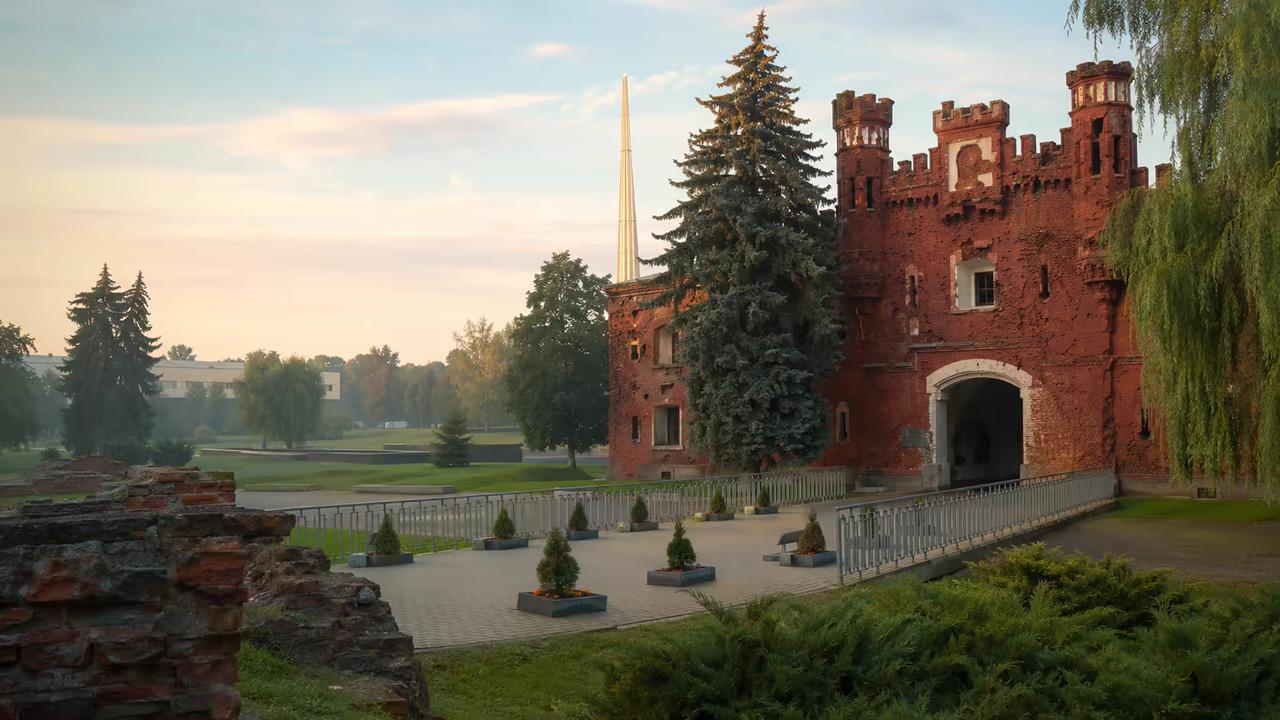
Brest se trouve à l'extrémité occidentale de la Biélorussie, juste à la frontière polonaise, et est surtout connue pour la légendaire Forteresse de Brest — un mémorial de la Seconde Guerre mondiale qui attire des visiteurs du monde entier. Cette ville compacte et abordable d'environ 340 000 habitants mêle patrimoine soviétique et rythme de vie détendu, propre aux petites villes. Elle est idéale pour les expatriés en quête de faibles coûts, d'un mode de vie plus calme et d'un accès facile à l'UE, à quelques kilomètres seulement.
Contrairement aux grandes capitales, Brest récompense ceux qui valorisent la vie de quartier, la convivialité piétonne et un rythme plus lent. La position de la ville au carrefour de la Biélorussie, de la Pologne et de l'Europe au sens large lui confère un mélange culturel unique qui la distingue des autres villes biélorusses. Que vous soyez un travailleur à distance souhaitant optimiser votre salaire, un retraité en quête de tranquillité et d'accessibilité, ou un professionnel transfrontalier partageant son temps entre la Biélorussie et l'UE, Brest a quelque chose à vous offrir.
La rivière Moukhavets traverse le centre-ville, et le fleuve Bug forme la frontière naturelle avec la Pologne à l'ouest. Cette géographie a façonné l'identité de Brest depuis des siècles — un point de rencontre de cultures, de routes commerciales et d'histoires. Aujourd'hui, cet héritage perdure dans les panneaux de rue bilingues de la ville, la cuisine d'influence polonaise et le flux quotidien de navetteurs traversant la frontière.
Brest en un coup d'œil
- Population
- ~340 000 (agglomération ~380 000)
- Région
- Oblast de Brest, Biélorussie occidentale
- Connu pour
- Forteresse de Brest, porte d'entrée à la frontière polonaise, patrimoine soviétique
- Loyer moyen (1 chambre)
- BYN 1 200–1 600 (~€450–€600)
- Salaire moyen
- BYN 2 025–2 200/mois (~€750–€815)
- Communauté d'expatriés
- Petite mais en croissance — principalement des professionnels polonais, ukrainiens et russes
- Devise
- Rouble biélorusse (BYN)
- Langue
- Biélorusse et russe
- Fuseau horaire
- UTC+3 (heure de Moscou)
Pourquoi s'installer à Brest
- Un coût de vie abordable : les loyers, l'alimentation et les transports sont bien en dessous des moyennes d'Europe occidentale, ce qui vous permet de vivre confortablement avec un budget modeste. Une personne seule peut s'en sortir avec BYN 2 500–3 700 par mois charges comprises — soit environ la moitié de ce que vous dépenseriez à Varsovie ou le tiers des coûts berlinois.
- La commodité d'une ville frontalière : le poste frontière de Terespol vers la Pologne est à quelques minutes. Toutefois, les voyageurs doivent vérifier l'état actuel de la frontière avant de planifier leurs déplacements — la frontière Biélorussie–Pologne a connu de nombreuses fermetures et de longs délais depuis la crise frontalière de 2021. Lorsqu'elle est ouverte, les escapades du week-end à Lublin ou les voyages dans l'UE au sens large sont simples. De nombreux résidents ont historiquement fait leurs courses de l'autre côté de la frontière pour varier les épiceries et les articles ménagers.
- Compact et propice à la marche : la plupart des courses quotidiennes, des cafés et des parcs se trouvent à 15–20 minutes à pied dans le centre-ville. Vous avez rarement besoin d'une voiture au quotidien.
- Architecture et histoire de l'ère soviétique : la Forteresse de Brest, le Boulevard Lénine et de nombreux monuments confèrent à la ville un caractère distinctif que vous ne trouverez nulle part ailleurs en Europe. La forteresse à elle seule vaut le détour.
- Peu d'embouteillages et rythme tranquille : la circulation est légère par rapport à Minsk, et la ville a une atmosphère détendue de petite ville où les voisins se connaissent. Pas de stress aux heures de pointe.
- Une économie transfrontalière en plein essor : le commerce et la logistique avec la Pologne créent des opportunités d'emploi de niche et maintiennent l'économie locale dynamique malgré la taille modeste de la ville.
Trouver un logement à Brest
Loyers moyens
| Quartier | 1 chambre | 3 chambres | Caractère |
|---|---|---|---|
| Centre-ville | BYN 1 400–1 800 | BYN 2 500–3 500 | Propice à la marche, cafés, commerces, proche de la Forteresse de Brest |
| Gospitalny | BYN 1 200–1 500 | BYN 2 200–3 000 | Résidentiel calme, parcs, adapté aux familles |
| District de Volodarsky | BYN 1 100–1 400 | BYN 2 000–2 800 | Appartements modernes, bonnes liaisons en bus |
| District de Leninsky | BYN 1 000–1 300 | BYN 1 800–2 600 | Immeubles de l'ère soviétique, supermarchés, écoles à proximité |
| Mikroraion Vostok | BYN 900–1 200 | BYN 1 700–2 400 | Option économique, bâtiments plus récents, périphérie |
Comment trouver un logement
- Kufar.by : le plus grand site d'annonces de Biélorussie — filtrez par district, prix et nombre de pièces. La plupart des propriétaires y publient en premier. Le site est en russe, mais la traduction automatique du navigateur fonctionne bien.
- Onliner.by : plateforme populaire avec des annonces de location, des avis sur les quartiers et des données sur les charges. Propose également des forums où les résidents discutent des propriétaires et des immeubles.
- Agents locaux : les agences immobilières à Brest facturent un mois de loyer comme honoraires, mais peuvent accélérer la recherche, surtout si vous ne parlez pas le russe ou le biélorusse. Plusieurs agences opèrent près de la gare.
- Groupes Telegram : plusieurs groupes de chat dédiés à la location à Brest existent, où les propriétaires publient directement — renseignez-vous sur les liens dans les forums locaux d'expatriés. Ces groupes offrent souvent les meilleures affaires.
- Le bouche-à-oreille : dans une petite ville comme Brest, demander à vos collègues, voisins ou commerçants locaux peut vous permettre de dénicher des appartements non annoncés à des prix plus bas.
Conseils pour les expatriés
- Prévoyez une caution de 1 à 3 mois de loyer plus le premier mois d'avance. Certains propriétaires acceptent deux mois de caution au lieu de trois si vous présentez un justificatif d'emploi.
- Les factures de services publics (électricité, eau, gaz, internet) sont généralement séparées — prévoyez BYN 150–300 supplémentaires par mois selon la saison. Les coûts de chauffage en hiver peuvent faire monter les charges.
- Inspectez soigneusement les anciens appartements de l'ère soviétique pour détecter les problèmes de plomberie et de chauffage avant de signer. Vérifiez la pression de l'eau, l'étanchéité des fenêtres et l'état des radiateurs.
- Demandez si le propriétaire enregistre le bail — les contrats non enregistrés sont courants mais vous laissent sans protections formelles en tant que locataire.
- Les appartements meublés sont moins courants en dehors du centre ; prévoyez un budget pour le mobilier de base si vous louez non meublé. Les meubles d'occasion sont bon marché sur Kufar.by.
- Le chauffage est fourni de manière centralisée dans la plupart des immeubles et inclus dans les charges hivernales, de sorte que les coûts augmentent sensiblement d'octobre à avril.
Guide des quartiers
- Centre-ville : idéal pour les célibataires et les couples qui souhaitent pouvoir tout faire à pied, profiter de la vie nocturne et être proches de la Forteresse de Brest. Loyers plus élevés, mais tout est à portée de main. La plupart des restaurants, cafés et commerces sont concentrés ici le long de la rue Sovetskaya et du Boulevard Lénine. C'est là que commencent la plupart des nouveaux arrivants.
- Gospitalny : verdoyant et calme — populaire auprès des familles et des retraités. Plusieurs parcs et écoles à distance de marche. Des rues plus tranquilles et une atmosphère de quartier en font un choix solide pour les résidents à long terme. Parc immobilier soviétique bien entretenu.
- District de Volodarsky : complexes d'appartements modernes avec de bonnes liaisons de transport en commun. Bonne option intermédiaire pour les jeunes professionnels qui souhaitent une construction plus récente sans payer les prix du centre. Scène commerciale en plein essor avec plusieurs supermarchés et un centre commercial.
- District de Leninsky : logements abordables de l'ère soviétique, proches des supermarchés et des services locaux. Choix pratique pour les expatriés soucieux de leur budget. Un mélange d'anciens immeubles et de quelques bâtiments rénovés. Bon accès aux écoles et aux cliniques.
- Mikroraion Vostok : la zone la plus abordable, avec des constructions récentes en périphérie est. Un peu plus éloignée du centre, mais bien desservie par les bus. Options commerciales et de services en développement. Populaire auprès des jeunes familles dont le budget ne permet pas de vivre au centre.
Coût de la vie à Brest
Répartition du budget mensuel
| Catégorie | Fourchette budgétaire (BYN) |
|---|---|
| Loyer (1 ch., centre-ville) | 1 400–1 800 |
| Charges | 150–300 |
| Internet (60 Mbps+) | 30–50 |
| Alimentation | 600–900 |
| Transport (abonnement mensuel) | 35–50 |
| Repas au restaurant (4×/mois) | 200–350 |
| Loisirs / Salle de sport | 80–150 |
| Téléphone mobile | 20–40 |
| Total | 2 530–3 670 |
Dépenses quotidiennes
- Café : BYN 5–8
- Déjeuner (restaurant ordinaire) : BYN 15–25
- Abonnement mensuel de transport : BYN 32
- Bière (bar, 0,5 L) : BYN 6–10
- Place de cinéma : BYN 10–15
- Miche de pain : BYN 2–3
- 1 litre de lait : BYN 2–3
- Abonnement mensuel salle de sport : BYN 80–150
- Paire de jeans : BYN 80–150
Brest est nettement moins chère que Minsk et bien moins chère que la plupart des villes de l'UE. L'alimentation est particulièrement abordable grâce à la production agricole locale et à la proximité des marchés de gros polonais. Manger dans les stolovayas (cafétérias style cantine) maintient les dépenses alimentaires à un niveau remarquablement bas – un repas complet avec soupe et plat principal peut coûter BYN 10–15.
Se déplacer à Brest
- Transports en commun : Un réseau de bus et de trolleybus dessert la ville. Un abonnement mensuel coûte environ BYN 35–50 (~13–18 EUR). Les lignes sont fréquentes dans la journée mais se raréfient après 21 h. Les tickets à l'unité coûtent BYN 1,00 et s'achètent à bord. Le système est basique mais fiable pour une ville de cette taille.
- Taxis : Abordables et facilement disponibles. Les applications et services de taxi locaux proposent des courses en ville pour BYN 5–15 selon la distance. Yandex Go peut avoir une disponibilité limitée ; des alternatives locales sont largement utilisées.
- Vélo : Le terrain plat rend le vélo praticable, bien que les pistes cyclables dédiées soient limitées. La plupart des résidents marchent ou prennent le bus pour les courts trajets. Le vélo en libre-service n'est pas encore établi, mais l'intérêt croît chez les jeunes résidents.
- Voiture : La circulation est minime comparée à Minsk ou à toute capitale de l'UE. Le stationnement est généralement gratuit ou très bon marché en dehors du centre. Le carburant coûte moins cher que dans l'UE. La conduite s'effectue à droite ; les permis de conduire internationaux sont utiles les premiers mois, le temps d'obtenir un permis biélorusse.
- Aéroport : L'aéroport de Brest (BQT) assure un nombre limité de vols saisonniers. La plupart des expatriés passent par l'aéroport national de Minsk (MSQ), à environ 350 km à l'est (~5 h en train ou en bus), ou traversent la frontière pour rejoindre l'aéroport Chopin de Varsovie, à environ 200 km. L'option polonaise est souvent plus rapide et moins chère pour les destinations européennes.
- Liaisons interurbaines : Des trains directs desservent Minsk (~5 h) et Hrodna (~4 h). Pour Varsovie, il faut changer à la frontière à Terespol en raison de l'écartement des rails différent et des procédures administratives – le trajet total dure environ 6–8 heures selon les temps d'attente à la frontière. La disponibilité des services peut varier selon les restrictions frontalières ; vérifiez les horaires actuels avant de voyager. Les cars longue distance sont moins chers mais plus lents. La traversée frontalière Brest–Terespol est desservie par des navettes et des taxis. Les billets de train peuvent être achetés en ligne sur poezd.rw.by.
La santé à Brest
- Hôpitaux et cliniques : L'hôpital clinique régional de Brest est le principal établissement public. Plusieurs polycliniques desservent les différents quartiers. Les cliniques privées offrent des rendez-vous plus rapides, des équipements plus récents et des salles d'attente plus confortables, bien que les options soient plus limitées qu'à Minsk.
- Médecins anglophones : Disponibilité limitée – principalement dans les cliniques privées. Apprendre un vocabulaire médical de base en russe est utile pour les consultations publiques. Certains médecins en cabinet privé parlent polonais, ce qui peut être pratique pour les résidents frontaliers.
- Pharmacies : Nombreuses et bien approvisionnées. De nombreux médicaments sont vendus sans ordonnance à des prix inférieurs à ceux de l'Europe occidentale. Des pharmacies ouvertes 24 h/24 existent dans le centre-ville. Les génériques courants sont très abordables.
- Assurance : L'assurance maladie publique est obligatoire pour les résidents de longue durée et couvre les soins de base. Une assurance privée est recommandée en complément pour un accès plus rapide et de meilleures installations. Les primes sont abordables par rapport aux standards de l'UE.
- Numéros d'urgence : 103 (ambulance), 101 (pompiers), 102 (police). Les délais d'intervention sont raisonnables en ville – généralement 10–15 minutes pour les ambulances dans le centre.
- Soins dentaires : Les cliniques dentaires privées proposent des soins de qualité à une fraction des tarifs pratiqués dans l'UE. Un plombage coûte BYN 30–80 ; un détartrage BYN 40–70. De nombreux Polonais traversent la frontière spécifiquement pour se faire soigner les dents à Brest.
Recevez un plan de demenagement personnalise
Laissez votre e-mail et nous vous enverrons une checklist adaptee ainsi que trois devis de demenageurs verifies.
Culture et art de vivre
- La forteresse de Brest : Le monument emblématique de la ville – un vaste complexe commémoratif de la Seconde Guerre mondiale avec des musées, des monuments et l'iconique statue du « Courage ». Incontournable pour les résidents comme pour les visiteurs. L'entrée dans l'enceinte est gratuite ; les tickets de musée coûtent BYN 5–10. Les commémorations annuelles du 22 juin attirent de grandes foules et des délégations internationales.
- Patrimoine soviétique : Le boulevard Lénine, la gare ferroviaire de l'époque soviétique et les monuments dispersés témoignent de l'histoire de la ville au XXe siècle. Des visites guidées à pied sont proposées par des guides locaux qui peuvent expliquer le contexte historique et signaler des détails que la plupart des visiteurs manquent.
- Parcs et espaces verts : Le parc du Millénaire et les rives de la rivière Moukhavets offrent des sentiers de promenade et de cyclisme. La ville est plus verdoyante que beaucoup ne l'imaginent, avec des avenues bordées d'arbres et des petits parcs dans les quartiers résidentiels. Les week-ends d'été attirent les familles au bord de l'eau.
- Atmosphère de ville frontalière : La proximité de la Pologne a historiquement influencé les habitudes commerciales locales, les importations alimentaires et les habitudes de voyage. Les produits polonais sont courants dans les supermarchés locaux. Cependant, la frontière Biélorussie–Pologne a connu d'importantes restrictions et des fermetures périodiques depuis 2021, et les voyages transfrontaliers ne sont donc pas toujours fiables. Vérifiez l'état actuel de la frontière avant de planifier des passages réguliers.
- Vie nocturne : Modeste comparée à Minsk – quelques bars et clubs en centre-ville, ainsi que plusieurs spots de bière artisanale. L'ambiance est détendue plutôt que festive. La vie sociale se passe surtout dans les cafés et les restaurants plutôt que dans les boîtes de nuit.
- Sports : Le club de football Dynamo Brest évolue dans la Premier League biélorusse. Le hockey sur glace et le basketball ont également leurs adeptes locaux. Plusieurs salles de sport et centres de fitness sont présents en ville, avec des abonnements mensuels allant de BYN 80 à 150. Les amateurs de plein air peuvent explorer le parc national de Belovezhskaya Pushcha, site du patrimoine mondial de l'UNESCO à environ 70 km au nord, qui abrite des bisons d'Europe.
Achats
- Le centre-ville compte plusieurs centres commerciaux, notamment Terminal et Kontur, proposant vêtements, électronique et articles ménagers.
- Les achats transfrontaliers à Terespol et à Biała Podlaska sont populaires – les supermarchés polonais proposent une gamme plus large de marques européennes à des prix compétitifs.
- Les marchés locaux vendent des produits frais, des produits laitiers et des articles artisanaux à des prix nettement inférieurs à ceux des magasins.
- Kufar.by est la plateforme de référence pour trouver des meubles, appareils électroménagers et articles de maison d'occasion lors de l'installation dans un nouveau logement.
- La plupart des magasins acceptent Visa et Mastercard, mais les petits étals de marché fonctionnent uniquement en espèces.
Gastronomie et restauration
- Goûtez aux draniki (galettes de pommes de terre), à la machanka (ragoût de porc), à la babka (tourte aux pommes de terre) et aux produits laitiers locaux – des incontournables de la cuisine biélorusse. La proximité de Brest avec la Pologne signifie que vous trouverez aussi des pierogi, du żurek et d'autres plats polonais sur les menus.
- Le centre-ville et le quartier de Gospitalny concentrent la plus grande densité de cafés et de restaurants.
- Les repas bon marché commencent à BYN 8–12 dans les stolovayas style cantine ; les restaurants de gamme moyenne facturent BYN 25–45 par plat. La gastronomie haut de gamme est limitée, mais quelques établissements de prestige près de la forteresse accueillent les visiteurs.
- Les boulangeries et épiceries fines d'influence polonaise apportent de la variété à la scène gastronomique locale. Les achats transfrontaliers d'épicerie polonaise étaient historiquement courants chez les résidents souhaitant des produits de marques européennes à des prix compétitifs, mais les fermetures de frontières depuis 2021 ont rendu cette pratique moins fiable.
- Les marchés paysans vendent des produits de saison frais à bas prix – le marché central près de la gare routière est le plus grand.
Communauté d'expatriés
- Petite mais active – la plupart des expatriés se connectent via des groupes Facebook locaux et des discussions Telegram. La communauté est plus soudée qu'à Minsk, et les nouveaux arrivants ont tendance à être accueillis rapidement.
- Les échanges linguistiques en polonais et en russe sont courants en raison de la situation frontalière de la ville. Ce sont de bons endroits pour rencontrer des locaux et d'autres ressortissants étrangers.
- Le complexe muséal de la forteresse de Brest accueille occasionnellement des événements culturels internationaux qui rassemblent locaux et expatriés.
- Les événements sociaux transfrontaliers avec les communautés polonaises ont été affectés par les restrictions frontalières depuis 2021, bien que les communautés en ligne restent actives.
Marché de l'emploi à Brest
- Principaux secteurs : Commerce frontalier et logistique, industrie légère, agroalimentaire, éducation et administration publique. Le secteur de la logistique est particulièrement fort compte tenu du volume de marchandises transitant entre la Biélorussie et l'UE.
- Principaux employeurs : Les douanes de Brest et les entreprises de logistique, Savushkin Product (produits laitiers – l'un des plus grands exportateurs alimentaires de Biélorussie), l'administration locale et les compagnies de transport transfrontalier.
- Salaires moyens par secteur :
| Secteur | Salaire net mensuel (BYN) |
|---|---|
| Commerce et logistique | 2 200–3 000 |
| Industrie | 1 800–2 500 |
| Éducation | 1 500–2 000 |
| Secteur public | 1 600–2 200 |
| Informatique (postes à distance) | 3 000–5 000+ |
- Ressources pour la recherche d'emploi : Kufar.by, les sites d'emploi locaux et LinkedIn pour les postes internationaux. Les emplois transfrontaliers en Pologne ont été une option courante par le passé, mais les fermetures de frontière depuis 2021 ont rendu les trajets quotidiens imprévisibles. Vérifiez le statut actuel de la frontière avant de compter sur un emploi polonais. Certains employeurs ont proposé des navettes transfrontalières lorsque le passage est ouvert.
L'éducation à Brest
- Écoles internationales : Offre limitée — il n'existe pas d'écoles proposant le programme complet IB ou le programme scolaire britannique à Brest. Les familles souhaitant une éducation internationale se tournent généralement vers Minsk ou vers les écoles polonaises de l'autre côté de la frontière à Terespol ou Biała Podlaska, toutes deux accessibles en moins d'une heure. Certaines familles scolarisent leurs enfants dans des écoles polonaises tout en résidant à Brest.
- Universités : l'Université technique d'État de Brest (BrSTU) et l'Université d'État de Brest A.S. Pouchkine proposent des programmes en ingénierie, informatique et sciences humaines. Toutes deux accueillent des étudiants internationaux et offrent des cours préparatoires en langue russe pour les candidats étrangers.
- Écoles de langues : des cours de russe et de biélorusse sont disponibles dans les universités et auprès de professeurs particuliers. Des écoles de langue polonaise fonctionnent en raison de la demande transfrontalière — particulièrement utiles pour les expatriés qui envisagent de faire la navette ou d'étudier en Pologne.
- Éducation des enfants : les écoles publiques locales sont gratuites et de qualité raisonnable, bien que l'enseignement soit dispensé en russe ou en biélorusse. Les cours particuliers en anglais ou en polonais sont abordables (30–60 BYN/heure). Plusieurs jardins d'enfants privés accueillent les enfants dès l'âge de 3 ans.
Liste de contrôle pour déménager à Brest
- Confirmez les exigences actuelles en matière de visa ou de permis de séjour auprès du consulat biélorusse (les règles varient selon la nationalité ; certains pays bénéficient d'une entrée sans visa ou d'un e-visa — vérifiez les dernières règles compte tenu de l'évolution de la situation politique)
- Souscrivez une assurance maladie valable en Biélorussie
- Préparez un inventaire de vos effets personnels pour le dédouanement
- Réservez un hébergement temporaire (hôtel ou location de courte durée)
- Renseignez-vous sur le quartier de votre choix via Kufar.by ou Onliner.by
- Téléchargez les applications Yandex Taxi, Onliner.by et Kufar.by avant votre arrivée
- Enregistrez votre adresse auprès des autorités locales (obligatoire dans les 5 jours ouvrables)
- Ouvrez un compte bancaire à la Belarusbank ou à la Priorbank
- Procurez-vous une carte SIM locale (A1, MTS ou life:))
- Explorez votre quartier et repérez la pharmacie, la clinique et le supermarché les plus proches
- Installez votre connexion internet — les fournisseurs incluent Beltelecom et Atlant Telecom
- Familiarisez-vous avec les lignes de bus vers le centre-ville et le passage frontalier
- Visitez la Forteresse de Brest pour vous repérer par rapport au monument principal de la ville
- Signez un bail de location à long terme
- Inscrivez-vous au régime public d'assurance maladie ou confirmez votre couverture privée
- Ouvrez vos comptes de services publics (électricité, eau, chauffage)
- Obtenez un numéro d'identification fiscale (NIF) si vous travaillez localement
- Rejoignez les groupes Telegram ou Facebook d'expatriés locaux pour bénéficier d'un soutien communautaire
- Ouvrez un compte bancaire polonais si vous prévoyez des déplacements transfrontaliers réguliers
- Explorez les quartiers voisins avant de vous engager sur le long terme
Guides connexes
- S'installer en Biélorussie — guide complet du pays
- S'installer à Minsk — guide de la capitale